


8,63 €
Mehr erfahren.
- Herausgeber: Seren
- Kategorie: Gesellschafts- und Liebesromane
- Sprache: Englisch
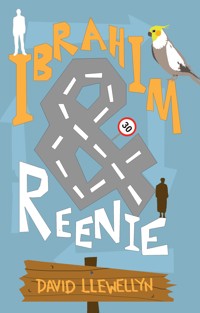
Ibrahim is a young Muslim guy walking from Cardiff to London. He has his own reasons, and his own mental and physical struggles to deal with along the way. What he hadn't counted on was a chance meeting with 75-year-old East Londoner Reenie before he's hardly started. With her life's luggage in a shopping trolley, complete with an orange tent and her pet cockatiel, Reenie is also walking the M4, and not for charity. As they share a journey their paths stretch out before and behind them into the personal and political turns of European history in ways neither could have foreseen. An impressive and daringly human book from novelist David Llewellyn.
Das E-Book können Sie in Legimi-Apps oder einer beliebigen App lesen, die das folgende Format unterstützen:
Seitenzahl: 418
Veröffentlichungsjahr: 2013
Ähnliche




















Contents
Title Page
Song of the Open Road
1
2
3
4
5
6
7
8
9
10
11
12
13
14
15
16
17
18
19
20
21
22
23
24
25
26
27
28
Acknowledgments
About the Author
Copyright
Ibrahim & Reenie
David Llewellyn
You road I enter uponand look around, I believe you are not all that is here,
I believe that much unseen is also here.
Walt Whitman,Song of the Open Road
1
Until that day, Ibrahim had never seen a pheasant – living or dead. He knew what a pheasant was, had seen innumerable pheasants shotgunned out of grey English skies on TV, but had never seen one, as it were, in the flesh. And its flesh was almost all he could see, spilling out from a tyre-tracked mess of feathers in the middle of the road. The pheasant was the fifth dead creature he had passed, following two hedgehogs, a rabbit and a fox, a dead animal for every two miles walked, and it seemed to him that this road was where all things came when they had outlived their purpose, when they were useless or dead.
At the roadside he had seen a plastic toy car, its bright colours dulled and smudged by dirt; cans and bottles and empty cartons blossoming like garish weeds; three shopping trolleys; a wheelchair with the name of a familiar hospital stencilled onto it in white; the severed, bald, and eyeless head of a doll; and a bunch of fresh flowers, still swaddled in cellophane and placed with mournful deliberation. Now that summer was over, the roadside ferns were beginning to brown and the hedgerows were spattered with angry red berries.
He walked slowly, in some pain, but leaning forward as if braced against a stiff gale. The traffic cut past him in slicing waves – never more than three cars at a time; loud snatches of music blaring from open windows, plastic bags and buckled tin cans and clouds of dust caught up in their wake.
The motorway was near, but it could have been a hundred miles away, because Ibrahim was walking from Cardiff to London, a journey of one hundred and sixty miles, give or take, and he was using the older roads.
He had woken earlier than was usual for a Tuesday, after a night of broken sleep. He ate a light breakfast, packed his things into a rucksack, urinated three times in less than fifteen minutes – the last time coaxing out only a few embarrassed drops – and had left his dusty, mildewed flat four hours earlier. But by late afternoon and the moment when he saw the ovoid puddle of feathers and guts that was once a pheasant, he had covered just ten miles.
It would have been easier to drive or catch a train, but there was never any chance of that. Instead,he walked, resting every half mile or so to take the weight off a leg augmented with titanium pins and rods, but those rest breaks were short, cut brief by his determination and his refusal to admit that he had made a mistake, that he should turn around and go home, that he should reply to his sister’s letter and tell her he couldn’t come, and ignore every letter she sent from then on. If anything, it was the pain that drove him; that bass note deep inside his leg. The kind of pain that was at once agonising and reassuring, because he would not turn around and he would not give up and the pain could only end when he stopped walking.
Besides, he had spent days planning this journey. What clothes to wear, what food to take. Poring over maps and using the computers in his local library to study online journey planners. Calculating how many miles he should walk each day, and penning Xs on the map to mark each night’s resting place. Quickly he began to think of that crooked old road – its arch cresting in the elbow of the Severn Estuary – not as a road but as a cliff-face, with Cardiff as the base camp and London its summit. When resting he drank water and ate chocolate, the Freddo bars he bought – so he told himself – for their cheapness, and not because they were chocolate frogs that reminded him of after-school treats.
Ibrahim was a serious man. Twenty-four years old, but mirthless; his expression many years estranged from a smile or even a grin. Though he lived in one city, and was walking to another, he was ill-suited to the density of other people, as if that place between cities was where he belonged. Some people are made lonely and desperate by distance and isolation, while others thrive and find their peace in it. Ibrahim was the latter. Since leaving the outer edge of Cardiff and the last clusters of newly built show homes, he’d passed only a handful of other people: truck drivers congregating around a layby burger van, and a sweating, red-faced jogger with an iPod strapped to his arm.
If the next hundred and fifty miles were like this, he reasoned, the journey should be easy. Traffic he could handle. It was the idea of people and transport, being surrounded by people and beinginsideany mode of transport, that filled him with dread.
Here’s to a hundred and fifty miles of open, empty roads and no people.
But this prayer, this hope, was smashed and ground into the earth when he reached the grass verge between the road and the car park of a chain hotel, and saw the old woman in the deckchair, and the orange tent, and the little table, and the camp stove, and the kettle, and the supermarket trolley crammed full of boxes and bags.
He stopped walking, blinking at the scene before him as if each blink might straighten things out, help it make some kind of sense, but it was no use. She was still there.
There was something marmoreal about her, she and her deckchair carved from the same block and abandoned at the roadside. A permanent memorial to every bag-lady who’d ever lived. Her frame, all but lost beneath a thick all-weather coat, was shrunken, almost no-necked, her chin in her chest, but when he drew nearer she sat upright and craned around to look at him.
He took another step towards her.
‘What’s wrong with your leg?’ she asked. ‘You’re limping.’
He reached down and massaged the calf of his right leg, wincing as if suddenly reminded of the pain and the cause of it. ‘It was an accident,’ he said. ‘It hurts sometimes.’
Placing her mug on the table, she studied him for a moment, and pointed to her tent. ‘If you go in there, I’ve got another deckchair,’ she said. ‘Never know when you’ll have company. Sit yourself down. You look like you could do with a rest.’
He heard a familiar twang in her accent, an unmistakable trace of East London. Gratefully he nodded, then walked over to her tent and leaned inside. In the filtered, muddy light he saw a deckchair, a sleeping bag and pillow on a thin foam mattress, and in one corner of the tent an ornate, gilded cage housing a tiny grey and yellow bird. The bird shuffled along the bars of its cage, inching towards him using its scaly grey feet and its beak, tilted its head and whistled.
‘Don’t mind Solomon,’ said the old woman. ‘He just wants feeding.’
He heaved the chair out from the tent, wrenched it open, and set it down on the other side of the old woman’s table.
‘Fancy a cuppa?’ she asked him. ‘I’ve only just boiled the kettle. I’ve got tea or coffee.’ Then, a minute or so later, passing him his coffee: ‘Sorry it’s not real milk and sugar. Only got long life and sweeteners, see?’
He thanked her anyway, taking the mug and for a moment holding it in both hands, enjoying the almost painful heat. It was late summer, but already there was a coldness to the air, the incoming creep of autumn. For a week or more, the inner-city evenings had been scented with more bonfires than barbecues.
‘I’m Reenie, by the way,’ said the old woman. ‘Well. My name’s Irene. But everyone calls me Reenie.’
‘I’m Ibrahim.’
‘Ibrahim? That’s the same as Abraham, isn’t it?’
He nodded.
‘Yeah,’ said Reenie. ‘My dad’s name was Avram. That’s the same as Abraham. Called himself Albert, though. Thought Avram was a bit old-fashioned, I think. You don’t get many Avrams or Abrahams or even Alberts nowadays. But Ibrahim… I bet that’s a popular name. I mean with…’ She paused, biting at her lower lip as if struggling to seize on a word, the right word. ‘Where you from?’
‘Cardiff.’
‘No, I meanoriginally.’
‘Oh. London.’
‘No, love, I mean yourfamily. Where’s yourfamilyfrom?’
‘Oh. Pakistan. Originally.’
‘Right. That’s what I meant. I bet Ibrahim’s a popular name withpeople from Pakistan.’ And she drew those last three words out, as if avoiding other words altogether.
‘Yeah, it is,’ said Ibrahim. ‘And your dad’s name was Avram, you said?’
‘Yes, love.’
‘How’s that spelt?’
‘A-v-r-a-m.’
He felt something in his chest, like the slamming of a door caught in a draft. A heart palpitation? At his age? ‘Avram what?’ He asked, his mouth drying up.
‘Lieberman,’ said Reenie. ‘He’s not famous or anything. Why’d you ask?’
‘Nothing.’ He avoided her gaze and felt a sudden lurch in his stomach. ‘Just wondering.’ He smiled at her. ‘I’ve never met anyone called Reenie before.’
‘No,’ she laughed. ‘Probably not. Not so many Irenes about nowadays, I reckon. And Reenie’s just a nickname. So. Have you walked all the way from Cardiff?’
‘Yeah. It’s taken me all day. With my leg, you know.’
‘And where you going? Newport? ’Cause, you know, the buses aren’t that expensive, and the train’ll get you there in ten minutes.’
‘No. I’m going to London.’
She said nothing, instead offering an expression he couldn’t read, a quizzical combination of frown and smile, and a moment’s silence passed between them.
‘Well, love,’ she said, at last. ‘You really should think about getting the train or the coach or something. London’s about a hundred and fifty milesthatway.’ And she pointed over her shoulder with a hooked thumb.
‘No,’ he said. ‘I can’t get the train. Or the coach. And I don’t drive.’ He sipped his coffee, hoping she had run out of questions, and stopped himself from wincing at the sickly taste of UHT milk, more overpowering than the charcoal bitterness of her cheap instant coffee. ‘How about you?’ he asked. ‘Where are you going?’
‘Me? Oh, I live here. Can’t you tell?’
‘You…livehere?’
She laughed. ‘No, love. I’m pulling your leg. I’m just resting here for a bit. But it’s like they say, wherever I lay my hat…’
‘What does that mean?’
‘It’s asaying. Wherever I lay my hat’s my home. Not that I’ve got an hat. I’ve got an umbrella, but no hat.’
‘And the trolley? What’s with the shopping trolley?’
‘I’m borrowing it,’ said Reenie. ‘Well. You put a pound in, you get a trolley. And they’ve got so many of the bloody things; I didn’t think they’d miss one of them.’
‘But why do you need it?’
‘For my things. I needed somewhere for the tent, somewhere for my chairs, somewhere for my camp stove and my kettle and my clothes. Somewhere for Solomon. Course… he gets the back seat. The front end bounces about a bit when I’m pushing it. He’d shake all his feathers out if I put him up front.’
‘But isn’t that stealing? If you just take the trolley home with you, I mean?’
She leaned forward, her chair’s rusted springs squeaking beneath her, and frowned theatrically, as if she already had the answer to his question and knew it before he asked.
‘Well, the way I see it is they’ve got branches all over the country. When I don’t need it any more I’ll take it to another supermarket and get my pound back. Like I said, I’m not stealing it. I’mborrowingit.’
He laughed, or rather he smiled and huffed through his nose, but then his attention was caught by the police car slaloming its way across the car park, towards them.
‘Hello,’ said Reenie. ‘You in trouble with the law, or something?’
He shook his head. ‘No. Are you?’
‘Not recently, no.’
The police car reached the foot of their embankment in seconds, and two officers – a man and a woman – climbed out and walked towards them. Ibrahim was almost certain he saw the moment when they both studied the terrain, wondering where best to place themselves to assert their authority, and failing when they ended up one higher than the other and both lower than the pair sitting in deckchairs.
‘Hello,’ said the policewoman, giving each of them in turn a cheery, disarming smile. ‘You okay?’
‘We’re fine, love,’ said Reenie, answering quickly, as if she had expected both the arrival of the police, and the question, for some time.
‘Right. You see we’ve had a call from somebody at the hotel. They were a little concerned. They said you’rewalkingto London. Is that correct?’
Ibrahim looked from Reenie to the policewoman, his mouth opening and closing. How could anyone in the hotel know he was walking to London?
‘Yes, love,’ said Reenie. ‘Is there a problem?’
The policeman, clearly anxious at standing lower on the verge than his colleague and having to look up at Ibrahim and Reenie, climbed a few steps higher. ‘There’s no problem, no,’ he said, talking to Reenie but staring at Ibrahim. ‘It’s just they said you’ve been here a few days, and they were worried about you. Where’ve you come from? Are you homeless?’
‘I’m not homeless. I’ve got a tent,’ said Reenie. ‘And I’ve come from Cardiff, but I’m going to London.’
‘Well, you see, London’svery far away.’ The policeman emphasised the last three words as if talking to a child or a foreigner. ‘It’s too far to walk.’
‘I’m not doing it in a day,’ said Reenie, sitting up straight. ‘I’m taking my time. There’s no law against walking to London.’
‘No, there isn’t. But you’ve got a lot of things with you. That trolley for one thing, and your tent. Have you got any family in Cardiff? Does anyone know you’re out here?’
‘I’ve got no family,’ said Reenie, her voice a little quieter. ‘No husband, no kids. I’m doing this on my own.’
‘And, uh, how about your friend, here?’ The policeman looked again at Ibrahim.
‘We only just met,’ said Reenie. ‘But he’s walking to London, too.’
‘You’realsowalking to London?’ The policeman asked.
Ibrahim nodded but said nothing.
‘And could I take your name?’
Reenie leaned further forward in her chair. Another squeak of springs.
‘I’m sorry, young man,’ she said. ‘But you didn’t take my name, so why are you taking his?’
‘It’s okay, really,’ said the policewoman, rejoining the conversation as if to steer it away from raised voices. ‘We’re just concerned for your welfare, Mrs…’
‘You can call me Reenie. I’ve been a widow eight years now, so it’s a bit late to be calling me Mrs anything.’
‘Very well.Reenie. We’re just a little concerned for your welfare. London’s very far away, and you have a lot of things with you. Besides, you’re right next to the road here, which isn’t safe.’
‘Well, I wasn’t planning on staying here,’ said Reenie. ‘I’m just having a bit of a rest.’
‘In that case,’ said the policeman. ‘I think it’s probably best we call social services. If you don’t have anyone back in Cardiff who we can call, I mean.’
‘You don’t need to do that,’ said Ibrahim, speaking for the first time since their arrival. ‘We’ll be moving along soon, and I’ll be with her.’
‘Is that true?’ asked the policeman.
‘It is now,’ said Reenie.
‘But you said the two of you only just met.’
‘And we did. But if this young man doesn’t mind taking it in turns to push my trolley, I won’t say no.’
Reenie and Ibrahim exchanged a glance, and smiled as if this had been their plan all along. Turning away from them, the police officers had a moment’s conference consisting largely of whispers and shrugs.
‘Okay,’ said the policeman, when they had come to their decision. ‘If you two agree to move on,today, we’ll leave you to it. But I still think it’s a bad idea. Walking to London. You should try getting back to Cardiff, or finding somewhere to stay in Newport. There are homeless shelters. We can get you the details, or…’
‘And like I said, I’m not homeless,’ said Reenie. ‘I’ve got a tent.’
The policeman nodded and, after a baffled pause, he and his colleague returned to their car and drove back across the car park, pulling up in front of the hotel.
‘That’ll be the cow I spoke to earlier,’ said Reenie. ‘Hotel manager. Snooty bint. Came marching out of the hotel. Told me I was onprivate property. Silly mare didn’t know what she was talking about. I said to her, I said, “That car park might be private property but this bit of grass here isn’t, so you can sling your hook.” She wasn’t happy about that. Must have called the police.’
‘Right,’ said Ibrahim. ‘So maybe we should pack up and move on, yeah?’
‘We?’ Reenie laughed. ‘Who’s this “we”, then?’
‘Me and you. I thought I was helping you push the trolley.’
‘And I thought that was just forthem,’ said Reenie, nodding towards the police car.
‘It doesn’t have to be,’ said Ibrahim. ‘Must be hard work, pushing all that. And we’re both going the same way. Makes sense.’
‘And how do I know you won’t rob me blind?’
He laughed. ‘Rob you blind? Well, first of all, because I wouldn’t. But even if I wanted to, which I don’t, have you even got anything worth stealing?’
‘Well, there’s Solomon.’
‘Solomon?’
‘My bird.’
‘Why would I want to steal a budgie?’
‘He’s not a budgie. He’s a cockatiel.’
‘Why would I want to steal a cockatiel?’
She considered this for a moment, staring down at the pale oval of cream in her lukewarm tea. ‘Fair enough,’ she said, at last. ‘You can come, I suppose. But don’t think you’re sleeping in my tent. I do havesomestandards, you know.’
2
Irene Glickman – Reenie to the friends and family she once had – remembered the first time she felt others seeing her not as a woman, but as anOldWoman. It wasn’t her first grey hair, her first wrinkle, her first liver spot. It wasn’t The Change, or the day her bus pass appeared on the doormat. It was a Thursday, her shopping day, and as she stepped off the bus a young man helped her with her bags. He was only being kind, but there was something in his tone and his smile, something vaguely patronising, or self-satisfied, that said he was proud of himself forHelping The Old Woman. It was his Good Deed For The Day. She thanked him, and said something about there not being many gentlemen around nowadays, but as the bus pulled away she felt a kind of sadness as her age, and the reality of it, dawned on her in a way it never had before. It was one thing to notice her body ageing, quite another for others to notice and act on it.
She was grateful, when she began planning the walk to London, that there was nobody to tell, nobody to look at her inthatway; that patronising, disbelieving way that said, ‘Oh, dear. Reenie’s lost it.’ A friend of hers had spent her last days in sheltered accommodation, every plan questioned by those paid to keep an eye on her; every shopping trip and holiday requiring an unofficial seal of approval. Reenie spent many afternoons in their common room, seeing how they were treated, and she was determined never to end up in such a place. Yes, her house was too big and empty for her; yes, she struggled with the stairs, and she wasn’t dusting as often as she should, and the garden had long ago turned into a jungle, but it was all hers. She made her plans alone, with no one there to question them.
The trolley she picked up from a supermarket near her home, and her status as an Old Woman granted her the license to walk away with it, unchallenged. Nobody questioned the sight of an Old Woman pushing a trolley down the street. But in a way, she had wanted someone to stop and question her, if only so that she could throw their question back at them. What was so strange about walking to London? People have been around much longer than cars and trains. Was it so long ago people walked from place to place? Hadn’t there been times, in living memory, when people walked great distances, and not always through choice?
The trouble was, it had been a very long time since this had last happened in Britain. In Britain, people had been driven from place to place for generations. If anyone walked a great distance now it was to prove a point, and usually for charity. It was centuries since the last British exodus. Migrations, yes, but these involved cars, and trains, and boats. Photographs of suitcase-laden families walking single file on country lanes, leaving behind them ravaged towns and villages, were of events that had happened Somewhere Else and to Someone Else.
Reenie didn’t remember such scenes, but they were as much a part of her as the single hazel fleck in her otherwise blue eyes, a hand-me-down from her father’s side. The story of how she came to live in London she remembered like a nursery rhyme, or the bare bones of a fairy tale. Her father spoke rarely of their time in Vienna, and even less of what followed, and her only memory of that time was so vague, so lacking in detail, it could have happened in any city, in any country.
She remembered a vast park, and in that park enclosures filled with exotic animals; zebras and giraffes, elephants and monkeys, a blue-green pond surrounded by flamingos. She remembered a man and a woman, her parents, and mountainous clouds on a dusk horizon, but nothing more.
There were voids in her father’s recollections of Vienna and Europe, chapters he’d never shared. They, he and Reenie’s mother, had left their home. They were put onto trains. They were taken north. Much of what happened after that remained blank, but her father did once share the story of how he and many other men – there were no women – were made to march west. It was January.
‘And Polish Januaries, they are cold,’ he said, with a distant understatement.
When she told the young police officers she was walking to London, and they looked at her as if she were insane, she wanted to tell them about her father, and the walk so terrible he never spoke of it again.
Yes, she could have caught the train. That would have been the easy thing to do, and the cost of the fare was unimportant to her. Speed and comfort were unimportant to her. Ease was unimportant to her. It was the journey that mattered. And what about her belongings? They might have allowed her on a train with Solomon inside his cage, and a small suitcase would be enough for her clothes, but Reenie knew she might never return to Cardiff, or the house where she had lived for almost fifty years. If she was leaving, and for good, she would travel as a whole; the parts of her life that still mattered to her crammed into that supermarket trolley.
She hadn’t expected to meet another person on the same journey. Perhaps people did this all the time, walking between cities, and it wasn’t all that strange. Perhaps there were hundreds of people out there, now, tramping from one end of the country to the other on foot – north to south; east to west. Perhaps, away from the motorways and the train tracks, this was a country full of people walking about like nomads, just walking.
She realised that, had they met under other circumstances, she would have treated Ibrahim differently. If she saw him coming towards her on a dark night she would have crossed the street to avoid him. If he were loitering outside her house, she would hover near the phone, wondering when it was appropriate to dial 999.
Or if she were fifty years younger, how would she look at him then? He was handsome, if a little weighty, but she had always been attracted to bigger, cuddlier men. And there was something exotic in his looks, his short hair and thick beard the darkest black, his skin the lightest shade of brown, but still dark enough to make his almost metallic blue eyes stand out like little coins. He reminded her of a waiter she’d met when in Venice with Jonathan. They were at a restaurant near San Marco, on the Calle Spadaria, and the waiter flirted with her, sparking a jealous row between husband and wife, not because Reenie had attracted the waiter’s attention but because – and only because – she had enjoyed it.
Beneath his scruffy clothes and that shabby bird’s nest of a beard, Ibrahim had something of the waiter’s beauty; something almost feminine in his long eyelashes, his full lips, his smooth skin; but beyond that something soft and quiet, something gentle. Nothing like the young men she had seen on TV; waving placards and burning flags. Ibrahim was different. She saw no violence in him, no hint of a temper. A sadness, perhaps, but no violence.
As a girl she might have fallen for his looks, for his quietness, for that lack of violence. Liking him, though, was not the same as trusting him. Reenie trusted no one completely, having learnt and relearnt this lesson her whole life.
Ibrahim was not one of the bastards. He hadn’t tried persuading her to turn back, or catch the train. He hadn’t laughed at her plan, or talked to her as if she was mad. If he wanted to steal from her, he’d already had the opportunity. He was not one of thebastards, but still. He’d go soon enough. Get sick of her slowing him down. Hitch a ride or give in and catch the train. Everyone goes away, eventually.
For now, though, it was a relief having someone else push the trolley. It wasn’t so much the weight that made it hard work – once you had the whole thing moving it seemed to push itself along with its own momentum. No, it wasn’t the weight; it was the wheels that made it a challenge. They had minds of their own, all four of them pulling in different directions, and the whole thing jumping and shuddering with every bump and pothole. But Ibrahim was a young man, and stronger than her, and they made greater progress in the two hours after leaving the hotel than she had made in her first two days from Cardiff.
They entered Newport from the south-west, and all the way across the city centre they were gawped at. Nothing about them – little old woman in raincoat and wellies; stocky, dark young man with shaved head and beard – made sense, and people stared at them as if to say,They’re not a couple, they’re not mother and son. What’s their story?
Reenie felt safer outside the cities, where there were fewer people, fewer cars – where there were wide-open spaces and places to camp. The city was noise and commotion, and it was getting late. If they weren’t on the other side of Newport by nightfall there would be nowhere to pitch her tent, and she’d have to sleep outdoors, in some cold, hard concrete corner of the city.
Unlike Ibrahim, Reenie hadn’t planned her journey with maps. She knew some of the roads she would have to travel along from daytrips taken years ago. Then, she had been the navigator, an RAC road atlas open in her lap while Jonathan drove. She’d hoped some parts of the route would prove familiar, but very few had.
The bridge across the River Usk she remembered, but as a brand new landmark in the city. Now it looked weathered and worn, its concrete pillars the same muddy shade of brown as the river beneath it. The riverbanks were strewn with debris – the half-buried skeletons of shopping trolleys, a discarded bicycle, the rotting carcass of a rowing boat.
Ibrahim said little as they crossed the city. He was slowing, his face flushed and shining with sweat, and while at first he kept a steady pace, always a few yards ahead of her, now they walked side by side; Reenie talking as if to punctuate the prolonged silences between them.
‘Haven’t been to Newport in years,’ she said. ‘I remember when they was making that film,Tiger Bay. It had the girl in it. What’s her name? Hayley Mills. That’s her. John Mills’s daughter. And it was set in Tiger Bay, down in Butetown, but they filmed some of it in Newport, by the Transporter Bridge. Must have been fifty years ago now.’
‘You’ve… lived in… Cardiff… fifty years?’ asked Ibrahim, struggling to catch his breath.
‘Yeah. Must be that, at least.’
‘’Cause, you haven’t… got the accent. You still sound… like you’re from London.’
‘Yeah, well, some people lose their accents, some don’t.’
She didn’t tell him that as a child her accent, and even the language she’d spoken, were different again, that her accenthadchanged, but that having changed once, and so dramatically, it stayed fixed, as if that one change was enough to last a lifetime.
‘And why’d you move to Cardiff?’ he asked.
She took a moment to answer him, and in that moment considered the raft of promises that brought her from London to Cardiff and the man – no, theboy –who made and broke them all. He’d made this other city, this place away from London, sound like the answer to all their problems, and she believed him. So long ago. She remembered his name, but his face was vague now. Did it happen to her? Wasn’t it all just a film she had once seen?
‘Just fancied a change of scenery,’ she said. ‘You know how it is. A change is as good as a rest. Why didyoumove to Cardiff?’
‘University.’
‘Oh. You’re a brainy one, are you?’
He laughed and wiped his forehead with his sleeve. ‘No. Not really. Just wanted to go to uni. Got in to Cardiff.’
‘What were you studying?’
‘History.’
‘Did you get a degree?’
He shook his head. ‘Didn’t finish the course.’
There was something in his expression – as if he was tired of answering that question – that stopped her from asking any more. They carried on in silence until reaching the eastern edge of the city, and by then it was beginning to get dark.
3
Kirsty’s phone buzzed its way, sideways, across her desk, nudging itself closer to the edge; the last name she expected to see lit up on its screen. They hadn’t spoken in almost a year. Not out of animosity or resentment, rather their clumsy and abortive attempt at dating, an attempt that came close to being ‘a relationship’ before stalling, had left them with too little to talk about, and nothing in common except the very brief time they shared. So why should he call now?
She picked up her phone and answered it. ‘Steve?’
‘Hi, Kirsty. You okay to speak?’
‘Sure.’
A quick glance around the newsroom. Another researcher thumbing idly at his phone. Rhodri, her producer, soundproofed and pacing in his glass box of an office, talking to someone distant through the speakerphone. Most of the other researchers and production team elsewhere, as the office reached the end of a Tuesday afternoon.
‘So. How are you?’ asked Steve.
Christ. Where was this heading? Had a year of single life reduced him to rekindling former flames, flicking through the well-thumbed pages of his Little Black Book? That was assuming men even had Little Black Books these days, or that they ever had, outside of films and dodgy sitcoms. Assuming, too, that he had spent the last twelve months single, unable to move on, or frozen in the very last moment she had seen him, in that same way that it’s impossible to imagine rivers flowing if you’re not around to watch them.
‘I’m good, thanks,’ said Kirsty. ‘How are you?’
‘Great. Great. You still with the BBC?’
‘Yes.’
‘Oh, that’s good. That’s kind of why I called you, actually.’
She frowned for the benefit of no one. ‘Right. Well. Yes. I’m still here.’
‘Still working on the news?’
‘Yes.’
‘Okay. Well, as it happens, I might have a story for you.’
‘Really.’
‘Yeah.’
‘Are you sure? I mean, is that even, you know,allowed?’
‘Well. Not really. But, you know, as long as I’m not mentioned by name or anything. I mean, anyone could have given you this story. And it’s not like we’re… you know. And anyway…’
‘So what’s the story?’
A long pause. Steve was a policeman, at least he had been when they dated, but this was the first time he’d ever called with a story. She leaned back in her chair, waiting for his explanation.
‘This old woman and this Asian guy are walking to London,’ he said.
She scowled. It sounded like the opening line of a joke.
‘They’re walking to London?’
‘Yeah. We got a call from this hotel, just off the M4. They were complaining about the old woman camping next to their car park, so we went to check it out. Turns out she and this Asian guy are walking to London.’
‘What? For charity?’
‘No. That’s the thing. They’re just walking to London. It’s not for charity.’
‘Right. And… I mean… who are they?’
‘Don’t know. They weren’t breaking any laws or anything. We moved them on. But I just thought… It’sweird, isn’t it? Apparently, they’d only just met.’
‘So they don’t know each other?’
‘Don’t think so.’
‘But they’re walking to Londontogether?’
‘Yeah.’
‘So you thought you’d call me?’
‘Well. Yeah. It’s the kind of thing you report on the local news, isn’t it?’
True. It was September. The last dreary days of Silly Season. Unless war broke out (and even a war was unlikely to impact much onlocalnews) or some major crime or accident occurred, they were in the slow news doldrums between party conferences. Paradoxically, a ‘slow news’ month meant a busy month for researchers, whose job it then became to comb through acres of minor events in the search for something newsworthy.
‘So where are they?’ she asked.
‘Just off the M4. You know the junction with the hotel and the business park?’
‘I think so.’
‘Well, there. But we moved them on, so they’ll be heading towards Newport.’
‘Right.’
Another silence that became pointed.
‘So, anyway,’ said Steve. ‘Just thought I’d let you know. You know. In case it was something you could use.’
‘Yeah. Well, thanks for that, Steve.’
‘Don’t mention it. You know. Just thought, we haven’t spoken inages, and then this happened, and I thought, “Kirsty might be able to, you know, use this,” so I called you.’
‘Yeah. That’s great, Steve. Thanks.’
‘Cool. Well. Maybe see you around, yeah?’
‘Yeah.’
‘Great.’
‘Take care, Steve.’
‘Right. Yeah. You too, Kirst.’
‘Bye, Steve.’
‘Bye.’
She ended the near-interminable call with her thumb, got up from her desk, crossed the office to Rhodri’s glass box, and rapped her knuckles three times on the door. Rhodri was still talking at the grey plastic triangle in the centre of his desk, but he gestured for her to come in, and she entered, closing the door quietly behind her. He was talking to somebody in Welsh, a language Kirsty had never spoken. Even after eighteen months of working there she still felt a twinge of resentment in those moments when colleagues jabbered away in this familiar yet foreign tongue as if they were doing it on purpose to exclude the handful of people, a minority, who couldn’t.
‘Iawn iawn, byddain siarad i chi’n fuan! Wel dwi’n credu bod e di bod yn Barcelona penythnos yma. Yeah… Mae’n alright i some! Iawn, hwyl hwyl.’
Finished, Rhodri clapped his hands together and grinned at her. Or rather, he gave her tits a cursory glance and then grinned at her.
‘Kirsty,’ he said. ‘What can I do you for?’
She smiled falsely, more a grimace than a smile. ‘Erm, I think I might have a story. Filler, really. Nothing major. Too late for tonight, obviously, but maybe we could get it done for tomorrow morning.’
‘Okay. What’s the story?’
‘Old woman and some Asian guy walking from Cardiff to London.’
‘For charity?’
‘Not for charity.’
‘Gandhi Asian, or Jackie Chan Asian?’
‘I didn’t ask.’
‘And where’d you get this?’
‘A friend. He works for the police.’
‘They’ve been arrested?’
‘No. Nothing like that. He just called me, because he’s seen them, and…’
‘Because if it’s police business it could get messy.’
‘No. They’ve not been arrested. I was thinking human interest, filler, like I said, maybe something we could check out…’
He nodded. ‘Right. Okay. Tell you what. You drive up there, to wherever they are. Do a recce. If it stands up, give me a ring. We’re stretching bugger all very thin tomorrow morning as it is. I mean, we’re bloodyleadingwith that leisure centre closure. So we might be able to use it. But you go scope it out first, yeah?’
‘Okay.’
With that decided Kirsty returned to her desk and picked up her handbag and her car keys. The drive out of Cardiff took an age, her progress slowed by the rush-hour traffic pouring like treacle from the city. She sat in gridlock, drumming an impatient tom-tom on the steering wheel. The passengers of a coach stared down at her from their windows, an ageing gallery of white perms and dewlaps. The driver of a white van, his beefy arm tattooed with the greening feathers of a Welshfleur-de-lys, leered at her and winked. Three Asian guys, teenagers, sat chicken-winging – elbows dangling from the open windows of a BMW; black bandana-and-baseball-capped heads bobbing in time with thunderous hip-hop.
Then the cars and vans and lorries moved, and she was out of Cardiff and on the motorway, but by the time she reached the hotel near the junction her quarry – the old woman and the Asian man – had gone. Undeterred, she drove on and was within the southern limits of Newport when, finally, she saw them. Sure enough, an old woman and, a few paces ahead of her, a young man pushing a supermarket trolley.
They looked like a story. Never mind what that story might be. There was struggle, pathos, grim determination, the faintest whiff of the eccentric. Exactly the kind of thing the audience for local news laps up. She was thinking like a journalist, because that was what she trained to be. Shame then that she wasn’t a journalist, but a researcher; a job only one or two rungs up from runner, though she could barely tell the difference. Still, this was your ‘foot in the door’, as people told her. Your way in. Knuckle down, look for stories. If you’re good, they’ll notice. They – the anonymousThey. The omniscientThey. The all-seeingThey. The practically trademarked Powers That Be. Would they notice her this time? Would this be the filler, the piece of fluff, the small dose of whimsy that drew attention to her? Perhaps. She had seen true nonentities promoted for less substantial stories than this.
Though she slowed the car as she passed them by, Kirsty was soon a hundred yards ahead of them. It would have looked strange for her to slow down to their pace, as if kerb crawling, and there were other cars behind her, so she drove on until the next roundabout, performed a U-turn, and came back, driving past them a second time.
Perhaps it was a statement. Some kind of protest. There was something bohemian about the old woman. Didn’t seem the cosy, grandmotherly type. Was their journey political? A comment on the struggles of people in a faraway land? But if that was the case, where were their placards and t-shirts printed with slogans? Where was their message?
Or perhaps something theatrical; an oblique work of performance art. No, that was ridiculous. Perhaps there was nothing to the story. Perhaps there was no story. Perhaps she should drive back to Cardiff and tell Rhodri there was nothing worth seeing, let alone reporting.
And yet, as they shrank away, framed in widescreen by her rear view mirror, they looked like a story. So telegenic. This could work.This could work.
Presently, she found somewhere to pull in and called the office, waiting briefly on hold before being put through to Rhodri.
‘So. What’s the story?’
She pictured him staring fixedly at that grey plastic triangle on his desk, the lid of a ballpoint pen tucked in one corner of his mouth where he wished he had a cigarette.
What was the story? Theylookedlike a story. But whatwasthe story?
‘They’re on the move,’ she said. ‘They’ve left the hotel and they’re heading in to Newport.’
‘And they’rebothwalking to London?’
‘I think so. Well. They’re definitely walking to Newport.’
‘Right.’
She felt the prolonged silence from the other end of the line draw all the air out of her lungs and stop her heart from beating. Her mouth got dry, and she felt she might be blushing. Why had she called him so soon? Why hadn’t she taken the initiative to follow them, stop them, ask questions before calling Rhodri? This wouldn’t be the day she got noticed. If anything, this would be the day she got unnoticed, reverse-noticed, ignored.
Forget Kirsty. She’ll bring you nothing but rubbish. In fact, maybe she’d make a betterrunner…
‘Sod it,’ said Rhodri. At last. ‘Find them. Quiz them. If they’re walking to London, call me back and I’ll send Angharad and a crew.’
And Kirsty promised him she would do just that.
4
They had reached the Coldra, a large interchange on the far side of Newport, and Ibrahim couldn’t remember another time when he had felt so tired.
In the centre of this interchange, in the shadow of the motorway flyover, lay an oasis of grass and trees, the perfect place for them to pitch Reenie’s tent. The motorway would provide shelter, should it rain, and the trees could hide them from the road.
He could leave her there, of course. Sure, it was getting late and the sky was beginning to ink over with night, but in the plans he drew up, the notes he scribbled on maps, he ended his first day so much further along the road than this. He had thought he might walk for twelve hours, at least, and in those plans ended his first day in Lydney, on the other side of the English border. He had no idea where he would stay when he got there, perhaps a bus station where he could spend the night, or a park with a bandstand. Somewhere dry, with no people.
Now, as they put up the tent and began unpacking the things from Reenie’s trolley, he tried convincing himself he could walk another twelve miles, at least. Maybe even reach the border. He had no obligations. He had helped her get this far, never promising to take her all the way to London. Besides, there was an urgency to his journey. Time was a factor. He could help her set up camp, in the middle of this roundabout, then carry on walking. He could walk well into the night. Eventually the roads would get quieter, and on some he might feel like the only man on Earth. What was keeping him here?
But then he remembered the name she’d said and he felt the thudding pain in his right leg; an ache that was spreading now, through every limb and tingling like pinpricks in the soles of his feet. He was exhausted.
‘Shall I put the kettle on?’ asked Reenie, unfolding her small table and draping over it the gingham tea towel she used as a tablecloth. ‘Nothing like a cuppa after a long walk. We used to walk all the time when I was a girl. We’d walk for miles and miles. All the way up over Hackney Marsh, or out as far as Epping Forest. We’d walk all the way there, all the way back. Nowadays, no one walks anywhere. Too bloody lazy, if you ask me.’
He nodded and smiled but said nothing. He had both hands on his leg, working at the muscle with his thumbs, and each time he applied more pressure a shot of pain pounced through his leg, but it was that good, almost reassuring pain that he could tolerate, though only just.
‘You alright?’ asked Reenie.
‘I’m fine.’
‘That leg of yours giving you gip?’
‘Yeah.’
‘So what happened to it?’
‘An accident.’
It came out blunt, colder than intended, and it was strange for Ibrahim to remember a time when he couldn’t even call it that, when he’drefusedto call it an accident. For months and even years he had called it hisinjury, both the physical damage to his body and the event that caused it. Injury seemed the only word for it; ‘accident’ felt so diluted, so small. An accident was something unintended, random, without reason.
The damage he suffered seemed so precise, so calculated, he often wondered if it was the product of some grand, unseen design. There had to be a reason why his leg was broken in so many places, why his face was smashed beyond recognition, why – microscopic and undetected for two years – there had been one final punchline to his injuries. His faith told him there was a reason for everything, that everything that happened was the will of God, from blessed miracles to deaths and injuries. Even his father had believed this, saying it was a sign, a message from Allah. If his father could suggest that, knowing only what he knew, what would he have said had he known everything?
As it was, the timing was all wrong. Two years earlier Nazir Siddique may have had a point. Had Ibrahim’s accident happened then, there may have been some justice to it, and even then if he was the only one to be injured, but what had the others done? What had Rhys and Caitlin and Aleem done to deserve that?
He refused to believe his accident –theiraccident – was some divine punishment, backdated to earlier actions, as if the heavenly clerics and number crunchers meting out spiritual justice were simply catching up with a backlog. And into this single plughole of doubt he saw his faith begin to vanish, like so much swirling, brackish bathwater. He tried clinging to the vestiges of it, but he might as well have tried clinging on to soapy dregs. If the accident, hisinjury, was not the work of God, what was it? If it was just that, an accident, why do such things happen? If there is no reason why they happen, what then? His doubt, and the absolute terror it gave birth to, was a cancer to his faith, and he began to wonder if he had ever truly believed.
Yes, he had proclaimed that God is great, and done so at the top of his voice, but it was said as a chorus, with a dozen of his friends. They spoke loudly, as if volume added credence, or took away the need to question what was being said. Now that he was left with none of those friends and just the sketches of his faith he realised they could have shouted anything, any choice of words, in any order. It wouldn’t have mattered.
Of course, they had never questioned the substance, the character and the mind of Allah. When their discussions were over, and they’d finished poring over another passage, reciting it in their faltering, East London Arabic, Allah remained as faceless and unknowable as He was before they began. His words, so the sheikh told them, were there in the book. There was nothing more to know. It is the word and the law of God. Even thinking about what He might look like, or how His mind might work beyond those pages, washaraam.




