


7,67 €
Mehr erfahren.
- Herausgeber: Seren
- Kategorie: Fantasy und Science-Fiction
- Sprache: Englisch
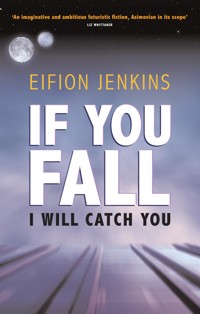
Gwydion is a boy on the verge of manhood who knows nothing of 9/11. But in 2084, the psychic shockwaves of the event that once shook the world are still felt in his village - all that is left of Wales. Gwydion's mental powers bring him to the attention of the planet's remaining politicians, desperate for a way to escape the failing Earth. But in a world that has lost track of its history, Gwidion is determined to find out the truth about his past. His efforts to answer his own questions propel him from his sheltered rural community, via the mysterious Soma Academy in Madrid, to a new life in the outer reaches of the galaxy.
Das E-Book können Sie in Legimi-Apps oder einer beliebigen App lesen, die das folgende Format unterstützen:
Seitenzahl: 610
Veröffentlichungsjahr: 2013
Ähnliche















Contents
Title Page
Dedication
book one
book one chapter one
book one chapter two
book one chapter three
book one chapter four
book one chapter five
book one chapter six
book one chapter seven
book one chapter eight
book one chapter nine
book one chapter ten
book one chapter eleven
book one chapter twelve
book one chapter thirteen
book one chapter fourteen
book one chapter fifteen
book two
book two chapter one
book two chapter two
book two chapter three
book two chapter four
book two chapter five
book two chapter six
book two chapter seven
book two chapter eight
book two chapter nine
books three and four
book three chapter one
book four chapter one
book three chapter two
book four chapter two
book three chapter three
book four chapter three
book three chapter four
book four chapter four
book three chapter five
book four chapter five
About the Author
Acknowledgements
Copyright
If you fall
I will catch you
Eifion Jenkins
For JJ, who always believed
BookOne
I have been in many shapes before I attained a congenial form
– The Romance ofTaliesin
chapter one
‘Have you ever been in love?’
Gwidion felt suddenly dizzy. He and Cai were sitting dangling their legs over the wall of the Ruins. Gwidion looked up at the blue, blue sky – so blue it seemed to have the power to pierce his body. So blue he had to close his eyes and steel his stomach against the rising terror which gripped him. His hands tightened on the blocks of limestone beneath him, blanching his knuckles so they appeared as part of the Ruins themselves.
It is coming again, he thought.
The heady scent of aviation fuel hit him first, making the muscles of his gut contract, then the flames which engulfed that beautifulblue, blue sky in an awesome blaze of red and orange. And finally the black pall which hid the twin towers from view like a shroudsuddenly descending over them. Then the falling began...
‘Have you ever been in love?’ Cai’s repeated question jerked his eyes open, and with a kind of relief he saw the blue sky still above his head and felt the solid stones beneath his fingers.
He looked at Cai without replying, then looked down, watchinghis feet blot out a huge area of grass ten metres below them. Thiswas as high as the two could climb, a crumbling perch which gave them a panoramic view over the countryside. It was the highest point anywhere around. The remains were two or three feet thick in places, and where they were sitting looked down on a large rectangular patch of grass bordered by four walls. At its highest point Gwidion calculated it must have been three storeys high – and at one corner where they now sat, a tangle of rusted and twisted metal jutted out angrily as if the structure had been torn apart by some great force. Sometime in history, a long, long time ago, this great building had risen higher than Cai and Gwidion could imagine. Sixteen floorssome said. More, said others. Countless floors, said Cai, with histalent for exaggeration. So countless floors it was.
Their current perch was even higher than three storeys andseemed to be at the top of a great shaft, the front of which hadcollapsed but which Cai said must originally have housed anelevator, a box which carried people up and down the unimaginably high building at unimaginably high speeds. Gaping holes, which had once been windows, allowed light and sunshine to flood the openspace which now remained. With a single foot held in front ofhim, Gwidion could block out a window, its form framing the shape of his foot almost perfectly. Cai nudged him and Gwidion had to snatch at a protruding piece of metal in the mortar beneath him to keep his balance.
The question had been in Welsh – and Gwidion didn’t alwaystrust his brother when he spoke to him in Welsh. Especially aquestion like that.
‘I bet you have,’ said Cai.
His brother was right, of course. It was such a shocking experienceto fall in love for the first time. It had happened on the last day of spring study term. There was a sort of party atmosphere that day. Theyhad done some drawing and even some maths, but in general the mentor had been easy on them. When he was in a good mood it soon spread throughout the class. He paced slowly from port to port, looking at their work, occasionally nodding or sounding a soft ‘hmm’ of approval, or if need be a quiet click of his tongue against his teeth. Even his corrections were made gently, as if today they didn’t really matter. He seemed to move closer to the children than normal, his thigh might brush against a shoulder as they sat on the floor, his breath might tickle the hairs on the nape of a neck as he hovered,bent deeply from the waist, a fraction longer than was really necessary.In the mentor such small things passed for happiness.
Lauren was sitting across the room – only a port or two away, far enough so that they could look at each other easily without too much head-turning, close enough so that the meaning of their glances was unmistakable. Gwidion yearned for her in a way he had not known possible. They were classmates and friends – and more than that. In such a small community children knew each other from birth. As soon as they were old enough to leave the security of their mothers’ arms, their lifelong relationship with the others began, and it continued until they either left the village, or until they died. In such an extended family it was difficult to imagine how from one day to the next mere familiarity could breed love – but he had never had these feelings about her, or anyone else, before. The strength of hisemotion was so palpable and seemed so obvious, he feared thatothers might be able to touch it too. It was also incredibly delicious – and it took him by surprise. He could hardly keep his mind on his work at all. He wanted to touch her there and then, to kiss her even. And when she smiled at him it was as if the rest of the room, his classmates, the study, everything, melted away into the background.
Of course Cai would have noticed. It wouldn’t be like him to miss that sort of thing.
‘I have,’ said Cai. ‘I have been in love.’ Gwidion was finally forcedto look at him. ‘Ce’nder Lauren. Did you see the way she was lookingat me, the last day of study at the end of term?’
Cai could no longer stifle the huge grin that now spread across his face. Gwidion blushed and held more firmly onto the wall beneath him, to stop himself falling and, more importantly, to keep his hands from wrapping themselves around his brother’s neck.
‘I’m going to marry her,’ Cai leered. The challenge was enough, it was just enough to make Gwidion lose patience and release hisgrip – and in that same moment Cai twisted in a grotesque mockeryof someone being attacked, his arms flailing upwards, his bodytwisting sideways. And he jumped.
‘Cai,’ shouted Gwidion, tears, terror and hate already mixed in his voice. But it was too late. Gwidion grabbed his safe hand-holdon the wall again to stop himself from following his brother. Caifell expertly, landing like a parachutist, knees bending, rolling onto the grass, rolling and rolling over and over until he came toa halt, spreadeagled like the chalk outline of a dead body in an old murder spool.
Gwidion prised a piece of mortar loose from the wall beneath hishands, releasing a small cloud of dust into the air. It smelled old and damp and the fine powder seemed to cling to the inside of hisnostrils. He took aim carefully and threw.
He moved his foot so that it blanked out Cai’s motionless body from view, waited for the scream and was relieved to hear only thethud of stone on grass echoing around the four walls. Withoutlooking again, he stood up on the ledge and picked his way carefullyback down. The jagged outline of the wall they had climbed,worn, he guessed, by generations of disobedient children, provideda sort of staircase to follow. His hands and feet were familiar with the route and he moved fast without hurrying, balancingmomentarily in thin air before alighting safely on the next small ledge below, turning his body – now looking out over the green fields towards the village where they lived, now looking down at Cai’s still prostrate body on the grass.
He wondered for a moment what it would be like if this time he had judged it wrongly, if this time Cai had really hurt himself. He imagined telling his mother, he thought about the questions of the adults, he thought about the tears. He imagined a funeral such as he had read about in some books, or the sort you got in those old spools they weren’t supposed to watch, where the widow stood before the grave in a black veil. It would be quite a scene, the whole village gathered in the roundhouse, the words of the mentor ringing outinto the silence. He imagined Lauren being there watching him,admiring his small handsome figure, feeling for him in his grief. He felt the tears welling up in his throat as the coffin was lowered into the ground – and with a shock realised he was so moved by his own fiction that in reality he was about to cry as he, Gwidion, stepped up to drop a final well-aimed stone into the deep, deep hole in the earth.
Clunk. And clunk, clunk, clunk in a rapid diminuendo went the echo around the the tiny confines of a grave.
The final part of his descent took him to the outside of the Ruins and he had to go back through the entrance to reach the roomwhere Cai lay. By the time he stood on the grass of the floor inside, his brother’s body had gone and Cai was running – running and laughing across the fields towards home.
‘It’s lunch time,’ shouted Cai. ‘Come on, lover boy, I’ve invited Ce’nder Lauren for lunch.’
He was already a hundred metres or more in front, ploughing straight through the field of fast-growing sweetcorn which bordered the Ruins. Gwidion stopped and watched the tall plants part and sway as his brother followed a straight furrow through the crop. He gave up the chase. They were not supposed to cut across the fields which grew the village’s only source of staple foods. Only water was more precious than their harvest, and even in the boys’ few years on Earth, both had known hunger many times. Not just hunger, but desperate hunger. Hunger that burned at your insides and screamed at you throughout the day so that you could not watch a spool orplay a realie without it tearing at your thoughts and making youmiss the plot. It was hunger which made your clothes grow big andramshackle and hid your body in folds of cloth. It was a feeling ofdesire like no other. Until now.
It occurred to him that hunger for food only existed in the short-term memory. Once satisfied, it took cover in the recesses of themind, until drawn out again. It was possible to remember beinghungry, yes, but it was not possible to feel hungry when you had just eaten. Desire for a girl was something different. It did not go away when he saw Lauren or spoke to her or feasted his eyes on the many things that fascinated him about her face, or the way she looked, or that endearing flick of the fingers with which she tidied her hair out of her eyes and behind her ears. None of these things sated his love. If anything at all, it made it grow stronger and demanded more. What could possibly satisfy the craving of love? Consumed by such passion, he was sure he could forget food.
Gwidion sauntered back along the path which led through the fields to the village. The hedges on either side were of birch and ash and the irrigation channels at the foot of them smelled damp. This year’s new growth sprang young and straight and fresh towards the sunlight. On these hedges the villagers tied small pieces of string on particularly promising young straight shoots – branches that would one day be suitable for stakes or building poles, or even walkingsticks. These would be spared at hedge-cutting time for two orthree years, sometimes more, before they were finally harvested and taken to be dried in the low barns around the village, themselves built out of wood harvested in previous years. Gwidion found one or two marked branches and stopped to admire them, stroke their straightness and check that they were developing well. It would soon be time to cut them.
It was beginning to grow warm, especially here in the doubleshelter of the hedges on each side of the path. There was not exactlya breeze, but the air moved in those light gusts typical of earlysummer, eddies of moist breath. It was going to be hot today. Anexplosion of insects drifted close to the lush growth of the trees, the biscuit smell of the gorse flowers hung in pockets on the air. At the end of the path, just before it opened onto the village enclosure stood the menhir. Gwidion stopped and rested his hands on its cool lichen-covered surface and felt the throb of the earth resonating through it. The standing stone was a good metre taller than him, though if he wrapped his arms around it he could just – only just – join the tips of his fingers together. He let his fingers wander the grooves of the ogham carved into its corners. Dŵr, he read. Water. If he put his ear flat against the stone, he could hear the underground river swishing way below, its voice deep and muted by the rock and soil above it. The level was low. In June that was not good. A wood pigeon rose from the trees behind him, its great wings whirring in annoyance at the effort of take off, drawing Gwidion back to the surface.
Smoke from the low duggs of the village rose into the air and brought with it the memory of food. But the memory of love wasmore powerful and Gwidion still loitered, wishing to daydream alittle longer. Cai would probably have arrived home by now, but it didn’t matter. There would be no inquest, no row from hismother. Just as Gwidion would say nothing about Cai’s dashthrough the sweetcorn crops. For however cruel and mean his brother was to him, and however much he stretched the boundariesof the acceptable, Gwidion knew him better than anybody. IfCai was lawless towards his brother, then he was even more so arebel against adult authority. Cai would never tell. And Gwidion would never tell.
They were brothers, after all.
They were, after all, twins.
chapter two
The other children were leaving the main roundhouse as Gwidion walked towards the wafts of cooking coming from his own dugg. Lauren was in the first small group of girls, talking excitedly. The sight caused his stomach to give a small contraction and forget its interest in food. She stopped when she noticed him and detached herself a metre or two from the others. Gwidion walked towards her until he was close enough for her to speak.
‘The mentor asked where you were. He went to see your mother,’ she spoke American as they were accustomed to do in study.
Their faces met briefly in a formal kiss of greeting, then Gwidion gestured past the village enclosure. His reply was in Welsh. ‘The Ruins. I was playing in the Ruins.’
‘By yourself?’ asked Lauren. She looked nervously towards her friends who had now moved some distance away but chattered and glanced back now and then to watch the two of them. Nothing was missed, nothing went unremarked.
Gwidion shrugged. ‘I like the Ruins, you can see for kilometres and kilometres. You can see everything, all the fields, the duggs, everything. You can see as far as there is, where the sky comes down to the land, and that’s as far as you can see. You can come with me.’
‘My mother says not to,’ said Lauren. ‘She says it isn’t safe.’
‘Do you do everything your mother says, Ce’nder Lauren?’Gwidion asked with a nervous smile. She combed her fair hairbehind her ears with her fingers and smiled back.
‘It’s OK, really,’ he persisted. ‘You just have to be careful. Come this afternoon.’
Lauren looked towards her friends again. ‘We have to be in study.’
‘After study, then.’
Lauren started to go to rejoin the other girls. ‘Maybe,’ she said with a backward look to Gwidion. He smiled and gave a half-hidden wave of the hand and Lauren smiled too.
As Gwidion walked down the earthen steps into his dugg the smellof soup met his nostrils. His mother was bending over the central fire, her long black straight hair falling dangerously close to thepot shewas stirring. Gwidion’s eyes adjusted to the dim light and the haze of smoke and steam. The dugg was really just a small version of a roundhouse, sunk into the ground for insulation so that the grassed roof ended only about half a metre above the ground. The varioussleeping and living areas were arranged around the central open fire which provided enough heat to warm the entire space, even inwinter. At this time of year the fire would not be kept in all day.
His mother looked up when she sensed him approaching. She put down her spoon and came forward to hug him.
‘Gwidion, where have you been? The mentor came. You didn’t go to study this morning.’
‘I was in the Ruins,’ said Gwidion taking his seat at the low wooden table next to the fire.
‘But study is important. All the other children go.’
‘But Mam, I know everything.’
She straightened herself and could not help laughing loudly,holding onto the bowl of steaming soup in her two hands to keep it from spilling.
‘That’s no answer, Gwidion. And if you do know everything then you should be helping the others to learn it too.’ She put the soup in front of him with a rough hunk of maize bread. ‘Now eat your soup and tell me why you didn’t go.’
Gwidion dipped the bread into the bowl and sucked on itgreedily.‘I was with Cai. He knows everything as well.’
For the first time his mother gave a tut of annoyance. ‘Cai is asnaughty as you and Cai shouldn’t miss study either.’ She broughther own bowl to the table and sat opposite her son.
‘Now tell me why you didn’t go to study.’
There was a pause. ‘It was history,’ said Gwidion in American.
‘And you know everything about history,’ said his mother softly, still speaking in Welsh.
‘We know nothing about history.’ The next pause was even longer. ‘Were the Ruins a skyscraper once?’
His mother looked up from her bowl in alarm. It was not the question which bothered her, but the tremor she recognised in his voice. His breath came in short hard bursts as if he was filling his lungs after exercise.
‘Cai says so. Cai says it once had countless floors.’
She measured her reply. ‘Maybe it was, but I don’t think it hadthat many storeys. Cai exaggerates, you know that. What did youdo there?’
‘Oh, played.’ He took a spoonful of soup but his next words were just audible. ‘Cai jumped.’
His mother stopped eating and waited for him to continue.
‘He likes to frighten me,’ Gwidion added quickly.
‘And were you frightened?’
Gwidion had stopped eating too, though he still held his woodenspoon which was dripping soup on the table as it shook in histrembling hand. His eyes filled with tears.
‘Mam, why don’t we build skyscrapers any more?’
She leaned across the table, taking his hands in hers. She knew too well the note of panic in his voice. She knew where this washeading, but how to stem this tide of sadness, or where it came from, was still a mystery to her.
‘Hisht,’ she said gently, her face close to his. ‘Gwidion, ssh, don’t put yourself through this again.’
She knew her words were useless. She knew the pain she felt served no purpose either, but she could not stop herself. She thought back to his childhood and asked herself the question mothers haveposed countless times. Was it my fault? Was it something I did?She had learned the long and hard way by now that the questions were fruitless and largely rhetorical. How many times in his thirteenyears had she tried to reach inside her son to find this pain andhelp soothe it? But only he could know where the hurt lurked, and until he could discover it for himself, all she could do was...what mothers do. She tried to coax him back to his food, she held him tight. She talked about his friends at study. She promised him a realie instead of going to study in the afternoon. Anything. She would offer anything to help hold him back from the abyss of this sorrow. But now the tears had begun falling they were not about to be rescued. She moved to his side of the table and took him in her arms and sat down and waited for the grief to subside. She knew she would wait a long time.
Gwidion heard the mentor arrive later that afternoon. His mother had put him to lie on his bed next to hers in the sleeping area at the western side of the dugg opposite the entrance. It was a low wooden bed raised only a few centimetres from the floor and he lay on the mattress he had woven from cordyline leaves the year before. In that time it had slowly begun to compress into a thick piece of cardboard, flat except for two indents where his hip and shoulder had imprinted their weight. In a few months, after the crops had been harvested, there would be time to weave new mattresses from the leaves they picked. And he and Cai would also weave one for their mother as was the custom.
He was dozing when the mentor came in, and still whimperingsoftly to himself after his prolonged bout of crying. As the conversation went on a few feet away, he began to tune into it. There wasanother man with the mentor this time, too. One whose voice he did not recognise. The mentor and his mother talked softly forwhat seemed like ages. He knew from his mother’s tone of voice that she was trying to put the mentor off, but the mentor’s voice wasurgent. Gwidion could not catch everything, but he guessed it was to do with his study and the fact that he had gone to the Ruins again that morning.
Listening to the three of them in that insubstantial state between sleep and waking, it seemed to him that the inside of his head began to swell with a chorus of a hundred jabbering voices. His own breathing became uncomfortably loud like that of a large warm beast. Soon his head seemed to expand to fill the whole room, filled with chattering, chattering and his own terrible breath. He felt as if he might explode.
His mother’s voice broke the nightmare. ‘Gwidion.’ She came and sat on the bed beside him. ‘Gwidion, the mentor has broughtsomeone to see you.’
‘Is it about my study?’ he asked. The two men had followed his mother and stood slightly behind her.
‘Where were you this morning, Ce’nder Gwidion?’ asked the mentor kindly.
‘The Ruins.’
‘Was Cai there?’
Gwidion remained silent. Cai was his brother, Cai was his twin.
‘This is Colonel Jiménez. From the Academy in Madrid. He wanted to meet you.’
Jiménez stepped forward, almost giving a small bow. He smiled at Gwidion’s mother but she did not return it.
‘I am very impressed with your work in study, Gwidion. You have a great gift.’ His Welsh was faltering, with a heavy Spanish accent.
‘I like to know things,’ said Gwidion.
‘Tell me about Cai,’ said Jiménez, moving closer and squatting so that he could see eye-to-eye with the boy. He moved like a bear whose eye had been caught by a telltale ripple in the water. But he had moved too fast, a little too eagerly, and Gwidion averted his gaze quickly. Cai was his brother, Cai was his twin.
‘I have a brother,’ said Jiménez, relaxing his posture a little butremaining at the boy’s eye level. The unusual admission brought Gwidion fully awake. ‘I hardly ever see him, he works a long way away in Peru. You are very lucky.’
‘Do you miss him?’ asked Gwidion.
‘Often. We were close. Not twins, but very close, nevertheless.’
‘Is he older than you?’
‘Two years older.’ He laughed softly. ‘It’s not always easy having an older brother. He’s bigger, he’s stronger, he bosses you about. And he’s always getting you into trouble.’
‘But you don’t tell,’ said Gwidion solemnly. Jiménez laughed again and was forced to agree with the boy.
‘No, you don’t tell. But I’m not really here to talk about brothers. I’m here to talk about your study.’
‘You came all the way from Madrid just because I missed ahistory study?’
Now everyone laughed and the atmosphere in the room relaxed. His mother let go of his hand while Gwidion sat up cross-legged on his mattress. The mentor sat down on a low bench against the wall of the dugg.
‘It’s not the first time, is it? Don’t you like history?’
‘Not all of it. We learn about the dome, how it works, our customs, our rituals, how we live. All this I know.’
‘So what do you like?’
‘I like the time before history, the time of the menhir, before our life was measured and calculated. When we lived in the open. I like to know things about that.’
‘What other sorts of things do you like?’
‘I like books. Real books, not the optik books they use in study. I like books you can open at any page, or books which fall open at pages where other people have bent them from reading them over and over. I like books where you can read the end before you get in too deep.’
There was a pause. ‘Have you read many books?’ Jiménez asked.
Gwidion’s expression had changed. As the suspicion dropped from his expression, the colonel saw a bright animated thirteen-year-old boy again.
‘We don’t have many. I have read them all. I know the endingsof some great books,’ he said proudly. ‘I know the end of Jude and Arabella inJude the Obscure, that’s very sad. I know the end ofUlyssesand Mam says I’m too young to read that sort of thing. I know the end ofA Prayer for Owen Meany– that’s really shocking. I’d like to write a book with an ending like that one day.’
‘I’m sure you are capable of it, Gwidion,’ said Jiménez. ‘I am sure you are capable of many things. And Cai?’
‘He, of course, loves optik books. They are created by people who want to stop you jumping back and forth. Cai likes his mysteries to be revealed slowly, bit by bit. He likes tension and fear and surprise. I like to know where I am going.’
Once Cai had been optikingThe Inheritorsby William Golding.Gwidion had already read it. ‘Don’t you want to know whathappens?’ Gwidion had asked.
‘I’ll find that out anyway,’ Cai said. ‘And besides it doesn’t have to end that way.’
‘What do you mean it doesn’thaveto end that way. Of course it does, that’s the way it ends. That’s the way it was written.’
‘No it doesn’t have to,’ he had said simply. And that was that. The conversation could go no further, it could only end in a fight.
Cai was a shaper of the universe. Gwidion was its dreamer.
‘Gwidion.’ His mother was shaking him gently by the shoulders. ‘Gwidion.’ He opened his eyes again slowly and found himself lying on the bed. It took him a moment to re-adjust. The mentor was there and another man. Jiménez. From Madrid. He had a brothertoo. The two men and his mother were looking at him with anexpression of kindness and concern. The colonel’s bald head caught the light from the central roof-hole for a moment and Gwidion looked for the first time at his uniform. Grey and gold. Grey and gold and, on his lapel, a pair of golden wings. He would like to have wings like that.
‘Would I become a pilot at your Academy?’ Gwidion askedtrying to sit upright, pointing at the wings.
‘Take your time,’ Jiménez said kindly. ‘You drifted off there. I amnot a pilot, but my job is to find boys like you who maybe couldbecome a pilot – of sorts. Of a special sort. Do you have dreams?’
‘Everybody dreams,’ said Gwidion simply.
‘Tell me about yours.’
Gwidion appeared to be rousing himself from a deep sleep.
‘We went to the Ruins, Cai and I, so we could see where the sky touched the earth. Cai jumped.’ The tears were beginning again, starting deep in the throat and rising. He tried to stop them but he could not breathe at the same time as stifling the sadness in his mouth. His mother stood up suddenly and spoke firmly.
‘No. No more. Not now, not today.’
The mentor began to object gently. ‘Ce’nder Ana, the colonel has come from Madrid... ’
But Jiménez stood and held up his hand in a gesture of acquiescence.‘No matter.’
Ana aimed her words at the mentor with unusual force. ‘The colonel has come from Madrid, the colonel can also go back to Madrid. Where does the boy have to go?’
Jiménez bowed slightly. ‘Indeed I can go back. And I will come again with your permission.’ He turned to Gwidion. ‘I am sorry to have caused you upset, that was not my intention. You are a young man ofmany talents, Gwidion, and that is a rare thing. The Academy could be a great place for you to learn and grow. I will talk to your mother and we will see each other again if you wish. But only if you wish.’
There was no reply. Only the soft breathing of a child fast asleep. Jiménez took Gwidion’s mother lightly by the elbow and turned to the mentor. ‘I would like to talk to Ana alone.’
The mentor didn’t have time to answer before Ana answered.
‘That won’t be necessary.’ She moved away from both men and made towards the entrance, signalling that they were to leave.
The colonel hesitated and looked from the mentor to Ana and back. His hand was hanging still in mid-air, still grasping an imaginaryelbow. He let it drop to his side.
‘Very well.’
‘Colonel, I am sorry,’ the mentor spoke as soon as they were out of earshot of Gwidion’s dugg.
Jiménez shook his head.
‘I should have had things better prepared. If he hadn’t gone off tothe Ruins today, I am sure his mother would have reacted differently.’
Jiménez answered with a light snort. ‘That’s something I wouldn’t bank on.’
‘Colonel?’
‘But you are right that this has been a wasted visit. And I havecome all the way from Madrid. You must prepare the boy. He isalready thirteen and we need him at the Academy.’
‘Colonel, the village needs him too.’
Jiménez stopped walking. The mentor was the taller of the two and at first glance when they stopped and stood toe to toe itseemed obvious who was in charge. On the one hand was the stocky,solid frame of the military man, pugnacious in contrast to theascetic stoop of the mentor. In simple physical terms it might appearto be an uneven contest, but perhaps the willowy build of the mentor was flexible enough to have withstood many of theseonslaughts from Madrid.
‘You have a privileged position, mentor. Your village is alsoprivileged. In return the Academy requires... ’ he let his handsfall away from his broad shoulders in a careless gesture, ‘... what itrequires.’
‘In this case the boy.’
‘Yes.’
‘And how on earth am I supposed to persuade him? Not tomention his mother.’
‘You’ll find a way. There is always a way.’
‘Why Gwidion?’
The pair continued their face-off, neither of them showing any signs of aggression, neither one prepared to turn away. Jiménez was used to being obeyed without question, but he had a sort of respectfor this thin, slightly bowed man, an uncomfortable go-between who shuffled his allegiance between his village and the might of theRepublic. A Catholic priest of a man in an outback mission.
‘We have been watching Gwidion since he was seven, since the very first time you told us of his potential. That is your job and you have done it well. Now the time is right. Gwidion is special.’
The mentor’s inward struggle continued as he listened to the colonel’s words. It was true it had been he who had singled out Gwidion. He had been proud to tell the Academy of the boy’sachievements and potential. Six years ago it had seemed obviousthat the village would have more sons. At the age of seven, the prospect of Gwidion going away to Madrid had in any case seemedan eternity away. Eternity had a habit of turning up sooner thanexpected.
‘There is the question of this twin... ’ the mentor began slowly. ‘This is something I haven’t told Madrid about, and it is something that worries us all.’
Jiménez laughed. ‘Oh yes, the imaginary friend. Hardly surprising,really. A young boy, an outsider in his village, separated from theothers by his gender, his intelligence... ’
‘This is different.’
The mentor stopped. He had not mentioned Cai to the Academy before for fear of spoiling Gwidion’s chances, in the hope that it was a phase which would pass. Now he wanted to say more and yet Jiménez seemed completely untroubled by mention of it. A chicken was scratching nearby, sending a light spray of dust over their feet as they spoke. The mentor shooed it away then indicated to the colonel to walk.
‘You can stay in the roundhouse tonight. We will feed you and make up a bed for you there. You will be able to talk to Gwidion again in the morning before you leave.’
The colonel stepped into the gloom of the roundhouse and smiled.
‘I can’t remember the last time I slept on a cordyline mattress, mentor.’ He stopped. That was a lie. He could indeed remember thelast occasion. And being back in this village now, in Ana’s village, he remembered it all too well. And not without a great deal ofpleasure. He shook himself back to the present.
‘But I’m sure I’ll enjoy the experience. After enough mead.’
chapter three
Gwidion’s mother bent low over her sleeping son. She passed her hand over his forehead and felt the sticky clamminess of a fever. She could make no sense of the low muttered words coming from his mouth. These episodes had begun two years ago at about the same time as he had shown the first signs of entering puberty. Like the mentor she had put it down to the stress of the changes going on inhis body. She had shown patience, she had been understanding,she had not asked too many questions of him or tried to deny hisexperiences. But it was hard. It was especially hard now when she sat with him, trying to comfort him, trying to calm him.
Outside she could hear the preparations being made for the meal. A visit by someone from anywhere was a rarity. A visit by someone from Madrid was both a rarity and an honour. Though the village chose to live its own life cut off as far as possible from a Republic it had little trust in, it could not escape the connections which bound it to Madrid.
It needed technology, it needed know-how.Most of all it needed an answer to the fertility plague. All the world needed an answer to that.
She walked to the entrance of the dugg and looked over towards the roundhouse to where the villagers were now gathering. It wouldbe difficult to avoid going. She could ask a friend to sit with Gwidion,but that would mean denying someone else the chance to chat to an outsider and catch up on the latest news of the Republic.
She looked back at her son. Perhaps she was simply worrying too much. Then something caught her eye, something about the lump of bedclothes in the gloomy corner of the dugg. She peered harder, letting her eyes re-adjust to the lack of light.
A burst of air left her mouth in shock, followed by a scream of terror which silenced the party beginning in the roundhouse.
‘He’s gone.’
Tabitha, a well built woman who was talking animatedly with Jiménez near the entrance, was the first to speak. ‘It’s Ce’nder Ana.’
A number of women ran towards her dugg. From within came Ana’s loud wails above the attempts of the other women to calm herand explain what had happened. At first Jiménez chose to ignorethe drama as best he could, not wishing to interfere in any privatevillage matter, but his ears had pricked at the mention of Gwidion’s mother’s name, and putting down his drink he began to move closer to her dugg.
‘He was here. He was here. He’s gone. It’s not possible.’
The colonel moved up alongside the mentor as the women again came to the door of the dugg. Ana’s face was distraught.
‘My boy. He was here, asleep. I turned my back for a moment. It’s not possible. I didn’t leave the dugg. It isn’t possible.’
She fell weeping into the arms of the other shocked villagers. Those who could not give immediate help walked stupidly into the dugg and looked again at Gwidion’s bed as if somehow his mother might have missed him.
Jiménez edged gently through the crowd of women to stand in front of Ana. He took her hand and she looked at him. His voice was low and calm but intent.
‘Tell me exactly. I can help.’
Ana breathed deeply in through her sobs and constructed thesentences carefully.
‘He was there on the bed asleep. Feverish. He was murmuring things in his sleep, dreaming something.’
‘Yes, yes. Go on.’
Ana’s eyes looked madly at him for a moment, opening wide with disbelief at what she was about to say.
‘I went to the door and looked back. And he was gone. Help me. Look for him.’
The wailing began again, but Jiménez spoke firmly over it.
‘Was there anything he said? Anything you could hear. Anything you recognised?’
Gwidion’s mother shook her head at him, her eyes full of tears now, but her mouth was fighting to say something.
‘Cai.’ It was nothing but a hoarse whisper.
‘Cai? His twin?’
Ana nodded. Jiménez straightened and looked around him. The villagers waited for him to speak.
‘The Ruins,’ he said finally. ‘Take me to the Ruins.’
The mentor led the search party but it was the colonel who found him asleep, spreadeagled at the foot of the tower, almost as if he had fallen.There was no sign of injury, his breathing was deep and peaceful.
Jiménez lifted him in his powerful arms and carried him the long walk back, stumbling now and then in the failing dusk light and through unfamiliarity with the path. He cursed occasionally under his breath, his face set in grim expression of determination. It was a feat of considerable strength and perseverance, stubbornness even. But no-one else felt the need to offer to take his turn.
Back at the dugg he laid him tenderly on the bed, pulling therough blanket over him and smoothing the hair out of his eyesbefore allowing his mother to take over his care.
When he was satisfied Gwidion was comfortable, he stood back.The dugg was empty now, the other villagers having satisfiedthemselves that all was well and returned to the party. The mentor hovered nearby until a look from the colonel indicated that he too might leave.
‘Thank you,’ Ana said looking into the colonel’s face when theywere alone. Then she added quietly: ‘You cannot take my boy like this’.
Jiménez looked back at her equally earnestly.
‘Ana, we need him more than ever now. And he must come ofhis own accord.’
She turned away from him. ‘He will never do that.’
Jiménez took her by the shoulder and turned her towards him. For the first time there was a familiarity about the way he touched her. For the second time that day he remembered that night on a cordyline mattress fourteen years ago. His voice dropped to a whisper.
‘Ana, he is my son too.’
She shook herself away from his hand and turned back to her son. ‘There is no need to remind me of that, Colonel.’
The flatness of her voice, its utter absence of emotion, woke him from his pleasant memories more sharply than if she had doused him with cold water. Jiménez bowed slightly and left the dugg.
chapter four
Gwidion was back at his port in study the next morning with theother children. The lesson was Spanish, the language of the Republicof Hispania, of which this corner of Bretaña was a small part. The children were sitting cross-legged in a semi-circle facing their ports which illuminated them in a ghostly fashion in the gloom of the roundhouse. Most of the inhabited buildings in the village used woven plant materials for their floor coverings such as the waste from maize and the virtually indestructible leaves of the cordylines and flax which colonised great swathes of rough ground.
The profusion of elegant tall flower spikes on the flaxes provided an exotic display of orange and brown and creamy yellow in the summer, like so many giant pin cushions, and after flowering they were harvested for their fibrous leaves which were woven into hard-wearing mats for the duggs. But the roundhouse, the main communalbuilding of the sixty-seven domers who lived here, used their most precious resource – wood.
The floor was laid in large rectangular planks, cut in various sizes from the trunk of a felled tree to make the most efficient use of the timber, and laid like a patchwork of irregular flagstones from wall towall. Here were ash, beech and sycamore side by side, hazel andbirch providing thin strips to fill those awkward gaps near the walls. In the centre of the building, some five metres in diameter, was the most impressive feature of all. Set into the floor, like a giant piece of marquetry, was a star shape made from the largest planks of oak, stained dark with woad and blackberry.
The sound of footfalls was different here from in a dugg –softer and more reverential, warmer. The smell of the roundhouse was always changing, according to what it was being used for. Todaythe slightly acrid smell of hot technology hung in the air, mixedwith the scent of a huddle of children. The mentor, his hair greying,his long face drawn and gaunt, but not stern, moved from onechild to the next, squatting beside them to examine their work. His ease of movement belied his years as he prowled around the room,occasionally pouncing on something that needed correcting, orpraising, or sharing with the rest of the class. The children were working on translating a short technical essay on the principles ofsolar power acceleration, written in American. The mentor saidlittle, stopping here and there to point something out, occasionallyasking a child to read a sentence aloud. Gwidion had alreadyfinished and was looking patiently at the mentor, waiting for him to arrive at his port.
The mentor became aware of his gaze and gave an almostimperceptible sigh. He skipped the next child and came over to Gwidion. He gave his work the most cursory of glances.
‘Good, good, well done,’ he murmured. ‘You can tackle another one, you’ll find plenty in the same datafile. That’s very good.’
The comment was something of an understatement. He hadoften thought that sometimes it was a little too good. Gwidion had a precocious habit of correcting the original, not from the language point of view, but on its fundamental science. By the age of ten he was comfortable with the field theories of general relativity, not to mention the highly complex equations which governed the infinite multi-dimensional universes of Einstein’s successors.
‘Why is the speed of light constant?’ he had demanded during one translation exercise.
The mentor had not seen the danger signs. ‘Because it has been measured experimentally.’
‘I don’t trust constants. They never work.’
The mentor couldn’t help smiling as he remembered the boy’s petulant conviction. He should have gone over to talk to him alone. Instead he chose to conduct the argument in front of the class. ‘It’s true they don’t always survive, Ce’nder Gwidion.’
‘If speed is measured as a function of distance and time, and time and distance are both measured as functions of the speed of light,then the speed of light is just a function of the speed of light. It’sabsurd. Why shouldn’t distance or time be the constants? Or why shouldn’t they all be variable?’
It was such a beguiling argument that the mentor had not been able to think fast enough to answer it. He felt the eyes of Gwidion’sstudymates on him, uncomprehending, but curious to see how this was going to turn out. The science or the mathematics were not what was at stake here. Something much more ancient washappening, the challenge of the young to the old, the child to the parent. Gwidion was growing up.
The mentor felt his own primordial anger rise in his breast. He bluffed. He pulled rank. He used his age and his verbal sophisticationto gain an advantage. He told Gwidion to concentrate on theassignment and not to get sidetracked. He suggested, not without a cutting sarcasm, that they would have a private lesson in logic at a later date. It was a fundamental mistake for a teacher and in thequiet of his dugg that evening he regretted it. He could not in all conscience as mentor argue that any material in study was purely alinguistic exercise and that the science could be left for another time. To translate, the material had to be understood. And onceunderstood it was open to challenge.
As Gwidion’s grasp of technical matters and his facility formathematical acrobatics began to outstrip his own, his only option was to sidestep the conflicts. He encouraged Gwidion to formulate and develop his ideas and passed the results on to the Academy in Madrid. And it wasn’t long before the Academy had started to take a serious interest in the boy. Now he hoped that Gwidion’s mother could be persuaded to let her son go to the capital to carry on hisstudies. There were many things he could still offer his pupil asmentor, but he had learned enough to know that he could not fulfill all the needs of the boy’s intellectual growth. Such a hugetalent in such a small world should not be allowed to go to waste.
But it wasn’t going to be easy. There was the question of Cai, for one. And there was an even bigger question from the community’s point of view. He looked around the ports. Daisy, Lauren, Amy,Bethan, Rosa, Angelica, Rhiannon, Boa, Julia, Megan... Girls,nothing but girls.
The community’s need for young males was important, but the mentor’s memory was long. Fatherhood was a taboo subject, but heremembered well enough the colonel’s night on a cordyline mattressall those years ago. Who would not in such a small community? Jiménez was not a colonel then of course, but even so he bore the marks of one destined for success.
The mentor could not argue against such great considerations. He too had served his time in the capital, he knew its workings and he had been lucky, or cunning, enough to survive the harsh politics of a crumbling Republic and get himself sent home.
The price of his sinecure could occasionally be high indeed,the uncomfortable and balancing act of being a friend both to the village and Madrid, and in the process giving up all hopes of finding real friendship.
Gwidion was, as usual, last to leave his port when study ended. As he emerged from the roundhouse into the surprising afternoonsunshine and the sudden heat of a summer’s day, he saw Laurenloitering a little apart from the group of girls. She was no more than a few months his senior, but she seemed to Gwidion to be much older. It was partly the way young girls hung around together in tightgroups talking easily among themselves and partly the way theygiggled when he spoke to them. His mother said that was just theway of girls, that their giggles hid their own nervousness and that it didn’t mean they didn’t like him. On the contrary. But when faced with having to talk to one of them, especially Lauren, that wasdifficult to believe. What drove him on this time was his new-found emotion of adolescent love. He remembered what Cai had said, how he had jeered at him. And he remembered Cai’s threat. The choice of boys was not exactly plentiful; a girl might be expected to plump for what she could get. He couldn’t allow that to happen.
When he was within a metre or two of her he spoke. ‘Are you going home?’
Lauren looked towards the other girls who were now somedistance away, glancing back towards the pair, curious to see thedevelopment of this romance. They chattered and laughed and their hands flew back and forth from hair to faces to mouths, touching themselves, making contact with each other. He envied them their easy pantomime of communication and their apparent freedom from the awkwardness he felt as he stood stiffly before Lauren, his heart beating, his hands unable to find a place to hide.
In answer to his question she looked directly back at him. Shewore the same plain smock as the others, clasped around her waist by a cloth belt. It made the upper part of her dress bulge slightly,but as they touched briefly in a formal greeting he noticed that the surplus material was no longer totally empty. There was fleshbeneath it, not much perhaps, but enough to suggest that some shapewas developing inside the rough fabric. She smoothed the sides ofher dress, pulling the skirt tighter below her belt and breathing in as she did so, heightening the effect Gwidion was so fascinated by. Her light curly hair was held back from her face by a silver hairband. It was unusually beautiful, a filigree of fine metalwork.
‘I like your headband.’
She smiled. ‘My mother made it for me. For my passage.’ She blushed and looked down at her bare feet for a minute or two, then back at Gwidion. It was a moment of closeness, a personal revelation shared. It told him she was moving into womanhood, it told himthat she wanted him to know it. She pulled the band off with a singlemovement, tossing her head so that her hair bounced lightly on her shoulders, and handed it to him.
‘Look, Ce’nder Gwidion. This is my father’s bond, the hawthorn,’ she said pointing to one of three strands which made up the main body of the knotwork.
‘The sixth tree,’ said Gwidion, gravely.
Lauren nodded. ‘It is unlucky. It is my father’s bond.’
Unlucky perhaps, thought Gwidion, but the scent of may blossomwas also the scent of female sexuality – at one and the same time the tree of enforced chastity, and the tree of orgiastic sex.
‘And here,’ said Lauren pointing at the second strand. ‘My mother’s bond, the rowan, the tree of life.’
‘And yours?’ Gwidion asked, although his quick eye had alreadyrecognised Lauren’s bond as the bramble. But in poring together over this beautiful ornament the pair had forgotten their shynesses and Gwidion’s hands had found something to do in caressing thedelicate interweaving of the smooth silver braids, so close to her own fingers. He had no wish to break the spell or cause her to move away from him.
‘The blackberry. Joy, exhilaration and wrath.’ She laughed lightlyfor one who bore so much in her bonds. Perhaps she took itplayfully, as many took zodiacal signs. Perhaps she was too young to feel the full weight of its significance. Perhaps in the face of such portents, her only option was to laugh lightly.
Gwidion turned the hairband over and over in his hands as ifsearching for something he had missed. ‘Ce’nder Arianrhod is aflawless silversmith,’ he said finally.
It was true, Lauren’s mother was the finest craftsworker in thevillage in any material. She worked with magnifiers, hot irons and tiny, tiny tools which were fascinating to touch. Some were so small that you could not even tell what they were with the naked eye. Sometimes she even used microscopes.
‘I remember once she came to study, when one of the portsbroke,’ he added, returning the ornament to Lauren. As she took it from him and put it back in her hair, the spell of those close moments was weakened. Gwidion wanted it to last for longer. There was no alternative but to talk.
‘She came with her tools strapped around her in a belt and opened up the port there in front of us, do you remember?’
‘The belt belonged to her mother too when she was technician.’
What was revealed inside the port was not unlike Lauren’s hairband, a tiny network of silver, gold and black, a thing of intricate magic. But not merely in two dimensions this time. The port was built layer on microscopic layer, filaments too thin to see with the naked eye weaving forwards and backwards, up and down.
‘But she had to take it away to complete the repair after all because she couldn’t do it in the roundhouse,’ said Gwidion. Lauren nodded and smiled.
And Lauren had been allowed to go with her, for one day itwould be her role also to repair the village’s ageing technology. Her eyes were strong and, like the other girls, her fingers werenimble and sensitive. Just one more thing that divided Gwidionfrom his studymates and made him feel clumsy and stupid intheir presence.
‘One day perhaps I will be the repairer like my mother. I would love that. Perhaps I will make you a wrist clasp as practice,’ she added shyly, and for the first time in ten minutes she looked away to seewhat had happened to the other girls, although they had longgone, to see if this conversation was being noticed, to see if she should go too.
‘No, stay Ce’nder Lauren,’ said Gwidion, answering her unspoken question. ‘Come with me. Come to the Ruins.’
‘I can’t. I am not to,’ she answered, unsure.
‘Then come and see where the sky touches the earth.’
‘It is a long way.’
‘Not so far, a couple of kilometres.’
Lauren hesitated, looking around again.
‘You won’t be too late home.’
Again she hesitated. Gwidion urged her.
‘I promise.’ He took her hand.
Her next words fell like four cold stones into the pool ofGwidion’s emotions, breaking the surface, sinking towards hisheart, sending the ripples outwards, outwards, waking up his everyinsecurity, undermining the trust that had been so painstakinglyconstructed over the last few minutes, tying his tongue again.
‘Will Cai be there?’
And suddenly she was frightened. She pulled her hand away.
‘No, I can’t, my mother... I’m sorry. It’s too far.’
And she was gone.
Outwardly Lauren’s dugg was almost indistinguishable fromGwidion’s. Her mother looked up from the broken port she was working on and smiled briefly as her daughter entered.
‘I’ve nearly finished,’ she said.
Rather than going to her sleeping area, Lauren picked astrawberry from a bowl lying on her mother’s work-table. She waited. Her mother looked up from her work again.
‘Come and give me a cuddle, then,’ she said. Lauren put thewhole strawberry in her mouth, then gave her mother a kiss full on the lips, sharing the red sweet juice with her like a pair of lovers. They both laughed. A bright red stain spread over the logic array she was mending.
‘Oh damn. That’s not going to help. I have enough troublerepairing some of these parts as it is.’
Lauren moved away. ‘Sorry.’
But her mother’s annoyance wasn’t directed at her. ‘That’s OK.’She put down her work and placed another strawberry in her mouth.‘You’re early. Didn’t you go to play with the other girls today?’
Lauren shook her head. Her mother gave her a questioning look.
‘I was talking to Ce’nder Gwidion after study. The others went off.’
She took another strawberry from the bowl and climbed up to sit on her mother’s knee. There was a silence while her mother studiedher face and Lauren appeared to concentrate on eating her strawberry.
‘It’s nice of you to talk to him. He must feel a bit lonely sometimes with so many girls around. At his age he needs company.’
‘He’s very strange,’ said Lauren.
‘Ce’nder Gwidion is a very bright boy.’ She waited. ‘Do youlike him?’
‘He asked me to go to the Ruins.’
‘What did you say?’
‘I said I couldn’t.’
‘Did you want to go?’
‘I don’t know. He asked me to go and see where the sky touches the earth. What does he mean?’ She paused. ‘I was frightened. Cai frightens me.’
‘You should not let your fear stop you. You will come to no harm. When you were both younger you played together a lot. I can remember when the pair of you tried to go swimming in thehydroponics bay and you got a mouthful of nutrients and came home saying you were turning into a banana.’
Lauren squirmed with embarrassment. ‘I never did.’
‘You did.’ She tightened her grip on her daughter to stop herclimbing down. ‘And I remember the time when you had chicken pox.’
‘He’s very serious,’ Lauren cut in.
‘Ce’nder Gwidion is unique among us. One day he could be aleader of our village, he will certainly be very important to our future.’




