


1,99 €
Mehr erfahren.
- Herausgeber: Edizioni Haiku
- Kategorie: Gesellschafts- und Liebesromane
- Sprache: Englisch
Indian Emoticons
Das E-Book können Sie in Legimi-Apps oder einer beliebigen App lesen, die das folgende Format unterstützen:
Veröffentlichungsjahr: 2016
Ähnliche




















Indian Emoticons
Patrizia Caiffa
––––––––
Translated by Louise Rabour
“Indian Emoticons”
Written By Patrizia Caiffa
Copyright © 2014 Edizioni Haiku
All rights reserved
Distributed by Babelcube, Inc.
www.babelcube.com
Translated by Louise Rabour
Cover Design © 2014 Marianna Forte
“Babelcube Books” and “Babelcube” are trademarks of Babelcube Inc.
Table of Contents
Title Page
Copyright Page
Patrizia Caiffa | INDIAN EMOTICONS
Introduction
Glimpses
The Ganesh festival in Arambol
Fishermen and arranged marriages
Delhi Monsoon
Kalighat
Bhang shop
Special lassi
Emotions
Instants of eternity
Monsoons and fears
Return to paradise
Stories
After the tsunami
The good samaritan of Dadar station
The arrival of Babu at the Good Samaritan Mission
The “converted” missionary
Suicides among Indian farmers.
Recommended by Lonely planet
Chronicles
Between curfew and unrest, | in the golden prison of the valley of the lake
Kebabs and lessons on the lake at sunset
The angry gods of water and mud
The tea shop
The duck herd
ISBN 978-88-98149-00-1 | www.edizionihaiku.com
Patrizia Caiffa
*
INDIAN EMOTICONS
*
Those who love India know this:
we don’t know exactly why it is that we love her.
She is dirty, poor, infected, sometimes a thief and a liar,
often foul-smelling, corrupt, ruthless and indifferent.
Yet once we have met her we cannot be without her.
We suffer when we are away from her.
But love is like this:
instinctive, inexplicable, unbiased.
*
Tiziano Terzani, Un altro giro di giostra,
Longanesi
*
**
Introduction
*
*
The title “Indian Emoticons” is a word-play referring to all of the different emotions experienced in India, and narrated here in a youthful, brisk, lively style. Short stories, like “emoticons”: icons of facial expressions or moving pictures like those used in chats or e-mails to express the feeling the sender wishes to convey.
This is how I envisioned this short book: a quick succession of “emoticons” written during four different journeys, over four consecutive years (from 2007 to 2010), attempting to capture the freshness of each moment. The style is poignant, simple and concise, aiming to evoke curiosity, but at the same time exploring some important issues.
A taste of India, revealing the old and the new living side by side, each moment bringing to life different “emoticons”: smiling, joyful, sad, pensive, dreaming, hoping, despairing, small tasters inviting the reader on a journey of discovery of this fascinating country. Fleeting, invisible scenes and experiences which I have attempted to share with humility and respect for an incredibly rich but vastly different culture, at the risk of 'getting it wrong' and being misunderstood.
I simply wrote about what was, for me, so new and different.
The book is divided into four sections: “Glimpses”, “Emotions”, “Stories” and “Chronicles”, to bring together different approaches and genres of writing. At times I have used a more journalistic style, at other times I have chosen to reveal more intimate and personal experiences.
I have focused on the more ordinary moments, the stories of everyday life, even during crisis situations, such as the clashes in Kashmir or the floods in Ladakh in 2010. In many of these stories, you will find the social inspiration and denunciation of injustice which characterize most of my journalistic work. Stories that do not appeal to most of Italy’s newspapers, who have no interest in examining these topics in depth, especially when it comes to the more southern areas of the world. In various parts of the book you will find questions, reflections and aspirations.
In the appendix, I share two short fictional stories on the subject of “forbidden love”, born from my observations of people and events. These stories, though fictitious, are plausible: In India, in addition to the common practice of arranged marriages, the union between people from different castes or religions is frowned upon, and widows are not permitted to marry whoever they like. But the influence of the west through television and the internet are making those differences less and less marked. Sadly, in time, much will be lost of India's authenticity and uniqueness. We can only hope that a positive outcome of these changes will be that many Indian couples can live their love freely. For now the allure of India remains, waiting to be discovered and savored.
Happy reading and enjoy the journey!
*
*
Glimpses
*
*
...their religion, which is one of the most abstract
and philosophical in the world, is, in theory, now,
a totally practical religion: a way of living.
Even though India
is an inferno of poverty
it is wonderful to live there,
because she is never profane.
*
Pierpaolo Pasolini, L’odore dell’India,
Guanda, 1962-1990
*
*
*
*
The Ganesh festival in Arambol
*
Arambol, August 2009 (Goa)
*
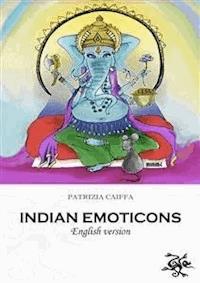
The statue of the god of abundance is pink, big-bellied and wears a golden crown. Under his long trunk he wears garlands of white, yellow or saffron flowers. At his feet, fires and wads of incense burn all day and night in his honor. At the end of August, the whole of India celebrates Ganesh, the elephant- headed god. Even the Hindu minorities in Arambol – a small village in the North of the catholic state of Goa, a colonial inheritance of Portugal – join together in celebration for a whole week.
Ganesh sits on his regal throne, and his messenger, a mouse, lies by his right foot. The Hindus pray to Ganesh for fertility and prosperity in their lives. They celebrate him with songs, firework displays, allegorical floats carrying massive images of him, men dancing wildly, drumming and offerings on the sea shore, until the final climax, when the many statues of Ganesh, all lined up on the beach, are lifted up and carried out to the sea, while the faithful eat popcorn that tastes of flowers.
In Arambol, among palm trees and returning monsoons, the procession begins in the street, with young boys sitting on the ground paying homage to the elephant god with their drums. Hundreds of people, in small familial groups, follow their personal statue – bought from local artists – in the dark alleys that lead to the beach, chanting prayers punctuated by sudden shouts, while in the sky all around fireworks explode just like New Year in Italy.
It is a gentle night, with a yellow crescent half-moon, and the people on the beach are singing and taking care to keep the fires lit in front of dozens of Ganesh statues. In some areas where the festival is more popular, for example in Mumbai, there are thousands of statues. And in the magical play of light and shade one can see women in bright colorful saris with overexcited children. Old people hold torches or arrange small parcels on the lap of the deity. Self-assured men break open coconuts for the puja as though they were made of butter. The coconut water is then poured onto the face and ears of the elephant-god, the last gesture before he is lifted up onto the men’s shoulders to be carried out to sea, followed by a shouting and exultant crowd.
The waves gently touch their feet, and the waters open to embrace the many statues of Ganesh, openly welcoming the gifts, offerings and hopes of these people. The statues, made of sand, will then disappear magically into the dreams of the sea.
*
Lesen Sie weiter in der vollständigen Ausgabe!
Lesen Sie weiter in der vollständigen Ausgabe!
Lesen Sie weiter in der vollständigen Ausgabe!
Lesen Sie weiter in der vollständigen Ausgabe!
Lesen Sie weiter in der vollständigen Ausgabe!
Lesen Sie weiter in der vollständigen Ausgabe!
Lesen Sie weiter in der vollständigen Ausgabe!
Lesen Sie weiter in der vollständigen Ausgabe!
Lesen Sie weiter in der vollständigen Ausgabe!
Lesen Sie weiter in der vollständigen Ausgabe!
Lesen Sie weiter in der vollständigen Ausgabe!
Lesen Sie weiter in der vollständigen Ausgabe!
Lesen Sie weiter in der vollständigen Ausgabe!
Lesen Sie weiter in der vollständigen Ausgabe!
Lesen Sie weiter in der vollständigen Ausgabe!
Lesen Sie weiter in der vollständigen Ausgabe!
Lesen Sie weiter in der vollständigen Ausgabe!
Lesen Sie weiter in der vollständigen Ausgabe!
Lesen Sie weiter in der vollständigen Ausgabe!
Lesen Sie weiter in der vollständigen Ausgabe!
Lesen Sie weiter in der vollständigen Ausgabe!
Lesen Sie weiter in der vollständigen Ausgabe!
Lesen Sie weiter in der vollständigen Ausgabe!




