


Erhalten Sie Zugang zu diesem und mehr als 300000 Büchern ab EUR 5,99 monatlich.
- Herausgeber: Nordisk Books
- Kategorie: Gesellschafts- und Liebesromane
- Sprache: Englisch
Inlands is the story of a young woman moving from Stockholm to a small community on the edge of the Arctic Circle, to her boyfriend's home town. But when their relationship ends shortly after her arrival, she decides not to return to the city. It's a brilliantly wrought piece of fiction, an account of our protagonists's struggles to adjust to new customs, with a quiet poetry to the descriptions of her experience in the alternating endless sunlight and bitter cold of the Swedish inlands.
Sie lesen das E-Book in den Legimi-Apps auf:
Seitenzahl: 179
Veröffentlichungsjahr: 2020
Das E-Book (TTS) können Sie hören im Abo „Legimi Premium” in Legimi-Apps auf:
Ähnliche




















Inlands
Published by Nordisk Books, 2020
www.nordiskbooks.com
Elin Willows, 2018. First published by Natur & Kultur.Published by arrangement with Partners in Stories Stockholm, Sweden.
This English translation copyright
© Duncan J. Lewis, 2019.
Cover design © Nordisk Books
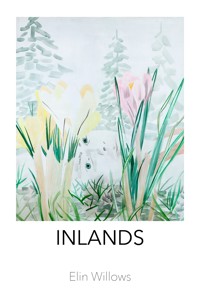
Cover art by Lise Blomberg
Printed and bound in Great Britain by Clays Ltd, Elcograf S.p.A.
A CIP catalogue record for this book is
available from the British Library
ISBN 9780995485266
ePub ISBN 9780995485297
This book is sold subject to the condition that it shall not, by way of trade or otherwise, be lent, resold, hired out or otherwise circulated without the publisher’s prior consent in any form of binding or cover other than that in which it is published and without a similar condition including this condition being imposed on the subsequent purchaser.
Also by Nordisk Books
Havoc
Tom Kristensen
You can’t betray your best friend
and learn to sing at the same time
Kim Hiorthøy
Love/War
Ebba Witt-Brattström
Zero
Gine Cornelia Pedersen
Termin
Henrik Nor-Hansen
Transfer Window
Maria Gerhardt
For my grandfather
Part one
1
In a place where people look at you. A place where it’s apparent that I’m new. I have to explain in the grocery store – yes, I live here, I’ve moved here.
The occasional welcoming reply in return, but I don’t feel accepted here. I understand that it will take more than that.
And next time I’m standing at the till comes the follow-up question: Why?
It’s summer and most of the tourists are from Norway. They arrive throughout the day and stop outside the shop with their enormous cars.
Family size packs of bacon, mild cheese and Coke. And afterwards, at the till: How much is the Petterøe’s?
It’s half the price of tobacco in Norway. They’re predictable, the Norwegians. They buy the same stuff every time and we laugh about it in the stockroom. Not because it’s so hilarious, but there isn’t that much else to laugh at. I don’t know my colleagues. I know what they are called and where some of them live, but I know nothing about them. But I learn. Laila, who holds short speeches during the fika and lunch breaks, about how it was better in the old days and how we should all get that immigrants aren’t doing our country any good. I think about how the only foreigners here are the Norwegians and wonder why no one argues with her. The others look away. Fredrik eats his snack consisting of canned tuna. Sometimes he puts the tuna on a cracker, other times he just eats it straight from the can with a fork. He doesn’t sit with the rest of us at the table; he leans nonchalantly against the counter. He’s usually the only guy.
I got the job here quickly. I had good references and Ann-Christine was retiring. After working here for a few months, I’ve become used to the routine. Deliveries are on Mondays and Thursdays and sometimes during the week we collect orders. They come in from older customers out in the neighbouring villages, those who aren’t able to do the shopping themselves. Their detailed lists often include things like weekly magazines or a bag of boiled sweets, which I always pack last. Then I think about how Iris or Karl or Gertrud will enjoy them. This might be the highlight of their week.
One day, just as I’ve taken down a bar of chocolate and a magazine for someone called Siv, I decide that my week also needs a highlight. It’s Saturday and the shop closes early, but the kiosk is open and I buy an interiors magazine and spend half an hour choosing pick ‘n’ mix.
The kiosk is known as ‘Olle’s’ but it does have a proper name, which I can never remember. The other shoppers always pass a friendly greeting to the guy who may be called Olof, but even after six months of Saturdays I don’t feel like one of them.
In both places, there’s equal surprise. Not over the fact that I want to live with him, but that I’m the one moving to him. Everyone wonders why we don’t do it the other way round. Why he doesn’t move to me. The people I’m moving away from don’t know where I’m going. No one has been here. Where I’m moving to, they’re also surprised. Why am I leaving that which I’m leaving, for this? And, before it’s over, the answer to the first question is him. And the answer to the second question is that we haven’t even considered doing it the other way round. That somehow this made sense for us. Us. Which no longer exists. And so the astonishment only increases when I stay, when I decide to not move back. But there isn’t a way back. I’ve made my decision and now I’ll live with it until the next decision. And I’m not ready for anything like that right now.
That which was once our decision, now feels like a different decision, now that it’s I alone who stand behind it. All that surprise is infectious. But at the same time, I become more sure of my choice. Or more sure that I’ll stick with it.
2
One day when I finish early, Lena, who normally works on the meat counter, says that she’s going to the flea market. She’s worked the early shift and when she notices that I’m on my way out the door she asks if I want to come too.
We drive to the small industrial park, through gritted snow that’s slowly melting away. It’s the end of April and hard to believe that it will ever be summer in this place. I had been here previously, with him, before I moved up, but I don’t remember it being so big. There are hundreds of pieces of furniture in the old warehouse. After a couple of laps, I decide to go for a small desk and a nightstand. I also find a rug for my large room and up against a wall there are VHS tapes loaded with home-recorded, British crime series. I choose seven tapes.
It’s only when I get to the till that I realise I haven’t seen prices on any of the items and it’s clear that there aren’t any when the man behind the counter asks what I’d like to pay. I’m confused by the question and finally name a price that the man at the till halves and rounds down.
Lena says that she’ll happily drive me home as it’s not really a detour – And you like crime shows I can see?
She’s obviously referring to the VHS tapes and continues: Have you seen the Norwegian series, ‘Murder Mysteries’?
I say that I must have missed it, and she explains that it’s really good and that she actually has all the episodes taped, because it’s on exactly when her son has football training that she has to drive him to. She says she’ll bring the tape into work tomorrow if I’m interested.
The winter is so cold here, but somehow still warm. The cold gives a kind of security and there’s no wind this far inland. The thermometer shows minus 28 and I have to buy new gloves. He drives me over to the neighbouring town. There are multiple shops to choose from and it can just about be considered a town. Now that we are no longer a couple, we talk differently to one another. Occasionally I almost forget to not use that voice which was only for him, but at the same time it feels good to avoid it. We can still talk to each other now, but not about the same things.
Even if my salary is low, I’m suddenly flush with money. I work five days a week, sometimes six and as I don’t have a car, I rarely leave the village, where there are no shops in which to spend money. Maybe I should get my own flat. Mona, from whom I’m renting a room, has said I can stay as long as I like and that she hasn’t planned on increasing the rent. It’s too low and I’m not sure if she is aware of it.
And I’m happy there but I sometimes wonder how long she will be able to put up with that large house.
Everyone knows so much about cars here. When I have my lunchbreak at the same time as Stina and Fredrik, they only talk about alloys.
3
I read in the local paper about a snow scooter accident in the neighbouring town. About how someone never came home from a trip out and how someone else worried for hours before they found out about the accident. Those hours of distress are described in so much detail. It’s almost as if I feel the panic myself while I read the article. It’s a familiar but unusual feeling, it’s been a while since I’ve felt it.
On the ice, I’ve often known the feeling, but it’s a long time ago, I was last out on the ice when I was with him. Before I moved here. I could never imagine driving on the frozen lakes, barely walk out there. But neither do I have my license. And I rarely get in a car with anyone else now. I stay in the village. There’s no anxiety here. No one I need to be anxious about. I’ve got myself. I avoid a lot of emotions by being here.
It’s ten o’clock and my coffee break is over. Fredrik chucks two banana skins in the bin and I fold up the paper.
Nature surrounds this place, but I still don’t make it out there. Not without a car. On my walks, I just wander around the village; I listen to music and lose track of time, especially now in the summer when the sun is constantly present. I walk along the streets and footpaths and along the roadside and I meet nobody and no flora.
Every now and then he calls and asks if I fancy going out. Then I say yes. We take the car and watch the country road verges flash by the windows, but the landscape barely changes. He usually chooses a layby next to the road, where he leaves the car, and we go for a walk.
This is where nature lives. This is where you find the tall trees, unfamiliar with cities and electric lights. This is where there are paths, created from years of arbitrary wandering, which criss-cross as they bed in. This is where there is a kind of freedom, which I haven’t yet understood or made use of. A kind of freedom which is much clearer from a distance.
4
No one moves here. This becomes clear long before I pack up the car with all my things, to move here. It leads to countless explanations as to why I’m leaving the city to move more than a thousand kilometres away. Love, that’s the simplest explanation. But it still seems odd that I’m moving. That’s what everyone thinks.
After it’s over, the best explanation is gone. It’s in the air already while we’re stuffing my things in the car. It’s like playing Tetris, trying to get everything in the car, even with the estate we’ve borrowed. It’s not that we’re arguing, but the ambience between us has changed. Living together in the same town, which we’ve worked for, eventually turns out to be the thing that bursts the bubble. We make the journey up in one stretch. We’d planned to stay over with friends on the way, but I understand why he suddenly says: We might as well just drive the whole way now.
It’s not a thousand unbearable kilometres. We know each other too well for it to be insufferable, but it’s unnecessary.
I don’t want to be the one who makes the first move, so I wait for him. It lasts about a week and my two rooms are inhabitable by the time he wants to speak. We don’t need to say a lot to one another. The unsaid is said and we both realise that this doesn’t change too much. And I end up staying; I’ve made my choice.
From time to time, I wonder what my teenage self would have thought of my moving here. Not because it’s a long time since I was a teenager, but because it isn’t. Some things change so quickly. Perspective can change.
I see the Northern Lights for the first time one evening when I’ve just started to get used to the loneliness. He calls me: You need to go outside now.
It’s freezing cold, as I learn it is on these nights, and I have way too few clothes on. But I stay outside. Against my better judgment, I’m enchanted and end up walking down to the lake for a clearer view. The green lights have the upper hand tonight. They cover the whole sky. I think about how this is something that I’ll want to remember and regret not having a camera with me, but immediately realise that it would never be the same in a photo.
The cold bites, so that the two pairs of gloves don’t quite cut it and I wish I was wearing thermals. The evening air is a tight film over my face. Suddenly, he’s standing next to me with a certain degree of anticipation, a certain degree of persuasion: ‘You must love this?’
And I do.
I go home with him and we drink tea and nothing more. Nothing more can happen between us ever again. We both know this, it’s not in the air, not in our bodies.
On the way home, I feel a kind of gratitude. The Northern Lights ended some time ago and have left behind a huge star-speckled sky. If I was freezing before, the cold is painful now, and I hurry along the path through the village.
When winter comes, I’ve been living in the room I’m renting for a year. There are actually two rooms, but one of them is more like a hallway, and just contains my desk, where I also eat breakfast. I always have dinner in the bed which also functions as a sofa in the larger of the two rooms. I watch TV.
5
You need to find another way to make yourself tired in the summer. Something other than nightfall. Because it doesn’t exist. We’re south of the arctic circle, but the sun doesn’t make it below the horizon before it’s up again. The light does not sleep.
It takes a while to get used to the eternal daylight. To get used to the peculiarly transparent light at night time.
Blinds don’t help. Eyes still too clear, alight.
I take the first paid leave of my life. Normally you’d have to wait until the second year of employment, but Sonia lets me take it anyway and suddenly I have two weeks without constraints. Two weeks with no outline.
The only thing I know is that I don’t want to leave here during my holiday. I don’t want to go home to my family yet and I can’t get away from here without a car. I stay here and let the days pass. Days and nights. They melt together, with the constant light filtering through the rolled-down blinds.
At the start there were a lot of looks. Long held looks which stick to my skin afterwards. Stay in my head. Before too, when I was with him here, I got those looks, but he was like a shield. The looks bounced off him and they weren’t as drawn out. I gained acceptance through him, because I was here with him. It went unquestioned, by his side I was welcomed. And he didn’t get the looks because they could speak to him, ask him questions. I get questions too, but more often I get those looks. And without him I don’t know who they are coming from.
I don’t tell anyone that my reason for moving here has gone, not directly at least. Especially not my family. I can’t be bothered trying to convince them or having to answer questions about when I’m coming home. This is my home now. I decided that a week after it was over. I’m here now.
I only tell them what’s happened after I get the job. I tell them in a way that it’s not quite clear when it happened. No one thinks to ask either and instead they tell me that I’m brave to stay here.
6
Calm on the lake. The great wide deep lake which gives the village a coastline that it doesn’t really have. It’s the evening and I go for a walk as usual, this time along the lake shore and he’s with me. He has called earlier today and asked how I was doing and what I’ve been up to over the summer. I tell him I’ve been working and don’t mention the holiday.
We haven’t seen one another for a few weeks and he’s tanned and wearing sunglasses, even though it’s unnecessary in the evenings when the sun is lower. I realise that he wants to say something, tell me something. He passes his hand through his hair, builds up to it: Listen – I’m going to be moving.
He’s got into a school I didn’t even know he had applied at and he’s moving to the coast, he tells me. The real coast, with a proper coastline. He hesitates, as if waiting for an approval from me, but I just say congratulations and that’s great and I think I also mean it.
We walk for a while without saying anything and finally we’ve walked for hours and the sun creeps down but we both know that it’ll soon turn and we turn and walk back to my place. He hugs me at the door and says bye.
And I know that it really is bye now.
I don’t think any more about it that night and when I wake up the next day, I ‘ve forgotten about it at first. It’s only when I’m buttering my toast that I come to remember that he’s leaving.
7
If you’re going out, you go to the Hotel. And people do go out, but I don’t. It’s Saturday and I’ve been to the kiosk to buy a magazine and pick ‘n’ mix. I’ve got one of the VHS crime mysteries on the TV. I’m wearing jogging bottoms and a freebie promotional t-shirt. I’m just stuffing a foam strawberry into my mouth when the first murder takes place and there’s a knock at the door. I pause the tape and assume it’s either him or a wayward drunk. But it’s Stina from work. Behind her in the autumn gloaming there’s a car idling, its lights shining through the damp air: Hey, we’re on our way to the Hotel and thought you might want to come along.
She was also working today, just like me and we didn’t chat more than usual, but maybe she hinted at the fact that she was going out this evening and maybe I hinted at the fact that I might like to tag along. I notice her looking at my clothes, notice the artificial strawberry taste in my mouth: I’ll just get changed.
The guy driving the car is hopefully sober and introduces himself as Kalle. I recognise him of course, even if we’ve never spoken. You know people, here. I’ve met Stina’s friend Jenny before, at the shop, and she sits next to me in the back in a short, black dress. On the floor of the car are beer cans and other rubbish, as well as Jenny’s pin-sharp heels. The music is loud enough that we avoid having to talk. I close my eyes in the darkness.
You don’t walk to the Hotel. You don’t really walk anywhere here, but especially not to the hotel because it’s at the top of the hill. The view is described with words like breathtaking and it’s not far from the truth if you’re into nature. Of course you can see the whole village from here, but you can also see how small it is. From here you understand that the area is dominated by nature. The lake, the mountain, the wide vistas, the forest.
Kalle parks and we go in. We leave our jackets in the car but cold skin soon warms up, becomes almost clammy, it’s a full house tonight. It’s packed every Saturday and I recognise almost everyone here. They’re either customers or they work at the petrol station or friends of these people that I don’t know personally.
Two texts when the news has gotten out. From home. One comforting and the other more questioning; you’ll be coming home now? But I’m not. That’s the one thing I’ve made my mind up about. I answer both briefly. A thanks and an explanation that I have a job here now.
When I worked out the explanation, it was clear in my mind and when someone calls to ask the same question afterwards, it sounds true when I give the same answer.




