


Erhalten Sie Zugang zu diesem und mehr als 300000 Büchern ab EUR 5,99 monatlich.
- Herausgeber: Paraclete Press
- Kategorie: Religion und Spiritualität
- Sprache: Englisch
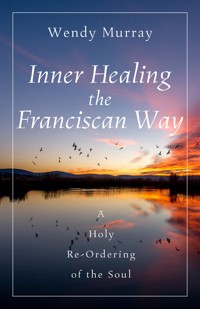
For those who feel broken, lost, or spiritually depleted, Inner Healing the Franciscan Way offers a roadmap to rediscovering God's presence and finding restoration and healing. At some point, we all experience loss or disappointment—when our best efforts and carefully laid plans simply fall apart. As we struggle to put the pieces back together through sheer willpower, the intense loneliness can be crushing. Fortunately, there is another path—the healing and empowering force of the Franciscan Way of life. Through the lens of her difficult journey through divorce and professional upheaval, Wendy Murray explores the surprising road to spiritual rehabilitation she discovered through Saint Francis of Assisi and his timeless principles of poverty, chastity, and obedience. These monastic virtues, often misunderstood in today's world, hold the power to refashion every aspect of our lives—physical, emotional, psychological, spiritual—under a new and holy re-ordering that brings us into health and wholeness. Blending memoir, theology, and practical wisdom, this book is a lifeline for anyone who feels they are sinking under the weight of hopelessness. Inner Healing the Franciscan Way is an invitation to discover that a shattered life isn't the end of your story, although it may feel that way. It is the beginning of a new story. This is a book for those who dare to believe there is hope, even and especially when life falls apart.
Sie lesen das E-Book in den Legimi-Apps auf:
Seitenzahl: 236
Veröffentlichungsjahr: 2025
Das E-Book (TTS) können Sie hören im Abo „Legimi Premium” in Legimi-Apps auf:
Ähnliche







Praise for Inner Healing the Franciscan Way
With this volume, Wendy Murray expresses the heart and mind of the great saint to aid us in our Christian living today. I was led smoothly from life to vows but was grabbed by the insights of “simplicity” as a virtue to cultivate. This is going to be my new “special gift” to give to relatives and new friends.
—Scott W. Sunquist, President, Gordon-Conwell Theological Seminary and author of several books, including The Shape of Christian History: Continuity and Diversity in the Global Church
In Inner Healing the Franciscan Way, Wendy Murray blends a lucid understanding of history, theology, and Scripture with threads of a compelling personal narrative to form a book that is as captivating as it is enriching. I’ve long been tutored by Murray’s journalistic work, but in the pages of this book I was challenged to walk in the way of St. Francis in our time.
—Jeff Crosby, author of The Language of the Soul and World of Wonders
Wendy Murray, in this insightful book, demonstrates how Inner Healing the Franciscan Way can infuse into our souls a clear and holy path during our own personal sorrows and victories of the spirit. This is a book that matches the wisdom of St. Francis with a contemporary writer’s personal revelations.
—Christopher de Vinck, author of Things That Matter Most: Essays on Home, Friendship, and Love
In Inner Healing the Franciscan Way, Wendy Murray insightfully notes the masculine (Francis) and feminine dimensions (Clare) of the Franciscan vision of life and how they found her after a painful period in her life. This wonderful book highlights the perennial practical wisdom of thirteenth-century Franciscan spirituality that helps re-order the soul in the twenty-first century.
—Albert Haase, OFM, author of The Persistent God: A Guide to Deepening Prayer
In Inner Healing the Franciscan Way, Wendy Murray shares a life-changing discovery: You don’t have to be a vowed religious—or even Catholic—to appreciate the sheltering constraints of poverty, chastity, and obedience, or to recognize the uplifting power of humility, charity, simplicity, and wisdom. Murray unpacks the thirteenth-century wisdom that met her in a place of despair and set her on a path of healing. Contemporary seekers bereft of consolation may draw hope and guidance from this inspiring witness to the transformative practice of Franciscan spirituality.
—Christine Marie Eberle, author of Finding God Along the Way: Wisdom from the Ignatian Camino for Life at Home
Accessibly written, this book connects ancient and modern thinkers, clarifying Franciscan theology and practice. I especially loved the way the author leads us through the Canticle of the Creatures in ways that help us understand how simplicity and profundity go hand in hand. This book will speak especially to the broken and the lost.
—Keren Dibbens-Wyatt, Christian contemplative and author of Recital of Love
That Wendy Murray wrote Inner Healing the Franciscan Way “as one whose life and belief system were shipwrecked and who found an improbable rescue through an endearing saint,” speaks to how the faith, the wisdom, and the practices of St. Francis and St. Clare have continued to shape and save pilgrims through the centuries.
—Caryn Rivadeneira, author of Saints of Feather and Fang
As I read Wendy Murray’s Inner Healing the Franciscan Way, I found myself longing to be free from the myriad distractions and ambitions that cloud my vision and keep me from being close to the God I profess to love. I found in this book practical and meaningful ways to apply Franciscan vows and virtues to my very modern life. I highly recommend Inner Healing the Franciscan Way.
—Fernando Ortega, acclaimed singer-songwriter of Christian music
With lyrical prose and deep transparency, Wendy Murray intertwines the lives of St. Francis and St. Clare with her own journey of recovery from searing heartbreak. The result is an engaging read, with much to ponder.
—Gwenfair Walters Adams, PhD, Professor of Church History and Spiritual Formation at Gordon-Conwell Theological Seminary
2025 First Printing
Inner Healing the Franciscan Way: A Holy Re-Ordering of the Soul
ISBN 978-1-64060-974-7
Copyright © 2025 by Wendy Murray
Unless otherwise noted, Scripture quotations are taken from the COMMON ENGLISH BIBLE. © Copyright 2011. COMMON ENGLISH BIBLE. All rights reserved. Used by permission. (www.CommonEnglishBible.com).
Scripture quotations marked KJV are taken from the King James Version of the Bible.
Scripture quotations marked NIV are taken from the Holy Bible, New International Version®, NIV®. Copyright © 1973, 1978, 1984, 2011 by Biblica, Inc.™ Used by permission of Zondervan. All rights reserved worldwide. www.zondervan.com The “NIV” and “New International Version” are trademarks registered in the United States Patent and Trademark Office by Biblica, Inc.®
Scripture quotations marked NRSVue are taken from the New Revised Standard Version Updated Edition. Copyright © 2021 National Council of Churches of Christ in the United States of America. Used by permission. All rights reserved worldwide.
The San Damiano Books name and logo are trademarks of Paraclete Press.
Library of Congress LCCN number 2025016762
10 9 8 7 6 5 4 3 2 1
All rights reserved. No portion of this book may be reproduced, stored in an electronic retrieval system, or transmitted in any form or by any means—electronic, mechanical, photocopy, recording, or any other—except for brief quotations in printed reviews, without the prior permission of the publisher.
Published by Paraclete Press
Brewster, Massachusetts
www.paracletepress.com
Printed in the United States of America
TO KATE
Where swaddled in strips
Of a torn shirt
Just as an angel told
He shines in the dark valley
—Anne Porter
ALSO BY WENDY MURRAY
Clare of Assisi, Gentle Warrior (2020)
A Mended and Broken Heart, The Life and Love of Francis of Assisi (2008)
On Broken Legs (2004)
Facing Forward (2002)
Sacred Journeys (2002)
Day of Reckoning (2001)
The Warrior King (2010)
CONTENTS
INTRODUCTION
——— Part One ———
FINDING FRANCIS
WHO WAS FRANCIS?
——— Part Two ———
VOWS
INTRODUCTION TO THE VOWS
CHAPTER ONE
POVERTY
CHAPTER TWO
CHASTITY
CHAPTER THREE
OBEDIENCE
——— Part Three ———
VIRTUES
INTRODUCTION TO THE VIRTUES
CHAPTER FOUR
HUMILITY
CHAPTER FIVE
CHARITY
CHAPTER SIX
SIMPLICITY
CHAPTER SEVEN
WISDOM
CONCLUSION
ACKNOWLEDGMENTS
APPENDIX
WENDY’S RULE
GLOSSARY OF TERMS
ABBREVIATIONS
NOTES
Inner HealingtheFranciscan Way
We have been called to heal wounds, to unite what has fallen apart, and to bring home those who have lost their way.
—St. Francis
INTRODUCTION
I will make the blind walk a road they don’t know, and I will guide them in paths they don’t know. But I will make darkness before them into light and rough places into level ground. These things I will do; I won’t abandon them.
—Isaiah 42:16
It took the wreckage of my life to bring me to the place where I could see—if achingly—the healing and empowering force of Franciscan vows and virtues. It took losing all that had once defined my life—my role as a wife, my profession as a national journalist, my intimacies and my income, the power of my station, and the associated losses and humiliations. All of it. Mine was a ruined soul.
The following pages explore new themes about spiritual rehabilitation which came to me through such struggles. I write not to elevate my story (this is not about me) but to lay bare the level of human desolation I confronted in a way that might offer hope for others whose lives, for whatever reasons, have similarly collapsed. The point is, that collapse—any collapse—isn’t the end of your story, though it may feel that way. It is the beginning of a new story.
As I ponder the landscape of our times, I am seeing an ocean of seeking, damaged, and ruined souls who seem as lost as I once was, striving and asserting a form of human will in the effort to save themselves, even while nearly collapsing under the weight of so lonely an enterprise. Through it all, over time, I found the healing and empowering force of the Franciscan Way of life. I came to understand it through embodying Francis’s own vision for his movement as expressed in the vows and virtues. The model that St. Francis forged for his (then) new and innovative Order lends graces that remain operative for hungry and searching souls even today.
My friend the late Fred Buechner wrote once, “It slays us all, they call it life.” And, while the sentiments I impart here arise from a place of hope for those whom life has “slain,” it is my prayer that these explorations will scratch out a path toward healing and renewal for any who long for the sacred journey toward higher holy allegiances. It is for those who dare to believe there is hope, even and especially for a ruined life. What follows in these pages is an exploration as to how all aspects of our human experience can be consecrated—the physical, the emotional, the psychological, the spiritual, the material, even the sexual. Each, in its turn, can be refashioned under a new and holy re-ordering. Then it can be said truly, “Don’t you know that … you don’t belong to yourselves? You have been bought and paid for, so honor God with your body.”1
Who Are the Franciscans?
The Franciscan Order, named for its founder, Francis of Assisi (1182–1226), showed itself at its inception as a rag-tag band of men and women wearing simple earthy tunics tied with a three-knotted rope dangling from the waist and with tonsured hair (see the Glossary). Francis envisioned his brothers as a fellowship of the knights of the Round Table who were called to live a life of chivalry in the hermit’s garb of penance. This picture evolved even during Francis’s own lifetime. And over subsequent years, decades, and centuries, the Order experienced internal splintering and realignment. By the sixteenth century the three branches of Franciscanism were fully defined and operating in their respective spheres.2 These branches included the Friars Minor Observants (brown tunic), currently the second largest Order in the Roman Catholic Church, second only to the Jesuits; the Friars Minor Capuchin (brown tunic, often with long beards), the fourth largest; and the Friars Minor Conventuals3(gray or black tunic), the branch that most rigorously encourages education and the building of universities. The Order also includes women, as initiated by Clare herself, known as the Poor Clares or “the Second Order,” as well as the Third Order (tertiaries), comprised of lay men and women. It is worth noting that the Franciscans have more canonized and beatified saints than members of any other Catholic Order.
The signature feature of the Franciscans when Francis initiated the Order was their threefold vows of poverty, chastity, and obedience. For Francis, these vows represented the imposition of outward constraints that functioned as a wedge to halt the grinding gears of habits of mind and body that lead to self-destruction. He imposed them upon himself, first and foremost, and in turn, seeing the transformative power such constraints brought to his new life and spiritual vision, implemented them as a requirement for those who would similarly assume the rustic tunic.
Francis further exalted the virtues, of which he said, “You most holy Virtues … each [of you] puts to rout vices and sins.” In contrast to the vows, which impose constraints from the top down, the virtues represent an ascent from the bowels of human reckoning to an inward and upward striving toward holiness. The result of these operations in tandem on the human soul—the constraints of the vows and the ascent of the virtues—is the healing of lives. And not healing only, but consecration. Holiness can rise from the last desperate and cynical corners of a shipwrecked life. There is hope, in other words. And the following chapters explore both the vows and the virtues and their respective pathways to healing and holiness.
The Destiny of the Seed
Such healing is written into the code of the universe, as I came to understand in my work as a flower farmer. Simply plant a seed and you will see it. You will understand that a new, perfect, wondrous life is the destiny of those minuscule seeds, mere flecks of dust, that have been cast off, buried in the ground, and trodden under foot. This is the story of every seed. The miracle of the seed is that the very trodding of it, its death and burial, is the portal into its realizing its destiny—it is destined to become a perfect, unique, and fully formed flower.
Yours is the destiny of the seed. You yourself will become that flower. When (and only when) the seed of your life is buried in its rightful place, surrendered to the invisible forces that break through the decay, God does something altogether original with the fragments. I assure you, the exercise of the vows and virtues will get you there.
When I’ve considered my desire to extol the graces of Franciscan spirituality, I’ve been compelled to ponder the vows of poverty, chastity, and obedience—vows Francis required of those who would join his Order. I ask myself: How could this form of devotion appeal in any way to a religious seeker? As I’ve studied at great length the lives of both St. Francis and St. Clare, I’ve found it self-evident that “Franciscanism” as a concept is wider and deeper than those signature threefold vows. Therefore, the Franciscan Way is accessible and even desirable to anyone, regardless of worldly station or Christian identity. Francis himself realized this when his movement was spreading. Many desired to live in the way of his devotion but had already given themselves in marriage and secular vocation. What was to become of those pilgrims who longed to live the Franciscan Way but whose circumstances disallowed it? Rather than eschew these earnest seekers, Francis answered their cry by establishing what he called “Third Order” Franciscans, or tertiaries, comprised of both lay men and lay women.4
The origin of the Third Order arose as a result of a season of prayer Francis undertook late in his life when he questioned whether he should withdraw from active ministry and retreat to a cave as a contemplative. He solicited the advice of a few of his closest companions, including Brother Masseo and Clare:
… [H]e called Brother Masseo into the woods, and, baring his head, crossing his hands and kneeling he asked: “What does our Lord Jesus Christ wish me to do?” Brother Masseo answered that the blessed Christ’s answer to Brother Sylvester and to Sister Clare and her companion was the same: “He wants you to go out preaching, because God did not call you only for yourself, but also for the salvation of others.” Then the hand of the Lord came over Saint Francis. In a fervor of spirit he rose up completely on fire with the power of the Most High, and said: “In the name of the Lord, let’s go!” … From that time on he thought about making a Third Order for the salvation of everyone everywhere.5
Francis accommodated the longings of those dear secular people who desired to follow his way, but whose circumstances mitigated against adopting the three signature features of his Order.
Relinquishment Is the Way to Holiness
It is my belief that people, consciously or not, desire something to live for—and not to “live for” only—but to sacrifice for, perhaps to die for. The sense is woven into the human fabric that there is a reason we are here, that our lives are not random. We belong to something, and the great challenge of human imagining is to winnow through the static noise of culture and take hold of the nub of truth as to why we exist. The key for Francis and those who followed him lay not in what one could attain as human pilgrims, but in what is freely relinquished for a higher aspiration. If St. Francis has taught me anything, he has taught me the value of what we give up. “Value” is not the right word, but it is as close as we can come to understanding that true power arises in what is freely relinquished. It is a force that is invisible and in some way immeasurable. Francis would assure us that there is great fulfillment to be had, but it does not arise through self-referring aspirations. It arises through self-relinquishment, giving things up, what some might call “mortifications.” Because the more we shed of “self” the more we are postured to don the new attire of God’s glory, an attire that is both invisible and intimate. It comes to us only in the act of open-palmed yielding.
I want to be clear that when I say “relinquishment” I am not entertaining thoughts of the kind of emptying espoused in Buddhism where relinquishment leads to nirvana, a state of “nothingness.” In the Franciscan Way, “relinquishing” is the act of willingly giving up ownership of the terms of one’s life and allegiances so that other new, higher, deeper, and more robust terms can realized. It is not an exercise to enter the realm of nothingness; it is an act of will that embraces a more pure form of holiness under the creative and robust operations of an intimate God, who requires something of us. Holiness is a mystery. It is attained only when the human will is surrendered to the operations of the Spirit of God. The limited human purview is not sufficient to wage a campaign toward holiness.
Thus, in the Franciscan Way, we are summoned to bow before him in humility and to accept whatever terms he asks of us in order to meet the challenge of his call upon us. I sit in my room and measure the parameters of my limited life and ponder my own insignificance and consider that we are all, in some way or another, fleeing the feeling of insignificance or feeling lost, depressed, or otherwise purposeless. What is the point? What is the purpose of our existence? Why are we here? What does it all mean? The beginning point of the answer to these age-old questions lies in our willingness to stop cleaving to our own version of what life means. Jesus said that whoever would save his life must lose it. In other words, let go of your ideas about what will save you. We cannot save ourselves, and the more we try, the farther we will wander from finding true salvation.
Franciscan Themes
There exist certain themes in Franciscan spirituality that enable any seeker to begin the process of wearing the mantle even if his or her station in life disallows adopting these strict vows. “The Franciscan Way” is a layperson’s scheme for appropriating a unique quality of life, bearing its identity as Franciscan, yet opening a way for lay Catholics, lay Protestants, and even non-Christians to join that path. The Franciscan Way is not a religious Order; it is a way of life defined by key themes in Francis’s understanding of God, creation, and humanity. All of this can be adopted by anyone desiring a deep and purifying spiritual ascent.
This book is laid out in three parts. Part One highlights the way Francis hijacked my own spiritual journey and shaped my later life. It also includes a brief biography of Francis. (Elsewhere and throughout the book, when dealing with biographical material, I refer frequently to portions drawn from my biography of St. Francis, titled A Mended and Broken Heart, the Life and Love of Francis of Assisi.6) Part Two examines the Franciscan vows—poverty, chastity, and obedience, exploring how these expressions can be understood and applied in modern times for those outside the official Order and in keeping with the spirit of the Third Order Franciscans. Part Three focuses on the virtues that Francis himself exalted and modeled for those who bore the name “Franciscan.”
It is also important to note that, beyond the sentiments of St. Francis and St. Clare, I make generous use of insights from a variety of saints and spiritual writers. This is because the Franciscan Way, while built upon the apparatus of Franciscan operations and assertions, further embodies a willingness to glean insights from a wide fellowship of saints and strugglers, all of whom point the way to higher ground (spiritually speaking), as Francis himself did, and which his principles accommodate. Francis drew inspiration from many others who went before him, especially the Irish saints. So while the Franciscan principles put forth in this volume are built upon the bones that Francis outlined for his Order, the lifeblood of its operations is embellished by a company of others who trod the pathway to holiness, among them St. Francis de Sales, Thomas Merton, and even Fred “Mister” Rogers.
If Franciscan spirituality is nothing else, it is an exercise in the particulars. Adopting these vows and cultivating the virtues enabled Francis and his followers to give concrete expression to these particulars and to grow in interior devotion in a uniquely Franciscan Way. I understand that living the Franciscan Way may not be for everyone. But it is the right fit for some, maybe you. Those on whom life has worked its ravages may find its consolations especially appealing. For those who desire spiritual ascent and greater clarity, the Franciscan Way shows a way forward—and not forward only but forward by means of miraculous, inexplicable, and invisible operations that ultimately land a striving soul in a place of peace, rest, and, in time, glory. If you find yourself in the unfortunate situation of having been betrayed, bereft, or otherwise overthrown by the “changes and chances of mortal life,”7 the Franciscan Way bids you to hold on. Francis will find you even as he found me. You’ll find your way through by the hand of a faithful, tested, and loving guide. It is my prayer that this short book will help you receive such graces.
Part One
FINDING FRANCIS
Now, at last, tired of being misled, entrust to the Truth all that the Truth has given to you and nothing will be lost. All that is withered in you will be made to thrive again. All your sickness will be healed.
—St. Augustine
The moment that signaled my unwitting transition from conventional evangelical piety to “the Franciscan Way” occurred in a remote chapel nestled in the crag of a mountain above the town of Assisi. Francis himself had often retreated to this hermitage, also known as Eremo delle Carceri (Hermitage of the Caves). It was the year following my divorce, and I described it in a book I wrote at that time:
… [W]e hiked the upper ridge of Mount Subasio, where Francis had walked many times. Hidden within its beech forests and down winding rocky pathways we took our lunch at a hermitage where Francis often retreated for solitude. I went into a chapel to pray, the only one there not bedecked in a nun’s habit of black and white. Bending my aching legs to the hardwood kneeler, I knew I’d never be a nun. I was a hiker, in pain at the moment, my backpack near me on the pew, my boots scraping, shirt smelling, my walking stick within reach. I caught the breeze from an opened window and heard myself pray … “What does someone like me have to do with Francis?”
The nuns didn’t begrudge me my weeping. In a way, I wanted to laugh. I couldn’t help thinking I’d taken on a life of poverty, chastity, and obedience without ever joining the Poor Clares!8
The earliest days of my Christian sojourn were not marked by Franciscan devotion or even by Catholicism, but by evangelical pietism. I was a product of the “Jesus movement” of the 1970s, and the majority of my youth and early adult life was shaped by that faith expression. My spontaneous conversion in 1972 was both authentic and unsolicited. I had just turned 16 and sat alone on my bed in a state of great sorrow due to a variety of specific reasons. They were the same kinds of reasons for anyone’s sorrow: damaged lives and practical consequences—children left crying alone on their beds.
The hand of God reached down from his heavenly seat and counted my tears as precious. He lifted my face, and the tears that fell thereafter bore the graces of the name of Jesus. I barely knew the name. I had no Bible. The World Book Encyclopedia sufficed to set me on my way. In time, the accoutrements of Christian devotion subsumed my life, and I embraced them wildly.
I became known among my peers as a Jesus Freak, a name I bore proudly. At that time, in the early 1970s, a new movement was arising, and I was a small part of it. The movement itself caused me to feel that I was part of something big—at least bigger than my insignificant life. It was written of in major media: “The Year of the Evangelical,” and so forth. Anyway, the seed of faith had been planted that day on my bed, and thereafter forces began to do their work with the effect of bringing forth a form of life that defined my days.
In order for a seed to germinate, that is, for the external shell to yield to the force of life arising out of it, certain conditions must be met. In the case of the seed of my newly emerging faith, those conditions moved from what I gleaned from the WorldBook Encyclopedia to acquiring a real Bible, I don’t remember how or from whom. Nor do I remember which version I read. At that time the notion of Bible “versions” was beyond me. I attended a national youth conference at which I heard Billy Graham speak and where my faith became strangely animated by the idea of reading a small booklet outlining simple “laws” to total strangers, people in movie theaters, that would translate their hopeless lives to a world of light and abundance, right there in the fifth row holding a box of popcorn. I also found a dynamic young church where the pastor’s preaching felt like cleansing water on a parched soul. These conditions surrounded that living seed, and a life burst forth in the form of evangelical devotion. Enthusiasms heightened, being tempered only slightly by words spoken by Billy Graham at the youth conference that struck me then and strike me still: “It is not easy to be a New Testament Christian.” Of course then I took it to mean that the person in the movie theater to whom I was presenting the spiritual laws would turn a cold shoulder and rebuff me. It did mean that, alas. But it meant much more than that too, as comes to be understood by any Christian who perseveres.
My evangelical fervor underwent a great reckoning when my 24-year marriage to a pastor collapsed. Here I must digress in order to lay bare the contours of a broken life that set the stage for the spiritual turn I was to take under the tutelage of St. Francis.
Things Fall Apart
Tolstoy said all happy families are alike, and each unhappy family is unhappy in its own way. The same is true of marriages and, alas, the dissolution of marriages. Each dissolution is unhappy in its own way, and the dissolution of an evangelical-Christian marriage is perhaps the unhappiest of all. It is a sorrow that finds little solace in the world. Two people, who in a declaration under God have abided as one and forged an original and unique existence, suffer ruination before the eyes of horrified onlookers, be they friends or family. Pat Conroy in his essay “Anatomy of a Divorce”9 says divorces should be conducted in “abattoirs, surgical wards, blood banks or funeral homes.” Yet they are played out in real time amid colonies of real people, human souls whose inner moorings will be forever altered. There is no uncreating what was made in a marriage and which, in divorce, is unmade.
When my husband and I married as young college students, we held out all the optimism of youth and zeal for evangelical devotion. We set our course toward mission and service and bent all decisions to that end.




