


48,99 €
Mehr erfahren.
- Herausgeber: John Wiley & Sons
- Kategorie: Wissenschaft und neue Technologien
- Sprache: Englisch
This title is a much needed update of Barbosa's self-published Manual of Basic Techniques in Insect Histology. It is a laboratory manual of 'traditional' and 'modern' insect histology techniques, completely revised using cutting-edge methodology carried out today and includes new immunohistochemical techniques not previously looked at.
Insect Histology is designed as a resource for student and professional researchers, in academia and industry, who require basic information on the procedures that are essential for the histological display of the tissues of insects and related organisms.
Sie lesen das E-Book in den Legimi-Apps auf:
Seitenzahl: 558
Veröffentlichungsjahr: 2014
Ähnliche



















Table of Contents
Title Page
Copyright
Preface
Acknowledgements
Introduction
About the companion website
Chapter 1: Problems of sclerotized chitin: Softening insect cuticle
1.1 Introduction
1.2 General Methods
1.3 Preparations of insect eggs
1.4 Double Embedding Techniques
References
Chapter 2: Fixation
2.1 Introduction
2.2 Aldehyde based fixatives
2.3 Protein denaturing
2.4 Picric acid based
2.5 Mercuric chloride based
2.6 SEM/TEM
2.7 Other
References
Chapter 3: Dehydrating, clearing, and embedding
3.1 Dehydration
3.2 Clearing
3.3 Embedding General
3.4 Embedding – Ester Wax
3.5 Embedding – Methacrylate
References
Chapter 4: Staining
4.1 Single-contrast staining – Carmines
4.2 Single contrast staining – Nuclear Stains
4.3 Single contrast staining – General Stains
4.4 Single contrast staining – Golgi
4.5 Single contrast staining – Eggs
4.6 Single contrast staining – Silver Stains
4.7 Polychrome staining techniques – General
4.8 Polychrome staining – Brain/Nerve
4.9 Polychrome staining – blood
4.10 Single contrast procedures for chitinous material
4.11 Polychrome staining procedures for chitinous material
4.12 Polychrome staining for chitinous material – KOH
4.13 Polychrome staining for chitinous material – Differential staining of Individual Organs
4.14 Staining of specific tissues
4.15 Two dye combinations
References
Chapter 5: Immunohistochemical techniques
5.1 Introduction
5.2 General immunostaining techniques
5.3 Immunolabeling of samples for Transmission Electron Microscopy (TEM)
5.4 Proliferation assays
5.5 Methods to detect specific proteins
References
Chapter 6: Use of genetic markers in insect histology
6.1 Introduction
6.2 Inducible genetic markers
6.3 Mosaic gene expression
6.4 Fluorescent markers for live imaging and kinetic microscopy
References
Chapter 7: Fluorescence
7.1 Introduction
References
Chapter 8: Mounting
8.1 Introduction
References
Chapter 9: Preparation of whole mounts
9.1 Introduction
References
Chapter 10: Preparation of whole mounts for staining
10.1 Introduction
10.2 Detection of NAPDHd
10.3 SEM
10.4
In situ
hybridization
References
Chapter 11: Preparation of genitalia, mouthparts and other body parts
References
Chapter 12: Preparation of chromosomes
References
Chapter 13: Preparation of other specific insect organs and tissues
13.1 Introduction
References
Appendix: Dissecting fluids and saline solutions
A.1 Introduction
A.2 Physiological solutions
References
Index
End User License Agreement
Pages
ix
xi
xiii
xiv
325
326
327
328
329
330
331
1
2
3
4
5
6
7
8
9
10
11
12
13
14
15
16
17
18
19
20
21
22
23
24
25
26
27
28
29
30
31
32
33
34
35
36
37
38
39
40
41
42
43
44
45
46
47
48
49
50
51
52
53
54
55
56
57
58
59
60
61
62
63
64
65
66
67
68
69
70
71
72
73
74
75
76
77
78
79
81
82
83
84
85
86
87
88
89
90
91
92
93
94
95
96
97
98
99
100
101
102
103
104
105
106
107
108
109
110
111
112
113
114
115
116
117
118
119
120
121
122
123
124
125
126
127
128
129
130
131
132
133
134
135
136
137
138
139
140
141
142
143
144
145
146
147
148
149
150
151
152
153
154
155
156
157
158
159
160
161
162
163
164
165
166
167
168
169
170
171
172
173
174
175
176
177
178
179
180
181
182
183
184
185
186
187
188
189
190
191
192
193
194
195
196
197
198
199
200
201
202
203
204
205
206
207
208
209
210
211
212
213
214
215
216
217
218
219
220
221
222
223
224
225
226
227
228
229
230
231
232
233
234
235
236
237
238
240
239
241
242
243
244
245
246
247
248
249
250
251
252
253
254
255
256
257
258
259
260
261
262
263
264
265
266
267
268
269
270
271
272
273
274
275
276
277
278
279
280
281
282
283
284
285
286
287
288
289
290
291
292
293
294
295
296
297
298
299
300
301
302
303
304
305
306
307
308
309
310
311
312
313
314
315
316
317
318
319
320
321
322
323
324
333
334
335
336
337
338
339
340
341
342
343
344
344
345
346
347
Guide
Cover
Table of Contents
Preface
Begin Reading
List of Illustrations
Fig. 1.1
Fig. 1.2
Fig. 1.3
Fig. 1.4
Fig. 1.5
Fig. 1.6
Fig. 2.1
Fig. 2.2
Fig. 2.3
Fig. 2.4
Fig. 2.5
Fig. 2.6
Fig. 2.7
Fig. 2.8
Fig. 2.9
Fig. 2.10
Fig. 2.11
Fig. 3.1
Fig. 3.2
Fig. 3.3
Fig. 3.4
Fig. 3.5
Fig. 4.1
Fig. 4.2
Fig. 4.3
Fig. 4.4
Fig. 4.5
Fig. 4.6
Fig. 4.7
Fig. 5.1
Fig. 5.2
Fig. 5.3
Fig. 5.4
Fig. 5.5
Fig. 5.6
Fig. 5.7
Fig. 6.1
Fig. 6.2
Fig. 6.3
Fig. 6.4
Fig. 6.5
Fig. 6.6
Fig. 6.7
Fig. 6.8
Fig. 6.9
Fig. 6.10
Fig. 6.11
Fig. 6.12
Fig. 7.1
Fig. 7.2
Fig. 7.3
Fig. 7.4
Fig. 7.5
Fig. 7.6
Fig. 7.7
Fig. 8.1
Fig. 8.2
Fig. 9.1
Fig. 9.2
Fig. 9.3
Fig. 9.4
Fig. 9.5
Fig. 10.1
Fig. 10.2
Fig. 10.3
Fig. 10.4
Fig. 11.1
Fig. 11.2
Fig. 11.3
Fig. 12.1
Fig. 12.2
Fig. 12.3
Fig. 12.4
Fig. 12.5
Fig. 12.6
Fig. 13.1
Fig. 13.2
Fig. 13.3
Fig. 13.4
Fig. 13.5
List of Tables
Table 2.1
Table 2.2
Table 2.3
Table 2.4
Insect Histology
Practical Laboratory Techniques
Pedro Barbosa
Department of Entomology, University of Maryland, College Park, MD
Deborah L. Berry
Department of Oncology, Co-Director, Histopathology and Tissue Shared Resource, Lombardi Cancer Center, Georgetown University, Washington, D.C.
Christina S. Kary
Genes & Development, Cold Spring Harbor Laboratory Press, Woodbury, NY
This edition first published 2015 © 2015 by Pedro Barbosa, Deborah L. Berry and Christina S. Kary
Registered office: John Wiley & Sons, Ltd, The Atrium, Southern Gate, Chichester, West Sussex, PO19 8SQ, UK
Editorial offices: 9600 Garsington Road, Oxford, OX4 2DQ, UK
The Atrium, Southern Gate, Chichester, West Sussex, PO19 8SQ, UK
111 River Street, Hoboken, NJ 07030-5774, USA
For details of our global editorial offices, for customer services and for information about how to apply for permission to reuse the copyright material in this book please see our website at www.wiley.com/wiley-blackwell.
The right of the author to be identified as the author of this work has been asserted in accordance with the UK Copyright, Designs and Patents Act 1988.
All rights reserved. No part of this publication may be reproduced, stored in a retrieval system, or transmitted, in any form or by any means, electronic, mechanical, photocopying, recording or otherwise, except as permitted by the UK Copyright, Designs and Patents Act 1988, without the prior permission of the publisher.
Designations used by companies to distinguish their products are often claimed as trademarks. All brand names and product names used in this book are trade names, service marks, trademarks or registered trademarks of their respective owners. The publisher is not associated with any product or vendor mentioned in this book.
Limit of Liability/Disclaimer of Warranty: While the publisher and author(s) have used their best efforts in preparing this book, they make no representations or warranties with respect to the accuracy or completeness of the contents of this book and specifically disclaim any implied warranties of merchantability or fitness for a particular purpose. It is sold on the understanding that the publisher is not engaged in rendering professional services and neither the publisher nor the author shall be liable for damages arising herefrom. If professional advice or other expert assistance is required, the services of a competent professional should be sought.
Library of Congress Cataloging-in-Publication Data
Barbosa, Pedro, 1944-
Insect histology : practical laboratory techniques / Pedro Barbosa, Deborah L. Berry, Christina S. Kary. -- First edition.
pages cm
Includes bibliographical references and index.
ISBN 978-1-4443-3695-5 (cloth) -- ISBN 978-1-4443-3696-2 (pbk.) 1. Entomology--Laboratory manuals. 2. Histology--Laboratory manuals. I. Berry, Deborah L., 1972- II. Kary, Christina S., 1975- III. Title.
QL464.B34 2014
595.7– dc23
2013050117
A catalogue record for this book is available from the British Library.
Wiley also publishes its books in a variety of electronic formats. Some content that appears in print may not be available in electronic books.
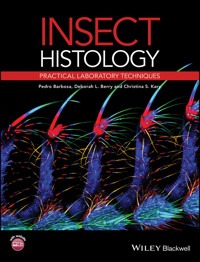
Cover image: Moth antenna. Autofluorescence confocal stack reconstruction. Image by Donna Beer Stolz, Ph.D. Center for Biologic Imaging. University of Pittsburgh, Pittsburgh, PA.
Preface
* Van Heerden, H.P. 1945. Some histological methods of interest to entomologists. Journal of the Entomological Society of South Africa 8:157–161.
“The standard histological procedures of the zoologist do not as a rule give very successful results when applied to insects…” (Van Heerden, 1945). If one adds to this statement that histological methods, entomological or otherwise, are a frustrating balance between science and art, one can understand the reluctance of entomologists to utilize histological techniques. The situation is additionally complicated by the fact that the techniques that have been formulated are scattered throughout various scientific journals and in general textbooks.
This book is designed to bring the procedures of insect histology to entomologists and others who utilize insects as experimental animals. Since no technique can be applicable to all insects, the techniques in this book are presented as guidelines. These basic methods can be easily modified to suit the characteristics of a particular insect or specific research problems.
It would be useless to present another book on the theory and use of histological methods, particularly since success in applying procedures is in part contingent upon practice and experience. In addition, there are already numerous sources of generalized information on the theoretical aspects of histological techniques. Instead, in this book the reader will fixatives, stains, procedures, and so on, which have been reported to be specifically applicable to insects. The book also presents information useful in dealing with histological problems encountered in insect tissues such as sclerotized chitin, yolk-laden eggs, chromosomes, genitalia, and so on.
Acknowledgements
We acknowledge the support of the respective institutional affiliations of the authors of this manual, that is, the College of Computer, Mathematical, and Natural Sciences and the College of Agriculture and Natural Resources of the University of Maryland (PB), the Lombardi Comprehensive Cancer Center of Georgetown University (DB), and Cold Spring Harbor Press (CK). This work was conducted in part at the Lombardi Comprehensive Cancer Center Histopathology & Tissue Shared resource which is supported in part by NIH/NCI grant P30-CA051008. The content is solely the responsibility of the authors and does not necessarily represent the official views of the National Cancer Institute or the National Institutes of Health.
We further acknowledge and appreciate the contributions of Damien Laudier of Laudier Histology (http://www.laudierhistology.com/) for the use of key illustrations and figures. These are individually acknowledged in the legend of each submitted figure.
Introduction
The Manual of Basic Techniques in Insect Histology is designed as a resource for those researchers who require basic procedures and information essential for the histological display of insects, in part or in total. Specifically, it can serve as a basic laboratory reference or as an essential supplement to complement lectures in courses which deal with insect histology.
This second edition of the book extends the original histological approaches into modern applications. The manual provides a comprehensive survey of fixation techniques which are crucial to all downstream histological preparations and applications. Preparations and techniques unique to insects are provided for advanced techniques such as immunohistochemistry, in situ hybridization, TEM, SEM and whole mount preparations.
In order to permit efficient use by the reader, the information in this book is presented in a readable and consistent format. Although there are divergences where necessary or where the information is not available, most of the book follows the same format. Finally, throughout the book, the amounts of all ingredients are designated by the term, parts (pt.). In compounds which occur as solid, parts equals grams, while in those compounds occurring as liquids, parts equals milliliters. All procedural information and recommendations for the use of particular methods in this manual are taken from the literature cited. In some instances, not as much information is available as one might desire. However, these materials and procedures were included since the characteristics and limitations of a technique are a function of the insect and experimental conditions.
In histology many chemicals are used that are harsh, corrosive, potential irritants, and some (such as Dioxane or Formaldehyde) may be carcinogenic. Like most chemicals they can be absorbed through the skin or inhaled; in some cases inhaled over a period of time. Thus, one must use common sense in developing lab practices and constant vigilance and care in order to keep chemicals off the skin, or avoid inhalation. And, when in doubt, use the hood. A small amount of planning and thought can avoid a great deal of trouble and regret. Thus, safety glasses or goggles and shield, proper gloves, laboratory coat and apron, adequate ventilation, and a class B extinguisher should be used or available in the lab. Always seek expert advice when in doubt.
About the companion website
This book is accompanied by a companion website: www.wiley.com/barbosa/insecthistology
This website includes:
• Powerpoints of all figures from the book for downloading
• PDFs of tables from the book
Chapter 1Problems of sclerotized chitin: Softening insect cuticle
1.1 Introduction
The softening and processing of heavily sclerotized specimens for subsequent histological preparations is one of the major problems in insect histology. Many approaches to the solution of this problem have been suggested. Attempts to soften and otherwise alter sections with sclerotized chitin have been incorporated at every procedural level of histological methods. Suggestions have been made for changes in fixation, clearing, mounting, and embedding. Others have also attempted prefixation, postfixation, premounting, presectioning, and so on, as additional steps geared towards improving the quality of sections.
Aside from the more detailed procedures and specific compounds that are recommended in the following pages there are other simple general methods recommended. These techniques represent basic procedures that have been used independently or in conjunction with other methods. One of the most widely used procedures is the treatment of insect specimens with sodium or potassium hydroxide. These chemicals soften sclerotized portions of specimens and dissolve the soft internal tissues. They are generally used either cold or warm at a 10% concentration. These substances are also frequently used in the preparation of insect specimens for taxonomic study.
The use of hypochlorite of soda is another alternate for softening chitin. It is suggested for the preparation of all stages, that is, larvae, pupae, and adults. The insect is usually placed in boiling hypochlorite of soda (about 25% in distilled water). It is usually left in the solution for about 24 hours or more. A third, widely used approach is the use of tenerals or newly moulted specimens. In this way, the specimens are used before the cuticle has hardened.
The elimination of certain chemical agents which tend to harden insect tissues can also be helpful. Occasionally, it is best merely to avoid long exposures to hardening compounds. For example, to avoid excess hardening, short exposures or avoidance of the higher concentrations of ethanol will aid in preventing its hardening effects. The use of n-butyl or t-butyl alcohol as a substitute dehydrating agent may avoid the hardening of tissues. Similarly, prolonged exposure to certain chemicals or fixatives containing chemicals such as acidified dichromate, mercuric chloride or chromic acid is not recommended. Prolonged heating may also cause unwanted brittleness. The choice of clearing agent may also be a key factor in brittleness of tissue preparations. Thus, the use of clearing agents other than xylene or similar compounds will result in improved preparations. Finally, excessively high temperatures and prolonged periods of infiltration in wax may be another source of troublesome tissue hardening.
Fig. 1.1Beetles have a hardened cuticle. (Source: © Michal Grabowski.http://commons.wikimedia.org/wiki/File:Xylena_exsoleta.jpg#filehistory/CC BY-SA 3.0.)
Fig. 1.2 Components of the cuticle. Procuticle – polysaccaride chitin and cross-linked proteins involved in sclerotization.
Fig. 1.3 The most sclerotized parts of beetles. (Source: Ellis 2000. Reproduced with permission of Elsevier.)
Another widely used procedure involves the puncturing of insect specimens before placing them in a fixative. This allows complete penetration of the fixing agent. Care must always be taken not to damage particular areas of interest on the specimen. The following procedure was suggested as an alternative to the puncturing of specimens.
Lesen Sie weiter in der vollständigen Ausgabe!
Lesen Sie weiter in der vollständigen Ausgabe!
Lesen Sie weiter in der vollständigen Ausgabe!
Lesen Sie weiter in der vollständigen Ausgabe!
Lesen Sie weiter in der vollständigen Ausgabe!
Lesen Sie weiter in der vollständigen Ausgabe!
Lesen Sie weiter in der vollständigen Ausgabe!
Lesen Sie weiter in der vollständigen Ausgabe!
Lesen Sie weiter in der vollständigen Ausgabe!
Lesen Sie weiter in der vollständigen Ausgabe!
Lesen Sie weiter in der vollständigen Ausgabe!
Lesen Sie weiter in der vollständigen Ausgabe!
Lesen Sie weiter in der vollständigen Ausgabe!
Lesen Sie weiter in der vollständigen Ausgabe!
Lesen Sie weiter in der vollständigen Ausgabe!




