


57,99 €
Mehr erfahren.
- Herausgeber: John Wiley & Sons
- Kategorie: Wissenschaft und neue Technologien
- Sprache: Englisch
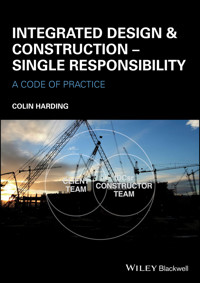
Manufacturing and service industries have significantly improved their levels of productivity, quality, and profitability over the past 30 years, whereas in the construction industry similar levels of improvement have been impossible to achieve. Numerous reports have identified fragmentation of the industry’s management structures and processes as the underlying cause of the waste and inefficiencies that keep costs high and margins low. Integrated Design and Construction is an integrated yet competitive form of procurement, design and project delivery based on the principle of purchasing any other high value warranted manufactured product. Such an approach would make the construction process more like other manufacturing industries, allowing contractors to make similar improvements to those already seen in other manufacturing industries. Designed for use by experienced construction professionals, familiar and proficient with traditional design and construction system best practice, this Code of Practice provides both client and constructor with the necessary information to adopt this approach to create well-designed and well-constructed products, fully meeting client needs.
Sie lesen das E-Book in den Legimi-Apps auf:
Seitenzahl: 160
Veröffentlichungsjahr: 2015
Ähnliche



















Table of Contents
Cover
Title Page
Copyright
Foreword
Acknowledgements
Glossary of terms and acronyms
Introduction
Background
Chapter 1: IDCsr principles and process
1.1 The principles and process of integrated design and construction – single responsibility
Chapter 2: The IDCsr constructor legal entity—structures, responsibilities and skills
2.1 IDCsr constructor team structure
2.2 The IDCsr constructor project management team
2.3 IDCC consortia approach
2.4 IDCsr constructor team roles responsibilities and skills
Chapter 3: IDCsr client team—structures, responsibilities and skills
3.1 Structure
3.2 Client team roles, responsibilities and skills within the IDCsr process
Chapter 4: IDCsr project insurance conditions
Chapter 5: IDCsr project payment system
Chapter 6: IDCsr model sale agreement terms and conditions
Chapter 7: IDCsr information and communication technology (ICT)
7.1 Project management ICT
7.2 Summary of other ICT tools available for IDCsr practitioners (see Appendix for details)
Chapter 8: Process Stage 1 inception
8.1 Client team set-up, client need, business case/feasibility and client brief preparation
Chapter 9: Process Stage 2 selection
9.1 IDCC competitive bid process, IDCC concept, client evaluation and commitment
Chapter 10: Process Stage 3 delivery
10.1 IDCC design and construction
Appendix : Information and communication technology
A.1 Business process
A.2 Interoperability
A.3 e-Business
A.4 Electronic document management systems
A.5 Electronic trading
A.6 Information visualisation
A.7 Mobile technology
A.8 4D project management
A.9 Building information model(ling) – BIM
A.10 Project management
Index
End User License Agreement
Pages
vii
ix
x
xi
xii
xiii
xiv
xv
xvi
xvii
83
84
85
86
87
88
89
90
91
92
1
2
3
4
5
7
8
9
10
11
12
13
14
15
16
17
18
19
20
21
22
23
24
25
27
28
29
30
31
32
33
34
35
36
37
38
39
41
42
43
44
45
46
47
48
49
50
51
52
53
54
55
56
57
59
60
61
62
63
64
65
66
67
68
69
70
71
72
73
74
75
76
77
78
79
80
81
93
94
Guide
Cover
Table of Contents
Foreword
Introduction
Begin Reading
List of Illustrations
Chapter 1: IDCsr principles and process
Figure 1 Integrated Design and Construction – single responsibility.
Figure 2 The IDCsr process.
Chapter 2: The IDCsr constructor legal entity—structures, responsibilities and skills
Figure 3 The IDCsr constructor legal entity project management team.
Figure 4 IDCsr constructor formal management responsibility and design communications chart.
Figure 5 IDCC consortia structure.
Chapter 3: IDCsr client team—structures, responsibilities and skills
Figure 6 Client team.
Figure 7 IDCsr client project team responsibilities and communications.
Figure 8 The IDCsr integrated team.
Chapter 8: Process Stage 1 inception
Figure 9 Stage 1 flow chart.
Figure 10 The negotiated IDCsr process.
Chapter 9: Process Stage 2 selection
Figure 11 Stage 2: flow chart – competition.
Figure 12 Competitive bidding process flow chart.
Figure 13 Bidding management structure.
Figure 14 Concept and bid management responsibility and e-design communications.
Chapter 10: Process Stage 3 delivery
Figure 15 Stage 3 flow chart.
Figure 16 IDCC design delivery process.
Figure 17 IDCsr constructor design delivery: management responsibilities and e-design communications.
Figure 18 IDCC Stage 3.16 construction delivery responsibilities and e-design communications.
Integrated Design & Construction – Single Responsibility
A Code of Practice
Colin HardingBSc Tech Hons
Chartered Construction ManagerPast President CIOB
This edition first published 2015
© 2015 by John Wiley & Sons, Ltd
Registered office
John Wiley & Sons, Ltd, The Atrium, Southern Gate, Chichester, West Sussex, PO19 8SQ, United Kingdom.
Editorial offices:
9600 Garsington Road, Oxford, OX4 2DQ, United Kingdom.
The Atrium, Southern Gate, Chichester, West Sussex, PO19 8SQ, United Kingdom.
For details of our global editorial offices, for customer services and for information about how to apply for permission to reuse the copyright material in this book please see our website at www.wiley.com/wiley-blackwell.
The right of the author to be identified as the author of this work has been asserted in accordance with the UK Copyright, Designs and Patents Act 1988.
All rights reserved. No part of this publication may be reproduced, stored in a retrieval system, or transmitted, in any form or by any means, electronic, mechanical, photocopying, recording or otherwise, except as permitted by the UK Copyright, Designs and Patents Act 1988, without the prior permission of the publisher.
Designations used by companies to distinguish their products are often claimed as trademarks. All brand names and product names used in this book are trade names, service marks, trademarks or registered trademarks of their respective owners. The publisher is not associated with any product or vendor mentioned in this book.
Limit of Liability/Disclaimer of Warranty: While the publisher and author(s) have used their best efforts in preparing this book, they make no representations or warranties with respect to the accuracy or completeness of the contents of this book and specifically disclaim any implied warranties of merchantability or fitness for a particular purpose. It is sold on the understanding that the publisher is not engaged in rendering professional services and neither the publisher nor the author shall be liable for damages arising herefrom. If professional advice or other expert assistance is required, the services of a competent professional should be sought.
Library of Congress Cataloging-in-Publication Data
Harding, Colin (Builder)
Integrated design & construction–single responsibility : a code of practice/Colin Harding.
pages cm
Includes bibliographical references and index.
ISBN 978-1-118-77829-6 (paperback)
1. Building–Superintendence. 2. Architects and builders. 3. Building–Practice. 4. Architectural practice. I. Harding, Colin. II. Chartered Institute of Building (Great Britain) III. Title. IV. Title: Integrated design and construction–single responsibility.
TH438.H275 2015
690 – dc23
2015015795
A catalogue record for this book is available from the British Library.
Wiley also publishes its books in a variety of electronic formats. Some content that appears in print may not be available in electronic books.
Cover Image: Matthew Apps/Getty
Foreword
The code of practice for Integrated Design and Construction-Single Responsibility (IDCsr) integrates within a single team all the key participants involved in the process of designing and constructing a successful project. The objective of the team is a focus on delivering the end product within pre-defined parameters. This marks the final extension of the paradigm shift initiated by Sir Michael Latham almost two decades ago and then further developed by Sir John Egan.
This document describes the next logical step by outlining a practical way of delivering a product through effective collaboration between the professionals involved. This is done by effectively merging the various stages of traditional design and project management. Resonance of many of the themes and concepts incorporated can be found in recent innovative procurement models being supported by the Cabinet Office. In the private sector, the practice of an integrated team approach, particularly where a single entity is responsible for design, delivery and operation, has already found its niche in a variety of sectors.
I congratulate the initiative and efforts of Colin Harding, PPCIOB and his team whose knowledge, experience and vision have been instrumental in creating this pioneering Code of Practice as the most comprehensive document formulating the practical application of a single responsibility team approach in the built environment.
I am pleased that the CIOB is continuing to lead from the front in the collective effort to drive the necessary culture changes in the industry, and this Code of Practice will stimulate significant improvements to the processes and practices of project design, delivery and management in the built environment.
James Wates CBE,FCIOB,FRICS,FICE,FCGI,FRSAPresident (2010-2011) CIOBChairman, Wates GroupChairman, CITBChairman, UKCGChairman, BRE Trust
Lesen Sie weiter in der vollständigen Ausgabe!
Lesen Sie weiter in der vollständigen Ausgabe!
Lesen Sie weiter in der vollständigen Ausgabe!
Lesen Sie weiter in der vollständigen Ausgabe!
Lesen Sie weiter in der vollständigen Ausgabe!
Lesen Sie weiter in der vollständigen Ausgabe!
Lesen Sie weiter in der vollständigen Ausgabe!
Lesen Sie weiter in der vollständigen Ausgabe!
Lesen Sie weiter in der vollständigen Ausgabe!
Lesen Sie weiter in der vollständigen Ausgabe!
Lesen Sie weiter in der vollständigen Ausgabe!
Lesen Sie weiter in der vollständigen Ausgabe!
Lesen Sie weiter in der vollständigen Ausgabe!
Lesen Sie weiter in der vollständigen Ausgabe!
Lesen Sie weiter in der vollständigen Ausgabe!
Lesen Sie weiter in der vollständigen Ausgabe!
Lesen Sie weiter in der vollständigen Ausgabe!




