


Erhalten Sie Zugang zu diesem und mehr als 300000 Büchern ab EUR 5,99 monatlich.
- Herausgeber: Orenda Books
- Kategorie: Gesellschafts- und Liebesromane
- Serie: The Arctic Mysteries
- Sprache: Englisch
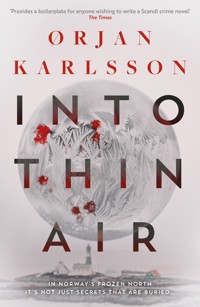
Chief Investigator of Nordland Police, Jakob Weber is drawn into a complex case when a teenaged girl goes missing in Northern Norway, and a second woman disappears from a remote island in similar circumstances … FIRST in a compelling, dark new Nordic Noir series. `Provides a boilerplate for anyone wishing to write a Scandi crime novel … Weber, "a dagger in a velvet sheath", is an engaging character; discerning readers will wish to meet him again´ Mark Sanderson, The Times `Atmospheric´ Crime Monthly `Jakob Weber is a great protagonist, and the sense of place is phenomenal. The perfect start to a series destined for greatness´ Thomas Enger `This is first-class Nordic Noir from the real North, where danger lurks around every corner´ Gunnar Staalesen _______ In Norway's frozen north, it's not just secrets that are buried… When nineteen-year-old Iselin Hanssen disappears during a run in a popular hiking area in Bodø, Northern Norway, suspicion quickly falls on her boyfriend. For investigator Jakob Weber, the case seems clear-cut, almost unexceptional, even though there is some suggestion that Iselin lived parts of her life beneath the radar of both family and friends. But events take a dramatic turn when another woman disappears in similar circumstances – this time on the island of Røst, miles off the Norwegian coast, in the wild ocean. Rumours that a killer is on the loose begin to spread, terrifying the local population and leading to wild conspiracies. But then Jakob discovers that this isn't the first time that young women have vanished without a trace in the region, and it becomes clear that someone is hiding something … and another murderous spree may have just begun… For fans of Joe Pickett, Ragnar Jonasson and Jorn Lier Horst ______ `Dark and totally gripping … adds a new dimension to the police procedural which goes beyond the standard elements of the genre´ Ewa Sherman, European Literature Network What readers are saying… `Multiple theories and suspects keep us on edge until the very end' `Impossible to put down´ `The spectacular setting is a character in its own right´ `Quirky, believable characters and some of the most breathtaking descriptions of Northern Norway that I've ever read´ `Simply superb … both creepy and thrilling´ `An incredible, addictive start to a new series´
Sie lesen das E-Book in den Legimi-Apps auf:
Seitenzahl: 483
Veröffentlichungsjahr: 2025
Das E-Book (TTS) können Sie hören im Abo „Legimi Premium” in Legimi-Apps auf:
Ähnliche



















THANK YOU FOR DOWNLOADING THIS ORENDA BOOKS EBOOK!
Join our mailing list now, to get exclusive deals, special offers, subscriber-only content, recommended reads, updates on new releases, giveaways, and so much more!
CLICK HERE TO SIGN UP
Already a subscriber? Click the link again so that we can send you details of what you like to read.
Thanks for reading!
TEAM ORENDA
iWhen nineteen-year-old Iselin Hanssen disappears during a run in a popular hiking area in Bodø, northern Norway, suspicion quickly falls on her boyfriend. For investigator Jakob Weber, the case seems clear-cut, almost unexceptional, even though there is some suggestion that Iselin lived parts of her life beneath the radar of both family and friends.
But events take a dramatic turn when another woman disappears in similar circumstances – this time on the island of Røst, a hundred kilometres off the coast, in the wild ocean.
Rumours that a killer is on the loose begin to spread, terrifying the local population and leading to wild conspiracies. But then Jakob discovers that this isn’t the first time that young women have vanished without a trace in the region, and it becomes clear that someone is hiding something … and another murderous spree may have just begun…ii
iii
INTO THIN AIR
ØRJAN KARLSSON
TRANSLATED BY IAN GILES
iv
For Eilifv
CONTENTS
vi
1
He exited the E6 motorway half an hour north of Gothenburg. He passed a service station surrounded by a fence crowned with small Swedish, Norwegian and Danish flags. He pulled over a little further down the road, got out the road atlas and opened it at the page he had marked earlier.
He had never been here before. Not like this.
After making sure that it was the right place, he drove on down a narrow road, the asphalt ragged at the edges. It wasn’t long before the coast opened up before him, the lights of Denmark just visible in the dusk descending on Kattegat. Shining pearls of light. Each point a house.
A home.
A family.
Sweden’s west coast was a popular area for second-home owners, but this lane was bordered by rocky coves, patches with brackish water and hardy yellow grass that tolerated both salt water and frost. It was boggy, verging on outright swamp, with iridescent dragonflies hovering above pitch-black pools of water.
His kind of landscape.
On the way down to the small cove, branches scraped against the sides of the vehicle. There was barely room to turn around, but he was used to this kind of thing. He was able to steer his vehicle with pinpoint accuracy without clipping sharp rocks or anything else which might scratch the paintwork. The imprints left by the tyres in the hard, dry ground would disappear within a couple of days – if the rain didn’t wash them away first. Scandinavian summer weather was fickle.2
It took him a couple of minutes to park so that he was facing back the way he had come. He unfastened his seat belt, killed the engine and applied the handbrake. Then he leaned back in his seat and sat there with the window rolled down until the ticking of the cooling engine had ceased and all he could hear was the lapping of waves and the faint breeze through the treetops.
He got out and removed the two twenty-litre plastic containers that were strapped to the rear of the van. He took these down to the water’s edge. Then he returned to the van to retrieve the thermal binoculars. They were a heavy, solid German make; he had bought them on the black market in Warsaw.
He raised the lenses to his eyes. The passenger ferry from Gothenburg to Frederikshavn blazed in his field of vision. When viewed through the binoculars, the ferry lost its defined contours. Instead, it became a blurry rectangle made up of shades of red and orange, as if the vessel were on fire.
He returned the binoculars to their case and filled the two containers with seawater. He put them down on the ground by the van and opened the sliding door. It slipped noiselessly backward on its oiled tracks, revealing the space within. The compartment was concealed behind a partition wall that separated the driver’s cab from the rest of the vehicle.
Ordinarily, this would be the living area of the camper van, with its kitchenette and small dining area allowing the family to eat together and perhaps play a game of cards in the evenings. This one, however, looked rather different.
The night before, he had dismantled the interior. He had taken the furniture apart and stowed the pieces in the roof box. Then he had rolled up the carpet. The green fabric had been hiding a floor coated in hardwearing, light-green industrial paint. The type that could withstand a high-pressure jet wash. The last thing he had done was to fit the steel bench. He had screwed the frame into the vehicle chassis using robust bolts. All told, it hadn’t taken him more than an hour or so.3
He heaved the containers of water into the back. Then he climbed in himself and closed the door. He switched on the battery-powered light attached to the ceiling and turned on the small black-and-white monitor fixed to the partition. The screen was connected to a video camera showing the view through the windscreen. If anyone came down the gravel track he would spot them.
He raised one of the containers and poured the water into the receptacle at the end of the steel bench. He needed some of the water from the second container to fill the tank up to the brim. Experience had shown him that he would need to refill later on.
There was a thick rubber apron hanging on a hook on the back door. He stripped down to his underpants. He folded each item of clothing and placed his garments in a clear plastic bag. Then he put on a hairnet, slipped an overshoe onto each foot and put the apron over his head, tightening the belt at his waist.
All the while, he kept an eye on the figure lying under the white sheet on the bench. He could see the ribcage calmly rising and falling.
Finally, he put on rubber gloves – plain, old yellow washing-up gloves. He took hold of a corner of the sheet with his thumb and forefinger and pulled it back to reveal the naked, bound body beneath.
He took a hair clip from the pocket of the apron. The blue topaz in the middle of the clip glittered in the light cast from the ceiling. He pulled her black hair to one side, over her left eye, securing it with the clip.
Her eyelids quivered.
It wouldn’t be long before she woke up.4
CHAPTER 1
JAKOB WEBER
Jakob Weber took Garm off his lead and let the dog through the gate into Bodø cemetery. The Jack Russell Terrier looked up at him quizzically, his body trembling with pent-up energy.
‘Go to Mum.’
Garm raced off. He set a course between the trees and the tombstones, occasionally stopping to make sure that Jakob was following.
There was no one else in the cemetery at this early hour. The flat, almost featureless, burial site was crammed in between Olav V gate and Bodø Airport. She had joked that there would be no shortage of transport options when she left this world. Jakob turned up the collar of his jacket. The westerly wind – chilly for this time of year – rustled through the leaves on the trees lining this narrow avenue.
He preferred to visit the cemetery at this time of day. It felt as if he had Lise to himself. Her grave was in one of the new rows right by the airport boundary fence.
He crouched in front of the simple, grey granite headstone. It was inscribed with copper-gilded letters that spelled out Lise Alvdal Weber, followed by her dates of birth and death. An absurd calculation where the difference was always too small: forty-one years.
He removed the remains of the old flowers from the vase, before inserting a new bouquet of fresh red roses. He took a cloth from his jacket pocket and ran it across the top of the stone. Then he took a step back and looked up. On the horizon, he found the peak of Børvasstindan – that grey mountain with its flecks of white just in front of its compatriots, Breitind and Rundtind. Thirteen peaks. One disciple too many. One left over. Like him 6after Lise. It had been six months and it was still just as incomprehensible.
Garm brushed his muzzle against Jakob’s trouser leg. He bent down and scratched the dog behind the ears. His shirt sleeve slid up, revealing his wristwatch. No wonder the dog was impatient. He’d been standing at the grave for twenty minutes, lost in thoughts that were already forgotten.
On his way back to the car, he caught sight of a passenger jet above the waters of Saltfjorden. Based on its course, he could tell the captain was planning to fly past the town before turning and landing from the east. The plane would make landfall just a few hundred metres from Lise’s grave. He still had plenty of time. In fact, just enough to buy a cup of coffee before the passengers emerged in the arrivals hall.
He opened the boot of the Mitsubishi Outlander. Garm hopped in without waiting for the command and lay down on the blanket inside the cage, his gaze fixed on his master. He wanted some reassurance that he’d be getting out again soon. Jakob gave the dog a treat. Every week, he would buy a one-kilo bag of small meatballs. He let Garm have two or three after a walk or a longer stint in the car. He would hear Lise whispering to him, a smile in her voice:
‘You’ve gone soft.’
The first thing Jakob noticed when he parked outside the terminal was the blue-and-white liveried van with the logo of the local news broadcaster, NRK Nordland, on the side. A camera crew were standing outside the revolving door into the arrivals hall. There were three of them: the camera man, the sound man and a reporter. And not just any old reporter – it was Sigrid Malmsten. She was the journalist who had won the SKUP Award the year before for a revelation about the overly cosy ties between the mayor of Bodø council and key certain businesses in town.
The aftermath of the story had seen the council down a mayor, while the police had eventually filed corruption charges against 7two of Bodø’s top-ten richest names. Jakob assumed things were mostly back to normal by now. People with money made their own rules. They claimed – albeit never openly – that they were entitled to special treatment. After all, they created jobs for the ‘common people’. Jakob had met enough of them to realise that they really did believe what they said.
‘What’s the story here then?’ he asked as he walked up to Sigrid.
‘Strictly speaking I think I’m supposed to ask that,’ the journalist replied sharply. Only the expression in those green eyes told Jakob that the response was meant as a joke. One of the officers at the station had described Sigrid as ‘a woman with facial expressions like a brick wall’. Although, upon reflection, he didn’t think the officer had said ‘woman’.
Sigrid brushed a blonde lock of hair off her face. She was a smidge shorter than his own decidedly average 179 centimetres, and she was fit. The shadow of a scar ran from her left ear diagonally down to her chin – the result of a climbing accident. She had told him about the incident a couple of weeks earlier when they had bumped into each other at the City Nord out-of-town shopping centre. Sigrid had asked whether he fancied a coffee. Jakob had accepted, even though he thought he’d be putting himself on the receiving end of journalistic questions. He had been pleasantly surprised. They had mostly chatted about normal stuff: the new airport; military exercises further north; the travails of local football club Bodø/Glimt. When the conversation had taken a more personal turn, Sigrid had told him about the accident and Jakob had opened up about Lise. It had been nice.
‘I’m here to pick up a colleague,’ Jakob said. ‘What about you?’
‘Celebrity alert,’ Sigrid replied. ‘Marte Moi, better known as “Nature Lady”, has decided to showcase Lofoten to her followers. First stop is Bodø before she heads on to Røst and Værøy and then the full tour of the archipelago. You know, the Svolværgeita pinnacle, whale watching, the village at Henningsvær, trip on a fishing smack. The whole tourist caboodle.’8
‘And that merits a full camera crew from the local news?’
Sigrid looked askance at Jakob. ‘You don’t know who Nature Lady is?’
‘Should I?’
‘Well, that depends. Do you use Instagram or TikTok?’
‘I barely even use Facebook.’
Sigrid took out her mobile phone. ‘Let me show you.’ She pulled up Nature Lady’s Instagram profile. She dragged her finger down the screen, and dozens of photos and videos scrolled by so quickly he didn’t have time to take them in, his impression being that most of the posts depicted colourful natural landscapes with the protagonist posing in the centre of shot.
‘This is the last one she posted.’
Sigrid tapped on a photo showing a girl on a plane. She was around twenty-five to thirty years old, with prominent red lips, brown eyes and black hair that was fastened up with a copper-coloured slide. A braid hung over one shoulder. A line written at an angle read:
‘Crossing the Arctic Circle! Stay tuned for my northern adventure!’
‘She’s no Lars Monsen,’ Jakob commented dryly.
‘No, you’re not wrong. Monsen has about 140,000 Instagram followers. Nature Lady has…’ Sigrid raised her phone to him.
‘One point three million?!’ Jakob exclaimed.
‘Spot on. She’s one of the best-known influencers in Scandinavia. She combines nature with food, music, fashion, wellness and anything else that happens to keep the attention of her followers. She’s got a good nose for this stuff – no doubt about it.’
‘Well, a nose plus a good manager,’ the cameraman interjected.
‘And now she just happens to be coming to Bodø and Lofoten?’ Jakob asked.
‘Nothing that Nature Lady does is ever by chance. Her trip’s sponsored by Visit Norway.’9
Sigrid’s mobile emitted a soft chime. She checked the message.
‘Got to run. She’s on her way to the luggage belt. See you!’
She vanished through the revolving doors together with the crew, only to reappear a moment later with a thin paperback in her hand. She offered it to Jakob. ‘I finished this one yesterday,’ she said. ‘Why don’t you take it? Please, you’ll be doing me a favour. It’ll look like I’m fangirling if I wave it in Nature Lady’s face. It’s not bad, actually. Especially the first chapter.’
Jakob took the book. The cover showed Marte Moi – Nature Lady – standing on the front steps of a log cabin. Behind her, the mountains were piercing holes in the sky. The title of the book was My Journey and in parentheses underneath there was a subheading reading Join in!
‘Enjoy.’ Sigrid winked at him and hurried back into the arrivals hall.
Jakob slipped the book onto the back seat of the car. He liked reading, but he’d had problems concentrating for the last few months. If he plumped for a novel, his eyes would slide across the pages, unable to hook onto a single word or sentence. His colleague Armann had a sixteen-year-old daughter who would probably be familiar with Nature Lady. He’d give the book to Armann, and he could pass it on to her. Bank some decent dad points.
Inside the terminal, he bought a cup of coffee from the machine in the newsagent’s. He scrutinised the passengers as they came down the stairs from the first floor. He spotted that Sigrid had already intercepted her target. The journalist almost disappeared in the crowd of eager onlookers who flocked around her and the influencer.
The spectacle left him in no doubt that Marte Moi really was a celebrity. Jakob caught quick glimpses of her as she spoke, gesticulating to the camera. The copper hair slide shone in the flashes from the mobile-phone cameras. She seemed energetic. Switched on. As if she were on duty. Nevertheless, he struggled to 10understand the concept. Marte Moi didn’t actually do anything except post pictures of herself standing in front of natural wonders and sights that anyone could travel to.
Good God. If Lise had heard him say something like that, she would have slapped the back of his head and called him a grumpy old man. He had to be careful not to end up like the old-timers at the station who were fond of declaring that it had all been better back in their day. Just like Rolf Kvist, his now-retired partner. He had sworn by his old-school typewriter with its correction key until the head of HR had personally confiscated it from his desk. That had been three years ago.
‘Jakob Weber?’
He turned around. The woman behind him already had her arm extended, a khaki wheelie suitcase on the floor at her side. He’d seen her headshot on the intranet, but she was taller than he’d been expecting. Her shoulders broader. His inner detective filtered through his impressions. Around 175 centimetres tall, Asian features. Dark, straight, shoulder-length hair. Brown eyes. A straight nose with freckles at the bridge. A hint of burgundy lipstick. Slightly crooked left canine. Running shoes, blue jeans and a white top under a black leather jacket.
Firm handshake. Police.
CHAPTER 2
NOORA YUN SANDE
He was different from how she had imagined. Kind of stooping. But his handshake was firm, and his voice deep and warm, with that musicality so typical of northern Norway.
‘Jakob Weber. Welcome to Bodø.’
‘Noora Sande. Thanks for picking me up.’
‘Don’t mention it.’
He let go of her hand. He was evidently at a loss as to how to proceed. The uncertainty surprised her. Jakob Weber was a detective held in high esteem down in Oslo. An analyst from the old school. In Kripos-speak, he was someone who ‘lived and breathed the case’, as they put it at the National Criminal Investigation Service. Which was generally a polite way of describing monomaniacal tendencies. A recluse. But in this respect Jakob was different. Those who had worked with him described him as sociable and affable. A leader who always went first and knew the way. Now, though, he seemed uncertain.
Noora knew that Kripos had tried to lure him south, but Jakob had declined for family reasons. Judging by the ring on his finger, Noora assumed that meant a wife and kids.
Only a handful of people knew that she hadn’t really wanted to come to Bodø. She was happy at Kripos. She was on her way up. A young and promising rising star.
What would Jakob have made of her had they met at Kripos a year ago?
As far as she was concerned, the partnership with Jakob was a bonus. A blessing in disguise. Two or three years in Bodø and then she’d be packing her bags to return to Oslo. Maybe she’d have another star on her shoulder and more responsibility in the criminal-investigative section at Kripos.12
Maybe.
That single word pretty much summed up her whole life.
‘Been up north before?’ Jakob asked as they made for a recently washed Mitsubishi Outlander.
‘I did a year at college in Kabelvåg after I finished senior high.’ Noora inhaled through her nostrils, filling her lungs. She had forgotten how fresh the air was here. Cool and salty. ‘I took the outdoor programme. Lots of mountain climbing and surfing,’ she added. ‘Over forty days in a tent. Bloody freezing in winter – and absolutely fantastic.’
Jakob turned to her, and smiled. ‘Then I reckon you know Lofoten better than I do. That may come in handy. We sometimes get sent out there to help the local force with their inquiries. Remind me what they call it these days at Police University College? Complementary skills?’
‘Something like that.’
He opened the boot and Noora heaved her case in. A shrill bark had her reeling backward in surprise.
‘Garm!’ Jakob exclaimed before turning to her. The streak of uncertainty was back on his face. ‘You’re not afraid of dogs, are you? I sometimes have Garm with me, but he hasn’t got that used to other people after…’ The rest of the sentence petered into nothingness.
‘Not a bit,’ Noora replied. ‘We had standard poodles back home. My mum did dog shows with them when I was little. I reckon I’ve been inside every single sports hall in Eastern Norway. I was just surprised.’
Jakob’s face relaxed. ‘Garm’s a good boy, but he’s a bit possessive about me. It’ll soon pass once he gets to know you.’
He got into the driver’s seat. ‘Do you want to drop your bag off at your flat first, or should we just head down to the station?’
‘Station,’ Noora replied. ‘Still not got a flat. I’ll be crashing with a friend from college until I find my own place. Apparently she lives round the corner from the police station.’ Noora opened the messages on her phone. ‘9D Nordlysbuen,’ she says.
13‘Ah, in East,’ Jakob said. ‘Yes, it’s only five minutes’ walk from the station.’
They pulled out of the airport car park and went left at the first roundabout. On the right-hand side she could see a football pitch with floodlights in each of its four corners.
‘Bodø/Glimt?’
‘Spot on. Their home stadium – the Aspmyra. I was a season ticket holder for years, but work was always getting in the way. Nowadays I watch the games on TV even though I’m only down the road. I could hear the roaring from my veranda the day we beat Roma six-one.’
It wasn’t more than five or six minutes after they left the airport that Jakob parked outside Bodø police station, which was a modern, three-storey brick-built building. He opened both rear windows to make sure Garm had fresh air.
Noora looked around. The building was next to a big roundabout. On the horizon, she caught sight of a blue mountain through the low sea clouds.
‘That’s Landegode,’ said Jakob. ‘If you’ve seen a postcard of Bodø in the midnight sun, you’ll have seen that mountain.’
‘Way too close to be Lofoten, right?’
‘Spot on. Round the back of Landegode you’ve got Vestfjorden, which stretches out as far as the Lofotens. But on a clear day, you can see the Lofoten Wall from the top of Keiservarden.’
‘Keiservarden?’
‘I’m getting the feeling that you stuck to Kabelvåg that year you spent at college. We’ll do a geography lesson some other day. But don’t worry about it; it’s easy to find your way around Bodø. The town is at the tip of a peninsula. We’re mostly surrounded by the sea.’
She followed Jakob and Garm through the main entrance and into a bright and airy foyer that stretched right up to the vaulted roof of the building.
‘We work in the Joint Unit for Intelligence, Prevention and Investigation. It’s one hell of a mouthful, but the official abbreviation isn’t much better,’ Jakob added.
14‘JUIPI?’
‘Spot on. We usually just call it “Investigation”. It’s a good fit with our job. And as Bodø police station is also the headquarters for the Nordland police district, we often help out the smaller offices around the district. Either by going there or with video calls.’ Jakob held his keycard up to a door on the right-hand side of the foyer. Beyond it there lay a lift and a staircase. ‘Our offices are on the first floor. The Crow insisted on meeting you as soon as you arrived. Just as well to get it over with.’
‘And the Crow is…?’
‘Our boss. Konrad Råkstad.’
‘Ahh. And the nickname…’
‘…is one we only use behind his back.’
‘Good to know.’
On the first floor, Jakob led her into a bright and pleasant open-plan area. On the far side, there were three small offices with windows onto the main space, as well as views of a park. Towards the centre of the space, she saw a bigger office. The Crow’s nest, Noora guessed.
‘There are currently four detectives, including the two of us,’ Jakob informed her. ‘I’ll introduce you to the other two later. Right now, it’s probably best you say your hellos to Police Superintendent Råkstad. Then we can sort out the formalities: access cards, car and all that. I’ll be waiting in our office.’ Jakob nodded towards the cubicle furthest away from Råkstad’s office.
‘Any tips?’
‘Smile, nod and keep your trap shut.’
As Noora approached Råkstad’s office door, she saw that the blind on the window next to it was pulled down. She stopped. She noticed her pulse increasing as she pictured another office door somewhere else, not that long ago. She saw the contours of the man who had been waiting for her on the other side when she had opened it. Felt his hand around her neck.
‘Come in!’
Noora stared in surprise at her own fist, which was now resting 15against the door. She didn’t remember having knocked. But the tenderness in her knuckles told her she must have knocked hard.
The office was reminiscent of a showroom in a new office building. Råkstad was sitting behind a rectangular glass-and-steel desk. The shiny surfaces shone dimly in the glow from the concealed ceiling lights. Apart from a PC display, keyboard and mouse, there was nothing on the desk except a glass of water on a tray. Noora couldn’t see so much as a sheet of paper anywhere.
Råkstad leaned back in his chair, studying Noora over the top of his square steel spectacles. His mop of fine blond hair was swept sideways across his brow. His eyes were slate grey, his face angular, like his glasses. He had sharp cheekbones and the bridge of his nose ran down towards his mouth like a dorsal fin. But his lips stood out – they were fulsome, almost sensual.
‘Police Detective Noora Yun Sande,’ he said at last. His dialect, if it could be called that, was Greater Oslo. Bokmål. Råkstad had pronounced her name in completely flat tones.
‘That’s right.’
‘It wasn’t a question, Sande,’ Råkstad replied. ‘Graduated third in your class at Police University College. Degree in Bioscience from the University of Oslo. A degree of snowboarding talent as a young woman, but not good enough to represent Norway.’
Råkstad raised the glass to his lips, drinking soundlessly from it. He set the glass down in the centre of the tray. Then he clasped his hands in front of him on the glass desk. His manicure wasn’t much to look at, Noora thought to herself.
‘I demand two things from the people who work for me,’ Råkstad continued. ‘Absolute honesty and absolute loyalty.’
Noora stood there, trying to conceal the discomfort she felt. She’d heard the same lecture before. She knew from experience that those who demanded absolute loyalty rarely wanted honesty in equal measure. Was Råkstad expecting her to reply? A military-style ‘Yes, sir’?
She remembered Jakob’s advice and kept mum.
16‘Let me start by welcoming you to Bodø. You come highly recommended by Kripos. That’s a good start.’ Råkstad paused for breath. The office became so silent that Noora could hear the whirring of the ventilation system above her. ‘Let me lead by example when it comes to honesty,’ Råkstad said at last. ‘You were not my first choice for this job. I was set on another candidate for the role – someone with more hands-on police experience than you. But I was overruled by Chief of Police Telle. That’s something I must accept, in the same way that you must accept that I have high expectations of you.’ Råkstad met her gaze. She noticed a hint of yellow in his left eye. ‘I shan’t speculate on whether you are a quota candidate or have in some other way that I’m unaware of been given an advantage in the application process. You work for me now, and you will henceforth be measured on what you deliver. Do we understand each other?’
Noora nodded. She broke eye contact with him. It seemed like a good idea to give Råkstad the victory in this staring contest.
‘What the hell happened to northern hospitality?’ Noora sat down opposite Jakob.
‘I’m sure he’ll have welcomed you to Bodø,’ Jakob said dryly.
‘Sure, but he made me feel anything but welcome.’
‘Don’t take it personally. Like his specs and hair, the Crow’s leadership philosophy comes straight from the fifties. But it’s no coincidence that he’s in charge of the section. His brain is at least as sharp as his tongue. Since he took over, our clearance rates have increased significantly. And, look, there was a lot of competition for the job and they picked you. That’s all I need to know about your qualifications.’
Noora swallowed. She looked out of the window. Just like Råkstad, Jakob had no idea what had gone on behind the scenes when she had got the job. In Bodø, only Chief of Police Vigdis Telle knew – but not even she was aware of all the details.
Jesus, Noora, she thought. Don’t underestimate yourself. You’re good enough for this job.
17‘Ready to do the rounds?’
‘Rounds?’
‘Meeting your new colleagues. Napping your way through the fire-safety demonstration. Being briefed on internal procedures and plans. Access card for the building, keys for your car. Forgetting which names go with which faces as soon as you’re told them. All that jazz.’
‘When you put it like that, it’s hard to say no.’
The administrative hoops that Noora had to jump through to officially call herself a Bodø police detective took around three hours. Most of the people Noora met were nice enough – only the head of the police security service, Ivar Kjellemo, seemed a little reserved.
‘Ivar’s a bit nostalgic,’ Jakob explained after Kjellemo’s concise security briefing.
‘How so?’
‘I think he wishes he’d been in the security service during the Cold War. A time when there were fewer grey areas and we knew who the enemy was. It’s all a bit chaotic these days. As well as the Russians’ unpredictability, he has to keep up to speed with international cybercrime, hybrid threats and suspicious Chinese acquisitions.’
‘The old Cold War was better than the current one?’
‘I reckon he thinks so.’
Jakob’s smile transitioned to a grimace when he caught sight of the clock in the foyer.
‘Good Lord. I completely forgot about Garm. He’ll need a breather. Fancy coming with me?’
Noora shook her head. ‘I might as well find out whether the username and password they gave me in IT actually work.’
‘Good idea. See you in about half an hour.’
CHAPTER 3
ARMANN FEMRIS
‘It’s down towards the sea. On the other side of that hill,’ said Ronald Janook, head of forensics for Nordland police district. He turned around, waving Armann to follow him along the narrow path. Ronald wore sturdy rubber boots. The white disposable coverall that forensics used at crime scenes was rolled up to his knees.
Armann looked sceptically at his own ankle-high boots and black jeans. Not exactly hiking gear. Normally, he would have changed into more suitable attire at the office, but the duty officer had called him in the car while he was en route to the station. He’d been told to head straight to the old Bremnes coastal fortress built by the Germans at Løp, north of Bodø town centre. His partner, Josefine – she went by Fine – had to drop off her daughter at nursery and wouldn’t be here for another twenty or thirty minutes. Armann ran his hand through his shoulder-length black hair. His palm became moist. The morning air on this June day was both cool and damp. Typical Bodø weather.
‘Afraid of ruining your dress shoes?’ Ronald was already halfway up a steep and slippery slope. Armann bit his tongue. As head of forensics, Ronald sometimes came across as a Viking feudal lord, but Armann knew it was a bad idea to butt heads with him.
His soles lacked grip, so Armann had to grab hold of the branches of the birch trees along the path to avoid slipping backward. Even before he had reached the top, his shoes were mucky and the hems of his jeans were soaked.
‘She was found by a hiker,’ Ronald told him, without looking around. ‘One of those World War Two junkies. He told me he’s built an exact replica of the cannon battery in his basement.’
‘He’s a bachelor, I take it?’
19‘What do you think?’ Ronald replied, laughing in his characteristic bass tone. ‘Uniform have his name and number in case you want a word with him later.’
Armann nodded at Ronald’s back. He would have to discuss it with Jakob when he and Fine got back to base.
During the war, Bremnes Fort had been part of the German Atlantic Wall, comprising multiple cannon positions, bunkers and underground munitions stores. Most Bodø locals were familiar with the place, and after it had been closed by the Norwegian armed forces in 1994 it had been converted into a military-history-themed hiking trail. But it was also a place where youngsters came to party, as well as – on a couple of tragic occasions in recent years – to end their lives.
Armann stopped to scrape mud off his shoes on a mossy hillock. Rainy, dark-grey skies shrouded Landegode mountain. Armann could still feel the presence of the peak through the cloud. It was a weight on his very consciousness.
‘She was found in the bunker beneath cannon emplacement eleven.’ Ronald’s voice emanated from the trees ahead of him. Armann hurried to catch up.
‘Aren’t the bunkers sealed off?’ he asked as soon as he spotted the white overalls again.
Ronald shrugged. ‘Might be, but it’s not unusual for people to break into the bunkers. A couple of years before the pandemic, I seem to remember someone organising a rave in one of the bigger ones to mark the end of high school. They brought in a generator and lights. Apparently they nearly topped themselves thanks to all the carbon monoxide.’
Cannon emplacement eleven was located in the space between the trees and the rocks. Yellow-and-white tape had already been extended around the outside of the emplacement wall. An officer was on duty by the tape, his back to it and a cigarette in his hand.
‘Jesus Christ,’ Ronald shouted. ‘You know better than to smoke here.’
20The officer hurried to stub out the cigarette on a rock at his side.
‘Pick that up,’ Ronald ordered in a flat voice.
The officer obeyed.
Ronald raised the cordon for Armann and pointed to a plastic bag containing gloves, hairnets and foot covers. Armann pulled these on before following Ronald, who was now standing by the steel door that led into the bunker.
Only now did Armann noticed a faint but sour smell. It made him think of kimchi – the Korean fermented pickle that used vegetables and sometimes shrimp. A jar of kimchi left open for too long in a hot room.
‘The entrance to this bunker was covered in a sheet of plywood. She must have put it there after she went inside. It’s probably why she was here for so long before anyone found her.’
The bunker was a circular, grey room cast from concrete. Armann had to bend his neck to avoid hitting his head against the ceiling. Two battery-powered floodlights ensured that every last detail was visible in their harsh glow.
The woman was lying by the wall close to the door. Had Armann not already known it was a woman, it would have been difficult to make out the sex. She wore jeans that were tattered at the seams. A faded T-shirt had begun to disintegrate into the gelatinous, yellowing torso. Some of the letters that had been printed on the T-shirt were still visible. Remains of skin and tufts of dark-blonde hair were still attached to parts of the skull. The lips were gone. The teeth were even, a shade of yellowish white.
Armann crouched beside the body, pulled out his torch and shone it at the lettering. He recognised the two distinctive J’s at once: a band logo.
‘She’s wearing a Jinjer T-shirt. They’re a Ukrainian rock group.’
Ronald crouched beside him. ‘Who would have thought that your peculiar taste in music would ever come in useful?’ he commented, without any hint of irony or sarcasm. ‘That would 21go with the ID card we found in her pocket. Name on the card is Galyna Ivanova. I checked the missing-persons register, and apparently a Ukrainian woman called that went missing in March.’
Armann nodded. ‘Galyna, her younger brother and their mother were among the first Ukrainian refugees to arrive in Bodø. They had fled Mariupol. The mother told the media they were struggling with PTSD from the war. Galyna must have had a meltdown when the civil defence force tested their air-raid siren.’
Ronald stood up. He didn’t move, his face thoughtful.
‘How do you think she did it?’ asked Armann.
Ronald produced a sealable plastic bag containing a pill box. ‘Rohypnol. It’s both anti-anxiety and a soporific. It takes a lot of it for someone to die, but I’m not ruling out that she took the pills with alcohol. That would cast a different light on this.’
‘But you haven’t found a bottle?’
‘No. But she might have drunk it outside the bunker and chucked it in the sea before she came in here.’
Armann leaned towards the corpse. Then he pulled out a pen and pointed to a gash running across the woman’s partially decomposed neck. ‘What’s that from, would you say?’
‘At first I thought it might indicate suffocation,’ Ronald replied. ‘But then I found this on the floor next to her.’ He produced a second sealed bag, which contained a wooden cross on a string of what appeared to be twisted cloth or twine.
‘As the body swelled as a result of putrefaction, the string strained across the neck until the knot burst. Hence the gash.’ Ronald returned the bag back to his pocket. ‘Of course, we’ll be doing an autopsy, but my preliminary conclusion is suicide.’
‘Have the family been notified?’ Armann asked.
‘No – isn’t that your job?’
‘One hell of a start to the day.’
‘If it’s any comfort, it’s probably going to get worse before it gets better.’
22‘You’ve always been a ray of fucking sunshine.’
On his way back to his car, Armann called Fine, who said that she had dropped her little girl off and was en route to Løp. Armann asked her to divert to the police station and meet him there.
After their brief call, he stood by his car for a few minutes. He regretted not bumming a cigarette off that officer on duty by the cordon. It had been years since he had quit smoking, but now he would happily have taken a long drag on a ciggie to vanquish the sensation of kimchi past its best. Back inside the car, he found Jinjer online and began playing their song ‘Hello Death’ so loudly that the intense rock music drowned out his thoughts.
CHAPTER 4
NOORA
Once Jakob had left to take Garm for his walk, Noora returned to the investigation section’s offices.
The three cubicles were empty. The light in Råkstad’s office was off and the blind in the window by the door was now up. In the semi-darkness, Noora could just make out his office chair. For a moment an image entered her head of Råkstad sitting there watching her, the yellow flecks in his eyes sparkling like gold dust.
She switched on her PC and logged on. She headed straight for the police’s universal interface, from which she could access all the databases and records she needed. Well, not everything. The details of her own case – the report that had led her to this office in Bodø – were held on a separate server at Kripos.
‘One person’s word against another,’ was what the Kripos lawyer had told management. ‘A clear case of sexual harassment and abuse of power,’ was what the lawyer Noora’s trade union had engaged on her behalf had said.
The lawyer had recommended that Noora take her case to the press and had given her the name of a tabloid hack at VG. Noora had refused. She hadn’t wanted to become a whistleblower, with all the stresses that entailed. And she knew she would be a pariah in the police forever afterwards if she did.
‘You know he’ll do it again. To other women?’ her lawyer had said to her. Noora had replied ‘Yes’ and almost added ‘But there are things you don’t know. Things I haven’t told you.’
Despite her refusal, Noora suspected the union lawyer had told the top brass at Kripos that she was weighing up whether to contact the media, because the very next day the ‘Bodø solution’ had been put on the table. Noora had agreed on one condition: ‘Don’t tell him where I’ve gone.’ Of course, he would find out 24eventually. But for the time being, her name was only searchable by officers working in Nordland police district.
It’ll get better. It’ll all be fine in the end.
She was in Bodø now, not Oslo. That was all that mattered.
Noora went to STRASAK – the electronic national criminal records database – and filtered her search geographically to Nordland police district.
Drunkenness, vandalism, drugs, violence, burglary, embezzlement and smuggling. A statistical cross-section of any police district in the country. But Noora noticed that there was far less gang crime here than in the big city. She skimmed the titles of the latest cases entered and spotted one recurring crime: fish smuggling.
She clicked on the most recent one. Following a tip-off from the public, three German camper vans had been raided at a campsite outside Bodø. The freezers in two of the three vehicles had contained in excess of three hundred kilos of cleaned fillets. Each. The maximum tourists were permitted to take out of the country was eighteen kilos.
The fine was set at ninety-seven thousand kroner.
Ninety-seven thousand! Noora stifled a snort of laughter.
‘I see you’ve found the number-one mortal sin in these northerly climes.’
Noora spun around in her chair. The man who had spoken was standing in the doorway to her office. He was leaning against the frame. He looked exactly like a male fashion model: distinctive jawbone, shoulder-length black hair, blue eyes, a salt-and-pepper five o’clock shadow, charcoal jacket over a T-shirt emblazoned with a Ramones logo.
He was forty – give or take.
Only his footwear marred his otherwise well-groomed appearance: the black ankle boots were caked in mud.
‘And you are?’
The man turned his head and said over his shoulder: ‘She’s only been here half a day and already acting as if she owns the place.’
25‘Then she’ll fit right in,’ said a woman that Noora now realised was standing by the coffee maker on the far side of the room. She wore a simple but tasteful black trouser suit with matching black trainers. Her platinum-blonde hair was cut in a short military style.
The man held out his hand to Noora. ‘Armann Femris. That caffeine slave’s name is Josefine Skog.’
‘You can call me Fine,’ said the woman. She came over to them, clutching a mug of coffee, and shook hands with Noora. ‘And you must be Noora Sunde – our token southerner in the section.’
‘That’s right.’
‘Welcome on board. And don’t pay Armann any attention. He’s just overcompensating after a rough start to the day.’
‘How’s it going with you and Jakob?’ Armann interjected. ‘Found the tone, the electricity, the emotion?’
‘Um … excuse me?’ Noora stammered.
‘No excuse necessary,’ Armann grinned. ‘Jakob is a dagger in a velvet sheath. A charlatan disguised as a charmer.’
‘Bloody hell, Armann,’ came Jakob’s voice. ‘You might give her a couple of minutes to get to know you before you let loose.’ Jakob appeared, Garm trotting along behind him. He looked at Noora apologetically. ‘Armann is a great investigator and semi-okay person. The problem is he never knows when to keep his mouth shut.’
‘Semi-okay?’ Armann exclaimed, extending his arms in a theatrical gesture. ‘High praise from a sourpuss like you.’
‘Pretty ballsy bringing Garm into the office,’ Fine said.
‘The Crow’s car wasn’t in the car park, so I thought I’d take a chance.’
‘He’ll know about it when he starts sneezing, what with his allergies,’ Fine warned.
‘Hope so,’ Jakob said, and the other two laughed.
‘I spoke to Ronald on my way up,’ Jakob continued, his voice now more serious. ‘He told me about the woman in the bunker.’
26‘Probably suicide,’ Armann said with a nod. ‘Fine and I are going to pay a visit to the family as soon as we’ve confirmed the woman’s identity.’
‘Good. Incidentally, it’s almost time for us to submit our quarterly report on unsolved cases. Telle isn’t one to give extensions.’
‘Unlike the Crow, you mean?’ said Fine in a way that Noora interpreted as heavily ironic.
Noora examined her three new colleagues. She saw how relaxed they seemed in each other’s company. And she felt something settle inside her. The anxiety that had been simmering away within her seemed to be dissipating. The investigative team in Bodø might be small compared with Kripos, but a small team didn’t mean insignificant cases. In rural areas, police detectives were more jacks-of-all-trades than in the cities, where every imaginable form of specialist expertise was just minutes away.
Her ‘other’ mobile emitted a soft chime. Noora hesitated briefly before she retrieved the small Nokia from her jacket pocket. The mobile had no apps and no internet access – it was the very opposite of a modern smartphone. On the screen the text message icon had appeared.
The good-natured ribbing outside her door continued, but she could no longer hear what they were saying. Her attention was directed at the phone. Noora didn’t want to open the text. But she knew she wouldn’t be able to resist.
She gave in.
You do realise I’ll never let you go?
CHAPTER 5
ISELIN HANSSEN
She was one step closer to her goal. Iselin let out a howl of joy. She felt both ridiculous and elated.
She read the first line of the email yet again:
‘You are hereby invited to the physical tests for admission to Police University College.’
The police academy!
She had got over the first hurdle.
What a relief. It was a more overwhelming feeling than she had expected. She wanted to call Casper and share the news right away. But she hesitated, her thoughts returning to the run a week ago.
It had been really crappy weather that day. One low-lying cloud after another dumping its contents, turning the landscape grey and reducing visibility. Nevertheless, she had gone for a run. Iselin knew that as long as she kept moving she wouldn’t get cold. But after the run – in the almost-empty car park by the Maskinisten hiking trail – she had sought shelter under an oak and stretched her calves.
At first she hadn’t noticed the blue Volvo parked a few metres away. There were generally plenty of hikers around there – people would drive in after work for a quick walk before dinner. But not on days like this.
Only when she had turned her back to the trunk to stretch her hamstrings did she notice the two men in the back seat of the car. They were facing each other, caressing each other’s faces. Exchanging rushed kisses that became long and tender embraces.
The rainwater pouring down the window had distorted the scene within. It reminded Iselin of an old black-and-white movie. Then the figure closest to her had turned his head and his characteristic profile had been unmistakable: receding 28hairline, straight nose and prominent chin. Otto Jahrberg. Casper’s dad.
Iselin remembered how she had been rooted to the spot, unable to tear herself away from what she was seeing. There was something deeply personal – almost desperate – about what was unfolding in the back seat of that car. Two grown men hiding like teenagers on their first date.
Who was Otto Jahrberg with?
Iselin hadn’t made a conscious decision to get closer – it had just happened. Her movement had caught the attention of the unknown figure. The man had looked up and stared straight at Iselin, who then realised that she knew exactly who he was: one of the two police officers who had come to give a talk on careers in policing a few months ago.
She had turned on her heel and run, not looking back. She hoped Otto hadn’t recognised her from behind. And surely the policeman didn’t remember her? She supposed he must give talks like that to hundreds of students a year. Then again, Iselin had asked him several questions. She’d been one of the most animated members of the audience.
That was why she had been so nervous about the decision from Police University College. What if the policeman had done something to prevent her from being summoned for the physicals? Only now did Iselin realise how mad that idea was. A crazy conspiracy theory.
But it didn’t solve the issue with Otto Jahrberg. Iselin had seen him with someone else – a man. But was that really her problem? It was up to Otto whether he wanted to tell Casper and Julia – Casper’s mother – about the relationship. Still, she knew something that Casper didn’t. A secret that would turn the Jahrbergs’ lives upside down if it got out.
But perhaps there was another solution? Casper hadn’t been particularly enthusiastic about Iselin’s plans to study in Oslo. He’d kept saying ‘You do know there’s a police academy in Bodø, right?’ 29like a stuck record. At least until yesterday. All of a sudden, Casper had suggested that if she got in then perhaps they might go to Oslo together, and get themselves a flat in Grünerløkka.
Iselin had been so stunned by this change of mood that all she had said was ‘suppose so’. The doubts had crept in after Casper had gone home later that evening. Did she really want to go to Oslo with Casper? Had she only said yes because she had a guilty conscience about not telling him about his father?
Iselin knew one thing for sure: she needed to get out of here. She needed to experience something new. She needed to meet new people. There was nothing wrong with Bodø, but sometimes the town felt kind of … claustrophobic. Just like her relationship with Casper. She was nineteen, while he was three years her senior and already acting as if they were soon to be married.
Perhaps it was time for a break? She would talk to him about it tomorrow. And when she left Bodø, she’d take the secret about Casper’s dad with her.
Iselin logged off and changed into her fitness gear. She was slightly dreading her run, which would follow the same route that she had taken the day she’d come across Otto and the policeman. Thirteen kilometres from the door, up the gravel track to the northern edge of the Vågøyvannet lake. From there, she would follow the forest trails up to Keiservarden and then back. A climb from ten metres above sea level to 366. It was tough, but this kind of workout gave her a chance of getting into the academy.
Since Easter, she’d been running this trail every Wednesday after school, come rain, shine or snow. Her dad had come with her on the first few occasions, but then he’d started turning her down. He claimed he couldn’t keep up with her. That was his way of giving her praise.
Iselin set off at a leisurely pace and didn’t up her speed until she had overcome the steep climb up to the plateau, where the paths and trails meandered through the lush Bodø landscape. She turned off onto 30the path down to the lake. The ground was soft after the rain overnight. The leaves of the birch trees along the trail sprinkled her with cooling droplets of water. Iselin filled her lungs. She felt her head clear and all thoughts of Casper and their relationship fall away.
‘You never regret a run,’ was what her dad always said. Now she understood what he meant. Some days it was hard to get going, but the endorphins were like magic. As soon as they began to course through her body, she forgot her troubles and how worn out she was. All that mattered was the here and now.
When she reached the northern end of Vågøyvannet, there was a small area of marshy ground with a stream running through it, like a deep channel in the greenery. Iselin usually crossed the stream via a toppled tree trunk, but today the ground leading up to the darkened log was too wet and muddy for her to reach it without her shoes filling up with smelly bog water.
She took a swig from her bottle and turned around to jog back the way she had come. But she stopped when she caught sight of something green moving between the white of the birch trunks a little way ahead of her.
Iselin waved her hand to keep the gnats and midges at bay. This was a popular hiking area, so it wasn’t unusual to bump into other people. But wasn’t there something off about the way the person had been running? Bent forward. As if they were trying to make themselves small.
Iselin clipped her bottle back onto her belt and headed for the two white birch trees the figure had already passed.
The footprints in the soft ground were clear to see. They continued in the same direction she was heading. Iselin listened. She could hear nothing but the rush of blood in her own ears.
She began to run again, but the peace she’d felt before was gone. Her breathing was uneven: she’d managed to get out of sync. Suddenly she began to notice spots along the path where someone might be able to hide: in the shadows under a tree, behind the dense foliage in a bog, on the other side of a craggy rock.
31Jesus Christ, pull yourself together!
Before long, the path grew into a full gravel track and all trace of the other runner disappeared. The landscape became more open and she could see further. When Iselin reached the top of Keiservarden some fifteen minutes later, she simply shook her head at herself.
Mind games and fantasies. This wasn’t like her. But she had been sleeping badly lately. Her application to the Police University College, Otto in the car with that policeman, her relationship with Casper, leaving Bodø and Dad for three years – maybe longer. Decisions and resolutions. It was all tangled up together. It made her doubt which choices to make. But not here. Out under the vast sky, everything seemed so simple. She knew what she had to do. She had known all along.
As soon as she got home, she would call Casper. She would tell him she needed a break. Tell him that some distance would do them both good.




