



1,99 €
Mehr erfahren.
- Herausgeber: DigiCat
- Kategorie: Religion und Spiritualität
- Sprache: Englisch
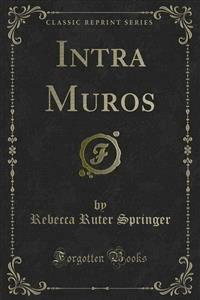
Intra Muros is a profound exploration of the spiritual and metaphysical realms that lie beyond the confines of earthly existence. Through its ethereal narrative style, Rebecca Ruter Springer melds beautiful prose with captivating imagery, sharing her personal experiences of vision and revelation. The book is distinguished by its contemplative tone and vivid descriptions, offering readers insight into the afterlife while engaging with themes of love, loss, and redemption. Published in the late 19th century, it reflects the era's growing interest in spiritualism and the esoteric, positioning itself as a significant contribution to both religious and literary discourses of that time. Rebecca Ruter Springer, a devoted spiritualist, was deeply influenced by her personal encounters with grief and transcendence. The loss of her loved ones prompted her to delve into questions of existence beyond the physical world, leading to her writing Intra Muros. Her background as a prolific writer and her involvement in social reform further enriched her narrative, as she incorporated values of empathy and elevated understanding of the human condition, making her work resonate strongly with contemporary audiences. Intra Muros is a must-read for those intrigued by the intersections of spirituality and literature. It invites readers to ponder the nature of the soul and the continuity of love beyond death, making it not only a reflective work but also a comforting companion for anyone grappling with their existential questions. In this enriched edition, we have carefully created added value for your reading experience: - A succinct Introduction situates the work's timeless appeal and themes. - The Synopsis outlines the central plot, highlighting key developments without spoiling critical twists. - A detailed Historical Context immerses you in the era's events and influences that shaped the writing. - A thorough Analysis dissects symbols, motifs, and character arcs to unearth underlying meanings. - Reflection questions prompt you to engage personally with the work's messages, connecting them to modern life. - Hand‐picked Memorable Quotes shine a spotlight on moments of literary brilliance. - Interactive footnotes clarify unusual references, historical allusions, and archaic phrases for an effortless, more informed read.
Das E-Book können Sie in Legimi-Apps oder einer beliebigen App lesen, die das folgende Format unterstützen:
Veröffentlichungsjahr: 2023
Ähnliche
















Intra Muros
Table of Contents
Introduction
Poised between the ache of separation that mortality imposes and the quiet conviction that love, learning, and communion are not extinguished by the grave, Intra Muros invites readers into a contemplative exploration of hope’s endurance, imagining a realm where the unfinished work of the heart continues, where rest and purpose coexist, and where the bonds forged in kindness are neither denied nor diminished but deepened, so that the questions by which the living are haunted—about memory, identity, and the shape of mercy—are approached with reverent curiosity rather than dread, with hospitality rather than fear.
Rebecca Ruter Springer’s Intra Muros is a work of Christian visionary prose from the late nineteenth century in the United States, set not in earthly streets but in a carefully imagined afterlife that resembles a hospitable city and garden. Written in the first person and presented as an account of a spiritual experience, it participates in a long tradition of devotional narratives that seek to console and instruct. First appearing in the closing years of the 1800s and subsequently reaching many readers through new editions, the book stands at the intersection of personal testimony and pastoral encouragement, shaped by Protestant sensibilities of its era.
The premise is simple and gently paced: after a season of severe illness, the narrator finds herself awakening in a realm of light and repose, where she is welcomed and guided through scenes that unfold with the unhurried logic of a lucid dream. The prose is measured, affectionate, and exact in its sensory detail, favoring warmth over spectacle and conversation over argument. Readers encounter a voice that is earnest without stridency and descriptive without ornament for its own sake, creating a contemplative rhythm. The tone remains steadfastly consoling, inviting reflection rather than debate, and urging attention to the ordinary textures of comfort, beauty, and care.
Among the work’s central themes are the continuity of personal identity, the expansion rather than erasure of loving ties, and the idea that spiritual maturation continues beyond death as a patient education in goodness. Springer imagines rest not as passivity but as harmony, a rightly ordered energy directed toward worship, learning, and service. The narrative treats home and hospitality as theological categories, recasting doctrine into domestic experience. It also meditates on memory—what is healed, what is cherished, what is transfigured—while portraying mercy as a process that respects freedom and invites consent. These emphases make the vision tender rather than triumphal, intimate rather than speculative.
The book’s artistry lies in the clarity of its imagery and the tact of its conversations. Landscapes, dwellings, and waterways are described with tactile calm, not to establish geography for its own sake but to suggest that beauty and order have moral weight. Dialogue frames theological reflection as companionship, allowing questions to arise naturally in the presence of trusted guides. The result is an ethic of care: gentleness, patience, and purposeful service shape the atmosphere. For readers who carry grief, these pages offer a vocabulary of hope that neither denies sorrow nor sensationalizes the hereafter, but locates consolation in recognizable gestures of belonging.
Although anchored in the devotional culture of its century, Intra Muros remains relevant to contemporary readers navigating medicalized dying, fragmented communities, and plural spiritual landscapes. It offers a humane language for talking about death that neither coerces nor scolds, inviting intergenerational and interdenominational conversations about meaning, remembrance, and responsibility. Its vision encourages practices of attention—care for the sick, hospitality for the lonely, generosity toward the stranger—that do not depend on agreement about metaphysics to be lifesaving. By framing transformation as a gentle schooling in love, the book provides an alternative to fear-driven narratives of the afterlife, sustaining courage without bluster.
Approached today, the narrative can be read as both historical artifact and spiritual memoir: a late-nineteenth-century imagination of heaven offered in the cadence of personal witness. It rewards slow reading and periodic pauses, allowing its scenes to function less as itinerary than as meditation. Without demanding assent to every detail, Springer’s account invites readers to examine what they hope for the beloved dead and for themselves, and to consider how such hope might reshape daily ethics. That enduring invitation is why the book still matters: it creates space for tender courage, making room for a future envisioned in the language of kindness.
Synopsis
Intra Muros, first published in 1898, is Rebecca Ruter Springer’s visionary account of the afterlife, written in a gentle, devotional mode rather than as formal theology. Framed as an experience granted during serious illness, the narrative follows a first-person journey “within the walls” of a radiant city that draws on scriptural imagery. Springer positions the work as a faithful record of what she saw and felt, offering scenes designed to console and instruct. The book develops steadily through visits to places of welcome, healing, learning, and worship, each episode building an impression of ordered, purposeful life beyond death.
At the outset, the narrator awakens in a landscape of brightness and calm, attended by familiar, loving companions who ease the passage from earthly weakness to renewed vitality. Recognition is immediate yet untroubled, emphasizing continuity of identity without the weight of sorrow. Guided through gardens and along living waters, she is introduced to a dwelling prepared for restoration and repose. The setting combines intimate domesticity with harmonious beauty, shaping the book’s central conviction that the next life is neither abstract nor solitary. Early scenes underscore hospitality and care as foundational features of the city, orienting the traveler toward gratitude, recovery, and wonder.
Subsequent chapters expand the itinerary to include houses of reception and healing, quiet halls of instruction, and places where music and praise rise like breath. The narrator learns that growth is ongoing: capacities enlarge, understanding deepens, and service replaces idleness. Memories persist without regret, forming a basis for learning rather than for grief. Companions explain the patterns of life there, not as rigid rules but as rhythms of love, order, and mutual aid. The emphasis falls on development—minds and affections refined, skills employed for others’ good—so that the world within the walls feels active and communal rather than static or solitary.
In exploring relationships, the narrative treats family ties and friendships as enduring, clarified by a larger charity that frees them from fear and possessiveness. Encounters with dear ones affirm recognition and affection, yet the governing principle is a purer love that widens circles rather than narrowing them. Domestic spaces are personal but open, and companionship often serves a purpose beyond private happiness. The narrator observes how affections find their true measure in service and worship, portraying community life as both intimate and expansive. These scenes address common questions about identity, attachment, and belonging, presenting harmony without erasing individuality or responsibility.
The tour also reveals a structured compassion that reaches both inward and outward. Residents participate in welcoming the newly arrived, tending those who need rest or instruction, and guiding souls whose earthly lives ended in pain or confusion. The narrator hears that the bonds of prayer continue to matter, with love from earth answered by ministries of patience and help, though earthly turmoil does not disturb the peace of the city. This interplay of care, wisdom, and measured knowledge supports a vision of heaven as responsive and benevolent, where freedom and assistance coexist and where progress is nurtured without haste.
Throughout, Springer anchors the vision in familiar Christian motifs—living water, a radiant city, welcoming gates—while avoiding doctrinal disputes or speculative timelines. The presence of divine love is constant and personal, the source of light, music, and order, yet details are offered as impressions rather than definitions. Explanations defer to experience: lessons arise from walking, seeing, and serving, not from argument. The narrative thus positions itself between testimony and parable, offering images that resonate with scripture without claiming to settle contested questions. Its measured tone aims to comfort and steady, inviting reflection more than debate.
First received as a simple record of consolation rather than a literary experiment, Intra Muros has endured as a devotional classic, often reprinted and sometimes titled Within the Gates. Its staying power lies in the coherence of its world: a heaven portrayed as purposeful, relational, and graciously familiar. By tracing a steady movement from weakness to renewed capability, from private comfort to shared service, it addresses perennial anxieties about death, separation, and meaning. Without relying on shocks or revelations, the book leaves readers with a spacious hope and a framework for grief that continues to speak across generations and traditions.
Historical Context
Rebecca Ruter Springer’s Intra Muros, also circulated as Within the Gates, appeared in the United States in 1898, at the close of the nineteenth century. Its setting is not a geographic locale but a visionary, devotional account of the afterlife narrated by an American Protestant author. The book emerged amid an expanding market for religious consolation literature and personal testimonies. Late Victorian readers in the U.S. encountered it through church networks, tract societies, and family libraries. The work’s form—an intimate first-person narrative—aligned with the era’s preference for experiential religion, shaping expectations that private spiritual impressions could edify a broad public.
Springer (1832–1904) was an American writer who spent much of her adult life in the Midwest and in Washington, D.C. She married William McKendree Springer, a Democratic congressman from Illinois who served in the U.S. House of Representatives from 1875 to 1895. Her social world linked reform-minded Protestants, politicians, and publishers during the Gilded Age. Though not a theologian, she wrote for religious audiences and contributed to the period’s abundant devotional prose. That milieu—pulpits, parlor readings, and women’s church societies—favored texts that instructed, comforted, and reinforced orthodox belief, shaping the tone and concerns that Intra Muros carries into its portrayal of hope beyond death.
The American Civil War (1861–1865) and the epidemics and accidents of industrializing society left late nineteenth-century readers acutely aware of mortality. In its wake, a flourishing genre of “consolation” literature addressed grief and the question of heaven. Elizabeth Stuart Phelps’s influential The Gates Ajar (1868) popularized a domesticated vision of the afterlife, stressing reunion and recognizable affections. Intra Muros follows within this cultural current, offering a detailed but scripturally inflected picture aimed at comforting the bereaved. Its emphasis on continuity between earthly ties and heavenly fellowship reflects the needs of households marked by loss and the pastoral concerns of Protestant clergy.
Across the 1870s–1890s, evangelical revivalism—associated with figures such as Dwight L. Moody—encouraged personal conversion narratives, Bible-centered piety, and practical holiness. The Holiness movement within Methodism and related churches stressed sanctification and growth in grace, themes that pervaded popular sermons and Sunday school materials. Intra Muros echoes these emphases by portraying character formation and service as meaningful beyond earthly life, without delving into sectarian controversy. Its gentle, didactic tone mirrors devotional books that circulated at camp meetings, missions, and home parlors, where testimony and exhortation blended. Readers thus encountered the text as part of an interdenominational evangelical culture prioritizing moral earnestness and consolation.
From 1848 onward, Modern Spiritualism, beginning with the Fox sisters’ “rappings,” introduced séances and mediumship into American life, provoking debate about communication with the dead. Clergy and evangelical writers warned against these practices while addressing the same anxieties—loss, certainty, and the unseen world. Intra Muros differentiates itself by presenting a private, theologically framed vision that avoids occult methods and locates authority in biblical resonance and moral fruit, not in mediums. Its popularity indicates how orthodox Protestants met curiosity about the afterlife with narratives promising comfort and order, rejecting sensationalism while satisfying a demand for vivid, hopeful description.
The period saw growing space for women’s religious authorship, from Sunday school fiction to memoirs and devotional guides, fostered by voluntary societies and temperance and missionary organizations. Women’s clubs and church reading circles broadened readerships and legitimized female spiritual testimony. Intra Muros participates in this culture by granting a woman narrator interpretive authority over an intensely personal experience, yet one presented for communal edification. The book’s domestic sensibility—attention to home, friendship, and care—parallels the era’s ideal of Christian womanhood while also extending it, suggesting that such virtues retain value in a redeemed order and can be discussed publicly by a laywoman writer.
Religious publishing expanded rapidly in the Gilded Age, with Chicago- and New York–based houses issuing inexpensive devotional books, tracts, and gift editions for Christian homes. Intra Muros fit the gift-book and comfort-book markets and was reprinted repeatedly in the early twentieth century; it also circulated under the alternative title Within the Gates. The work’s portability and intimate style helped it move through evangelical networks—Sunday schools, lending libraries, and pastoral care—where short, consoling narratives were prized. Its wide dissemination points to a broad Protestant appetite for orderly, uplifting depictions of heaven suitable for family reading and pastoral visitation.
Taken together, these contexts illuminate how Intra Muros reflects its era while gently shaping it. The book gathers late nineteenth-century evangelical commitments—family-centered piety, moral growth, and biblically tinged imagination—into a serene afterlife panorama meant to console and instruct. It implicitly critiques sensational Spiritualism and stern, speculative dogmatism by offering an accessible, experiential witness anchored in Protestant devotion. Without advancing a sectarian program, it affirms values prized in Gilded Age religious life: domestic affection, purposeful service, and hope beyond loss. In doing so, it preserves a snapshot of how many American Protestants wished heaven to answer the griefs and aspirations of their age.




