


118,99 €
Mehr erfahren.
- Herausgeber: John Wiley & Sons
- Kategorie: Wissenschaft und neue Technologien
- Sprache: Englisch
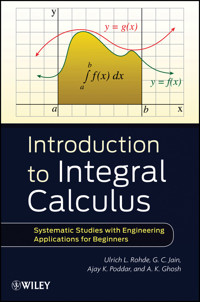
An accessible introduction to the fundamentals of calculus needed to solve current problems in engineering and the physical sciences I ntegration is an important function of calculus, and Introduction to Integral Calculus combines fundamental concepts with scientific problems to develop intuition and skills for solving mathematical problems related to engineering and the physical sciences. The authors provide a solid introduction to integral calculus and feature applications of integration, solutions of differential equations, and evaluation methods. With logical organization coupled with clear, simple explanations, the authors reinforce new concepts to progressively build skills and knowledge, and numerous real-world examples as well as intriguing applications help readers to better understand the connections between the theory of calculus and practical problem solving. The first six chapters address the prerequisites needed to understand the principles of integral calculus and explore such topics as anti-derivatives, methods of converting integrals into standard form, and the concept of area. Next, the authors review numerous methods and applications of integral calculus, including: * Mastering and applying the first and second fundamental theorems of calculus to compute definite integrals * Defining the natural logarithmic function using calculus * Evaluating definite integrals * Calculating plane areas bounded by curves * Applying basic concepts of differential equations to solve ordinary differential equations With this book as their guide, readers quickly learn to solve a broad range of current problems throughout the physical sciences and engineering that can only be solved with calculus. Examples throughout provide practical guidance, and practice problems and exercises allow for further development and fine-tuning of various calculus skills. Introduction to Integral Calculus is an excellent book for upper-undergraduate calculus courses and is also an ideal reference for students and professionals who would like to gain a further understanding of the use of calculus to solve problems in a simplified manner.
Sie lesen das E-Book in den Legimi-Apps auf:
Seitenzahl: 422
Veröffentlichungsjahr: 2012
Ähnliche

















Contents
Cover
Title Page
Copyright
Foreword
Preface
Biographies
Introduction
Acknowledgment
Chapter 1: Antiderivative(s) [or Indefinite Integral(s)]
1.1 Introduction
1.2 Useful Symbols, Terms, and Phrases Frequently Needed
1.3 Table(s) of Derivatives and their corresponding Integrals
1.4 Integration of Certain Combinations of Functions
1.5 Comparison Between the Operations of Differentiation and Integration
Chapter 2: Integration Using Trigonometric Identities
2.1 Introduction
2.2 Some Important Integrals Involving sin x and cos x
2.3 Integrals of the form , where a, br
Chapter 3a: Integration by Substitution: Change of Variable of Integration
3a.1 Introduction
3a.2 Generalized Power Rule
3a.3 Theorem
3a.5 To Evaluate Integrals of the Form where a, b, c, and d are constant
Chapter 3b: Further Integration by Substitution: Additional Standard Integrals
3b.1 Introduction
3b.2 Special cases of Integrals and proof for standard Integrals
3b.3 Some New Integrals
3b.4 Four More Standard Integrals
Chapter 4a: Integration by Parts
4a.1 Introduction
4a.2 Obtaining the Rule for Integration by Parts
4a.3 Helpful Pictures Connecting Inverse Trigonometric Functions with Ordinary Trigonometric Functions
4a.4 Rule for Proper Choice of First Function
Chapter 4b: Further Integration by Parts: Where the Given Integral Reappears on Right-Hand Side
4b.1 Introduction
4b.2 An Important Result: A Corollary to Integration by Parts
4b.3 Application of the corollary to Integration by Parts to integrals that cannot be solved otherwise
4b.4 Simpler method(s) for evaluating standard integrals
4b.5 To Evaluate
Chapter 5: Preparation for the Definite Integral: The Concept of Area
5.1 Introduction
5.2 Preparation for the Definite Integral
5.3 The Definite Integral As an Area
5.4 Definition of Area in Terms of the Definite Integral
5.5 Riemann Sums and the Analytical Definition of the Definite Integral
Chapter 6a: The Fundamental Theorems of Calculus
6a.1 Introduction
6a.2 Definite Integrals
6a.3 The Area of Function A(x)
6a.4 Statement and Proof of the Second Fundamental Theorem of Calculus
6a.5 Differentiating a Definite Integral with Respect to a Variable Upper Limit
Chapter 6b: The Integral Function Identified as ln x or loge x
6b.1 Introduction
6b.2 Definition of Natural Logarithmic Function
6b.3 The Calculus of ln x
6b.4 The Graph of the Natural Logarithmic Function ln x
6b.5 The Natural Exponential Function [exp(x) or ex]
Chapter 7a: Methods for Evaluating Definite Integrals
7a.1 Introduction
7a.2 The Rule for Evaluating Definite Integrals
7a.3 Some Rules (Theorems) for Evaluation of Definite Integrals
7a.4 Method of Integration by Parts in Definite Integrals
Chapter 7b: Some Important Properties of Definite Integrals
7b.1 Introduction
7b.2 Some Important Properties of Definite Integrals
7b.3 Proof of Property (P0)
7b.4 Proof of Property (P5)
7b.5 Definite Integrals: Types of Functions
Chapter 8a: Applying the Definite Integral to Compute the Area of a Plane Figure
8a.1 Introduction
8a.2 Computing the Area of a Plane Region
8a.3 Constructing the Rough Sketch [Cartesian Curves]
8a.4 Computing the Area of a Circle (Developing Simpler Techniques)
Chapter 8b: To Find Length(s) of Arc(s) of Curve(s), the Volume(s) of Solid(s) of Revolution, and the Area(s) of Surface(s) of Solid(s) of Revolution
8b.1 Introduction
8b.2 Methods of Integration
8b.3 Equation for the Length of a Curve in Polar Coordinates
8b.4 Solids of Revolution
8b.5 Formula for the Volume of a “Solid of Revolution”
8b.6 Area(s) of Surface(s) of Revolution
Chapter 9a: Differential Equations: Related Concepts and Terminology
9a.1 Introduction
9a.2 Important Formal Applications of Differentials (dy and dx)
9a.3 Independent Arbitrary Constants (or Essential Arbitrary Constants)
9a.4 Definition: Integral Curve
9a.5 Formation of a Differential Equation from a Given Relation, Involving Variables and the Essential Arbitrary Constants (or Parameters)
9a.6 General Procedure for Eliminating “Two” Independent Arbitrary Constants (Using the Concept of Determinant)
9a.7 The Simplest Type of Differential Equations
Chapter 9b: Methods of Solving Ordinary Differential Equations of the First Order and of the First Degree
9b.1 Introduction
9b.2 Methods of Solving Differential Equations
9b.4 Linear Differential Equations
9b.4 Type III: Exact Differential Equations
9b.5 Applications of Differential Equations
Index
Copyright © 2012 by John Wiley & Sons, Inc. All rights reserved
Published by John Wiley & Sons, Inc., Hoboken, New JerseyPublished simultaneously in Canada
No part of this publication may be reproduced, stored in a retrieval system, or transmitted in any form or by any means, electronic, mechanical, photocopying, recording, scanning, or otherwise, except as permitted under Section 107 or 108 of the 1976 United States Copyright Act, without either the prior written permission of the Publisher, or authorization through payment of the appropriate per-copy fee to the Copyright Clearance Center, Inc., 222 Rosewood Drive, Danvers, MA 01923, (978) 750-8400, fax (978) 750-4470, or on the web at www.copyright.com. Requests to the Publisher for permission should be addressed to the Permissions Department, John Wiley & Sons, Inc., 111 River Street, Hoboken, NJ 07030, (201) 748-6011, fax (201) 748-6008, or online at http://www.wiley.com/go/permission.
Limit of Liability/Disclaimer of Warranty: While the publisher and author have used their best efforts in preparing this book, they make no representations or warranties with respect to the accuracy or completeness of the contents of this book and specifically disclaim any implied warranties of merchantability or fitness for a particular purpose. No warranty may be created or extended by sales representatives or written sales materials. The advice and strategies contained herein may not be suitable for your situation. You should consult with a professional where appropriate. Neither the publisher nor author shall be liable for any loss of profit or any other commercial damages, including but not limited to special, incidental, consequential, or other damages.
For general information on our other products and services or for technical support, please contact our Customer Care Department within the United States at (800) 762-2974, outside the United States at (317) 572-3993 or fax (317) 572-4002.
Wiley also publishes its books in a variety of electronic formats. Some content that appears in print may not be available in electronic formats. For more information about Wiley products, visit our web site at www.wiley.com.
Library of Congress Cataloging-in-Publication Data:
Introduction to integral Calculus: systematic studies with engineering applications for beginners / Ulrich L. Rohde.
p. cm.
Includes bibliographical references and index.
ISBN 978-1-118-11776-7 (cloth)
1. Calculus, Integral–Textbooks. I. Rohde, Ulrich L.
QA308.I58 2012
515′.43–dc23
2011018422
Foreword
“What is Calculus?” is a classic deep question. Calculus is the most powerful branch of mathematics, which revolves around calculations involving varying quantities. It provides a system of rules to calculate quantities which cannot be calculated by applying any other branch of mathematics. Schools or colleges find it difficult to motivate students to learn this subject, while those who do take the course find it very mechanical. Many a times, it has been observed that students incorrectly solve real-life problems by applying Calculus. They may not be capable to understand or admit their shortcomings in terms of basic understanding of fundamental concepts! The study of Calculus is one of the most powerful intellectual achievements of the human brain. One important goal of this manuscript is to give beginner-level students an appreciation of the beauty of Calculus. Whether taught in a traditional lecture format or in the lab with individual or group learning, Calculus needs focusing on numerical and graphical experimentation. This means that the ideas and techniques have to be presented clearly and accurately in an articulated manner.
The ideas related with the development of Calculus appear throughout mathematical history, spanning over more than 2000 years. However, the credit of its invention goes to the mathematicians of the seventeenth century (in particular, to Newton and Leibniz) and continues up to the nineteenth century, when French mathematician Augustin-Louis Cauchy (1789–1857) gave the definition of the limit, a concept which removed doubts about the soundness of Calculus, and made it free from all confusion. The history of controversy about Calculus is most illuminating as to the growth of mathematics. The soundness of Calculus was doubted by the greatest mathematicians of the eighteenth century, yet, it was not only applied freely but great developments like differential equations, differential geometry, and so on were achieved. Calculus, which is the outcome of an intellectual struggle for such a long period of time, has proved to be the most beautiful intellectual achievement of the human mind.
There are certain problems in mathematics, mechanics, physics, and many other branches of science, which cannot be solved by ordinary methods of geometry or algebra alone. To solve these problems, we have to use a new branch of mathematics, known as Calculus. It uses not only the ideas and methods from arithmetic, geometry, algebra, coordinate geometry, trigonometry, and so on, but also the notion of limit, which is a new idea which lies at the foundation of Calculus. Using this notion as a tool, the derivative of a function (which is a variable quantity) is defined as the limit of a particular kind. In general, Differential Calculus provides a method for calculating “the rate of change” of the value of the variable quantity. On the other hand, Integral Calculus provides methods for calculating the total effect of such changes, under the given conditions. The phrase rate of change mentioned above stands for the actual rate of change of a variable, and not its average rate of change. The phrase “rate of change” might look like a foreign language to beginners, but concepts like rate of change, stationary point, and root, and so on, have precise mathematical meaning, agreed-upon all over the world. Understanding such words helps a lot in understanding the mathematics they convey. At this stage, it must also be made clear that whereas algebra, geometry, and trigonometry are the tools which are used in the study of Calculus, they should not be confused with the subject of Calculus.
This manuscript is the result of joint efforts by Prof. Ulrich L. Rohde, Mr. G. C. Jain, Dr. Ajay K. Poddar, and myself. All of us are aware of the practical difficulties of the students face while learning Calculus. I am of the opinion that with the availability of these notes, students should be able to learn the subject easily and enjoy its beauty and power. In fact, for want of such simple and systematic work, most students are learning the subject as a set of rules and formulas, which is really unfortunate. I wish to discourage this trend.
Professor Ulrich L. Rohde, Faculty of Mechanical, Electrical and Industrial Engineering (RF and Microwave Circuit Design & Techniques) Brandenburg University of Technology, Cottbus, Germany has optimized this book by expanding it, adding useful applications, and adapting it for today's needs. Parts of the mathematical approach from the Rohde, Poddar, and Böeck textbook on wireless oscillators (The Design of Modern Microwave Oscillators for Wireless Applications: Theory and Optimization, John Wiley & Sons, ISBN 0-471-72342-8, 2005) were used as they combine differentiation and integration to calculate the damped and starting oscillation condition using simple differential equations. This is a good transition for more challenging tasks for scientific studies with engineering applications for beginners who find difficulties in understanding the problem-solving power of Calculus.
Mr. Jain is not a teacher by profession, but his curiosity to go to the roots of the subject to prepare the so-called concept-oriented notes for systematic studies in Calculus is his contribution toward creating interest among students for learning mathematics in general, and Calculus in particular. This book started with these concept-oriented notes prepared for teaching students to face real-life engineering problems. Most of the material pertaining to this manuscript on calculus was prepared by Mr. G. C. Jain in the process of teaching his kids and helping other students who needed help in learning the subject. Later on, his friends (including me) realized the beauty of his compilation and we wanted to see his useful work published.
I am also aware that Mr. Jain got his notes examined from some professors at the Department of Mathematics, Pune University, India. I know Mr. Jain right from his scientific career at Armament Research and Development Establishment (ARDE) at Pashan, Pune, India, where I was a Senior Scientist (1982–1998) and headed the Aerodynamic Group ARDE, Pune in DRDO (Defense Research and Development Organization), India. Coincidently, Dr. Ajay K. Poddar, Chief Scientist at Synergy Microwave Corp., NJ 07504, USA was also a Senior Scientist (1990–2001) in a very responsible position in the Fuze Division of ARDE and was aware of the aptitude of Mr. Jain.
Dr. Ajay K. Poddar has been the main driving force towards the realization of the conceptualized notes prepared by Mr. Jain in manuscript form and his sincere efforts made timely publication possible. Dr. Poddar has made tireless effort by extending all possible help to ensure that Mr. Jain's notes are published for the benefit of the students. His contributions include (but are not limited to) valuable inputs and suggestions throughout the preparation of this manuscript for its improvement, as well as many relevant literature acquisitions. I am sure, as a leading scientist, Dr. Poddar will have realized how important it is for the younger generation to avoid shortcomings in terms of basic understanding of the fundamental concepts of Calculus.
I have had a long time association with Mr. Jain and Dr. Poddar at ARDE, Pune. My objective has been to proofread the manuscript and highlight its salient features. However, only a personal examination of the book will convey to the reader the broad scope of its coverage and its contribution in addressing the proper way of learning Calculus. I hope this book will prove to be very useful to the students of Junior Colleges and to those in higher classes (of science and engineering streams) who might need it to get rid of confusions, if any.
My special thanks goes to Dr. Poddar, who is not only a gifted scientist but has also been a mentor. It was his suggestion to publish the manuscript in two parts (Part I: Introduction to Differential Calculus: Systematic Studies with Engineering Applications for Beginners and Part II: Introduction to Integral Calculus: Systematic Studies with Engineering Applications for Beginners) so that beginners could digest the concepts of Differential and Integral Calculus without confusion and misunderstanding. It is the purpose of this book to provide a clear understanding of the concepts needed by beginners and engineers who are interested in the application of Calculus of their field of study. This book has been designed as a supplement to all current standard textbooks on Calculus and each chapter begins with a clear statement of pertinent definitions, principles, and theorems together with illustrative and other descriptive material. Considerably more material has been included here than can be covered in most high schools and undergraduate study courses. This has been done to make the book more flexible; to provide concept-oriented notes and stimulate interest in the relevant topics. I believe that students learn best when procedural techniques are laid out as clearly and simply as possible. Consistent with the reader's needs and for completeness, there are a large number of examples for self-practice.
The authors are to be commended for their efforts in this endeavor and I am sure that both Part I and Part II will be an asset to the beginner's handbook on the bookshelf. I hope that after reading this book, the students will begin to share the enthusiasm of the authors in understanding and applying the principles of Calculus and its usefulness. With all these changes, the authors have not compromised our belief that the fundamental goal of Calculus is to help prepare beginners enter the world of mathematics, science, and engineering.
Finally, I would like to thank Susanne Steitz-Filler, Editor (Mathematics and Statistics) at John Wiley & Sons, Inc., Danielle Lacourciere, Senior Production Editor at John Wiley & Sons, Inc., and Sanchari S. at Thomosn Digital for her patience and splendid cooperation throughout the journey of this publication.
Ajoy Kanti GhoshProfessor & Faculty Incharge (Flight Laboratory)Department of Aerospace EngineeringIIT Kanpur, India
Preface
In general, there is a perception that Calculus is an extremely difficult subject, probably because the required number of good teachers and good books are not available. We know that books cannot replace teachers, but we are of the opinion that, good books can definitely reduce dependence on teachers, and students can gain more confidence by learning most of the concepts on their own. In the process of helping students to learn Calculus, we have gone through many books on the subject, and realized that whereas a large number of good books are available at the graduate level, there is hardly any book available for introducing the subject to beginners. The reason for such a situation can be easily understood by anyone who knows the subject of Calculus and hence the practical difficulties associated with the process of learning the subject. In the market hundreds of books are available on Calculus. All these books contain a large number of important solved problems. Besides, the rules for solving the problems and the list of necessary formulae are given in the books, without discussing anything about the basic concepts involved. Of course, such books are useful for passing the examination(s), but Calculus is hardly learnt from these books. Initially, the coauthors had compiled concept-oriented notes for systematic studies in differential and integral Calculus, intended for beginners. These notes were used by students, in school- and undergraduate-level courses. The response and the appreciation experienced from the students and their parents encouraged us to make these notes available to the beginners. It is due to the efforts of our friends and well-wishers that our dream has now materialized in the form of two independent books: Part I for Differential Calculus and Part II for Integral Calculus. Of course there are some world class authors who have written useful books on the subject at introductory level, presuming that the reader has the necessary knowledge of prerequisites. Some such books are What is Calculus About? (By Professor W.W. Sawyer), Teach Yourself Calculus (By P. Abbott, B.A), Calculus Made Easy (By S.P. Thomson), and Calculus Explained (By W.J. Reichmann). Any person with some knowledge of Calculus will definitely appreciate the contents and the approach of the authors. However, a reader will be easily convinced that most of the beginners may not be able to get (from these books) the desired benefit, for various reasons. From this point of view, both parts (Part I and Part II) of our book would prove to be unique since it provides a comprehensive material on Calculus, for the beginners. First six chapters of Part I would help the beginner to come up to the level, so that one can easily learn the concept of limit, which is in the foundation of calculus. The purpose of these works is to provide the basic (but solid) foundation of Calculus to beginners. The books aim to show them the enjoyment in the beauty and power of Calculus and develop the ability to select proper material needed for their studies in any technical and scientific field, involving Calculus.
One reason for such a high dropout rate is that at beginner levels, Calculus is so poorly taught. Classes tend to be so boring that students sometimes fall asleep. Calculus textbooks get fatter and fatter every year, with more multicolor overlays, computer graphics, and photographs of eminent mathematicians (starting with Newton and Leibniz), yet they never seem easier to comprehend. We look through them in vain for simple, clear exposition, and for problems that will hook a student's interest. Recent years have seen a great hue and cry in mathematical circles over ways to improve teaching Calculus to beginner and high-school students. Endless conferences have been held, many funded by the federal government, dozens of experimental programs are here and there. Some leaders of reform argue that a traditional textbook gets weightier but lacks the step-by-step approach to generate sufficient interest to learn Calculus in beginner, high school, and undergraduate students. Students see no reason why they should master tenuous ways of differentiating and integrating by hand when a calculator or computer will do the job. Leaders of Calculus reform are not suggesting that calculators and computers should no longer be used; what they observe is that without basic understanding about the subject, solving differentiation and integration problems will be a futile exercise. Although suggestions are plentiful for ways to improve Calculus understanding among students and professionals, a general consensus is yet to emerge.
The word “Calculus” is taken from Latin and it simply means a “stone” or “pebble”, which was employed by the Romans to assist the process of counting. By extending the meaning of the word “Calculus”, it is now applied to wider fields (of calculation) which involve processes other than mere counting. In the context of this book (with the discussion to follow), the word “Calculus” is an abbreviation for Infinitesimal Calculus or to one of its two separate but complimentary branches—Differential Calculus and Integral Calculus. It is natural that the above terminology may not convey anything useful to the beginner(s) until they are acquainted with the processes of differentiation and integration. This book is a true textbook with examples, it should find a good place in the market and shall compare favorably to those with more complicated approaches.
The author's aim throughout has been to provide a tour of Calculus for a beginner as well as strong fundamental basics to undergraduate students on the basis of the following questions, which frequently came to our minds, and for which we wanted satisfactory and correct answers.
i.What is Calculus?
ii.What does it calculate?
iii.Why do teachers of physics and mathematics frequently advise us to learn Calculus seriously?
iv.How is Calculus more important and more useful than algebra and trigonometry or any other branch of mathematics?
v.Why is Calculus more difficult to absorb than algebra or trigonometry?
vi.Are there any problems faced in our day-to-day life that can be solved more easily by Calculus than by arithmetic or algebra?
vii.Are there any problems which cannot be solved without Calculus?
viii.Why study Calculus at all?
ix.Is Calculus different from other branches of mathematics?
x.What type(s) of problems are handled by Calculus?
At this stage, we can answer these questions only partly. However, as we proceed, the associated discussions will make the answers clear and complete. To answer one or all of the above questions, it was necessary to know: How does the subject of Calculus begin?; How can we learn Calculus? and What can Calculus do for us? The answers to these questions are hinted at in the books: What is Calculus about? and Mathematician's Delight, both by W.W. Sawyer. However, it will depend on the curiosity and the interest of the reader to study, understand, and absorb the subject. The author use very simple and nontechnical language to convey the ideas involved. However, if the reader is interested to learn the operations of Calculus faster, then he may feel disappointed. This is so, because the nature of Calculus and the methods of learning it are very different from those applicable in arithmetic or algebra. Besides, one must have a real interest to learn the subject, patience to read many books, and obtain proper guidance from teachers or the right books.
Calculus is a higher branch of mathematics, which enters into the process of calculating changing quantities (and certain properties), in the field of mathematics and various branches of science, including social science. It is called Mathematics of Change. We cannot begin to answer any question related with change unless we know: What is that change and how it changes? This statement takes us closer to the concept of function y = f(x), wherein “y” is related to “x” through a rule “f”. We say that “y” is a function of x, by which we mean that “y” depends on “x”. (We say that “y” is a dependent variable, depending on the value of x, an independent variable.) From this statement, it is clear that as the value of “x” changes, there results a corresponding change in the value of “y”, depending on the nature of the function “f ” or the formula defining “f ”.
The immense practical power of Calculus is due to its ability to describe and predict the behavior of the changing quantities “y” and “x”. In case of linear functions [which are of the form y = mx + b], an amount of change in the value of “x” causes a proportionate change in the value of “y”. However, in the case of other functions (like y = x2 − 5, y = x3, y = x4 − x3 + 3, y = sin x, y = 3ex + x, etc.) which are not linear, no such proportionality exists. Our interest lies in studying the behavior of the dependent variable “y”[=f(x)] with respect to the change in (the value of) the independent variable “x”. In other words, we wish to find the rate at which “y” changes with respect to “x”.
We know that every rate is the ratio of change that may occur in quantities which are related to one another through a rule. It is easy to compute the average rate at which the value of y changes when x is changed from x1 to x2. It can be easily checked that (for the nonlinear functions) these average rate(s) are different between different values of x. [Thus, if |x2 − x1| = |x3 − x2| = |x4 − x3| = . . . . . ., (for all x1, x2, x3, x4,. . .) then we have f(x2) − f(x1) ≠ f(x3) − f(x2) ≠ f(x4) − f(x3) ≠ . . . . . .]. Thus, we get that the rate of change of y is different in between different values of x.
Our interest lies in computing the rate of change of “y” at every value of “x”. It is known as the instantaneous rate of change of “y” with respect to “x”, and we call it the “rate function” of “y” with respect to “x”. It is also called the derived function of “y” with respect to “x” and denoted by the symbol y′[=f ′(x)]. The derived function f ′(x) is also called the derivative of y[=f(x)] with respect to x. The equation y′ = f ′(x) tells that the derived function f′(x) is also a function of x, derived (or obtained) from the original function y = f(x). There is another (useful) symbol for the derived function, denoted by dy/dx. This symbol appears like a ratio, but it must be treated as a single unit, as we will learn later. The equation y′ = f ′(x) gives us the instantaneous rate of change of y with respect to x, for every value of “x”, for which f ′(x) is defined.
To define the derivative formally and to compute it symbolically is the subject of Differential Calculus. In the process of defining the derivative, various subtleties and puzzles will inevitably arise. Nevertheless, it will not be difficult to grasp the concept (of derivatives) with our systematic approach. The relationship between f(x) and f ′(x) is the main theme. We will study what it means for f ′(x) to be “the rate function” of f(x), and what each function says about the other. It is important to understand clearly the meaning of the instantaneous rate of change of f(x) with respect to x. These matters are systematically discussed in this book. Note that we have answered the first two questions and now proceed to answer the third one.
There are certain problems in mathematics and other branches of science, which cannot be solved by ordinary methods known to us in arithmetic, geometry, and algebra alone. In Calculus, we can study the properties of a function without drawing its graph. However, it is important to be aware of the underlying presence of the curve of the given function. Recall that this is due to the introduction of coordinate geometry by Decartes and Fermat. Now, consider the curve defined by the function y = x3 − x2 − x. We know that, the slope of this curve changes from point to point. If it is desired to find its slope at x = 2, then Calculus alone can help us give the answer, which is 7. No other branch of mathematics would be useful.
Calculus uses not only the ideas and methods from arithmetic, geometry, algebra, coordinate geometry, trigonometry, and so on but also the notion of limit, which is a new idea that lies at the foundation of Calculus. Using the notion of limit as a tool, the derivative of a function is defined as the limit of a particular kind. (It will be seen later that the derivative of a function is generally a new function.) Thus, Calculus provides a system of rules for calculating changing quantities which cannot be calculated otherwise. Here it may be mentioned that the concept of limit is equally important and applicable in Integral Calculus, which will be clear when we study the concept of the definite integral in Chapter 5 of Part II. Calculus is the most beautiful and powerful achievement of the human brain. It has been developed over a period of more than 2000 years. The idea of derivative of a function is among the most important concepts in all of mathematics and it alone distinguishes Calculus from the other branches of mathematics.
The derivative and an integral have found many diverse uses. The list is very long and can be seen in any book on the subject. Differential calculus is a subject which can be applied to anything which moves, or changes or has a shape. It is useful for the study of machinery of all kinds - for electric lighting and wireless, optics and thermodynamics. It also helps us to answer questions about the greatest and smallest values a function can take. Professor W.W. Sawyer, in his famous book Mathematician's Delight, writes: Once the basic ideas of differential calculus have been grasped, a whole world of problems can be tackled without great difficulty. It is a subject well worth learning.
On the other hand, integral calculus considers the problem of determining a function from the information about its rate of change. Given a formula for the velocity of a body, as a function of time, we can use integral calculus to produce a formula that tells us how far the body has traveled from its starting point, at any instant. It provides methods for the calculation of quantities such as areas and volumes of curvilinear shapes. It is also useful for the measurement of dimensions of mathematical curves.
The concepts basic to Calculus can be traced, in uncrystallized form, to the time of the ancient Greeks (around 287–212 BC). However, it was only in the sixteenth and the early seventeenth centuries that mathematicians developed refined techniques for determining tangents to curves and areas of plane regions. These mathematicians and their ingenious techniques set the stage for Isaac Newton (1642–1727) and Gottfried Leibniz (1646–1716), who are usually credited with the “invention” of Calculus.
Later on, the concept of the definite integral was also developed. Newton and Leibniz recognized the importance of the fact that finding derivatives and finding integrals (i.e., antiderivatives) are inverse processes, thus making possible the rule for evaluating definite integrals. All these matters are systematically introduced in Part II of the book. (There were many difficulties in the foundation of the subject of Calculus. Some problems reflecting conflicts and doubts on the soundness of the subject are reflected in the “Historical Notes” given at the end of Chapter 9 of Part I.) During the last 150 years, Calculus has matured bit by bit. In the middle of the nineteenth century, French Mathematician Augustin-Louis Cauchy (1789–1857) gave the definition of limit, which removed all doubts about the soundness of Calculus and made it free from all confusion. It was then that Calculus had become, mathematically, much as we know it today.
To obtain the derivative of a given function (and to apply it for studying the properties of the function) is the subject of the ‘differential calculus’. On the other hand, computing a function whose derivative is the given function is the subject of integral calculus. [The function so obtained is called an anti-derivative of the given function.] In the operation of computing the antiderivative, the concept of limit is involved indirectly. On the other hand, in defining the definite integral of a function, the concept of limit enters the process directly. Thus, the concept of limit is involved in both, differential and integral calculus. In fact, we might define calculus as the study of limits. It is therefore important that we have a deep understanding of this concept. Although, the topic of limit is rather theoretical in nature, it has been presented and discussed in a very simple way, in the Chapters 7(a) and 7(b) of Part-I (i.e. Differential Calculus) and in Chapter 5 of Part-II (i.e. Integral Calculus). Around the year 1930, the increasing use of Calculus in engineering and sciences, created a necessary requirement to encourage students of engineering and science to learn Calculus. During those days, Calculus was considered an extremely difficult subject. Many authors came up with introductory books on Calculus, but most students could not enjoy the subject, because the basic concepts of the Calculus and its interrelations with the other subjects were probably not conveyed or understood properly. The result was that most of the students learnt Calculus only as a set of rules and formulas. Even today, many students (at the elementary level) “learn” Calculus in the same way. For them, it is easy to remember formulae and apply them without bothering to know: How the formulae have come and why do they work?
The best answer to the question “Why study Calculus at all?” is available in the book: Calculus from Graphical, Numerical and Symbolic Points of View by Arnold Ostebee and Paul Zorn. There are plenty of good practical and “educational” reasons, which emphasize that one must study Calculus:
Because it is good for applications;Because higher mathematics requires it;Because its good mental training;Because other majors require it; andBecause jobs require it.Also, another reason to study Calculus (according to the authors) is that Calculus is among our deepest, richest, farthest-reaching, and most beautiful intellectual achievements. This manuscript differs in certain respects, from the conventional books on Calculus for the beginners.
Organization
The work is divided into two independent books: Book I—Differential Calculus (Introduction to Differential Calculus: Systematic Studies with Engineering Applications for Beginners) and Book II–Integral Calculus (Introduction to Integral Calculus: Systematic Studies with Engineering Applications for Beginners).
Part I consists of 23 chapters in which certain chapters are divided into two sub-units such as 7a and 7b, 11a and 11b, 13a and 13b, 15a and 15b, 19a and 19b. Basically, these sub-units are different from each other in one way, but they are interrelated through concepts.
Part II consists of nine chapters in which certain chapters are divided into two sub-units such as 3a and 3b, 4a and 4b, 6a and 6b, 7a and 7b, 8a and 8b, and finally 9a and 9b. The division of chapters is based on the same principle as in the case of Part I. Each chapter (or unit) in both the parts begins with an introduction, clear statements of pertinent definitions, principles and theorems. Meaning(s) of different theorems and their consequences are discussed at length, before they are proved. The solved examples serve to illustrate and amplify the theory, thus bringing into sharp focus many fine points, to make the reader comfortable.
The contents of each chapter are accompanied by all the necessary details. However, some useful information about certain chapters is furnished below. Also, illustrative and other descriptive material (along with notes and remarks) is given to help the beginner understand the ideas involved easily.
Book II (Introduction to Integral Calculus: Systematic Studies with Engineering Applications for Beginners):
Chapter 1 deals with the operation of antidifferentiation (also called integration) as the inverse process of differentiation. Meanings of different terms are discussed at length. The comparison between the operations of differentiation and integration are discussed.Chapter(s) 2, 3a, 3b, 4a, and 4b deal with different methods for converting the given integrals to the standard form, so that the antiderivatives (or integrals) of the given functions can be easily written using the standard results.Chapter 5 deals with the discussion of the concept of area, leading to the concept of the definite integral and certain methods of evaluating definite integrals.Chapter 6a deals with the first and second fundamental theorems of Calculus and their applications in computing definite integrals.Chapter 6b deals with the process of defining the natural logarithmic function using Calculus.Chapter 7a deals with the methods of evaluating definite integrals using the second fundamental theorem of Calculus.Chapter 7b deals with the important properties of definite integrals established using the second fundamental theorem of Calculus and applying them to evaluate definite integrals.Chapter 8a deals with the computation of plane areas bounded by curves.Chapter 8b deals with the application of the definite integral in computing the lengths of curves, the volumes of solids of revolution, and the curved surface areas of the solids of revolution.Chapter 9a deals with basic concepts related to differential equations and the methods of forming them and the types of their solutions.Chapter 9b deals with certain methods of solving ordinary differential equations of the first order and first degree.An important advice for using both the parts of this book:
The CONTENTS clearly indicate how important it is to go through the prerequisites. Certain concepts [like (−1) · (−1) = 1, and why division by zero is not permitted in mathematics, etc] which are generally accepted as rules, are discussed logically. The concept of infinity and its algebra are very important for learning calculus. The ideas and definitions of functions introduced in Chapter-2, and extended in Chapter-6, are very useful.The role of co-ordinate geometry in defining trigonometric functions and in the development of calculus should be carefully learnt.The theorems, in both the Parts are proved in a very simple and convincing way. The solved examples will be found very useful by the students of plus-two standard and the first year college. Difficult problems have been purposely not included in solved examples and the exercise, to maintain the interest and enthusiasm of the beginners. The readers may pickup difficult problems from other books, once they have developed interest in the subject.Concepts of limit, continuity and derivative are discussed at length in chapters 7(a) & 7(b), 8 and 9, respectively. The one who goes through from chapters-1 to 9 has practically learnt more than 60% of differential calculus. The readers will find that remaining chapters of differential calculus are easy to understand. Subsequently, readers should not find any difficulties in learning the concepts of integral calculus and the process of integration including the methods of computing definite integrals and their applications in fining areas and volumes, etc.The differential equations right from their formation and the methods of solving certain differential equations of first order and first degree will be easily learnt.Students of High Schools and Junior College level may treat this book as a text book for the purpose of solving the problems and may study desired concepts from the book treating it as a reference book. Also the students of higher classes will find this book very useful for understanding the concepts and treating the book as a reference book for this purpose. Thus, the usefulness of this book is not limited to any particular standard. The reference books are included in the bibliography.I hope, above discussion will be found very useful to all those who wish to learn the basics of calculus (or wish to revise them) for their higher studies in any technical field involving calculus.
Suggestions from the readers for typos/errors/improvements will be highly appreciated.
Finally, efforts have been made to the ensure that the interest of the beginner is maintained all through. It is a fact that reading mathematics is very different from reading a novel. However, we hope that the readers will enjoy this book like a novel and learn Calculus. We are very sure that if beginners go through the first six chapters of Part I (i.e., prerequisites), then they may not only learn Calculus, but will start loving mathematics.
Dr. -Ing. Ajay Kumar PoddarChief ScientistSynergy Microwave CorporationNJ 07504, USAFormer Senior Scientist (DRDO, India)
Spring 2011
Biographies
Ulrich L. Rohde holds a Ph.D. in Electrical Engineering (1978) and a Sc.D. (Hon., 1979) in Radio Communications, a Dr.-Ing (2004), a Dr.-Ing Habil (2011), and several honorary doctorates. He is President of Communications Consulting Corporation; Chairman of Synergy Microwave Corp., Paterson, NJ; and a partner of Rohde & Schwarz, Munich, Germany. Previously, he was the President of Compact Software, Inc., and Business Area Director for Radio Systems of RCA, Government Systems Division, NJ. Dr. Rohde holds several dozen patents and has published more than 200 scientific papers in professional journals, has authored and coauthored 10 technical books. Dr. Rohde is a Fellow Member of the IEEE, Invited Panel Member for the FCC's Spectrum Policy Task Force on Issues Related to the Commission's Spectrum Policies, ETA KAPPA NU Honor Society, Executive Association of the Graduate School of Business-Columbia University, New York, the Armed Forces Communications & Electronics Association, fellow of the Radio Club of America, and former Chairman of the Electrical and Computer Engineering Advisory Board at New Jersey Institute of Technology. He is elected to the “First Microwave & RF Legends” (Global Voting from professionals and academician from universities and industries: Year 2006). Recently Prof. Rohde received the prestigious “Golden Badge of Honor” and university's highest Honorary Senator Award in Munich, Germany.
G.C. Jain graduated in science (Major—Advance Mathematics) from St. Aloysius College, Jabalpur in 1962. Mr. Jain has started his career as a Technical Supervisor (1963–1970), worked for more than 38 years as a Scientist in Defense Research & Development Organization (DRDO). He has been involved in many state-of-the-art scientific projects and also responsible for stabilizing MMG group in ARDE, Pune. Apart from scientific activities, Mr. Jain spends most of his time as a volunteer educator to teach children from middle and high school.
Ajay K. Poddar graduated from IIT Delhi, Doctorate (Dr.-Ing.) from TU-Berlin (Technical University Berlin) Germany. Dr. Poddar is a Chief Scientist, responsible for design and development of state-of-the-art technology (oscillator, synthesizer, mixer, amplifier, filters, antenna, and MEMS based RF & MW components) at Synergy Microwave Corporation, NJ. Previously, he worked as a Senior Scientist and was involved in many state-of-the-art scientific projects in DRDO, India. Dr. Poddar holds more than dozen US, European, Japanese, Russian, Chinese patents, and has published more than 170 scientific papers in international conferences and professional journals, contributed as a coauthor of three technical books. He is a recipient of several scientific achievement awards, including RF & MW state-of-the-art product awards for the year 2004, 2006, 2008, 2009, and 2010. Dr. Poddar is a senior member of professional societies IEEE (USA), AMIE (India), and IE (India) and involved in technical and academic review committee, including the Academic Advisory Board member Don Bosco Institute of Technology, Bombay, India (2009–to date). Apart from academic and scientific activities, Dr. Poddar is involved in several voluntary service organizations for the greater cause and broader perspective of the society.
A.K. Ghosh graduated and doctorate from IIT Kanpur. Currently, he is a Professor & Faculty Incharge (Flight Laboratory) Accountable Manager (DGCA), Aerospace Engineering, IIT Kanpur, India (one of the most prestigious institutes in the world). Dr. Ghosh has published more than 120 scientific papers in international conferences and professional journals; recipient of DRDO Technology Award, 1993, young scientist award, Best Paper Award—In-house Journal “Shastra Shakti” ARDE, Pune. Dr. Ghosh has supervised more than 30 Ph.D. students and actively involved in several professional societies and board member of scientific review committee in India and abroad. Previously, he worked as a Senior Scientist and Headed Aerodynamic Group ARDE, Pune in DRDO, India.
Introduction
In less than 15 min, let us realize that calculus is capable of computing many quantities accurately, which cannot be calculated using any other branch of mathematics.
To be able to appreciate this fact, we consider a “nonvertical line” that makes an angle “θ” with the positive direction of x-axis, and that θ ≠ 0. We say that the given line is “inclined” at an angle “θ” (or that the inclination of the given line is “θ”).
The important idea of our interest is the “slope of the given line,” which is expressed by the trigonometric ratio “tan θ.” Technically the slope of the line tells us that if we travel by “one unit,” in the positive direction along the x-axis, then the number of units by which the height of the line rises (or falls) is the measure of its slope.
Also, it is important to remember that the “slope of a line” is a constant for that line. On the other hand “the slope of any curve” changes from point to point and it is defined in terms of the slope of the “tangent line” existing there. To find the slope of a curve y = f(x) at any value of x, the “differential calculus” is the only branch of Mathematics, which can be used even if we are unable to imagine the shape of the curve.
At this stage, it is very important to remember (in advance) and understand clearly that whereas, the subject of Calculus demands the knowledge of algebra, geometry, coordinate geometry and trigonometry, and so on (as a prerequisite), but they do know from the subject of Calculus. Hence, calculus should not be confused as a combination of these branches.
Calculus is a different subject. The backbone of Calculus is the “concept of limit,” which is introduced and discussed at length in Part I of the book. The first eight chapters in Part I simply offer the necessary material, under the head: What must you know to learn Calculus? We learn the concept of “derivative” in Chapter 9. In fact, it is the technical term for the “slope.”
The ideas developed in Part I are used to define an inverse operation of computing antiderivative. (In a sense, this operation is opposite to that of computing the derivative of a given function.)
Most of the developments in the field of various sciences and technologies are due to the ideas developed in computing derivatives and antiderivatives (also called integrals). The matters related with integrals are discussed in “Integral Calculus.”
The two branches are in fact complimentary, since the process of integral calculus is regarded as the inverse process of the differential calculus. As an application of integral calculus, the area under a curve y = f(x) from x = a to x = b, and the x-axis can be computed only by applying the integral calculus. No other branch of mathematics is helpful in computing such areas with curved boundaries.
Prof. Ulrich L. Rohde
Acknowledgment
There have been numerous contributions by many people to this work, which took much longer than expected. As always, Wiley has been a joy to work with through the leadership, patience and understanding of Susanne Steitz-Filler.
It is a pleasure to acknowledge our indebtedness to Professor Hemant Bhate (Department of Mathematics) and Dr. Sukratu Barve (Center for Modeling and Simulation), University of Pune, India, who read the manuscript and gave valuable suggestions for improvements.
We wish to express our heartfelt gratitude to the Shri K.N. Pandey, Dr. P. K. Roy, Shri Kapil Deo, Shri D.K. Joshi, Shri S.C. Rana, Shri J. Nagarajan, Shri A. V. Rao, Shri Jitendra C. Yadhav, and Dr. M. B. Talwar for their logistic support throughout the preparation of the manuscripts. We are thankful to Mrs. Yogita Jain, Dr. (Mrs.) Shilpa Jain, Mrs. Shubhra Jain, Ms. Anisha Apte, Ms. Rucha Lakhe, Ms. Radha Borawake, Mr. Parvez Daruwalla, Mr. Vaibhav Jain, Mrs. Shipra Jain, and Mr. Atul Jain, for their support towards sequencing the material, proof reading the manuscripts and rectifying the same, from time to time.
We also express our thanks to Mr. P. N. Murali, Mr. Nishant Singhai, Mr. Nikhil Nanawaty and Mr. A.G. Nagul, who have helped in typing and checking it for typographical errors from time to time.




