


Erhalten Sie Zugang zu diesem und mehr als 300000 Büchern ab EUR 5,99 monatlich.
- Herausgeber: Crossway
- Kategorie: Religion und Spiritualität
- Sprache: Englisch
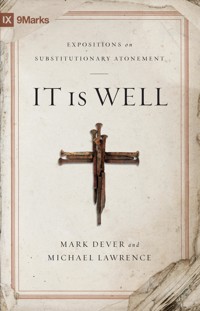
The idea of Christ's substitutionary atonement for sinners is central in both the Old and New Testaments—from the Passover to the prophets to the words of Jesus and the apostles. In It Is Well, pastors Mark Dever and Michael Lawrence demonstrate how the atonement is clearly taught throughout Scripture. Starting with Exodus 12 and moving through other key Old Testament passages into the Gospels and the epistles of Paul and Peter, the authors offer careful expositions on fourteen crucial texts. As they speak to important issues such as what happens when there is no substitute for sin, why God forsook Christ, Jesus' perspective on his substitutionary work, and the necessity and benefits of the atonement, they show how much the doctrine applies to the Christian life. It Is Well not only encourages pastors to preach this essential doctrine for the strengthening of the church, but it helps individual believers understand and exult in the richness of God's love in Christ. Part of the 9Marks series.
Sie lesen das E-Book in den Legimi-Apps auf:
Seitenzahl: 430
Veröffentlichungsjahr: 2010
Das E-Book (TTS) können Sie hören im Abo „Legimi Premium” in Legimi-Apps auf:
Ähnliche









It Is Well: Expositions on Substitutionary AtonementCopyright © 2010 by Mark Dever and Thomas Michael Lawrence
Published by Crossway Booksa publishing ministry of Good News Publishers 1300 Crescent StreetWheaton, Illinois 60187
All rights reserved. No part of this publication may be reproduced, stored in a retrieval system, or transmitted in any form by any means, electronic, mechanical, photocopy, recording, or otherwise, without the prior permission of the publisher, except as provided for by USA copyright law.
Cover design: Studio Gearbox First printing 2010 Printed in the United States of America
Unless otherwise indicated, Scripture quotations are from The Holy Bible: New International Version®. Copyright © 1973, 1978, 1984 Biblica. Used by permission of Zondervan. All rights reserved. The “NIV” and “New International Version” trademarks are registered in the United States Patent and Trademark Office by Biblica. Use of either trademark requires the permission of Biblica.
Scripture quotations marked ESV are from the ESV ®, copyright © 2001 by Crossway. Used by permission. All rights reserved.
All emphases in Scripture quotations have been added by the author.
Trade paperback ISBN: 978-1-4335-1476-0 PDF ISBN: 978-1-4335-1477-7 Mobipocket ISBN: 978-1-4335-1478-4 ePub ISBN: 978-1-4335-2443-1
Library of Congress Cataloging-in-Publication Data Dever, Mark. It is well : expositions on substitutionary atonement / Mark Dever and Michael Lawrence. p. cm. Includes index. ISBN 978-1-4335-1476-0 (tp) 1. Atonement—Biblical teaching. I. Lawrence, Michael, 1966- II. Title.BS680.S2I7 2010 234'.5—dc22
2009036658
VP 21 20 19 18 17 16 15 14 13 12 11 10 14 13 12 11 10 9 8 7 6 5 4 3 2 1
To J. I. Packer, Messenger of the cross (1 Cor. 1:18)
CONTENTS
Preface
1. The Passover: Exodus 12
2. The Day of Atonement: Leviticus 16
3. Crushed for Our Iniquities: Isaiah 52:13–53:12
4. Ransom for Many: Mark 10:45
5. Forsaken: Mark 15:33–34
6. To Save the World: John 3:14–18
7. Better That One Man Die: John 11:47–52
8. Propitiation: Romans 3:21–26
9. Delivered Over to Death for Our Sins: Romans 4:25
10. Justified by His Blood: Romans 5:8–10
11. Condemned Sin: Romans 8:1–4
12. Becoming a Curse for Us: Galatians 3:10–13
13. Bore Our Sins in His Body on the Tree: 1 Peter 2:21–25
14. Christ Died for Sins: 1 Peter 3:18
PREFACE
My conversion occurred as a very abrupt and sudden change in my life. I can recall the moment when the Lord shook me out of my former self. Sitting in the pew on a Sunday morning next to Rebeccah, we were hearing of the crucifixion from the book of Luke. I had never read or heard the text. The Lord, in his mercy, very clearly showed me the differing fate of the two men crucified next to Jesus, and that the defining difference between them was in their hearts. I was shaken by the intensity and immediacy of the scene at Calvary, the certainty of death, and, through it all, the calm assurance Jesus offered. He would remember the man who asked to be remembered.
Prior to that morning I was not just an unrepentant sinner, but I was in love with my sin. And I was unwilling or unable to understand the significance of the death of Jesus. But shortly after my conversion, I had a dream, about which I told my senior pastor Mark, in which I awoke in a room filled with treasure, treasure that I hadn’t earned but that I owned, that I hadn’t worked for but that I now possessed.
Praise the Lord! He knew what my hard heart needed! Before that day, my experiences in church had been interesting and mostly academic. But since then I have not read or sung of Christ’s crucifixion without being emotionally stirred and freshly affected by his work on the cross for me.
That is the story of Hanz, a good friend of mine and a new Christian. As he talked to me about his story, he said, “I still weep when we sing about Christ’s death for us, or when I read about it.” Hanz first heard the story of Christ’s substitutionary death on the cross during that sermon series on Luke’s Gospel. By God’s grace, he hasn’t been the same since.
Of course, not everybody is like Hanz. Other people may come into the same church hall, the same sanctuary, and not see the cross at all.
From time to time I’ve been asked, “Where is the cross in your church?” People look around our 1911 meeting house and find no cross there. You won’t find it in gold, silver, or wood. You won’t find it embroidered on a banner or carved in the paneling. It’s nowhere on the pulpit or on the table. Where is it?
It’s there. It’s there at the heart of our church. It’s in the Bible. It’s in the sermons. It’s in the songs and the prayers. And it’s in the hearts of the people—like it is in Hanz’s heart.
Today, the cross is hard to find in many evangelical churches. Even as crosses proliferate on screens and Web sites, the cross seems to be fading in public worship. It may be more common in architecture and ornament than in the past, but it seems to be disappearing from our songs and our sermons.
What’s going on?
For centuries now, there has been a move to understand Christianity more by the religious experience it provides than by its doctrines. We want to feel God, or at least feel better. We want to feel joy or commitment or sobriety or intimacy with God. We want to see our lives here and now improve. The crucifixion of Christ seems like an important, even necessary, event historically, but not anything that needs to be highlighted today. It may be a moving story, but how will it help my work on Tuesday or my marriage tonight?
Yet the neglect of the cross in our churches is the result of more than our growing fascination with the subjective and with self-improvement. There is also a growing hostility to the whole notion that Christ suffered as a substitute, that God would desire such a thing, or that God is at all wrathful. Theologians and biblical scholars have reread parts of the Bible—or set it aside—in order to fashion a seemingly more humane religion, a religion of improvement rather than rescue. In such a domesticated version of Christianity, there is no place for a bloody cross.
That’s why Michael Lawrence and I decided that the sermons that have come to comprise this book needed to be preached.
In our congregation in Washington DC, we normally preach expositional sermons through consecutive sections of Scripture. In this series we did something a little different. Rather than preach straight through a book of the Bible, or even do a topical series on Christ’s atonement, we decided to take crucial texts from the Old and New Testaments that shape our understanding of atonement, and preach through them in canonical order. In so doing, we helped ourselves and the congregation see how deeply rooted atonement and substitution are in the story of the Bible. We also saw the beautiful development of this doctrine from its beginnings in Genesis through Isaiah, to the teaching of Christ, to the crucifixion itself, and finally to the Holy Spirit–inspired apostolic teaching about it.
We Christians serve no mute God. God predicts, God acts, and God interprets his actions. Long ago God revealed the connection between sin and death. He taught his people that forgiveness would involve sacrifice, and he planted the concept of substitution from very early in human history. Isaiah the prophet was given unusual clarity about the substitution that we as fallen humans require, and that God would provide. And in the life and ministry of Jesus, all the prophecies came true. God provided a substitute for us.
These sermons explore the same biblical texts dealt with by Steve Jeffery, Michael Ovey, and Andrew Sach in Pierced for our Transgressions.1 These friends have provided the pastor and serious Christian with a wonderful treatment of the heart of our faith. The sermons in this volume are meant as a supplement, a meditation, a path through the Bible to trace one of the deepest truths in God’s Word.
In our congregation, Hanz isn’t alone in being moved by the cross. Without fail, it seems, the songs and hymns that we sing that remind us of God’s wrath and Christ’s bearing it for us stir up solemn joy in the congregation, which then climaxes in wonder and awe. You can hear it and see it and feel it.
This is never truer than when we sing the hymn “It Is Well with My Soul.” I wish you could hear the church sing the stanza, “My sin, not in part, but the whole, is nailed to the cross, and I bear it no more, praise the Lord, praise the Lord, O my soul.” Our voices join in ecstasy, and we stand amazed at our inclusion, stunned and relishing God’s costly, gracious mercy toward us in Christ. The truth of the Word, the cross in the Bible, explodes into glorious joy at the foundation and heart of our life together as a church. When we experience that solemn joy, that deep delight, that loud celebration together, whether we’re at the Lord’s Table or simply rejoicing after confessing our sins in prayer, the cross is seen to be the center of our church.
Have you wondered about the cross lately? Have you wondered where it is in your own church, or in your own life? It’s our prayer that these meditations will help you re-center your life on God’s sacrifice for us in Christ and join in the celebration that’s going on eternally as the saints in heaven praise God for the Lamb who was slain for us.
—Mark Dever, Washington DC, June 2009
1 Steve Jeffery, Michael Ovey, and Andrew Sach, Pierced for Our Transgressions: Rediscovering the Glory of Penal Substitution (Wheaton, IL: Crossway, 2007).
CHAPTER ONE
THE PASSOVER
Exodus 12
MARK DEVER
Why did Jesus come to atone for our sins? And how did he do so? What we hope to do in the fourteen expositional messages in this book is simply to show that the doctrine of penal substitution is clearly taught in the Bible. Now, what we mean by “penal substitution” is simply that Jesus stood as a substitute for his people, taking the penalty that was due to those who actually deserved it. In other words, when Jesus died on the cross and bore the wrath of God, he was standing in our place.
For various reasons this traditional Christian idea has fallen on hard times in many quarters. Secular writers see the idea of Christ’s sacrificing himself for sinners as a vestige of primitive religion, one that should have been abandoned, as religion evolved to a more bloodless, humane theology and practice of peace and goodwill to all. After all, the argument runs, human sacrifice was eventually replaced by animal sacrifice, and even that was gradually phased out, too. Indeed human society has now largely evolved out of such superstition altogether. Belief in sacrifice fades with belief in God, which in turn fades into simple belief in ourselves. And that, people think, is the way of truth.
We are used to hearing such unbelief from unbelievers, but in recent years even some self-professed Christians have expressed great discomfort with the idea of atonement, and especially with the idea of penal substitution. Often, their discomfort is expressed in language objecting to anyone who would say that “penal substitution” is the only way to talk about the atonement Christ has made. That would be a sound objection, yet I don’t know anyone against whom it could justifiably be made. No one I know argues that “penal substitution” is the only way to talk about the atonement of Christ. Of course there are many images that the New Testament uses to talk about what Jesus accomplished on the cross: the language of redemption speaks economically about buying someone out of slavery; there is medical imagery about overcoming diseases, and martial language about victory and warfare as Christ leads us to triumph. But in addition to all these there is also a very clear theme in the New Testament of penal substitution, from Jesus’ explanation of his own death as a “ransom for many” to Paul’s declaration that Jesus the sinless one “became sin for us.” When we speak of Jesus as our substitute, therefore, we are speaking in a deeply biblical way about what Jesus accomplished for us at Calvary. In these studies of several crucial texts of Scripture, we hope to see this and understand it and exult in the richness of God’s love to us in Christ.
We begin our studies in the Old Testament book of Exodus. Exodus begins with Moses’ birth and calling in the first four chapters, and then, starting in chapter 5, Moses obeys God by confronting the great pharaoh of Egypt and demanding the release of the Israelites. At the same time, he declares God’s judgment on the pharaoh’s arrogant refusal to obey by announcing divine plagues on Egypt.
In chapter 12 we come to the tenth, the final, the climactic of those plagues, and the surrender of Pharaoh to God’s demands. As we look at this chapter, we want to answer four important questions:
1) What is the Passover?
2) What happens when you have no Substitute?
3) What happens when you do have a Substitute?
4) Who remembers the Passover?
1) What Is the Passover?
A short answer to this first question is that the Passover, just as its name suggests, is God’s passing over someone as he judges, a benefit provided through a substitute.
Here is how the book of Exodus records God’s instructions to the Israelites about the first Passover:
The LORD said to Moses and Aaron in Egypt, “This month is to be for you the first month, the first month of your year. Tell the whole community of Israel that on the tenth day of this month each man is to take a lamb for his family, one for each household. If any household is too small for a whole lamb, they must share one with their nearest neighbor, having taken into account the number of people there are. You are to determine the amount of lamb needed in accordance with what each person will eat. The animals you choose must be year-old males without defect, and you may take them from the sheep or the goats. Take care of them until the fourteenth day of the month, when all the people of the community of Israel must slaughter them at twilight. Then they are to take some of the blood and put it on the sides and tops of the doorframes of the houses where they eat the lambs. That same night they are to eat the meat roasted over the fire, along with bitter herbs, and bread made without yeast. Do not eat the meat raw or cooked in water, but roast it over the fire—head, legs and inner parts. Do not leave any of it till morning; if some is left till morning, you must burn it. This is how you are to eat it: with your cloak tucked into your belt, your sandals on your feet and your staff in your hand. Eat it in haste; it is the LORD’s Passover.
“On that same night I will pass through Egypt and strike down every firstborn—both men and animals—and I will bring judgment on all the gods of Egypt. I am the LORD. The blood will be a sign for you on the houses where you are; and when I see the blood, I will pass over you. No destructive plague will touch you when I strike Egypt.
“This is a day you are to commemorate; for the generations to come you shall celebrate it as a festival to the LORD—a lasting ordinance. For seven days you are to eat bread made without yeast. On the first day remove the yeast from your houses, for whoever eats anything with yeast in it from the first day through the seventh must be cut off from Israel. On the first day hold a sacred assembly, and another one on the seventh day. Do no work at all on these days, except to prepare food for everyone to eat—that is all you may do.
“Celebrate the Feast of Unleavened Bread, because it was on this very day that I brought your divisions out of Egypt. Celebrate this day as a lasting ordinance for the generations to come. In the first month you are to eat bread made without yeast, from the evening of the fourteenth day until the evening of the twenty-first day. For seven days no yeast is to be found in your houses. And whoever eats anything with yeast in it must be cut off from the community of Israel, whether he is an alien or native-born. Eat nothing made with yeast. Wherever you live, you must eat unleavened bread.”
Then Moses summoned all the elders of Israel and said to them, “Go at once and select the animals for your families and slaughter the Passover lamb. Take a bunch of hyssop, dip it into the blood in the basin and put some of the blood on the top and on both sides of the doorframe. Not one of you shall go out the door of his house until morning. When the LORD goes through the land to strike down the Egyptians, he will see the blood on the top and sides of the doorframe and will pass over that doorway, and he will not permit the destroyer to enter your houses and strike you down.
“Obey these instructions as a lasting ordinance for you and your descendants. When you enter the land that the LORD will give you as he promised, observe this ceremony. And when your children ask you, ‘What does this ceremony mean to you?’ then tell them, ‘It is the Passover sacrifice to the LORD, who passed over the houses of the Israelites in Egypt and spared our homes when he struck down the Egyptians.’” Then the people bowed down and worshiped. The Israelites did just what the LORD commanded Moses and Aaron. (12:1–28)
Here the Lord instructs Moses about the Passover and especially about his people’s need for a substitute to die in their place. In verse 3 specifically, the Lord instructs Moses to “tell the whole community of Israel that on the tenth day of this month each man is to take a lamb for his family, one for each household.” A lamb would be needed, a Passover lamb that would die sacrificially so an Israelite family would be passed over in judgment.
The Israelites were to make a meal of the lamb. It was important that there be enough, verse 4 says, so that everyone could participate, but equally so that there not be too much, so that none would be wasted. Not only so, but the Passover lamb was to be special! Just like other sacrificial animals, this lamb was to be without defect (v. 5).
Now, the fact that the lamb was to be without defect makes you think of what? Peter wrote in 1 Peter 1:18–19:
For you know that it was not with perishable things such as silver or gold that you were redeemed from the empty way of life handed down to you from your forefathers, but with the precious blood of Christ, a lamb without blemish or defect.
Jesus is the one whom John the Baptist called “the Lamb of God” (John 1:29, 36). And John of the Revelation reported seeing in his heavenly revelation “a Lamb, looking as if it had been slain, standing in the center of the throne,” (Rev. 5:6). All these images were reflecting the Passover. Moreover, we see in Exodus 12:6 that the lamb was to be sacrificed “at twilight.” According to the historian Josephus the Passover lambs would be killed at about 3 PM, the same time that Jesus died (see Luke 43:44–46).
Something else about this slain lamb is that its blood seems to be especially significant. According to Leviticus 17:11, blood symbolized two things: the life of the victim and the life of those for whom it was substituted. Thus, in verse 7 comes the most important instruction of all: the Israelites were to take some of the slain lamb’s blood and put it around the entrance to the house, “on the sides and tops of the doorframes” of the house where they would eat the meal. It is in Exodus 12:12 that the Lord is clearest about why he instructs his people to do this: “On that same night I will pass through Egypt and strike down every firstborn—both men and animals—and I will bring judgment on all the gods of Egypt. I am the LORD.” Yahweh, the one true God, the Creator and Judge of all, is executing judgment on all the gods of Egypt! The ones in whom the Egyptians’ hopes rested were to be killed, and in such a way that there would be no natural explanation for it. This was to be a clearly divine statement. The Lord would show publicly that the Egyptian gods were utterly powerless to protect them. That, by the way, may be why the animals were included in this fate, because many of the Egyptian gods were represented as various animals. So the Lord was making it crystal clear that even these animals—or more specifically, the gods represented by them—couldn’t protect them from the real God.
The Lord continues in verse 13: “The blood will be a sign for you on the houses where you are; and when I see the blood, I will pass over you. No destructive plague will touch you when I strike Egypt.” The blood is a sign of salvation for the Israelites, but notice that it was not just the Egyptians who were subject to God’s wrath and deserved his punishment. God does not say that the Israelites were exempt from judgment just because they were Israelites, or because they lived better lives than the Egyptians. No, the Israelites themselves were under God’s wrath, and so they needed to be protected. If they would be saved, it would not be because God’s justice had no claim against them; it would be because when God saw the blood on the doorframes, the blood of the sacrificial substitute, he would in grace pass over that house as he judged. Spread upon the doorframes, the blood of the lamb symbolically covered those within whose own blood rightfully should have been shed in penalty for their sins.
In verses 8 to 11, the Lord specifies still more about this meal, and each detail points us to the salvation that God was giving his people through the death of the Passover lamb. In verse 8 he tells Moses: “That same night they are to eat the meat roasted over the fire, along with bitter herbs, and bread made without yeast.” The bitter herbs mentioned here were to recall the bitterness of Israel’s slavery (see Ex. 1:14), but their bitterness would be overwhelmed by the sweet taste of the lamb! Look also at the reference there to the bread made without yeast. In 1 Corinthians 5, Paul understands this as an image meaning “without sin,” and he calls the church to live up to that purity.
Then, in Exodus 12:9, some very specific instruction is given, which many have wondered about: “Do not eat the meat raw or cooked in water, but roast it over the fire—head, legs and inner parts.” Why would the Lord give such instruction? Well, perhaps eating raw meat was prohibited here in contradistinction to some pagan festivals with sacrificial meat eaten raw, including with the blood. God did not want his people to think that he was giving them magical powers of the slain victim somehow; nothing like this was going on with this sacrifice. But even more importantly, he was teaching them about some spiritual realities such as the connection of sin and death, and preparing them for the planned Messiah, who would come, who would be slain as a substitute for them. Thus the Israelites wouldn’t have before them on their festal table a stew made of unrecognizable meats, but rather a whole lamb—an uncomfortable reminder that they as a community were dependent on another being slain in their stead.
In verse 11, the Israelites are instructed to eat in a hurry and with trembling, with alarm at all that was going on and perhaps also in anticipation. This was the night of their deliverance, their liberation, their redemption, their salvation! Passover is the oldest of the Jewish festivals. It is their founding festival, their July 4th, and it is fixed as firmly in the Old Testament mind as anything could be. And what is at the very center of that festival? The lamb without defect that is slain as their substitute.
So did God intend the Passover lamb as a preview of Christ? Yes! The apostle Paul could not be clearer than in 1 Corinthians 5:7–8: “Christ, our Passover lamb, has been sacrificed.” Christ is the only-begotten Son of God, and the seed of Abraham, and also the Passover lamb.
You and I need deliverance from bondage to sin and from the fatal judgment of God, and that deliverance will come only through the blood of the firstborn lamb without blemish. Just as the Passover lamb was a substitute for sinners, so too is the Lamb of God. You see, all this was done for Israel so that they—and we—would see and know that God’s people would be saved by a substitute. That’s what God is teaching his people here as he instructs Moses about the Passover.
Do you see what is going on here? Deep in the story of the Bible we see that while the Israelites were just as subject to God’s wrath and judgment as the Egyptians, the lamb became a substitute for them, and the application of its blood became the only way of their salvation. While there may be no explicit mention of the lamb bearing the sins of many, that is implicit in the lamb bearing the punishment for the Israelites’ sins, and in those who are marked by the lamb’s blood being delivered from the penalty they justly deserved. In the death of the Passover lamb, therefore, God was laying down part of the most basic vocabulary by which we were later to understand the death of Jesus, the Lamb of God, the Messiah.
In Exodus 12:14–20, the Lord instructs Moses about the Feast of Unleavened Bread, by which the Israelites were to remember the results of the substitute. They are to memorialize forever the deliverance that God is about to perform for them in the exodus.
Now, Christian, what does this remind you of as you’re seeing this memorial meal here? Yes, the Last Supper. In fact, remember that Jesus’ sacrifice was made during the Passover festival in Jerusalem. That was no mere coincidence; it happened at that time for a reason. Just as the Passover meal was to aid the memory, so is the Lord’s Supper. In remembering what God has done for us, we come to believe in what he has promised he will do for us! That’s what the Lord is making sure here his people will do.
That is also why, in verse 15, the person who does something as insignificant (we might think) as eating leavened bread during these days is treated so severely—he must be cut off from Israel. Not to keep this festival is to begin to forget the Lord’s deliverance of his people, and that is to lead them ultimately to stop worshiping the Lord. To forget what the Lord has done is a kind of blasphemy, a denial of God in his goodness. That’s why the punishments for violating the feast were so severe. The Lord was making sure that his people would always remember this night when they were delivered from their bondage immediately by the power of God.
In verse 21, the Bible says that Moses obeyed the Lord in all of this. He instructed the elders of the Israelites about the Passover, and thus instructed them about their need for a substitute. The Lord would only bring death if it was deserved. He is a good and just God. What had the firstborn done to so specially deserve death? Nothing especially. But they stood for the whole. They stood for the strength of the people and for their future hopes. The Israelites did not deserve God’s deliverance. That was pure mercy, as was this instruction to them about a substitute. The Lord wanted them to forever remember what he in his grace had done for them; he had provided them a substitute. So he gave them this meal, and then this special week, to act as a reminder to them, to teach successive generations the truth about himself and his kindness to them and to help them reflect upon all this year after year.
Isn’t that what the Lord Jesus did for us in giving us baptism and the Lord’s Supper? Both ordinances—baptism as the initial rite and the Lord’s Supper the repeated rite—remind us of the great deliverance the Lord has wrought for us in saving us from our sins, in delivering us from the penalty we deserve. That’s exactly what we see here in Exodus 12. See what the Bible says in verse 24: “Obey these instructions as a lasting ordinance for you and your descendants.” We obey these commands of Christ as one way of passing the gospel message down to the generations to come. How would they explain such actions? They’re going to have to know the gospel of the Lord Jesus Christ to make sense of all this. So we obey, and we continue to show that the Lamb of God was slain for the sins of all those who would trust in him.
In verses 26 and 27 we see clearly this concern that the truth about God and his great acts be faithfully passed down to the generations to come. The Lord is concerned about the children, even if some of us too often aren’t. He builds into the very structure of things reminders that will go on beyond our generation, because he cares about the rising generation and the generation to come. The Israelites were spared because the lamb was sacrificed. That’s the story that keeping this meal tells people.
And then, in verses 27 and 28, we see the response of the people to all this. “Then the people bowed down and worshiped.” The words bowed down and worshiped are used in parallel, which tells us that they refer to the same thing. “The Israelites did just what the LORD commanded Moses and Aaron.” This is a kind of repentance and faith. They killed the animal, had the meal, marked the doors, and stayed in their houses. This obedience was a placing of their confidence in God’s promise that this substitutionary sacrifice would be for their redemption. They were showing that they had faith. They were doing what the Lord had called them to do.
My friend, if you’re not a Christian, God is calling you to trust him, to believe that One has been sacrificed to pay your penalty, to bear your burden, to save you from God’s judgment for your sins. That’s the message that this Passover account has for us. The Lord God made us all in his image and yet we all deserved to be judged, even as God judged the Egyptians. Indeed we all deserve that judgment totally and forever because of our rebellion against him. But God in his great love caused this punishment to fall on Christ. The Son of God voluntarily laid down his life for us if we would trust him and repent of our sins. Jesus Christ is the Passover Lamb sacrificed for all who will be his people. The Lamb without defect became our substitutionary sacrifice, if we will repent and believe. As John Stott has said, “The concept of substitution lies at the heart of both sin and salvation. For the essence of sin is man substituting himself for God, while the essence of salvation is God substituting himself for man. . . . My contention is that substitution is not another ‘theory’ or ‘image’ to be set alongside the others, but rather the foundation of them all.”1
So yes, let’s speak well of Jesus. Let’s admire his exemplary life, and imitate it. But let’s also remember that we have nothing unless he is our substitute. If Jesus has simply come to teach us how to live, then we all fail. And we all fail eternally. Let us therefore praise him that he has become our substitute, when we were utterly helpless, prostrate before God’s just claims.
“But,” I can hear someone say, “I don’t need a substitute. I don’t even know if that is fair! I can get everything I need from reading my Bible, from my own interior sense of right and wrong, and from reading and watching others.” But, oh, my friend, the point of the Christian good news is not so small a thing as to give us what we think we need or want. Do you know how some people get religious because they kind of want to use God to have a little bit more peace in their life? They just need a little moral sense of some forgiveness from God, a little sense of order, a little religious pick-me-up. That’s not Christianity. If that’s how you’ve thought of Christianity, that’s not really it. There is much better news out there than that. God has come not to provide what you want or what you think you need—a little peace and order in your life, a little hope in a dim and dismal time. No, God has come to meet a much deeper, much more profound need than you may have even known that you have.
I love what Jim Packer wrote years ago about this, contrasting our slighter man-centered gospels with the real God-centered gospel of the Bible:
Without realizing it, we have during the past century bartered that gospel [the biblical gospel] for a substitute product which, though it looks similar enough in points of detail, is as a whole a decidedly different thing. Hence our troubles; for the substitute product does not answer the ends for which the authentic gospel has in past days proved itself so mighty. The new gospel conspicuously fails to produce deep reverence, deep humility, a spirit of worship, a concern for the church. Why? We would suggest that the reason lies in its own character and content. It fails to make men God-centered in their thoughts and God-fearing in their hearts because this is not primarily what it is trying to do. One way of stating the difference between it and the old gospel is to say that it is too exclusively concerned to be “helpful” to man—to bring peace, comfort, happiness, satisfaction— and too little concerned to glorify God. The old gospel was “helpful” too— more so, indeed, than is the new—but (so to speak) incidentally, for its first concern was always to give glory to God. It was always and essentially a proclamation of Divine sovereignty in mercy and judgment, a summons to bow down and worship the mighty Lord on whom man depends for all good, both in nature and in grace. Its center of reference was unambiguously God. But in the new gospel the center of reference is man. This is just to say that the old gospel was religious in a way that the new gospel is not. Whereas the chief aim of the old was to teach men to worship God, the concern of the new seems limited to making them feel better. The subject of the old gospel was God and his ways with men; the subject of the new is man and the help God gives him.2
Here in Exodus 12 we are introduced to that old gospel, the biblical gospel. God would deliver us—not because of anything we have done or because of anything that we are—but solely because of Christ’s substitutionary sacrifice for us.
2) What Happens When You Have No Substitute?
When you have no substitute, very simply, you are not passed over, but rather judged. That is what Exodus 12 teaches in verses 29 to 32:
At midnight the LORD struck down all the firstborn in Egypt, from the firstborn of Pharaoh, who sat on the throne, to the firstborn of the prisoner, who was in the dungeon, and the firstborn of all the livestock as well. Pharaoh and all his officials and all the Egyptians got up during the night, and there was loud wailing in Egypt, for there was not a house without someone dead. During the night Pharaoh summoned Moses and Aaron and said, “Up! Leave my people, you and the Israelites! Go, worship the LORD as you have requested. Take your flocks and herds, as you have said, and go. And also bless me.”
Do you see what happened here? Judgment fell on the Egyptians while God’s people were delivered, not because they were inherently better or because their ethnicity protected them, but because of the substitute slain in their place. The Lord judged Egypt but saw the blood of the slain lamb and therefore passed over the sins of his people.
In verse 29 God’s judgment of sinners is clear and terrible. From the highest to the lowest in the society, the Lord struck down the firstborn of Egypt, delivering the decisive blow that gained the Israelites their freedom. Some have tried to suggest a natural explanation for this—like bubonic plague—but this does not explain the affliction taking only the firstborn. The final plague was intended to be unambiguously understood as a divine act of judgment. Pharaoh understood; he grieved because of the penalty of God’s judgment and sent the Israelites away. You can feel the emotion in verse 31: “Up . . . leave . . . go!” Pharaoh feels a deep (and understandable!) sense of urgency to let God’s people go.
This judgment on Egypt was a terrible preview of the judgment that is to come on all of us spiritually. God is a good God, and because of that, he will judge us. In fact, God’s judgment reminds us of his sovereignty, his goodness, and our need for a savior. How clearly do you see that? Do you see why God’s very goodness means that he must judge you? If not, pray that God would show you that. To be convicted of your sins would be the best gift you could ever get, because that is the starting point of a new relationship with God, a reconciled relationship with him.
At the time of the exodus, Egypt was the most powerful empire on earth. Yet national strength protects no one from the judgment of God when it comes. Jonathan Edwards once preached in New York City that “death serves all alike; as he deals with the poor, so he deals with the rich: is not awed at the appearance of a proud palace, a numerous attendance, or a majestic countenance; pulls a king out of his throne, and summons him before the judgment seat of God, with as few compliments and as little ceremony as he takes the poor man out of his cottage. Death is as rude with emperors as with beggars, and handles one with as much gentleness as the other.”3
3) What Happens When You Do Have a Substitute?
The answer is simple: you are not judged but passed over. Look at all the benefits that flow from the substitute:
The Egyptians urged the people to hurry and leave the country. “For otherwise,” they said, “we will all die!” So the people took their dough before the yeast was added, and carried it on their shoulders in kneading troughs wrapped in clothing. The Israelites did as Moses instructed and asked the Egyptians for articles of silver and gold and for clothing. The Lord had made the Egyptians favorably disposed toward the people, and they gave them what they asked for; so they plundered the Egyptians. The Israelites journeyed from Rameses to Succoth. There were about six hundred thousand men on foot, besides women and children. Many other people went up with them, as well as large droves of livestock, both flocks and herds. With the dough they had brought from Egypt, they baked cakes of unleavened bread. The dough was without yeast because they had been driven out of Egypt and did not have time to prepare food for themselves. Now the length of time the Israelite people lived in Egypt was 430 years. At the end of 430 years, to the very day, all the LORD’s divisions left Egypt. Because the LORD kept vigil that night to bring them out of Egypt, on this night all the Israelites are to keep vigil to honor the LORD for the generations to come. (vv. 33–42)
God not only passed over those protected by the sign of the substitute, but he also blessed them with a speedy exodus, and even with Egyptian gifts. Verses 37 to 39 give us the historical account of their deliverance. This is the exodus. When you see the Bible refer to the exodus, this is it. The Israelites left Egypt completely and directly—no half-measures. And then in verses 40 to 42, we are called to remember this Passover. This very night was the 430th anniversary of the Israelites going down into Egypt. And having used Egypt as his stage to show the world something of his great power, God brings them out.
What was the meaning of it all? God was displaying himself, his character, and his merciful plans. Throughout the rest of the Bible, until Calvary, this is the great act of God to save his people—the exodus! Oh, my friend, pray that you understand something of the greatness of being delivered from the service of sin and from God’s just charges against you. God is sovereign, even over the rise and fall of nations, and Christ is the deliverer he has provided for all who will trust in him.
Brothers and sisters, let us no longer live as those who have not been delivered. Let us marvel at our salvation and thank God for it. As Christians, we celebrate our deliverance by God, not by ourselves. We don’t pat ourselves on our religious backs. Rather, we live delighted and a little surprised that God would save us as he has. We rejoice in what God has done for us.
4) Who Remembers the Passover?
The answer comes in verses 43 to 51:
The LORD said to Moses and Aaron, “These are the regulations for the Passover: No foreigner is to eat of it. Any slave you have bought may eat of it after you have circumcised him, but a temporary resident and a hired worker may not eat of it. It must be eaten inside one house; take none of the meat outside the house. Do not break any of the bones. The whole community of Israel must celebrate it. An alien living among you who wants to celebrate the LORD’s Passover must have all the males in his household circumcised; then he may take part like one born in the land. No uncircumcised male may eat of it. The same law applies to the native-born and to the alien living among you.” All the Israelites did just what the LORD had commanded Moses and Aaron. And on that very day the LORD brought the Israelites out of Egypt by their divisions.
Here, the Lord instructs Moses about how to remind people about the Passover gained by the substitute. He does this as he instructs Moses on who is to partake of the supper. The Lord seems to have a great concern about this. Thus the meal is held “inside one house.” I suppose if it were outside, it would be harder to control and more likely that people who were not members of the covenant community might partake.
The detail there in verse 46—“Do not break any of the bones”—is significant. As we’ve seen before, God intended the lamb to be presented whole on the table, not only to remind them of the animal that had given its life as their substitute, but also to remind the people that they were part of one community (cf. 1 Cor. 10:17). And, of course, John tells us in John 19:36 that on the cross, quite unusually for one crucified, none of Jesus’ bones was broken. The Israelites were not to break up the substitute and take it in smaller units. So, today, the church community as a whole takes the Lord’s Supper, not as individuals, or small groups, or families, but as a church. Edwards reflected on the community we’ve been brought into by Christ’s sacrifice: “Christ has brought it to pass, that those whom the Father has given him should be brought into the household of God; that he and his Father, and his people, should be as one society, one family; that the church should be as it were admitted into the society of the blessed Trinity.”4 Notice also in Exodus 12:48 that from the very beginning a way was made to include non-Israelites. There are no social or ethnic restrictions. The word translated “slave” there in verse 44 is a little misleading. It is the word ebed, and it simply means a servant, any sort of worker—what we today might call an employee or a hired hand. The point of the meal was to include all those who would define themselves as trusting in God and his promises and to exclude those who merely happened to be in their physical vicinity at mealtime.
This meal was about more than physical hunger, and therefore God was very particular about who could eat of it and who could not. The people of Israel were not to be merely or even primarily an ethnic community. All who would repent and believe would be included in the benefits won by the substitute. God was building a community to display his character to all creation.
My friend, what do you do to remember God’s deliverances? Are you active in remembering or fairly passive? Do you read the Bible and note his goodness there? Do you study the history of his church and see his kindness stretched across the ages? Do you get to know others and search out his mercy in each of their lives? Do you reflect on your own life and record your own experiences and so capture something of his amazing generosity and grace to you? Do you share those experiences with others? Why do we so quickly forget and ignore even God’s best gifts to us?
I love Spurgeon’s exhortation to elderly saints to talk of God’s goodness to them: “Do not die, O ye greyheads—ye who have passed your threescore years and ten—do not pass away from this earth with all those pleasant memories of God’s lovingkindness to be buried with you in your coffin; but let your children, and your children’s children, know what the everlasting God did for you.”5
In our congregations we want to be faithful to remember God’s great goodness in our lives, and we want to be faithful to tell others of that goodness. In fact, we want to be marked by that. Like the nation of Israel, our congregations are called to be both exclusive and inclusive: exclusive in the sense that all this is only for those who have known God’s love in Christ, but inclusive of as many of those as we can be. So we are a community not defined by ethnicity but by repentance and faith—and by gratitude. We are the foreigners at the table, you know.
Conclusion
Professor Geza Vermes asked in his book The Changing Faces of Jesus, “Why was Jesus executed?” Here is how he answered that question: “Had he not been responsible for the fracas in the Temple of Jerusalem at Passover time when Jewish tradition expected the Messiah to reveal himself, very likely Jesus would have escaped with his life. Doing the wrong thing in the wrong place and in the wrong season resulted in the tragic death of Jesus on the Roman cross.”6
The wrong thing? How can we possibly consider Jesus coming and presenting himself as the one who was laying down his life as a ransom for many, and doing so deliberately at the time of Passover, to be “doing the wrong thing”? Professor Vermes may be a good professor of some things, but he is not very good at seeing what God is deliberately doing.
Penal substitution is no new idea. It is as old as the Passover. We agree with these words written by a Christian in the generation after the apostles:
When our iniquity had come to its full height, and it was clear beyond all mistaking that retribution in the form of punishment and death must be looked for, the hour arrived in which God had determined to make known from then onwards His loving-kindness and His power. How surpassing is the love and tenderness of God! In that hour, instead of hating us and rejecting us and remembering our wickednesses against us, He showed how long-suffering He is. He bore with us, and in pity He took our sins upon Himself and gave His own Son as a ransom for us—the Holy for the wicked, the Sinless for sinners, the Just for the unjust, the Incorrupt for the corrupt, the Immortal for the mortal. For was there, indeed, anything except His righteousness that could have availed to cover our sins? In whom could we, in our lawlessness and ungodliness, have been made holy, but in the Son of God alone? O sweet exchange! O unsearchable working! O benefits unhoped for!—that the wickedness of multitudes should thus be hidden in the One holy, and the holiness of One should sanctify the countless wicked!”7
O Lord God, we do stand amazed at your ancient plan of redemption for us—that One holy should be able to hide the sins of multitudes and that One holy should be able to sanctify countless wicked. O Lord, we acknowledge that One holy to be none other than the Lord Jesus Christ, the Lamb of God slain for us. We thank you for your matchless love for us. We remember, and we celebrate. In Jesus’ name, Amen.
1 John Stott, The Cross of Christ (Downers Grove, IL: InterVarsity, 1986), 160, 168.
2 J. I. Packer and Mark Dever, In My Place Condemned He Stood: Celebrating the Glory of the Atonement (Wheaton, IL: Crossway, 2008), 112–13.
3 Jonathan Edwards, “The Nakedness of Job,” in The Works of Jonathan Edwards, 10.406.
4 Jonathan Edwards, “The Excellency of Christ,” in Works, 1.689.
5 Charles H. Spurgeon, “Remembering God’s Works,” Metropolitan Tabernacle Pulpit, vol. 49, 448.
6 Geza Vermes, The Changing Faces of Jesus (New York: Viking, 2001), 280.
7 “Epistle to Diognetus,” in Early Christian Writings, rev. ed., ed. Andrew Louth, trans. Maxwell Stamforth (London: Penguin, 1987), 147.




