


23,99 €
Mehr erfahren.
- Herausgeber: Batsford
- Kategorie: Geisteswissenschaft
- Sprache: Englisch
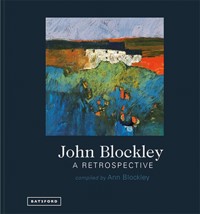
John Blockley was one of Britain's most outstanding watercolour and pastel painters of the late 20th century, and has exhibited at the Royal Academy. Self-taught, he produced work that has always been experimental and progressive. His highly textured style was well ahead of his time and still hugely influential now. The quality of his work is even more staggering given that he never trained at any art college, and spent most of his working life as an engineer. He only started painting full time at the age of 52. His obsession for drawing and painting, even while a successful engineer, was driven by his search for the essence of his subjects. The power of his paintings reveal that passion. This beautiful retrospective of his work, including drawings, watercolours, pastels and also acrylics, brings together the best of his work. The illuminating commentary on his work is from his daughter, Ann Blockley, who is also an acclaimed painter in her own right. She understands completely where John Blockley was coming from in his artistic vision and also explains the techniques he used. Breaking with so many traditions in watercolour painting in the 1960s, John was and is an influential figure in the art world. John said, 'In order to paint the terrain as I see it – blotched, mottled, grainy – I must experiment'. These experimentations are still of huge value to painters today. This book is perfect for any painter who enjoys John's work but also for all the many, many fans of his work.
Das E-Book können Sie in Legimi-Apps oder einer beliebigen App lesen, die das folgende Format unterstützen:
Seitenzahl: 41
Veröffentlichungsjahr: 2018
Ähnliche















John Blockley
A RETROSPECTIVE
Acknowledgements
I would like to give a huge thank you to Cathy Gosling for her foreword and involvement in making this retrospective book possible. Thanks also to Moira Huntly who helped to ensure the historical accuracy of the text and for her drawing of John. I am grateful to Tom Coates for the use of his oil painting and to my sister, Pamela Robinson, who loaned me paintings from her private collection for use in the book.
Page 1: Pembrokeshire Headland,c. 1987Watercolour
Pages 2–3: Pembrokeshire Cottagesc.1999Mixed media
Foreword
I feel honoured to be writing a foreword to this retrospective book compiled by Ann about her father, John Blockley. I was John’s editor and publisher for more than 20 years and worked with him on most of his painting books. I first met John in the late 1970s when I was a junior editor at Pitman Publishing assigned to work on his first hardback book, The Challenge of Watercolour. I loved his work from the outset, and over the years we built up not just an excellent professional relationship, but a real friendship.
John was an inspirational painter with a huge following that increased steadily over the years and his books on painting were extremely popular. The one I am perhaps most proud of is Watercolour Interpretations, published in 1987 by HarperCollins: we were given a free rein by the publisher and I believe it was one of John’s favourites as well.
John had a mischievous sense of humour but could also be quite difficult at times. However, this was only because he believed so passionately in what he was doing and didn’t want to compromise. I have also been Ann’s editor for many years, and I am so pleased to have been able to commission G. John Blockley: A Retrospective for Pavilion Books, and to work on it with her. It was thrilling to see John’s work displayed in Ann’s studio and house and she has done a tremendous job in bringing so much of his unpublished work together and writing such a perceptive narrative about her father’s painting life.
Cathy Gosling
Introduction
I am delighted to be introducing the paintings and drawings of my late father, G. John Blockley, to a new 21st-century audience. For those of you already familiar with his work, I hope this book will offer a few surprises as well as nostalgic delights.
I have been thinking about compiling the book for many years, but felt daunted by what I knew would be a challenging project. My sensitivities to saying and doing ‘the right thing’ and the drive to commit to my own painting had deterred me from starting. The catalyst was the need to move a plan chest in my studio where John’s work had been stored since his death in 2001.
Ann’s LampAcrylic
It was crammed with artwork and sketchbooks of every size, along with photographs of paintings covering many different subjects in a variety of mediums through decades of working practice. I needed to empty the drawers in order to move the chest and so I began to look through everything. A week later, with my studio floor covered in astonishing imagery, I found myself emotional, humbled and amazed yet again by the passion and integrity of this unique collection. I decided then not to let any more time pass by.
John’s colleagues over the years have offered varying views about what kind of book would be most relevant. There were debates that the theme might be the degree to which ‘the influence of John Blockley’ had changed the course of watercolour. Some said it amounted to a new art movement in itself. Ultimately, I decided that these ideas were for someone else to explore and that it was not my job to hypothesize about my father’s place as an artist within the historical context of British watercolour. Looking at the stunning work through fresh eyes, it seemed unnecessary to list glowing comments from art critics or contemporaries. My role was simply to allow the work to speak for itself: to let viewers, both old and new, draw their own conclusions. And that is what I have set out to do.
‘I enjoy it all – the looking, the dreaming, the note-taking and drawing and then the creative action in the studio.’
John in the studio (detail)Moira Huntly
‘Blockers’ in his studioTom CoatesOils
SunflowersWatercolourc.1987These sunflowers were sketched and a series of interpretations followed after a visit to my garden.
I have curated the book using the material to which that I had access, so it is only a snapshot of the overall picture. My criteria for selecting images were inevitably driven by personal preference, but I have tried to include as much variety as possible. In the ‘Painting sources’ section I have organized the artwork by subject for convenience. It was against John’s character to index and catalogue – he preferred a spontaneous, instinctive and often messy approach. His sketchbooks are chaotic, with drawings made at whatever page fell open. He felt that time wasted on finding the correct page diminished his creative impulse to draw. Drawings are often upside down or sideways in the sketchbook, but for ease of viewing they have been positioned here the right way round. Where possible, associations have been made between drawings and paintings, some of which were taken directly from an initial sketch. Although images have been placed in this book according to the subject or medium, John’s aim was to see the world in abstract terms. Whether the subject was a mountain, a building or a flower, the painterly qualities linked them all. Similarly, all the paintings made over 50 years, from traditional to more abstract, are united by the common thread of a deep commitment to drawing and observation.
While some of the pictures have been published previously, at least half have not. Sizes have not been included as the information was not always available; the paintings ranged from 2m (6½ft) to tiny jewels. The quotations are John’s own words, taken from the earlier books listed on page 144. Each of these books concentrated on a particular idea, medium or subject, so this is the first time that the whole spectrum of change and development in his work has been threaded together to reflect the progression and inspiration behind it. I believe that these works are as relevant today as when they were painted and I hope that the images, as well as my father’s story, will be as important a source of inspiration to you as they have been to me.
Ann Blockley




