


0,99 €
Niedrigster Preis in 30 Tagen: 1,99 €
Niedrigster Preis in 30 Tagen: 1,99 €
Mehr erfahren.
- Herausgeber: DigiCat
- Kategorie: Gesellschafts- und Liebesromane
- Sprache: Englisch
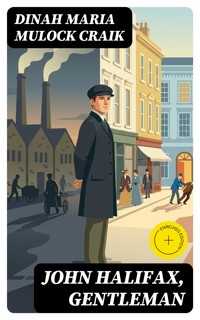
In 'John Halifax, Gentleman,' Dinah Maria Mulock Craik presents a compelling narrative set in Victorian England that intricately explores themes of social class, identity, and moral integrity. Through the life of John Halifax, a self-made man whose journeys oscillate between humble beginnings and genteel society, Craik employs a rich, descriptive prose that captures the ethos of the era. The novel's literary style resonates with the didactic tendencies of Victorian literature, offering readers a moral compass while navigating through personal and societal challenges, ultimately advocating for kindness and integrity amidst adversity. Dinah Maria Mulock Craik, a prominent figure in the Victorian literary scene, was motivated by her own experiences of poverty and social mobility, insights that deeply influenced her thematic choices in 'John Halifax, Gentleman.' Her background allowed her to portray the struggles and triumphs of the working class authentically, evoking empathy in her readership. Craik was not only a novelist but also a poet and a feminist, and her desire to highlight the strength of the human spirit is omnipresent throughout her writing. This timeless novel is highly recommended for readers interested in 19th-century literature, social commentary, or character-driven stories. Craik's intricate character development and vivid depictions of Victorian life offer treasures for both literary enthusiasts and casual readers alike. 'John Halifax, Gentleman' stands as a testament to personal dignity and social responsibility, making it a must-read for those seeking both entertainment and enlightenment. In this enriched edition, we have carefully created added value for your reading experience: - A succinct Introduction situates the work's timeless appeal and themes. - The Synopsis outlines the central plot, highlighting key developments without spoiling critical twists. - A detailed Historical Context immerses you in the era's events and influences that shaped the writing. - A thorough Analysis dissects symbols, motifs, and character arcs to unearth underlying meanings. - Reflection questions prompt you to engage personally with the work's messages, connecting them to modern life. - Hand‐picked Memorable Quotes shine a spotlight on moments of literary brilliance. - Interactive footnotes clarify unusual references, historical allusions, and archaic phrases for an effortless, more informed read.
Das E-Book können Sie in Legimi-Apps oder einer beliebigen App lesen, die das folgende Format unterstützen:
Veröffentlichungsjahr: 2022
Ähnliche



















John Halifax, Gentleman
Table of Contents
Introduction
At once a celebration of self-made character and an inquiry into what it means to be truly gentle, John Halifax, Gentleman pits the claims of birth and privilege against the quieter authority of integrity, friendship, and responsible work, tracing how a life shaped by industry and principle can transform not only a man’s fortunes but also the moral atmosphere surrounding him, and asking readers to consider whether gentility is an inheritance of blood or a discipline of heart, especially when tested by the emergent pressures of modern commerce, civic unrest, and the continual demand to act justly toward those with less power.
First appearing in 1856, Dinah Maria Mulock Craik’s novel belongs to the Victorian domestic and social tradition, unfolding in an English provincial environment shaped by early nineteenth-century industry, small-town commerce, and shifting class boundaries. Though attentive to household scenes, it consistently looks outward to workshops, countinghouses, and council rooms, placing the private sphere in dialogue with the public. The book’s historical backdrop is not ornamental; it frames questions about moral conduct, economic responsibility, and civic belonging that preoccupied mid-Victorian readers. Without relying on sensational incident, Craik crafts a narrative grounded in recognizable workplaces and communities, where reputation, labor, and conscience carry lasting consequences.
At the book’s center stands John Halifax, introduced as a poor, determined youth whose path is observed by his closest friend, a physically fragile narrator whose vantage allows both intimacy and clear moral distance. The storytelling adopts a first-person, retrospective voice that is warm, observant, and measured, preferring steady accumulation of detail to melodramatic shocks. Readers encounter apprenticeships, home life, business decisions, and moments of public strain, yet the chapters breathe with everyday rhythms and quiet suspense. The tone is earnest without severity, inviting reflection on character and choice while leaving room for humor, affection, and the consolations of shared endeavor.
In presenting a gentleman who begins with neither rank nor wealth, the novel probes what constitutes genuine gentility: steadfastness under pressure, fairness in trade, generosity in victory, and humility in influence. It treats labor not as drudgery but as a site where conscience is proved, suggesting that prosperity gains value when pursued with justice and shared for the common good. Crucially, friendship structures the book’s ethics; the narrator’s loyal witness models how care, honesty, and patience can sustain a life’s work. Domestic affection and civic duty interweave, implying that the habits cultivated at home shape the decisions that reverberate in public.
Craik also supplies a quietly persuasive social history, attentive to the texture of workshops, the ethics of credit and partnership, and the responsibilities attached to influence in a community. The narrative attends to the openings and limits of social mobility in an era when industry expands yet birth still confers advantage, exploring how education by apprenticeship, religious conviction, and personal discipline can together challenge inherited hierarchies. Without abstract theorizing, it examines conflicts between conscience and expediency, public reputation and private truth. Leadership emerges as service rather than domination, tested in crises that demand prudence, courage, and the willingness to forego easy gain.
For contemporary readers, its questions remain acute: how to define success without reducing it to wealth, how to conduct business ethically in competitive markets, and how to widen the meaning of gentle beyond lineage, polish, or performative status. The narrator’s disability, treated with dignity and agency, reframes strength as interdependence and moral clarity rather than physical prowess, offering a humane counterpoint to narrow ideals of ability. The novel’s insistence that character is cumulative—formed through daily choices, loyalties, and fair dealing—speaks to current debates about merit, privilege, and inclusion, encouraging readers to evaluate power by the good it quietly enables.
Readers approaching the book today will find an accessible prose style, patient pacing, and scenes that privilege the moral weight of ordinary decisions over spectacle, making the novel both inviting and contemplative. Its optimism is earned rather than effortless, tempered by losses, disappointments, and the recognition that ideals require maintenance in the face of pressure. As a portrait of character tested within family, enterprise, and town, it rewards attention with a cumulative warmth and clarity rare in fiction. John Halifax, Gentleman endures because it imagines success as usable goodness, proposing a version of influence that is principled, practical, and deeply humane.
Synopsis
First published in 1856, Dinah Maria Mulock Craik’s John Halifax, Gentleman is a Victorian novel told in the first person by Phineas Fletcher, a physically frail observer who chronicles the rise of his friend John Halifax. Set in a provincial English town during a period of commercial expansion and social unease, the narrative traces how character, labor, and conscience can define gentility more than lineage. With unembellished steadiness, Phineas records incidents at home and in trade, framing John’s progress not as a string of sensational reversals but as a sustained testing of principles in workshop, street, and drawing room.
Phineas first meets John as a destitute but self-reliant youth whose quick wit and modest pride conceal hardship. Brought into the orbit of Abel Fletcher, Phineas’s strict Quaker father and a respected tanner, John secures honest work and a chance to learn a craft. Early scenes emphasize practical tasks, small acts of reliability, and the awkward friendliness between an invalid scholar and a robust apprentice. The shop floor and counting-house become arenas where punctuality, thrift, and truthfulness matter. As John’s competence grows, so does Phineas’s conviction that gentlemanliness is a moral habit, not a birthright—a conviction the story continually examines.
Beyond the yard gates, John encounters the frictions of class in nearby estates and assembly rooms, where manners can veil contempt. He is neither servile nor defiant, and his poise unsettles those who think rank confers virtue. A developing attachment to Ursula March—an intelligent young woman connected with local wealth—tests his resolve to marry for mutual respect rather than advantage. The narrative dwells on delicate negotiations: words spoken at doors, proprieties observed, and the costs of refusing patronage. Through Phineas’s watchful commentary, the courtship sequence links private affection to public reputation, suggesting that love consolidates, rather than distracts from, ethical purpose.
Public tensions sharpen as bad seasons and high prices incite unrest, bringing crowds to warehouses and mills. Abel Fletcher’s pacifist convictions are contrasted with the town’s fear of riot, and Phineas’s vulnerability throws the danger into personal relief. John steps into this crisis with the practical courage of one who understands both hunger and law: he speaks plainly, protects property without cruelty, and submits to responsibility that older men evade. The episode strengthens his standing while keeping his motives transparent. Order is restored not by force alone but by credibility earned from earlier fairness, and the community begins to trust his leadership.
Stability follows in the form of a household marked by industry and warmth. John’s home—plain rather than ostentatious, sometimes associated with Longfield—becomes a training-ground for civility rooted in work. Family scenes emphasize education, thrift, hospitality, and the small self-denials that make comfort honorable. In business, he prefers clear accounts and punctual wages to speculation, modeling a paternal, if demanding, stewardship of labor. The narrative continues to set him among neighbors of higher birth and lower scruple, letting comparison do its work. Through Phineas’s affectionate scrutiny, domestic happiness appears less as reward than as the everyday proof of disciplined choices.
Prosperity brings exposure to harsher tests: commercial fluctuations threaten the firm, private distress shadows the household, and malice in high places tries to stain a hard-won name. John answers pressure with patience and plain dealing—selling rather than scheming, speaking truth rather than courting favor—yet the cost of rectitude is never minimized. Illness forces reckonings about dependence; civic debates over reform and responsibility demand a voice from those who employ others. Phineas’s narrative, increasingly reflective, weighs public duty against personal tenderness, observing how a reputation is kept not by one decisive act but by a long series of consistent, sometimes costly, choices.
By closing on character rather than spectacle, the book offers a persuasive ideal of the self-made gentleman: diligent in trade, faithful in friendship, equitable in authority, and gentle at home. Without overturning the social order, it redefines honor in terms accessible to talent and conscience, aligning middle-class aspiration with humane Christianity and civic usefulness. Readers interested in industrial-era life, domestic realism, and the ethics of influence find in Phineas and John a complementary pair—witness and agent—through whom endurance is rendered legible. The novel’s enduring resonance lies in its quiet argument that stability and kindness can be forms of courage.
Historical Context
Dinah Maria Mulock Craik’s John Halifax, Gentleman appeared in 1856, but its action unfolds earlier, from the late eighteenth into the early nineteenth century, in the English Midlands. The principal setting, Norton Bury, is a thinly disguised Tewkesbury in Gloucestershire, a market town at the junction of the Severn and Avon that prospered through river traffic and trade. Nearby uplands recall the Malvern district. The narrator belongs to a Quaker tanner’s household, placing commerce, dissenting religion, and artisanal industry at the story’s center. This milieu reflects the first phases of Britain’s Industrial Revolution, when small manufacturers, mills, and improved transport transformed provincial economies and social aspirations.
Quakers, formally the Society of Friends, shaped civic and economic life in many towns like Tewkesbury. They emphasized pacifism, plain dealing, and mutual trust, values that facilitated reputation-based credit in trade. As Protestant Dissenters, Friends and other Nonconformists faced legal disabilities before 1828, when Parliament repealed the Test and Corporation Acts that had restricted them from holding municipal and many public offices. Their meetinghouses, charitable networks, and schools offered alternative institutions to the Anglican establishment. The novel’s milieu therefore intersects with Nonconformist ethics and limitations, showing how industrious citizens navigated civic participation, conscience, and enterprise under a legal order slowly opening to them.
Between roughly 1780 and 1830, Britain’s Industrial Revolution accelerated in textiles, metalworking, tanning, and allied trades. The Severn corridor and adjoining counties benefited from navigable rivers and a growing canal network, which lowered transport costs for hides, wool, coal, and finished goods. Provincial banks and long-credit arrangements expanded, enabling ambitious apprentices to become partners or proprietors. Factory organization began to replace domestic spinning and weaving, while steam power and improved machinery increased output. Market towns balanced guild legacies with emergent capitalist practices. The novel situates its characters amid this shift from craft to organized manufacture, where prudence, reliability, and reinvested profits could secure advancement.
War and scarcity marked the era depicted. The French Revolutionary and Napoleonic Wars (1793–1815) disrupted trade, raised taxation, and contributed to high grain prices. Food shortages sparked recurring bread riots across English counties, including the West Midlands and Gloucestershire, especially in 1795 and 1800–1801. Parliament’s 1815 Corn Laws protected domestic grain producers but kept prices high during downturns. Industrial change provoked machine-breaking in the Luddite disturbances (1811–1813), and rural Swing riots followed in 1830. Scenes of crowd unrest in the novel echo these pressures, portraying how small manufacturers and workers negotiated loyalty, order, and subsistence amid fiscal burdens and fluctuating markets.
The narrative traverses decades that culminated in the era of parliamentary and municipal reform. After the repeal of the Test and Corporation Acts (1828) and Catholic Emancipation (1829), the Great Reform Act of 1832 extended representation to burgeoning towns and broadened the middle-class electorate. Municipal Corporations reform followed in 1835, reorganizing local governance and access to office. Such changes reshaped the avenues by which industrious tradesmen could influence civic life, serve on councils, or engage in public projects. The book’s world reflects this widening participation, aligning commercial respectability with notions of citizenship, responsibility, and measured progress rather than radical upheaval.
Beneath political change lay debates over poverty and labor. Under the Old Poor Law, parish overseers administered relief through rates, workhouses, or wage allowances like the 1795 Speenhamland system. Industrial towns contended with periodic unemployment and the employment of children in mills and workshops. Early factory legislation addressed conditions only gradually, with the 1833 Factory Act regulating hours for children and young persons. Philanthropic initiatives—many associated with Nonconformist circles—supported schools, savings banks, and temperance. The novel’s attention to prudence, charity, and responsible management corresponds to these discussions, presenting commercial success as inseparable from fair dealing and concern for dependents.
When the book appeared, Victorian domestic realism was in full ascendancy, shaped by circulating libraries such as Mudie’s Select Library (founded 1842), which favored morally earnest, family-readable fiction. Craik’s work joined contemporaries who explored industry and conscience, including Elizabeth Gaskell’s Mary Barton (1848) and North and South (1854–55). The ideal of the “self-made man” resonated with readers and soon found emblematic expression in Samuel Smiles’s Self-Help (1859). Middle-class audiences prized narratives that linked personal discipline to social stability. John Halifax, Gentleman fits this landscape, centering integrity, diligence, and mutual aid as the means by which provincial households could thrive within an expanding economy.
Viewed against this background, the novel advances a recognizably mid-Victorian synthesis: Nonconformist ethics, commercial probity, and civic mindedness set against the period’s volatility. Its presentation of “gentlemanliness” locates status in conduct rather than lineage, echoing debates about merit, respectability, and access to public life that intensified around the Reform era. Episodes of economic strain and public disorder register the costs of war and transition without embracing revolutionary remedies. By celebrating steady work, equitable dealings, and charitable responsibility, the book reflects contemporary hopes that social harmony could be secured through personal virtue, prudent enterprise, and institutions gradually widened by legal and political reform.
John Halifax, Gentleman
CHAPTER I
"Get out o' Mr. Fletcher's road, ye idle, lounging, little—"
"Vagabond," I think the woman (Sally Watkins, once my nurse), was going to say, but she changed her mind.
My father and I both glanced round, surprised at her unusual reticence of epithets: but when the lad addressed turned, fixed his eyes on each of us for a moment, and made way for us, we ceased to wonder. Ragged, muddy, and miserable as he was, the poor boy looked anything but a "vagabond."
"Thee need not go into the wet, my lad. Keep close to the wall, and there will be shelter enough both for us and thee," said my father, as he pulled my little hand-carriage into the alley, under cover, from the pelting rain. The lad, with a grateful look, put out a hand likewise, and pushed me further in. A strong hand it was—roughened and browned with labour—though he was scarcely as old as I. What would I not have given to have been so stalwart and so tall!
Sally called from her house-door, "Wouldn't Master Phineas come in and sit by the fire a bit?"—But it was always a trouble to me to move or walk; and I liked staying at the mouth of the alley, watching the autumnal shower come sweeping down the street: besides, I wanted to look again at the stranger-lad.
He had scarcely stirred, but remained leaning against the wall—either through weariness, or in order to be out of our way. He took little or no notice of us, but kept his eyes fixed on the pavement—for we actually boasted pavement in the High Street of our town of Norton Bury—watching the eddying rain-drops, which, each as it fell, threw up a little mist of spray. It was a serious, haggard face for a boy of only fourteen or so. Let me call it up before me—I can, easily, even after more than fifty years.
Brown eyes, deep-sunken, with strongly-marked brows, a nose like most other Saxon noses, nothing particular; lips well-shaped, lying one upon the other, firm and close; a square, sharply outlined, resolute chin, of that type which gives character and determination to the whole physiognomy, and without which in the fairest features, as in the best dispositions, one is always conscious of a certain want.
As I have stated, in person the lad was tall and strongly-built; and I, poor puny wretch! so reverenced physical strength. Everything in him seemed to indicate that which I had not: his muscular limbs, his square, broad shoulders, his healthy cheek, though it was sharp and thin—even to his crisp curls of bright thick hair.
Thus he stood, principal figure in a picture which is even yet as clear to me as yesterday—the narrow, dirty alley leading out of the High Street, yet showing a glimmer of green field at the further end; the open house-doors on either side, through which came the drowsy burr of many a stocking-loom, the prattle of children paddling in the gutter, and sailing thereon a fleet of potato parings. In front the High Street, with the mayor's house opposite, porticoed and grand: and beyond, just where the rain-clouds were breaking, rose up out of a nest of trees, the square tower of our ancient abbey—Norton Bury's boast and pride. On it, from a break in the clouds, came a sudden stream of light. The stranger-lad lifted up his head to look at it.
"The rain will be over soon," I said, but doubted if he heard me. What could he be thinking of so intently?—a poor working lad, whom few would have given credit for thinking at all.
I do not suppose my father cast a second glance or thought on the boy, whom, from a sense of common justice, he had made take shelter beside us. In truth, worthy man, he had no lack of matter to occupy his mind, being sole architect of a long up-hill but now thriving trade. I saw, by the hardening of his features, and the restless way in which he poked his stick into the little water-pools, that he was longing to be in his tan-yard[3] close by.
He pulled out his great silver watch—the dread of our house, for it was a watch which seemed to imbibe something of its master's character; remorseless as justice or fate, it never erred a moment.
"Twenty-three minutes lost by this shower. Phineas, my son, how am I to get thee safe home? unless thee wilt go with me to the tan-yard—"
I shook my head. It was very hard for Abel Fletcher to have for his only child such a sickly creature as I, now, at sixteen, as helpless and useless to him as a baby.
"Well, well, I must find some one to go home with thee." For though my father had got me a sort of carriage in which, with a little external aid, I could propel myself, so as to be his companion occasionally in his walks between our house, the tanyard, and the Friends' meeting-house[2]—still he never trusted me anywhere alone. "Here, Sally—Sally Watkins! do any o' thy lads want to earn an honest penny?"
Sally was out of earshot; but I noticed that as the lad near us heard my father's words, the colour rushed over his face, and he started forward involuntarily. I had not before perceived how wasted and hungry-looking he was.
"Father!" I whispered. But here the boy had mustered up his courage and voice.
"Sir, I want work; may I earn a penny?"
He spoke in tolerably good English—different from our coarse, broad, G——shire drawl; and taking off his tattered old cap, looked right up into my father's face, The old man scanned him closely.
"What is thy name, lad?"
"John Halifax."
"Where dost thee come from?"
"Cornwall."
"Hast thee any parents living?"
"No."
I wished my father would not question thus; but possibly he had his own motives, which were rarely harsh, though his actions often appeared so.
"How old might thee be, John Halifax?"
"Fourteen, sir."
"Thee art used to work?"
"Yes."
"What sort of work?"
"Anything that I can get to do."
I listened nervously to this catechism, which went on behind my back.
"Well," said my father, after a pause, "thee shall take my son home, and I'll give thee a groat[1]. Let me see; art thee a lad to be trusted?" And holding him at arm's length, regarding him meanwhile with eyes that were the terror of all the rogues in Norton Bury, Abel Fletcher jingled temptingly the silver money in the pockets of his long-flapped brown waistcoat. "I say, art thee a lad to be trusted?"
John Halifax neither answered nor declined his eyes. He seemed to feel that this was a critical moment, and to have gathered all his mental forces into a serried square, to meet the attack. He met it, and conquered in silence.
"Lad, shall I give thee the groat now?"
"Not till I've earned it, sir."
So, drawing his hand back, my father slipped the money into mine, and left us.
I followed him with my eyes, as he went sturdily plashing down the street; his broad, comfortable back, which owned a coat of true Quaker cut, but spotless, warm, and fine; his ribbed hose and leathern gaiters, and the wide-brimmed hat set over a fringe of grey hairs, that crowned the whole with respectable dignity. He looked precisely what he was—an honest, honourable, prosperous tradesman. I watched him down the street—my good father, whom I respected perhaps even more than I loved him. The Cornish lad watched him likewise.
It still rained slightly, so we remained under cover. John Halifax leaned in his old place, and did not attempt to talk. Once only, when the draught through the alley made me shiver, he pulled my cloak round me carefully.
"You are not very strong, I'm afraid?"
"No."
Then he stood idly looking up at the opposite—the mayor's—house, with its steps and portico, and its fourteen windows, one of which was open, and a cluster of little heads visible there.
The mayor's children—I knew them all by sight, though nothing more; for their father was a lawyer, and mine a tanner; they belonged to Abbey folk and orthodoxy, I to the Society of Friends—the mayor's rosy children seemed greatly amused by watching us shivering shelterers from the rain. Doubtless our position made their own appear all the pleasanter. For myself it mattered little; but for this poor, desolate, homeless, wayfaring lad to stand in sight of their merry nursery window, and hear the clatter of voices, and of not unwelcome dinner-sounds—I wondered how he felt it.
Just at this minute another head came to the window, a somewhat older child; I had met her with the rest; she was only a visitor. She looked at us, then disappeared. Soon after, we saw the front door half opened, and an evident struggle taking place behind it; we even heard loud words across the narrow street.
"I will—I say I will."
"You shan't, Miss Ursula."
"But I will!"
And there stood the little girl, with a loaf in one hand and a carving-knife in the other. She succeeded in cutting off a large slice, and holding it out.
"Take it, poor boy!—you look so hungry. Do take it." But the servant forced her in, and the door was shut upon a sharp cry.
It made John Halifax start, and look up at the nursery window, which was likewise closed. We heard nothing more. After a minute he crossed the street, and picked up the slice of bread. Now in those days bread was precious, exceedingly. The poor folk rarely got it; they lived on rye or meal. John Halifax had probably not tasted wheaten bread like this for months: it appeared not, he eyed it so ravenously;—then, glancing towards the shut door, his mind seemed to change. He was a long time before he ate a morsel; when he did so, it was quietly and slowly; looking very thoughtful all the while.
As soon as the rain ceased, we took our way home, down the High Street, towards the Abbey church—he guiding my carriage along in silence. I wished he would talk, and let me hear again his pleasant Cornish accent.
"How strong you are!" said I, sighing, when, with a sudden pull, he had saved me from being overturned by a horseman riding past—young Mr. Brithwood of the Mythe House, who never cared where he galloped or whom he hurt—"So tall and so strong."
"Am I? Well, I shall want my strength."
"How?"
"To earn my living."
He drew up his broad shoulders, and planted on the pavement a firmer foot, as if he knew he had the world before him—would meet it single-handed, and without fear.
"What have you worked at lately?"
"Anything I could get, for I have never learned a trade."
"Would you like to learn one?"
He hesitated a minute, as if weighing his speech. "Once I thought I should like to be what my father was."
"What was he?"
"A scholar and a gentleman."
This was news, though it did not much surprise me. My father, tanner as he was, and pertinaciously jealous of the dignity of trade, yet held strongly the common-sense doctrine of the advantages of good descent; at least, in degree. For since it is a law of nature, admitting only rare exceptions, that the qualities of the ancestors should be transmitted to the race—the fact seems patent enough, that even allowing equal advantages, a gentleman's son has more chances of growing up a gentleman than the son of a working man. And though he himself, and his father before him, had both been working men, still, I think, Abel Fletcher never forgot that we originally came of a good stock, and that it pleased him to call me, his only son, after one of our forefathers, not unknown—Phineas Fletcher, who wrote the "Purple Island[4]."
Thus it seemed to me, and I doubted not it would to my father, much more reasonable and natural that a boy like John Halifax—in whom from every word he said I detected a mind and breeding above his outward condition—should come of gentle than of boorish blood.
"Then, perhaps," I said, resuming the conversation, "you would not like to follow a trade?"
"Yes, I should. What would it matter to me? My father was a gentleman."
"And your mother?"
And he turned suddenly round; his cheeks hot, his lips quivering: "She is dead. I do not like to hear strangers speak about my mother."
I asked his pardon. It was plain he had loved and mourned her; and that circumstances had smothered down his quick boyish feelings into a man's tenacity of betraying where he had loved and mourned. I, only a few minutes after, said something about wishing we were not "strangers."
"Do you?" The lad's half amazed, half-grateful smile went right to my heart.
"Have you been up and down the country much?"
"A great deal—these last three years; doing a hand's turn as best I could, in hop-picking, apple-gathering, harvesting; only this summer I had typhus fever, and could not work."
"What did you do then?"
"I lay in a barn till I got well—I'm quite well now; you need not be afraid."
"No, indeed; I had never thought of that."
We soon became quite sociable together. He guided me carefully out of the town into the Abbey walk, flecked with sunshine through overhanging trees. Once he stopped to pick up for me the large brown fan of a horse-chestnut leaf.
"It's pretty, isn't it?—only it shows that autumn is come."
"And how shall you live in the winter, when there is no out-of-door work to be had?"
"I don't know."
The lad's countenance fell, and that hungry, weary look, which had vanished while we talked, returned more painfully than ever. I reproached myself for having, under the influence of his merry talk, temporarily forgotten it.
"Ah!" I cried eagerly, when we left the shade of the Abbey trees, and crossed the street; "here we are, at home!"
"Are you?" The homeless lad just glanced at it—the flight of spotless stone-steps, guarded by ponderous railings, which led to my father's respectable and handsome door. "Good day, then—which means good-bye."
I started. The word pained me. On my sad, lonely life—brief indeed, though ill health seemed to have doubled and trebled my sixteen years into a mournful maturity—this lad's face had come like a flash of sunshine; a reflection of the merry boyhood, the youth and strength that never were, never could be, mine. To let it go from me was like going back into the dark.
"Not good-bye just yet!" said I, trying painfully to disengage myself from my little carriage and mount the steps. John Halifax came to my aid.
"Suppose you let me carry you. I could—and—and it would be great fun, you know."
He tried to turn it into a jest, so as not to hurt me; but the tremble in his voice was as tender as any woman's—tenderer than any woman's I ever was used to hear. I put my arms round his neck; he lifted me safely and carefully, and set me at my own door. Then with another good-bye he again turned to go.
My heart cried after him with an irrepressible cry. What I said I do not remember, but it caused him to return.
"Is there anything more I can do for you, sir?"
"Don't call me 'sir'; I am only a boy like yourself. I want you; don't go yet. Ah! here comes my father!"
John Halifax stood aside, and touched his cap with a respectful deference, as the old man passed.
"So here thee be—hast thou taken care of my son? Did he give thee thy groat, my lad?"
We had neither of us once thought of the money.
When I acknowledged this my father laughed, called John an honest lad, and began searching in his pocket for some larger coin. I ventured to draw his ear down and whispered something—but I got no answer; meanwhile, John Halifax for the third time was going away.
"Stop, lad—I forget thy name—here is thy groat, and a shilling added, for being kind to my son."
"Thank you, but I don't want payment for kindness."
He kept the groat, and put back the shilling into my father's hand.
"Eh!" said the old man, much astonished, "thee'rt an odd lad; but I can't stay talking with thee. Come in to dinner, Phineas. I say," turning back to John Halifax with a sudden thought, "art thee hungry?"
"Very hungry." Nature gave way at last, and great tears came into the poor lad's eyes. "Nearly starving."
"Bless me! then get in, and have thy dinner. But first—" and my inexorable father held him by the shoulder; "thee art a decent lad, come of decent parents?"
"Yes," almost indignantly.
"Thee works for thy living?"
"I do, whenever I can get it."
"Thee hast never been in gaol?"
"No!" thundered out the lad, with a furious look. "I don't want your dinner, sir; I would have stayed, because your son asked me, and he was civil to me, and I liked him. Now I think I had better go. Good day, sir."
There is a verse in a very old Book—even in its human histories the most pathetic of all books—which runs thus:
"And it came to pass when he had made an end of speaking unto Saul, that the soul of Jonathan was knit unto the soul of David; and Jonathan loved him as his own soul."
And this day, I, a poorer and more helpless Jonathan, had found my David[1q].
I caught him by the hand, and would not let him go.
"There, get in, lads—make no more ado," said Abel Fletcher, sharply, as he disappeared.
So, still holding my David fast, I brought him into my father's house.
CHAPTER II
Dinner was over; my father and I took ours in the large parlour, where the stiff, high-backed chairs eyed one another in opposite rows across the wide oaken floor, shiny and hard as marble, and slippery as glass. Except the table, the sideboard and the cuckoo clock, there was no other furniture.
I dared not bring the poor wandering lad into this, my father's especial domain; but as soon as he was away in the tan-yard I sent for John.
Jael brought him in; Jael, the only womankind we ever had about us, and who, save to me when I happened to be very ill, certainly gave no indication of her sex in its softness and tenderness. There had evidently been wrath in the kitchen.
"Phineas, the lad ha' got his dinner, and you mustn't keep 'un long. I bean't going to let you knock yourself up with looking after a beggar-boy."
A beggar-boy! The idea seemed so ludicrous, that I could not help smiling at it as I regarded him. He had washed his face and combed out his fair curls; though his clothes were threadbare, all but ragged, they were not unclean; and there was a rosy, healthy freshness in his tanned skin, which showed he loved and delighted in what poor folk generally abominate—water. And now the sickness of hunger had gone from his face, the lad, if not actually what our scriptural Saxon terms "well-favoured," was certainly "well-liking." A beggar-boy, indeed! I hoped he had not heard Jael's remark. But he had.
"Madam," said he, with a bow of perfect good-humour, and even some sly drollery, "you mistake: I never begged in my life: I'm a person of independent property, which consists of my head and my two hands, out of which I hope to realise a large capital some day."
I laughed. Jael retired, abundantly mystified, and rather cross. John Halifax came to my easy chair, and in an altered tone asked me how I felt, and if he could do anything for me before he went away.
"You'll not go away; not till my father comes home, at least?" For I had been revolving many plans, which had one sole aim and object, to keep near me this lad, whose companionship and help seemed to me, brotherless, sisterless, and friendless as I was, the very thing that would give me an interest in life, or, at least, make it drag on less wearily. To say that what I projected was done out of charity or pity would not be true; it was simple selfishness, if that be selfishness which makes one leap towards, and cling to, a possible strength and good, which I conclude to be the secret of all those sudden likings that spring more from instinct than reason. I do not attempt to account for mine: I know not why "the soul of Jonathan clave to the soul of David." I only know that it was so, and that the first day I beheld the lad John Halifax, I, Phineas Fletcher, "loved him as my own soul."
Thus, my entreaty, "You'll not go away?" was so earnest, that it apparently touched the friendless boy to the core.
"Thank you," he said, in an unsteady voice, as leaning against the fire-place he drew his hand backwards and forwards across his face: "you are very kind; I'll stay an hour or so, if you wish it."
"Then come and sit down here, and let us have a talk."
What this talk was, I cannot now recall, save that it ranged over many and wide themes, such as boys delight in—chiefly of life and adventure. He knew nothing of my only world—books.
"Can you read?" he asked me at last, suddenly.
"I should rather think so." And I could not help smiling, being somewhat proud of my erudition.
"And write?"
"Oh, yes; certainly."
He thought a minute, and then said, in a low tone, "I can't write, and I don't know when I shall be able to learn; I wish you would put down something in a book for me."
"That I will."
He took out of his pocket a little case of leather, with an under one of black silk; within this, again, was a book. He would not let it go out of his hands, but held it so that I could see the leaves. It was a Greek Testament.
"Look here."
He pointed to the fly-leaf, and I read:
"Guy Halifax, his Book.
"Guy Halifax, gentleman, married Muriel Joyce, spinster, May 17, in the year of our Lord 1779.
"John Halifax, their son, born June 18, 1780."
There was one more entry, in a feeble, illiterate female hand: "Guy Halifax, died January 4, 1781."
"What shall I write, John?" said I, after a minute or so of silence.
"I'll tell you presently. Can I get you a pen?"
He leaned on my shoulder with his left hand, but his right never once let go of the precious book.
"Write—'Muriel Halifax, died January 1, 1791.'"
"Nothing more?"
"Nothing more."
He looked at the writing for a minute or two, dried it carefully by the fire, replaced the book in its two cases, and put it into his pocket. He said no other word but "Thank you," and I asked him no questions.
This was all I ever heard of the boy's parentage: nor do I believe he knew more himself. He was indebted to no forefathers for a family history: the chronicle commenced with himself, and was altogether his own making. No romantic antecedents ever turned up: his lineage remained uninvestigated, and his pedigree began and ended with his own honest name—John Halifax.
Jael kept coming in and out of the parlour on divers excuses, eyeing very suspiciously John Halifax and me; especially when she heard me laughing—a rare and notable fact—for mirth was not the fashion in our house, nor the tendency of my own nature. Now this young lad, hardly as the world had knocked him about even already, had an overflowing spirit of quiet drollery and healthy humour, which was to me an inexpressible relief. It gave me something I did not possess—something entirely new. I could not look at the dancing brown eyes, at the quaint dimples of lurking fun that played hide-and-seek under the firm-set mouth, without feeling my heart cheered and delighted, like one brought out of a murky chamber into the open day.
But all this was highly objectionable to Jael.
"Phineas!"—and she planted herself before me at the end of the table—"it's a fine, sunshiny day: thee ought to be out."
"I have been out, thank you, Jael." And John and I went on talking.
"Phineas!"—a second and more determined attack—"too much laughing bean't good for thee; and it's time this lad were going about his own business."
"Hush!—nonsense, Jael."
"No—she's right," said John Halifax, rising, while that look of premature gravity, learned doubtless out of hard experience, chased all the boyish fun from his face. "I've had a merry day—thank you kindly for it! and now I'll be gone."
Gone! It was not to be thought of—at least, not till my father came home. For now, more determinedly than ever, the plan which I had just ventured to hint at to my father fixed itself on my mind. Surely he would not refuse me—me, his sickly boy, whose life had in it so little pleasure.
"Why do you want to go? You have no work?"
"No; I wish I had. But I'll get some."
"How?"
"Just by trying everything that comes to hand. That's the only way. I never wanted bread, nor begged it, yet—though I've often been rather hungry. And as for clothes"—he looked down on his own, light and threadbare, here and there almost burst into holes by the stout muscles of the big growing boy—looked rather disconsolately. "I'm afraid SHE would be sorry—that's all! She always kept me so tidy."
By the way he spoke, "SHE" must have meant his mother. There the orphan lad had an advantage over me; alas! I did not remember mine.
"Come," I said, for now I had quite made up my mind to take no denial, and fear no rebuff from my father; "cheer up. Who knows what may turn up?"
"Oh yes, something always does; I'm not afraid!" He tossed back his curls, and looked smiling out through the window at the blue sky; that steady, brave, honest smile, which will meet Fate in every turn, and fairly coax the jade into good humour.
"John, do you know you're uncommonly like a childish hero of mine—Dick Whittington? Did you ever hear of him?"
"No."
"Come into the garden then"—for I caught another ominous vision of Jael in the doorway, and I did not want to vex my good old nurse; besides, unlike John, I was anything but brave. "You'll hear the Abbey bells chime presently—not unlike Bow bells[6], I used to fancy sometimes; and we'll lie on the grass, and I'll tell you the whole true and particular story of Sir Richard Whittington[5]."
I lifted myself, and began looking for my crutches. John found and put them into my hand, with a grave, pitiful look.
"You don't need those sort of things," I said, making pretence to laugh, for I had not grown used to them, and felt often ashamed.
"I hope you will not need them always."
"Perhaps not—Dr. Jessop isn't sure. But it doesn't matter much; most likely I shan't live long." For this was, God forgive me, always the last and greatest comfort I had.
John looked at me—surprised, troubled, compassionate—but he did not say a word. I hobbled past him; he following through the long passage to the garden door. There I paused—tired out. John Halifax took gentle hold of my shoulder.
"I think, if you did not mind, I'm sure I could carry you. I carried a meal-sack once, weighing eight stone."
I burst out laughing, which maybe was what he wanted, and forthwith consented to assume the place of the meal-sack. He took me on his back—what a strong fellow he was!—and fairly trotted with me down the garden walk. We were both very merry; and though I was his senior I seemed with him, out of my great weakness and infirmity, to feel almost like a child.
"Please to take me to that clematis arbour; it looks over the Avon. Now, how do you like our garden?"
"It's a nice place."
He did not go into ecstasies, as I had half expected; but gazed about him observantly, while a quiet, intense satisfaction grew and diffused itself over his whole countenance.
"It's a VERY nice place."
Certainly it was. A large square, chiefly grass, level as a bowling-green, with borders round. Beyond, divided by a low hedge, was the kitchen and fruit garden—my father's pride, as this old-fashioned pleasaunce was mine. When, years ago, I was too weak to walk, I knew, by crawling, every inch of the soft, green, mossy, daisy-patterned carpet, bounded by its broad gravel walk; and above that, apparently shut in as with an impassable barrier from the outer world, by a three-sided fence, the high wall, the yew-hedge, and the river.
John Halifax's comprehensive gaze seemed to take in all.
"Have you lived here long?" he asked me.
"Ever since I was born."
"Ah!—well, it's a nice place," he repeated, somewhat sadly. "This grass plot is very even—thirty yards square, I should guess. I'd get up and pace it; only I'm rather tired."
"Are you? Yet you would carry—"
"Oh—that's nothing. I've often walked farther than to-day. But still it's a good step across the country since morning."
"How far have you come?"
"From the foot of those hills—I forget what they call them—over there. I have seen bigger ones—but they're steep enough—bleak and cold, too, especially when one is lying out among the sheep. At a distance they look pleasant. This is a very pretty view."
Ay, so I had always thought it; more so than ever now, when I had some one to say to how "very pretty" it was. Let me describe it—this first landscape, the sole picture of my boyish days, and vivid as all such pictures are.
At the end of the arbour the wall which enclosed us on the riverward side was cut down—my father had done it at my asking—so as to make a seat, something after the fashion of Queen Mary's seat at Stirling, of which I had read. Thence, one could see a goodly sweep of country. First, close below, flowed the Avon—Shakspeare's Avon—here a narrow, sluggish stream, but capable, as we at Norton Bury sometimes knew to our cost, of being roused into fierceness and foam. Now it slipped on quietly enough, contenting itself with turning a flour-mill hard by, the lazy whirr of which made a sleepy, incessant monotone which I was fond of hearing.
From the opposite bank stretched a wide green level, called the Ham—dotted with pasturing cattle of all sorts. Beyond it was a second river, forming an arch of a circle round the verdant flat. But the stream itself lay so low as to be invisible from where we sat; you could only trace the line of its course by the small white sails that glided in and out, oddly enough, from behind clumps of trees, and across meadow lands.
They attracted John's attention. "Those can't be boats, surely. Is there water there?"
"To be sure, or you would not see the sails. It is the Severn; though at this distance you can't perceive it; yet it is deep enough too, as you may see by the boats it carries. You would hardly believe so, to look at it here—but I believe it gets broader and broader, and turns out a noble river by the time it reaches the King's Roads, and forms the Bristol Channel."
"I've seen that!" cried John, with a bright look. "Ah, I like the Severn."
He stood gazing at it a good while, a new expression dawning in his eyes. Eyes in which then, for the first time, I watched a thought grow, and grow, till out of them was shining a beauty absolutely divine.
All of a sudden the Abbey chimes burst out, and made the lad start.
"What's that?"
"Turn again, Whittington, Lord Mayor of London," I sang to the bells; and then it seemed such a commonplace history, and such a very low degree of honour to arrive at, that I was really glad I had forgotten to tell John the story. I merely showed him where, beyond our garden wall, and in the invisible high road that interposed, rose up the grim old Abbey tower.
"Probably this garden belonged to the Abbey in ancient time—our orchard is so fine. The monks may have planted it; they liked fruit, those old fellows."
"Oh! did they!" He evidently did not quite comprehend, but was trying, without asking, to find out what I referred to. I was almost ashamed, lest he might think I wanted to show off my superior knowledge.
"The monks were parsons, John, you know. Very good men, I dare say, but rather idle."
"Oh, indeed. Do you think they planted that yew hedge?" And he went to examine it.
Now, far and near, our yew-hedge was noted. There was not its like in the whole country. It was about fifteen feet high, and as many thick. Century after century of growth, with careful clipping and training, had compacted it into a massive green barrier, as close and impervious as a wall.
John poked in and about it—peering through every interstice—leaning his breast against the solid depth of branches; but their close shield resisted all his strength.
At last he came back to me, his face glowing with the vain efforts he had made.
"What were you about? Did you want to get through?"
"I wanted just to see if it were possible."
I shook my head. "What would you do, John, if you were shut up here, and had to get over the yew-hedge? You could not climb it?"
"I know that, and, therefore, should not waste time in trying."
"Would you give up, then?"
He smiled—there was no "giving up" in that smile of his. "I'll tell you what I'd do—I'd begin and break it, twig by twig, till I forced my way through, and got out safe at the other side."
"Well done, lad!—but if it's all the same to thee, I would rather thee did not try that experiment upon MY hedge at present."
My father had come behind, and overheard us, unobserved. We were both somewhat confounded, though a grim kindliness of aspect showed that he was not displeased—nay, even amused.
"Is that thy usual fashion of getting over a difficulty, friend—what's thy name?"
I supplied the answer. The minute Abel Fletcher appeared, John seemed to lose all his boyish fun, and go back to that premature gravity and hardness of demeanour which I supposed his harsh experience of the world and of men had necessarily taught him; but which was very sad to see in a lad so young.
My father sat down beside me on the bench—pushed aside an intrusive branch of clematis—finally, because it would come back and tickle his bald pate, broke it off, and threw it into the river: then, leaning on his stick with both hands, eyed John Halifax sharply, all over, from top to toe.
"Didn't thee say thee wanted work? It looks rather like it."
His glance upon the shabby clothes made the boy colour violently.
"Oh, thee need'st not be ashamed; better men than thee have been in rags. Hast thee any money?"
"The groat you gave, that is, paid me; I never take what I don't earn," said the lad, sticking a hand in either poor empty pocket.
"Don't be afraid—I was not going to give thee anything—except, maybe—Would thee like some work?"
"O sir!"
"O father!"
I hardly know which was the most grateful cry.
Abel Fletcher looked surprised, but on the whole not ill-pleased. Putting on and pulling down his broad-brimmed hat, he sat meditatively for a minute or so; making circles in the gravel walk with the end of his stick. People said—nay, Jael herself, once, in a passion, had thrown the fact at me—that the wealthy Friend himself had come to Norton Bury without a shilling in his pocket.
"Well, what work canst thee do, lad?"
"Anything," was the eager answer.
"Anything generally means nothing," sharply said my father; "what hast thee been at all this year?—The truth, mind!"
John's eyes flashed, but a look from mine seemed to set him right again. He said quietly and respectfully, "Let me think a minute, and I'll tell you. All spring I was at a farmer's, riding the plough-horses, hoeing turnips; then I went up the hills with some sheep: in June I tried hay-making, and caught a fever—you needn't start, sir, I've been well these six weeks, or I wouldn't have come near your son—then—"
"That will do, lad—I'm satisfied."
"Thank you, sir."
"Thee need not say 'sir'—it is folly. I am Abel Fletcher." For my father retained scrupulously the Friend's mode of speech, though he was practically but a lax member of the Society, and had married out of its pale. In this announcement of his plain name appeared, I fancy, more pride than humility.
"Very well, I will remember," answered the boy fearlessly, though with an amused twist of his mouth, speedily restrained. "And now, Abel Fletcher, I shall be willing and thankful for any work you can give me."
"We'll see about it."
I looked gratefully and hopefully at my father—but his next words rather modified my pleasure.
"Phineas, one of my men at the tan-yard has gone and 'listed this day—left an honest livelihood to be a paid cut-throat. Now, if I could get a lad—one too young to be caught hold of at every pot-house by that man of blood, the recruiting sergeant—Dost thee think this lad is fit to take the place?"
"Whose place, father?"
"Bill Watkins'."
I was dumb-foundered! I had occasionally seen the said Bill Watkins, whose business it was to collect the skins which my father had bought from the farmers round about. A distinct vision presented itself to me of Bill and his cart, from which dangled the sanguinary exuviae of defunct animals, while in front the said Bill sat enthroned, dirty-clad, and dirty-handed, with his pipe in his mouth. The idea of John Halifax in such a position was not agreeable.
"But, father—"
He read deprecation in my looks—alas! he knew too well how I disliked the tan-yard and all belonging to it. "Thee'rt a fool, and the lad's another. He may go about his business for me."
"But, father, isn't there anything else?"
"I have nothing else, or if I had I wouldn't give it. He that will not work neither shall he eat."
"I will work," said John, sturdily—he had listened, scarcely comprehending, to my father and me. "I don't care what it is, if only it's honest work."
Abel Fletcher was mollified. He turned his back on me—but that I little minded—and addressed himself solely to John Halifax.
"Canst thee drive?"
"That I can!" and his eyes brightened with boyish delight.
"Tut! it's only a cart—the cart with the skins. Dost thee know anything of tanning?"
"No, but I can learn."
"Hey, not so fast! still, better be fast than slow. In the meantime, thee can drive the cart."
"Thank you, sir—Abel Fletcher, I mean—I'll do it well. That is, as well as I can."
"And mind! no stopping on the road. No drinking, to find the king's cursed shilling at the bottom of the glass, like poor Bill, for thy mother to come crying and pestering. Thee hasn't got one, eh? So much the better, all women are born fools, especially mothers."
"Sir!" The lad's face was all crimson and quivering; his voice choked; it was with difficulty he smothered down a burst of tears. Perhaps this self-control was more moving than if he had wept—at least, it answered better with my father.
After a few minutes more, during which his stick had made a little grave in the middle of the walk, and buried something there—I think something besides the pebble—Abel Fletcher said, not unkindly:
"Well, I'll take thee; though it isn't often I take a lad without a character of some sort—I suppose thee hast none."
"None," was the answer, while the straightforward, steady gaze which accompanied it unconsciously contradicted the statement; his own honest face was the lad's best witness—at all events I thought so.
"'Tis done then," said my father, concluding the business more quickly than I had ever before known his cautious temper settle even such a seemingly trifling matter. I say SEEMINGLY. How blindly we talk when we talk of "trifles."
Carelessly rising, he, from some kindly impulse, or else to mark the closing of the bargain, shook the boy's hand, and left in it a shilling.
"What is this for?"
"To show I have hired thee as my servant."
"Servant!" John repeated hastily, and rather proudly. "Oh yes, I understand—well, I will try and serve you well."
My father did not notice that manly, self-dependent smile. He was too busy calculating how many more of those said shillings would be a fair equivalent for such labour as a lad, ever so much the junior of Bill Watkins, could supply. After some cogitation he hit upon the right sum. I forget how much—be sure it was not over much; for money was scarce enough in this war-time; and besides, there was a belief afloat, so widely that it tainted even my worthy father, that plenty was not good for the working-classes; they required to be kept low.
Having settled the question of wages, which John Halifax did not debate at all, my father left us, but turned back when half-way across the green-turfed square.
"Thee said thee had no money; there's a week in advance, my son being witness I pay it thee; and I can pay thee a shilling less every Saturday till we get straight."
"Very well, sir; good afternoon, and thank you."
John took off his cap as he spoke—Abel Fletcher, involuntarily almost, touched his hat in return of the salutation. Then he walked away, and we had the garden all to ourselves—we, Jonathan and his new-found David.
I did not "fall upon his neck," like the princely Hebrew, to whom I have likened myself, but whom, alas! I resembled in nothing save my loving. But I grasped his hand, for the first time, and looking up at him, as he stood thoughtfully by me, whispered, "that I was very glad."
"Thank you—so am I," said he, in a low tone. Then all his old manner returned; he threw his battered cap high up in the air, and shouted out, "Hurrah!"—a thorough boy.
And I, in my poor, quavering voice, shouted too.
CHAPTER III
When I was young, and long after then, at intervals, I had the very useless, sometimes harmful, and invariably foolish habit of keeping a diary. To me, at least, it has been less foolish and harmful than to most; and out of it, together with much drawn out of the stores of a memory, made preternaturally vivid by a long introverted life, which, colourless itself, had nothing to do but to reflect and retain clear images of the lives around it—out of these two sources I have compiled the present history.
Therein, necessarily, many blank epochs occur. These I shall not try to fill up, but merely resume the thread of narration as recollection serves.
Thus, after this first day, many days came and went before I again saw John Halifax—almost before I again thought of him. For it was one of my seasons of excessive pain; when I found it difficult to think of anything beyond those four grey-painted walls; where morning, noon, and night slipped wearily away, marked by no changes, save from daylight to candle-light, from candle-light to dawn.
Afterwards, as my pain abated, I began to be haunted by occasional memories of something pleasant that had crossed my dreary life; visions of a brave, bright young face, ready alike to battle with and enjoy the world. I could hear the voice that, speaking to me, was always tender with pity—yet not pity enough to wound: I could see the peculiar smile just creeping round his grave mouth—that irrepressible smile, indicating the atmosphere of thorough heart-cheerfulness, which ripens all the fruits of a noble nature, and without which the very noblest has about it something unwholesome, blank, and cold.
I wondered if John had ever asked for me. At length I put the question.
Jael "thought he had—but wasn't sure. Didn't bother her head about such folk."
"If he asked again, might he come up-stairs?"
"No."
I was too weak to combat, and Jael was too strong an adversary; so I lay for days and days in my sick room, often thinking, but never speaking, about the lad. Never once asking for him to come to me; not though it would have been life to me to see his merry face—I longed after him so.
At last I broke the bonds of sickness—which Jael always riveted as long and as tightly as she could—and plunged into the outer world again.
It was one market-day—Jael being absent—that I came down-stairs. A soft, bright, autumn morning, mild as spring, coaxing a wandering robin to come and sing to me, loud as a quire of birds, out of the thinned trees of the Abbey yard. I opened the window to hear him, though all the while in mortal fear of Jael. I listened, but caught no tone of her sharp voice, which usually came painfully from the back regions of the house; it would ill have harmonised with the sweet autumn day and the robin's song. I sat, idly thinking so, and wondering whether it were a necessary and universal fact that human beings, unlike the year, should become harsh and unlovely as they grow old.
My robin had done singing, and I amused myself with watching a spot of scarlet winding down the rural road, our house being on the verge where Norton Bury melted into "the country." It turned out to be the cloak of a well-to-do young farmer's wife riding to market in her cart beside her jolly-looking spouse. Very spruce and self-satisfied she appeared, and the market-people turned to stare after her, for her costume was a novelty then. Doubtless, many thought as I did, how much prettier was scarlet than duffle grey.
Behind the farmer's cart came another, which at first I scarcely noticed, being engrossed by the ruddy face under the red cloak. The farmer himself nodded good-humouredly, but Mrs. Scarlet-cloak turned up her nose. "Oh, pride, pride!" I thought, amused, and watched the two carts, the second of which was with difficulty passing the farmer's, on the opposite side of the narrow road. At last it succeeded in getting in advance, to the young woman's evident annoyance, until the driver, turning, lifted his hat to her with such a merry, frank, pleasant smile.
Surely, I knew that smile, and the well-set head with its light curly hair. Also, alas! I knew the cart with relics of departed sheep dangling out behind. It was our cart of skins, and John Halifax was driving it.
"John! John!" I called out, but he did not hear, for his horse had taken fright at the red cloak, and required a steady hand. Very steady the boy's hand was, so that the farmer clapped his two great fists, and shouted "Bray-vo!"




