


1,99 €
Mehr erfahren.
- Herausgeber: Quickie Classics
- Kategorie: Gesellschafts- und Liebesromane
- Sprache: Englisch
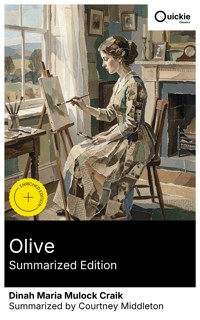
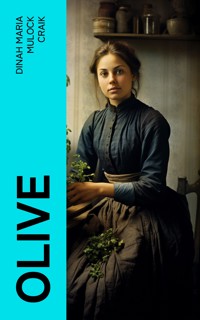
First published in 1850, Olive traces the formation of Olive Rothesay, born with a pronounced spinal curvature, as she negotiates family rupture, secrecy, and the vocation of painting. Craik fuses domestic realism with a quietly radical Künstlerroman, rendering interiors and landscapes with painterly exactness while probing the ethics of care, independence, and desire. The narrative insists that physical difference can co-exist with moral and artistic authority, placing disability at the center of Victorian debates about womanhood and work. Dinah Maria Mulock Craik wrote from the vantage of a professional woman of letters who supported herself by fiction and journalism in London's competitive literary marketplace. Having experienced early family losses and financial precarity, she repeatedly explored self-help, dignity, and duty in domestic settings. Her sensitivity to women's economic and affective constraints, together with a practical knowledge of periodical culture and circulating libraries, informs Olive's insistence on female artistic labor as both livelihood and moral calling. Readers of Victorian fiction that joins feeling to social thought will find Olive moving and incisive: a landmark for studies of gender, art, and disability, and a compelling domestic narrative for admirers of Charlotte Brontë, Elizabeth Gaskell, and nuanced moral realism. Quickie Classics summarizes timeless works with precision, preserving the author's voice and keeping the prose clear, fast, and readable—distilled, never diluted. Enriched Edition extras: Introduction · Synopsis · Historical Context · Brief Analysis · 4 Reflection Q&As · Editorial Footnotes.
Das E-Book können Sie in Legimi-Apps oder einer beliebigen App lesen, die das folgende Format unterstützen:
Veröffentlichungsjahr: 2026
Ähnliche

















Olive (Summarized Edition)
Table of Contents
Introduction
What does it mean to fashion a whole life from the raw materials of difference, longing, and steadfast moral resolve? In Olive by Dinah Maria Mulock Craik, a Victorian novel first published in the mid-nineteenth century, this searching question shapes a narrative set within the domestic and artistic worlds of nineteenth-century Britain. Blending clear-sighted realism with an ethical imagination, Craik follows her heroine’s formation across drawing rooms, studios, and social thresholds where reputation, sympathy, and class continually intersect. The result is a work situated between domestic fiction and the female coming-of-age story, attentive to vocation as well as affection, and to the way private choices echo through a public sphere.
The premise is deceptively simple: a child enters the world marked by a visible physical difference, and those who love her must learn how to see her fully. As Olive grows, she meets tenderness and prejudice in equal measure, and discovers that art can become a grammar for feeling and thought when language fails. The narrative voice is third-person and steadily intimate, guiding readers with calm, judicious commentary without dampening emotion. Craik’s prose favors clarity, measured pacing, and quietly luminous description, producing a reading experience that is reflective rather than sensational, heartfelt rather than melodramatic, and concerned always with the dignity of ordinary human ties.
One of the novel’s central commitments is to the lived experience of embodiment. Without resorting to spectacle, Craik foregrounds how social gazes, architectural spaces, and daily tasks can injure or sustain a person whose body does not conform to fashionable ideals. Olive’s difference is neither a mere obstacle nor a miraculous token; it is part of her selfhood, shaping perception, dependency, patience, and strength. Around this, the book meditates on the economies of care: how kindness is offered, withheld, or misdirected; how parental love may illuminate or shadow a life; and how truthfulness, even when difficult, becomes a form of respect.
Equally important is the theme of vocation. Olive’s artistic training unfolds as a disciplined, vocational path rather than an indulgence, and the novel attends to practice, mentorship, and the subtle economies of patronage. Through this lens, Craik examines the limits imposed on women who seek to make their talent legible in a public marketplace, as well as the quiet strategies by which they claim space and authority. The emphasis falls on integrity more than celebrity: how to make work that is honest, sustaining, and responsive to others, and how to balance self-sufficiency with the mutuality that all art—indeed all living—requires.
Within the broader canvas of Victorian domestic realism, Craik balances sentiment with restraint. Scenes of household management, country walks, visits, and conversations are finely observed, allowing ethical choices to emerge from ordinary routines rather than from contrived spectacle. The narration occasionally widens to comment on conduct and community, yet it keeps close to feeling, letting weather, interiors, and workaday gestures mirror inner states. Readers will find the tempo unhurried but cumulative: a sequence of quiet crises and recognitions that favors moral clarity over shock. The novel’s emotional register is compassionate, serious, and hopeful, without surrendering to simplification or easy consolation.
Situated in the mid-Victorian moment, the book engages questions of respectability, class sympathy, gender prescription, and charitable duty that structured public life in nineteenth-century Britain. Craik’s method is not polemical; she builds critique through patient portraiture, showing how communities create belonging by deciding whom to see and how to name them. In doing so, the novel anticipates later conversations about inclusion and the ethics of care, especially around disability, while remaining faithful to its historical idiom. Its argument is ultimately civic as well as intimate: empathy is not a mood but a practice, enacted in rooms, streets, workplaces, and laws.
For contemporary readers, Olive endures as a rare Victorian novel that centers a disabled woman’s interior life while treating love, work, and community with unsentimental warmth. It rewards readers interested in women’s artistic labor, the history of the bildungsroman, and the ethics of everyday care. Its pages invite slow attention—an openness to quiet scenes, small pivots of conscience, and the resilient textures of hope. In an age still wrestling with access, visibility, and the pressures to conform, Craik’s story remains bracingly relevant, suggesting how steadfast kindness, honest work, and imaginative sympathy can widen the shared room of human possibility.
Synopsis
Olive (1850), by Dinah Maria Mulock Craik, opens with the birth of a daughter whose visible physical difference unsettles an already fragile marriage. Her mother struggles to reconcile pride and disappointment, while the father’s absences and temper leave the household uneasy. The child’s perceived lack of conventional beauty exposes the family to social scrutiny and pity, raising questions about worth, love, and belonging that the narrative pursues with quiet intensity. From this domestic threshold, the book situates itself within a recognizably Victorian world of duty and reputation, yet signals a more searching inquiry into character: what constitutes gentleness, courage, and a life well-lived.
As Olive grows, small kindnesses counterbalance early wounds. Illness and solitude refine sensitivity rather than bitterness; she observes more than she speaks, teaching herself to read people’s motives. A discovery of artistic talent becomes both refuge and vocation, offering structure, purpose, and a way to transform inward vision into visible form. The narrative follows her discreet education—books, drawing, and example—underscoring the limited, often improvised avenues available to a young woman who must protect her health and dignity. Within the home’s shifting alliances, she learns prudence without cynicism, measuring affection, truthfulness, and self-restraint as the foundations on which she might build independence.
Adolescence brings change and responsibility. Family circumstances contract, compelling Olive to think practically about sustaining herself and those she loves. She pursues art with disciplined modesty, seeking instruction when possible and work when offered, careful to keep independence without courting notoriety. The world beyond the parlor proves ambivalent: sympathy often mingles with condescension, yet a few discerning patrons recognize skill rather than sentiment. Craik traces these steps with an eye for the economies of respectability—how rooms are rented, letters are exchanged, introductions are given—so that career progress feels precarious but attainable. Art becomes not only self-expression but a livelihood that tests patience, judgment, and endurance.
With new circles come attachments that complicate Olive’s inner quiet. She forms steadfast friendships with women whose candor and care enlarge her courage, and she encounters a man whose moral seriousness corresponds to her own. The affection that grows between them remains bounded by duty, circumstance, and Olive’s sense of honor; she refuses to seek love as pity or to barter principle for security. The novel, attentive to conscience, treats attraction as a proving ground for integrity. Subtle crises of silence, timing, and misunderstanding explore how self-respect coexists with vulnerability, and how a woman may choose constancy without surrendering the self she has worked to secure.
The past intrudes through a figure linked to earlier wrongs, drawing hidden fissures to the surface. A young woman, shaped by neglect and grievance, claims a place that unsettles Olive’s household and the narrative’s moral geometry. Questions of legitimacy, inheritance, and responsibility press upon everyone involved, revealing the unequal burdens society places on women for men’s failures. Olive’s instinct is to repair, not expose, yet her charity must not become collusion. The plot thus moves between compassion and justice, testing whether truth can heal without destroying, and whether a repaired home can hold those bound by blood, choice, and the consequences of secrecy.
Illness, financial strain, and social misunderstanding gather into a period of trial that clarifies character. Olive’s art, now a steady craft, sustains more than herself; it becomes the means by which she protects dependents and asserts a quiet place in the world. As tensions crest, she chooses candor over convenience, forgiving without forgetting the harms that shaped her youth. Affection deepens into a promise that must reconcile private happiness with public duty, while the household experiments in new arrangements of trust. Craik keeps the tone humane and sober, allowing obstacles to fall away less through miracles than through perseverance, tenderness, and deliberate, honest work.
Without disclosing final turns, the closing movement affirms the novel’s faith in steadfast labor, ethical love, and the dignity of lives often overlooked. Olive reframes beauty as character made visible—patience, truth, mercy—and proposes a domestic order capacious enough to include bodily difference, complicated kinship, and women’s professional ambition. First published in 1850, it stands as a carefully observed example of early Victorian domestic fiction that treats disability neither as spectacle nor sentiment but as an ordinary condition within a moral drama. Its resonance endures in its insistence that a home is something created, not simply inherited, and that constancy can be a radical choice.
Historical Context
Published in 1850 by Smith, Elder and Co., Dinah Maria Mulock’s Olive emerged in early Victorian Britain, a period of rapid social change. The novel belongs to the domestic realist tradition that flourished in the 1840s and 1850s, reaching readers mainly through circulating libraries such as Mudie’s Select Library (founded 1842). Its settings move within British provincial and metropolitan milieus shaped by expanding print culture, improved transport, and an increasingly literate middle class. Mulock, who had moved to London in the mid-1840s to write professionally, composed the book amid debates about morality, respectability, and women’s roles that framed much mid-nineteenth-century fiction.
Britain in the 1830s and 1840s experienced intense industrialization, urban growth, and economic volatility known as the Hungry Forties, alongside the Chartist movement (c. 1838–1848) demanding political reform. Railways expanded quickly after the 1830 Liverpool and Manchester line, knitting provincial towns to London’s markets and culture. These forces reshaped middle-class life and anxieties about work, respectability, and social mobility. Olive reflects this milieu through its attention to domestic economies, genteel poverty, and the moral valuation of labor and perseverance, themes common to contemporaries such as Elizabeth Gaskell’s Mary Barton (1848), though Mulock keeps the focus on private lives rather than factory politics.
Victorian gender ideology emphasized separate spheres: paid work and public authority for men, domesticity and moral influence for women. Legal coverture curtailed married women’s property and contractual rights until incremental reforms began in the 1870s. Limited respectable employments—governessing, needlework, and some artistic pursuits—were supplemented by philanthropic supports like the Governesses’ Benevolent Institution (1841). New educational footholds appeared with Queen’s College, London (1848), and Bedford College (1849). Olive engages these debates by presenting a woman’s struggle to secure moral and economic independence without forfeiting propriety, exploring how talent could become a vocation within, and sometimes against, prevailing expectations.
Artistic ambition, central to the novel, unfolds against mid-nineteenth-century British art institutions. The Royal Academy (founded 1768) dominated exhibition culture, yet its Schools did not admit women until 1860, even though women could exhibit. Government Schools of Design, begun in 1837, and the Female School of Design (1842) offered limited training paths. The Pre-Raphaelite Brotherhood (1848) challenged academic conventions with moral earnestness and close observation. Provincial galleries and London exhibitions expanded audiences. Olive mirrors these conditions by tracing the practical and social barriers a woman artist faced—restricted instruction, professional gatekeeping, and the need to reconcile public visibility with feminine respectability.
Religious currents shaped personal conduct and literary taste. Evangelicalism, influential across denominations, stressed self-scrutiny, charity, and the sanctity of family life. Publishers and circulating libraries favored morally edifying narratives, steering authors toward themes of piety, perseverance, and domestic virtue. Mulock’s fiction participates in this climate while extending sympathy to those outside conventional ideals. In Olive, ethical tests arise less from doctrinal dispute than from daily obligations—truthfulness, forgiveness, and care—aligning with the era’s moral pedagogy yet emphasizing compassionate inclusivity. The tone resonates with contemporaries like Charlotte Yonge, but Mulock’s emphasis on female self-culture and work gives the ethic a practical edge.
Family law and custom provided powerful narrative constraints in the 1840s and 1850s. Inheritance practices privileged male lines; guardianship and legitimacy rules could determine a woman’s security. Civil divorce only became more accessible with the Matrimonial Causes Act 1857; before then, separation was socially and legally fraught. The absence of married women’s property rights before the 1870 and 1882 Acts kept wives economically dependent. Olive’s plot navigates these structures through cautious attention to reputation, obligation, and consent, using domestic decisions to expose how legal conventions governed intimacy and survival without turning the story into a tract on reform.
Attitudes toward bodily difference also inform the novel. Nineteenth-century Britain saw early institutional orthopedics—London’s Orthopaedic Hospital was founded in 1838—and proliferating treatises on spinal curvature and deformity. Social prejudice, however, often equated physical impairment with diminished prospects in marriage and work. Literature began to challenge such assumptions by decoupling character from appearance. Olive contributes to this shift by situating a heroine marked by a spinal deformity within circles that test, and sometimes transcend, conventional pity or stigma. The narrative’s attention to resilience, access to care, and the dignity of capability echoes contemporary medical debates while insisting on moral equality.
The novel appeared amid a flourishing of women’s authorship following the Brontës and alongside Gaskell’s and Yonge’s domestic fictions. Issued in the three-volume format for the library market, Olive balances readability with ethical reflection prized by mid-Victorian gatekeepers like Mudie’s. While accepting the period’s ideals of duty and restraint, it critiques narrow respectability by validating female artistic labor, intellectual growth, and benevolent independence. In doing so, the book records the possibilities and boundaries of early Victorian Britain—its institutions, reforms, and sensibilities—and models a humane, quietly reformist vision that speaks to the unsettled yet hopeful tenor of 1850.




