


Erhalten Sie Zugang zu diesem und mehr als 300000 Büchern ab EUR 5,99 monatlich.
- Herausgeber: Huia Publishers
- Kategorie: Fantasy und Science-Fiction
- Sprache: Englisch
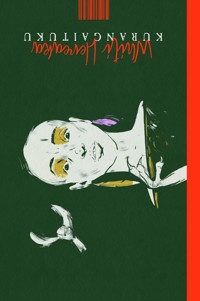
Kurangaituku is the story of Hatupatu told from the perspective of the traditional 'monster', Kurangaituku, the bird woman. In the traditional story, told from the view of Hatupatu, he is out hunting and is captured by a creature that is part bird and part woman. The bird woman imprisons him in her cave in the mountains. Hatupatu eventually escapes and is pursued by Kurangaituku. He evades her when he leaps over hot springs, but Kurngaituku goes into them and dies.In this version of the story, Kurangaituku takes us on the journey of her extraordinary life – from the birds who sang her into being, to the arrival of the Song Makers and the change they brought to her world, and her life with Hatupatu and her death. Through the eyes of Kurangaituku, we come to see how being with Hatupatu changed Kurangaituku, emotionally and in her thoughts and actions, and how devastating his betrayal of her was.
Sie lesen das E-Book in den Legimi-Apps auf:
Seitenzahl: 486
Veröffentlichungsjahr: 2021
Das E-Book (TTS) können Sie hören im Abo „Legimi Premium” in Legimi-Apps auf:
Ähnliche













First published in 2021 by Huia Publishers39 Pipitea Street, PO Box 12280Wellington, Aotearoa New Zealandwww.huia.co.nz
ISBN 978-1-77550-656-0 (print)ISBN 978-1-77550-673-7 (ebook)
Copyright © Whiti Hereaka 2021Cover illustration © Rowan Heap 2021
This book is copyright. Apart from fair dealing for the purpose of private study, research, criticism or review, as permitted under the Copyright Act, no part may be reproduced by any process without the prior permission of the publisher.
A catalogue record for this book is available from the National Library of New Zealand.
Published with the assistance of
Ebook conversion 2021 by meBooks
Hey you little hōhā,keep questioning andkeep pushing boundaries.
Acknowledgements
Te Kore / Te Pō
ACKNOWLEDGEMENTS
I feel like this is a story that I have carried with me since I was a child. My whānau would spend a lot of time driving between Taupō and Rotorua, and we would always stop at Te Kōhatu o Hatupatu in Ātiamuri. I would leave my koha in the rock and shiver thinking about Hatupatu hiding there from the terrible bird-woman. Being a hōhā kid, I always wanted to know more about her—the bird-woman.
I acknowledge Te Rangikāheke, whose work inspired the book of Māori myths I read as a child, and the other storytellers from Te Arawa—I hope that my work can contribute in a small way to our mātauranga Māori.
I also mihi to my tīpuna and whānau.
I have been writing this novel for almost a decade, so there are many people and organisations that I am grateful to for their support over that time. Thank you to the NZSA Auckland Museum Research Grant and the very helpful librarians at the Auckland Museum in particular, who guided my initial research. To Creative New Zealand for their ongoing support, especially Haniko Te Kurapa (you can stop asking me how the novel is coming along now!). I worked on this novel during my residencies at the Michael King Writers Centre and at the Roxby Downs Community Library supported by Writers SA.
I am also a bit overwhelmed thinking about the many people whose work has inspired me or whose presence in my life unlocked a bit of this novel. Thank you to the many writers I know who have listened to me talk about this book for almost a decade and who have been, perhaps, a bit bamboozled by my jazz hands as I talk about it.
Thank you Witi Ihimaera for very gently suggesting that perhaps I was trying to write more than one book at once—you were right! You said this to me when I needed clarity, and to be honest, a boost in confidence to keep going. Ngā mihi ki a koe, e te matua.
Another special thank you to Pip Adam, a writer and reader (and human) I admire very much who very generously read this novel for me before I submitted it and let me know that my ambitious idea for the format of this novel actually worked.
Thank you to the team of people at Huia Publishers, who have been supportive and, let’s be frank, patient with me! Thank you for the inciteful and incisive editing, Liz Breslin, Jane Blaikie and Bryony Walker. Ngā mihi to the reo Māori editors Kawata Teepa, Brian Morris, Pania Tahau-Hodges and Mairangimoana Te Angina who wrangled my enthusiastic but very basic understanding of te reo Māori into sentences that actually make sense! Thank you to the design team, Te Kani Price, Christine Ling and Camilla Lau; your work is consistently beautiful and does so much to support the story. Thank you Waimatua Morris, Claudia Palmer, Michaela Tapp, Brian Bargh and Eboni Waitere for taking my story from manuscript to book, from my hands into the world.
And finally, I mihi to Kurangaituku. The challenge of writing your story has tested me as an author and as a human, but I think that I am better for it. Although I remain a poor vessel for your voice, I am forever grateful for the chance to try and capture it. Forgive me my mistakes.
Please choose your kaitiaki—the guide to your journey.
MIROMIRO RURU
TE KORE
Kurangaituku
My story, my name, me.
My name tells a story.
Perhaps a story familiar to you.
I have waited so long for you to return to me. I mourned the loss of you for a while, convinced that you would not return. Had I imagined our connection? Did you not feel the same pull on your wairua when we were separated? You had forgotten me, forsaken me. The memory of you haunted me. I doubted my mind, my heart, my reality. How could I have been so wrong?
I sent miromiro to find you. Whisper a charm to the miromiro and he will sing to your errant lover—
Tihi-ori-ori-ori.
Bring her home. She is lost to me.
The sweet call of the miromiro winding the intentions of love into your heart.
Miromiro, a conduit for messages between lovers separated by the forest, by lands far away. The thoughts of your lover whispered from the shadows of the forest—you cannot see your lover, but you know that they are thinking of you, calling you back to their arms.
I whispered my love for you to the small bird and sent him to find you—across the forest, across mountains, across time. Did you hear my yearning for you in his melody? Did you think of me?
Tihi-ori-ori-ori.
A hum of recognition.
And you are here. Perhaps you thought we had been apart too long, that our bond had been severed. But we are entwined, aho twists over and under whenu. We are the fabric of each other—our lives must intersect. I have missed you, and I welcome you back with love.
I have a gift for you—a black sphere, almost perfectly round. I place it in your hand; it sits in your palm, your fingers must cradle it so it does not fall. It is lighter than you expect; it is not a dense mass of stone but something else, something yielding. The sphere feels warm in your hand; it is wet to the touch like a pebble pulled from a river—glossy obsidian, with flecks of white. It seems like the entire night sky has been captured within it. Hold it to your eyes. Through it you see everything—the black, the dark, the nothingness. Open your mouth, and place it on your tongue—it is too large for you to close your mouth, and I can see the panic in your eyes. Surrender to the feeling. The sphere changes—no longer round, the mass in flux, pooling on your tongue—it spreads out from your open mouth over your face. A scream enveloped by darkness. The dark invades your body through your eyes, your nose, your open mouth. It is the air in your lungs, the blood in your veins, the marrow in your bones. Let it invade you, colonise you, assimilate to it, until your body is no longer anything—it is part of the darkness. There is something in the dark, unseen, but known. Every instinct whispers monster. It is not the monster that is frightening—it is the dark.
I am dead.
Am I dead?
The world is dark and all that is left is darkness, a black void blankness. Let it be blank. Listen to the blank, the black, the dark. Blank is different from nothing. Nothing suggests, well, nothing. No. Thing. But blank is possibility —it may be filled, it may change, or it may remain. Blank.
Te Kore,
endless Te Kore, the void that stretches forever because there are no boundaries, no time. There is just Te Kore.
Te Kore,
endless Te Kore, the void that has no substance. There is nothing to perceive. There is nothing, just Te Kore.
Te Kore,
endless Te Kore, the beginning and the end. All the things that have been and will be, but cannot manifest in—
Te Kore,
endless Te Kore.
Everything, every possible thing, is enfolded together so very tightly that enormous heat is generated. It is the heat of creation, the blank feeling its potential.
And in the infinite void of Te Kore there is a hum, a hum of recognition, a prediction of change. We have started something. It is a beginning and in less than a second everything expands into—
Te Pō.
The darkness at last a presence, there is no longer an empty void. There is the night that stretches on.
Te Pō.
And in the darkness, the hum grows stronger. It is the hum of many voices, of infinite voices. It is all that has been, that will be, finding its form. Finding its will to be.
Particles combine and divide—the ripples of their coupling and divorce spread out and become great waves. Everything has changed.
Te Pō.
The darkness envelops. It invades. It is you and me and we are darkness.
Te Pō.
The darkness is complete, oppressive. It defines and shapes our form. It pushes down, and we push back.
Te Pō.
The darkness is our comfort, yet we continue to repulse it. The darkness that had defined our form has been replaced with space.
Te Pō.
The darkness is now an absence of light. We have perceived this. Our eyes have opened.
Te Pō.
And in the darkness, we listen for the hum. It is both within us and without us.
Te Pō.
The darkness is a womb—it has nurtured us, but we cannot stay within its confines forever.
Te Pō.
And in the darkness we realise that we are not alone. We are many who dwell in the darkness of—
Te Pō.
The darkness, o the darkness that has nurtured us, that has oppressed us and defined us. The darkness that is us must inevitably arc into light.
Ki te whaiao, ki te ao mārama.
A pinprick of light. It is the seed of potential. It is minute in the great void, this particle of light. I am tempted to say insignificant, but because it holds your attention, it is significant—you have imbued it with importance. Thus, this tiny speck has become the centre.
Watch as it continues to grow—the heat and light increase at a rate impossible for us to fathom. To our slow senses it is as if we are witnessing a great explosion. One moment we can hardly see the light, the next we are surrounded by it.
Meet me here at the centre. The centre of all that is known, all that will be.
We will create a world here from a few words, we will make a place where you and I will be comfortable. Let us first build a whare where we can share a story. A whare tapere, a house of storytelling and games. A pātaka kōrero, a storehouse of language. Dig foundations in the light, holes for posts—four. Our whare will be a simple rectangular shape; symmetry soothes and pleases. From afar, our whare shines in the blank, it is a tiny speck in the great abyss of Te Pō. It carries you and me. It is so small in the vastness, so vulnerable. How is it not crushed by the black? Be comforted by the thought that eventually night arcs into day.
We must continue. Walls. Plain for now, but by the end of our telling they will be carved by words and deeds—life, if you’d call it that, frozen in the moment. Past, present, future simultaneous. As it is; as it should be.
Below is the blank, the black—a floor is a necessity. Let us throw a mat on the floor. It is finely woven from flax fibre. The warp and the weft are tight; none of the blank shows through the minute holes, the pinpricks, the specks. Not a particle of blank shows through. The floor supports and yields. It is comfortable sitting here, perhaps even lying here, letting my words lull you to sleep.
Above are ridgepole and rafters, the backbone and ribs of the whare that envelopes us. Do you imagine yourself the heart? Keeping the rhythm of the place, letting the whare live. The kōwhaiwhai patterns have yet to be painted on the rafters and ridge—they too are blank, waiting for their story to begin.
What more do you need to be comfortable? A roof overhead, thatched as they were in old times. A window to let in some air. A door so that you can leave this place when it is time. Across the window, we will place a sliding panel so that we might shut out the world if we choose to. I will borrow it from a whare carved by expert hands long ago. Or perhaps, from this point of time, that whare has yet to be built. Perhaps it is our whare that will inspire the carver—his dreams are of our pare and our door. The door will depict a likeness of me. On the window, the likeness of Hatupatu.
The whare, now whole, must be blessed so that we may dwell together. I take water into my mouth, let it drip from tongue to beak to hand, and cast the drops into the corners. The water both cleanses and nourishes the seeds of potential here—we stand at the beginning and the end of a journey. I open a path so that my words might be fruitful, so that you may hear them and be satiated. I welcome you to this place that we have created. I welcome those whose lives I will invoke here—or at least, the part of their lives that I have glimpsed.
Let this place be filled with the things that we will need for the telling— a frayed taupō unpicked by my curious claws hangs in a corner; the pelts of two kurī, one black and one white, stretched out on drying frames; the fine cloaks and weapons that Hatupatu stole propped up against a wall—things I would have given freely, if I had been asked. A miromiro sings—tihi-ori-ori-ori—a lament for a lost lover.
Let this place be filled with love and betrayal, with death and life, with humans and non-humans, with upheaval and change.
These are the things we need for the telling. These are the things of my story.
Stories live through you and you through them.
A story does not live until it is told; the initial thought in the storyteller’s head is a quickening, it is the spark of something, it is the beginning.
I will try to share my story with you, but these shapes and groups that you think of as words cannot convey the experience. They are an approximation. Is it truly possible for anyone to understand the life of another? But I will tell you my story anyway—it is enough for you to have a taste, to run your tongue along the edge of my blade.
It is a privilege to be heard—and one not many are allowed. There are always those who will speak for others, to take control of the narrative. In my absence Hatupatu told his story; my voice was erased entirely. I found myself clothed in a character that wasn’t familiar—skin that had been pulled and stretched to fit another idea of me. I became an adjunct to his story, a character to be played against so that he might learn bravery. The fact that he is a thief and a murderer is glossed over. The truth is forgotten.
Ah, the truth. The tūī sings a different song to that of the kākā. But both sing the truth.
This story does not dwell within me but in the space between us. I cannot hold this story too tightly to myself. To live, it must have room to grow. Remember the story of how the gods separated the sky father Ranginui from his wife, Papatūānuku—the earth mother. Rangi and Papa held each other in such a tight embrace that their children could not thrive. It is only when Tāne-mahuta forced them apart that life could flourish. Is it not the same for a story?
It lives in the telling.
I live in the telling.
But that is telling.
I am a creature of words. I am a creature of imagination. I live on the edges of dreams and the margins of thought. I live in the whisper of the page. It is selfish then, this story. I want to be heard. I want to exist again, at least in your mind. I need to tell you this story so that you’ll let me in and I can breathe again. I was hatched in the imaginations of many. I slipped into the minds of the flock, generation after generation. I was a mutation that helped them adapt to their niche. I was a thought that was passed on to their children and grandchildren. I was woven into their nests and burrows. I was in their flight patterns and mating calls. I boomed in the night and trilled in the day. And eventually I was. What is a body, but a collection of carbon atoms held together—in my case—by will. Is it not true that the mind is part of the body and therefore a body can be imagined?
My body, in the beginning, was that of kōtuku, the white heron, a bird who lives on the margins of water and land, on the margins of the natural and supernatural, a conduit between Te Ao Mārama and Te Rēinga. The bird who is rarely glimpsed—he kōtuku rerenga tahi; the bird who stands motionless in wait of its prey—he kōtuku kai whakaata, a kōtuku that feeds upon its reflection.
He tohu, a hum of recognition.
A pattern is emerging on the ridgepole above us, pinpricks of gentle bluish light, like the stars through leaves. If we speak too loudly, the light disappears only to return when we are silent once more. Look up at the twinkling light—perhaps you can see constellations in miniature above you.
When I first dwelt in my cave, I could not stretch my mind to make a simple metaphor, glow-worms into stars. To me, stars were stars and pūrātoke were pūrātoke—each beautiful, but quite different from one another. I had no innate gift for storytelling, no need then to tell my story, to have a voice. This need, this want, is a gift from humanity. Your gift to me.
Events slide in and out of view. The endless repetitions collide with one another and create a pattern that is reflected upon itself. I have trouble keeping all I’ve experienced in an order that you expect and understand.
Beginning.
Middle.
End.
Middle.
Beginning.
Te Kore.
Te Pō.
Te Whaiao.
Te Pō.
Te Kore.
So this is where we start. It is at once a beginning, a middle and an end.
Through these pages, through these words, I live. Unread, these pages are my burrow buried beneath the ash and debris of a violent eruption—here I wait for the return of beings that create me. I am bound and unbound—in this form I can exist in many places, in many minds at once. I am physical, yet I can fly again without a body—I can fly to places as yet unimagined, see new wonders through your eyes.
Through you I am renewed. How will you remember me? The creature without a body, the collector of taonga, the betrayed lover? A contradictory creature—attractive and repellent. A liar, a thief, a murderer.
A giant. A monster. An ogress.
A monster who killed the birds of her flock and consumed them—not out of hunger, but out of curiosity. Through their flesh I could see their life experience. I could see where they had flown, taste what they had eaten, hear the sounds of their flock. I would suck the sweet brains from their skulls, tainted by the surprise of their own death, later with the fear of the monstrous creature that had killed them.
You too are a curious creature, hungry for experience—I recognise myself in you. Look at the book in your hands, the leaves opened, the spine cracked. The words on the pages are like a pulsing heart—you can see life here. You can feel it in your hands. A life waiting to be consumed. Through stories you glimpse the world of the other. One hundred lifetimes or more able to be lived by a single being. Past, present, future—all able to be lived and felt. The lives you can live within a story are endless. The lives I have consumed are countless.
Do these words that we share make you think that I am whispering to you? Is it my voice that you hear in your head as the shapes of the letters, the meaning they hold, fire up your neurons? I have borrowed your voice; I am clothed in your accent. You may imagine that my voice is harsh like the screech of a kārearea, or the trilling sweetness of a korimako, but in truth I have never had a voice of my own. Even when I finally managed to become corporeal, when I had learnt to push blood through my body with a heart, had contained my mind within the fleshy confines of a brain—I didn’t learn how to manipulate vocal cords and air to make sound. It was easier for me to communicate in other ways—to use the thoughts of others to communicate.
See now through my eyes—let my words fill your mind, let me weave for you my story.
A bird who cannot sing. A ridiculous creature.
It is sad indeed to be a creature who is unable to sing its own song.
This story, then, is my song.
Strike from the page all that has been written before. Let the words and letters slip from your mind; pile them upon one another, obliterating their meaning—their ink bleeds into the white spaces: they become pōngerengere, dark and suffocating.
See now through my eyes. Let my words fill your mind. Let me in.
How can I live without thee, how forgoThy sweet Converse and Love so dearly join’d,To live again in these wild Woods forlorn?
John Milton, Paradise Lost, Book IX
TE AO MĀRAMA
CHAPTER ONE
KUTUKUTU AHI
We started something.
A quickening, the spark of something.
We made fire.
I stood on the soft māhoe as he rubbed with his kaikōmako stick. I stood with my back turned to him, trusting that he would keep the sparks from my wing tips, trusting that he would not burn me. My trust was freely given then.
Even though I could not see him, every other one of my senses was attuned to his presence—as if without my eyes I could see him more clearly. The change in the air between us as his arm and hand moved closer to me. I breathed in the smell of the veins in his forearms engorging with blood. I held the breath until my head felt light, not wanting to lose this small part of him and me to the atmosphere. I could feel the pressure he exerted on his kaikōmako as he thrust it deeper into the groove of the māhoe, the rhythm working its way up from my feet to my spine, and it took all my self-control to stop the feathers on my back ruffling with pleasure.
The knot of tī kōuka leaves caught alight, and he brought the flames to life with his breath. Ka hā ia.
‘I first met you by the fireside,’ Hatupatu said. This was not true. We had met in the forest, long before we had made fire together. I tipped my head back, my long neck curving to the sky, so I could look him in the eye while my back was turned. It was a risk. Sometimes it was hard to predict his reaction to me, and my body. There were times when he despised me for reminding him that I was something not human. Times when the space between us was too great for our minds to meet, and in those spaces his fear would easily tip into violence. He laughed. I chattered my beak—explain—and he laughed harder.
‘Turn around and look at me properly,’ he said. Why did he think that I could not read him upside down? That his way of seeing was the only way? Still, I let his words move me. I turned and let my neck rest in the front of me, hiding its inhuman length in its curve. I cocked my head and looked at him. He made me wait. I watched him as if he was the kōaro I stalked in a swift stream—he was just as elusive. The ripple of firelight across his face thickened the shadows around his mouth—was he smiling?
‘In stories. I first met you in stories.’
A hum of recognition, a hum of prediction.
I had preyed upon the Song Makers in their dreams—seeking the cracks in their subconscious where I could seep into. I invaded their thoughts, pressed the thought of me into the air around them—a fearsome creature, a great white bird stalking them in the forest. I was the something lurking in the corner of their eye, the something that whispered into that ancient part of their brain that still thought of itself as a small mammal—the part that makes skin goose-pimple in fear, that makes the heart beat faster in the presence of a predator.
I made their stories, and they had made me. He made me.
He told me my story, the story told by his father and brothers. The story that made young boys scared to become hunters. The korimako that had been sacrificed to make his voice sweeter must have been a prodigious bird. His words bewitched me and nearly undid me—I could feel the borders of my reality fraying. Stitch by stitch he was unpicking me. The idea of me warped by his story, by his imagination. I could feel the shift in my mind and in my flesh.
Aho twists under and over whenu.
I felt weak against him, but I had to hold the thought of me together. I pushed that thought out into the dreams of the birds that roosted above us—the tūī, the miromiro, the pīwakawaka. Amplified by their dreams, the thought spread further and deeper into the forest to the kererū, the kākā and kōkako. The idea of me was so thick in the air that the night birds had waking dreams of me—the calls of the ruru, the whēkau and the kiwi were a litany of me. Strengthened by my flock, I could face him again.
‘Kurangaituku,’ he said, and I was undone again. His voice twisted my name around me, binding me to him. And my heart betrayed me—beating as if I was the prey and he the hunter. Hatupatu smiled, ‘Come, let me tell you a story.’
We started something.
A quickening, the spark of something.
We made fire.
CHAPTER TWO
ORUANUI
Before the birds, I was nothing. No. Thing. Incorporeal. Can I ever explain what it was like? Perhaps it is akin to describing light—that it can be two things at once, that it can embody two behaviours at the same time. I was both particle and wave—here and non-existent. Most beings experience the world through the body. Every sensation—sight, sound, touch, taste, smell—builds how they conceive the world. You exist as a body and you die as a body, and when you have finally rotted away and your bones have turned to dust, you will no longer exist. Being incorporeal is more than being free of flesh and the forces that act upon it—time, gravity, hunger—it means perceiving your self entirely differently as well.
Someone, somewhere, tells a story about you. In that act of storytelling, that person is not just talking about you but has actually created a you that exists in their story. You exist in this plane and in the world created by story. Both instances are you and exist independently, and more importantly, dependently. What is that idiom? Are your ears burning? The burning of your ears is the awareness of your other. Push it further—you are not only aware of your other and your other of you, but you are the other. It is as if you are many and one at the same time.
You and your other experience their lives individually—what you do in this plane does not dictate the actions of your other in theirs—but also collectively. You lead, as one of your phrases goes, a double life. They are both you—individual and part.
Can you imagine that? Two of you living separate but connected lives, each instance of you informing and enriching the other’s view of the world. Now take those two lives and double it in your mind. Double it again and again, beings upon beings created, splitting from one another like cells dividing—until the entire world is populated with you.
You are here and there and aware of both.
We became aware of each other—the birds and me. Until they perceived me, I had never thought about myself. And it changed how I thought of myself. My identity was defined in relationship to the other—the birds became my negative space.
The birds were the first to recognise me—they called me down from the mist and I was formed by their song. At first I was mutable, every bird remade me in their image. A ruru sang of me, and I would fly the night sky with him hunting for wētā. At dawn, the notes of the korimako would evoke me, and I would dart amongst the treetops looking for nectar. I flew and ran and swam with my flocks for centuries. And the thought of me grew stronger with each generation, their songs binding me forever to the corporeal world.
And then the world changed.
The birds knew that something was awry. Of course the birds knew. They had felt the tremor within the earth for months, weeks, days. Some had only known the earth like this—so short were their lives. But they recognised the change that was coming. A hum of recognition. Whatever it was, the birds knew.
The flock flies, or swims, or runs. And if some survive the blast they are not those in its path—those in the forest that hadn’t taken flight, those in the forest that couldn’t take flight, have no chance of survival.
High above the rimu canopy, a kārearea soars. The shock wave hits the forest. Looking down, the kārearea sees the mighty trees felled in an instant. Ancient trees that have blocked the sun from the forest floor for centuries, maybe more, topple, rip from the ground like a weak sapling in a spring storm.
An eruption so tremendous that it colours the sky on the other side of the planet, and rips apart the centre of this island.
Our kārearea stays steady, as if tethered to the spot by a line we hold. How long must he stay here? In our minds we can make this moment stretch out forever—he will be frozen on this page as if he is caught in the ignimbrite flow. A kārearea-shaped stone defying gravity because we will it so. He looks to the crater that has opened up from the earth. A huge column of debris rises above the earth. We can take our time describing what he sees. We can slow down the process, which would have happened in the blink of your eye, or rather, the boom of the shock wave. Had he been looking down to the forest our kārearea would have missed the column. We can imagine him looking at two places at once. It is the prerogative of the storyteller—we could justify it. Imagine that he looks down briefly and back up again so that it makes sense—although in ‘reality’, in the time it took to glance down and up again, the column would have already collapsed. And so, we freeze the column too—to give us time to describe it, to give us time to imagine it.
The column is made up of ash, pumice and lava. It is bigger than any of the buildings that you have engineered, or will engineer. It glows with the heat of the earth, expands with the gases that are created by the heat. Within it a storm rages—lightning rips through the column. If there is thunder, it is drowned by the roar of the earth as it pushes out more and more debris.
And then it collapses. We will slow time. Compare its fall to that of a building imploding, filling the city streets that surround it with dust and the atoms of the people it has crushed. The bottom of the column spreads out pulling the top towards its centre. The weight of the material pushes it across the land so quickly that it reaches the top of this island in a quarter of an hour. It is tempting to think that the boom preceding the fire cloud was a sort of warning, a siren for all living things to take cover. There is no point in playing the childhood game of counting the seconds between the flash of lightning and the clap of thunder to guess how far away the storm is because it is already here. It is a trick of our imaginations—that because we’ve slowed down time, we’ve allowed some life to escape. We have written in a space between the shock wave and the fire cloud that really didn’t exist. If their bodies had survived the boom, if their organs had not been liquefied, if their lungs survived to take their next breath, it would have been one of fire and poisonous gas. They would have been obliterated from inside and out as the heat of the debris, as the force of it, bore down on them.
It is impossible not to admire a force such as that. It would be easy to attribute such force and destruction to a malevolent god, a god who must be bound by powerful magic to the mountain he inhabits so that he cannot consume the earth again. With every rumble of the earth—the worry that his ropes had slipped, that he might rise again, this slumbering giant.
The flock has no thoughts of gods, no worries about what they may have done to cause this. The flock doesn’t attribute the workings of the world to their existence—it will be, whether they are or not. Survival is the only thing the flock thinks about, although the chance of survival is slim. The boom of the flattened forest spreads up into the air, knocking a few to the ground. How high would they have to fly to escape the cloud? The great tsunami of gas and pumice? Heated air usually provides uplift, but this air is so hot that feathers and wings disintegrate. Gas burns out the lungs of those still in the air. Do you imagine their bodies dropping to the ground, pillowed and preserved in the ash? In this death their bodies do not succumb to gravity—their carbon is rent in mid-air.
What of our kārearea? Our stoic kārearea who witnessed this all for our greed for knowledge? Do we leave him tethered to the spot to be battered, shredded, consumed by the fire cloud that engulfed him? Does he manage to fly away to safety? Does it matter? He has served our purpose and our thoughts are elsewhere, our thoughts are not high above the cooling ignimbrite but below it.
The crater that is left is the shape of a human heart, and will eventually fill with water, the source of many awa that run like arteries across the landscape. Around this huge crater the forests of rimu, felled and burnt by blasts, are unable to re-establish in the new soils rich in pumice. In their place mataī and tōtara will grow, and in these forests I will eventually hunt the birds that my beloved desired. In these forests I will be betrayed.
This landscape is utterly devoid of life, blanketed as it is in the now solid fire cloud. Ash still hangs in the sky making the light from the sun murky, like the canopy of the forest is still intact. But of course it isn’t. The ground that had once been the forest floor is buried under this new land. If you imagine the tallest trees from the forest—taller than the trees you think of now as giant, the trees that are grandfather to those you presume to call ancient— if those trees were still standing, if they hadn’t been consumed by the cloud, then you could imagine that the ash and rock would cover the tips of their newest leaves many times over.
And beneath all of this, I am curled in my burrow.
I am dead.
Am I dead?
Life when it is trapped will attempt escape—tree roots will crack rock, animals will test their traps, perhaps maiming themselves to be free. The first song that birds dream is of escape. You can hear them sing it just before they hatch—a muffled prayer.
Escape, escape …
… this place is too small for me. Body folded, wet with albumen, yolk sack absorbed. Egg tooth pierces the air cell and I breathe for the first time—hā.
Egg tooth chips at the shell—light rushes in and I can taste the air.
And so it was for me.
The life I had so carefully pieced together, the body made up of dreams, borrowed from nightmares, had to be free from the bonds of the earth. I was stuck. The limitations of a body, of a life starkly apparent. I couldn’t stay in this burrow forever. What was once a home was now a prison—both burrow and body. I needed to be free. I could dig with my claws and find my way back to the surface, but my claws were like the raindrops above, wearing down the rock over generations.
There was no longer a forest above me, nowhere for a flock to make its home. How would I be sustained without them? How could I live on in their memories if I could not implant myself in them? Even if I spent years digging my way to the surface, would my body just cease to exist as the memory of me faded, as the flock renewed itself generation upon generation and as the few that had known me died? Would they still sing of me?
There was no longer a forest above me, nowhere for a flock to make its home. If the birds’ imagination had given me form, then what would become of me lying beneath the earth for centuries? Would my body cease to exist as the memory of me faded?
My burrow, large enough to accommodate me, small enough to keep the warmth in, deep enough to preserve my life—or at least my body. It had been buried deeper by the debris—although not as deep as the tallest tree in the forest, just a sapling of two or three summers.
And I was frightened of my demise. Frightened that as I had attained life, that as I had rejected myself as incorporeal, I would die. That this would be the end of my existence. In the midst of the fear then was joy, because I had attained the life I sought, because I knew what it was like to be alive. Life is the fear of mortality. Life is the fear of the unknown world of the dead. Life would rather rip itself apart to try and survive than to lie in wait of death. And so it was that I clawed at the earth, at first with a desperation that wore my claws down to nubs, that broke the tip of my beak. It was frustrating and fruitless, but still I continued.
Before the eruption, there was life around my burrow. Microbes, insects, worms. In the rich soil above me I could feel the weight of them, the writhing millions above me. I could hear them, the worms, the invisible of the forest, tunnelling through the soil, eating and excreting the leaf litter and turning it into food for the trees. This reason alone should exalt the worm. Later, much later, I had another reason to honour the lowly worm and its role in our world and another.
Even the worms had gone. I was alone. The cooling rock above me had no dreams. I succumbed to the comfort of the dark, of nothingness. Above me was death. Below me was death. I was surrounded by it. How easy it would be to surrender to it.
To learn what it was to be extinct, what it was to no longer exist. Te Ngarohanga.
But life is tenacious. Life returned to me. Perhaps it recognised itself in me. Wind brought leaf litter from surviving forests. The microbes upon the leaves—bacteria and fungus—broke them down until at last there was enough matter to sustain a small colony of worms. When we consider the forest, it is easy to look at it in parts, focusing on the birds or the trees. It is more difficult to consider the whole, that all creatures that dwell in the forest do not just live there, but they make up the forest. The forest does not exist without every one of them, even down to the earthworms. There is love between the plant roots and the earthworms—they feed each other, without one there can be no other. They are bound, they are joined. It is like storyteller and audience—both are dependent on the other.
Life returned. Earthworms moving as one mass—a knot of creatures curled around each other alone and as one—colonised the forest again. I pushed the thought of me through the rock, I was the rotting leaves for the earthworms to gorge on. The meagre thoughts of the worms were like a feast to me. And I am made in the image of those that dream of me. I am soil and segment. I am moisture diffusing through skin. My limbs were no longer covered in muscle; the fibres twisted themselves into thousands of writhing worms knotted together to form me.
The forest regenerated above me and the flock returned. I could feel their thoughts above me—I could taste their thoughts. I slipped into their minds, a half-forgotten dream, a passing thought. Year by year my strength returned.
I dreamt of escape. My burrow was too small for me.
The rain wore away at the ignimbrite above me. Water froze on the surface, cracking the shell around me, forcing it apart millimetre by millimetre. There came a time when a crack became big enough to change the light in my burrow. I could taste the air again. I could breathe again—hā.
Hhhhaaaaa.
Hhhaaaa.
Hhaaa.
My bonds had been broken, and the world could creep back into my consciousness.
A tōtara seed became lodged in the crack. Its roots would force the crack apart as the tree grew. My burrow expanded as water dripped in, wearing the rocks and rotting my feathers away. It was many more years until the crack became a hole big enough for me to squeeze my body through. And finally I was free to roam the forest again.
I emerged from my burrow, my skin naked and raw like a newly emerged hatchling. It was very different—the world had changed over the centuries it took for the forest to renew. The forest had returned, but the trees of the forest had changed. The species I had once walked under could no longer survive the mixture of ash and pumice in the soil, and new trees had taken their place. The trees were filled with the chatter and song of the birds that were so familiar. It was good to hear them again after all my years underground.
Far off I heard the call of a bird I had never heard before. A slow, mournful song, punctuated by a bass pulse underneath the melody. A new bird, a new flock. A new mind to add to my collection. It sounded to me like one great creature, a bird of many throats singing in the forest.
The tōtara above my burrow had grown to full height. Its trunk was at least twice my height in diameter. I climbed it, the rotted feathers making my wings useless. My curiosity urged my weakened body further and further up. I had to find where the new flock lived. In the tree I had a good vantage point—I could see the changed plateau that I had been part of for centuries. I could see a clearing, smoke rising from it. It would seem the fire of the eruption still burned in some places, perhaps creating mud pools and geysers like the ones that lay to the north. I scanned the canopy before me for the mystery bird.
Where was that haunting song? Where was the creature that made it? I closed my eyes to listen for it, as if I could sharpen my ears if I blocked the distractions of the world of light. I felt impatient to find it—me who had waited in my burrow for hundreds of years, now could not wait a few minutes. Why had it stopped? Why did it no longer sing?
You can probably guess the creature who had made the song. It was a song made by bone and wood and gourd, not by the flexible vocal cords of a bird. It was not a bird I had sought, nor a creature who was supernatural—although at the time I did not know this.
And then the low notes pulsated; the mournful song I yearned for began anew. I compared it to the birds I knew, the birds I was familiar with. Such a song must be made by a creature who has the ability of the tūī to sing two songs at once. It must use the landscape to amplify its song like the boom of the kākāpō from its bowl on a ridge. I concentrated on that sound and only that sound, letting it reverberate around my head and ignite my imagination. I moved my head in its direction and opened my eyes. The new song was coming from the clearing. Perhaps a bird had adapted to the landscape of fire, although it hardly seemed possible having only these centuries to evolve. But it was a better explanation than magic, that perhaps this new bird had been created by the eruption itself. A fire-bird who lived on ash and sulphur, who made its nest in the cooling lava flow.
At the edge of the clearing I saw them, the new creatures. I had never seen beings like them before; to my eyes they were just as monstrous as the taniwha in the Song Makers’ stories. They stood upright like moa and were almost as tall. They were sparsely feathered like newly hatched chicks and draped themselves in dried leaves and the feathers of my flock. They had surrounded the clearing with young trees, stripped of branches and leaves, the ends sharpened. They had planted the trees closely together, forming a barrier against—I couldn’t think what. They had built nests upon the ground, entirely enclosed like that of the riroriro but created in strange rigid shapes, the tops pointed to the sky like the tops of volcanoes. The earth was still active here—hot pools and mud pools boiling from the magma beneath were dotted near the clearing, but the smoke did not come from those sources. The creatures had found a way to trap fire, tamed in small pits outside, or remarkably, within their nests. Perhaps they were creatures made from the eruption, creatures who did not seem to fear fire like the rest of the forest did. A fire-bird, of sorts.
They refused the limits of their own voices, creating instruments for song when their own voices could not create the sound they wanted. To me they seemed magical. They had the ability to make the inanimate sing—music created from stone, bone, shell, wood and plants. A tūī has two voice boxes, but the Song Makers could have many, not only the instruments they played individually, but the voice they created when they sang together. When they sang in unison, the different tones of each voice would blend to make songs that I had never heard before.
I did not know that their real talent was the ability to shape reality to their will—to create objects and dwellings from trees and stone, to shape the land around them, to grow the food they needed, to hunt and store for lean times, but most of all to tell stories. Everything they did told a story, the lines etched into their bodies, the lines etched upon the land.
The world had changed. Changed around me, changed without me. I was no longer the apex of these islands. I had been usurped.
CHAPTER THREE
SONG MAKERS
I called them Song Makers—they made the world around them sing. Their language mimicked the songs of the birds around them—I could hear the birds’ notes in every word. Later, when the Settlers came, the Song Makers would embrace the word for ordinary as their identity.
I watched the Song Makers for years, in the shadows of the forest, in the lee of their barrier. My years, my centuries, my millennia on these islands of birds left me unprepared for the arrival of the Song Makers. The birds were unprepared too. They had never encountered a predator like the Song Makers before. They overpowered the moa. Against four or five Song Makers, the impressive stature of the moa seemed insignificant—a riroriro in the clutches of the kārearea. The Song Makers hunted them and feasted upon their large bodies until the only place that moa lived was in the stories that the Song Makers told. The moa, all of the moa, gone. The scraps of them in middens or the bodies of the clumsy forgotten in tomo. The moa was kin to me now—a bird of legend, a bird of the imagination.
The Song Makers enthralled me. Their language was unintelligible to me for at least a season. But I was determined to learn their language because it is an act of love to learn a language, an act of becoming.
When I finally grasped their notes I was amazed to find that some of their chatter was about things that didn’t exist, speculation on how the world was formed and histories of their ancestors. They took pleasure in both the telling and in listening to them. These were creatures of the mind and I allowed myself to become enamoured by their words. I bound myself to them, as I’ve bound myself to you.
I gorged myself watching and listening to the Song Makers. I wanted to feast on the endless stories they seemed to possess. I wanted to possess such imagination—the ability to see this world anew through their eyes. Consume their thoughts and absorb their imagination. I would use their imagination against them just as they had used the moa’s body against itself. I would invade their thoughts, just as I had done with the flock—become part of their minds, part of their homes.
Ah, but the Song Makers resisted me. I had not encountered minds that were closed to me before. I could slip into the dreams of birds easily—they had called me to them, evolved with me in their niche. But the Song Makers had barriers I could not scale.
I had learnt from the tōtara seed. I would find a crack.
There were a few individuals amongst the Song Makers who were open to the unseen, matakite. I preyed upon them in their dreams, and while they slept I took root in their subconscious.
By and by there were hints of me in their storytelling. At first I was a kōtuku—the bird that flies between realities. But they recognised that I was rarer than the kōtuku, a bird seen perhaps once in a lifetime. I was kin to the kōtuku, but something different—a great white bird that stalked the forest looking for Song Maker prey. In their stories they called me giant, and my stature grew with each telling. I nurtured the idea of me by lurking close to their village. My presence in their midst did not go unnoticed. There were times when I pushed my mind so hard against theirs that one would pause and shiver. I allowed one or two to glimpse me amongst the shadows. Soon they would hesitate when I was present in the dark. I was the something lurking in the corner of their eye, the something that whispered into that ancient part of their brain that still thought of itself as a small mammal, the part that makes skin goose-pimple in fear, that makes the heart beat faster in the presence of a predator.
I fed on their stories of me, this monstrous bird who lurked in the forest forever hunting. A bird with a taste for Song Maker flesh, who would eat the souls of the unfortunate.
I fed on their idea of me, allowing it to divide my cells and rebuild my body. I was malleable, like the red clay from Kurawaka, hewn by Tāne to create his daughter-wife Hineahuone.
Before he created Hineahuone, Tāne’s urge to procreate was strong. He fathered the trees in the forest, the birds and the lizards. It seemed that this did not slake his appetite, and for a time he contemplated mating with his own mother. But Papatūānuku told him to take the red clay from her pubis to create his bride. From the Kurawaka clay Tāne shaped his wife. Before he breathed life into Hineahuone, Tāne made love to her inanimate body—where he spilt his seed became the mucus of her nose, the wax in her ears, the saliva of her mouth and the tears of her eyes. Eventually, he breathed life into her. She sneezed and he proclaimed, ‘Tihei mauri ora!’ At least, that is what has been told.
The changes to my body were violent, an eruption of imagination. I let their stories absorb into me. I curled around the story and let it curl me. I opened myself up to it—the story and I were no longer separate. The Song Makers’ stories of me evolved quickly, and their storytelling tore my body apart—my bones grew longer and heavier, ripping apart the muscles and tendons, bursting through the thin skin that covered them. To say that this transition was painful seems laughable and useless. What else could the reformation of skeleton and musculature be but painful? It was not just that I was growing bigger, I was growing differently. Somewhere in the telling the story changed—the Song Makers introduced humanity to a story that was not human at all. I was no longer just a bird, I was becoming more like my creators, the humans I desired. They did not grant me a wholly human body, just parts of it. Somehow this mixture of bird and woman made me more fearful in their stories. Perhaps it reminded them how close they actually were to the natural world they believed they ruled. Perhaps they thought themselves like moa trapped by hunters, that part of their brain still whispered predator, over and over again.
Because of their words I became more like the Song Makers—the shape of my legs changed underneath the shaggy down of my feathers. The muscles in my thighs lengthened, flaring out softly to my knees, which turned from the back of my body to the front. My feet were sturdy, large like the moa and able to cross the forest floor, the rocky coastline, the tussock of the volcanic plateau, easily.
My wings were like the Song Makers’ arms although they were feathered and much longer, almost twice the length. At the end of their span, where there were once elegant wing tips, the Song Makers had gifted me their hands, at least the shape of them. My fingers were elongated and made even longer by the claw-like fingernails at their tips. I spent some time making a fist and then stretching my fingers out.
This body was foreign to me—I no longer knew its parameters. My torso had changed. The down on my chest and belly gave way to skin. It was pale, far too pale for a Song Maker; it matched my feathers—white like the kōtuku. Sitting high on the chest were breasts, globes of fat that hung from me. My breasts peaked into the bud of a nipple, that most mammalian thing. The breasts seemed to serve no purpose, did not keep my heart and lungs warm at all. Later, I would see them used to feed the very young Song Makers. Later still, I would find that they gave pleasure as well.
Why would an animal evolve so that their vital organs were so vulnerable to the elements? I shivered whenever it was cold. I had not known such cold as that first winter without my feathers. My skin was so vulnerable to the cold and the wind, not only did it shiver, but it also became chapped and raw. The nipples on my chest cracked and bled, and some days the heat from my body attempting to repair itself was the only warmth I felt on my skin.
They had made me woman.




