


Erhalten Sie Zugang zu diesem und mehr als 300000 Büchern ab EUR 5,99 monatlich.
- Herausgeber: THP Ireland
- Kategorie: Fantasy und Science-Fiction
- Sprache: Englisch
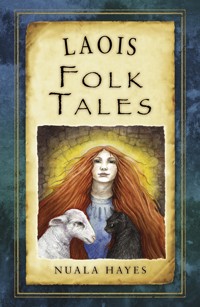
From miracle-working saints and shape-shifting witches to silent ghosts and wailing banshees, County Laois is teeming with folk tales and a selection of the best, drawn from historical sources and interviews, have been brought to life here by storyteller by Nuala Hayes. This book will take you on a journey through the county's varied landscape, from the rugged Slieve Bloom Mountains to its fertile plains, with tales of talking cats, bewitched butter, fairy changelings and holy fish. On the way you will meet characters like the great warrior Conall Cearnach, from whom the people of Laois are said to be descended; Moll Anthony, the wisewoman of the Red Hills; and the White Lady said to haunt Durrow Castle. Richly illustrated by internationally renowned artist Rita Duffy, these enchanting stories can be enjoyed and shared time and again.
Sie lesen das E-Book in den Legimi-Apps auf:
Seitenzahl: 216
Veröffentlichungsjahr: 2015
Das E-Book (TTS) können Sie hören im Abo „Legimi Premium” in Legimi-Apps auf:
Ähnliche





This work is dedicated to the people of Laois
CONTENTS
Title
Dedication
Introduction and Acknowledgements
1. The Origin Story of Laois
2. Fionn MacCumhaill and the Salmon of Knowledge
3. Fionn and his Sliotar
4. The Birth of Oisín
5. Fionn MacCumhaill and the House of Death
6. Fionn and the Leix Giant
7. The Third Gate at Rossnacreena
8. The Banshee from the Mountains
9. The Red Fairy of Grantstown
10. The Bewitched Butter
11. Biddy Aghaboe
12. Kind, Little Women
13. Moll Anthony of the Red Hills
14. The Stolen Child
15. The Bacach Rua
16. Our Kitty
17. Stories of Strange Cats
18. The Tailor
19. Clopook
20. Caoch the Piper
21. Four Saints and the Book of Leinster
22. The Man from Laois Who Became Pope
23. The White Lady of Durrow
24. The Ballad of James Delaney
25. Bloody Battles
26. Frank Fogarty and the Pass of the Plumes
27. The Battle of the Button, Which Led to Clontarf
28. Tall Tales from Timahoe
29. A Strange Foreboding
30. Tales from Cadamstown
31. Tales from Neilstown
32. The Tales of Dan Culleton
33. The Tales of Mick Dowling
34. The Tales of Jenny McGlynn
35. David Norris
Further Reading
About the Author
About the Illustrator
Copyright
INTRODUCTIONAND ACKNOWLEDGEMENTS
‘Sometimes folklore cuts straight to the heart of life. It illuminates history like a small pure flame burning in the darkest corner of memory.’
Vincent Woods, writer and broadcaster1
I learnt about Laois mainly through the stories and lore that were shared with me when I had the good fortune to be appointed artist-in-residence with Laois County Council Arts Office in 2002.
My brief was to ‘unearth’ the oral stories in this midland county, which, up to that point, were relatively unknown to me. To those who live on the peripheries of the island, the Midlands are places you pass through to get to the other side. The midpoint, the centre where roads meet, is also a place of movement and action, and a historically strategic place to possess, if the aim was to conquer. I discovered in County Laois that the stories that are told are intrinsically bound up with the landscape, the place and the history. The stories of ghosts and spirits are stories from the subconscious underworld, beyond the seen world. Many of the storytellers I met call themselves historians, yet they fully understand the purpose and value of the told story as a way of knowing the world and their place in it.
Henry Glassie makes the point in Irish Folk History that the local historians ‘connect to an ancient and vital Irish idea by ordering history more in space than in time’.
By the end of my time in County Laois – almost two years and many stories later – I had collected and recorded nine CDs of oral stories and history from many parts of the county. These recordings are now part of the Laois Oral Archive Collection and are available to the public through the Library Service. Some of those people who so generously shared their stories are no longer with us, but their voices remain. The recorded material was also the basis for a six-part radio series called Tales at the Crossroads, which was produced in 2004 for RTÉ Radio One.
Thanks to the encouragement of Muireann Ní Chonaill, the Arts Officer, and with support from the Heritage Office, I also produced a video of the same name which was filmed by local artist Ray Murphy and edited by Sé Merry Doyle of Loopline Films.
A story told is never the same twice. The written word pins the story down and forces it into the straitjacket of sentences and grammar. And the written text cannot always capture the music of the voice, the pauses, the emphasis to make a point, or even a joke. Or can it? In retelling these stories in written form, I have tried to retain the voice of the person who told me the story. As a teller of stories myself, I found it difficult to write them down, but I resisted the temptation to change or ‘improve’ them. To ‘tell’ a story is to live in the moment along with a listener. To read a ‘told’ story is a very different experience. A story asks to be told aloud.
The much-repeated phrase at the end of a story also applies here: Má tá bréag ann bíodh, ní mise a chum é (If there is a lie in here, don’t blame me – I didn’t invent it!).
However, this time around, I had access to the riches of the National Folklore Collection at UCD, to the local libraries in Stradbally and in Portlaoise, and to the published work of people such as Laois archaeologist Helen M. Roe, who collected Tales, Customs and Beliefsfrom Co. Laoghis in 1939; John Canon O’Hanlon, who wrote the mammoth work A History of the Queen’s County, as well as collections of folk tales and local legends, which were published under his pseudonym, Lageniensis. Brother Dan Hassett FSC of the De la Salle Order in Castletown also collected and collated local lore and stories in 1985.
The collection of John Keegan’s Selected Works, edited by Tony Delaney, is always a rich source of stories and poems from his short lifetime (1816–1849). A History of Stradbally Co. Laois, compiled by the Stradbally Historical Project in 1989, was also very useful.
However, the real pleasure in the process of compiling this work was meeting the very generous people who shared their time and their stories with me first, in 2002 and now thirteen years later in 2015.
Grateful thanks to Paddy Heaney, Paddy Dooley, Mick Dowling, Michael Clear, Dan Culleton, Johanna O’Dooley, Adrian Cosby, John F. Headen, Roghan Headen, Arthur Kerr, Hugh Sheppard, Paddy Laffin, Tina Mulhall, Seán Murray of Laois Archaeology, Hugh O’Rourke, Jimmy Fitzpatrick, the past pupils of Camross National School and the families of the late Jenny McGlynn and Frank Fogarty, for allowing me to reproduce their stories.
I am grateful to the management and members of Laois County Council; to Arts Officer Muireann Ní Chonaill, and the staff at the Arts Office, to Heritage Officer Catherine Casey and to Bernie Foran, County Librarian, for their support and enthusiasm for the project. It was a great boon to stay at the Arthouse in Stradbally, so close to the beautiful hills and lush valleys, which feature in many of the stories.
Julie Shead, librarian at Stradbally Library, thank you.
Míle buíochas to Criostóir Mac Cárthaigh of An Roinn Béaloideasa/Department of Folklore at UCD for his help sourcing material and to storyteller Aideen McBride, without whose encouragement I might never have begun. Thanks also to my friend and colleague, Jack Lynch for perusing the manuscript with a beady eye.
I am delighted to collaborate once more with Rita Duffy, who provided such vibrant images to illustrate the stories. Folklore and story is a rich source of inspiration to her as an artist, and her enthusiasm and energy keeps me spinning on. Thanks also to the photographer Stanislav Nikolov who documented all the drawings.
Nuala Hayes, 2015
Rock of Dunamase, County Laois.
NOTE
1. Vincent Woods, Folklore and Modern Irish Writing, Eds Anne O’Connor and Anne Markey (Irish Academic Press, 2014).
1
THE ORIGIN STORYOF LAOIS
The mythical origins of the Laoighsigh, the people of Laois, tells us that they were descended from the great Conall Cearnach, renowned among the Red Branch Knights and leader of the army of Conor Mac Neasa, King of Ulster, whose headquarters was at Emain Macha, now known as Navan Fort, in County Armagh.
It was said that Conall Cearnach fought against Queen Maedhbh of Connacht for seven years. After his defeat at the Battle of Ros na Rí alongside the River Boyne, he came south. The Book of Leinster tells us that he had two sons, Iriel Glúnmhar and Lughaidh Laoiseach Ceann Mór (Laoiseach of the Big Head). Laoiseach Ceann Mór was the one to watch.
Around the year AD 112, the King of Leinster looked for assistance against an invasion from Munster and our man Laoiseach was successful in defeating the Munstermen at Mullaghmast, Coolrus and Magh Riada, and banished them finally at another battle at Móna Droichead near Borris-in-Ossory. As a reward for his brilliant leadership Laoiseach was given Dunamase and its surrounding territories. It is from this man that Laois got its name.
With the Fort at Dunamase as his centre, he divided the area under his control into seven. Better known as ‘the seven tribes of Laois’, a portion was given to each of his seven followers.
The O’Moores, Lughaidh Laoiseach’s own descendants, are likely to have got their name from his big head, his ceannmór. The others were the O’Kellys, the O’Devoys, the O’Dorans, the O’Lalors, the O’Dowlings and the McEvoys. The leaders of these tribes were awarded many privileges at the court of the king, including the right to a sirloin of beef from a cow killed for the king’s table. They acted as counsellors and treasurers as well as distributing the king’s bounty to bards, musicians and other professionals. Rory O’Moore had a hand in setting up the Franciscan monastery in Stradbally and his family is praised in Leabhar na Nua Congbhaile, now known as the Book of Leinster.
The O’Moores and all these other family names are still prevalent in Laois and in the surrounding counties. In the main it was the ancestors of these septs or tribes that were the opposition to the invasions and plantations which make up the history of this part of the Midlands of Ireland. This is a place where the old roads crossed, where the story of Ireland was played out. The location, created by the boundary of the River Barrow to the north and east, the River Nore to the south and the Slieve Bloom Mountains to the west, with rich lands in the valleys in between, makes the county of Laois a beautiful place in which to live, as well as a place worth fighting over.
While searching for stories in Laois, I came across various spellings of the name which awakened my curiosity. In a handwritten book of stories collected in 1927 by Áine Uí Chiarbhaic of Ballyadams NS, she writes ‘Stories from Laoghis’ in the frontispiece. This book is in the National Folklore Collection.2
Then there is Leix, from which Abbeyleix, or Mainistir na Laoise, gets its name. From the sixteenth century, when the lands of Laois were annexed by the English Crown, the area was known as Queen’s County, after Queen Mary.
The sister county, now Offaly, was called King’s County. The principal fort or dún, which was up to then an O’Moore stronghold, was taken by the English forces and the town Maryborough developed after the fort was built. So it was until we achieved independence from England in 1921 and the decision to change the name was voted in by the Local County Council. Queen’s County became County Laois and Maryborough became Portlaoise.
In between all the tussles for power, the battles and the conflicts, life went on, children were born and the people survived on the fruits of the good soil, the water from the many spring wells and the legends and stories, which nourish the imagination.
NOTE
2. NFC:36.
2
FIONN MACCUMHAILLANDTHE SALMONOF KNOWLEDGE
When I first came to Laois in 2002, I wasn’t aware that Fionn MacCumhaill, the legendary warrior of ancient times, was associated with the this part of Ireland. In fact I shouldn’t have been surprised because, like all popular folk heroes, his reputation spread like wildfire and there are stories of the Fianna in many places. I discovered that Fionn’s name is still remembered in Laois in the town of Ballyfin, Baile Fhionn, Fionn’s home place. I visited fifth and sixth class in Camross National School and when I asked the young people if they had any stories, first up was the story of how Fionn gained wisdom, told to me by a twelve-year-old girl named Katy Wallace. She told it as an introduction to another story, which follows this one.
When Fionn was only a young lad, his father Cumhall was killed in a battle. Mórna, his mother, feared his father’s enemies would come after him too, so she sent him to live in the Slieve Bloom Mountains where he would be reared by two wise women named Bodhmhall and Liath Luachra.
They taught him all the skills they knew. He learned how to fight, to hunt, to run as fast as a hare and faster than a hound. He could make his way through a thick forest without breaking a twig or making a sound. He learned to respect the creatures of earth, river and sky and only to hunt when he needed to eat.
However the women were not skilled in poetry. In those days, poetry was a skill that only the druids, who spent years studying it, could master. So they sent him to live and work with an old druid, a poet named Finnegas, who lived alongside the River Boyne.
Finnegas taught him the language, the rhymes and the metres of poetry for an hour or two every day. The rest of the time, he spent fishing. He loved fishing and spent hours, days and years fishing for the salmon of knowledge. It was said that the first person to taste the flesh of this salmon would gain all the knowledge of the world. This particular salmon passed up the river every year to lay its eggs. Finnegas had spent years of his life studying but he realised he was not a master. He had never found the secret wisdom of the salmon. The wisdom of the legendary salmon of knowledge, which swam in the waters of the River Boyne, was all he desired.
After years of failure, Fionn was there with him at the moment of success. The young boy watched as he caught the speckled fish. He saw his joy and delight as he struggled to land the salmon.
Now, the truth was that Finnegas was skilled in many ways, but cooking a fish was not one of them, so he asked Fionn to help him. Fionn had been well taught by the women of the Slieve Bloom Mountains. He made a fire and began to cook the fish.
As he watched it cooking away on the spit over the fire, he noticed a blister appearing on the skin of the salmon. He pressed the blister to smooth the skin and in the process burnt his finger. He put his finger in his mouth to cool it and had the first taste of the salmon of knowledge. Finnegas came out to see how he was getting on. When he looked at Fionn, he recognised the knowing in his eyes.
‘Did you taste the salmon?’
‘I just pressed the blister on the skin,’ Fionn replied, ‘so it would be perfect for you.’
Finnegas spoke with the sadness of a man who knew that the gift of wisdom would never be his. ‘I cannot teach you anymore. You already have all the knowledge in the world. Go on and be leader of the Fianna!’
And that he did, but that’s another story!
3
FIONNANDHIS SLIOTAR
Fionn loved to play hurling. One day he was out in his back garden, hitting his sliotar up in the air with his hurley. A bird flew by. This bird had lost one of the eggs from its nest and thought the ball was the missing egg, so it caught it in its beak as it flew through the air.
Fionn was devastated. He loved his hurley and his ball; they were his most treasured possessions, so he decided to go looking for the ball.
He lived in the Slieve Bloom Mountains so he looked all over the mountains, and in the trees that covered them, searching everywhere for the nest. He couldn’t find it, so he decided to go to Offaly to look there. He went as far as the River Shannon. He crossed the river and searched all the counties around it, until he got to County Clare. There, up on the Cliffs of Moher, was a huge nest and inside was the bird, sitting on his hurling ball!
Fionn was very happy he had found the ball, but he didn’t know what to do. How could he get his ball back without disturbing the bird? In the end, he decided he would go looking for the lost egg.
His mother was very worried by now. She called around to her friends in the Slieve Bloom Mountains, but no one knew where he was. Then she noticed the hurley and saw that the ball was missing. She guessed he was off somewhere looking for it.
Fionn searched throughout Munster for the egg, then he went up to Connacht and Ulster. Then back he came to the mountains of Laois and there, lying on a patch of grass, he found the egg. He was so glad it wasn’t broken.
He went the whole way back to Clare with the egg. When he got a chance while the bird was away, he put the egg back in the nest.
The mother flew back. She looked at the sliotar and she looked at the egg and she knew which one of them was hers.
So Fionn got his hurling ball back. He went home and told his friends and his mother the story, but none of them believed him.
But he didn’t really mind because he knew it was true!3
NOTE
3. Laois Oral Archive, CD.1.
4
THE BIRTHOF OISÍN
The story of the birth of Oisín is one of my favourite stories. I have told it for many years without realising that it has strong connections with ancient districts in County Laois, Killeshin and Sleatty. Killeshin was once Cill or Gleann Ossian, or Oisín, in the Irish language. Sleatty is in Sliabh Mairghe, the Slieve Margy Mountains, which overlook the huge plains of Leinster across to the highest peaks of the Wicklow Mountains and southwards towards Mount Leinster in County Wexford.
Fionn MacCumhaill himself, they say, was born in these mountains and fostered by his aunt Bobal Bendrond, the Druidess wife of Cucend of Teamhar Mairge.
But enough of the background. Here’s the story.
It was evening time. Fionn MacCumhaill and his two dogs, Bran and Sceolán, were coming home, tired after a day’s hunting in the hills. Fionn walked slowly, enjoying the peace and quiet after the excitement of the day. The two wolfhounds padded along beside him. Suddenly a deer leapt from a bush and the dogs began to bark. Fionn began to shout, urging the dogs on, ‘Ar aghaidh leat, a Bhran! Ar aghaidh leat, Sceolán!’
Soon they were chasing the deer through the smooth valley, all of them in steady, beautiful flight. Suddenly the deer stopped and lay on the ground with the calm of an animal without fear. But the dogs didn’t stop. They continued to race towards her.
‘They’ll pull her apart,’ Fionn thought to himself.
But the dogs didn’t go in for the kill. When they reached the doe, they stopped and began to sniff and to play around her as though she was another dog – and an interesting one at that. Fionn was astonished. He had never seen the likes of it before and when he eventually caught up with his hounds, he put out his hand and the doe nuzzled her soft black nose into the upturned palm.
Without fear there is no hunt. Fionn decided that this was no ordinary deer. He decided to bring her back to his dún (fort) and protect her. She joined the herd that grazed the plains around the fort, where the Fianna were forbidden to hunt.
One day the door to Fionn’s room opened and a beautiful young woman walked in. Fionn was surprised and asked who she was.
‘My name is Sadhbh,’ the woman replied, ‘and I have come to ask for your protection. I am in terror of the Fear Dorcha.’
As soon as he heard this, Fionn realised that this was a woman of the other world and that she had come to him first in the form of a deer. ‘He is everywhere,’ she said. ‘He looks up at me from the water and looks down at me from the sky. His voice commands and demands. I cannot escape and I am afraid!’
When she spoke the words, a deep desire to protect her stirred in Fionn’s heart and he invited her to stay. She did and in no time at all they were inseparable. Fionn lost interest in everything, including hunting, fishing, feasting and ficheall (chess). Nothing interested him, apart from being with this beautiful woman, Sadhbh.
His mates in the Fianna were not impressed.
One day news came that the dreaded Lochlannaigh (the Danes) had rounded the Hill of Howth and were preparing to attack. At the best of times, Fionn had no time for these men from the north, with their long boats, their long legs and their long, wild hair, but this time they were coming between him and his beloved. He promised he would be back soon. He bade farewell to the love of his life and set off with his comrades to face the foe. The servants were left with orders to take good care of her while he was gone.
One day, not long after this, the sound of an dord Fhiann, the hunting horn used by the Fianna, was heard from the hill outside the fort.
When Sadhbh heard the sound she ran outside. A figure who was the image of Fionn, with two dogs just like Bran and Sceolán, stood on the crest of the hill. Sadhbh was overjoyed. Her husband had returned! And she had great news for him. She was expecting their child. The servants tried to stop her but she wouldn’t be held back. Horrified, they watched as she ran up the hill. The tall man raised his hand to strike her with a holly bush. At that moment, Sadhbh disappeared, but in her place there appeared a doe, frightened and shivering and backing away in terror. Three times the creature tried to escape and three times the savage dogs followed her and pulled her back. When eventually the servants reached the spot, there was nothing to be seen. They could hear the sounds of dogs barking and the beat of feet running, but the sounds seemed to be coming from all directions, so it was impossible to follow them.
Having dispatched the invaders back to wherever they came from, and satisfied that any who remained in Ireland were well dead, Fionn returned to his dún.
He didn’t wait for the victory celebrations. He headed straight home where he hoped that the love of his life would be waiting to meet him, her arms outstretched in greeting.
The sight that greeted him when he returned was far from what he had imagined. There were few people around and those who were avoided his eyes. What had happened? He caught the eye of Garbh Crónán, the Rough Buzz, the man whose job it was to see to the opening and closing of the gates.
‘Cad a tharla?’ Fionna asked. ‘What happened?’
When the story was told to him, Fionn dropped his head in despair and went back to his room. He stayed there, alone, for many weeks. When eventually he did emerge, he trained five special dogs for hunting. He wanted to be sure that if a deer were caught and it happened to be Sadhbh, she would not be killed. One day he was out again hunting with his men when they heard the sound of a dog fight in the distance. They followed the sound and found the five special dogs in a circle, holding off the rest of the snarling, growling pack.
A small fair-haired boy, no more than 3 years of age, stood calmly in the centre of the circle, looking around without fear. Fionn called the dogs off and went towards the boy. The boy didn’t speak a language he understood, but something in his look, his alert and calm eye, reminded him of a doe. Fionn took the boy home and began to speak to him and teach him and, when he was old enough, to ask him questions.
A young child doesn’t remember the past very well, but the boy did remember living alone in a cave with a deer he loved. There was always food left at the mouth of the cave and sometimes a dark figure would cast a shadow and the deer would disappear.
Fionn called the boy Oisín, which means ‘young deer’. He was raised on the mountains of Slieve Mairge by Fionn’s own foster mother. He learnt all the skills of the Fianna and he grew up to be a warrior and a poet. He came to be known as the last of the Fianna.
But that, as they say, is another story.




