


11,99 €
Mehr erfahren.
- Herausgeber: DVS Editora
- Kategorie: Bildung
- Sprache: Englisch
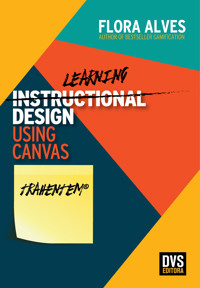
This is a work for people who believe in the power of simplicity. Flora Alves redefines Learning Design and demystifies it by translating theory into practice visually, collaboratively, and consistently. In this methodology, the design is centred on the "human being", for whom a learning solution is developed, and not only in the tasks that they have to perform. The process gains agility as it uncovers essential practices to promote the learning of the adult of today, who surrounded by stimuli and technology, needs to be involved in their learning process. By defining Learning Design as the systematized, chained and intentional organization of content, using appropriate learning methodologies for each type of knowledge, in order to stimulate and facilitate the learning process in different contexts, as well as to promote change of behaviour in relation to performance, attitudes and behaviours, the Trahentem® Methodology for Learning Design using Canvas is the tool that will guide you in the practice of that process, in a way that is aligned with the organizational objectives to be impacted, guaranteeing the transfer of learning into practice.
Sie lesen das E-Book in den Legimi-Apps auf:
Seitenzahl: 135
Veröffentlichungsjahr: 2017
Ähnliche
















Copyright© DVS Editora 2016
All rights for the Brazilian territory reserved by the publisher.
All rights for the Brazilian territory reserved by the publisher. No part of this book may be reproduced, stored in a retrieval system, or transmitted in any form or by any means, electronic, mechanical, photocopying, recording, or otherwise, without the written permission of the author
Book Cover: Grasiela Gonzaga / Spazio Publicidade e Propaganda
Canvas Design: Kênia Souto
Layout: Konsept Design & Projetos
English version from non-edited original: McSill Story Studio UK
Production: Schäffer Editorial Ltda
“In the long history of humankind those who learned to collaborate and improvise most effectively have prevailed.”.
(CHARLES DARWIN)
TRAHENTEM
“In the pages of our lives we draw our stories. Styles vary, strokes and colors as well. Yet we are all true artists”.
(FLORA ALVES)
CONTENTS
TRAHENTEM
DEDICATION
THANK YOU
ACKOWLEDGEMENTS
FOREWORD
THEORY PUT INTO PRACTICE
ONCE UPON A TIME OR “HOW A METHODOLOGY IS BORN”
Keep An Open Mind And Believe: There Is Always Something To Be Learned
The Glue Of Knowledge
The Great And Real Challenge: Helping Others Learn
Tools
BEFORE YOU READ THIS BOOK
You Should Know
ALIGNING CONCEPTS
Challeng
Design What?
Instructional Design
But What Is Learning?
Learning Sciences And The Context
Andragogy
Heutagogy
Instructional Learning Design
Changing The Mindset
Learning Design, A Definition
Instructional Learning Systems Design
Canvas Or Time To Undo The Confusion!
The Cycle Of Learning Solutions
THE TRAHENTEM® METHODOLOGY FOR LEARNING DESIGN USING CANVAS AND DESIGN THINKING
What The Trahentem® Approach Borrowed From Design Thinking
The Stages Of Design Thinking And The Trahentem® Methodology
PREMISES OF THE TRAHENTEM® METHODOLOGY REVISITING IMPORTANT BASIC ASPECTS
When A Learning Solution Is Necessary
How This Analysis Influences Your Work As A Learning Designer
THE TRAHENTEM® METHODOLOGY FOR LEARNING DESIGN USING CANVAS
What The Trahentem® Methodology For Learning Design Using Canvas Is
What The Trahentem® Methodology For Learning Design Using Canvas Is For
How The Trahentem® Methodology For Learning Design Using Canvas Works
The Seven Characteristics Of The Trahentem® Methodology
What Makes This Tool
Trahentem® ID-Empathy And The Diagnosis Process
Trahentem® ID-Tasks And The Selection Of Contents For Your Learning Solution
Trahentem® ID-ROPES And The Creation Of Training Modules
THE TOOL IN PRACTICE
Materials You Will Need
Preparing The Scenario
The Characteristics Of The Tool Guide Its Use And Establish The Best Practices
Tips
Model Basen On Case Study
Diagnosis With ID-Empathy Canvas: Connecting Organizational Analysis To Individual Analysis
Contents Selection With ID-Tasks Canvas: Making The Selection Of Essential Contents
ID-ROPES: Designing The Modules Of A Learning Solution Centered In The Participants And In Their Performance Using Canvas
CHOOSING INSTRUCTIONAL METHODOLOGIES
THINGS YOU WILL WANT TO KNOW
It Is Not Necessary To Follow An Order Or Use The Three Canvas Models
Freedom To Create
On-Site Or Collaborating Long-Distance - With Or Without Using Technology
Is It Necessary To Be An Experienced Instructional Learning Designer To Use The Methodology?
Doing Learning Design Is A Very Serious Matter
CONTRIBUTIONS FROM THOSE WHO ALREADY USE THE TRAHENTEM® METHODOLOGY FOR LEARNING DESIGN USING CANVAS
Adilson Marcos De Oliveira Júnior – Unimed Londrina
Adriano Jesus – Assurant Seguradora S/A
Bruna Pullig
Cynthia Lanza – SG – Aprendizagem Corporativa DESENHADA SOB MEDIDA
Daniele Monteiro – Assurant Seguradora S/A
Leticia Tojer – FAZESP – Escola Fazendária do Estado de São Paulo
Luciana Lessa Soares – Viação Águia Branca S/A
Michele Arnaud – GVT
Ronaldo Pontes Moura
Thays Araújo
GALLERY OF CHAMPIONS
WE HAVE FINISHED. NOW WHAT?
Bibliography
DEDICATION
This book is dedicated with all my love and admiration to you, Sergio Guerra, the most deserving of all merit. You are truly a specialist in creating the conditions for those around you to develop, perform, and do their very best. You are the most sublime example of what it is to be human.
It is also especially dedicated to two “great young women” who inspire me and make me proud. Gabriela Queiroz Miranda and Mariana Queiroz Miranda, you make me have faith in the future and believe, more and more, in the transforming force of education. I love you with all my heart and all my soul. I wish you both the best that life can offer forever and ever. May your thirst for learning grow more as each day goes by, thus keeping your mind open, your eyes curious, and your spirit always young, so that you yourselves may grow even more every day.
THANK YOU
To you, Ana Carolina Spolidoro Queiroz, and to you, Jedey Alves Miranda Junior, my eternal gratitude for having given me much more than the warm physical space to begin to write this book. Thank you immensely for giving me the greatest treasure I could ever want, which is to be with you, my family. The days we spent together were unforgettable, fulfilling and filled with joy. I love you and admire you as role models to follow, thank you!
May our bonds always be strengthened and may us always be together to celebrate life.
ACKOWLEDGEMENTS
I strongly believe that life takes us some places so we may meet certain people. And so was how I met each of the people who contributed generously and affectionately to some chapter in this book.
We cannot fly by ourselves, we carry a little of each person who crosses our path. In the contributions chapter, written by many hands by professionals united by their challenges and objectives, each of them shares their experiences with this tool or an adaptation of it to their reality. It was also with great happiness that among the contributions I received a case study of a successful implementation, based on the knowledge learned in my first book which proposes to be a guide on Gamification, from concept to practice. How great it is to learn that our ideas contribute to building knowledge and practice.
My endless gratitude to each one of you, my friends and travelling companions.
Adilson Marcos de Oliveira Júnior, from Unimed Londrina, who is already sharing what he has lerned with other colleagues. Adriano Jesus, from Assurant Seguradora S/A, who with great proactivity designed the Canvas by hand and was inspired to create. Bruna Pullig, a restless mind and an enriching presence in each workshop. Cynthia Lanza, whom today I have the pleasure to see bloom at SG Aprendizagem Corporativa Desenhada sob Medida. Daniele Monteiro, a traveling companion and competent professional who brightens our days with her smile. Leticia Tojer, a role model of how to make it happen, from FAZESP - Escola Fazendária do Estado de São Paulo. Luciana Lessa Soares, from Viação Águia Branca S/A, who gave me the joy of seeing my first book transformed into a sensational learning solution. Michele Arnaud, from GVT, who presents us with her competence and sweetness. Ronaldo Pontes Moura, who in a creative and charming way connected this tool to Coaching. Thays Araújo, you are a role model of engagement and leadership in the learning process.
It would be unfair to end this acknowledgement without highlighting my editors, admirable professionals and incredible partners always open to new ideas, the team at SG Aprendizagem Corporativa Desenhada sob Medida and all those who have given me a small piece of themselves so that I could build my inner self on a daily basis.
FOREWORD
The verb to learn gains special meaning in this book. It is really an example of the practice you intend to teach. Those who know the author, Flora Alves, are not surprised, after all she is a person who combines the most special skills. To our luck, her broad knowledge of education and learning is once again within reach of the general public.
The Trahentem® methodology for Learning Design using Canvas, described and detailed here by the author, is not only useful for professionals who work in the area of Human Resources and Training. It is also valuable for managers, administrators, consultants and professionals in all areas. Incidentally, the reader can have proof of that in the several testimonies and contributions in the final chapter of the book.
The lightness and simplicity in approaching those themes further enhance their content, making it easy to take in the concepts and all aspects that involve this tool.
As a Human Resources professional, I am very happy to share with you, the reader, this pleasant read.
It is also important to emphasize that it is the responsibility of companies, through their professionals, to develop and stimulate the continuous development of their employees, promoting democratic opportunities for evolution and opening prospects for a promising career.
Undoubtedly, the tool presented by Flora Alves helps to achieve that purpose and is a highly relevant contribution to the quality of the teaching-learning process, especially in corporate education.
Glaucimar PeticovBradesco Human Resources Director Banco Bradesco - Brazil
THEORY PUTINTO PRACTICE
The saying goes that in practice, theory and practice are not the same. As I believe that theory and practice must go together for both consistency and credibility, I always do my best to overthrow that myth. That was how the Trahentem® methodology for Learning Design using Canvas was born. Among so many definitions, practice means “the action or process of performing or doing something”, and putting into practice means carrying out, implementing.
This methodology was designed to help Instructional Designers, experienced or beginners, to put into practice what they know is essential, but find it difficult to practice, and so they can help others learn.
The Trahentem® method for Learning Design using Canvas does not neglect or leave aside what is essential for a learning solution to meet its goals, it only provides us with a dynamic and secure way to perform our work in real life, that is, so that we can make our practice take into consideration all the theory necessary for success.
ONCE UPON A TIME OR“HOW A METHODOLOGY IS BORN”
While some have a poetic view about the emergence of new studies and tools, others believe such findings are restricted to those who devote their lives to academic studies and laboratories. In the case of the birth of this methodology, it was the combination of both!
My personal experience has also shown me that professional challenges, difficulties and crises can be great allies and even propelling springs to great breakthroughs and innovations.
I will summarize how this methodology was born and I hope to inspire you to always be a combination between an eternal apprentice, a curious child and a committed professional. So, in the near future, I will be the one to read the book you signed.
KEEP AN OPEN MIND AND BELIEVE: THERE IS ALWAYS SOMETHING TO BE LEARNED
There was once someone who followed this premise: even when it seems bad, there is something good in a learning event... That is me and that statement is, to me, a great certainty. It was that belief that led me along paths that allowed the birth of the Trahentem® methodology for Learning Design using Canvas.
In Brazil, as well as in some other countries, professionals working in the development and facilitation of learning solutions come from diverse academic backgrounds. Thus, in choosing to embrace the development of people and organizations through teaching-learning processes, we must invest time and energy in the improvement of our knowledge and skills.
It was no different with me. In the last fifteen years of my career, as a partner of a corporate training consultancy company that offers tailored solutions, I have devoted much of my time to research and development. That process includes, more intensively in the last five years, my participation in international congresses and events, mainly in the United States and Europe. Today, having created this method, which has helped my company and others in the execution of your work with excellence, I can tell you that it was worth every second and every cent invested, but things did not happen overnight.
“I only know that I know nothing”, and so the more I learn, the more I have to learn. It was with that thought, or mind set, that I was designated Master Trainer by the ATD – (American) Association for Talent Development – in Brazil, and by the same association I also became an Instructional Designer. Yes, I was already experienced and had been working with training for more than twenty years, but I wanted to raise the bar of my performance to other levels and so I pursued certifications and other trainings. I haven’t stopped and will never stop doing that. I will go on that way, tirelessly seeking the improvement of my skills and, consequently, my work.
Driven by the same goal, I obtained my certification in BMG – Business Model Generation – Innovation in Business Models with Alex Osterwalder in Zurich, Switzerland, among other certifications and courses less relevant to the birth of the Trahentem® methodology for Learning Design using Canvas.
That intense traffic between groups of nationalities and diverse objectives brought me an invitation to participate in the Business Design Summit, which takes place in Berlin, and there I went to what would be, besides unforgettable, a determining event – although I didn’t know at the time – for the birth of my own methodology.
The Summit in Berlin brought me ideas, new friends, a reunion with friends made in previous events, magnificent experiences and many questions. Sometimes I wondered, “Where does it all fit?” and I confess that many things – although obviously fantastic – did not fit my context at the time, but I was intrigued and fascinated, because somehow I knew: everything would fit when the time came. I kept absorbing every drop and organizing what I learned so I could access it when I needed.
THE GLUE OF KNOWLEDGE
Keeping an open mind was key to learning many things that made sense at the right time, and that’s exactly what happened. I am convinced that it was not simply an insight but a logical chain of knowledge that brought to light the Trahentem® Methodology for Learning Design using Canvas.
The real challenges worked as a catalyst, and the feeling I had was that all the knowledge gained over time was moving, accommodating and sticking to each other, to put together a real map that would allow Instructional Designers and consultants, with different levels of professional experience, to be able to create effective learning solutions in a practical and dynamic manner, without, however, leaving aside all that is necessary for a Design focused on the human being, the participant, and their performance.
THE GREAT AND REAL CHALLENGE: HELPING OTHERS LEARN
I am a partner of a corporate training company that offers tailored solutions and that means care and customization. Our DNA is our unique support for each client and each demand, and the challenge that triggered the launch of this methodology was the increase of our Instructional Designers team.
The team grew rapidly as I observed the difficulty those professionals had in developing effective learning solutions dynamically and aligned with the business objectives of our clients. Among these professionals, we had those more experienced as well as people with less experience. However, the practice of Design in real life, with briefings that don’t always start complete, the lack of specificity in the instructional objectives and the time pressure, made our work become unproductive and often even messy. Not to mention that most of it continued to begin with the form and not the essence of what was needed for the trainees to perform their tasks.
You must notice that I am not saying at any point that the professionals were not competent or had no knowledge of what should be done, but the belief seemed to hover in the air that “in practice, theory and practice are not the same”. Let’s be honest, there is no ideal scenario. In the vast majority of cases where a training intervention is needed, time is pressing over us for reasons ranging from launching a product to hiring new people who need to perform quickly.
I’m sure you’ve seen yourself in front of the computer, with a pile of books of diverse content, struggling to create a training whose demand set the goal as something like this: “Emphasize the importance of Vendors’ attitude to business success”... or “Raising awareness of the importance of cooperative behaviors for achieving results”. Where to start? What to measure? What content to approach, and how?




