


60,99 €
Mehr erfahren.
- Herausgeber: John Wiley & Sons
- Kategorie: Wissenschaft und neue Technologien
- Sprache: Englisch
The third in a trilogy of global overviews of conservation of diverse and ecologically important insect groups. The first two were Beetles in Conservation (2010) and Hymenoptera and Conservation (2012). Each has different priorities and emphases that collectively summarise much of the progress and purpose of invertebrate conservation.
Much of the foundation of insect conservation has been built on concerns for Lepidoptera, particularly butterflies as the most popular and best studied of all insect groups. The long-accepted worth of butterflies for conservation has led to elucidation of much of the current rationale of insect species conservation, and to definition and management of their critical resources, with attention to the intensively documented British fauna ‘leading the world’ in this endeavour.
In Lepidoptera and Conservation, various themes are treated through relevant examples and case histories, and sufficient background given to enable non-specialist access. Intended for not only entomologists but conservation managers and naturalists due to its readable approach to the subject.
Sie lesen das E-Book in den Legimi-Apps auf:
Seitenzahl: 621
Veröffentlichungsjahr: 2013
Ähnliche


















Table of Contents
Title page
Copyright page
Preface
Acknowledgements
1: Lepidoptera and Invertebrate Conservation
Introduction
Biological background
Sources of information
2: The Diversity of Lepidoptera
Introduction
Distinguishing taxa
Drivers of diversity
3: Causes for Concern
Introduction: Historical background
Extinctions and declines
4: Support for Flagship Taxa
Introduction
Community endeavour
Flagships
5: Studying and Sampling Lepidoptera for Conservation
Introduction
Sampling methods
Interpretation for conservation
Priorities amongst species
Priority for conservation
Species to areas
Critical faunas
Related approaches
6: Population Structures and Dynamics
Introduction: Distinguishing populations
Metapopulation biology
Vulnerability
7: Understanding Habitats
Introduction: The meaning of ‘habitat’
Habitat loss
8: Communities and Assemblages
Introduction: Expanding the context
‘Vulnerable groups'
Habitats and landscapes
Assessing changes
9: Single Species Studies: Benefits and Limitations
Introduction
Some case histories
Variety of contexts
10: Ex Situ Conservation
Introduction: Contexts and needs
Lepidoptera in captivity
Translocations and quality control
Assisted colonisation
11: Lepidoptera and Protective Legislation
Introduction
Prohibition of collecting
12: Defining and Alleviating Threats: Recovery Planning
Introduction: The variety of threats to Lepidoptera
Habitat manipulation and management
13: Assessing Conservation Progress, Outcomes and Prospects
Introduction
Monitoring conservation progress
Indicators
Future priorities and needs
Index
This edition first published 2014 © 2014 by John Wiley & Sons, Ltd
Registered office: John Wiley & Sons, Ltd, The Atrium, Southern Gate, Chichester, West Sussex, PO19 8SQ, UK
Editorial offices: 9600 Garsington Road, Oxford, OX4 2DQ, UK
The Atrium, Southern Gate, Chichester, West Sussex, PO19 8SQ, UK
111 River Street, Hoboken, NJ 07030-5774, USA
For details of our global editorial offices, for customer services and for information about how to apply for permission to reuse the copyright material in this book please see our website at www.wiley.com/wiley-blackwell.
The right of the author to be identified as the author of this work has been asserted in accordance with the UK Copyright, Designs and Patents Act 1988.
All rights reserved. No part of this publication may be reproduced, stored in a retrieval system, or transmitted, in any form or by any means, electronic, mechanical, photocopying, recording or otherwise, except as permitted by the UK Copyright, Designs and Patents Act 1988, without the prior permission of the publisher.
Designations used by companies to distinguish their products are often claimed as trademarks. All brand names and product names used in this book are trade names, service marks, trademarks or registered trademarks of their respective owners. The publisher is not associated with any product or vendor mentioned in this book.
Limit of Liability/Disclaimer of Warranty: While the publisher and author(s) have used their best efforts in preparing this book, they make no representations or warranties with respect to the accuracy or completeness of the contents of this book and specifically disclaim any implied warranties of merchantability or fitness for a particular purpose. It is sold on the understanding that the publisher is not engaged in rendering professional services and neither the publisher nor the author shall be liable for damages arising herefrom. If professional advice or other expert assistance is required, the services of a competent professional should be sought.
Library of Congress Cataloging-in-Publication Data
New, T. R.
Lepidoptera and conservation / T.R. New.
pages cm
Includes bibliographical references and index.
ISBN 978-1-118-40921-3 (cloth)
1. Lepidoptera–Conservation. 2. Lepidoptera–Habitat. 3. Butterflies–Conservation. 4. Wildlife conservation. I. Title.
QL542.N495 2014
595.78–dc23
2013022175
A catalogue record for this book is available from the British Library.
Wiley also publishes its books in a variety of electronic formats. Some content that appears in print may not be available in electronic books.
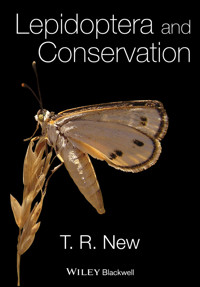
Cover image: Female Golden sun-moth (Synemon plana. Castniidae). Photos: © Lucinda Gibson.
Cover design by Nicki Averill
Preface
This book is an overview of the place of Lepidoptera, butterflies and moths, in conservation, and of what we have learned about conservation from concerns over their declines and losses and attempts to redress these. It builds on the burgeoning – and increasingly diverse and scattered – number of scientific papers, symposium proceedings and government agency reports throughout the world that deal with conservation of individual species or assemblages of these insects within most key terrestrial habitats. It emphasises also the enormous ecological variety and diversity amongst the Lepidoptera, and the importance of incorporating whatever is known of that variety into practical conservation planning and management. Advocacy, particularly that flowing from liking for butterflies – a group described as having powerful ‘resonance’ for many people – is a critical aspect of this conservation. Not least, this support is important because many informed sympathisers may contribute to conservation surveys or practical site or resource management, whilst local or regional interest groups can assemble, coordinate and disseminate relevant information effectively and rapidly to a receptive audience.
In common with many other invertebrates, promoting the conservation of insects is hampered severely by their public image, whereby they are seen widely as harmful and as objects for destruction and suppression. The major exception to this broad generalisation is the butterflies, almost universally seen as popular, harmless, associated with wellbeing of ‘nature’, and valued as cultural (or, sometimes, collectable) objects, and with their losses and declines accepted as worthy of redress. However, butterflies are only one rather small segregate of the large order Lepidoptera, with the other members (moths) often evoking less sympathetic responses: if they are considered at all, moths have historically suffered from a tendency of people to regard them as pests and inimicable to human interests, another generalisation masking their enormous ecological and taxonomic variety. Consequently, these major components of the order (with the exception of members of a few ‘flagship groups’, mostly in northern temperate regions) have lagged considerably behind butterflies in their appearance and representation on conservation agendas.
Biases toward butterflies and the northern temperate regions are inevitable in this book – with the butterflies of Western Europe, and especially of the United Kingdom, providing the foundation of many conservation paradigms in the discipline. It is true also that within the tropics and southern temperate regions, the larger Lepidoptera are perhaps the only representatives of any species-rich insect group that are amenable to relatively easy sampling and survey coupled with a high level of accurate taxonomic recognition to species/genus levels. This, linking with historical interest and experience, has rendered them accessible tools in many exercises in evaluating biodiversity. Such studies continue to proliferate and diversify. Simply ‘keeping up’ with the burgeoning information flow on European butterflies, in particular, would be a full-time (although absorbing!) occupation, and I can make no pretence at having done so. Many recent ecological papers provide further and increasingly penetrating and well focused insights for Lepidoptera conservation, and range from novel approachs and detail, increasing taxonomic and ecological variety, and challenging ideas and perpective. Edited volumes such as those by Settele et al. (2009), Dover et al. (2011), Boggs et al. (2003) and Ehrlich and Hanski (2004) provide much thought-provoking perspective and background. Specialist journals, such as the Journal of Insect Conservation, include relevant contributions in almost every issue. Many others (available up to early 2013) are also cited in this book, and range from single-author studies to the wider ‘Proceedings’ of major symposia on regional faunas or individual taxa. The latter are exemplified by the massive literature on individual butterfly taxa, such as the Wanderer (or Monarch, Danaus plexippus) in North America, the large blues (Maculinea) in Europe, and checkerspots (Melitaeinae) in both these regions: these intensively studied species must figure highly in any overview of conservation within the order. Thus, much has been written already about conservation of Lepidoptera – proceedings of some major symposia (such as Pullin 1995, Dover et al. 2011) demonstrate the wide interest present, as do a number of books dealing mostly with butterfly conservation and emphasising different parts of the world. The discipline is developing rapidly, with ever-more sophisticated detail of biological and political subtlety. In this book, I have cited simply a selection of the most relevant literature known to me by very early 2013; inevitably this selection is subjective, and many equally important and informative examples are excluded by space rather than deliberate slight. Another author might write a book on these topics with rather limited overlap with the references cited here!
More widely, the demand for yet more books on Lepidoptera seems insatiable. In his survey of books dealing with British butterflies alone, for example, Dunbar (2010) enumerated some 600 titles up to 2008. Perusal of almost any natural history book dealer's current catalogue reveals proliferating titles aiding identification or recognition of particular genera or families, with many of the books including magnificent colour illustrations to aid this, and some of the more ambitious publishing projects forecasting numerous serial volumes to deal with larger groups or regional faunas. Few of these emphasise conservation, although their perusal can aid evaluation of ‘rarity’ and enhance biological and distributional knowledge considerably.
However, whilst the discipline of Lepidoptera conservation has expanded enormously over the last few decades, many of the limitations noted in a review by New et al. (1995) persist, not least in the form of strong regional and taxonomic biases in conservation efforts and outcomes. The elegant research flowing from studies on European butterflies, in particular, has ‘set the scene’ for much conservation practice of far wider application for Lepidoptera in much of the rest of the world, where the necessary foundations of basic documentation and research have yet to be consolidated and the resources to do so are very limited.
Much of the wider current attention to insect conservation has its foundation in concern over fates of butterflies, with studies and sympathies on these insects of paramount conservation interest being critical drivers of establishing insects more widely in conservation policy and consideration.
There are many components to appreciation of Lepidoptera in conservation. In July 2008, Butterfly Conservation Europe issued a document entitled ‘Why butterflies and moths are important’, in which the major attributes that help to render them serious foci for conservation were encapsulated. The reasons were grouped under a series of headings: aesthetic value, ecosystem value, educational value, health value, economic value, intrinsic value and scientific value. Ranging from idealistic to practical, these broad categories display the variety of values, one or more of which is broadly evident or implicit in almost every case that has attracted attention. Collectively, they cover a highly persuasive suite of justifications for need and action.
The book is global in scope, and the 13 chapters fall into several main groups. The first five chapters provide historical, political and biological background on Lepidoptera and the progressive documentation and understanding of their conservation needs, and their roles as both targets for conservation and signals of wider conservation needs. Chapters 6–10 encompass the ecological scenarios of Lepidoptera conservation and some of the major approaches to their conservation. Chapters 11 and on move more toward the practical pursuit of conservation, emphasising the roles of legislative support, clear definition of conservation needs and actions, and how these may be monitored as a basis for adaptive management. The final chapter assembles the many aspects of progress to suggest how they constitute a template for the future and how priorities for that future may be set. I have tried to include sufficient general background for the book to be useful to non-lepidopterists, as well as for more specialist readers.
Lepidoptera are one of the ‘big four’ orders of holometabolous insects, each with several hundred thousand species and widely distributed across the world. This book complements the conservation perspectives given for two others of these orders, Coleoptera (New 2010) and Hymenoptera (New 2012b). However, it can draw on a much more complex and informed – at times, controversial – basis of interest, experience and documentation. Fundamental lessons on ecological relationships (particularly between insect herbivores and plants, and mutualisms between Lepidoptera and other insects), population structures and dynamics, impacts of alien taxa and the consequences of climate change are simply examples of the many ways in which studies on butterflies and moths have contributed to general principles of wide, even universal, relevance in insect conservation management. Their biological variety, coupled with high levels of local or regional endemism and ecological specialisation, and the naturally low abundance and high vulnerability of many relatively well documented taxa have all contributed to conservation concern. Energetic debate continues over the absolute and relative importance of many apparent threats. Whether the endemic Hawaiian species of Eupithecia moths, with their unique fly-catching caterpillars, are susceptible to alien parasitoids and predatory ladybirds introduced as biological control agents (Sheppard et al. 2004), or selected local butterflies are vulnerable to over-collection by hobbyists both exemplify themes that engender heated controversy. The latter has led to much conflict between collectors and conservationists, with the high prices paid for rare (and, in many cases, officially protected) butterflies – as well as for beetles and some others – a powerful incentive for transgressing any formal protective measures for the sake of financial reward. Historically, the desire to obtain specimens of rare species has extended to practices that have occasionally confused distributional recording in relation to more natural recent range expansions attributed to climate changes – most notably through the desirability of many the rarest British Lepidoptera (some of them sporadic and rare migrants to Britain and seen there only occasionally) inducing importations of livestock from mainland Europe for release for purported capture in southern England, with high rewards for the ‘smugglers’ from collectors seeking the prestige of exhibiting ‘real British specimens’ in their cabinet. The ‘Old Moth-Hunter’, P.B.M. Allan (1943), gave an entertaining account of the subterfuges in a chapter entitled ‘The Kentish Buccaneers’, which remains a fascinating insight into collector psychology up to the mid-twentieth century.
These topics, and many others are dealt with in this book, but much of it deals with more universal threats associated with loss of habitats and changes within them and how human interference and impacts, both current and anticipated, may be countered or ameliorated. The book is thus a contribution to the wider development of insect conservation, and how this most popular of all insect orders has played central roles in the development and evolution of the discipline.
Two comments on nomenclature are needed. First, the largest moth superfamily (Noctuoidea) has recently been extensively re-arranged in order to reflect more natural phylogenetic relationships revealed by morphological and molecular studies (Zahiri et al. 2011), so that (amongst other changes at the family level) many of the species previously included in Noctuidae are now placed in Erebidae. These changes have not yet penetrated conservation studies widely, and any species previously referred to as included in Noctuidae is referred to as such in this book. Second, the detailed attention to some butterflies has led to use of more than one generic name for the same species, or ambiguity over species/subspecies status, and some possible confusion may ensue. I have used the names given in individual publications, but the following are noted as possible ambiguities: Euphydryas/Eurodryas aurinea; Melitaea/Mellicta athalia; Maculinea/Phengaris arion (and related large blues); Lysandra/Polyommatus; Plebejus samuelis/Lycaeides melissa samuelis.
T.R. New
Department of Zoology
La Trobe University
Melbourne
References
Allan, P.B.M. (1943) Talking of Moths. Montgomery Press, Newtown.
Boggs, C.L., Watt, W.B. & Ehrlich, P.R. (eds) (2003) Butterflies. Ecology and Evolution Taking Flight. University of Chicago Press, Chicago and London.
Butterfly Conservation Europe (2008) Why Butterflies and Moths are Important. Wageningen.
Dover, J., Warren, M. & Shreeve, T. (eds) (2011) Lepidoptera Conservation in a Changing World. Springer, Dordrecht.
Dunbar, D. (2010) British Butterflies – a History in Books. The British Library, London.
Ehrlich, P.R. & Hanski, I. (eds) (2004) On the Wings of Checkerspots. A Model System for Population Biology. Oxford University Press, Oxford.
New, T.R. (2010) Beetles in Conservation. Wiley-Blackwell, Oxford.
New, T.R. (2012b) Hymenoptera and Conservation. Wiley-Blackwell, Oxford.
New, T.R., Pyle, R.M., Thomas, J.A., Thomas, C.D. & Hammond, P.C. (1995) Butterfly conservation management. Annual Review of Entomology 40, 57–83.
Pullin, A.S. (ed.) (1995) Ecology and Conservation of Butterflies. Chapman & Hall, London.
Settele, J., Shreeve, T., Konvicka, M. & Van Dyck, H. (eds) (2009) Ecology of Butterflies in Europe. Cambridge University Press, Cambridge.
Sheppard, S.K., Hennema, M.L., Memmott, J. & Symondson, W.O. (2004) Infiltration by alien predators into invertebrate food webs in Hawaii: a molecular approach. Molecular Ecology 13, 2077–2088.
Zahiri, R., Kitching, I.J., Lafontaine, J.D. et al. (2011) A new molecular phylogeny offers hope for a stable family-level classification of the Noctuoidea (Lepidoptera). Zoologica Scripta 40, 158–173.
Acknowledgements
The following organisations, individuals and publishers are thanked for advice and granting permission to use or modify material to which they hold copyright: Cornell University Press; the Ecological Society of America Inc.; the Edinburgh Entomological Club (Dr G.E. Rotheray); Elsevier, Oxford; European Journal of Entomology; IUCN Publications; the Lepidoptera Research Foundation Inc.; Minnesota Agricultural Experiment Station, St Paul; the Natural History Museum, London; the Netherlands Entomological Society (Dr R. de Jong); Pensoft Publishers (Dr L. Penev); the Royal Zoological Society of New South Wales, Mosman; Springer Science and Business Media b.v., Dordrecht; Surrey Beatty and Sons, Baulkham Hills; Taylor and Francis; Wiley-Blackwell, Chichester. Every effort has been made to obtain permissions for such use. The publisher apologises for any inadvertent errors or omissions, and would welcome news of any corrections that should be incorporated in future reprints or editions of this book.
I also thank Lucinda gibson for allowing me to use her excellent pictures of a female Golden sun-moth, a notable endemic species in South Eastern Australia. The book has been supported enthusiastically by Ward Cooper as Commissioning Editor. Also at Wiley, I have very much appreciated the support and patient advice from Kelvin Matthews as the project developed.
Ken Chow has dealt efficiently with production matters. The help of Nancy Arnott (Project Manager for Toppan Best-set Premedia Ltd) is also greatly appreciated, and the careful copy-editing by Joanna Brocklesby has improved the text.
1
Lepidoptera and Invertebrate Conservation
Introduction
Lepidoptera, the butterflies and moths, have for long been familiar both to naturalists and people in many other walks of life. Butterflies, arguably the most popular of all insect groups, have been a major focus for collectors and other hobbyists, as symbols of the wealth and health of the ecosystems that support them – and those interests have also contributed to concerns arising from their declines and, in a few cases, well publicised extinctions. The clearly documented losses of taxa such as the Large copper (Lycaena dispar dispar) from the fens of eastern England in the mid nineteenth century (Duffey 1977, Feltwell 1995) and reported decline of the Xerces blue (Glaucopsyche xerces) a decade or so later in the western United States (where it became extinct later: Pyle 2012), for example, each mark the beginnings of concern for insect conservation in those regions. More widely, the popularity of butterflies and later extinctions (such as of yet another lycaenid, the Large blue, Maculinea arion, in Britain as recently as 1979: Thomas 1991) have led to studies on these insects forming the strongest foundation of the developing science of insect conservation. Several factors contribute to this – simple aesthetics are important in creating a liking and sympathy for conspicuous insects, whether they are tiny lycaenids, as the above cases, or large and spectacular tropical swallowtails or birdwings (Papilionidae) such as those that enthralled explorers of then remote parts of the world during the Victorian era, and continue to do so. That era saw the proliferation of natural history documentation, prompted in part through the ‘philatelic approach’ to collecting, with progressive accumulation of distribution records, biological and life history details. These interests induced production of increasingly complete and sophisticated illustrated handbooks that enabled hobbyists to identify their study objects with reasonable certainty and summarise biological and distributional information, and so to confidently contribute further to the record of fact and inference that has provided a vital legacy to present-day students. This legacy is geographically biased, of course, but the 200 years and more of accumulated information has rendered the butterflies of Britain, followed by those of some other parts of the northern temperate zones, the best documented of all regional insect faunas. In short, they are informative as examples and models for emulation and understanding to biologists seeking a foothold in the daunting world of invertebrate diversity. Importantly, they are accessible to non-specialists, encouraged by the wealth of well illustrated identification guides and authoritative but non-technical information available.
Butterflies are unusual, also, in their cultural connotations, with artistic roles since pre-Columbian years (Pogue 2009) including representation in the ancient art from many parts of the world, as well as presence in literature, myth and religion – the latter including symbolised connection to the soul in several distinct cultures. That, in general, people ‘like butterflies’ and do not fear them as harmful renders them popular and powerful ambassadors for the wealth of insect life. However, there is also suggestion that the appeal of such insects may link to ‘academic disapproval’ and deter young scientists from taking up study of the group. Study of such aesthetically pleasing insects is occasionally associated with second-rate intellect, so that supervisors may lead potential lepidopterist graduate students to turn their focus to ‘insect taxa that are judged to be more academically respectable’ (Kristensen et al. 2007). Simplistically, butterflies, together with a few families of larger showy moths (notably hawkmoths, Sphingidae, and silk moths, Saturniidae) and the brightly coloured day-active burnets (Zygaenidae), are commonly regarded as ‘beginners' bugs’, simply because they are attractive and accessible easily by non-specialists. The reality is far different, as much recent literature – some cited in later chapters – demonstrates!
However, the butterflies are only a small component of one of the largest insect orders. They comprise only some 20,000 named species, a total surpassed by each of several individual families of moths which comprise, perhaps, a further 350,000 species. (2003) estimated global Lepidoptera species richness as ‘certain to exceed 350,000 species’ with considerable uncertainty over what the real total may be, and rather more than 160,000 species having been named. These are distributed amongst about 124 families grouped into 47 superfamilies ( 1999). More recently, and incorporating the uncertainty implied here, (2007) estimated that ‘There are considerably more than a quarter-million Lepidoptera species, probably in the order of magnitude of half a million, but there are not a million – let alone several millions’. The theme of taxonomic diversity is revisited in , and is noted here simply to emphasise that we are dealing with an enormous group of insects – confidently amongst the four largest orders of insects as they are at present understood, and probably the smallest of the four – and amongst which biological and taxonomic knowledge is very uneven ( 1992). Estimates of species numbers are difficult, not least because of the great variety of species concepts used in modern biology, and the transition from simple morphospecies to greater appreciation of intrinsic variation may affect the number of entities recognised very considerably.
Lesen Sie weiter in der vollständigen Ausgabe!
Lesen Sie weiter in der vollständigen Ausgabe!
Lesen Sie weiter in der vollständigen Ausgabe!
Lesen Sie weiter in der vollständigen Ausgabe!
Lesen Sie weiter in der vollständigen Ausgabe!
Lesen Sie weiter in der vollständigen Ausgabe!
Lesen Sie weiter in der vollständigen Ausgabe!
Lesen Sie weiter in der vollständigen Ausgabe!
Lesen Sie weiter in der vollständigen Ausgabe!
Lesen Sie weiter in der vollständigen Ausgabe!
Lesen Sie weiter in der vollständigen Ausgabe!
Lesen Sie weiter in der vollständigen Ausgabe!
Lesen Sie weiter in der vollständigen Ausgabe!




