


Erhalten Sie Zugang zu diesem und mehr als 300000 Büchern ab EUR 5,99 monatlich.
- Herausgeber: Nick Hern Books
- Kategorie: Poesie und Drama
- Serie: NHB Modern Plays
- Sprache: Englisch
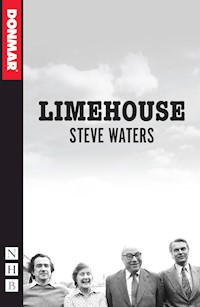
A divisive left-wing leader at the helm of the Labour Party. A Conservative prime minister battling with her cabinet. An identity crisis on a national scale. This is Britain 1981. One Sunday morning, four prominent Labour politicians – Bill Rodgers, Shirley Williams, Roy Jenkins and David Owen – gather in private at Owen's home in Limehouse, East London. They are desperate to find a political alternative. Should they split their party, divide their loyalties, and risk betraying everything they believe in? Would they be starting afresh, or destroying forever the tradition that nurtured them? Steve Waters' thrilling drama takes us behind closed doors to imagine the personal conflicts behind the making of political history. Limehouse premiered at the Donmar Warehouse, London, in 2017, directed by Polly Findlay. It is a fictionalised account of real events, and it is not endorsed by the individuals portrayed.
Sie lesen das E-Book in den Legimi-Apps auf:
Seitenzahl: 84
Veröffentlichungsjahr: 2017
Das E-Book (TTS) können Sie hören im Abo „Legimi Premium” in Legimi-Apps auf:
Ähnliche

















Steve Waters
LIMEHOUSE
NICK HERN BOOKSLondonwww.nickhernbooks.co.uk
Contents
Title Page
Original Production
Dedication
Acknowledgements
Epigraph
Characters
Limehouse
About the Author
Copyright and Performing Rights Information
Limehouse was first performed at the Donmar Warehouse, London, on 8 March 2017 (previews from 2 March), with the following cast, in order of speaking:
DEBBIE OWEN
Nathalie Armin
DAVID OWEN
Tom Goodman-Hill
BILL RODGERS
Paul Chahidi
SHIRLEY WILLIAMS
Debra Gillett
ROY JENKINS
Roger Allam
Director
Polly Findlay
Designer
Alex Eales
Lighting Designer
Jon Clark
Sound Designer
Emma Laxton
Composer
Rupert Cross
Casting Director
Alastair Coomer CDG
Limehouse is a fictionalised account of real events. It is not endorsed by the individuals portrayed.
This play is dedicated to the memory of my mother, Yvonne June Waters, 1941–2016; and also to the memory of Howard Davies, 1945–2016.
Acknowledgements
The author would like to thank the following people for their assistance in the writing of the play:
Professor Michael Kenny, Lord Roger Liddle, Lord David Owen, Lady Debbie Owen, Lord Bill Rodgers, Baroness Shirley Williams.
None of the opinions in the play are attributable to them.
Thanks too to Polly Findlay, Josie Rourke, Clare Slater, the cast of the original production and all the Donmar Warehouse for their assistance in the development of the play.
S.W.
‘In Limehouse, in Limehouse, before the break of day, I hear the feet of many men who go upon their way, Who wander through the City, The grey and cruel City, The streets where men decay.’
Clement Attlee, 1912
‘The plural of conscience is conspiracy’
Arthur Henderson
Characters
DAVID OWEN, Labour MP – forty-twoDEBBIE OWEN, American, literary agent, David’s wife – thirty-eightBILL RODGERS, Labour MP – fifty-twoSHIRLEY WILLIAMS, ex-Labour MP – fiftyROY JENKINS, ex-Labour politician and President of the European Commission – sixty
Setting
The Owens’ house, Narrow Street, Limehouse, London, January 25th, 1981.
This play is a fiction based on real events.
This ebook was created before the end of rehearsals and so may differ slightly from the play as performed.
One
Early morning. The Owens’ kitchen.
A cork-tiled floor; the walls are painted white. Reclaimed-wood kitchen units stage left with sink; gas-hob cooker to the rear; stylish but not fancy; the wooden surfaces hold a plate rack and stacked plates; pots of herbs and flowers. From overhead beams hang drying herbs and implements. In the centre of the stage is a large round table of planed oak, rough and uneven; around it elegant wooden chairs, documents, papers; basket of fruit. It feels oddly timeless and handmade, comfortable and chic.
Light comes in from street lights from the front; to the rear two doors upstage-left and right to an open-plan living space, with large picture windows revealing the sky and the open expanse of the Thames looking south to Rotherhithe; stage right leads to a staircase down to the street and telephone; stage left into the rest of the house and children’s rooms upstairs.
It’s four in the morning; moonlight, cold and pitiless through the high windows, meets the sodium glow from the street.
DEBBIE OWENenters in a dressing gown.
DEBBIEspeaks to the audience.
DEBBIE. When I was a child we used to summer on Long Island,
the sound of tidal shifts and the snapping of sails in the breeze sang me to sleep,
and here in Limehouse, you wake and sleep to the river’s shift and pull, the barges out at anchor on the Thames or the collier’s boat knocking at the jetty; all day long the river shifts and swells, smacking at our windows like it’s signalling something
and that day in January, 1981, it felt like history was a surge beating at the doors and calling us,
calling us out.
DAVID OWENenters – he’s in yesterday’s clothes.
DAVID. We have to start again.
DEBBIE. You need to sleep.
I need to sleep.
DAVID. I should call up somebody, Peter at theGuardian, yes, I’ll just call Peter up.
DEBBIE. At 4 a.m.? You think he’s waiting up for you? To say what exactly?
DAVID. Up with this we may no longer put! No more fudge and mudge!
DEBBIE. I suspect that can wait on Monday. And please keep your voice down, you’ll wake the children.
DAVID. Yesterday, in full public view the Labour Party committed hara-kiri. So why are the others so slow in instinct? Surely they know it’s kill or cure from now on.
DEBBIE. Okay, so we’re discussing this now.
DAVID. Obviously we’re discussing this now, yes.
DEBBIE. Look, tomorrow – today’s – Sunday, can’t you maybe, I don’t know put out some sort of press statement: ‘Coming soon, “Great Events’’ ’; I could rustle something up for you – come the morning –
DAVID. The printer’s rollers are turning, the ink’s hot, the last copy from the columnists’s in – right this minute, Labour’s obituary’s being typed – forget the motions and manifestos, there’s one story from conference: the Hard Left are in the driving seat – hot-wired the party, the unions, gerrymandered the leadership vote – and now we no longer say who leads us, no longer own the policies we go to the country with – and Monday morning every paper in the land will print that story. We have a day to stop that happening.
DEBBIE. Okay, yes, okay. I do see that, I do – get that.
DAVID. Well, thank God I’m not the only one who does.
Pause.
DEBBIE. Isn’t Roy with you? He’s looking for a job, isn’t he, now Europe’s done with, he must be pretty desperate.
DAVID. Desperate for this to be the Roy Jenkins show. No one knows where Roy stands, but if he leads us we’re sunk before we’re out the port, the man’s a relic, a decade past his sell-by date.
DEBBIE. Sure, sure – but Bill Rodgers’s onside, right, he’s pretty discontent.
DAVID. Oh Bill’s Roy’s poodle, does his bidding, runs his errands, when he’s not doubling as Shirley’s mascot; makes all the noises but hasn’t got the bloody attack.
DEBBIE. So Shirley’s the real prize?
DAVID. Not an MP right now, not got the guts for this fight, impossible to pin down.
DEBBIE. Well, correct me if I’m wrong but you can’t create a party on your own.
DAVID. Of course Ifuckingcan’t.
A young child calls off. They wince, wait.
A tugboat’s lights and the sound of a horn through fog.
The crying stops.
Another working breakfast at Bill’s then, hand-wringing and open letters; tomorrow we’ll be a laughing stock.
Better start looking at the vacancies in the BMJ.
DEBBIE. No! No, you don’t go back to that – you haven’t even begun in this, in politics – this is your chance, your time to make something genuinely you, genuinely new.
DAVID. Bill thinks I’m a wrecker, Shirley thinks I’m a lightweight, Roy thinks I’m Oswald Moseley –
DEBBIE. David, remember first and foremost you’re all friends.
DAVID. There’s no friendship in politics.
Pause.
DEBBIE. So treat them as friends.
Why do you never meet here?
DAVID. They don’t trust me to host! I’m the outlier.
DEBBIE. So, okay, get them over.
Build that trust. Let them see you like this.
DAVID. To what end?
No, they’ll instantly smell a rat.
And anyway you’re having lunch with your client, aren’t you?
DEBBIE. Absolutely, and the boys have football and it’s the au pair’s day off and I have three manuscripts to read, but all of that will have to wait.
Wehost tomorrow. No more frat parties at Bill’s on gin and Marmite sandwiches or cold suppers at Shirley’s or roast-beef lunches at Roy’s. I’ll cook up something… whatever we have in the house. Something convivial, warm, companionable – and we make it plain what you have between you – what you share.
And hold back on the papers, tip them off that something’s coming, that by teatime they will have that something.
Pause.
DAVID. Christ. Okay.
DEBBIE. And we’ll need to charm them and I know you don’t do charm, but you need to show that you love and understand each one of them, and keep the gas low and if you do this by close of play I promise you you’ll be more than a gang you’ll be a party.
Honey?
DAVID. All right.
Good. Good.
Brilliant, actually.
DEBBIE. Yes?
DAVID. Quite brilliant.
Debbie – I am nothing without you.
Blackout.
In the dark a radio plays Alistair Cooke’sLetter from Americadiscussing, ponderously, the inauguration of Ronald Reagan.
Two
9 a.m. Winter light streams in from the picture windows; foggy haze.BILL RODGERS, in raincoat covering M&S sweater and jeans; he holds a carrier bag with food.DEBBIEis making a shopping list, weighing out pasta, rooting in the fridge for cheese, noting it down.
BILL. You’re very far east.
Thought Kentish Town was off the map; this place is terra incognita.
DEBBIE. We like to be away from the fray.
BILL. Certainly away from that.
Not the first idea how to get here; drove round and round Old Street roundabout likeThe Flying Dutchman, forgot myA to Z, thinking, ‘just get on to Commercial Road’; luckily barely a milk float in sight.
Seems there’s less urgency than I feared.
Am I very early?
DEBBIE. Maybe you could fix some coffee – filter paper there, coffee in the tin above the sink; David’s dressing the children, be right down – David!
BILL. Okay. Coffee sounds an excellent interim plan.
He readies the coffee.
Oh I salvaged some of what I laughably call lunch.
DEBBIE. Really no need to do that.
BILL. Just given we were meant to be hosting, not that I’m making a thing of it, just all a little… sudden.
DEBBIE. It felt like maybe it was our turn – and we have the space as you see and well, the advantage of being out on a limb.
BILL. No complaints about the venue, Debbie; far more chic than chez Rodgers.
Yes, just some rather whiffy camembert, somewhat leaky and shall we say – whew – high –
DEBBIE. Ooh – yes, that’s certainly ripe –
She’s at the fridge.
Oh, bottle of something to warm us all up on the side there.
BILL. Ah, yes. Château Lafite? My word, no expense spared.
DEBBIE. Figured we ought to maintain his standards.
BILL. Uncanny – the Lafite’s his tipple of choice.Le Roi Jean Quinzewill be chuffed.
DEBBIE.Excuse me?




