


Erhalten Sie Zugang zu diesem und mehr als 300000 Büchern ab EUR 5,99 monatlich.
- Herausgeber: e-galáxia
- Kategorie: Gesellschafts- und Liebesromane
- Sprache: Englisch
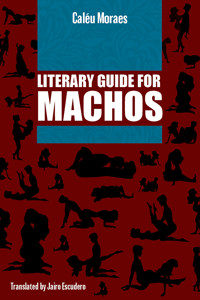
— Obscenely funny. The epitome of political incorrectness. From Hemingway to Camus to Du Fu, this scatological and irreverent narrative will guide your inner, lion-hearted maleness through some of literature's most interesting personalities, macho or not. The main character, who "wrote 13 theses, six dissertations and 34 monographs for other people" and, ironically, in his own prose, remains nameless, sketches a blend of colloquial, intellectual, and lustful adventures that will hook you from beginning to end.
Sie lesen das E-Book in den Legimi-Apps auf:
Seitenzahl: 100
Veröffentlichungsjahr: 2020
Das E-Book (TTS) können Sie hören im Abo „Legimi Premium” in Legimi-Apps auf:
Ähnliche




















Table of contents
Foreword
Our Bones
The Faggot Poet
The Advantages of Learning
The Advantages of Learning... Again
The Golem
The Hungarian Author
Mayan Priests
About My Novel
Dear Elfriede,
Genital Canto
The Revenge of the Ninja
Steven Seagal
The Golem: The Sequel
A New Novel
A House for Thinking
Perverted Pedagogy
Stocks
It’s Good to Read
The Fate of the Novel
How to Build Muscles with Poetry
I Don’t Understand Classical Music
A Defeated Samurai
About the author
Foreword
Our Bones
Literature is over. Period. Or should we say: semicolon. At least that which we defined as literature, with an uppercase L, and which was capable of changing thousands of destinies and dreams, as it did in previous centuries. Literature’s true influence in society today is minimal: it breathes artificially in ghettos, thanks to universities and those infected by literature, all those afflicted by Montano’s Malady, like you and me. This malady, an obsession with literature and the literary, with the desire to become “literature’s memory” incarnate, is also the pursuit of an antidote for the death of literature. Good heavens!
The term Montano’s Malady was created by the Catalan author Enrique Vila-Matas in his homonymous novel, and can be summarized by the following paragraph from the book:
Maybe literature is just that: to imagine another life which could be our own, to imagine a double. Ricardo Piglia says that to remember with a foreign memory is a variation of the double, but it’s also a perfect metaphor for the literary experience. I just quoted Ricardo Piglia and confirm that I live surrounded by quotes from books and authors. Sick with literature. If it persists, it could ultimately devour me, like a scarecrow by a whirlwind, until it made me lose myself in its limitless confines. Literature asphyxiates me more and more, and at fifty years old it concerns me to think that my fate is to ultimately be transformed into a rambling quotations dictionary.
The above paragraph haunted me when I first read Literary Guide for Machos as part of the panel of judges for the Silveira Souza Competition, in 2014; that’s because Caléu remembers with a foreign memory and duplicates the literary experience in each of the short stories, all with impressive vitality. I knew I had something different in hand, it wasn’t a heap of pastiches, clichés or sappy short stories. We were in the era of high-speed internet, of streaming, of the total portability of information, and I was tired of seeing academia, critics and big media searching for patterns and validations in literature, as if we were still in the 20th century. Literature is something else: now, something, else. Caléu’s book has all the elements of a fragmented world and, better yet, of a fragmented literature.
In his amusing and vitriolic essay Nude in Your Hot Tub, Facing the Abyss, novelist and philosopher Lars Iyer, a professor at Newcastle University, ultimately destroys all literary myths, one by one, pointing out the most evident reasons that caused the end of literature, which, nowadays, would be a mere pile of bones. However, in the last few lines of the essay, after deconstructing all utopian writing, he opens a window: “Savage art, like the cannibal you are. Remember, only when the thing is dead, picked at by a million years of crows, gnawed at by jackals, spat upon and forgotten, can we discover that last inviolate bit of bone.”
There it is, Caléu knew he was dealing with bones when he wrote his stories, he is one of those writers who was born of literature’s death and, because of that, he can tell it to fuck-off whenever he feels like it. His brief forms never pretend to be the first short stories written in the history of humanity, he is conscious of literature’s timeline, that unique and autophagic system. In the story that opens the book, The Faggot Poet, references to Cavafy are not as daunting as the assertion that “books are made to be sold, just like anything else.” With every story and every paragraph, authors such as Ginsberg, Cavafy, Doris Lessing, Naipaul, Coetzee, Elfriede Jelinek, Edward Said, Guimarães Rosa, Machado de Assis, Henry Miller, Rabelais, Imre Kertész, Rubem Fonseca, Hemingway and Gertrude Stein coexist very well with dicks, assholes, pussies and cocks. And yet, that is not the book’s greatest merit, which, as previously mentioned, is actually the utter unmasking of the literary character. And, although, the fluidity of the narratives evokes our last-minute hero, the Chilean Roberto Bolaño, there are also points of contact with the contemporary absurdness of the short stories written by the Israeli author Etgar Keret. Caléu has a sense of urgency, of living, of equating life and literature, of showing that the only frontier is desire; and he exorcises his ghosts in the best way possible, in line with what our Vila-Matas said: “there is no better way to get rid of an obsession than to write about it.”
Carlos Henrique Schroeder
`You are welcome to your intellectual pastimes and books and art and newspapers; welcome, too, to your bars and your whiskey that only makes me ill.
Knut Hamsun
The Faggot Poet
I read two of Allen Ginsberg’s interviews. Then I sold the book. I went home and, while taking a shit, finished Cavafy’s poems. Now I’ll sell them too. I steal books and then sell them. I read a few, others I disdainfully reject. But I sell them all. Books are made to be sold, just like anything else.
Sometimes, just like everyone else, I get hungry. So, I’ll finagle three or four specimens from the public library, rip off the stamped pages, and sell them any way I can. Later, like anything else.
This time I have to sell a Cavafy specimen, an Alexandrian poet educated in England. He wrote the poems in Greek. The book is bilingual.
I stole it from an asshole professor who bragged about knowing Greek. Between gulps of beer, I would read excerpts of the poems. He was with a redhead who, I suspect, was a prostitute. Great tits, great ass.
She wouldn’t take her eyes off me. I signaled towards the bathroom. I got up and went to meet her.
“What are you doing with that piece of shit?”
“I don’t know.”
I grabbed her ass and, after kissing her, I said:
“Get me that book.”
“Why?”
“Do you really want to hear that faggot reading aloud all night?”
She left. I went back to my table and waited. The professor, who was wearing a black shirt with a tie, got up. As they were leaving, she asked to carry the book. He started towards the door, and she left it on the table. I ran over, took the specimen and went back to my table, hiding it under my jacket.
He must have others at home.
My personal library is sizeable, but the books change quite a lot. It doesn’t bother me. I like to throw stuff away. I’m always burning my papers. The only thing I need is cleanliness.
We have too much garbage. We have too many a book.
My job is to write monographs, dissertations, and theses for loafer students. Therefore, because I know they need me, I charge quite a bit. Even so, the money is not enough. Hence, I steal books.
As to the redhead, I got her phone number in the bathroom. I called two or three days later. I had her at home. She had hard-rock thighs, like the spine on Lévi-Strauss’ The Naked Man.
I like to hit women. It gets me horny. I scratched her thighs. Two or three hours later, she left. That’s how it is. I also throw people away. Suddenly, they get on my nerves.
They say that, one fine day, a westerly professor went to Japan to learn about Zen. There, he met a Japanese wise man. He talked to him about his doubts in a pedantic, intellectual manner. The wise man was serving tea to the professor and filled the cup until it spilled. The professor made a big fuss:
“Careful! The cup is already full!”
The Japanese man then said:
“How can I teach you about Zen if, as is the case with this cup, you’re full of opinions and prejudices...?”
It’s the same with people. I believe we have a limit as to how many people we can live with. From one minute to the next, that limit can burst. There’s no point in collecting a bunch of people. We have to throw them away. Because they’ll rob us of our energy, as if they’re vampires.
Anyway, I need to sell a faggot poet.
Cavafy liked men.
Once, in Alexandria, he wrote about an office boy and his English boss corrected him: “A tall man, Mr. Cavafy, not a long man.” Cavafy knew English. I’m sure that, when he called the boy “a long man,” he was talking about his penis.
That’s it...
Cavafy was mad about dick. His poems show it. He would sometimes run around the neighborhoods of Alexandria so he could lie down all night in the arms of a sugar baby. In the morning, when he realized he’d again submitted to his love desires, he would write: “I swear I’ll never do it again.” But he did.
He spent his whole life bribing acquaintances in the hope of not drawing attention. He would pay the servants to dishevel his bed for the purpose of deceiving his mother. Every once in a while, he’d wash dishes at the brothels to save his sick lovers’ jobs. Things that women do.
Cavafy would do anything for his men. A faggot poet, ultimately. Actually, all poets are faggots. Have to be. A character created by Roberto Bolaño said that novels are heterosexual and poetry… a thing for homos. And he’s right.
I have to sell his poems. Few people buy poetry. Here, few people buy books. I’m almost convincing myself they’re right. I mean, why would I buy a book? There are too many poor people in this shithole country.
Some months ago, talking to a Heideggerian friend, I heard him say that he was at peace because he had discovered the house of the inhospitable. What in the hell is that? House of the inhospitable? I told him he was “Being” a fucking asshole. But that’s a story for another time.
I have to sell a book.
Who’ll buy it?
Suddenly, while drinking my coffee, I remember this homo for whom I wrote a master’s dissertation. It was about Cavafy. I call him and, with a little effort, he remembers me. He may have been feigning not remembering. I tell him about the book, but he says he already has all the poems he needs.
What am I going to do with this book? Who wants poetry? I need to slither around universities... run through their campi, show the book. I need to listen to conversations... research the subject. Pretend I’m interested in Cavafy. Find out who studies him… if anyone. I need to beget friendships.
I then tell him this specimen is different. That I’m going to meet with the translator, Trajano Vieira, and can ask him to write a small dedication mentioning his faggoty name. Silence... for a few moments, he says nothing. I insist: “So? You want the book? I’m going to see him in a couple of hours...”
Yes. He wants the book. Because of a shitty signature. He wants the book. I hang up the phone. I go to the bathroom. A serene piss. Long and without interruptions. A hot jet stream of veritably yellow piss. I look in the mirror. I see Trajano Vieira. I take the specimen and scribble whatever.
To so-and-so, affectionately... Trajano Vieira.
He likes the translator.
Later, I’ll meet him at a shopping mall. I give him the book for $120 reais.
The Advantages of Learning
Today things will change.




