


0,49 €
Mehr erfahren.
- Herausgeber: Quickie Classics
- Kategorie: Für Kinder und Jugendliche
- Sprache: Englisch
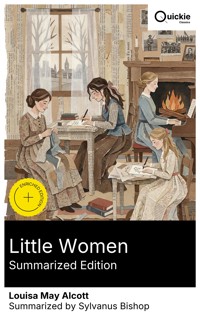
Little Women follows the intertwined bildungsroman of the March sisters—Meg, Jo, Beth, and Amy—set in Civil War–era New England. Alcott fuses domestic realism with comic verve and measured didacticism, staging scenes of work, illness, art, and courtship that test duty against desire. Situated between sentimental fiction and emerging American realism, the novel advances a quiet proto-feminist case for women's ambition, economic agency, and ethical citizenship within, and sometimes against, family claims. Alcott's biography underwrites this texture. The daughter of reformer Bronson Alcott and reared in Concord's Transcendentalist circle of Emerson and Thoreau, she knew financial precarity, rigorous self-education, and paid labor. Service as a Civil War nurse and success as a magazine writer, together with publisher Thomas Niles's request for a "girls' book," led her to refashion family diaries into art. Readers seeking a humane, incisive portrait of girlhood maturing into reflections on vocation, love, and citizenship will find Little Women enduringly fresh. It is essential for students of nineteenth‑century American literature and gender studies, and a luminous choice for general readers who prize wit, moral seriousness, and domestic complexity. Quickie Classics summarizes timeless works with precision, preserving the author's voice and keeping the prose clear, fast, and readable—distilled, never diluted. Enriched Edition extras: Introduction · Synopsis · Historical Context · Author Biography · Brief Analysis · 4 Reflection Q&As · Editorial Footnotes.
Das E-Book können Sie in Legimi-Apps oder einer beliebigen App lesen, die das folgende Format unterstützen:
Veröffentlichungsjahr: 2026
Ähnliche














Little Women (Summarized Edition)
Table of Contents
Introduction
At the heart of Little Women lies the restless negotiation between individual desire and familial responsibility, as four sisters in a modest New England household test the limits of duty, imagination, and work, and discover how generosity, pride, frustration, and hope can coexist in the slow, searching process of becoming adults while remaining kin, measuring the worth of talent and labor against the immediacy of daily needs, and learning, through small choices as much as grand intentions, to reconcile the impulse to stand apart with the equally urgent call to belong.
First published in two parts in 1868 and 1869, Louisa May Alcott’s Little Women is an American coming-of-age novel rooted in domestic realism and set in New England during and after the Civil War. Its world is recognizable and intimate: a household attentive to thrift, study, and mutual aid, surrounded by neighbors, schools, church, and the rhythms of seasonal work. The book bridges the nineteenth-century tradition of moral instruction and the emerging modern interest in individual psychology, presenting formative years in a distinctly American milieu shaped by wartime absence, limited resources, and the promise and uncertainty of postwar life.
At its outset, the novel introduces the March sisters—Meg, Jo, Beth, and Amy—who, guided by their mother while their father serves away from home, confront the ordinary trials of youth with inventiveness and resolve. The narrative traces lessons earned through work, study, play, and service, with episodes that balance light mischief and earnest reflection. A genial third-person voice invites readers into parlors, attics, and snowy streets, attentive to small gestures and material details. Dialogue is brisk, the humor affectionate, and the tone firm but compassionate, making the book approachable for new readers yet layered enough to reward careful attention.
Alcott’s central concerns include the dignity of labor, the attraction and risk of ambition, and the ethical texture of everyday choices. The sisters pursue different forms of excellence—domestic skill, artistic craft, musical devotion, social polish—and are asked to consider what success means when measured against integrity and care for others. The novel observes class differences without caricature, noting how money, leisure, and access shape opportunity while seldom determining character. It treats self-discipline not as renunciation but as a means of enlarging freedom, while honoring friendship, play, and imagination as forces that knit community and sustain hope during change.
Because the book first appeared in two volumes, its structure has an episodic grace: chapters often center on a short crisis, a venture, or a celebration that yields modest growth. The prose is straightforward and nimble, enriched by lively domestic scenes and a keen sense of the tangible objects that define a home. Readers can expect moral commentary that is frank yet rarely heavy-handed, as well as lively banter and occasional sentiment tempered by humor. The result is a narrative that moves gently but persistently, balancing instructive aims with genuine curiosity about personality, temperament, and the pleasures of shared life.
For contemporary readers, Little Women remains vital for its clear-eyed portrayal of how young people negotiate gender expectations, economic limits, caregiving responsibilities, and creative longing. It recognizes the satisfaction of useful work while acknowledging the desire for recognition and independence, a tension that resonates across professions and family structures today. The book invites reflection on the value of mutual aid and community-mindedness without idealizing poverty or hardship. Its attentiveness to grief, recovery, and everyday resilience offers a humane counterpoint to narratives driven by spectacle, valuing incremental change and patient courage in a world where public attention is fleeting.
Approached as a first encounter or a return, the novel rewards reading that lingers over gestures, rooms, weather, and the unassuming rituals that anchor a family. Its compassion refuses cynicism; its curiosity about vocation and character refuses simplification. Alcott’s portrait of sisterhood and mentorship emphasizes that selfhood is not a solitary project but a shared endeavor shaped by conversation, conflict, and care. Entering the March home, readers meet neither saints nor villains but people in formation, whose small experiments with generosity, thrift, artistry, and resolve illuminate larger questions about how to live well together, then and now.
Synopsis
Little Women, by Louisa May Alcott, follows the March family—four sisters and their mother—during and after the American Civil War. Their father serves as a chaplain away from home, and the family manages on limited means in a New England town. Alcott presents domestic life as a field for growth, tracing how each sister’s temperament and ambition are tested by work, friendship, and shifting fortunes. First published in two parts, the novel blends everyday incidents with moral reflection, using the sisters’ shared routines, small economies, and charitable acts to explore how character is shaped by duty, affection, and perseverance under modest circumstances.
Meg, Jo, Beth, and Amy March have distinct aspirations. Meg values comfort and respectability; Jo longs to write and resists conventional expectations; Beth is gentle and devoted to home; Amy seeks refinement and artistic recognition. Their imaginative theatricals and family “clubs” reveal a lively household that finds joy in creativity more than possessions. The sisters befriend their wealthy neighbor, Mr. Laurence, and his grandson, Laurie, whose companionship broadens their world. Through visits, music, and garden conversations, Alcott contrasts households across class lines, emphasizing both the attractions and obligations that come with privilege, and the Marches’ effort to keep gratitude and self-improvement at the center.
Work and self-discipline structure the girls’ days. Meg takes paid employment to ease family finances; Jo assists a demanding relative and begins selling stories; Beth manages home tasks with quiet constancy; Amy balances school and sketching. When news of their father’s illness arrives, the family rallies, revealing their resilience and capacity for sacrifice. Small but memorable decisions—relinquishing comforts, sharing earnings, adjusting ambitions—show Alcott’s interest in practical morality. The sisters learn to temper impatience, pride, and vanity, not through grand pronouncements, but through chores, letters, and daily efforts that bind them to one another as they navigate worry and hope.
Society presents temptations and tests, particularly for Meg and Jo. At fashionable gatherings Meg experiences the pressures of appearance and display, prompting reflection on sincerity versus show. Jo’s quick temper and independence sometimes clash with expectations of decorum, including those of Aunt March, whose opinions carry material weight. Laurie, charming yet restless, alternately encourages the sisters’ boldness and provokes missteps, illustrating how friendship can foster growth or mischief. Alcott uses these episodes to examine reputation, gossip, and the value of honest conduct, suggesting that real gentility rests less in wealth than in self-command and consideration for others.
Illness and generosity draw the community together. The Marches’ visits to a struggling immigrant family and their willingness to share food and time anchor the novel’s ethic of service. Beth’s quiet courage during a contagion becomes a touchstone for the household’s compassion, while Mr. Laurence’s paternal kindness—symbolized by access to music—deepens the families’ bond. The father’s health remains a concern, and Marmee’s practical wisdom steadies the sisters through uncertainty. Without sensational turns, Alcott shows how worry, modest relief, and renewed routine shape character, and how gratitude can coexist with lingering anxiety about the future.
As time passes, the sisters step toward adulthood and refine their early dreams. Meg moves closer to the claims of domestic life and weighs the realities of managing a household. Jo’s ventures in publishing bring small successes and hard lessons about the marketplace’s tastes. Amy pursues artistic training and social polish, seeking opportunities to improve her craft. Beth, ever self-effacing, continues as the family’s moral center. Laurie progresses in his studies and grapples with purpose. The youthful “castles in the air” are not abandoned so much as revised, as experience teaches them to balance aspiration with responsibility.
Jo’s independence leads her to New York, where new work and acquaintances challenge her views on literature, ambition, and integrity. She encounters an older scholar whose thoughtful criticisms invite her to consider substance over sensational appeal in her writing. City life complicates her notions of success: regular earnings, editorial demands, and solitude test her resolve. Letters home sustain her connection to the family, while distance helps her reassess temper, pride, and the uses of talent. Alcott frames authorship as labor shaped by conscience, suggesting that vocation matures through feedback, setbacks, and a clearer sense of what one hopes to contribute.
Meanwhile, opportunities abroad reshape Amy’s artistic outlook, exposing her to galleries, broader standards, and the discipline professional work requires. Travel widens her sense of taste and of the compromises artists make to improve. Laurie’s path intersects with European society and expectation, prompting scrutiny of leisure, effort, and identity. At home, Meg manages the practical arithmetic of household life and learns the quiet heroism of thrift, patience, and mutual aid. The family continues to face sickness and disappointment alongside celebrations, and their responses—more measured, less impulsive—mark the gradual turn from girlhood to considered adulthood.
By the close, Little Women affirms growth through ordinary trials: the steady work of keeping promises, caring for kin, and aligning gifts with service. Alcott’s narrative remains grounded in recognizable rooms, errands, and conversations, yet it treats domestic experience as worthy of literary seriousness. The novel’s enduring significance lies in its nuanced vision of womanhood and work, its acknowledgment of different temperaments and paths, and its insistence that affection and integrity can give shape to a meaningful life. Without requiring grand climax, it offers a lasting meditation on how people become themselves within family and community.
Historical Context
Published in two parts in 1868 and 1869 by Roberts Brothers of Boston, Little Women is set largely in Concord, Massachusetts, at the height of the American Civil War and in its immediate aftermath. The March household belongs to New England’s striving middle class, shaped by Protestant churches, common schools, and voluntary benevolent societies. Their father serves as a Union chaplain, locating the family within the era’s institutional framework of army, church, and civic association. Letters, newspapers, and sermons structure daily life. Alcott situates domestic scenes within a recognizable regional culture, using the home front to mirror national upheaval while affirming civic duty.
Between 1861 and 1865, the Union mobilized soldiers, funds, and civilian relief on an unprecedented scale. Northern households endured shortages, inflation, and constant casualty news, while women organized sewing circles, sanitary fairs, and hospital supplies through the United States Sanitary Commission and local aid societies. Louisa May Alcott volunteered as a nurse at the Union Hotel Hospital in Georgetown, Washington, in 1862–1863 and published Hospital Sketches in 1863, documenting battlefield convalescence and volunteer labor. Little Women absorbs this wartime environment on the home front, portraying thrift, mutual aid, and disciplined cheerfulness as civic virtues that sustain families during national crisis.
Concord in the mid nineteenth century was a center of Transcendentalism, associated with Ralph Waldo Emerson, Henry David Thoreau, and the educator Amos Bronson Alcott, Louisa’s father. The movement emphasized self-culture, conscience, and reform, promoting plain living and high thinking through lectures, reading circles, and experimental schooling. Bronson Alcott’s Temple School in Boston and the brief Fruitlands community (1843) reflected a search for moral education and cooperative labor. Raised in this milieu, Louisa absorbed habits of journal keeping, self-scrutiny, and literary aspiration. Little Women translates those ideals into accessible domestic practice, valuing inner growth, conversation, and purposeful work over ostentation.
Mid nineteenth century gender norms in the United States fixed women largely in the domestic sphere, with limited legal and economic rights. Married women’s property acts, passed in many states between the 1840s and 1860s, began to let wives control earnings and property, yet professions remained restricted. Teaching, sewing, domestic service, and governessing offered modest wages; writing for periodicals was an emerging avenue. Louisa May Alcott supported her family through such work, publishing under her own name and the pseudonym A. M. Barnard. Little Women examines female ambition, duty, and paid labor within these constraints, weighing independence against communal obligations.
New England’s strong abolitionist culture shaped the Alcotts’ household. Massachusetts hosted antislavery lectures, petitions, and aid networks that resisted the 1850 Fugitive Slave Act. In 1847 the Alcott family sheltered a freedom seeker in Concord, a fact Louisa recorded in her journal, and they associated with reformers who opposed slavery and promoted temperance and education. The Civil War’s emancipation aims unfolded alongside this activism. While Little Women remains focused on family life, its ethic of service, egalitarian sympathy, and principled citizenship echoes antislavery ideals, presenting everyday kindness and aid as forms of reform consonant with the era’s moral campaigns.
Educational reform shaped the period’s reading culture. Common schools expanded literacy, female seminaries trained teachers, and lyceum lectures popularized self-improvement. Bronson Alcott’s experimental pedagogy, though controversial, emphasized dialogue and moral development, and Louisa’s extensive reading included Bunyan’s Pilgrim’s Progress, a touchstone within the novel. The publishing industry in Boston and New York cultivated a booming juvenile market. At her publisher’s request, Alcott wrote Little Women rapidly in 1868; public demand produced a second volume in 1869. Illustrated in early editions by her sister May Alcott, the book’s realism and humor modernized domestic fiction for postbellum readers.
Industrial capitalism reshaped New England’s economy in the mid nineteenth century, from textile mills and machine shops to expanding railroads. Middle-class ideals of thrift, self-help, and charitable duty coexisted with recurrent downturns, including the Panic of 1857 and wartime inflation. The Alcott family often lived on precarious means, and Louisa’s earnings became crucial to household stability. Little Women reflects this milieu through attention to budgeting, handmade goods, and neighborly reciprocity, as well as aspirations for education and useful work. The narrative locates dignity in labor and careful consumption, critiquing conspicuous display while endorsing industriousness and social responsibility.
Little Women was an immediate bestseller, widely reprinted and translated, and it helped define an American tradition of girls’ literature. Reviewers praised its believable characters and moral clarity, while readers recognized contemporary concerns about work, virtue, and aspiration. The book adapts domestic fiction to a nation emerging from civil war, balancing stability with reform-minded energy. By elevating female friendship, artistic and educational striving, and ethical citizenship, it both reflects prevailing ideals of home and challenges rigid prescriptions for womanhood. Its portrait of ordinary lives offers a humane critique of status display and a hopeful program of everyday civic improvement.
Author Biography
Louisa May Alcott (1832–1888) was an American novelist, essayist, and reform-minded writer who emerged from 19th-century New England’s literary culture. Best known for Little Women, she wrote across forms, from juvenile fiction to sensation tales and memoir-like sketches. Her work bridged sentimental tradition and a pragmatic realism that foregrounded work, conscience, and female self-direction. Alcott supported herself primarily through writing, producing a steady stream of books and magazine pieces that reached a broad readership. While later scholarship has highlighted the range of her oeuvre, general audiences continue to associate her with narratives of family, friendship, and moral growth that remain widely read.
Alcott’s education was largely informal yet rigorous, shaped by constant reading, self-discipline, and access to the intellectual life of Concord and Boston. She absorbed ideas from the transcendentalist milieu—ideas about self-culture, reform, and the moral value of labor—through lectures, conversations, and proximity to prominent thinkers such as Ralph Waldo Emerson and Henry David Thoreau. She taught, read voraciously in libraries, and practiced writing through journals, poems, and short sketches. Exposure to theater and popular periodicals broadened her sense of audience and genre. This mixture of high-minded philosophy and practical engagement with everyday life informed both her themes and her plainspoken, brisk narrative style.
Before literary success, Alcott undertook paid work common to women of her era—teaching, sewing, and domestic service—experiences that later fed her fiction’s attention to wages, pride, and independence. Her first book, Flower Fables (1854), collected imaginative tales originally composed for a child audience. During the American Civil War, she served as a nurse in a military hospital near Washington, D.C., an experience she transformed into Hospital Sketches (1863). First appearing in periodical form and then as a book, it was praised for candor, humor, and humane observation. The volume established her national reputation and demonstrated her capacity to translate lived experience into literature.
Concurrently, Alcott wrote popular thrillers under the pseudonym A. M. Barnard, exploring disguise, ambition, and power within sensational plots. Stories and novellas such as Behind a Mask and Pauline’s Passion and Punishment traded domestic harmony for gothic tension and psychological gamesmanship. These pieces, printed in widely circulating magazines and story papers, allowed her to experiment with voice, pacing, and the marketplace’s demands. They also supplied crucial income. Long dismissed as mere potboilers, the thrillers have since been reappraised for their sharp gender critique and technical control, revealing a writer adept at navigating multiple literary registers while negotiating the economic realities of authorship.
Alcott’s breakthrough came with Little Women (1868–69), written at a publisher’s request for a book about girls. Its brisk episodes, humor, and commitment to depicting daily effort and aspiration resonated immediately with readers. Sequels and companion volumes—including Little Men, Jo’s Boys, An Old-Fashioned Girl, Eight Cousins, Rose in Bloom, and Work: A Story of Experience—expanded her exploration of education, vocation, and ethical choice. Though critical fashions shifted, contemporary reviewers often praised her vitality and moral clarity, while some debated sentimentality versus realism in her approach. Across this period, she balanced didactic aims with lively dialogue and scenes drawn from ordinary New England life.
Publicly aligned with reform, Alcott supported abolition and women’s rights, and she used essays, speeches, and fiction to argue for education, economic opportunity, and civic participation for women. After the war, when Massachusetts allowed women to vote in certain local school elections, she encouraged participation and reported on the effort. Her narratives repeatedly dramatize self-reliance, social responsibility, and the dignity of work, offering female characters who seek competence and community rather than mere ornament. This ethical emphasis, shaped by the reform movements of her day, helped her reach readers across class lines and continues to invite discussion in classrooms and scholarship.
Alcott suffered lasting ill effects after contracting typhoid during war service and from the treatments then in use, yet she continued to write, edit, and manage her literary affairs with energy. She lived primarily in Massachusetts and remained engaged with publishing until late in life. Alcott died in Boston in 1888. Her legacy endures through the sustained popularity of Little Women and its many adaptations for stage and screen, as well as renewed interest in her thrillers and autobiographical sketches. She is widely recognized as a foundational figure in American children’s literature and a precursor to modern discussions of gender, labor, and authorship.




