


139,99 €
Mehr erfahren.
- Herausgeber: John Wiley & Sons
- Kategorie: Wissenschaft und neue Technologien
- Sprache: Englisch
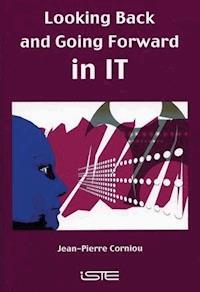
This book places IT in perspective by tracing its development through time, covering its origins in business, the massive expansion of the role of IT at the end of the 20th century, the growth of the internet, and the successes and failures of companies involved in this development. Despite its ubiquity in the modern world, the author highlights that efficient use of IT by businesses can only be gained by a good understanding of its potentials and pitfalls, highlighting how its informed use in practice is essential for companies to succeed. Finally, questions are raised concerning the future of IT: who will reap the benefits and why? Will IT continue to provide solutions and will it always deliver on its promise? Will it cease to advance and thus cease to be studied or will it continue to develop and thus provide new opportunities and challenges to users?
Sie lesen das E-Book in den Legimi-Apps auf:
Seitenzahl: 393
Veröffentlichungsjahr: 2013
Ähnliche



















Table of Contents
Foreword
Introduction – All Set for an E-journey
Chapter 1: The First Information Revolution
1.1. Information: the catalyst for the development of the human community
1.2. Writing
1.3. Counting
1.4. Sorting: Hollerith’s tabulating machines
1.5. Europe lagging behind
Chapter 2: From Electromechanics to Electronics
2.1. The NCR crucible
2.2. A company named CTR
2.3. IT: aproduct of World War II
2.4. IT: a complex, precious and expensive commodity
2.5. The trials and tribulations of IT in Europe
2.6. Centralization of IT power and work organization
Chapter 3: The Dawn of the Digital Era
3.1. The quest for new freedom
3.2. The colorful saga of major firsts
3.3. The internet explosion
Chapter 4: Light and Shade in the Digital World
4.1. The family tree of the digital world
4.2. The slippery slope
4.3. The engines powering progress in the digital era
Chapter 5: The Promise and Reality of New Technology
5.1. IT effectiveness called into question
5.2. The value of IT
5.3. The IT sector set up as a model
5.4. Telecommunications in the eye of the storm
5.5. Shifting boundaries and extended companies
5.6. Corporate network players
5.7. New opportunities and new competition
5.8. The new time/space framework
Chapter 6: IT Policies in Efficient Enterprises
6.1. Reduce the shortfall between promises and reality
6.2. Shedding light on IT and information systems
6.3. Information governance
6.4. Making choices
6.5. Structuring
6.6. Realization
6.7. Measurements and monitoring
6.8. To do it oneself or ask someone else to do it?
6.9. Sisyphus and security
Chapter 7: New Instructions for CIOs
7.1. Lessons of the past
7.2. The CIO's missions
Chapter 8: New Vision(s)?
8.1. Gurus and a New Economy in a perfect world
8.2. The technological outlook
8.3. Citizenship and economic development
8.4. Developments in the Third World
8.5. Security and freedom: what are the real threats?
8.6. Press, media and culture
8.7. Health and education
Conclusion
References and Bibliography
Acknowledgements
First published in France in 2002 by Hermes Science/Lavoisier entitled “La société de la connaissance : nouvel enjeu pour les organisations”
First published in Great Britain and the United States in 2006 by ISTE Ltd
Translated by Tim Pike
Apart from any fair dealing for the purposes of research or private study, or criticism or review, as permitted under the Copyright, Designs and Patents Act 1988, this publication may only be reproduced, stored or transmitted, in any form or by any means, with the prior permission in writing of the publishers, or in the case of reprographic reproduction in accordance with the terms and licenses issued by the CLA. Enquiries concerning reproduction outside these terms should be sent to the publishers at the undermentioned address:
ISTE LtdISTE USA6 Fitzroy Square4308 Patrice RoadLondon W1T 5DXNewport Beach, CA 92663UKUSAwww.iste.co.uk
© LAVOISIER, 2002
© ISTE Ltd, 2006
The rights of Jean-Pierre Corniou to be identified as the authors of this work has been asserted by them in accordance with the Copyright, Designs and Patents Act 1988.
Library of Congress Cataloging-in-Publication Data
Corniou, Jean-Pierre.
[Société de la connaissance. English]
Looking back and going forward in IT / Jean-Pierre Corniou.-- 1 st ed.
ISBN-13: 978-1-905209-58-3
1. Information technology--History. 2. Management information systems. 3. Information technology--Social aspects. I. Title.
T58.5.C684 2006
004.09--dc22
2006000869
British Library Cataloguing-in-Publication Data
A CIP record for this book is available from the British Library
ISBN 10: 1-905209-58-4
ISBN 13: 978-1-905209-58-3
Foreword
Reality cannot be judged or properly appreciated if there are no bearings. One of the major strengths of this book is to put IT into perspective and trace its development through time.
Jean-Pierre Corniou’s viewpoint gives rise to a first observation and a first surprise. Information Technology, which is said to be such a recent development, is in fact almost as old as the automobile. More than a hundred years of bustling history is hardly negligible! Many of us continue to blame system failures and computer bugs on youthful indiscretions. This could not be further from the truth.
IT is therefore more than a century old, and it has seeped into all the fields of activity on which each and every one of us has come to depend. And yet, for many company directors – myself included – it resembles a black box which has great difficulty in revealing its secrets.
This dependence can sometimes be difficult to bear because, unlike in other fields of activity, we do not have a set of intuitive parameters at our disposal that might enable us to appreciate the value and efficiency of the IT investments we make.
What we do know instinctively is that IT is a tool to aid productivity, and today, productivity levels – however little and however badly they are assessed – remain the primary justification for IT investment. Unfortunately, this productivity remains tied up to the image of factory automation or the mechanization of accounting operations, which have led to hours of work being cut down to mere seconds of processing. This simplistic vision does not suffice, because IT is also a tool which creates its own demand. Measurements of productivity are thus rendered difficult, if not to say impossible, most notably because of this continuous need, and because of the recurring dynamics between needs being created and satisfied. When a factory is automated, there is a “before” and an “after”, and the two relatively stable states can be compared. With IT, there is no stable final state.
IT is thus an incredibly versatile object. Things have changed somewhat with the arrival of ERPs which are more systemic tools, but so far we have always built systems that are made-to–measure. This flexibility is further emphasized by the continuous creativity that is constantly pushing back the barriers of what is possible. The end-result is that IT always generates more hunger than it can satisfy. How then can actual, permanent productivity levels be measured?
The computerization of accounting systems is a fine example. Granted, processing has gained in speed, but that is not the most important point because, other than speed, we have come to expect details of cost prices, expenses, analyzes, etc. How can these be measured? Faced with this observation, it is best to acknowledge that quantitative measures are, in some cases, insufficient unless there is an absolute desire to create them artificially. Actually, the fact that it is so difficult to assess productivity has led us to manage IT from an expenditure point of view, by carrying out benchmark analyzes with other businesses and optimizing the use of the expenditure rather than its size.
These difficulties are also encountered in the technological choices we make. With a lack of distance and a lack of measurements, our IT choices are based on trust in the recommendations of our advisors. Perhaps other businesses have already used the product and can vouch for its effectiveness. Inevitably, there is a natural degree of uncertainty with this kind of procedure. However, this acceptable air of uncertainty is coupled with an unbearable element: agreements drawn up with the vendor through contracts which are far from perfect. From that point onwards, there is the distinct feeling that the vendor is taking you for a ride and that, at the same time, the client is acting in an irresponsible manner. If contracts have not been clearly formalized, the client can be tempted to review demands, and we are only too aware of the fact that reviewed demands bring about additional expenditure. In this area, we should be as thorough with IT as we are with the provision of other goods and services.
Choices and decisions: a manager’s major responsibility. However, anyone who purchases a black box but lacks the necessary skills is bound to fail. This is applicable to the IT and automotive sectors alike. Today, 75% of a vehicle’s cost price can be attributed to its bought-in components. If the manufacturer does not fully understand and master these various parts, efficient vehicles will not be produced. The same goes for IT. It is essential to master the architecture and the system and have a full understanding of the subject throughout time, which is not necessarily the same for every car manufacturer. The only rule is that, in a major corporation, production is a complex system, and if a number of elements can be bought in from outside, it will simultaneously be rendered simpler and more efficient.
Obviously, our understanding of IT has evolved, as has its organization within a corporate environment. At one time, it was thought that the computerization of a company defined a certain kind of internal organization, and that organization- and computerization-related tasks were naturally intertwined. Optimal IT system issues even became defined as optimal organizational issues. However, today, with the aid of the perspective proposed by Jean-Pierre Corniou, it is clear that all of this has no meaning.
In effect, the division between those who use IT and everyone else no longer exists. We all use one or more computers and thus all contribute to IT on a general level. The IT manager is therefore no longer in charge of a single sector, but is responsible for the technology which acts as the liaison between all company workers.
Jean-Pierre Corniou quite justifiably uses the image of IT bilingualism. It is a case of being competent in IT whilst simultaneously understanding and being familiar with the company’s various business lines. A further difficulty is linked with the ambivalence towards the notion of in-house clients. The clients of CIOs are other company players, but these are not clients who are spending their own money. Within a company, the real money is that which comes in from outside clients. CIOs are unlike other suppliers because they also play an advisory role. Parallels can be drawn between the CIO-client relationship and that which exists between doctors and their patients: just because patients are prepared to pay their doctors a lot of money does not mean the latter can prescribe any old remedy! This leads to a relationship which is thus one of bilateral authority … and this can indeed be rather complicated!
The idea of a new economy did not solve anything. I have always been annoyed by the opposition between the old and new economies. The lion’s share of the mistakes made by non-IT experts – and sometimes by IT experts – could be traced back to their tendency to draw upward curves and build future scenarios without enough of a history behind them. This led to all the economic bubbles and disillusionment. With my experience gained as a company director, I am in a position to say that strategic thinking must be founded on long periods which provide more solid reference points, in order to assess the various possible scenarios. The erratic ups and downs of technological stocks in recent months have been a clear illustration of how short track records are judged. The growth rates experienced over an extremely short term had been excessively projected over too long a period. Failure was inevitable. However, there is another reason behind all this. The instigators of the so-called New Economy had forgotten the customers.
Let us take a look at what is happening in the automotive industry, and at Renault in particular. The e-vehicle on which we are currently working – featuring a mobile interface with the outside world and which is rich in information – is but in its early stages. The human/machine interface is the focal point of this e-vehicle, and the person on board is in most cases the driver, most of whose energy must be devoted to driving the car. Simple human/machine interfaces must therefore be designed, making use of the sole means available, namely speaking and hearing. Alas, we have a long way to go before achieving efficient voice control in a noisy environment. Furthermore, we do not yet have the slightest idea about what the true solvent market will represent – in other words, what the customer really needs. Whatever, in all cases, the product must be of genuine value if it is to attract solvent demand. Once again, this book clearly portrays the distinction between the dazzling rise of mobile phones, with a simple interface produced in response to a solvent need, and WAP systems, with their non-user-friendly interface and for which a solvent demand has yet to be identified.
We are aware of the fact that a company’s efficiency rests on its ability to manage useful information. One of the issues in my eyes is the ability to provide access to data which has been sorted and prioritized. In this area, today’s systems are a very long way from perfect. We have an unprecedented wealth of information at our fingertips but do not have the means of sorting it and providing it to the person who needs it at the time they need it. In this field, I have been struck by, for instance, the fact that the web has now become an accumulated mass of information that takes longer to read than traditional paper publications.
Therefore, Jean-Pierre Corniou’s book is a fine starting point which can be read with interest and understood by all. However, what is most important is that it puts its subject matter in perspective. Different elements are put back into context allowing the surrounding scenery to emerge, and objectives and decisions to be redefined. This book does not provide answers to questions and does not say what should or should not be done. It is a reference book, and that is where its major strength and greatest usefulness lie.
Louis SCHWEITZER
Chairman and Chief Executive Officer, Renault
Introduction – All Set for an E-journey
As dawn broke over the 21st century, Information Technology officially celebrated its golden anniversary … it might be thought that the 50 year-mark would go hand-in-hand with the age of reason, but nothing could be further from the truth. In the extended family of innovation, IT is still the rebellious teenager: immature, incomplete and frustrating. Frequent counter-performances have left users irritated, while corporate board-members continue to be annoyed by the sheer unpredictability of results, despite the massive investments being made. So often in the world of IT, arx tarpeia capitoli proximo: high praise is swiftly followed by a sharp fall! The lack of foresight on the part of programmers led to record turnover being generated by the need to correct the Y2K bug and its actual or presumed effects. The overly-hyped stock market triumphs of the New Economy were followed by a nosedive which left investors in a state of shock; the very investors who had sought to plough their funds and put their unlimited trust in high-yield ventures which would seemingly be devoid of setbacks. Nevertheless, IT remains fallow ground for dreams of greater things, and is still behind many a success story. It continues to embody a new intellectual frontier, offering a world of ubiquity and unlimited exploits.
However, what do we mean by “Information Technology”? The term may suggest semantic singularity, when in fact IT now encompasses a wide and growing field of activities, competencies and products. The traditional “hardware” and “software” pigeon-holes – the former referring to physical equipment, the latter to programs – now fall short of accurately illustrating the types of product at stake. What really matters for today’s end-users is the quality of service provided by the diverse objects on offer. As such, IT is constantly evolving, fading into the history of innovative technology only to re-emerge on a far more widespread basis, taking on new and hitherto unimaginable forms.
As the 21st century began, a new leaf was turned as the Y2K bug was laid to rest, and along with it one of the blemishes on the skin of IT’s difficult early days. IT has entered a period of vast technical and social change, which is in line with the new perspectives faced by world economy. Indeed, two major shock-waves hit the world at the end of the 20th century: the fall of the Communist regime in 1989 and the bursting onto the scene of the web in 1993. Despite being the result of extremely different logical processes, the two were concomitant, and freed up convergent forces which, over a short period, have shaped a worldwide economic system in which rules seem to be laid down without any form of counterbalance. Economy, and now society as a whole, has come to be characterized by the free circulation of goods, individuals and ideas, instant and simultaneous access to unlimited information, and the bringing down of barriers between sectors, businesses and scientific disciplines. The movement, steeped in chaos and controversy, somewhere between Davos and Porto Alegre, appears to be irrepressible. But is it really? Is the model of this new economy – entirely focused as it is on short-term performance-the indisputable product of the third technological revolution?
For the world of IT, which had already undergone major transformations in the 1980s with the unharnessed development of micro-computing, the web has brought about a major upheaval, shaking in its wake players across the IT sector, whether manufacturers, software editors, service vendors and of course corporate IT departments. After the financial world had built them up with fever pitch enthusiasm, internet stocks were also the first to suffer a violent change of fortune. The IT world experiences the ups and downs of the business world with the accelerator full on. The IT world is a stage on which all the passion and drama of human activity is played out faster than elsewhere.
Ever since its earliest days, IT had been the affair of specialists who would sort problems out amongst themselves, using their own specific language. Nowadays, IT has made headway into ordinary, everyday life, the general public and mass-distribution media. Developments are dictated as much by mass-marketing policies as by technical evolution. All areas of the social and the corporate worlds now make use of IT tools. With the diversification of equipment, micro-computers have taken on multiple and hidden forms. Children and teenagers are no longer inhibited by the machines, which they make their own with unerring ease. Much like wireless telegraphy, cinematography and aircraft, which were fairground attractions before becoming mass phenomena, IT is now commonplace. However, the process is far from complete. There is still a mythical side to IT, which periodically continues to inspire when the boundaries are pushed further back.
The sole ambition of this book is to present the keys to understanding the technological world in which we live, and which has already deeply transformed our environment. Technological innovation, which shows no sign of letting up, will have an ever-stronger influence on our lives in the coming decades. History must help us to understand how and why we have reached this stage of development. Which opportunities have we drawn benefits from, and which have we wasted? Who and what economic forces can be found at the forefront of the movement? The advent of the information society is not the result of “generation spontaneity”, but has been the fruit of many contributors over more than half a century. An historical approach – hitherto under-exploited in this field which tends to shelter behind a modern, instantaneous image - offers a new viewpoint. By tracking the paths of those who contributed to the design of modern IT, by going back over the dreams and analyzing the failures, an in-depth view of this complex sector will be forthcoming. By going back to the roots of IT, we can attempt to comprehend what lies ahead in the years to come, with a view to minimizing the risks and maximizing the potential of future progress.
This book is as much a result of my impassioned personal experience as of analysis in the cold light of day, and will not fail to take sides and make choices, however unfair or excessive they may at times appear to be. The aim is to find a way through the thick undergrowth and shed some light on the subject. Future progress can only be achieved if a clear vision is provided. Action is enabled by a jargon- and mystery-free understanding. Investigative efforts of the like are justified by the subject at hand. Excess and passion have surrounded the history of IT. Technical adventures often resemble fictional novels. IT entrepreneurs have always been ambitious individuals on a quest for glory and fortune. Market growth has offered them opportunities which have never existed in any other sector. No-one is indifferent to IT, which as a discipline is at the crossroads between science and technique, rationality and humanity, culture and business. Feared and ignored by previous generations, but entirely taken on board by today’s children and teenagers who choose not to burden themselves with seeking a global vision, IT is now very much of our time: both the product and driving force of our era. In all fields, the 21st century will be marked by progress made in the deployment of information and knowledge processing techniques.
At what cost? In what conditions? With whom? Who will reap the benefits? Will IT cease to be studied and questioned? Or will transformations continue thus bringing about new concerns as well as new opportunities? We will attempt to understand yesterday’s challenges to be able to picture those we will face tomorrow, by providing a lucid answer to the following question: will IT die or be transfigured?
Chapter 1
The First Information Revolution
1.1. Information: the catalyst for the development of the human community
To be able to comprehend the social and economic impact of a nascent industry destined to gradually turn the world upside down, it is essential to go back to the sources of the history of IT: beyond the simple yet fascinating story of inventors and the objects they invented. However, this does not imply doing the work of an historian, but simply involves putting the expansion of this technical universe into perspective. Particular political and social contexts – and major shifts in history such as World War II – have always precipitated innovative processes, invariably led by a handful of ambitious and creative individuals, seeking, whatever the price, to automate one of humankind’s identity-forming activities: intellectual creation. Granted, what they created is essential. Without their efforts and their failures, we would not have the machines of today, which have become such a familiar part of our environment. Our attention will be focused on the uses that others then made of their discoveries. How did the use of calculating machines and intellectual production tools mould evolutions across society? A machine equates to nothing without the relevant education, training and work processes which render it operable. This socio-technical system will be considered, and, whenever necessary, ethical judgments as to the choices made will not be evaded.
Lesen Sie weiter in der vollständigen Ausgabe!
Lesen Sie weiter in der vollständigen Ausgabe!
Lesen Sie weiter in der vollständigen Ausgabe!
Lesen Sie weiter in der vollständigen Ausgabe!
Lesen Sie weiter in der vollständigen Ausgabe!
Lesen Sie weiter in der vollständigen Ausgabe!
Lesen Sie weiter in der vollständigen Ausgabe!
Lesen Sie weiter in der vollständigen Ausgabe!
Lesen Sie weiter in der vollständigen Ausgabe!
Lesen Sie weiter in der vollständigen Ausgabe!




