


19,19 €
Mehr erfahren.
- Herausgeber: Luath Press
- Kategorie: Gesellschafts- und Liebesromane
- Sprache: Englisch
Opening in the Danish dungeon where James raves at the end of his days, the book tells the story of his life from childhood to the betrayal by a spurned lover that leads to his imprisonment. Born in a climate of religious schism the young James Hepburn, Lord of Bothwell, soon finds himself divided between his loyalties and his conscience. Maturing rapidly into a brilliant young man, he is called home from Paris to take his place as Lord Bothwell. Life had taught him to be a fierce warrior and a passionate lover, and James's fate is set in motion when he meets his Queen. A love springs up between them that will overcome religious divides, spill blood, and haunt Bothwell until his dying day. BACK COVER The passionate and tragic story of Lord Bothwell, husband of Mary Queen of Scots, set against a background of religious turmoil, political strife and dramatic warfare. Told from his final days in a Danish dungeon, James Bothwell's tragic story, centring on his intense relationship with Mary Queen of Scots, unfolds. Set against the backdrop of French and Scottish history, in a climate of revenge, ruthless killings and religious strife, James finds himself divided between his loyalties and his conscience. The life of this fierce warrior and passionate lover is followed from his troubled childhood to the events of his final betrayal. Yet it is his meeting with the beautiful Mary Stuart that would ultimately secure his fate. Whilst Scotland, England and France grapple for power, tragic consequences await the lovers, with repercussions that would alter their country forever.
Das E-Book können Sie in Legimi-Apps oder einer beliebigen App lesen, die das folgende Format unterstützen:
Seitenzahl: 735
Veröffentlichungsjahr: 2014
Ähnliche



















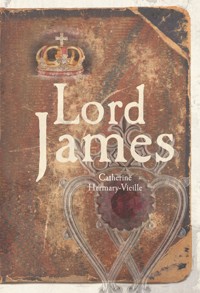
Lord James
By the same author:
LES DAMES DE BRIÈRES (t. 1), Albin Michel
L’ÉTANG DU DIABLE (t. 2), Albin Michel
LA FILLE DU FEU (t. 3), Albin Michel
LA BOURBONNAISE, Albin Michel
LE CRÉPUSCULE DES ROIS:
LA ROSE D’ANJOU (t. 1), Albin Michel
REINES DE CŒUR (t. 2), Albin Michel
LES LIONNES D’ANGLETERRE (t. 3), Albin Michel
LE GARDIEN DU PHARE, Albin Michel
LE ROMAN D’ALIA, Albin Michel
LES ANNÉES TRIANON, Albin Michel
LE GRAND VIZIR DE LA NUIT, Gallimard
L’ÉPIPHANIE DES DIEUX, Gallimard
L’INFIDÈLE, Gallimard
LE JARDIN DES HENDERSONS, Gallimard
LA MARQUISE DES OMBRES, Olivier Orban
UN AMOUR FOU, Olivier Orban
ROMY, Olivier Orban
LA PISTE DES TURQUOISES, Flammarion
LA POINTE AUX TORTUES, Flammarion
LOLA, Plon
L’INITIÉ, Plon
L’ANGE NOIR, Plon
LE RIVAGE DES ADIEUX, Pygmalion
Lord James
CATHERINE HERMARY-VIEILLE
LuathPress Limited
EDINBURGH
www.luath.co.uk
Contents
Dedication
Epigraph
Foreword
1
Dragsholm, Denmark, 16 June 1573
2
Scotland, March 1546
3
4
5
Spring 1551
6
1554–1555
7
8
Late 1556–1557
9
10
11
1559
12
13
14
15
Denmark and Scotland, 1560
16
17
18
19
20
21
22
23
24
25
26
27
28
29
Paris, 1565
30
31
32
33
Summer, 1566
34
35
36
37
38
39
40
41
42
43
44
45
February, 1567
46
47
48
49
50
51
52
15 May 1567
53
54
55
56
57
58
59
60
61
62
Early April 1578
Postscript
Addendum to Postscript
November 2010
First published in French 2006
First published in English 2011
eBook 2014
ISBN: 978-1-906817-54-1
ISBN (eBook): 978-1-909912-86-1
The publisher acknowledges subsidy from Scottish Arts Council towards the publication of this book.
The author’s right to be identified as author of this book under theCopyright,Designs andPatentsActs 1988 has been asserted.
© Editions Albin Michel S.A., Paris 2006
English translation © Luath Press Ltd.
To Sir Alastair and Lady Buchan-Hepburn who so spontaneously gave me their attention and benevolence during the writing of this book. With the expression of my deepest respect and loyal friendship.
And to the memory of James Hepburn, Earl of Bothwell.
Without any hesitation, I would give Scotland,France and England to follow you to the endsof the world in a white petticoat.
MARY STUART TO JAMES HEPBURN
Foreword
Lord James, written in French by Catherine Hermary-Vieille, was first published in Paris in January 2006 by the old and famous publishing house Albin Michel.
Its success was very much due to the author, who is recognised as a brilliant historian in her own right and who considers the Stuart Dynasty to be her favourite period in Scottish history, although her knowledge has a far wider span. She has also written extensively on the Tudors in English history, and in French history has firmly established herself as a leading authority on the 16th to 18th century period. She has lectured for the Quai d’Orsay in many countries, in universities, in hallowed academia, on television, radio, for many societies, and at special historical and literary events and gatherings. She is in great demand as an accomplished speaker on a wide range of subjects. The press, television and radio, and literary organisations frequently request her appearance when she launches a book, or at a special event to which her appearance would add distinction. In the context of her literary prowess and mastery of language and idiom, together with her extensive historical knowledge and detailed research, the media and literary establishment have praised her as a most outstanding author. She has enlightened and given pleasure to readers in seven countries, where her books are published in translation.
Recognising her contribution to literature, France some years ago awarded her the title of Chevalier de la Légion d’honneur, and also the rank of Officier des Arts et des Lettres.
We are now privileged to have her assent and that of her French publisher, Albin Michel, to have her bookLord Jamespublished in English by Luath Press of Edinburgh.
The reader ofLord Jameswill gain unique insight from her research. She shows her intimate knowledge of James Hepburn, the fourth Earl of Bothwell when she describes his early life, his upbringing, his periods spent in France, and his service and loyalty to Marie de Guise when Regent. Ultimately, she reveals his absolute devotion to Mary Stuart Queen of Scots, whom he married, their tragic separation, and finally his cruel death.
Hermary-Vieille’s profound knowledge, derived from family and historical archives of France, Scotland, Denmark and Sweden, has added greatly to her perception and understanding of this short but tempestuous period in Scottish and French history. Her detailed knowledge of France, its court life, and the leading families there and in Scotland, with whom Mary Stuart and Bothwell both associated, adds greatly to the interest and veracity of her descriptions, assessments and understanding, so brilliantly conveyed in her own writing and now reflected in the translation she personally has approved.
With her emotional but rational grasp of the actions, forces, disputes, loves, tragedies and evil endeavours, she depicts the successes and failures of leading figures in this period of history. She portrays the events that occurred in the countries where Bothwell lived as a child, student, courtier, soldier, husband of Mary Queen of Scots, for a short time ruler with her, and then finally as prisoner. InLord Jamesshe demonstrates a deep knowledge and sensitive awareness of history and factual detail.
The reader will enjoy an evocative and exciting story, but one which accurately traces events.Lord Jamesat last brings to parts of this period of Scottish history, all too often treated with repetitive biased similarity, new and intuitive opinions and assessments. Catherine Hermary-Vieille, with her own intelligent analysis, detailed and privileged research, and extensive historical knowledge, challenges some of the old concepts and opinions held. Her conclusions and perception as to where the truth lies surrounding the lives of Bothwell and Mary, from when they first met until their tragic parting at Carberry Hill and ultimately his death in Denmark, are vividly expressed with judgement and credible evidence. This she has gained from historical records and from her own visits to the countries and places, castles, prisons and other sites of significance where either Bothwell or Mary lived or visited.
The French national press and media gave Catherine Hermary-Vieille outstanding reviews and praise for her writing and for the historical portrayal and conclusions at which she arrived in her writing ofLord James.
To their praise I am happy and honoured to add my own, as a Hepburn, who is directly linked in ancestry to Lord James… otherwise known as James Hepburn, fourth Earl of Bothwell.
Sir Alastair Buchan-Hepburn, Baronet of Smeaton-Hepburn
1
Dragsholm, Denmark, 16 June 1573
IN ORDER TO FORESTALLany violence eight men escort Lord James to the fortress of Dragsholm. The fresh air galvanises the prisoner, who deprived of physical exercise for the past six years, is struggling even to cross the bridge spanning the moat to walk to the tower, starkly outlined like a rock against the blue sky. A short distance away, the sea shimmers softly in the sunlight and seagulls carried on wind currents soar above the gaily-coloured fishermen’s boats.
James, his mind devoid of thoughts, stops on the narrow spiral staircase to catch his breath. Only the command uttered by the governor of the prison who came to meet him remains clear. ‘Take the Earl to the pheasant room.’ His knowledge of Danish is now sufficient to understand the gist of conversations, and those very words bring back to him memories of his former life and freedom, now sadly shrouded in the darkness of time.
James suddenly finds himself in front of a door and notices its heavy iron lock. Where and when had he seen the like before? Edinburgh Castle! He grits his teeth and again determines that he will try to escape.
He is pushed into a square room with narrow windows through which filters a feeble light revealing a bed, a table, a chair, bare walls and floor and a fireplace. The air is stale and polluted with the odour of faeces and mould.
‘My Lord Bothwell is home!’ shouts one of the soldiers.
The knowledge of who he is… James Hepburn, Earl of Bothwell, Duke of Orkney, Lord of Shetland, and consort of the Queen of Scots must all be repressed in his mind in order to survive and remain sane. James hears the key turn in the lock. He is quite alone and deprived of his last servant, who stayed behind in Malmö. He had given him his old velvet mules, and in parting the young Dane had kissed his hands saying ‘May God protect you, my Lord.’
It seems God no longer has any interest in him.
James hesitantly explores his room. One of the windows overlooks a row of wooden cottages, which conceal the view of the moat and fortifications. On the left he can make out a stretch of the sea and to the right short thick grass with scattered fir trees. The hearth is empty and smells of soot. The mantelpiece is littered with dead and shrivelled flies. James picks one up between his thumb and forefinger and contemplates it at length. Will it now be only Death who sets him free?
He examines the walls and stops. There halfway up and faded with age he sees images of birds painted on the stonework, the reddish breast feathers and rounded eye of a pheasant can clearly be seen. The beating of his heart accelerates. He shivers with cold, but relives in his memory the sight of pheasants in the woods at Hailes, the expanse of moors beyond, the distant hills and the tranquil current of the Tyne flowing past Hailes to its source near Crichton. James shuts his eyes and once again sees the face of his mother, his sister Janet, and Mary, whose lips he kissed at Carberry in front of the traitors’ army before parting from her forever. From that moment, he knows she is in the power of his enemies and he can no longer protect her. Savagely he smashes his fist against the wall, which brings back the pain of the old wound inflicted by Jock Elliot’s sword, but far crueller to him is the unbearable misery of being unable to be at her side. Worse than his incarceration, hallucinations, and the prospect of a slow death is his inability to fight back against his enemies. Moray, Mary’s half-brother, and Lennox, father of her second husband Darnley, have both already been assassinated, John Knox is dead, but other traitors are still alive and wielding power. In his frustration, James punches the walls again. He has no idea how long he has been giving vent to his rage, but a key turns in the lock and a harsh voice growls, ‘My Lord, if you behave like a madman you will be taken to the pit.’
Yet James now hears nothing and sees nothing. Slowly the memory of Mary’s radiant face and happy smile fades away.
2
Scotland, March 1546
‘TRAITOR’S SON!’
The insult stung the young boy. Having slipped past the priest teaching him the rudiments of Latin, English, spelling and grammar, James had left the castle to hunt birds with his slingshot. A cold wind flattened the dry vegetation and whipped up froth where the current flowed round the rocks in the River Tyne. The sky was a uniform slate grey and faded into the horizon, beyond which lay the wild country of the Borders, notorious for the violence of its Reivers, which no Royal Lieutenant or any authority could tame.
‘Traitor’s son!’ the youth repeated.
Standing a few steps away from James, who was both younger and shorter than him, he watched the reaction of the heir to the Earls of Bothwell.
‘Bastard!’ James blurted out as he stood and faced his opponent.
He felt nothing but contempt for his father, but would never allow his name to be dragged through the mud. Grasping each other the two boys rolled on the ground. James kicked and hit his adversary with feet and fists, then felt his hair being pulled, followed by a violent blow across his face, from which he tasted the salty tang of blood on his lips.
James was quickly on his feet again, his face now swollen and bruised, and he faced his adversary Bob Armstrong, who burst out laughing.
‘You are a good fighter Hepburn, but you will never stop anyone here from thinking that your father the Earl of Bothwell is a coward.’
An apothecary urgently summoned to attend James at Hailes Castle applied a poultice of mixed herbs and sheep fat to the nose of his young patient.
‘Please don’t tell my mother,’ pleaded James.
Since her divorce, Agnes Hepburn had been living with her daughter Janet at Morham not far from Edinburgh. Separated from them at the age of eight, the young boy stayed either at Hailes or at Crichton, in the company of a father whose time was taken up mostly with courting the Regent Marie de Guise, at the same time as he was betraying her.
‘Your mother soon enough will see it for herself, my Lord – I fear your nose may stay broken.’
James remained silent, but the apothecary reassured him.
‘Don’t worry, women like to see the marks of a man’s courage imprinted on his face. They say that François de Guise, the uncle of our little Queen Mary Stuart, has a scar on his cheek, and the ladies fight over his favours just the same.’
In the vast kitchen, the only warm room at Hailes, the servants, the steward and the old priest who had come to scold his pupil had all gathered round James.
‘Broken nose or not you’ll be popular with the girls, master James,’ the cook commented.
The young boy did not care, but he was concerned at the thought of making his mother cry. Since their separation, he had not ceased rebelling against his father and his preceptor, nor from fighting with the boys in the neighbourhood. At Morham, Agnes Hepburn was worried. From time to time when Patrick, her former husband, requested Janet’s presence, she would send her to Hailes, but the little girl, who harboured boundless admiration for her brother, would return to her mother in a vindictive and uncontrollable mood. Eventually it would be necessary to send James away to learn discipline and gain an education, making him worthy of the title and honours he would inherit on his father’s death.
In the kitchen at Hailes, the old priest asked what other news there was.
The apothecary, who provided medical care over a large area stretching from Peebles to Haddington, reported items of news which he liked to distil one drop at a time so as better to relish his own importance.
In preparation for that evening’s supper, half a dozen chickens and a quarter of mutton were roasting on the spit, and over another fire, a cauldron of soup was simmering. The apothecary thought to himself that if he lingered a little longer while narrating his stories, he might be invited to stay the night at the castle.
‘No good news,’ he declared in gloomy tones. ‘Violence is still raging in the Borders, the English are increasing their attacks with pillage, arson, and cattle rustling, yet they still find allies amongst our own people.’
The cook crossed herself religiously.
‘May God forgive them!’
The priest, on the point of mentioning how quick the nobility were to break their trust, decide to keep silent – for was it not true that the Earl of Bothwell, master of this castle, had once sought favour with the English? Now it was rumoured that he was attached to the Regent Marie de Guise, but his financial difficulties might well once more lead him to lend an attentive ear to the siren song of the English.
‘The Douglases came back to us,’ said the cleric with satisfaction. ‘And after spending years in the service of the King of England, are now fighting against him.’
‘The English plundered their Scottish estates,’ noted the steward bluntly. ‘And I believe Archibald Douglas’s daughter married that traitor Matthew Lennox with HenryVIII’s blessing?’
‘Margaret Douglas is the English King’s own niece,’ the priest remarked. ‘She is the daughter of his eldest sister Margaret, our late Queen and a good Catholic.’
The steward frowned. He had recently joined the ranks of those Christians who had rejected papist idolatry, and now secretly attended the preaching of the Calvinists. The arrest of the best among them, George Wishart, had outraged him even more, as the Earl of Bothwell himself had betrayed the saintly man’s trust, thereby delivering him into the hands of that vermin Cardinal Beaton in St Andrews Castle.
‘The Devil take those liars!’ swore the cook.
‘What’s past is past, and it is to our little Queen that our thoughts must now turn. Despite all his efforts the King of England did not manage to secure her for his son the Prince of Wales, and now he never will.’
‘Sooner or later the Regent will send Mary to France to place her under the protection of the Valois and the Guises,’ asserted the priest.
The steward shrugged his shoulders. In England, their Queen would have become a confirmed Protestant. What use to the Scots was a puppet whose strings were pulled by Rome?
The night was pitch-black. Besides the crackling of the fire could be heard the barking of a few dogs, and the lowing of cattle brought into the byres built against the castle. Still seated on the kitchen table where the apothecary had placed him, James was deaf to the general conversation, as he mulled over in his mind thoughts hostile to his father. Why had he abandoned his family? Why was he ruining the family fortunes with his extravagance? Why had he betrayed George Wishart? Several times James himself had gone to listen to the old man. His gentleness, conviction, and the depth of his faith had moved him. During his last sermon, Wishart had blessed him, by placing his hands on his head. ‘May God protect you Master James,’ he had whispered. ‘May He grant you the strength and courage to remain loyal to Him and never abandon those to whom one owes loyalty and obedience, which is a sin worse than death.’
Since the previous summer his father had forbidden him to cross the Lammermuir hills, and he missed the long rides over the moors. Too young to fight against the English, he was however mature enough to hate their violent border forays.
His preceptor’s voice startled him.
In a severe tone, he said, ‘This young man is going to come with me and copy out a hundred times: I will not fight like a common ruffian and above all not with an Armstrong boy.’ He sighed. ‘And most of the Armstrongs are likely to end up on the gallows!’
A few months earlier, the preceptor had helped one of the Earl’s old retainers to set up a ministry near Liddesdale. Finding no church he had expressed his astonishment and received a reply, ‘We have no priest here, just Armstrongs and Elliots.’
The serenity of the preacher George Wishart impressed the crowd who had come to witness his execution in the courtyard of St Andrews Castle. The wind was blowing from the north and lifting the last dead leaves, blackened by winter’s incessant rain. Guards, together with a multitude of the Archbishop’s servants were hurrying along the castle ramparts. Some of his former mistresses who had been lucky enough to be granted the favour of occupying a velvet-cushioned seat joined them. The prelate’s current favourite Marion Ogilvy had excused herself, saying that human suffering was abhorrent to her. The arrival of the Cardinal was awaited.
The condemned man was enveloped in a long black cloak and his hands were tied. Motionless and with eyes half-closed, he prayed in a low voice, heedless of the multitude. Tapestries and brightly coloured embroidered silks adorned the castle windows, which overlooked the courtyard and the stake to which he was bound.
Suddenly the rolling sound of drums and clear notes of trumpets heralded the arrival of Beaton, who stepped majestically towards his seat beneath a canopy of crimson velvet. The Cardinal was satisfied that a heretic with dangerous charisma was about to be dispatched for the greater good of the Catholic community. He had seen already how Wishart had spread dissension in the south of the country through his preaching, which he believed to be the voice of the Devil, expressing himself with a false sincerity.
These preachers were a thorn in Beaton’s side. In order to be free to fight alongside the Regent Marie de Guise and rescue the Scottish monarchy from the claws of the English, he needed to be rid of them. Money was scarce and traitors numerous. Whom could he count on? Gordon and Huntly in the North, Atholl, Fleming, even the Kerrs and Maxwells in the Borders… the lure of English gold might overcome the keenest devotion and most sensitive honour. Men like George Wishart or John Knox, another fanatic, were undermining Catholic authority and thereby that of the government. He must not allow himself to feel any compassion for them.
‘Let the indictment be read,’ he commanded in a loud voice.
The list of crimes imputed to Wishart impressed the audience: heresy, schism, sacrilege, incitement to rebel against civil and religious authorities, abuse of trust. Wishart never flinched. The words ‘renegade’, ‘traitor’, ‘sorceror’ seemed not to affect him. Standing bolt upright in the face of an icy wind, he seemed impatient to depart on his great journey as soon as silence prevailed. For a brief moment, his glance met the Cardinal’s. ‘May God forgive him,’ thought the condemned man. He was ready to die for his faith.
Carrying leather pouches and wearing long cloaks of black cloth the two executioners approached the prisoner. In order to speed up the demise of the victim the Cardinal had authorised the placing of gunpowder under his armpits, which when exploding on contact with the flames would blow his body to pieces. Unhurriedly the executioners accomplished their task. Once the bags were in place, Wishart’s arms were carefully bound from shoulder to wrist.
The wind lifted his grey beard and ruffled his flat straight hair. Beaton played distractedly with his rings. That very morning he had again received death threats. Most of this intimidation came from agents of HenryVIIIwho were well known to him: the Earl Marischal, Cassilis, Kirkaldy of Grange, and Leslie, a gang of traitors and ambitious troublemakers. However, he had the support of the French, and their gold had enabled him to buy himself allies such as the Earls of Argyll and Bothwell, who had betrayed Wishart. Bothwell, ‘The Fair Earl’ as he was called, due to the delicacy of his features and the harmonious proportions of his body, had long been for sale to the highest bidder. Recently he had reaped the rewards, but for how long?
The condemned man was tied to the stake and the bundles of wood soaked in resin were about to be lit. Armed guards pointed their weapons towards the crowd, ready to tame any sedition fomented by the heretics who had come in their multitude to St Andrews to assist their pastor. Yet no one in the audience flinched.
The flames were already high and only the victim’s shoulders and face could still be seen. Everyone stood with bated breath. In the midst of the blaze, with the gunpowder attached to his body ready to blow up at any moment, Wishart stared straight at Beaton and in a strong and compelling voice proclaimed, ‘He who takes pleasure in my execution will soon be hanged on the very spot where he now stands.’
A moment later, there was the sound of an explosion and a cry of agony, then nothing more was heard except the crackling of flames, the sigh of the wind, and the melancholy cries of seagulls circling over the dungeon.
James pushed away the page on which he was copying a Latin declension. ‘I hate Cardinal Beaton,’ he declared furiously. ‘I hope the Devil is waiting for him in Hell.’
Alarmed, the young boy’s preceptor remained silent for a while. Was it possible that Calvinist perversion had penetrated this castle to thus trouble the mind of his pupil?
‘No blasphemy James!’ he ordered.
He was choked with emotion. That very night he would write to the Earl of Bothwell to inform him of the outrageous views expressed byhis son.
‘Is it Christian to burn one’s brother alive?’
‘Wishart had no brothers left,’ replied the priest in a trembling voice, ‘no friends left. His heresy had cut him off from the Christian community.’ The hardness in James’s gaze shocked him. Ordinarily courteous and anxious not to cause displeasure, the young boy stood before him with a vindictive light in his dark eyes.
‘I despise my father for having given up an innocent man to Cardinal Beaton.’
‘Be quiet!’ intimated the old priest. ‘Or I will have you flogged.’
He realized he would have to be ruthless, perhaps even send his pupil away from an area that had become too violent and troublesome. It was regrettable that at such a young age James had been exposed to the lawlessness of the Borders, the attacks of thieves and miscreants and the destruction by the English of the Abbeys of Melrose, Kelso and Jedburgh. Even if he disapproved of the son’s remarks about his father, he still had to recognise that the Earl of Bothwell was not a good example to be followed. His extravagant spending was engendered by vanity, and on two occasions, his sensuality had compromised him in England and caused him to be banished him from Scotland. Alone at Morham the virtuous Lady Agnes was bringing up Janet to the best of her ability, anxious to turn a headstrong child into a woman. The Hepburns were by nature proud, stubborn, and self-willed, and James he feared would be no exception. However, the young boy was loyal and courageous, and his pride made him rely more on himself than on the favours of others. If he were to be sent far from Hailes and Crichton, he would miss him.
James kept his head high in a defiant mood.
‘Go to your room,’ ordered the old priest, ‘and read a few passages from the gospel. I will send for you at supper time.’
The Earl of Bothwell’s reply to the preceptor’s letter arrived three days later. James was to leave immediately to go to his great-uncle Patrick Hepburn, Bishop of Moray, who resided at Spynie Palace near Elgin on the northern coast of the Earldom of Moray. Learned and good-natured, he wrote, my relative will give James the basis of a good education, and as he grows into adolescence James will find at Spynie a family atmosphere and discipline which I am not in a position to provide.
‘Good heavens!’ murmured the old priest after he finished reading the letter. He was distressed. Admittedly, the Bishop was reputed to be learned and jovial, but did he not have a string of mistresses and had he not fathered six bastards? To entrust a young boy to such a licentious man was folly. He would write again to the Earl to warn him. Like all his ancestors, his pupil was likely to be of a sensual nature, which needed to be sternly disciplined. What kind of example would he see at Spynie?
3
AT FIRST RESISTINGhis father’s decision to send him away from the family estates, James mounted his horse, a stocky thick-coated animal, and rode all the way to Crichton, galloping most of the way along paths he knew well. Patches of dappled spring sunlight flowed across meadows and moorland and brightened the distant Lammermuir hills.
Flocks of migrating geese were flying in formation across a sparsely cloud-scattered sky. Here and there could be seen columns of smoke, rising from holes cut in the centre of the roofs of peasants’ bothies. The moorland tracks of sheep and cattle were familiar to the young boy. He filled his lungs with the scents of spring and of the moorland he loved. He felt free and happy, all resentment and frustration cast aside.
The great mass of the castle built on a hill stood out against the horizon. Crichton was his father’s favourite home. Larger and better equipped than Hailes, the vast building dominated the valleys and bogs of the upper reaches of the Tyne, where by night could be heard the screeches, croaks and rustlings of its nocturnal wildlife. At Crichton, Lord Patrick had some fine antique pieces and artefacts that he had brought back from his first exile in Italy; opalescent glasses, busts of gods and goddesses, ancient goblets carved from alabaster and pottery urns on which could be seen traces of bacchanalian scenes.
Leaving Crichton had saddened him. When would be the next time he would see the postern gate and large inner courtyard with the kitchen, two storerooms, well, and enormous reception hall, where as small children he and Janet had loved to play? Spiral staircases led to private rooms, to wooden galleries running along the sides of the walls, and to lookout turrets set with loopholes.
Only a few days after young James Hepburn arrived at Spynie in the Earldom of Moray, the whole diocese was thrown into turmoil. News had just reached them that Cardinal Beaton had been brutally stabbed to death in the middle of the night in St Andrews Castle. While his terrified concubine had fled half-naked, the prelate’s blood-spattered body had been dragged to one of the windows overlooking the outer gallery and hung by one foot like a pig freshly bled. The castle had been evacuated immediately, and the murderers, James Kirkaldy of Grange together with his son, Norman Leslie, the Earl Marishall Lord Cassilis and Sir James Melville, all of whom were in league with England, had then occupied it.
A preacher called John Knox, who was a fervent disciple of Calvin, was gaining in popularity and he eagerly spread amongst his flock the news of Beaton’s death. Simultaneously the Earl of Lennox whose wife was a niece of HenryVIII, seized Dumbarton Castle, strategically situated on the west coast at the mouth of the River Leven. ‘Cardinal Beaton was a good prelate and a great statesman,’ the Bishop of Moray sighed with regret. ‘Such ordeals suffered by our poor country! Will the Regent Lord Hamilton ever be able to replace such a zealous servant?’
‘They say the Queen Dowager bore the Cardinal a very special affection,’ insinuated William, a strong lad of some twenty years, who was the eldest of the Bishop’s illegitimate children.
The prelate shrugged his shoulders. He had long since made a decision to ignore all gossip and slander.
James listened in silence without condoning the murder, but he was delighted that Beaton had paid for his crime. How could such corrupt men judge a man like Wishart? Philosophically, his great-uncle explained the threat Calvinism represented for Scotland, not only with regard to the Catholic faith, but also to the entire social order. If some noblemen now no longer obeyed the Regent, then the future was bleak. Their Queen little Mary Stuart was not yet four years old and a civil war in Scotland could place her in great danger.
Glorious spring sunlight flooded into the room where the Bishop took his meals surrounded by his chaplains, three of his illegitimate children, James and his preceptors. He intended to provide his children and his great-nephew too with the basis of an excellent education.
Since James was heir to the Earls of Bothwell and offspring of a family counted amongst the noblest in Scotland, he would be sent to Paris as soon as he turned sixteen in order to complete his studies and acquire the courtly manners and bearing of French aristocrats. The Bishop could see immediately that James was gifted with a bright intellect and a strong will. However, he was also quick-tempered, proud, and at times even reckless. Ever since his arrival at Spynie, the boy had kept his distance from his cousins. On several occasions, they had complained of being scorned by the new boy, who seemed to have a grandiose opinion of himself, despite the fact that his father had brought discredit upon the whole family. The Bishop had to act as mediator, as he wished the Hepburns to stay united. Only solidarity among members of the same family would guarantee the future during the very difficult times the country was enduring.
Every morning the boys studied their books. In the afternoons they would ride, train at arms, and occupy their time practising tennis, golf and archery. Already an accomplished rider, James regularly out rode his cousins. He loved to experience the same solitude he had enjoyed around Hailes and Crichton. He missed the familiarity of his own countryside, and he missed his mother and sister, but knew how to hide his sadness by maintaining an inscrutable expression from which his illegitimate cousins could discern nothing. He felt drawn to the seashore near Spynie, where pastures stretched for miles alongside the beach. Flocks of grazing sheep scattered as he passed and in the distance he could hear dogs barking. Riding alone into the wind, he let his imagination run wild. Once he was a grown man he would become everything his father was not and would restore the good name of the Hepburns. Neither Marie de Guise nor the Regent Lord Hamilton could rely on any of the nobles… each one was a potential traitor and James did not know whom he hated most, the English who bought them, or the Scots who let themselves be bought.
Once he reached the shore, he would launch his horse into a full gallop. The sea air invigorated him and he felt stronger and protected from those emotions which all too often overwhelmed him. At nightfall he would return, exhausted and soaked through with sweat and foam. His great-uncle asked him no questions; he undoubtedly loved him, but without telling him so, and James returned his affection. The youngest of his family, his great-uncle although lacking a religious vocation, had coped as best he could with reconciling his faith and his naturally sensual nature.
Each morning before lessons, all the castle’s occupants would listen to Mass celebrated by the Bishop. James recited the prayers and hastily mimed the ritual gestures, but he knew his heart no longer belonged to the Catholic Church.
James revealed his convictions in his letters to his sister. In his mind, he saw her slender figure, her long unkempt auburn hair and sweet face with those large eyes showing a hint of rebelliousness. The young girl caused endless trouble to her mother, who sometimes begged James to send his sister a letter of reproof. However, he could never bring himself to write the stern words expected of him. To him Janet was an elf or a fairy, destined to marry a prince and live in a tower lost in the midst of the moors. He would always protect her.
At the end of the year, it was reported that the occupants of St Andrews Castle, the ‘Castillians’ as they became known, had offered to hand themselves over to the Regent in exchange for a pardon. Hamilton had refused their request and the situation was at a stalemate. Neither faction was sufficiently organised nor well enough armed to mount an attack on the fortress. Unless the French attacked first the English would be certain to intervene. The Bishop continually talked about the possible landing of a French army sent by FrançoisIto assist Scotland, his old ally. HenryVIIIwas now ailing, and if he were to die his son, ten-year-old Edward, would succeed him and his Seymour uncles would seize power. Would they continue the old lion’s aggressive policy towards Scotland? Their forceful Protestantism threatened to destabilise their northern neighbour even more by encouraging sedition against the Queen Mother and her French allies. This disturbing news greatly troubled the cheerful Bishop, and the Christmas festivities at Spynie were not as merry as usual. James, who had hoped to join his mother and sister at Morham, was not allowed to do so. Turned into a quagmire by the heavy winter rains the roads had become dangerous and impassable. ‘Next summer you will be able to return to the Lothians,’ his uncle had promised him.
The landing of French soldiers at Leith in late spring made the political situation even more perilous. HenryVIIIwas now dead, followed to the grave only a few months later by FrançoisI, but their successors proved to be even more belligerent. The Guises had great influence over the new King of France, HenriII, and wanted to hasten to their sister’s rescue. The French seized St Andrews Castle, captured and deported the occupants, and sent John Knox who had joined the rebels, to row as a slave in the galleys. Peace seemed at last to have returned.
‘I have sad news for you, my son.’
The bishop, trying to spare the boy’s feelings, did not know what words to choose. Ashen faced, James listened with apprehension. He was thinking fearfully about his mother, about Janet, and his friends at Hailes and Crichton. New outbreaks of violence in the country prohibited him from travelling and he had remained at Spynie with a heavy heart.
‘It’s to do with your father.’
As he was speaking, Bishop Hepburn swallowed hard.
‘He has been imprisoned again.’
James, feeling a familiar rage rising within him demanded, ‘For what reason?’
‘By ill fortune his letters to the Governor of Berwick have been intercepted.’
‘What? Has he been begging for English money again?’ James exclaimed.
‘I do not know, my child.’
The distress he saw on his great-nephew’s face saddened the Bishop. Over the months, he had become fond of the boy. He showed enthusiasm for those subjects he enjoyed such as mathematics, French, ancient history, and in particular horse training, while remaining impervious to religious education. However the good Bishop did not harass him. He allowed himself great liberties, so did not feel he had the right to lecture others. Women were his soft spot and he could not see an attractive womanly figure or a pretty face without hoping to seduce and possess. This year yet again, despite all his precautions, another child had been born. He would warn his nephew when he became a man and caution him. Although not as handsome as his father, James would certainly grow into a man attractive to women. The Bishop could see that such a man, with those sensual lips, that broken nose and that compelling gaze, sometimes direct and challenging, could not fail to seduce. He well knew that like all Hepburns, when the time came he would not hold back.
‘Do not talk to me any more about my father,’ James said coldly.
‘You owe him respect and obedience,’ the Bishop said firmly.
‘Obedience perhaps,’ James acknowledged.
‘A son should never judge his father,’ the Bishop insisted. ‘Be aware my child that no one in Scotland is safe from criticism these days. In order to survive we must all learn to swim in troubled waters. On the one hand we have the pro-English Protestants and on the other the Catholics allied with France...’
‘The Scots have a government,’ interrupted James. ‘That is whom they must obey.’
‘Hamilton is weak,’ the Bishop said with regret. ‘The Queen Mother’s supporters are incapable of agreeing with each other, traitors abound and honest folk remain cautious. Before long, you will see the English army launch a counter-attack against the French. How will we stop them?’
‘By fighting them,’ James unhesitatingly replied.
The Bishop struggled to suppress a smile. At eleven years old, James already saw himself as a righter of wrongs. Unfortunately, life would teach him some hard lessons.
On the tenth of September, between the sea and the River Esk, the English crushed the Scottish army at Pinkie. Five thousand men were reported dead and fifteen hundred taken prisoner.
The new Duke of Somerset, the eldest of the Seymours, was now in control of the country’s key garrisons. There was no cohesion left amongst the Scots and it seemed the whole of society was crumbling. In accordance with Calvin’s demands, from now on the prayer books, and Old and New Testaments, would be written and distributed in the English language. The English claimed they had not invaded Scotland as enemies but as liberators.
Spynie and its surroundings remained peaceful. James had celebrated his twelfth birthday, and to earn a little money he had bought several young horses. After breaking in and training them he had resold them at a good profit. Gradually he was getting used to a life of loneliness. Between the responsibilities of his diocese and attention to his mistresses, his great-uncle had little time for James. His cousins were perpetually jealous and never missed an opportunity to ill-treat him. Being a legitimate child he would on the death of his father become Earl of Bothwell, High Admiral of Scotland, Lord of Hailes and Crichton, and would be accepted at court, whilst they being illegitimate and without fortune would lead a mundane and undistinguished life in the Earldom of Moray.
4
Taken by surprise, the servant drops the tray on which there was a bowl of soup, a piece of boiled beef, a couple of smoked herrings and a loaf of bread. He neither saw nor heard the prisoner who pounced on him. Since dawn, James has been working away at the bars of one of the windows. His nails and hands are bleeding and by hammering at the walls with his fists the self-inflicted wounds have reopened. During the night, his mind has been haunted by unbearable images, acute, heartrending, and murderous: Mary’s face at Carberry Hill, covered in dust and tears; the face of Moray, the Queen’s illegitimate half-brother, whom he would have liked to crush to death; his sister Janet’s radiant smile on her wedding day. Today Mary is a prisoner in England, Moray has been assassinated, and Janet has remarried. He wants to travel back in time, escape from this prison and be free…
The Danish servant’s lips split open under James’ fists. Rolled up in a ball on the floor yelling, he is trying to avoid kicks that bruise his sides. Three guards suddenly appear. James feels a cold gun barrel pressed against his temple and strong arms brutally overpowering him. He is winded. They are twisting his wrists and tying his hands. Where is he, and why is he being manhandled? Standing in front of him the governor of Dragsholm, Francis Lauridson spits out angry words at him. No matter whether they be Dukes or servants, he knows how to bring raving lunatics to heel. The instructions that came from Malmö were that he was free to decide on the means of subduing his prisoner. Now his mind is made up; it is to be the pit, the dungeon. There is nothing like darkness and silence to tame a wild beast.
James is dragged down the stairs of the tower to the ground floor. To make him walk faster the guards are kicking him and hitting him in the back. His thoughts are confused. What do they want, where are they taking him? His fit of rage subsided, he now feels dreadfully weary.
The open trap door reveals a ladder, and a dark hole, which gives off a nauseating stench of mould. With his bindings severed James descends the rungs one step at a time, one guard before him and one behind; the governor and the rest of the men watch him from above. Then he feels himself pushed, falls onto his knees, hears the sound of the ladder being removed and the opening sealed. A thin ray of light filters through the bars of the trap door. James can just make out a straw mattress and an iron bucket.
How long has he been curled up on this wretched mattress? A terrible anxiety torments him. They are going to let him perish in this hole; never again will he see daylight nor hear the sound of human voices. He is well acquainted with these dungeons; there is one at Crichton, one at Dunbar, and one at Hermitage. They throw dangerous criminals into them until the date of their trial. Yet during the six years he has been the Danish King’s prisoner no legal proceedings have been instituted against him. No magistrate has heard his plea, and in France, neither King CharlesIXnor the Guises have answered his appeals. Those of his friends who have escaped execution are lying low. From the floor of the dungeon, he hears the sliding of a plank.
‘Your meal, my Lord,’ someone jeers at him.
He jumps to his feet. Could there be a door, through which he could escape? Feeling his way he reaches the wall. On a board secured to the front of an opening, someone has left a jug of water, a chunk of bread, and a slice of cheese. James remembers that underground dungeons are often double. Like a rabid dog, he has to be fed from the adjacent cell.
No light filters through the trap door. His mouth is dry and icy sweat trickles down his back and dampens his palms. When he wants to take a drink, he is incapable of finding the jug in the dark and returns to lie down. A rumbling sound awakens him. A group of riders is approaching; is it his friends from the Borders, the patrol and the Reivers united in order to rescue him? He sees them galloping at full speed. The horses’ hooves are pounding against the hard ground and water splashes up from the streams, sparkling momentarily as they pass on their way. He recognizes Johnnie and Bob, Will and Tom, the Maxwells, Nixons, Armstrongs, Elliots, and Croziers. He trembles with fever and excitement. Will they find him in the middle of the night? He calls out to them, but the riders continue on their way; he sees the steel helmets and horses’ rumps disappearing into the distance. He cries out and a Reiver turns round, but beneath the helmet, there is no face.
5
Spring 1551
‘GOD BLESS YOU MY CHILD! If ever you need me I will always be here to welcome you.’
James hugged his great-uncle. Six years earlier, he had arrived at Spynie as a little boy and he was now departing as a grown young man. Over time, he had learned to curb his spiteful outbursts, and the previous summer had even been reunited with his father without experiencing any feelings of displeasure. Together they had discussed his forthcoming trip to France. Patrick Hepburn had promised him reasonable financial help and had given his son the names of Scottish nobles who lived at the court of HenriIIas part of the entourage of their young Queen. She was now betrothed to the Dauphin François, and Marie de Guise herself was about to cross the sea to France, to spend a few months at the side of her only daughter, and to visit many members of her extended family.
The French, eager to have the chief of the Hamiltons as an ally, had created him Duke of Châtelherault, with an annual income of twelve thousand pounds. Châtelherault himself was still at the helm of the Regency, but it was commonly known that the Queen Mother was determined to become Regent herself.
The prospect of his journey and of a stay in France which could last four years, the time necessary to obtain a bachelor’s degree, had greatly occupied James’s last months at Spynie. His great uncle’s generosity had enabled him to gather together suitable clothes, and his mother, by using some of her own resources, had managed to complete his wardrobe. Added to this were a few books, some toiletries and a writing case, and all his belongings were in three locked trunks, soon to be loaded aboard a ship bound for Saint-Malo.
James held out a frosty hand to his cousins, and kissed the maidservants, all of whom had fallen under his charm. Neither old nor young had spared themselves the trouble to please him, but although James was naturally attracted to women, he had held on to his innocence. The example set by his uncle, surrounded by numerous bastard children, did not appeal to him. His uncle had revealed to him in veiled terms the safest way to avoid making a mistress pregnant. In response to his nephew’s sarcastic laughter, he had merely given him a mischievous look.
‘If I had not taken this advice myself, my son, it is not eight children I would have depending on me now but forty. Chastity is a godsend for some but it is not in the nature of the Hepburns and one must accept this fact with humility.’
As soon as he landed in France James hired a young Breton who wished to go to Paris. He acquired two dappled geldings of nondescript breeding, and arranged for his trunks to be loaded onto the cart with the other passengers’ baggage. In Paris, one of his father’s friends had booked two rooms for him within the perimeter of the university.
‘We are here, my Lord!’ exclaimed François the young Breton. The scene viewed by the two riders was of streets of closely built houses, with the spires of parish churches rising up above the River Seine. In the distance, they could just make out the towers of Notre Dame.
The city was teeming with activity and the two young men struggled to push their way through the crowds thronging the many market stalls. They were met by a cacophony of sounds, with friends and families meeting, sellers calling their wares, and animals and children weaving their way amongst the populace who had come to do their shopping. Those on horseback waited patiently, while nobles ordered their servants to clear a way for them. When they reached the Pont-Neuf, they were surprised to find no view of the river, as the four-storied houses on it formed a solid wall. The riverbank they had been advised to follow led to Saint-André des Arts and to the convent of the Grand-Augustins, a dependency of the University of Paris. It was nightfall before they arrived, having lost their way many times.
James was impatient to see his lodgings. In front of the Petit-Pont rose the Rue Saint-Jaques. The young man gave a quick glance at the map given him by his great-uncle. To the left should be the Rue de la Bûcherie, where his accommodation was in the grounds of the university.
Within the space of a few days, James had thoroughly explored his neighbourhood, made friends with other students, and matriculated at the College of Reims. A place had been reserved for him there on the recommendation of Renée de Guise, a sister of the Queen Dowager of Scotland and Abbess of Saint-Pierre des Dames de Reims. He was to study Latin, mathematics, rhetoric and ancient history. A courier from Scotland brought a letter from his mother, telling him that in the absence of Marie de Guise the country remained peaceful, but that due to frequent forced recruitment and constant requisitioning for supplies the French troops were becoming very unpopular. In order to prevent the rise of Calvinism the Church was initiating reforms and starting to print prayer books and bibles in the Scottish tongue. However, admitted Lady Agnes, nothing seemed able to hold back the success currently enjoyed by the preachers of the Reformation. Just as her brother had done, Janet was now also turning to them. Catholicism seemed to be defended only by the elderly, and a few noble families who tended to be isolated on their estates.
‘Your father is once again exiled in England,’ noted the Lady of Morham at the end of her letter.
With legs outstretched and his face turned towards the sun, James stuffed the letter into a pocket of his breeches. It was a hot summer day and the narrow streets were stinking. Despite all its filth, its numerous thieves and swindlers, the arrogance of its grands seigneurs and all its eccentricities and vices, Paris remained an entrancing city.
One afternoon as he wandered around the Place de Grève, James Hepburn caught sight of his young Queen accompanied by two of her Guise uncles, François the war hero adulated by the crowds, and Charles Cardinal de Lorraine. Tall for her nine years, slim and charming, Mary was dressed in an emerald green riding dress and smiled happily at passers-by. ‘Long live the little Queen! Long live our Mary!’ they cheered. The young man approached as close as he could to the royal retinue but the little girl never once glanced in his direction.
Fair-haired young Alexander Murray had pale blue eyes and a sunburnt nose. Beneath the shade of a sycamore tree near the Royal College, the two young men were drinking chilled wine served in stoneware pitchers. Professors wearing black gowns, clerics and students came and went. Wagons were collecting refuse left outside houses and women and street urchins busied themselves filling buckets at the communal well.
‘Without the French Scotland would be ungovernable,’ maintained Alexander. ‘The heads of our noble families are constantly plotting, envying each other and coveting each others’ possessions. Is it not true your father tried to gain the hand of one of the Tudor princesses, either Mary the religious bigot or the young Elizabeth, in exchange for Hermitage Castle?’
‘Let us talk about something else,’ interrupted James.
The thought that his father had considered even for one instant handing over Hermitage to the English outraged him. This formidable fortress stood on a wild riverbank in the midst of the moors within reach of the English border, and no other place stirred his emotions more deeply. Once he became Earl of Bothwell, he would become its owner. Alexander swallowed a large gulp of claret. In a few months’ time, he would be going back to Scotland and his family castle. There nothing would have changed, while in Paris it seemed as though events and people were caught up in a whirlwind.
‘The Earl of Bothwell’s ideals are actually not so different from those of his peers: a regular income and a profitable alliance. What are yours?’ asked Alexander.
‘Mine are obedience to the monarch and a clear conscience. If you find this a little strange, it is because I am more of a conservative than you realise.’
‘I know all your weaknesses,’ mocked Alexander, ‘horses, women, military strategy, good wine…’
‘Don’t forget Scotland,’ James responded with feeling. ‘I shall never stop fighting to keep my country independent from England. Seymour’s proposal to unite the two countries is a farce. The big fish always swallows the smaller one.’
‘Since Elizabeth is considered illegitimate by the Catholics, the Guises could well fancy our little Queen on the English throne if her sister Mary Tudor were to die without an heir,’ countered Alexander.
‘I hope our Queen will forget this folly. She is a Catholic and Scotland will give her more than enough to contend with,’ James commented.
Large clouds were now banking up, harbingers of a storm to come. James signalled to the maidservant and in vain searched the pockets of his doublet.
‘I see,’ sighed Murray, ‘the heir of the powerful Hepburns is yet again destitute. Once more, the humble Murrays are going to be called to the rescue. On what do you squander the funds provided by your father?’
‘Women,’ James said with a sigh.
Warm raindrops started to fall, and were dripping off the already yellowing sycamore leaves. The damp dust beneath the trees gave off a pungent smell. Dogs ran for cover, their tails between their legs, and a horse whinnied loudly as it pulled a heavy cart loaded high with barrels.
In late autumn, Marie de Guise had to take leave of her daughter to return to Scotland. EdwardVIcoughed and was feverish, and England was in a state of unrest. If their young King were to die, Mary Tudor would succeed to the English throne and she would show no mercy towards those who had previously humiliated her. Faced with numerous enemies Edward Seymour Duke of Somerset, uncle of the King and English Regent, had been arrested for high treason. Anxiously James followed the news that came from across the Channel.
A diligent student, he now also had a thorough knowledge of the wealthy districts of Paris, which consisted of tall ornate houses with mullioned windows, adorned with capitals, pediments, and pilasters, their carvings of nymphs and fauns inspired by mythology. He was familiar too with the maze of narrow commercial alleys, their reeking network sheltering tanners, metal welders, fat dissolvers, leather dressers, slaughterers and flayers, who set themselves up close to murky waterways. At nightfall weak lanterns lit up the statues of virgins or saints erected near the clusters of thatched dwellings, which housed the large families of the poor.
When he had free time, James liked to go with a few friends to watch the construction work on the Louvre, led by Pierre Lescot. Stone by stone the feudal castle was disappearing and the splendour of the building now being erected dazzled the two young men. Four caryatids were commissioned from Jean Goujon for the great hall at a vast expense, which revealed the opulence of the French Treasury.
James had made a few friends amongst the Lutherans and Calvinists who frequented the university. The Reformation was reaching some ‘grands seigneurs’ and intellectuals, but the lower classes remained Catholic, hostile to the secret meetings of the Huguenots and outraged by the nocturnal defacement of religious statues. King HenriIIkept a firm grasp over the reins of government and there was no question of sedition as in Scotland. At the Pourceaux market outside the city walls, a poor wretch who had been preaching from a Lutheran book in villages in Normandy was burnt alive for heresy. Unlike the death of George Wishart in St Andrews, this execution had not aroused the slightest public reaction. The university was restless, but criticism of the government and bold political ideology were discussed only in taverns over a pitcher of wine rather than in public.
In December 1552, the Scottish nobles who lived in Paris were invited to celebrate the tenth birthday of their Queen, Mary Stuart. The wretched appearance of his horse, together with his lack of resources to buy clothes fit for court and the boorishness of his servant who was incapable of being trained as a page, forced James to stay away from the festivities. Mary had made a brief appearance and with the grace of an accomplished sovereign had addressed a few kindly words to each of them. Despite her young age, she had developed perfect self-confidence combined with great charm, a proud bearing and delightful spontaneity. James heard Alexander’s account with a sense of frustration. The young Queen had listened attentively to his impressions as a student and when he mentioned his friend, she had expressed surprise, saying, ‘And is the son of the Earl of Bothwell not among us then? In the letters she sends me my mother often speaks of his family.’ Taken off guard Alexander had answered that James was ill and had taken to his bed. She had nodded as if saddened by the news and had then walked away laughing, holding the arm of the youngest of her five uncles, the Marquis d’Elbeuf.




