


Erhalten Sie Zugang zu diesem und mehr als 300000 Büchern ab EUR 5,99 monatlich.
- Herausgeber: Muswell Press
- Kategorie: Poesie und Drama
- Sprache: Englisch
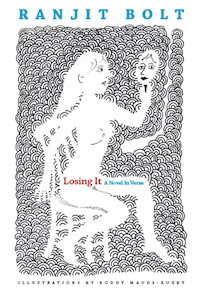
Written in rhyming couplets 'Losing It' is the story of Lucy, a luscious young virgin who goes to London to try losing her virginity.
Das E-Book Losing It wird angeboten von Muswell Press und wurde mit folgenden Begriffen kategorisiert:
Sie lesen das E-Book in den Legimi-Apps auf:
Seitenzahl: 122
Veröffentlichungsjahr: 2011
Das E-Book (TTS) können Sie hören im Abo „Legimi Premium” in Legimi-Apps auf:
Ähnliche

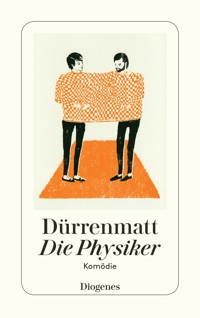














RANJIT BOLT
Losing It A Novel In Verse
ILLUSTRATIONS BY RODDY MAUDE–ROXBY
In Memoriam, Sydney Bolt 1920-2012
Contents
Title Page
Dedication
ONE
TWO
THREE
FOUR
FIVE
SIX
SEVEN
EIGHT
NINE
TEN
ELEVEN
TWELVE
About the Author
Copyright
ONE
I thought I’d start by bringing in
My beautiful young heroine –
Lucy, as lovely as the day
Is long, or almost, anyway.
And yet, for all her loveliness,
She had to suffer the distress,
With twenty less than two years off,
Of being the mock, the jeer, the scoff
Of all her friends and peers, because,
Not mincing words with you, she was,
At eighteen – don’t be shocked at this –
As virginal as Artemis!
And whereas, long ago, Lord knows –
In Homer’s time, or Cicero’s
Or many ages I could name,
So far from being a cause of shame,
Such purity was highly prized,
Virginity being recognised
As a most honourable state,
Today a girl must get a mate,
And if she lets the time slip by
Without one, people wonder why,
The taunts and brickbats start to fly.
In these lewd times, virginity
Is practically a stigma we
Wear more reluctantly each day
After the age of – sixteen, say.
Instinctively, young Lucy knew
A pretty-boy would scarcely do –
She snubbed them time and time again –
She must have someone with a brain.
She was, herself, no quarter-wit
(In fact, the total opposite)
And would prefer a clever fellow,
Be he as plain as straw is yellow,
To someone dull, or dim, or dumb,
Although as handsome as they come.
How right she was! There’s nothing worse
Than being unable to converse
On equal terms with someone who
You’ve picked to share a bed with you.
It breaks your heart when, after all
The night’s cavorting, they let fall,
Over the eggs, or muesli, stray
Remarks, opinions, that betray
A total want of intellect –
Romantic fantasies are wrecked
And, as the grisly meal drags on,
You’re praying for them to be gone.
She’d had, for three years now, or more,
Good-looking morons by the score
Pursuing her – they were a bore.
But, strange to say, she hadn’t met
A bright boy she could fancy yet.
Some had been ugly and not quite
Proportionately erudite,
While others looked quite cute, and were
Smart – but not smart enough for her.
The search was profitless and long.
Sometimes she almost got it wrong –
Thought she had found the perfect person
In fact could not have picked a worse one
Was ready to perform the act,
Or nearly, but escaped intact.
And so, as three years came and went,
She’d stayed in her predicament,
Just like a sweet, unwritten tune
That hoped to be composed quite soon.
Virginity, my curse on you!
What dire lengths I was driven to
To shake you off in my own youth!
You drove me mad, and that’s the truth!
And then it happened, quite by chance
All gone were shame, and ignorance
As, man instead of bashful boy,
Heart flooded with conceit and joy,
I ran round Oxford screaming out
The news, lest there be any doubt,
Dismaying friends, naming the girl,
And startling tourists in the Turl.
As spots to get deflowered in go
London’s the likeliest one I know
And there it was that Lucy hied.
Her great-aunt happened to reside
Near Hampstead Heath, and she had said
That Lucy could have board and bed
For just as long as she might need
To do the necessary deed.
Her parents worried, but agreed
(If they had tried to thwart her aim
She would have set off all the same)
But yes, they fretted. Who would not?
Lucy in London – that fleshpot!
That hydra, readying its maw
To swallow their sweet daughter raw!
And was she raw! – completely green –
Despite being nubile, and nineteen,
And born in an anarchic age
When teenage pregnancy’s the rage.
Her friends were all ahead of her
And that was the most poignant spur
To Lucy’s urgent quest: peer groups,
While best shrugged off as nincompoops,
Are never easily dismissed –
It takes real gumption to resist
The constant pleasure they apply.
Her parents knew this, which was why
They didn’t stand in Lucy’s way
Though they were deeply troubled, nay
Distraught.
Within a day or two
A cab climbed Fitzjohn’s Avenue
With Lucy in the back. “So this
Is it! The great metropolis!”
She murmured. “I’ve a shrewd idea
I’m going to rather like it here.”
Mind you, the place she’d picked to live
Was hardly representative:
Hampstead, which roosts high up above
The city, like a Georgian dove,
With more quaint nooks and strange dead ends
Than teenage girls have Facebook friends.
Its narrow, ancient streets, its squares,
Bankers’ retreats and luvvies’ lairs,
Many regard as rather twee
While still allowing this to be
A beautiful and charming spot.
“Was it Well Road, then, luv, or what?
Coz if it was, we’re bleedin’ ‘ere,”
The cabbie growled, then gave a leer,
For all he’d had a rotten day,
And added: “You care now, eh?
There’s lotsa dodgy blokes out there.”
Then gawped as he discharged his fare,
For he, if anyone, would know
That figures such as hers don’t grow
On trees. He watched this living ray
Of vernal sunshine walk away,
In his wing mirror for a while,
The day’s best looker, by a mile.
Her aunt’s house was a Gothic pile
Close, as I said, to Hampstead Heath.
It made beholders catch their breath,
If they had any taste at all,
For it was cut out to appal,
Quite perfect in its hideousness
You’d shy away from it, unless
You are the type that can enthuse
About redundant curlicues,
Arches that make no visual sense
And other such embellishments,
Which covered it, and which belong
To the New Gothic style gone wrong.
In short, this mansion was a mess
(Though quite imposing, nonetheless).
She pulled the bell-pull, and a weird,
Lugubrious butler soon appeared,
Got up in garb of dismal black
More suited to a century back
Than any menial of today.
His manner suited his array –
Silent, and solemn as the tomb,
He ushered Lucy to her room.
”Dinner will be at eight,” said he,
Then turned about decrepitly
And slowly sidled off.
“Queer sort!
Quite scary house, too,” Lucy thought,
“I wonder if I’ve boobed? Ah well,
Stay positive – too soon to tell –
You pull yourself together, girl –
We’re damned well giving this a whirl!”
By chivvying herself this way
She kept anxiety at bay
Till it was suddenly dispelled
When, wafting through the house, she smelled
The marvellous, savoury yet sweet
Aroma of some roasting meat
And fear gave way to appetite.
At table they were three that night -
Unless you count the jet black cat
That, through the evening, mutely sat
On Aunt Alicia’s ancient knee.
“So here you are, my dear!” cried she
Lolling, contented, in her chair
And smiling with a wicked air.
She wrapped her great black woollen shawl
About her, and tipped back the tall,
Black, pointed hat upon her head
While, with the gaze of the undead,
She scrutinized her lovely niece.
“Algernon, pass the brandy, please!”
How typical the old witch looked –
Eyes brightly twinkling, nose hooked,
While kindness, in her gaze, was blent
With something more malevolent.
Much, to be frank, was pretty strange
About her ménage. Its mélange
Of things and people who’d just slipped
Out of a Hammer Horror script:
Her butler, not to badmouth him,
Seemed, if not evil, somewhat grim,
Added to which, the mansion where
This quite grotesque and gruesome pair
Hung out, posed questions by the score:
Scuttling footsteps scraped each floor,
You couldn’t name one feature which
Was not replete with Gothic kitsch –
The goggling gargoyles standing guard
Over the horrible façade;
Long, lamp-lit passages that creaked,
Which rats patrolled, while barn-owls shrieked
Out in the grounds, and night-jars whirred;
Poltergeists, too, must be inferred –
Though nothing had quite moved as yet
Various objects seemed to fret
About their stationery state
And whisper: “We’ve not long to wait –
Just sit this silly supper out
And, brother, how we’ll shift about!”
But to my tale: Alicia had,
Some couplets back, addressed a lad
Whose age was more or less the same
As Lucy’s – Algernon by name,
He being her grandson, and in truth
As weird and off-the-wall a youth
As she a crone. He sat beside
His cousin, yet he hadn’t tried
To start a conversation – no,
Completely mum he was, as though
Deaf, dumb and blind, so unaware
He seemed that she was sitting there.
This baffled Lucy. All night long
He shunned her like a nasty pong,
She’d never been so dissed, so scorned -
She ventured a remark, he yawned
And seemed to wish she’d venture none,
As though he might have had more fun.
In Purgatory.
It’s often true
That if we’re paid attention to
By someone of the opposite
Gender, we’re not impressed one bit,
But if we’re shown no earthly heed
A sudden, quite compelling need
Will soon start forming in our head
To get that person into bed.
That was how Lucy felt tonight:
He was no babe, but he was bright,
Nay, burned with intellectual fire
And that’s a licence to look dire,
Or certain women deem it so,
Lucy being one such, as we know.
A dazzling, cerebral flow
He kept up. He was plain, all right,
A truly horrifying sight,
The inverse of an oil-painting –
His eyes, his nose, his everything
Instead of going in, stuck out,
Or else the other way about:
His belly swelled, his arse caved in;
Low-browed he was, with sallow skin;
His teeth were riven by many a gat;
Legs long and thin, arms short and fat;
Eyes shrunk by bottle-bottom specs –
A walking antidote to sex
He seemed. Yet from his thick lips came,
On any theme you cared to name,
So much, and all so apposite,
And interlaced with charm and wit
That Lucy pardoned the disgrace,
The nightmare of his form, and face.
How lucid his opinions were!
To what a range did he refer
Of learned sources to support
Each judgement, each arresting thought
And scintillating aperçu.
But Lucy might, for all he knew,
Or seemed in the least bit to care,
Have been a table or a chair -
Alicia only he addressed
From start to finish, and caressed
With talk of literature and art,
The whole of which he knew by heart,
And on it had a trenchant view,
With politics and finance too,
History, philosophy, music, food,
And yet on none he seemed a pseud.
He was as well-read as they come –
As well as Voltaire, and then some –
Sweet Jesus, was he erudite –
He’d read all day, he’d read all night,
Read till his eyes yelled: “Look, you creep,
Stop reading! Get some sodding sleep!”
So Lucy guessed – correctly, too.
When midnight came, and they withdrew,
She had been pierced through with the pain
Of Algernon’s complete disdain.
She made her way upstairs to bed
Inwardly fuming, seeing red,
Resolved to show this dweeb, this swot
Just who was who, and what was what,
By bedding him, without delay.
Despite a quite exhausting day
She kissed goodbye to that night’s rest,
Was angry, lustful, and depressed.
At two a.m. her self-esteem
Still harped upon a single theme -
Fed up of waiting one more hour
To net him, and assert her power,
She left her room and off she crept
To find the one in which he slept.
Down creaking passages she went
With wild, lascivious intent
Till, at the end of one, she saw
A line of light beneath a door
And knew instinctively, at once,
That this room must be Algernon’s.
“I mean, who else’s could it be?
A little geek like that,” thought she,
“Scattering learned quotes around,
He’s studying something, I’ll be bound.
Given the vast amount he knows
It’s reasonable to suppose
He never sleeps, just reads and reads –
God save us from such bookish weeds!”
Thus Lucy fumed in her denial,
Wanting him madly all the while.
She knocked. No sound. So why the light?
“Sleeps with it on? I guess he might…”
Na – studying, the little nerd.”
Listening more carefully, she heard
The sound of fingers tapping keys –
“He’s writing something, if you please!”
She knocked a second time. “Come in!”
She entered, and was facing him,
She in her skimpy negligée,
He eying her, as if to say –
Well, something cutting, anyway.
He went on typing, which was rude
And, given so much pulchritude,
So lightly clad, at two a.m.,
Suggested an excess of phlegm
To say the least. He wasn’t dim -
A young girl was disturbing him,
Not any girl, but cute as pie,
At this late hour, he must know why,
Yet he did nothing, typed away
As if her legs weren’t on display,
Her lovely long white arms all bare,
And shoulders, under auburn hair.
“Algernon? Still awake?” said she.
“What’s that you’re working on? Tell me…
Some masterpiece?” “It’s… nothing much –
A novel… that is, not as such…
Call it a kind of overview –
My take on where we are, and who.
Well, now he’d talked to her at least –
Tacit hostilities had ceased
And that was something – not enough
But something. “Oh, it’s sorry stuff,
Dear cousin – just you wait and see –
No one’ll publish it,” said he,
But I’m incredibly behind
So, Lucy, if you wouldn’t mind…”
He went to work, she went away
Having done nothing to allay
Her pain, and even more impressed
With Algie, for she little guessed
That all North London, new to her,
Is basically just one big whir
Of diverse up-to-date machines
All churning chapters out, or scenes –
We just can’t help it, it’s a bug,
It ought to get us thrown in jug
But it’s as natural to our class
As to eat, sleep, or wipe one’s arse.
When the North London evenings come
Just listen, and you’ll hear the hum
Of writers, droning on like bees
On laptops, iPads, and PCs.
Nature’s soft nurse (that’s sleep, of course)
Soothed Lucy’s woes at last, perforce.
And even Algie’s pattering keys
Did have the decency to cease.
Later, the rosy Hampstead dawn
Woke on the Heath and, with a yawn,
Sensing it was too soon to break,
Pulled up the misty sheets to take
Another forty winks before
She gave the signal for the roar
Of London life to recommence.
From her nocturnal devilments
The witch returned. Each night she flew
Off on her magic broom, to brew
Fresh mischief up. But even she,
A votaress of Hecatë,
Was a tad weary, and could use
A reinvigorating snooze.
The butler, rested and awake,
As always, just before daybreak,
Tested his tardy, ancient legs.
Prior to preparing bacon, eggs,
Toast, coffee, for which all would ask,
His long day’s first, lugubrious task,
He brooded in the bluish-grey




