


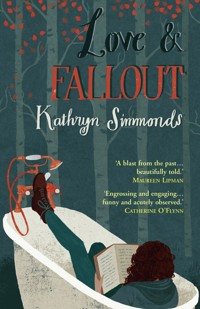
8,63 €
Mehr erfahren.
- Herausgeber: Seren
- Kategorie: Gesellschafts- und Liebesromane
- Sprache: Englisch
When Tessa's best friend organises a surprise TV makeover, Tessa is horrified. It's the last thing she needs - her business is on the brink of collapse, her marriage is under strain and her daughter is more interested in beauty pageants than student politi. What's more, the 'Greenham Common angle' the TV producers have devised reopens some personal history Tessa has tried to hide away. Then Angela gets in touch, Tessa's least favourite member of the Greenham gang, and she's drawn back into her muddy past. Moving between the present and 1982, and set against the mass protests which touched thousands of women's lives, Love and Fallout is a book about friendship, motherhood and the accidents that make us who we are. A hugely entertaining novel from debut novelist and award-winning poet Kathryn Simmonds.
Das E-Book können Sie in Legimi-Apps oder einer beliebigen App lesen, die das folgende Format unterstützen:
Seitenzahl: 508
Veröffentlichungsjahr: 2014
Ähnliche



















ContentsTitle PageDedicationThingsSaturday MorningPart One – With our lovely feathers1. Saturday Afternoon2. Life and Death3. Eco Chic4. An Alien Mug5. Fallout6. Woman in a Bath7. Miniature Scotch Eggs8. Singing Lessons9. Green Woman Blues10. Women!11. Bolognese12. The Arm of the Law13. A Blast from the PastPart Two – Down at Greenham14. Never Trust a Journalist15. A Collapsible Bike16. A Pink J-Cloth17. Brandy18. Earache19. Curl up and Dye20. Embracing the Base21. Stripping the Fence22. Under the Weather23. Bacon and Eggs24. Telly25. Three Little MaidsPart Three – Gonna Lay Down my Burden26. Meetings27. Silent Night28. A Two-Seater Sofa29. In the Cells30. Down by the Riverside31. Fires32. Miss Student Body33. Butterflies34. Bourbons35. The Muncher36. Feel Good37. Departures38. An Orange Tent39. PeaceAcknowledgementsCopyrightAdvertisement
Love and Fallout
by
Kathryn Simmonds
For Esther
Things
There are worse things than having behaved foolishly in public.
There are worse things than these miniature betrayals,
committed or endured or suspected; there are worse things
than not being able to sleep for thinking about them.
It is 5a.m. All the worse things come stalking in
and stand icily about the bed looking worse and worse and
worse.
(Fleur Adcock)
Saturday Morning
We are waist-deep in water and marching. At the poolside our instructor bounces on her toes, her compact body tight-sprung like one of the machines in the gym. ‘That’s it ladies!’ she calls, ‘keep working!’ Maggie marches behind me as the circle rotates. If she wasn’t so keen on Aquafit it’s unlikely I’d be here, not on a Saturday morning, but then friendship, like marriage, is sometimes a matter of compromise.
The class is halfway through. The dance music is pounding. I’ve nearly finished a To Do list in my head when I catch sight of a figure crossing the far edge of the pool – a girl of about twenty, her hair a mass of curls. She raises a hand to wave at someone, and as she smiles my list breaks apart and all at once the past comes crashing in. I jerk my chin back with a gasp as if to keep from taking in water.
‘Careful, Tess!’ Maggie is at my shoulder. I start moving again before there’s a pile-up behind me, trying to keep track of the girl as she heads towards the diving boards to scale the silver ladder.
The lesson continues. It’s only a girl, I tell myself. A girl swimming, that’s all.
Our instructor is bouncing with new urgency, her voice more insistent, the same tone used at fairgrounds when the rides speed up. Twelve women jump on the spot, spinning invisible hoops on their forearms until their muscles burn. The girl dives into deep water and disappears.
In the changing room, citrus shampoos mingle with the chemical tang of chlorine as we go about the business of dressing and undressing. Pool noise swells and fades with every flap of the swing door.
‘Honestly Tess, there it was, large as life. Larger. It practically needed its own introduction.’ Maggie is drying her hair with a beach towel. ‘He didn’t have a moustache in the photo. You need to be prepared for something like that. It was…’ she reaches for the word, ‘…transfixing. Over dinner, I had to stop myself from feeding it.’
I laugh and button my shirt.
‘And it wasn’t just the facial hair. I mean that doesn’t have to be a deal-breaker, but there were other things he didn’t mention. Like his age.’ Beside us a woman has a foot on the bench and is buckling her roman sandal with infinite care. Never too concerned about discretion, Maggie doesn’t seem to notice her lean nearer.
‘His profile said forty-nine, but if he was a day under sixty, I’m an Olympic athlete. Why do they think lying is all right?’
The internet dating has been going on for a while, but the only men she’s meeting seem to be deficient in some respect: the one who never paid for anything; the one who turned out to be married; the one who had a previously undisclosed enthusiasm for re-enacting historic battles.
‘We could try Salsa dancing,’ I say, thinking that might yield a few possibilities. ‘Do people still do that?’
Maggie says they do, but wouldn’t I rather go with Pete? For a moment I try to picture us in a community hall gyrating our hips. It’s been suggested in the room of the two-seater sofa that we should spend more time together – could a Latin beat improve the rhythm of our marriage? Possibly. But Pete’s never been much of a dancer – six foot three, beardy, size twelve feet, he’s more at home on a rugby pitch. Anyway, that isn’t a conversation for the communal changing room and, still musing on the idea of a shared hobby, I wring out my costume as Maggie tells me about a fantastic dress she’s spotted.
‘Just your colour,’ she says, sliding a comb through her bob.
‘Do I have a colour?’
‘You know you do … Colour me Lovely?’
A birthday gift three years ago – how could I forget the Colour me Lovely lady? I stood in her living room for an hour while she held material swatches against my face and told me I should be wearing more prune, ivory and sage green. She also said I could do topaz, lemon and pink (as long as it was tawny rather than baby). I thanked her, put my cycling helmet back on and pedalled home.
Maggie slows the comb. ‘That was fun, wasn’t it?’
My agreement seems to make her happy, and she sings to herself as she fastens an earring. On paper we may seem unlikely friends, but shared childhoods can easily thicken water to blood, and forty years on from our first meeting in a Stevenage back garden where we made perfume from fistfuls of her mum’s roses, Maggie’s more like my sister. A louder, more extravagant sister.
‘Doing anything this afternoon?’ I ask.
‘Not especially.’
Her response is uncharacteristically brief and I raise an eyebrow. ‘Another date?’
She smiles, ‘Something like that,’ and whisks her make-up bag to a bank of mirrors. Whatever it is will keep until next Saturday, or a mid-week phone call.
The key to my bike lock isn’t in the pocket of my jeans, or the pouch of my shoulder bag, and I’m on my knees feeling under the bench, when I hear someone sayExcuse me.I look up. Her curls are wet now, but it’s the girl from the diving boards. At close range, the resemblance turns my heart: the same almond-shaped eyes, arched brows, wide mouth. I move aside. She grabs a towel from the hook and enters a cubicle to dress.
When Maggie reappears I’m sitting on the bench with the bag gaping open on my lap. My legs feel useless, as if from the effort of treading water.
‘Are you all right?’
‘Fine.’
She regards me with a frown, and I nod to reassure her, to reassure myself.
‘Just… I can’t find my bike key.’
‘Tessa, you and keys.’ Together we finish the search.
It’s usually me with an eye on my watch, but today it’s Maggie who’s eager to be off into the Cambridge sunshine. But I don’t ask any more questions – wherever she is or isn’t going is her business. She brushes my cheek in a quick goodbye.
When she’s gone I remain on the bench, not wanting to admit what I’m waiting for, or rather who. In a few minutes the girl has finished dressing. I stand, ready to leave. My pulse throbs high in my neck as I approach and ask for the time.
She glances down at her sports watch then into my face.
‘Twenty-past twelve.’
‘Thanks.’
It is remarkable, her eyes are green, and at the corner of her lip is a beauty spot. I hesitate, wanting to speak, wanting to sayYou look like someone, someone I knew years ago.Could she be a relative? A distant cousin? But nothing comes. Instead I’m simply staring at her while women file past us barefoot towards the pool. The changing room is too hot and I have to get out.
‘Sorry,’ I say, accidentally brushing her shoulder in a move to the door.Sorry.Sorry.
Part One
With our lovely feathers
1
Saturday Afternoon
Pete lowers his paper and quietens one of his trumpet-playing jazz legends. We exchange a smile and I make sure to give him a kiss, albeit a slightly self-conscious one, because Valeria has reminded us that mutual acknowledgement is important and these small acts of appreciation will help re-establish intimacy. If we’re going to keep paying her sixty quid an hour for her advice, I for one am going to take it.
‘How was the class?’
‘Fine.’ My mind brushes against the girl from the pool, then withdraws. ‘Have you trimmed your beard?’
He passes a hand around his jaw. ‘No harm in looking presentable.’
‘None at all.’ Something else is different. The Hoover’s been out because our worn carpet is without fluff ball or paperclip. ‘Spring cleaning?’ The pile of newspapers usually stacked beside the bookshelves has disappeared; the broken dining-room chair propped against the wall for a fortnight has gone, and there’s no hint of the usual low-level clutter. ‘Looks great.’ Pete’s obviously trying too.
Assembling a cheese sandwich, I notice the fridge is whiter and all the kitchen surfaces have been recently wiped down. It smells lemony.
‘Where’s Dom?’ I ask, eating the sandwich standing up.
‘Working on his tan.’
That’s a joke. If he’s not plugged into Goth Friendly, his social networking site, the details of which he keeps a deliberate mystery, he’ll be locked in a garage with his band mates rehearsing for greatness.
‘There’s a Hitchcock on soon,’ Pete says. But I tell him I should get the seed potatoes in, then crack on with the leaflets.
‘What leaflets?’ His eyes leave the sports section.
‘For Heston Fields.’
‘Why are you doing them?’
‘Someone’s got to.’
He asks how much else I’m taking on, and I tell him we’re just working out a few ideas then stop because there’s a definite wrinkle in his brow, the wrinkle that leads to a frown and then on to the open highways of disagreement.
‘You’re running another campaign?’
We’ve had the Heston Fields discussion. Or row, as it turned out, and as far as Pete’s concerned, if the council wants to sell a chunk of neglected land so a developer can build luxury flats there’s no point losing any sleep. He calls it scrubland, or backlands, but the truth is, it’s public land. All right, it’s a bit tussocky, but kids play football there and people cross it to reach the parade that qualifies as Heston’s high street. We used to play cricket there with the kids. But I know there’s no point reminding him of this because Heston Fields has become what Valeria would call a trigger point. Unwilling to provoke an incident, I stuff my mouth with a final sandwich crust.
When Pete appears at the garden door to say the film’s starting, I’m on my knees making divots in the soil. He seems unusually agitated.
‘What’s got into you?’ I ask, shading my eyes. That’s meant to sound teasing but it comes out as stroppy. Valeria’s right, communication isn’t easy: words have so many ways of defying your intentions.
‘Nothing.’ He pauses to assess me. ‘What have you got on?’
My shorts are in the wash, so I’m wearing an old pair of his, khaki and belted at the waist. ‘They’re only for the gardening.’ My tone goes wrong again. He retreats. Should I call after him? But what will that achieve? We’ll end up having an involved conversation about shorts which could easily escalate, just as other ordinary conversations have done, until we’re not discussing shorts at all, we’re arguing about why he doesn’t want to help me save the local library and I don’t want to watch him referee rugby.
The April breeze is warm and fresh and the hum of a lawnmower floats over from a neighbouring garden while I kneel, cutting seed potatoes into sections, spacing them in a row. All long relationships suffer strain, it’s only natural, every couple has their own argument playing out in different forms, the subjects they return to again and again, pressed like bruises that never fade. I sit back on my haunches. We never thought we’d end up seeing a therapist. In fact we probably wouldn’t have if Pete’s sister hadn’t discreetly suggested it to him after a lunch visit. Of course we didn’t row in front of her, but we gave ourselves away all the same. Lack of eye contact? Flinching when the other spoke? Plates clattered too loudly in the kitchen? Who knows. But because neither of us wanted to quash the idea, because we agreed the sessions were only a precautionary measure, we found ourselves in Valeria’s tranquilly decorated living room with its South Asian tapestries and life-affirming pot plants.
I make another divot and turn my thoughts elsewhere, wondering what Pippa’s up to at university on a sunny Saturday afternoon. Would it bother her if I called later? Perhaps a text? But it’s impossible to say anything in a text – all those paraphrased thoughts, at every sign off the hopeful: ‘be nice to spk sn, love mum xx.’
After a few minutes the doorbell chimes. It chimes again so I call to Pete. He must have his headphones on. I slip out of my clogs and hurry through the living room expecting to find Pru on the doorstep with a question about the meeting agenda. But when I open the door, Pru isn’t standing there. Instead, smiling at me is a thin woman in her early forties who has the gloss and wing-mirror cheekbones of a former fashion model. Behind her is a camera crew.A camera crew.And there, waving, is Maggie. For a few stupefied seconds I can’t work it out: in some bizarre coincidence she’s stopped by at exactly the same moment as a TV crew.
‘Are you Tessa Perry?’ asks the thin woman.
Partly shielded by the door and ready to close it at any moment, I confirm my identity.
‘Excellent,’ she says, ‘because we’re here to…’ Then she raises her arms along with her voice and everyone cries in unison, ‘Make You Over!’
The penny teeters, bright and coppery at the edge of my comprehension then drops into a slot and rolls away. Maggie hasbroughtthese people here. Before I know what’s happening, they’re piling inside.
The living room, which was empty just minutes ago, is now crammed with bodies. One of the crew switches off a bright light and Jude, the woman with the cheekbones, declares, ‘We’re going to work a little miracle, darling. In a couple of days even your own husband won’t recognise you.’ Pete enters on cue carrying a tray of coffee mugs and proffers a plate of biscuits towards Jude. ‘Gingernut?’
She looks at them as if they might be about to get up and tell her a joke. ‘Not for me,’ she says, flashing a stellar smile. That smile seems familiar now from the blur of television magazines racked up in Sainsbury’s.
‘Did you know about this?’ I ask Pete. The spring cleaning suddenly makes sense.
‘Not until the last minute.’
Maggie kisses my cheek, ‘Isn’t it brilliant?’ She’s wearing a turquoise dress I’ve never seen before. Her hair is shining. And another conversation is explained, the Colour me Lovely lady. Nothing comes out of my mouth, though there are thoughts, half formulated, careering at speed on unfinished tracks. But there’s no time for discussion because the director, a wiry young man who’s introduced himself as Zeb, gathers us together and we watch as the scene that’s just played out is replayed on a tiny monitor.
There’s me, startled in Pete’s shorts, and there’s Jude at the door saying, ‘It’s all thanks to your best friend,’ and then Maggie stepping forwards for a hug, the camera framing us in close up, a faint streak of mud striping my cheek.
‘Perfect!’ Zeb claps his hands.
The waves of weirdness subside until I’m touching reality again, and when it comes my voice has an untethered quality, ‘Wait!’ The room falls quiet and the man who’s been twiddling a valve on his headset stops twiddling. I look around at them trying to reason, like someone speaking to hostage takers. ‘There’s been a mistake. I don’t want a make-over.’ I turn to Maggie and repeat it, as if she might translate. ‘I’m not going ontelevision.’
Zeb steps in.
‘Tessa, Tessa, don’t worry, lots of our guests are nervous but we’ve got a great package lined up. We had a look at Maggie’s letter and we’re going to start with the Greenham Common angle, then bring in your charity work. Everything will reflect you, organic products, fair-trade fashion…’
‘Greenham Common angle?’ My stomach drops at speed, like a bucket freefalling down a well shaft.
He consults his clipboard, ‘You werethere, weren’t you?’
‘Well yes, briefly, but…’ The sentence fades away. Greenham Common tumbles about in my head like dirty laundry as Zeb continues his spiel. While he speaks I’m bumping through images from the past, images I’ve not thought about for years, or rather not since this morning, when that green-eyed girl appeared at the pool.
He’s asking if I’ve any photos I could dig out. ‘We like to give the viewers some back story, a feel for who you are.’ But I don’t want the unidentified masses to feel me. And I certainly don’t want a discussion about Greenham Common. ‘You’d be very now,’ he says, ‘with your environmental charity, and your…’
‘Issues,’ says Jude, with an eye on my shorts.
The clematis bush has caught Zeb’s attention; he thinks we could do some nice shots beside it for the reveal. I have to make this stop.
‘I’m sorry, but this programme isn’t for me.’
Zeb says the programme is for everyone, it will be wonderful, it will change my life and amazing things will happen. I tell him I’m quite happy with my untelevised life. Our exchange goes on until Pete steps in and diplomatically suggests the TV people leave. Zeb now has a harassed expression. He looks from Pete to me as if he might find a solution.
‘Tell you what, we’ll give you guys some space,’ he says. ‘Talk things over. Give me a ring later, or in the morning if you like.’ I accept his card but say I won’t be changing my mind.
When they’ve finally trooped back into their people-carrier there’s only Maggie left in our living room.
‘Tess,’ she begins, and stops, as if unsure of what should follow. Her lipstick has bled away but a stencil of pink liner remains.
Pete collects a couple of coffee mugs and retreats to the kitchen. Then Maggie starts with a pitch just like the telly people, how exciting it’s going to be, how they’re going to spend a small fortune doing me up. I tell her I’m not a semi-detached. We’d usually laugh off cross words before it got to this, but in fact, I can’t remember how it got to this at all – wasn’t I planting potatoes?
‘I thought it would be fun,’ she says. ‘I wanted to give you a treat, a helping hand.’
‘If you wanted to help me you could distribute a few campaign leaflets, not arrange a lynching.’
‘Tessa, you’re overreacting. Most women would be thrilled.’
‘About what? Getting shown up on national TV by their best friend?’
Maggie manages a pub, she always dresses the part and sometimes a little extra, but that’s all right, that’s who she is and I wouldn’t try to change her, so why is she trying to change me?
‘What about Colour me Lovely? You enjoyed that,’ she says. I look at her for a second, she’s giving me no choice. ‘No, I didn’t, I only went because you’d brought the bloody thing as a present. What else was I going to do?’
A ripple of hurt breaks over her face. I turn my gaze towards the newly tidied bookcase and wish none of this was happening. ‘And anyway there’s a big difference between that and going on telly. What was in your letter?’ This is what I’m anxious to know. ‘What’s Greenham Common got to do with anything?’
She shrugs, as if I might as well know the truth. ‘That’s where it all started.’
‘All what started?’
‘Your saving the world thing.’
‘My what?’
‘You know what I mean.’ Her tone is matter of fact.
My heart thuds. Do I know what she means?
She sighs. ‘Look, this was supposed to be a nice surprise, a way to treat you, give you time for yourself, get you out of the bag lady gear for a…’ She stops short.
‘Bag lady?’ The words are neon-lit, they’re a massive Blackpool extravaganza and we’re standing beneath them. The letters are ton-heavy, teetering on a wire, sparking, ready to come crashing down between us.
‘God, I didn’t mean…’ she reaches at the space between us.
‘What did you mean?’
We stare at each other. When Pete appears from the kitchen, Maggie is in the hall still apologising, but this has been enough for one afternoon and I walk away while Pete sees her out.
Afterwards me and Pete sit on the sofa. He puts out a hand uncertainly then settles his fingers on the small of my back and makes circles while I try to understand.Bag lady?Okay, there are lots of jeans and jumpers in my wardrobe, but I can dress up if I want to. My hair is an average brown with the first traces of silver running through. Sometimes I wrap it with a scarf or clip it up with combs. I don’t wear make-up because I don’t like the feel of it, or the palaver.
‘She wouldn’t have wanted to upset you; you know what she’s like.’
‘I can’t stand the idea of those programmes.’
He nods. ‘She wanted to give you a boost, a bit of, what do they call it, me time.’
‘Me time?Seriously?’ He shrugs, the circles stop and he removes his hand.
I can’t help thinking this is the second time she’s gone behind my back, even though we never discuss the first, having tacitly agreed years ago never to mention it. I saybag ladyaloud, hoping Pete might rush to my defence but he doesn’t, he tells me not to worry about Maggie, she was simply being clumsy.
My hands are resting on my lap, nails ridged with dirt from the planting, wedding ring grazed after years of wear, crosshatched with the knocks and scrapes of daily life. We bought the ring in Broadstairs when we were camping. Sunburnt under our shirts from three hot days, the sky threatening rain, fingers interlaced as we climbed a steep slope away from the beach. What must we have looked like asking to unlock cabinets and inspect the jewellery? But I think we enjoyed looking out of place, all that love everywhere we went, dancing invisibly around us like the flecks of salt in seaside air.
The question I’ve been resisting finds its way out.
‘Do you think I need a make-over?’
‘No,’ Pete says. And then adds troublingly, ‘You’re just you, aren’t you.’
An hour later The Heston Fields Action Group are gathered around my kitchen table. News of the Make me Over visit has caused a minor frenzy.
‘When’s it going to be on?’ asks Pru, who is well into her seventies but has more vim than most thirty year olds.
‘But Pru, I’m not actually going todoit.’
‘You’re not? Oh,’ she says, disappointed. ‘I do love Jude – what’s she like in real life?’
We chat about Jude for a while until I manage to steer the conversation back to Heston Fields. This is only our second meeting and there are fewer people involved than in our drive to save the Post Office.
I begin checking my notepad, ‘So David, if you could investigate the planning laws, as agreed?’
David Parish nods with a ‘Will do’. He’s a retired architect. Excellent with detail. I run through, ensuring everyone’s happy with their roles, assign someone to write to the local paper and someone to circulate a petition. I’ll design leaflets, create the web page and ring local friends.
‘Eventually we could build towards a placard walk. But for now we need to think about ideas for fundraisers.’
‘A placard walk?’ repeats Alice Ainsley. This is the first time she’s done anything in the way of campaigning. ‘Do you… do you think that’s necessary?’
‘We need to be visible, Alice. This is common land, public green space. It’ll take work but we can turn things around.’
She nods as if willing herself to believe it and we begin to brainstorm publicity ideas. Pru, who’s been unusually quiet for the past few minutes, sits up. ‘You know Tessa, I’ve had a thought, something to get the message out.’ Everyone looks towards her. She pauses, ‘Television!’
I laugh. ‘Full marks for positive thinking but that’s slightly beyond budget.’
She smiles and lays down her pen. ‘But doesn’t one of us have the opportunity to become a television star?’
‘Oh marvellous,’ says David Parish, ‘top drawer.’
Oh God, she’s right. If I go on the programme and mention the campaign it’ll be the best publicity we’re ever likely to get. Then again, what about the Greenham Common angle? An uneasy feeling trickles into me. Television? No. I can’t.
‘Things are so busy at work,’ I say, which is true. It’s only a two-person office and we’re approaching a funding review, Frieda can’t get everything done by herself.
Four pairs of eyes fix on me. Pru’s gaze is unwavering. ‘I’m sure filming is swift.’
But I couldn’t have them package me up as a Greenham Woman, not after everything that happened. While the others talk, memories start to move around in my head like uninvited guests at a party, they initiate unwelcome conversations and hold forth with embarrassing anecdotes and pass around snapshots which I attempt to snatch away: a journalist in a burberry hat, a bicycle with a bent wheel, a flaring camp fire on a winter afternoon.
Pru knows the format of the show, she says they could easily include a couple of minutes on Heston Fields. We could make it a condition. Whatever my personal feelings, I can see it’s a brilliant idea. Imperilled, like a woman balanced on a high diving platform, I agree.
Coffee cups are chinked in celebration. David Parish, who’s taking notes in his beautiful copperplate handwriting, asks if he should amend the minutes with a new action point and his fountain pen hovers over the page:Tessa to appear on television.
It takes a while to find the right shoebox, and in the process I sift through a succession of others crammed with the odds and ends accumulated over years – cards from long-forgotten restaurants, books of souvenir matches, wedding invitations with felty corners, a handful of snaps from the early days with Pete. In one strip of pictures we’re squashed together in a passport booth, me on his lap, him pressing his mouth to my cheek in an exaggerated comedy kiss. Strange to stumble upon that intimacy again after so long, almost an intrusion, like passing lit windows and glancing at figures caught in an embrace.
Among the memorabilia are photographs which have never been sorted into albums and I find a picture of Mum in her early thirties, hair backcombed into a beehive, showing off her slim legs in a mini dress printed with overblown pink and orange roses. There’s a photo I thought we’d lost, Pippa as a newborn, soft and curled into herself, staring solemn-eyed at the camera. In another she’s sitting on my lap after her fourth birthday party, giggling while I hug her to me. I stare at the photo for a long time. Then I remember what I’m supposed to be looking for.
The Greenham stuff must be under the bed. I feel around behind a tartan rug and an old pair of trainers until the Freeman, Hardy & Willis box slides free. It’s a few seconds before I lift the lid. Inside is a badly knitted scarf – an early attempt before I gave up knitting for good – and beside that a few handwritten leaflets, two snapshots and an exercise book, the cover smeared with ancient splatters of mud. I pick it up as if it might bear radioactive traces and, with a deep breath, flip it open.
28 October 1982
Hope this wasn’t a mistake. Too late now. Met a girl called Rori (sp?) who helped me put up my tent. They’ve all gone to a meeting somewhere. Not sure what I’m supposed to be doing. It’s freezing. Fingerless gloves a mistake.
As I unravel the scarf, a little velvet box drops into my lap. Inside is a pair of silver earrings in the shape of peace symbols. They feel as strange as tiger’s teeth after all this time.
The photos are smaller than I remember. The first is a shot of a blockade. I’m squeezed up with a dozen other women, singing. This is the one I’ll show to the TV people. But the other is not for public view. I pick it up by the edges, and there we are, me and Rori with our arms slung around one another, the heads of passing women blurring in the background and at the far corner of the frame a child grasping a stick with a paper dove attached, just in shot. On the back of the photo, in handwriting that hardly resembles mine any more is writtenEmbrace the Base, 1982. We’re both laughing at some private, lost joke, faces turned towards each other, eyes meeting in an instant of joy. And the day returns with all the sharpness of cold weather. Rori’s smile, her springy curls spilling from her hat, the two of us clamped together as if we could stay like that forever.
I sit on the edge of the bed gazing down into the image and her lovely face rises up from where it’s been buried so long.
2
Life and Death
Mum sat on the settee peeling a saucepan of potatoes with the smallest, sharpest knife in the drawer, something she could do while barely taking her eyes off the six o’clock news. It was September, still warm, and outside a few kids were kicking a ball about before their mums called them in for tea. When a clip from Greenham came on, Dad mumbled to himself and turned his attention back to hisDaily Expresswhile I took a deep breath and said, ‘I was thinking, I might join them for a bit.’
Mum gave a quick little gasp as if she’d cut herself. ‘What?’ Her hands stopped in mid flow, a strip of peel drooping over her wet thumb.
‘The camp. I’ve decided to go and visit.’
Dad let out a snort. ‘We better get you some dungarees then.’
‘Don’t be daft, you can’t go and live on the roadside with that lot,’ said Mum.
‘They don’t live on the roadside.’
‘They do.’
‘No they don’t. They live in tents.’
‘Pitched by the roadside.’ She looked at me closely, the way she did when she thought I was coming down with something. ‘What about your job, they’re not ten-a-penny these days.’ And, after a pause, because she was still harbouring hopes we’d get back together, ‘what about Tony?’
‘I’ve told you, me and Tony are finished, and anyway, I’m not hanging about just because of some bloke.’
‘She’ll fit right in,’ said Dad.
‘It’s not funny, Brian.’ Dad put down the paper then and pointed the new remote control to silence Moira Stewart, who was reading a story about the Iran-Iraq war and regarding us with her serious woman-in-a-man’s-world expression. I knew instinctively that in another life, Moira would be doing her bit to safeguard humanity.
‘What’s put this into your head?’ said Dad.
‘Nothing’s put this into my head.I’veput this into my head. One nuclear warhead can do the damage of twenty-nine Hiroshimas.’
I reminded them about the dangers of cruise missiles, even though I’d gone through it with them all before; bits I’d got from the CND meeting at Knebworth village hall, bits I’d picked up from Tony, snippets I’d filleted fromThe Guardian. They exchanged a look that saidDo youthink she’s serious? I thought Dad was going to tell Mum it was just as well I didn’t go to university, the way I’d overheard him saying once when they were washing up. That was soon after I’d given them a lecture about the cruelty of factory farming and told them I was thinking of going vegetarian. ‘But you don’t like vegetables,’ Mum said. I didn’t have an answer for that one.
‘It’s that bloody leaflet isn’t it?’ said Dad.
‘No.’
‘The one with the bloke making a bunker under the stairs?’ asked Mum, still clasping her half-peeled potato. ‘Oh Tess, you don’t want to worry about that. Just because some little lad in the civil service is handing out leaflets, it doesn’t mean me and your dad will be panic-buying pineapple chunks.’
‘It’s not a joke.’
‘I know it’s not, you sleeping on the cold ground with that lot.’ She contemplated the murky saucepan.
‘That leaflet was written by the Ministry of Defence,’ I reminded her.
Protect and Surviveadvised, in illustrated steps, how best to cope before and after a nuclear strike. A shelter was vital.You and your family may need to live in this room for days after an attack, almost without leaving it at all. That alone sounded pretty awful, like Christmas Day and Boxing Day but without any decent food or telly, only the promise of a radioactive dust cloud if you tried to step outside. The leaflet said a pair of stout boots should be kept on standby for trips beyond the front door and that these trips should, if possible, only be conducted by people over thirty.
The problem was, we didn’t have a cellar or a bunker, our house was a new build and there was hardly enough room to keep the things we needed, let alone stock-pile things we didn’t. The people on Bishops Road would be all right because their houses had big cupboards under the staircases, I knew that from babysitting, but we couldn’t very well rush to Bishops Road and start knocking on doors with only four minutes warning. And anyway, who’d let us in? If you didn’t have the facilities, the leaflet suggested making a lean-to: there were drawings of a man carrying sandbags and looking busy with a hammer as if he were enjoying some Sunday DIY. He’d nailed three doors together but it didn’t say where he’d got them from. I couldn’t imagine Dad taking our doors off their hinges.
Mum seemed to have forgotten about the potatoes. ‘How long are you planning to go for?’ I told her I wasn’t sure yet, my visit was open. ‘How will you wash?’ She glanced at Dad whose eyes had slid back to the mute TV. ‘What about your monthlies?’ She mouthed. I made a shushing face. ‘Perhaps you should find another job, love. That place isn’t stretching you much, is it, and you could be earning a better wage too. You don’t have to stay in Stevenage now you’ve got your licence, you could go anywhere. Letchworth. Baldock. Or you could get something in London if you really wanted, couldn’t she Brian, go up on the train?’
Dad sighed. He was looking at me as if I were a map of somewhere foreign.
But I wasn’t bothered about getting on the train every day. I’d always known Hirshman & Luck was a temporary measure until I’d decided on the next step, and while I was going out with Tony, I didn’t care what the next step was. I loved clocking off and leaving it all behind, not having to think, let alone worry about anything until the next morning. Even when I was there I could use half my mind for the work and the other half for sifting through thoughts of our time together. But then Tony dumped me in the middle of a routine phone call about weekend plans. There’d been the slightest break in the conversation, and I knew it was coming, sure as an F16 out of a clear blue sky.
‘I was thinking, what if we put things on ice for a while?’ he said.
On ice? What did that mean? I wasn’t a polar bear. I didn’t want to be put on ice while he strode into the white wilderness and found himself a dozen Eskimo girls, giggling in their beaver skin dresses.
He stumbled something about really liking me but thinking it was best for both of us. There was a pause before he added that he thought we could be friends, but when it came down to it, he needed someone he could really talk to. I knew what he meant, he meant about current affairs and politics. He’d just finished his degree at the Polytechnic and was going to move to London. He said he was going to be busy, he had plans.
‘I have plans too. It’s not as if I want to hang around in Stevenage all my life.’ That’s what I said. Not bad. Not true either because actually, yes, I would have hung around in Stevenage, I would have hung around anywhere if Tony was there to hang around with. Instead we agreed it was a big world and he told me again how much he liked me and I just about maintained my dignity until we reached the end of the conversation and I was free to cry in the privacy of my bedroom with The Human League turned up loud to disguise the wailing.
After Tony dumped me, I carried on at work, soothed by the repetitive rhythm of the days: the post at nine-thirty, tea-break, minute-taking, the little tapes of dictation clattering onto my desk at intervals, each containing the slow drone of Mr Hirshman’s voice telling me where to put my full stops and when to start a new paragraph; the reassuring presence of Peggy, the senior secretary, the deliberate way she’d stop at exactly one o’clock every day and stretch up her arms to the ceiling saying, ‘Rest for the wicked, Tessa,’ then rise from her desk to retrieve her foil-wrapped sandwiches – chicken roll with piccalilli or tinned salmon and cress. Routine offers a modicum of comfort when your heart has been broken.
Mum and Dad knew I was suffering. Mum made me my favourite dinners for a week and I’d catch Dad giving a concerned sideways glance while we watchedNationwide, though he never said anything because he didn’t know what to say. He got all the information off Mum. They’d both liked Tony – Mum said he had lovely eyes and reminded her of a young Gene Pitney. But it didn’t matter what they thought about him anymore, it didn’t matter if they knew he’d soldThe Socialist Workerin the student union bar, because I’d never be bringing him home again. Tony was in the past. There were no more phone calls late at night just when I was giving up hope. There were no more trips to his friends’ parties. Those parties belonged to a different chapter of my life, and if he wanted to start something with that girl Lisa the social sciences student – I’d heard them having a long, flirtatious argument about the monarchy – then that was up to him.
Without Tony I could see my life for what it was, and what I saw was small and disappointing. Stevenage was ugly: its endless mini roundabouts, its purpose-built breezeblock towers, the fountain where teenagers sat on summer evenings knocking back cider as the sun glinted orange off the Co-op, young mums smoking cigarettes with one hand and rocking a pram with the other. If I stayed it would be the death of me. And as the days went by, the true meaninglessness of my afternoons of copy typing began to scare rather than soothe me, and my walk home through the town centre became a journey through my own colourless future.
What I needed to do was make my life count for something. If I could expect any life at all. Day by day I thought more about what was happening in the world, and with Tony pushed to the side, I had time to dwell on the real issues, the life and death of it. I kept theProtect and Surviveleaflet beside my bed and woke up worrying, or fell asleep and dreamed of the line-drawn man sheltering his family ineffectually in the homemade bunker. Four minutes, that’s all we’d have. And the weapons were real. They were coming. The Americans were going to park them here as a defence against the Russians and Mrs Thatcher thought it was a great idea.
On TV the Greenham women sang their songs, sisters under the skin, and it was suddenly obvious: here was a way to make a difference, a way to sacrifice my pathetic life for something noble, something meaningful and something I believed in. What’s more, now that I was no longer the object of someone else’s love, I could devote myself entirely. And the camp was a place Tony would never be part of, however many copies ofThe Socialist Workerhe sold.
Every night at the tea table Mum tried a new angle on me, but like Margaret Thatcher, I wasn’t for turning. Dad ate his shepherd’s pie, disconsolate after another long day at the yard. Three years ago, after he damaged his back, they’d put him onto deliveries and supplies, and now when he came home he had a tired look around the edges and never talked about work. Not like when he was doing an extension or knocking through a living room. I hadn’t heard him say any of his builder’s words for ages – newel, or screed, or mitre. The money wasn’t so good either. Mum had taken a part-time cleaning job, and then two. I wondered if they’d miss my board money.
Late one night I heard them talking downstairs; our house was too small for secrets.
‘Let her get it out of her system,’ Dad said. ‘She won’t last long without central heating and a warm bed.’
‘D’you think?’ Mum had that note in her voice, the one when she allowed herself to defer to Dad even though she didn’t quite believe what he was saying. It was the same note that came out when she’d painted the kitchen walls a nasty yellow, and Dad told her it would dry two shades lighter.
‘She gets these ideas doesn’t she. Remember that time she was going to make her own clothes?’ he said.
‘Oh yes, I’d forgotten about that.’
‘And when she started learning the guitar, how long did that last?’
‘Or when she was going to be an au pair in Switzerland,’ said Mum, who was now taking comfort in her own memories of my failed attempts to define myself as someone interesting. But I’d heard enough and went to lie on my bed, turning over my greatest flops as I stared at the ceiling. This wasn’t the same, I said to the zigzag crack that ran like a fault-line from the light fitting to the curtain rail. This was important. This would be the beginning of something. Goodbye to Mr Hirshman, goodbye to Peggy and the biscuit tins and the spider plants. Goodbye to evenings at The Old Volunteer, the pool table with its worn purple baize and the fruit machine that never paid out. Apart from Mum and Dad, the only person I was sorry to leave was Maggie.
*
From our table beside the door we had unrestricted views of the entire pub, which meant Maggie could chart the position of any decent men like battleships on a grid. She’d come straight from aerobics, and the satin v-neck of leotard showed under her denim jacket.
‘You’ve got to give it a go one night, you’d love it. And there was a complete stud on the running machine,’ she said, exhaling a plume of smoke from her B&H. The thought of a good-looking bloke seeing me in my tracksuit bottoms was no incentive. We chatted for a while. She described her new manager at the pub who had trouble changing the optics, and I told her about Mr Hirshman’s decision to create a stationery log-book to prevent the disappearance of propeller pencils, but actually I was working up to my announcement. After I’d made it there was a pause.
She blinked. ‘Is this my mum’s fault?’
‘What? No, it’s got nothing to do with your Mum.’ Though it did, a bit. Me and Paula always had good chats when I called for Maggie. She’d lent me a few copies ofSpare Rib, one of which contained a three-page feature about Greenham,For years men have left home for war but now women were leaving home for peace. I’d carried it around all week, re-reading it under my desk. Maggie, twizzling her cigarette, fixed her eyes on me.
‘Because she only went for the afternoon, and anyway, she’s going through the menopause. She’s got a book.’
‘I’ve handed in my notice.’
‘Te-ssa.’ She said my name the way she’d say it if I’d just given ten pounds to a tramp, then took a deep disbelieving drag on her B&H. ‘Why?’ The smoke filtered into a smog between us.
‘Because this is more important.’
She flicked her ash. ‘But those weapons aren’t even here yet.’
‘That’s the point – to stop them coming.’
She assessed me. ‘Listen, I know you like politics, and to be honest,’ she held up a hand, palm flat, ‘fair play. You’re clever.’ Maggie always insisted on my intelligence because I’d taken A levels, but she was the one could park on a sixpence and add up half a dozen drinks in her head. ‘Just answer me honestly…’
I waited.
‘Is it because of Tony?’ She didn’t wait for an answer. ‘You need to get away, right? Because I know what it’s like, not wanting to bump into someone.’ Maggie had experienced at least five break-ups by my reckoning. ‘But there are alternatives. You could get a job at Butlins. Theresa Matthews got a summer job helping with the kids’ club, she said it was brilliant.’
‘Maggie, I’m not going to Butlins, I’m going to Greenham Common.’
She exhaled and pressed the orange cigarette butt into the ashtray. ‘Honestly Tessa, I don’t get you sometimes.’
‘You’re supposed to be my friend. You’re supposed to support me.’
‘I am your friend, and a friend would tell you not to go and live outdoors with a load of lezzers.’
I’d known Maggie too long to be angry. We listened to Graham stacking the glass-washing machine. The jukebox was broken again.
‘I always thought he had a wonky eye,’ said Maggie.
‘Who?’
‘Tony Mercer.’
It had never occurred to me.
‘You’ll come back won’t you, you won’t go for long?’
I didn’t know how long I’d be going. Long enough to make a difference. Long enough to make a change. ‘Come and visit.’
‘Me?’
‘Why not?’
‘Yeah, okay.’ But I couldn’t tell if she meant it.
We moved off the subject then and she described plans for her twenty-first. She was hiring a function room in the old town, but wasn’t sure whether to invite Kerry Granger because she had an idea Kerry was after Dale Abbot and she thought me and Dale would be perfect together. I could see it was her way of keeping me connected to Stevenage, but the possibility of romance with Dale Abbot wasn’t enough, and as she talked, I was more confident than ever that I was doing the right thing.
*
The night before I left, Mum insisted I wash my hair thoroughly because God knew when I’d have the chance to get it near a bottle ofTimotei again. She said I could ring them anytime and Dad would come and pick me up. I said that was nice, but I was nineteen, old enough to drink and vote and get married, and I’d be fine. She said I was to be sensible and not get myself into any trouble with the police because some of those women were bound to be rough and there would be anarchists about. She said she knew I could lead my own life, but she and Dad had been around a bit longer – those women weren’t all there to ban the bomb, some of them were there for other reasons. Never mind what other reasons, she said, I could use my imagination.
I’d laid everything out on the bed the way I did before holiday, except this time there were no white plastic sunglasses or Bermuda shorts. Along with my new donkey jacket, jeans, jumpers and toiletries, I’d included: a bottle of tomato ketchup, an alarm clock, travel scrabble, a mouth organ (I’d learn), my diary, a copy ofThe Female Eunuch(this time I’d get past chapter two),The Second Sex(ditto) and Mum’s copy ofThe Wives of Sunset Strip, which I’d pinched from her bookshelf and hidden at the bottom of my pack for emergencies. Actually Mum had never read the book, it had been an ill-judged Christmas present from one of the ladies she cleaned for. From the news footage I’d seen, it was clear that fingerless gloves were essential because they accommodated fiddly tasks such as lighting matches. I’d nestled a packet of Golden Virginia in my bag too: offering tobacco around might be a good way of making friends. Like in prison.
3
Eco Chic
They’ve promised Greenham will only be mentioned to add what the director calls a little background colour. They still want to use a photograph.
‘May I see?’ asks Jude, leaning forwards from her position on the sofa. She’s dressed in wide-legged trousers teamed with a polka-dot blouse, and everything she says has a dramatic edge, as if a camera were permanently trained on her. ‘Hell’s teeth darling, where in the world did you get that stuff?’ She holds the blockade photo nearer. ‘Did you knit that? The poncho thingy?’ I have decided to take this whole experience with a big bucket of salt. Thankfully the filming at Heston Fields is already in the can.
‘No, but someone probably did. People used to drop off donated clothes.’
‘Lulu! Come and see this.’ Jude beckons a girl from the crew. ‘The other side of the eighties,’ she explains, ‘but you won’t be seeing any of that in Hoxton Square. Those dungarees! Shades of Dexy’s Midnight Runners, I fear.’
Lulu doesn’t look old enough to know who Dexy’s Midnight Runners are but she nods in appreciation and says Cool. With her long chestnut hair she reminds me of Pippa.
‘What was it like there?’ she asks.
Jude raises an eyebrow, also curious, but I can only muster a cliché.
‘It changed my life.’
She places a slim hand on my knee, ‘And now it’s being changed all over again, darling.’ I laugh, then realise she isn’t joking.
The conversation which follows is orchestrated to seem informal. Jude tells me to relax, pretend it’s only the two of us. She asks me to tell her about my lifestyle, so I talk about Easy Green and explain our ethos, how we advise people on low incomes about sustainable living – heat insulation, mostly – which helps reduce their utility bills. Just when I’m working towards another mention of the Heston Fields campaign, she cuts in, ‘Fabulous. Now, this is the key question. Ready?’ She allows a pause before it comes. ‘What do you want from your wardrobe?’
‘Oh, um, right…’This is not a question I’ve considered much, but something is called for. ‘Well the main thing is probably comfort.’
She re-crosses her legs and the gesture is like a sigh. ‘Ah yes, our old friendcomfort,’ she says using the kind of intonation that might be reserved for the word enema. ‘And where do you buy your clothes?’
‘Umm,’ I’m sorting through to remember my last purchase, a striped top from the new high-end charity shop in town. ‘I get a lot of things second-hand.’
She nods as if some puzzle is becoming clear. I mention a few things about landfill and sweatshops, before Zeb the director steps in, ‘We’ll have to stay off this Tessa, if you don’t mind. Don’t want a political broadcast.’
‘But I thought…’ I thought this was part of the package, the eco-chic theme.
He shoots Jude a meaningful look and scratches the soft wires of his beard. ‘Go again.’
‘Right, shopping as protest,’ says Jude seriously, pushing a chunky bracelet further up her arm and nodding towards my shirt. ‘So you could say that particular pea-green garment is a sort of protest. Or is that just what people do when you put it on?’
Someone in the crew hoots. A board clacks, ‘That’s it!’
Jude pats my knee. ‘It’s for the camera, darling,’ she says. ‘Strictly tongue-in-cheek.’
I remind myself about the bucket of salt.
Lulu is sent to organise coffee, and since I’m not needed for the moment I escape with her to the kitchen for ten minutes of normality. While we gather mugs, my phone bleeps.
Sorry haven’t rung. Things been crazy. Everything ok? Pip x
What sort of crazy? Probably not this sort. I’ve decided not to tell her about the TV show yet, and for once I don’t encourage her to ring.
Hi kiddo – everything fine. Speak soon. Lots of love, mum xxx
The message vanishes and the screensaver reappears; the kids last year on Camber Sands: Pippa, suntanned under a wide-brimmed fedora, Dom beside her smiling with a closed mouth because he was still wearing his braces.
Lulu stirs the mugs and frowns. ‘I can’t remember if I put sugar in Zeb’s.’
‘Zeb. That’s an interesting name, what’s it short for?’
‘Simon,’ she says, lifting the tray and making for the living room.
It’s another blossomy afternoon and sunlight falls in slats along the garden fence. Jude is already outside with a cigarette, which she raises in greeting.
‘Hideous for the skin,’ she says. I tell her I smoked roll-ups back in the day and she says it’s impossible to make a woodbine look stylish unless you’re eighteen and working the retro-grunge look.
‘You came around to the idea then?’ she says. ‘Zeb feared you were going to bolt. We had a Hare Krishna once and she refused outright.’
I shrug, reminding myself to play along. ‘It’s an experience.’
‘Exactly,’ she says. ‘One you won’t regret. And it’s for your daughter too.’
‘Is it?’ I conjure Pippa with sudden alarm. ‘Did she sign the letter?’
‘No no,’ Jude waves her cigarette hand. ‘What I mean is, we learn what’s acceptable from our mothers, don’t we? What you’re telling her is that this,’ she takes me in with another sweep of her cigarette, ‘is okay.’
I have a flash of Pippa in one of her outfits, mobile in hand, jumbo handbag on shoulder.
‘Believe me, I have no influence whatsoever on my daughter. Sometimes I wish I did.’
Me and Dom get along fine, apart from the usual tussles over wet towels on floors and homework, but with Pip it’s more complicated. I can’t dispel the idea I’m not the mother she wants.
Jude regards me with interest. ‘Even so, darling. It’s going to make you feel like a new woman when we sort you out.’
Sorting me out includes hair and make-up, for which Bobby, an attractive black American man with heavy-framed glasses, has been drafted in. He tells me I have gorgeous eyes. People have remarked on my eyes before; they’re hazel, like Mum’s, with a double row of eyelashes. Once or twice I was told off at school for wearing mascara, even though I didn’t have a make-up bag, it was Maggie who was always getting marched to the cloakrooms to wash her face. Maggie. My muscles tense at the memory of her in the turquoise dress. Pete’s right, she wouldn’t have meant to upset me, but haven’t we been friends for long enough? Why would she think I’d actually enjoy a make-over? Especially that sequence we filmed yesterday called ‘The right shape for your shape’ which involved me standing in my underwear while Jude assessed my body from various angles.Just don’t put me in a hexagonI said. But joking didn’t make things any less harrowing. Would Maggie want to go through that? She’s my oldest friend, we grew up next door to each other, and yes, we’re different, but when you’ve known each other since you were riding bikes together or running away from boys, the differences count for less. Or so I thought.
Bobby sifts his fingers through my hair and says hmm a lot. He produces a booklet of nylon hair swatches, each tinted a different shade, and tests them against my face before settling on Firecracker. I struggle to imagine a whole head of Firecracker, but when I ask questions he becomes mysterious and saysTrust me, so I sit back and let the mixing, separating and painting begin.
‘All these products are organic so they’re super gentle,’ he assures me, and I remember 1982, the one and only time I tried to colour my hair – in the wintry outdoors with a bottle of bleach.
The hair takes ages. When it’s done Bobby moves on to make-up. He tells me what good skin I have. He says he often finds this with curvaceous ladies; maybe it’s all that blood pumping around their bodies giving them a healthy flush. What do I think? He says he once worked with Meryl Streep and she had the most beautiful skin of any actress he ever came across who didn’t have an actual weight problem. Like porcelain.
When I’ve been dressed they stand around and examine me approvingly. I’m wearing a long green skirt made from crepey material – part of a fair trade couture range – which sways in fronds when I move. The rest is questionable. Particularly the pink bodice. I glance down and there are my breasts, lifted from the darkness and displayed like shy newborns quivering before an audience. I insisted to Jude that I’d never wear something like this, but she’s of the flat-chested model physique and kept saying, ‘You’ve got a lovely pair, Tessa, show them off.’ After negotiations she eventually fetched a cream jacket with seed pearls and feathers stitched around the collar. I’ve been instructed not to button it.
My feet are shod in a pair of stiletto heels – nude because this will apparently lengthen my legs – and Jude has made me get into something called Miracle Tights, which are supposed to give an instant streamlining effect. The operation of putting them on was like struggling into a pair of washing-up gloves three sizes too small.
‘Are you sure it all goes?’ I ask, assessing what I can see of the ensemble.
‘Goes,’ Jude laughs. ‘Co-ordinating handbags are for the MIFs darling.’
‘The what?’
‘The Milk In Firsts. Trust me, you look gorgeous.’ Bobby agrees and says he should probably leave the room before he starts having heterosexual thoughts.




