


1,49 €
Mehr erfahren.
- Herausgeber: SAINT BEDE
- Kategorie: Gesellschafts- und Liebesromane
- Sprache: Englisch
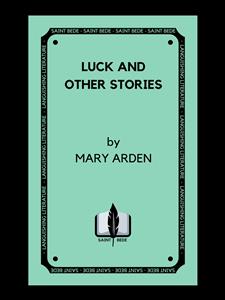
From the Languishing Literature series. Luck and Other Stories was first published in 1927. Mary Arden was the pen name of Violet Murry, the wife of John Middleton Murry. Even though she was a writer in her own right, her literary output was unfairly overshadowed by that of her husband's first wife (Katherine Mansfield). Violet sadly died of tuberculosis in 1931 having only published one book. This book. Saint Bede wishes to make hard to find literature accessible to everyone. By purchasing this book, you facilitate Saint Bede in the creation of more titles in this series.
Das E-Book können Sie in Legimi-Apps oder einer beliebigen App lesen, die das folgende Format unterstützen:
Veröffentlichungsjahr: 2019
Ähnliche




















Mary Arden
STORIES
A CHARMING OLD MAN
THE CASUAL ACQUAINTANCE
THE IDEALIST
DAUGHTERS
HOLIDAY TIME
LUCK
THE BUTTON
EVA
THE PLAY
UNCLE ALFRED
THE STEPMOTHER
BETWEEN FRIENDS
Credits
A CHARMING OLD MAN
Youth! Youth! Firm chin, rounded cheek, laughing eyes. 'What a delightful boy!' Manhood. Tall and slight. Always holding himself erect, bearing his head with such splendid dignity through the years. 'Sixty-five if a day, my dear, but so handsome!' And then... 'What a charming old man!' Yes, charming. The perfect word. Incredibly right. Simply complete. That triumph to which he had come, as it were, through a travail of years, and which hung like a silver aura about him - perfect, complete....
'Strictly amateur, my dear sir,' he said, bending forward across the luncheon table, 'strictly amateur, but I do like a good game now and then, and there's a lawn, a good lawn....' With his left hand and his fork he made a little gesture towards the sunny boarding house window, 'You've tried it, I dare say....'
'Well, sir, no,' said the little weak-voiced man opposite, 'I can't say I have. Croquet? I don't think I've ever played, but there are experts here, I fancy,' and he let his languid blue eyes travel about the crowded dining-room. 'Miss Stedworthy, for instance, and among all these August visitors, of course, one never knows. So many flowers are born to blush unseen, as they say....'
'Hum, lose their tempers, these women. Never knew one that didn't yet. Playin' with them. What's in it? Keep out o’ their way, that's all. Go for yer hoop....'
'Quite right, sir, yes...' but he wasn't listening, the little man.
'Do you ever read poetry, Colonel?' he asked. 'Some wonderful things have been done in that line, I think. I remember when I first read "In Memoriam," as a boy a“Calm is the morn without a sound...."'
He stopped. He looked fixedly at the line of glittering sea that quivered out there beyond the lawn and the bright red arrogant clumps of geraniums and the railing and the esplanade, as if he were trying to catch through all this clatter of knives and forks a murmur - Mmm-ssh-ah-ah! of the waves.
'Wonderful!' he said.
'Eh?' said the Colonel. 'No, I don't.' And under his beautiful white moustache he let his mouth stay open. There were some things which after a long life, a very long life, one wouldn't a' believed. Or - or never had believed in an' couldn't now.
'My dear sir,' he was beginning admonitorily, 'don't you...' but a gentle hand pressed his arm.
'Father dear,' said the voice of his only, his devoted daughter, 'do eat your dinner now. Some people are almost at cheese.... These pears are really very nice. So cool, and I'm surprised that they know at a place like this how to cook them. I used to say to Freda, "Now let them stew and stew and stew very slowly," and she never would. She'd serve them all white and still quite hard. There were some things she never could understand, just as when I used to tell her not to put your things to warm so near the fire....'
'I suppose you wouldn't care for game o' croquet, my dear?'
'Oh, no, father, not on a hot afternoon like this, and surely you wouldn't either, not in that sun. No, no, sunstroke'd be the very least. You let me take your deck-chair over to the clump of laurels in that nice patch of shade. I was there yesterday. You watch the sea and the people and are so cool and comfortable all the while. I was surprised. No one else came and invaded the whole afternoon. I was quite to myself.'
'For you to sit in th' shade, my dear, is all very well, very nice. But you don't seem to realize - there's a difference. I shall - I shall go into th' town an' do some shoppin'.'
'What is it you need, dear? I can -'
'Several things, Kate. Important. Do 'em myself....' But even as he spoke the enthusiasm he had felt for - well, really, for what? - drained away. Like fine sand, Frooo! it went through the sieve and was gone. And he didn't care any more. Why care? One had no part. Why care?... Och, what was that beastly thing on his neck? He put down his knife. But Kate had already seen. With an abstracted air, as if she didn't know what her right hand did, she flicked with a corner of napkin and the fly was gone.
'Oh, well,' he said, 'a bit hot perhaps. After all, I've not finished The Times to-day.'
So together they carried out his deck-chair across the lawn..
'Let me carry it, let me!' He put one hand on to the end and kept it there. His feet, always unbent at the instep, made a pleasant noise on the soft grass. Very pleasant. But how hot it was! Under the little corduroy smoking cap he'd insisted on putting on, he thought he felt some sweat collect. A long way off, it seemed, they would come to the patch of shade. But he didn't mind the distance. He felt amiable and rather happy.
Three little children had begun to play ball. They shouted and laughed. What a butter-fingers that youngster was! Catch it, now, catch it! Aw, missed again! He'd never quite made up his mind whether he really liked little children or not. Now he thought that he did. Fancy running about like that in the heat! Surely they oughtn't to be allowed!
'Don't you think it's rather hot for those children to be out, my dear?'
'Yes. Their mother's a careless woman. I saw her just now in the hall gossiping with that person Mrs. Weldon.'
They crossed a narrow gravel path and here came the shade. Briskly Kate unfolded his chair. He lowered himself into it. On one side he could see the front - not many people walking along there now - on the other the lawn, the children playing, the flower-beds, the house.
'Now, dear, I'm going indoors for a while. You'll be quite comfortable here?'
'Yes, yes, Kate. Yes, quite, thank you....' And he watched her thin, retreating figure. She was of his begetting. How strange that seemed! How strange! How alien she was! How different! Strange! Strange! Suddenly the word was a quintessence for him. Strange! And it seemed that in all this world he saw with his eyes nothing was familiar, nothing was close and real. Nothing. And yet, in a sort of way, those children on the lawn were more real, more familiar to him than Kate.
Now the smallest of them - a little girl in a blue and white check frock - suddenly, for no reason that he could see, broke away from the game and trotted over to the gravel path that ran along close before him. Now she was on the path itself. Going quickly. Tremendous purpose on her little face. Smack! Oh dear, what a tumble! Up again. Let's see. No harm done. She managed to get to her feet and for a moment looked blankly astonished. Then came the storm. Oh-oh-oh! She wept drearily, and the tears spouted out so fast.
'Come, come,' he said, getting up stiffly from his chair, 'let's see if we can't make things better again.'
He went over to her. She let him guide her along into the shade. She still wept and didn't look at him. He sat down again and held her between his knees, while he got out a beautiful smooth, yellowish silk handkerchief and fumblingly wiped her eyes with it, then began to dab at a scratch there was on her knee.
'Oh, not much,' he said, 'looks much worse'n it is. Very soon be well. We'll tie the handkerchief round, shall we?' Slowly he formed a knot behind the knee.
'There, there,' he said, as she still wept, 'we can't have any more tears, nothin' to wipe them away with now.'
'Oh-oh-oh! But gradually she stopped, and now, yes, it was over. She stared at him critically.
'You've got a big tear,' she said.
'Oh, yes, yes, but that's different. No good wipin' that. It never goes away.' He pulled her up on to his knee and began carefully to explain how a long time ago in the wars he had got a piece of shot in by his tear gland, and now there would always be a tear. 'You get quite used to it,' he said.
'Children, children! Dickie! Nellie! Florrie! Come in at once!' There was the careless woman standing in the doorway.
'I think that's your mother, isn't it, little girl?'
'Ye-es.' She smiled crookedly, got off his knee and trotted away. Half-way across the lawn she had an after-thought:
'Good-bye.'
He waved one of his hands slowly to and fro like Morse signalling and nodded his head.
Now the hot afternoon buzzed over the empty lawn, over the almost deserted front. The green seat on the other side of the railing. Phew! It must be too hot to touch! Over on the dazzling metallic sea there was one little boat with a white sail. He closed his eyes....
The fierceness went from the sun, the light changed. A little breeze sprang up and a lot of small sails appeared on the sea as if fanned there by the draught. The people walking along the front began to have long pointing shadows. There was a buzz of conversation now, in the welcome cool.
'Please, sir,' a husky voice said in his ear, ‘Madame told me to tell you she's very sorry, but she's got a touch of headache and is lying down, and she says it's late and wouldn't you like some tea?'
He opened his eyes. There stood that little scared creature of a maid, twisting her large hands together over her apron.
'All right,' he said, 'I'll go in.'
He got up, feeling as if all his bones had been screwed tight, went over to the house, and climbed the dark stairs.
Tap! Tap!
'May I come in, Kate?'
'Yes, do, dear,' she said, and as he entered her room, 'I've been wondering what you were doing.'
'Have you had tea?” he asked.
'Of course. A long time ago. It'll be dinner time soon.' She tossed her head fretfully on the pillow. 'Why didn't you come in sooner than this?'
'Oh, I - I had a bit of a nap, y' know. The heat. How's your head now, my dear?'
'Oh, it might be worse. I shall get up for dinner, of course.'
'Anythin' I can do?'
'No, no, dear, thank you very much. Nothing.'
He stood awkwardly by the door, smoothing the handle with his hand. This mood of hers he felt was - difficult. Surely one ought to do something! But what? What? Puzzled, he looked at that thin person lying on the bed.
'Would you rather I - I just left you quiet for a bit?'
'Yes, yes, dear, please.'
'Very well.' He went out, closing the door softly.
'In the old days, when she was a child,' he thought, 'what a sweet little thing she was! How we used to understand each other then! And he saw himself sitting in the old drawing-room in his uniform at teatime, sitting very straight up with Kate across one knee, while he fed her with bits of much-too-rich currant cake. His moustache moved up and down while he munched.
'I cut off your moustache. Snip, snip!' she said, and snipped an end with two stiff little fingers.
He didn't want any tea. He lit his pipe and wandered slowly out, through the garden and on to the esplanade. He had a queer feeling he couldn't define. He just said:
'It's all a strange business, very strange....'
The sea was beginning to have that opaque, milky look of evening. The sky was clear and soft. He felt that it overarched a world that was strange indeed. Most of the people seemed to be couples walking arm-in-arm.
What place had he in such a world: what business there – he who had lived so long ago?
'A long time ago,' he thought, 'hoch! yes, not that it is. Not so many years after all. But yet – it is!... What a tongue-tied chap I am! Never could put a thought into words. What in the world do I mean, I wonder now? Well, well!' He sat down at the extreme end of a seat whose other end was occupied. The girl had her arm round the man's neck in a shameless way.
Puff! Puff! The Colonel drew on his pipe and looked straight ahead.... And out of that other far-off life he heard:
'I'm so alone without you? Ah, so alone! I love you so!'
I love you so! Well, well! But what was the good of thinking of things - just thinking? None whatever. Led to sentimentality, that was all.... Dinner-time nearly by now, he supposed. Slowly he got up and slowly returned.
THE CASUAL ACQUAINTANCE
It was while they were all playing tennis after tea that Florence suddenly began to think of the Italian boy as special. What was it? Why was it? It was not so much he himself - the little dark wiry person who flew about after balls; dashing here, dashing there, sometimes bouncing into the air like an india-rubber ball too, sometimes squatting down so ridiculously and spreading out his knees - as something he, as it were, represented. Something which had been in her own mind for a long time, which she'd only dimly realized was there at all, which had all the same, she felt, been longing, frightfully longing to escape, to express itself, to be known....
'Come on, play up, kid. You seem to expect me to do every blessed bit of work.'
'Sorry,' she said airily, but oh, she felt tinglingly furious inside. What a block Roger was! How - well, not exactly disrespectful, but utterly without charm. Yes, that was it; without charm, utterly, and pleased with herself for having branded him so splendidly and awfully, she took Gwendoline's serve with a terrific drive that sent the ball skimming most beautifully just over the top of the net, and then skimming straight along over the ground the other side - so swift, so near the ground that even the little india-rubber man, who was too late for a volley, couldn't scoop it up.
'Ah ha!' he laughed rather breathlessly. 'Splendid! Good shot!' And then, with compressed lips, Florence began to play. She felt as if her mind were becoming hard and strong like steel, as if it were impossible to miss balls, as if her very life depended on her not missing them, as if... Only now, when the games stood four, five, Roger began to serve into the net. Cra-ash! You fool, you reckless ass!
'Balls, please,' he said intently.
'Cursed luck. Rotten,' he muttered as she gave them into his hot, trembling hands. But it was almost as if he had tears in his voice, and for all she still had that tingling feeling inside, she grinned in a schoolgirlish way, and said:
'Rotten. But I say. I say, don't mind such a lot, please....'
'H'm,' he grunted ungratefully, and it dawned on Florence that she hadn't said that right - not right at all.
'Game and! Gwendoline shrieked hysterically, throwing her racket into the air.
'Supposing your racket fell on your head,' said Florence.
'Ooh - you're a bad loser!
'No, I'm not. I'm not anything of the sort. I wasn't even talking about the game....'
All four of them strolled off to the deck-chairs under the lime tree. Gwendoline's fair mop of curls was all over the place; one little damp curl clung to her cheek as if it had been put there on purpose. Her soft, delicious face had somehow managed not to get as red as beetroot to-day. Her eyes were wide open and surprised as a little girl's.
'Phew,' said Roger, hitching up his flannel trousers, 'hot work, kids. What's that? Five sets running? Well... not bad....'
And because he used that word ‘kids' Florence felt that he not only put everything into a wrong place, on to an utterly wrong level, but jarred on something. Something beautiful, lovely and new.
'Yes, pretty good, wasn't it?'
'Pretty good?' said the dark-haired boy, as if it were a question, and with a slight, a very slight foreign accent. 'Pretty good?' His dark eyebrows raised themselves a little. They were very fine and very soft, like camel's hair. He and Florence looked at each other. He nodded his head - once - twice. She felt delightfully that there was a secret between them. Like a bird it hovered in the air. Its wings were still... and oh, she didn't want them to go on talking.... But now it was not a bird any more. It was in the air, everywhere. It was part of the quietness in the garden, of the light that was a kind of luminous grey now, and brushed so lightly on the lilies and the dark red roses and the snapdragons, and gave them a mysterious inner and living look that they never had by day....
'Well, we couldn't have seen to play another,' said Gwendoline, ‘or -'
'Surely you wouldn't want to play another,' Roger said in his man-of-the-world voice, and he sounded quite disdainful.
'N-no,' said Gwendoline faintly and unexpectedly, as if suddenly she didn't care a bit about tennis, or as if it never had really interested her in the least. ‘N-no, I don't think I should - not really....'
And now, from a little side door of the house some one came out in a white apron and clanged the supper bell, and they all got up and went in....
The house was dark and gloomy as a cave. No lamps seemed to have been lit anywhere except the one in the dining-room that glowed under its red shade.
'Will you sit there, Roger,' said Florence, 'and you - there. Why - ridiculous! Roger, you told me his name, only you mumbled so, I couldn't hear.'
'I didn't.'
'You did.'
'He said, “Alexander,"' the Italian boy told her in his soft voice.
She looked at him. She felt ashamed. She'd been going just to try how good a hostess she could make now that mother wasn't here - mother who always made her blush before visitors and feel young and colt-like and silly, and now.... No, no, this was too dreadful. She changed her voice and said in an artificial, mincing way:
'Are you staying in England long?'
That was the question one always asked of foreigners, and good heavens, she hadn't asked it all the afternoon!
'Well,' he said, smiling slowly, confidentially, and gazing at her, 'I have been three weeks. The first two weeks in London, and after that one week with him,' he bent his head towards Roger, who was stuffing salad into his mouth as if it were hay and he were using a pitchfork, ‘and to-night and tomorrow night I am to spend with him, and then day after that I go to Paris.'
'Oh, yes.' All that was just as it should be. He had said that to her somewhere before. It was perfectly right.
'Yes' he seemed to ask without speaking. 'Do you approve? That is to me more important than anything else. Do you approve?'
And with the whole of her she longed to answer:
'Yes, yes, I approve,' but she couldn't, she was held back, she was impotent. Ah, would he understand? Would he understand? And, all at once, she knew that he understood.
'By God!' Roger was staring at his arm as if some terrible plague had just broken out there. 'By God!' And he shook it up and down vigorously. ‘My beastly watch can't have stopped, can it? It says quarter past ten. Phew, Alex, old boy! Come on. Let's get the bike out. Come on. Quick march. Mother'll be in an awful wax. Good Lord!'
Red in the face, her grey hair in curl-papers, her bosom heaving, the awful vision of Roger's mother in a wax loomed terrible in front of Florence's eyes.
'I say!' she said.
And now all was bustle and flurry.
'I say, where are my other shoes? You're putting on the wrong shoes, Alex.'
'No, no; excuse me, Roger. I'm not. These are mine.'
'I know, Roger, I know,' said Gwendoline. 'You didn't have another pair. You came in your tennis ones.'
'Och!' cried Roger with a shout like despair, dashed out to the shed, and, loud as an aeroplane, the engine of the motor-bicycle was started up. Carefully, carefully he drove it out into the drive. The lamp was an enormous searchlight.
'Buck up, Alex!' he shouted, and, clutching both their rackets, Alex bounded up behind, landed exactly in the right position, marvellously, miraculously, and stayed there without moving. Like a monster that had got over the worst of its wrath, the sound of the engine going down the drive was less, was different.
'Good-bye.'
'Good-bye.'
Now there was no sound at all. All was still. Instantly the bustle was as much passed and over as if a whole hour of night had come between.
'Let's have a cigarette,' said Gwendoline, and her voice was far-off, as in a dream. 'Got any matches? No. I'll run in and get them and the cigs too....' And then they strolled over and sat under the lime.
'Gwen,' said Florence, in the warm caressing way she always spoke when they were talking in bed at night, 'what did you think of that Italian boy?'
'I liked him.'
'So did I.' She paused. 'Oh, Gwennie,' she went on hurriedly, 'you know we always tell each other everything. Well, I simply must, I simply can't help telling you how extraordinary I thought it all was - how there seemed all the time to be something so special and wonderful and secret between him and me. I - I can't explain really - how it was.'
'Oh, do try.'
'No,' she said, 'no, I don't want to. Not now. Not now, please, Gwennie. I couldn't.'
'All right,' Gwennie's little red lamp of a cigarette moved in the air. 'Of course, you can't explain those things. It's awfully, awfully hard. I know. Why,' she said, and suddenly she was very, very gay, 'I felt exactly as you did about him all the time.'
Well... Florence took a long, long plunge. When she came up to the surface again she was calm.
'Exactly as I did? No.'
She smiled a slow superior smile in the almost dark, raised the forefinger of her right hand a little, and knocked the ash off her cigarette.
'You - you couldn't have felt like me,' she said.
'Couldn't I? Why not?'
'Well,' said Florence, not quite keeping to the point, 'we'll never, never know - what the other one felt.'
'Shan't we?' said Gwendoline. 'But if we don't ever know –'
' How can we? We can't explain.'
'No,' said Gwendoline doubtfully. 'I suppose we can't. Doesn't that seem queer?'
'Awfully,' said Florence. ‘Awfully. I think...'
But they finished their cigarettes without saying any more, and went indoors.




