


1,99 €
Niedrigster Preis in 30 Tagen: 0,00 €
Niedrigster Preis in 30 Tagen: 0,00 €
Mehr erfahren.
- Herausgeber: Musaicum Books
- Kategorie: Geisteswissenschaft
- Sprache: Englisch
Walter Pater's 'Marius the Epicurean' is a captivating novel exploring the philosophical journey of a young Roman nobleman named Marius. Set in the era of Marcus Aurelius, the book delves into themes of religion, aesthetics, and the pursuit of pleasure. Pater's poetic and descriptive writing style immerses readers in the ancient world, offering a rich tapestry of Roman culture and intellectual thought. The novel also reflects Pater's own interests in art, beauty, and the balance between hedonism and introspection. Walter Pater, a prominent figure in the aesthetic movement of the late 19th century, was known for his essays on art and literature. His background in classics and his fascination with the Renaissance influenced 'Marius the Epicurean,' offering a unique perspective on ancient philosophy and spirituality. Pater's writing style, characterized by lyrical prose and deep introspection, invites readers to contemplate the deeper meanings of life and art. I highly recommend 'Marius the Epicurean' to readers interested in Roman history, philosophy, and the intersection of art and spirituality. Pater's novel offers a thought-provoking exploration of ancient culture and the eternal quest for meaning. In this enriched edition, we have carefully created added value for your reading experience: - A succinct Introduction situates the work's timeless appeal and themes. - The Synopsis outlines the central plot, highlighting key developments without spoiling critical twists. - A detailed Historical Context immerses you in the era's events and influences that shaped the writing. - A thorough Analysis dissects symbols, motifs, and character arcs to unearth underlying meanings. - Reflection questions prompt you to engage personally with the work's messages, connecting them to modern life. - Hand‐picked Memorable Quotes shine a spotlight on moments of literary brilliance. - Interactive footnotes clarify unusual references, historical allusions, and archaic phrases for an effortless, more informed read.
Das E-Book können Sie in Legimi-Apps oder einer beliebigen App lesen, die das folgende Format unterstützen:
Veröffentlichungsjahr: 2022
Ähnliche





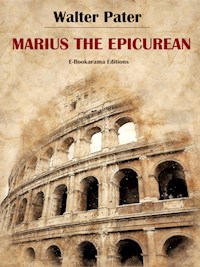




Marius the Epicurean
Published by
Books
Table of Contents
Introduction
Between the call of beauty and the claim of belief, Marius the Epicurean traces a life that tests whether a finely cultivated attention to sensation can suffice as a rule of conduct amid an empire alive with rival philosophies and new moral languages, pressing its protagonist to choose not between pleasure and pain but among competing visions of how to live well—measured, humane, lucid—when private reverie meets civic duty, when the consolations of art encounter the urgencies of mortality, and when the old assurances waver before a gentler yet more exacting ideal of goodness.
First published in 1885, Walter Pater’s novel belongs to the late-Victorian “novel of ideas,” combining historical fiction with philosophical Bildungsroman. Its action unfolds in second-century Rome under the Antonines, a moment of outward stability that contains diverse beliefs, artistic refinements, and subtle spiritual unrest. Pater, a British critic associated with Aestheticism, uses the classical setting not for pageantry but for inquiry, staging a laboratory of conscience in which an educated young Roman must assemble a way of life from competing schools. The result is a narrative poised between reconstruction and reflection, attentive to cultural detail yet primarily concerned with inner weather.
The premise is simple and searching: a thoughtful youth grows into adulthood while testing philosophical maxims against experience, friendship, art, and the pressures of a vast empire. Pater narrates in a closely observant third person that often feels like an interior memoir, blending episodes of travel and study with meditations on conduct, sensation, and duty. The prose is measured, lapidary, and sensuous without excess, alert to textures, colors, and ritual gestures. The tone is calm and scrupulous, preferring suggestion to spectacle; readers move through Roman villas, temples, schools, and streets at a reflective pace that privileges nuance over event.
Although its plot advances quietly, the book rewards attention with a densely woven surface: descriptions of festivals and funerals, the discipline of study, conversations that turn on a phrase, and the interior tremor that accompanies an ethical discovery. Pater’s historical textures are carefully chosen—objects, landscapes, and ceremonies illuminate states of mind rather than merely ornament the scene. Because the chapters often pause for analysis, the experience resembles a guided contemplation more than a chase, inviting readers to inhabit intervals of thought. The pace is deliberate, but the accumulation of finely registered moments yields a distinctive moral and aesthetic intensity.
At its heart stands the education of attention: how to look, how to savor, and how to translate perception into acts that do not betray others or oneself. The book examines the claims of pleasure, the disciplines that refine it, the pressure of mortality, and the hope that an ethic may be grounded in gratitude rather than fear. It weighs reticence against generosity, private cultivation against service, skepticism against trust. For contemporary readers navigating plural beliefs and secular uncertainties, its exploration of self-formation, conscience without fanaticism, and the humane uses of beauty remains both challenging and consoling.
Because the setting gathers Epicurean, Stoic, Platonist, and early Christian voices into close proximity, the narrative functions as a living anthology of moral temperaments. Pater presents each outlook with fairness, emphasizing the experiential appeal of ideas rather than reducing them to slogans. The result is not a treatise but a drama of comparison, where styles of living are tested by circumstance, friendship, and reflection. From a modern standpoint, this breadth models a generous method of reading across traditions, showing how contact with difference can refine one’s own commitments without caricature or zeal, and how ethical insight can grow through sympathetic attention.
To approach the book is to accept a slower rhythm in exchange for sustained clarity, to value the grain of a sentence as much as the curve of an action. Readers who appreciate reflective fiction, classical settings, and questions of how to live will find in Marius a companionable, serious guide. Its continuing significance lies in demonstrating that aesthetic refinement need not cancel moral weight, and that uncertainty can coexist with care. Without presuming to resolve every doubt, the novel offers a durable framework for deliberation, preparing us to meet competing claims with patience, tact, and a steadier sense of purpose.
Synopsis
Marius the Epicurean is a philosophical novel by Walter Pater, first published in 1885. Set in the second century during the Antonine age, it follows the inner education of Marius, a young Roman of cultivated temperament, as he tests competing ideals of how to live. Pater structures the narrative as a sequence of reflective episodes rather than dramatic intrigues, using the past to examine aesthetic perception, ethical tact, and religious possibility. Against a background of imperial order and subtle unrest, Marius seeks a rule of life that can dignify fleeting experience without self-deception, moving between ancient schools and new influences while remaining attentive to beauty and conduct.
Marius’s early chapters trace his upbringing among inherited rites and memories, where domestic piety and seasonal ceremonies shape a sensibility alert to nuance. Education broadens this receptivity, introducing classical poetry, philosophy, and the etiquette of civic life. He learns to weigh impressions with scruple, discovering that appetite must be disciplined if it is to yield insight. Pater presents this awakening as both sensory and moral: refined pleasure is inseparable from responsibility to the moment. The young Marius begins to sense that the old religion offers ceremony more than conviction, and he turns from inherited forms to an exacting, personal scrutiny of experience.
At school and in the capital, friendship draws Marius toward a brilliant companion whose enthusiasm for art, myth, and eloquence embodies the charms of the pagan world. Their shared reading and festivals intensify his appreciation of style and of the body’s claims, yet also expose the fragility of delight. When illness and loss touch this circle, the question of how to value pleasure under the shadow of mortality becomes urgent. Marius recognizes that unregulated indulgence cannot answer suffering, and that taste alone does not amount to a philosophy. The crisis becomes a hinge, directing him toward a more disciplined, reflective hedonism.
He articulates a measured Epicureanism, purged of vulgar associations, centered on lucid awareness, kindliness, and economy of desire. Pater sets this against the sober magnetism of Stoicism, represented by the imperial ethos of duty and self-command in the age of Marcus Aurelius. Contact with the courtly milieu shows Marius the nobility and limits of public virtue: administration steadies life, yet cannot wholly soothe the heart. Moving between cultivated retreat and official business, he weighs whether constancy comes from rule or from a vigilant attention to each moment. The narrative dwells on method—what to attend to, and how—to safeguard inward peace.
Christianity enters as a living presence rather than a thesis. Marius observes small communities defined by mutual care, disciplined worship, and a hope that reframes tribulation. Their practices strike him as an art of life with its own beauty, yet they carry risks under imperial suspicion. Encounters with believers, and with the devotional atmosphere surrounding them, enlarge his scale of sympathy. He studies the temper of their charity alongside classical ethics, wondering whether a tenderness rooted in trust might complete the Epicurean respect for limits. The question is not conversion as spectacle, but the criteria by which one recognizes genuine goodness.
Subsequent episodes place Marius where choice bears cost. Journeys, service, and moments of alarm test whether a philosophy of measured pleasure can command sacrifice. He refines a conscience attentive to small fidelities—gratitude, courtesy, protection of the vulnerable—finding in these acts a steadier joy than sensation affords. The narrative keeps his spiritual horizon deliberately delicate, recording changes of emphasis rather than abrupt vows. Even so, the presence of suffering communities and the stern example of civic duty oblige him to decide how inward poise meets public responsibility, and whether the happiest life may be the one that quietly spends itself for others.
Pater’s novel thus becomes a Victorian meditation on antiquity that probes permanent questions: how to justify pleasure, how to honor duty, how to read the claims of faith without credulity. Its cadence, learned allusion, and psychological tact offer a portrait of a soul educating itself through culture, friendship, and adversity. Without insisting on a single doctrine or revealing final resolutions, the book argues for delicacy joined to steadfastness, and for valuation of moments as moral occasions. It remains resonant for readers seeking a humane ethic amid plural ideals, inviting them to test what kind of attention makes life both beautiful and just.
Historical Context
Walter Pater’s Marius the Epicurean (1885) is set largely in second‑century CE Italy during the high Roman Empire. The narrative environment includes Rome and provincial or rural districts north of the city, within institutions such as the imperial court, the Senate, temples, and schools of grammar and rhetoric. The timeframe aligns mainly with the Antonine period, especially the reigns of Antoninus Pius (138–161) and Marcus Aurelius (161–180). Public life revolves around patronage, civic ceremonies, and an entrenched classical education steeped in Greek literature. This setting grounds the book’s exploration of philosophy, religion, and cultivated taste within a historically documented milieu.
Under the Antonines, the empire enjoyed relative peace and administrative regularity often described as the apex of the Pax Romana. Hadrian consolidated frontiers; Antoninus Pius governed from Italy with few major wars; Marcus Aurelius combined imperial duty with philosophical practice. Efficient provincial administration, a unified legal culture, and extensive roads supported trade linking Italy to North Africa, Egypt, Gaul, and the Levant. Urban infrastructure—aqueducts, baths, and forums—sustained civic life. Coinage like the denarius circulated widely, and municipal councils managed local affairs alongside imperial appointees. This orderly backdrop frames the novel’s attention to cultivated leisure, civic rituals, and the responsibilities of elite Roman citizenship.
Second‑century Rome fostered a competitive philosophical marketplace. Epicureanism, derived from Epicurus and poetically transmitted by Lucretius’s De rerum natura, taught atomism, the pursuit of ataraxia, and measured pleasures grounded in friendship and clear perception. Stoicism, deeply influential among Roman elites, emphasized virtue, duty, and living according to reason and nature; Emperor Marcus Aurelius composed the Meditations in Greek during the 170s. Middle Platonism offered metaphysical hierarchies and moral purification. Philosophers lectured in Rome, and educated youths read Greek and Latin moralists. This intellectual plurality provides the frame through which Pater places refined ethical inquiry and aesthetic discrimination within a recognizable, documented culture.
Religious life was plural and layered. Traditional Roman cults honored Jupiter, Mars, and Vesta; household worship centered on the Lares and Penates; and the imperial cult affirmed loyalty to the emperor. Mystery religions such as the cults of Isis and Mithras gained adherents, with Mithraea and Egyptian sanctuaries attested in the capital and garrison towns. Early Christian communities existed in Rome by the first century and produced apologists in the second, including Justin Martyr, executed in Rome around 165. Legal practice after Trajan’s rescript treated Christianity as illicit when denounced, leading to episodic persecutions, such as those at Smyrna (c. 155) and Lyon (177).
Elite education followed a two‑stage progression: the grammaticus taught literature, and the rhetor cultivated eloquence through declamation and argument. The Second Sophistic—an empire‑wide revival of Greek oratory—shaped elite ideals; figures like Herodes Atticus and Aelius Aristides exemplified this culture. In Latin, Fronto corresponded with Marcus Aurelius on style and duty; Aulus Gellius compiled Attic Nights; and Apuleius composed the Metamorphoses. Public libraries, including the Bibliotheca Ulpia in Trajan’s Forum, and frequent literary recitations supported a vigorous reading public. This educational and performative world supplies the historical matrix for reflections on taste, self‑fashioning, and disciplined attention to art and conduct.
Roman social order rested on ranks of senators, equestrians, citizens, and non‑citizens, with slavery embedded in household, agricultural, and administrative labor. Manumission created freedmen with obligations to former patrons, and patronage structured access to office and justice. Jurists such as Gaius wrote systematic legal texts—his Institutes date to the mid‑second century—clarifying private law and procedure. The grain dole continued to provision Rome, while baths, theatres, and circuses organized urban leisure. Commercial lifelines ran through ports like Ostia and along well‑maintained roads. Legal rescripts under Antoninus Pius offered some protections against extreme abuse, notably for slaves, reflecting evolving imperial oversight.
Mid‑century stability gave way to pressures that shaped sensibilities of the age. The Parthian War (161–166), conducted under co‑emperor Lucius Verus, brought Roman armies deep into Mesopotamia. Soon after, the Antonine Plague—likely smallpox or measles—spread across the empire (c. 165–180), causing significant mortality and economic strain attested in contemporary accounts and inscriptions. Marcus Aurelius spent long periods on the Danube during the Marcomannic Wars (166–180), and the Column of Marcus Aurelius later commemorated those campaigns. These disruptions encouraged reflection on fate, providence, and moral duty within a still‑cosmopolitan culture, conditions that inform the novel’s measured attention to conduct and consolation.
Composed in late‑Victorian Britain, the novel also reflects debates of Pater’s own moment. Pater, an Oxford don associated with the Aesthetic Movement, had argued in Studies in the History of the Renaissance (1873) for refined critical self‑culture. In Marius he turns to the Antonine age’s documented pluralism—philosophical, religious, and artistic—to examine how a cultivated life might secure ethical seriousness without dogmatic certainty. Historical figures such as Marcus Aurelius and Fronto anchor the setting. The book thereby critiques moral absolutism and crude hedonism alike, proposing disciplined perception and humane conduct as historically viable responses to instability, whether ancient or modern.
Marius the Epicurean
Volume 1
PART THE FIRST
CHAPTER I: "THE RELIGION OF NUMA"
As, in the triumph of Christianity, the old religion lingered latest in the country, and died out at last as but paganism—the religion of the villagers, before the advance of the Christian Church; so, in an earlier century, it was in places remote from town-life that the older and purer forms of paganism itself had survived the longest. While, in Rome, new religions had arisen with bewildering complexity around the dying old one, the earlier and simpler patriarchal religion, "the religion of Numa," as people loved to fancy, lingered on with little change amid the pastoral life, out of the habits and sentiment of which so much of it had grown. Glimpses of such a survival we may catch below the merely artificial attitudes of Latin pastoral poetry; in Tibullus especially, who has preserved for us many poetic details of old Roman religious usage.
At mihi contingat patrios celebrare Penates, Reddereque antiquo menstrua thura Lari:
—he prays, with unaffected seriousness. Something liturgical, with repetitions of a consecrated form of words, is traceable in one of his elegies, as part of the order of a birthday sacrifice. The hearth, from a spark of which, as one form of old legend related, the child Romulus had been miraculously born, was still indeed an altar; and the worthiest sacrifice to the gods the perfect physical sanity of the young men and women, which the scrupulous ways of that religion of the hearth had tended to maintain. A religion of usages and sentiment rather than of facts and belief, and attached to very definite things and places—the oak of immemorial age, the rock on the heath fashioned by weather as if by some dim human art, the shadowy grove of ilex, passing into which one exclaimed involuntarily, in consecrated phrase, Deity is in this Place! Numen Inest!—it was in natural harmony with the temper of a quiet people amid the spectacle of rural life, like that simpler faith between man and man, which Tibullus expressly connects with the period when, with an inexpensive worship, the old wooden gods had been still pressed for room in their homely little shrines.
And about the time when the dying Antoninus Pius ordered his golden image of Fortune to be carried into the chamber of his successor (now about to test the truth of the old Platonic contention, that the world would at last find itself happy, could it detach some reluctant philosophic student from the more desirable life of celestial contemplation, and compel him to rule it), there was a boy living in an old country-house, half farm, half villa, who, for himself, recruited that body of antique traditions by a spontaneous force of religious veneration such as had originally called them into being. More than a century and a half had past since Tibullus had written; but the restoration of religious usages, and their retention where they still survived, was meantime come to be the fashion through the influence of imperial example; and what had been in the main a matter of family pride with his father, was sustained by a native instinct of devotion in the young Marius. A sense of conscious powers external to ourselves, pleased or displeased by the right or wrong conduct of every circumstance of daily life—that conscience, of which the old Roman religion was a formal, habitual recognition, was become in him a powerful current of feeling and observance. The old-fashioned, partly puritanic awe, the power of which Wordsworth noted and valued so highly in a northern peasantry, had its counterpart in the feeling of the Roman lad, as he passed the spot, "touched of heaven," where the lightning had struck dead an aged labourer in the field: an upright stone, still with mouldering garlands about it, marked the place. He brought to that system of symbolic usages, and they in turn developed in him further, a great seriousness—an impressibility to the sacredness of time, of life and its events, and the circumstances of family fellowship; of such gifts to men as fire, water, the earth, from labour on which they live, really understood by him as gifts—a sense of religious responsibility in the reception of them. It was a religion for the most part of fear, of multitudinous scruples, of a year-long burden of forms; yet rarely (on clear summer mornings, for instance) the thought of those heavenly powers afforded a welcome channel for the almost stifling sense of health and delight in him, and relieved it as gratitude to the gods.
The day of the "little" or private Ambarvalia was come, to be celebrated by a single family for the welfare of all belonging to it, as the great college of the Arval Brothers officiated at Rome in the interest of the whole state. At the appointed time all work ceases; the instruments of labour lie untouched, hung with wreaths of flowers, while masters and servants together go in solemn procession along the dry paths of vineyard and cornfield, conducting the victims whose blood is presently to be shed for the purification from all natural or supernatural taint of the lands they have "gone about." The old Latin words of the liturgy, to be said as the procession moved on its way, though their precise meaning was long since become unintelligible, were recited from an ancient illuminated roll, kept in the painted chest in the hall, together with the family records. Early on that day the girls of the farm had been busy in the great portico, filling large baskets with flowers plucked short from branches of apple and cherry, then in spacious bloom, to strew before the quaint images of the gods—Ceres and Bacchus and the yet more mysterious Dea Dia—as they passed through the fields, carried in their little houses on the shoulders of white-clad youths, who were understood to proceed to this office in perfect temperance, as pure in soul and body as the air they breathed in the firm weather of that early summer-time. The clean lustral water and the full incense-box were carried after them. The altars were gay with garlands of wool and the more sumptuous sort of blossom and green herbs to be thrown into the sacrificial fire, fresh-gathered this morning from a particular plot in the old garden, set apart for the purpose. Just then the young leaves were almost as fragrant as flowers, and the scent of the bean-fields mingled pleasantly with the cloud of incense. But for the monotonous intonation of the liturgy by the priests, clad in their strange, stiff, antique vestments, and bearing ears of green corn upon their heads, secured by flowing bands of white, the procession moved in absolute stillness, all persons, even the children, abstaining from speech after the utterance of the pontifical formula, Favete linguis[1]!—Silence! Propitious Silence!—lest any words save those proper to the occasion should hinder the religious efficacy of the rite.
With the lad Marius, who, as the head of his house, took a leading part in the ceremonies of the day, there was a devout effort to complete this impressive outward silence by that inward tacitness of mind, esteemed so important by religious Romans in the performance of these sacred functions. To him the sustained stillness without seemed really but to be waiting upon that interior, mental condition of preparation or expectancy, for which he was just then intently striving. The persons about him, certainly, had never been challenged by those prayers and ceremonies to any ponderings on the divine nature: they conceived them rather to be the appointed means of setting such troublesome movements at rest. By them, "the religion of Numa," so staid, ideal and comely, the object of so much jealous conservatism, though of direct service as lending sanction to a sort of high scrupulosity, especially in the chief points of domestic conduct, was mainly prized as being, through its hereditary character, something like a personal distinction—as contributing, among the other accessories of an ancient house, to the production of that aristocratic atmosphere which separated them from newly-made people. But in the young Marius, the very absence from those venerable usages of all definite history and dogmatic interpretation, had already awakened much speculative activity; and to-day, starting from the actual details of the divine service, some very lively surmises, though scarcely distinct enough to be thoughts, were moving backwards and forwards in his mind, as the stirring wind had done all day among the trees, and were like the passing of some mysterious influence over all the elements of his nature and experience. One thing only distracted him—a certain pity at the bottom of his heart, and almost on his lips, for the sacrificial victims and their looks of terror, rising almost to disgust at the central act of the sacrifice itself, a piece of everyday butcher's work, such as we decorously hide out of sight; though some then present certainly displayed a frank curiosity in the spectacle thus permitted them on a religious pretext. The old sculptors of the great procession on the frieze of the Parthenon at Athens, have delineated the placid heads of the victims led in it to sacrifice, with a perfect feeling for animals in forcible contrast with any indifference as to their sufferings. It was this contrast that distracted Marius now in the blessing of his fields, and qualified his devout absorption upon the scrupulous fulfilment of all the details of the ceremonial, as the procession approached the altars.
The names of that great populace of "little gods," dear to the Roman home, which the pontiffs had placed on the sacred list of the Indigitamenta, to be invoked, because they can help, on special occasions, were not forgotten in the long litany—Vatican who causes the infant to utter his first cry, Fabulinus who prompts his first word, Cuba who keeps him quiet in his cot, Domiduca especially, for whom Marius had through life a particular memory and devotion, the goddess who watches over one's safe coming home. The urns of the dead in the family chapel received their due service. They also were now become something divine, a goodly company of friendly and protecting spirits, encamped about the place of their former abode—above all others, the father, dead ten years before, of whom, remembering but a tall, grave figure above him in early childhood, Marius habitually thought as a genius a little cold and severe.
Candidus insuetum miratur limen Olympi, Sub pedibusque videt nubes et sidera.—
Perhaps!—but certainly needs his altar here below, and garlands to-day upon his urn. But the dead genii were satisfied with little—a few violets, a cake dipped in wine, or a morsel of honeycomb. Daily, from the time when his childish footsteps were still uncertain, had Marius taken them their portion of the family meal, at the second course, amidst the silence of the company. They loved those who brought them their sustenance; but, deprived of these services, would be heard wandering through the house, crying sorrowfully in the stillness of the night.
And those simple gifts, like other objects as trivial—bread, oil, wine, milk—had regained for him, by their use in such religious service, that poetic and as it were moral significance, which surely belongs to all the means of daily life, could we but break through the veil of our familiarity with things by no means vulgar in themselves. A hymn followed, while the whole assembly stood with veiled faces. The fire rose up readily from the altars, in clean, bright flame—a favourable omen, making it a duty to render the mirth of the evening complete. Old wine was poured out freely for the servants at supper in the great kitchen, where they had worked in the imperfect light through the long evenings of winter. The young Marius himself took but a very sober part in the noisy feasting. A devout, regretful after-taste of what had been really beautiful in the ritual he had accomplished took him early away, that he might the better recall in reverie all the circumstances of the celebration of the day. As he sank into a sleep, pleasant with all the influences of long hours in the open air, he seemed still to be moving in procession through the fields, with a kind of pleasurable awe. That feeling was still upon him as he awoke amid the beating of violent rain on the shutters, in the first storm of the season. The thunder which startled him from sleep seemed to make the solitude of his chamber almost painfully complete, as if the nearness of those angry clouds shut him up in a close place alone in the world. Then he thought of the sort of protection which that day's ceremonies assured. To procure an agreement with the gods—Pacem deorum exposcere: that was the meaning of what they had all day been busy upon. In a faith, sincere but half-suspicious, he would fain have those Powers at least not against him. His own nearer household gods were all around his bed. The spell of his religion as a part of the very essence of home, its intimacy, its dignity and security, was forcible at that moment; only, it seemed to involve certain heavy demands upon him.
CHAPTER II: WHITE-NIGHTS
To an instinctive seriousness, the material abode in which the childhood of Marius was passed had largely added[1q]. Nothing, you felt, as you first caught sight of that coy, retired place—surely nothing could happen there, without its full accompaniment of thought or reverie. White-nights! so you might interpret its old Latin name.1 "The red rose came first," says a quaint German mystic, speaking of "the mystery of so-called white things," as being "ever an after-thought—the doubles, or seconds, of real things, and themselves but half-real, half-material—the white queen, the white witch, the white mass, which, as the black mass is a travesty of the true mass turned to evil by horrible old witches, is celebrated by young candidates for the priesthood with an unconsecrated host, by way of rehearsal." So, white-nights, I suppose, after something like the same analogy, should be nights not of quite blank forgetfulness, but passed in continuous dreaming, only half veiled by sleep. Certainly the place was, in such case, true to its fanciful name in this, that you might very well conceive, in face of it, that dreaming even in the daytime might come to much there.
The young Marius represented an ancient family whose estate had come down to him much curtailed through the extravagance of a certain Marcellus two generations before, a favourite in his day of the fashionable world at Rome, where he had at least spent his substance with a correctness of taste Marius might seem to have inherited from him; as he was believed also to resemble him in a singularly pleasant smile, consistent however, in the younger face, with some degree of sombre expression when the mind within was but slightly moved.
As the means of life decreased, the farm had crept nearer and nearer to the dwelling-house, about which there was therefore a trace of workday negligence or homeliness, not without its picturesque charm for some, for the young master himself among them. The more observant passer-by would note, curious as to the inmates, a certain amount of dainty care amid that neglect, as if it came in part, perhaps, from a reluctance to disturb old associations. It was significant of the national character, that a sort of elegant gentleman farming, as we say, had been much affected by some of the most cultivated Romans. But it became something more than an elegant diversion, something of a serious business, with the household of Marius; and his actual interest in the cultivation of the earth and the care of flocks had brought him, at least, intimately near to those elementary conditions of life, a reverence for which, the great Roman poet, as he has shown by his own half-mystic pre-occupation with them, held to be the ground of primitive Roman religion, as of primitive morals. But then, farm-life in Italy, including the culture of the olive and the vine, has a grace of its own, and might well contribute to the production of an ideal dignity of character, like that of nature itself in this gifted region. Vulgarity seemed impossible. The place, though impoverished, was still deservedly dear, full of venerable memories, and with a living sweetness of its own for to-day.
To hold by such ceremonial traditions had been a part of the struggling family pride of the lad's father, to which the example of the head of the state, old Antoninus Pius[2]—an example to be still further enforced by his successor—had given a fresh though perhaps somewhat artificial popularity. It had been consistent with many another homely and old-fashioned trait in him, not to undervalue the charm of exclusiveness and immemorial authority, which membership in a local priestly college, hereditary in his house, conferred upon him. To set a real value on these things was but one element in that pious concern for his home and all that belonged to it, which, as Marius afterwards discovered, had been a strong motive with his father. The ancient hymn—Fana Novella!—was still sung by his people, as the new moon grew bright in the west, and even their wild custom of leaping through heaps of blazing straw on a certain night in summer was not discouraged. The privilege of augury[3] itself, according to tradition, had at one time belonged to his race; and if you can imagine how, once in a way, an impressible boy might have an inkling, an inward mystic intimation, of the meaning and consequences of all that, what was implied in it becoming explicit for him, you conceive aright the mind of Marius, in whose house the auspices were still carefully consulted before every undertaking of moment.
The devotion of the father then had handed on loyally—and that is all many not unimportant persons ever find to do—a certain tradition of life, which came to mean much for the young Marius. The feeling with which he thought of his dead father was almost exclusively that of awe; though crossed at times by a not unpleasant sense of liberty, as he could but confess to himself, pondering, in the actual absence of so weighty and continual a restraint, upon the arbitrary power which Roman religion and Roman law gave to the parent over the son. On the part of his mother, on the other hand, entertaining the husband's memory, there was a sustained freshness of regret, together with the recognition, as Marius fancied, of some costly self-sacrifice to be credited to the dead. The life of the widow, languid and shadowy enough but for the poignancy of that regret, was like one long service to the departed soul; its many annual observances centering about the funeral urn—a tiny, delicately carved marble house, still white and fair, in the family-chapel, wreathed always with the richest flowers from the garden. To the dead, in fact, was conceded in such places a somewhat closer neighbourhood to the old homes they were thought still to protect, than is usual with us, or was usual in Rome itself—a closeness which the living welcomed, so diverse are the ways of our human sentiment, and in which the more wealthy, at least in the country, might indulge themselves. All this Marius followed with a devout interest, sincerely touched and awed by his mother's sorrow. After the deification of the emperors, we are told, it was considered impious so much as to use any coarse expression in the presence of their images. To Marius the whole of life seemed full of sacred presences, demanding of him a similar collectedness. The severe and archaic religion of the villa, as he conceived it, begot in him a sort of devout circumspection lest he should fall short at any point of the demand upon him of anything in which deity was concerned. He must satisfy with a kind of sacred equity, he must be very cautious lest he be found wanting to, the claims of others, in their joys and calamities—the happiness which deity sanctioned, or the blows in which it made itself felt. And from habit, this feeling of a responsibility towards the world of men and things, towards a claim for due sentiment concerning them on his side, came to be a part of his nature not to be put off. It kept him serious and dignified amid the Epicurean speculations which in after years much engrossed him, and when he had learned to think of all religions as indifferent, serious amid many fopperies and through many languid days, and made him anticipate all his life long as a thing towards which he must carefully train himself, some great occasion of self-devotion, such as really came, that should consecrate his life, and, it might be, its memory with others, as the early Christian looked forward to martyrdom at the end of his course, as a seal of worth upon it.
The traveller, descending from the slopes of Luna, even as he got his first view of the Port-of-Venus, would pause by the way, to read the face, as it were, of so beautiful a dwelling-place, lying away from the white road, at the point where it began to decline somewhat steeply to the marsh-land below. The building of pale red and yellow marble, mellowed by age, which he saw beyond the gates, was indeed but the exquisite fragment of a once large and sumptuous villa. Two centuries of the play of the sea-wind were in the velvet of the mosses which lay along its inaccessible ledges and angles. Here and there the marble plates had slipped from their places, where the delicate weeds had forced their way. The graceful wildness which prevailed in garden and farm gave place to a singular nicety about the actual habitation, and a still more scrupulous sweetness and order reigned within. The old Roman architects seem to have well understood the decorative value of the floor—the real economy there was, in the production of rich interior effect, of a somewhat lavish expenditure upon the surface they trod on. The pavement of the hall had lost something of its evenness; but, though a little rough to the foot, polished and cared for like a piece of silver, looked, as mosaic-work is apt to do, its best in old age. Most noticeable among the ancestral masks, each in its little cedarn chest below the cornice, was that of the wasteful but elegant Marcellus, with the quaint resemblance in its yellow waxen features to Marius, just then so full of animation and country colour. A chamber, curved ingeniously into oval form, which he had added to the mansion, still contained his collection of works of art; above all, that head of Medusa, for which the villa was famous. The spoilers of one of the old Greek towns on the coast had flung away or lost the thing, as it seemed, in some rapid flight across the river below, from the sands of which it was drawn up in a fisherman's net, with the fine golden laminae still clinging here and there to the bronze. It was Marcellus also who had contrived the prospect-tower of two storeys with the white pigeon-house above, so characteristic of the place. The little glazed windows in the uppermost chamber framed each its dainty landscape—the pallid crags of Carrara, like wildly twisted snow-drifts above the purple heath; the distant harbour with its freight of white marble going to sea; the lighthouse temple of Venus Speciosa on its dark headland, amid the long-drawn curves of white breakers. Even on summer nights the air there had always a motion in it, and drove the scent of the new-mown hay along all the passages of the house.
Something pensive, spell-bound, and but half real, something cloistral or monastic, as we should say, united to this exquisite order, made the whole place seem to Marius, as it were, sacellum, the peculiar sanctuary, of his mother, who, still in real widowhood, provided the deceased Marius the elder with that secondary sort of life which we can give to the dead, in our intensely realised memory of them—the "subjective immortality," to use a modern phrase, for which many a Roman epitaph cries out plaintively to widow or sister or daughter, still in the land of the living. Certainly, if any such considerations regarding them do reach the shadowy people, he enjoyed that secondary existence, that warm place still left, in thought at least, beside the living, the desire for which is actually, in various forms, so great a motive with most of us. And Marius the younger, even thus early, came to think of women's tears, of women's hands to lay one to rest, in death as in the sleep of childhood, as a sort of natural want. The soft lines of the white hands and face, set among the many folds of the veil and stole of the Roman widow, busy upon her needlework, or with music sometimes, defined themselves for him as the typical expression of maternity. Helping her with her white and purple wools, and caring for her musical instruments, he won, as if from the handling of such things, an urbane and feminine refinement, qualifying duly his country-grown habits—the sense of a certain delicate blandness, which he relished, above all, on returning to the "chapel" of his mother, after long days of open-air exercise, in winter or stormy summer. For poetic souls in old Italy felt, hardly less strongly than the English, the pleasures of winter, of the hearth, with the very dead warm in its generous heat, keeping the young myrtles in flower, though the hail is beating hard without. One important principle, of fruit afterwards in his Roman life, that relish for the country fixed deeply in him; in the winters especially, when the sufferings of the animal world became so palpable even to the least observant. It fixed in him a sympathy for all creatures, for the almost human troubles and sicknesses of the flocks, for instance. It was a feeling which had in it something of religious veneration for life as such—for that mysterious essence which man is powerless to create in even the feeblest degree. One by one, at the desire of his mother, the lad broke down his cherished traps and springes for the hungry wild birds on the salt marsh. A white bird, she told him once, looking at him gravely, a bird which he must carry in his bosom across a crowded public place—his own soul was like that! Would it reach the hands of his good genius on the opposite side, unruffled and unsoiled? And as his mother became to him the very type of maternity in things, its unfailing pity and protectiveness, and maternity itself the central type of all love;—so, that beautiful dwelling-place lent the reality of concrete outline to a peculiar ideal of home, which throughout the rest of his life he seemed, amid many distractions of spirit, to be ever seeking to regain.
And a certain vague fear of evil, constitutional in him, enhanced still further this sentiment of home as a place of tried security. His religion, that old Italian religion, in contrast with the really light-hearted religion of Greece, had its deep undercurrent of gloom, its sad, haunting imageries, not exclusively confined to the walls of Etruscan tombs. The function of the conscience, not always as the prompter of gratitude for benefits received, but oftenest as his accuser before those angry heavenly masters, had a large part in it; and the sense of some unexplored evil, ever dogging his footsteps, made him oddly suspicious of particular places and persons. Though his liking for animals was so strong, yet one fierce day in early summer, as he walked along a narrow road, he had seen the snakes breeding, and ever afterwards avoided that place and its ugly associations, for there was something in the incident which made food distasteful and his sleep uneasy for many days afterwards. The memory of it however had almost passed away, when at the corner of a street in Pisa, he came upon an African showman exhibiting a great serpent: once more, as the reptile writhed, the former painful impression revived: it was like a peep into the lower side of the real world, and again for many days took all sweetness from food and sleep. He wondered at himself indeed, trying to puzzle out the secret of that repugnance, having no particular dread of a snake's bite, like one of his companions, who had put his hand into the mouth of an old garden-god and roused there a sluggish viper. A kind of pity even mingled with his aversion, and he could hardly have killed or injured the animals, which seemed already to suffer by the very circumstance of their life, being what they were. It was something like a fear of the supernatural, or perhaps rather a moral feeling, for the face of a great serpent, with no grace of fur or feathers, so different from quadruped or bird, has a sort of humanity of aspect in its spotted and clouded nakedness. There was a humanity, dusty and sordid and as if far gone in corruption, in the sluggish coil, as it awoke suddenly into one metallic spring of pure enmity against him. Long afterwards, when it happened that at Rome he saw, a second time, a showman with his serpents, he remembered the night which had then followed, thinking, in Saint Augustine's vein, on the real greatness of those little troubles of children, of which older people make light; but with a sudden gratitude also, as he reflected how richly possessed his life had actually been by beautiful aspects and imageries, seeing how greatly what was repugnant to the eye disturbed his peace.
Thus the boyhood of Marius passed; on the whole, more given to contemplation than to action. Less prosperous in fortune than at an earlier day there had been reason to expect, and animating his solitude, as he read eagerly and intelligently, with the traditions of the past, already he lived much in the realm of the imagination, and became betimes, as he was to continue all through life, something of an idealist, constructing the world for himself in great measure from within, by the exercise of meditative power. A vein of subjective philosophy, with the individual for its standard of all things, there would be always in his intellectual scheme of the world and of conduct, with a certain incapacity wholly to accept other men's valuations. And the generation of this peculiar element in his temper he could trace up to the days when his life had been so like the reading of a romance to him. Had the Romans a word for unworldly? The beautiful word umbratilis perhaps comes nearest to it; and, with that precise sense, might describe the spirit in which he prepared himself for the sacerdotal function hereditary in his family—the sort of mystic enjoyment he had in the abstinence, the strenuous self-control and ascêsis, which such preparation involved. Like the young Ion in the beautiful opening of the play of Euripides, who every morning sweeps the temple floor with such a fund of cheerfulness in his service, he was apt to be happy in sacred places, with a susceptibility to their peculiar influences which he never outgrew; so that often in after-times, quite unexpectedly, this feeling would revive in him with undiminished freshness. That first, early, boyish ideal of priesthood, the sense of dedication, survived through all the distractions of the world, and when all thought of such vocation had finally passed from him, as a ministry, in spirit at least, towards a sort of hieratic beauty and order in the conduct of life.
And now what relieved in part this over-tension of soul was the lad's pleasure in the country and the open air; above all, the ramble to the coast, over the marsh with its dwarf roses and wild lavender, and delightful signs, one after another—the abandoned boat, the ruined flood-gates, the flock of wild birds—that one was approaching the sea; the long summer-day of idleness among its vague scents and sounds. And it was characteristic of him that he relished especially the grave, subdued, northern notes in all that—the charm of the French or English notes, as we might term them—in the luxuriant Italian landscape.
NOTE
1. Ad Vigilias Albas.
CHAPTER III: CHANGE OF AIR
Dilexi decorem domus tuae.
That almost morbid religious idealism, and his healthful love of the country, were both alike developed by the circumstances of a journey, which happened about this time, when Marius was taken to a certain temple of Aesculapius[4], among the hills of Etruria, as was then usual in such cases, for the cure of some boyish sickness. The religion of Aesculapius, though borrowed from Greece, had been naturalised in Rome in the old republican times; but had reached under the Antonines the height of its popularity throughout the Roman world. That was an age of valetudinarians, in many instances of imaginary ones; but below its various crazes concerning health and disease, largely multiplied a few years after the time of which I am speaking by the miseries of a great pestilence, lay a valuable, because partly practicable, belief that all the maladies of the soul might be reached through the subtle gateways of the body.
Salus, salvation, for the Romans, had come to mean bodily sanity[2q]. The religion of the god of bodily health, Salvator, as they called him absolutely, had a chance just then of becoming the one religion; that mild and philanthropic son of Apollo surviving, or absorbing, all other pagan godhead. The apparatus of the medical art, the salutary mineral or herb, diet or abstinence, and all the varieties of the bath, came to have a kind of sacramental character, so deep was the feeling, in more serious minds, of a moral or spiritual profit in physical health, beyond the obvious bodily advantages one had of it; the body becoming truly, in that case, but a quiet handmaid of the soul. The priesthood or "family" of Aesculapius, a vast college, believed to be in possession of certain precious medical secrets, came nearest perhaps, of all the institutions of the pagan world, to the Christian priesthood; the temples of the god, rich in some instances with the accumulated thank-offerings of centuries of a tasteful devotion, being really also a kind of hospitals for the sick, administered in a full conviction of the religiousness, the refined and sacred happiness, of a life spent in the relieving of pain.




