


2,49 €
Mehr erfahren.
- Herausgeber: Madeley publishing
- Kategorie: Lebensstil
- Sprache: Niederländisch
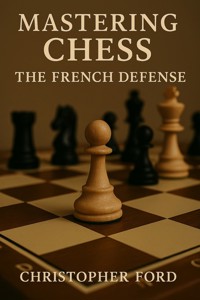
Mastering Chess: The French Defence – Your Complete Guide to One of Chess’s Most Respected Openings
Unlock the secrets of the French Defence, one of the most enduring and strategically rich responses to 1.e4. Whether you are a club player seeking to sharpen your repertoire or an aspiring master aiming to compete at the highest levels, this book provides a comprehensive roadmap from opening theory to endgame mastery.
Inside, you will discover:
- All Major Variations Explained – Winawer, Classical, Tarrasch, Advance, and Exchange, with move-by-move guidance and detailed plans.
- Middlegame Strategies – Learn how to maneuver pieces, manage pawn structures, and create tactical opportunities unique to the French Defence.
- Endgame Mastery – Understand IQP positions, doubled pawns, and central pawn chains to convert small advantages into wins.
- Practical Tips & Traps – Avoid common pitfalls, exploit opponent mistakes, and apply winning strategies in over-the-board play.
- Annotated Games – Historic and modern masterpieces illustrate key ideas, tactical motifs, and strategic concepts.
Take control of the center, seize the initiative, and master one of chess’s most respected defenses.
Das E-Book können Sie in Legimi-Apps oder einer beliebigen App lesen, die das folgende Format unterstützen:
Veröffentlichungsjahr: 2024
Ähnliche



















Mastering Chess
The French Defence
––––––––
Christopher Ford
2026
Copyright © 2026 by Christopher Ford
Contents
Preface
Chapter 1: 1.e4 e6 – The Birth of the French Defence
Historical Background
The Ideas Behind 1...e6
The Strategic Foundations of the French Defence
Typical Plans for Black After 1...e6 2.d4 d5
Psychological and Practical Aspects
Chapter 2: 2.d4 d5 – Core Ideas and Main Variations
Why 2...d5 Is Played
Typical Structures After 1.e4 e6 2.d4 d5
Main Variations After 2...d5
Move-by-Move Analysis of Key Responses
Typical Plans and Themes for Black After 2...d5
Common Tactical Motifs and Traps
Chapter 3: The Winawer Variation (3.Nc3 Bb4)
Historical Context
Key Ideas and Strategic Themes
Main Move Orders
Alternative Lines for White
Key Pawn Structures and Strategic Plans
Tactical Motifs in the Winawer
Summary of the Winawer
Chapter 4: The Classical Variation (3.Nc3 Nf6 / 3.Nc3 dxe4)
Historical Context
Strategic Goals
Move Orders
3.Nc3 dxe4 – Rubinstein Variation
Typical Pawn Structures
Typical Plans for Black
Typical Plans for White
Tactical Motifs
Illustrative Concepts
Summary of the Classical Variation
Chapter 5: The Tarrasch Variation (3.Nd2)
Historical Context
Strategic Goals
Main Move Orders
Typical Pawn Structures
Typical Plans for Black
Typical Plans for White
Tactical Motifs
Illustrative Concepts
Summary of the Tarrasch Variation
Chapter 6: The Advance Variation (3.e5)
Historical Context
Strategic Ideas
Main Move Orders
Typical Pawn Structures
Typical Plans for Black
Typical Plans for White
Tactical Motifs
Illustrative Concepts
Summary of the Advance Variation
Chapter 7: The Exchange Variation (3.exd5 exd5)
Historical Context
Strategic Ideas
Main Move Orders
Typical Pawn Structures
Typical Plans for Black
Typical Plans for White
Tactical Motifs
Illustrative Concepts
Summary of the Exchange Variation
Chapter 8: Typical Middlegame Plans and Structures in the French Defence
Characteristic Pawn Structures
Typical Piece Placements
Typical Plans for White
Typical Plans for Black
Common Tactical Motifs
Typical Middlegame Structures by Variation
General Strategic Guidelines
Illustrative Middlegame Concepts
Summary of Typical Middlegame Structures
Chapter 9: Typical Endgames in the French Defence
Characteristic Pawn Structures in Endgames
Typical Endgame Plans for White
Typical Endgame Plans for Black
Common Tactical Motifs in Endgames
Illustrative Endgame Concepts
Practical Principles
Summary of Typical French Endgames
Chapter 10: Practical Tips, Typical Traps, and Sample Games in the French Defence
Practical Tips for Playing the French Defence
Typical Tactical Traps
Sample Game Illustrations
Summary of Practical Tips and Traps
Chapter 11: Classic French games
Bobby Fischer vs Mikhail Tal
Garry Kasparov vs Vasyl Ivanchuk
Hannes Stefansson vs Viktor Korchnoi
David Howell vs Hao Wang
Judit Polgar vs Evgeny Bareev
Preface
Chess is a game of infinite possibilities, yet every great journey in chess begins with the moves we choose in the opening. Among these, the French Defence—initiated by the simple moves 1.e4 e6—stands out as one of the most enduring, strategically rich, and resilient defenses in the history of the game. It has been wielded by world champions and aspiring amateurs alike, a weapon as flexible in the hands of a tactical genius as it is in the arsenal of a positional strategist.
This book is an attempt to capture the full essence of the French Defence: its history, its philosophy, its modern evolution, and the myriad of plans, tactics, and nuances that have made it a cornerstone of chess theory for over a century. The goal is not merely to present move sequences, but to provide a comprehensive framework for understanding why the French Defence works, how to handle its complexities, and how to thrive in the resulting positions.
Why the French Defence?
The French Defence is more than just a response to 1.e4. It is a strategic statement. By playing 1...e6, Black immediately signals a readiness to challenge the center, maintain a solid structure, and prepare for both counterattacks and long-term positional battles. Unlike other defenses, the French is not reliant on early tactical skirmishes; it offers a blend of solidity, flexibility, and latent dynamism.
Over the decades, the French Defence has been the weapon of choice for some of the most legendary players in chess history. Botvinnik, Smyslov, Karpov, and more recently Anand and Carlsen have all demonstrated its power, showing that it is not only theoretically sound but practically effective at the highest level. Whether you are a club player seeking reliable structures or an aspiring master preparing for elite tournaments, the French Defence provides a repertoire that is as rich in strategy as it is in opportunity.
Who This Book Is For
This book is designed for a wide range of players:
Intermediate players (Elo 1400–2000)
who want to understand the French Defence not just as a set of moves, but as a living, breathing strategy.
Advanced players (Elo 2000+)
seeking detailed theoretical knowledge, nuanced move orders, and insight into modern grandmaster practice.
Coaches and trainers
who wish to have a structured, detailed resource for teaching the French Defence from fundamentals to advanced intricacies.
No prior deep knowledge of the French Defence is assumed, but a basic understanding of chess principles is expected.
How This Book Is Structured
The book is divided into several interconnected parts, each designed to build upon the previous:
Introduction
: Historical background, fundamental principles, and an overview of the French Defence’s strategic ideas.
Move-by-Move Guide
: Detailed explanations of the opening from 1.e4 e6 to the main variations, illustrating key plans and tactical motifs.
Main Variations
: Comprehensive coverage of all major lines, including the
Winawer
,
Classical
,
Tarrasch
,
Advance
, and
Exchange variations
, along with rare sidelines. Each variation is accompanied by strategic advice, move orders, and illustrative games.
Strategic and Tactical Themes
: The recurring plans and tactical motifs that define the French Defence, including pawn structures, typical piece maneuvers, and endgame considerations.
Illustrative Games Collection
: Annotated games from historical and modern masters to demonstrate how theory translates into practical play.
Modern Trends
: Recent innovations and top-level practice, supported by engine evaluations to highlight critical moves and plans.
Appendices
: Move trees, key positions, glossary, and recommended resources for deeper study.
Every section is designed to guide you step by step, gradually building your understanding from the basic concepts to advanced strategies and practical decision-making.
The Philosophy Behind This Book
Chess is not merely a game of memorization; it is a game of understanding. A move without a plan is like a word without meaning. In the French Defence, understanding the why behind each move is more critical than rote memorization, because the positions are often closed, strategic, and rich in subtlety.
This book emphasizes:
Reasoning over rote memorization
: Learn the plans behind the moves.
Strategic thinking
: Understand pawn structures, piece placements, and typical middlegame ideas.
Practical application
: Each line is accompanied by illustrative games showing how theory converts to over-the-board success.
A Final Word
If you approach this book with curiosity, patience, and a willingness to think, you will not only learn the French Defence—you will begin to see chess in a new light. You will learn how to construct plans from seemingly modest positions, how to counter your opponent’s threats, and how to find opportunities where others see obstacles.
The French Defence is more than an opening—it is a strategic mindset, a philosophy of counterplay, and a lifelong companion for those who love the game of chess. May this book guide you on your journey, deepen your understanding, and inspire you to wield the French Defence with confidence, creativity, and elegance.
Chapter 1: 1.e4 e6 – The Birth of the French Defence
The French Defence begins with the move 1...e6, a simple yet profoundly flexible response to 1.e4. This move, while appearing modest, sets the stage for a rich strategic battle, giving Black a solid foundation, counterattacking potential, and a wealth of plans. In this chapter, we explore why 1...e6 is played, what it accomplishes, and the ideas behind Black’s setup, forming the bedrock for all subsequent French Defence variations.
Historical Background
The French Defence is one of the oldest recorded defenses to 1.e4, first appearing in correspondence games in the 1830s. It was popularized in 19th and early 20th-century Europe, especially in France, hence its name. It gained fame through players such as Adolphe Deschapelles and later, World Champions like Botvinnik, Smyslov, and Karpov, who demonstrated its resilience and flexibility at the highest levels.
Key historical points:
1834
: Earliest recorded games using 1...e6 in French correspondence chess.
1849
: Paris matches solidify its reputation as a sound defense.
20th Century
: Adopted by Soviet players; became a mainstay at elite tournaments.
Modern Era
: Continues to be employed at the top level, often as a practical weapon against aggressive 1.e4 players.
The French Defence has survived decades of theoretical evolution, precisely because it is not purely tactical—it is strategic, flexible, and positionally sound, making it suitable for all levels of play.
The Ideas Behind 1...e6
At first glance, 1...e6 may seem passive compared to aggressive defenses like the Sicilian (1...c5) or the Caro-Kann (1...c6). However, its modest appearance masks deep strategic intentions.
Black’s Objectives
Prepare to challenge the center
:The immediate goal of 1...e6 is to support the move
...d5
on the next turn, striking at White’s central pawn on e4.
Maintain a solid pawn structure
:By keeping the e-pawn on e6, Black builds a sturdy pawn chain (c5, d5, e6), minimizing early tactical vulnerabilities.
Enable flexible development
:1...e6 keeps options open for knight development (Nf6, Nc6), bishop deployment (Bb4, Bd6, or b6/Bb7), and castling.
Prepare counterplay
:Unlike passive openings, the French allows Black to eventually counterattack the center with
...c5
and, in some lines,
...f6
, while retaining a solid base.
White’s Options and Challenges
White now faces a choice: how to establish the center. The most common continuations are:
2.d4
: Occupying the center, leading to the main French lines.
2.Nf3
: A more flexible approach, transposing into other e4 openings.
2.c4
: Less common, aiming for a reversed English or Hedgehog-style structure.
White’s key challenge is that Black can challenge the center immediately with ...d5, creating tension and leading to closed, strategic positions rather than open tactical battles.




