


3,49 €
Mehr erfahren.
- Herausgeber: Madeley publishing
- Kategorie: Lebensstil
- Sprache: Englisch
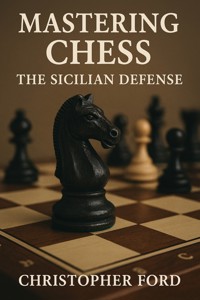
Are you ready to elevate your chess game to new heights? "Mastering Chess: The Sicilian Defense" is your guide to one of the most popular and successful chess openings in history. Whether you're a novice looking to learn the ropes or an experienced player aiming to sharpen your skills, this comprehensive resource is designed for you.
What’s Inside:
In-Depth Analysis: Dive into detailed explanations of the Sicilian Defense, exploring its rich history, key variations, and strategic concepts. Understand why it’s a favorite among world champions and elite players alike.
Clear Instructions: Each chapter breaks down complex ideas into digestible segments, making it easy to grasp essential concepts like pawn structures, typical tactics, and strategic plans for both sides.
Practical Examples: Learn through annotated classic games and modern masterpieces, including famous encounters featuring legends like Bobby Fischer, Garry Kasparov, and Magnus Carlsen. See how top players handle critical positions and draw inspiration for your own games.
Comprehensive Variations: Explore key variations of the Sicilian Defense, including the Dragon, Najdorf, Sveshnikov, and more. Understand their unique characteristics, strengths, and the typical plans for both White and Black.
Tactical Themes and Strategies: Uncover essential tactical motifs, pawn breaks, and piece placements that can turn the tide in your favor. Equip yourself with the tools to navigate complex middlegame positions with confidence.
Tips for Practical Play: Gain insights on how to adapt your playstyle and preparation based on your opponent’s tendencies. Learn how to avoid common pitfalls and traps in the Sicilian Defense.
Endgame Insights: Understand the transition from middlegame to endgame, including common endgame scenarios that arise from Sicilian structures. Learn how to capitalize on your advantages and convert them into victory.
Das E-Book können Sie in Legimi-Apps oder einer beliebigen App lesen, die das folgende Format unterstützen:
Veröffentlichungsjahr: 2024
Ähnliche



















Mastering Chess
The Sicilian Defence
––––––––
Christopher Ford
2024
Copyright © 2024 by Christopher Ford
Contents
Introduction
History and significance
Why the Sicilian Defence is so popular
Typical pawn structures
Goals and key concepts for Black and White
Part 1: Fundamentals of the Sicilian Defence
Chapter 1: Introduction to the Sicilian Defence
1.e4 c5: The First Move Explained
Principles behind the Sicilian
Typical ideas and plans for Black
Open Sicilian vs. Anti-Sicilian systems
Chapter 2: Main Ideas and Themes for Black
Central control and counter-attacking
Pawn structure dynamics
Imbalances: Active pieces vs. pawn weaknesses
Key squares and strategic objectives (d4, d5 squares)
Chapter 3: Understanding White's Plans
Central domination
Kingside attacks and the space advantage
Key pieces for White: Knights on d4, Rooks on open files
Typical pawn pushes (f4, g4, h4)
Part 2: Major Variations of the Sicilian Defence
Chapter 4: The Open Sicilian: 1.e4 c5 2.Nf3 followed by d4
General principles of the Open Sicilian
Importance of the d4 square
Black’s counter-attacking possibilities
Open Sicilian Game 1: Bobby Fischer vs. Mikhail Tal
Chapter 5: The Najdorf Variation: 1.e4 c5 2.Nf3 d6 3.d4 cxd4 4.Nxd4 Nf6 5.Nc3 a6
Strategic ideas and pawn structures
Black's queenside expansion (b5, a6)
Common tactical motifs (e.g., Nd5 sacrifices)
Najdorf Game 1: Bobby Fischer vs. Mikhail Tal
Najdorf Game 2: Magnus Carlsen vs. Levon Aronian
Naidorf Game 3: Vassily Smyslov vs. Boris Spassky
Najdorf Game 4: Mikhail Tal vs. Viktor Korchnoi
Chapter 6: The Dragon Variation: 1.e4 c5 2.Nf3 d6 3.d4 cxd4 4.Nxd4 Nf6 5.Nc3 g6
The fianchetto and hypermodern approach
Yugoslav Attack
Thematic sacrifices on h4 and h5
Piece activity and kingside pawn storms
Dragon Game 1: Bobby Fischer vs. Boris Spassky
Chapter 7: The Scheveningen Variation: 1.e4 c5 2.Nf3 d6 3.d4 cxd4 4.Nxd4 Nf6 5.Nc3 e6
Flexibility in pawn structure
Attack and defence: Handling White's aggressive pawn pushes (f4, g4)
Kingside vs. queenside activity: a balancing act
Chapter 8: The Classical Variation: 1.e4 c5 2.Nf3 d6 3.d4 cxd4 4.Nxd4 Nf6 5.Nc3 Nc6
Solid and less sharp than other systems
Central tension and piece coordination
Strategic subtleties in central and kingside play
Chapter 9: The Sveshnikov Variation: 1.e4 c5 2.Nf3 Nc6 3.d4 cxd4 4.Nxd4 Nf6 5.Nc3 e5
Double-edged and aggressive
Understanding the weak d5 square and piece dynamics
Key concepts like "late pawn pushes" and initiative
Sveshnikov Sicilian Game 1: Garry Kasparov vs. Vladimir Kramnik
Sveshnikov Sicilian Game 2: Magnus Carlsen vs. Sergey Karjakin
Part 3: Anti-Sicilian Systems
Chapter 10: The Closed Sicilian: 1.e4 c5 2.Nc3
Slower pace, strategic manoeuvring
Black’s flexible responses (g6, d6 systems)
White’s kingside pawn pushes (f4, g3)
Chapter 11: Alapin Variation: 1.e4 c5 2.c3
Thematic goals for White: immediate central control
Understanding Black’s counter-ideas (d5, Nf6 setups)
Play against the isolated queen’s pawn (IQP)
Alapin Game 1: Garry Kasparov vs. Anatoly Karpov
Alapin Game 2: Viswanathan Anand vs. Alexey Dreev
Chapter 12: Grand Prix Attack: 1.e4 c5 2.f4
Thematic kingside pawn storm
Black’s counter-play and counter-attacks on the queenside
Tactical themes and sacrifices
Grand Prix Attack Game 1: Gawain Jones vs. Fabiano Caruana
Grand Prix Attack Game 2: Veselin Topalov vs. Alexey Shirov
Grand Prix Attack Game 3: Gawain Jones vs. Hikaru Nakamura
Chapter 13: Other Anti-Sicilian Systems
Rossolimo Attack: 1.e4 c5 2.Nf3 Nc6 3.Bb5
Smith-Morra Gambit: 1.e4 c5 2.d4 cxd4 3.c3
Wing Gambit
Part 4: Strategy and Tactics in the Sicilian Defence
Chapter 14: Key Strategic Ideas in the Sicilian
Exploiting imbalances: Piece activity vs. structural weaknesses
Central tension: When to release and when to maintain
Typical pawn breaks (b5, d5, e5)
Controlling key squares (d4, d5, e4)
Chapter 15: Tactical Motifs in the Sicilian Defence
Tactics around the open c-file
Common sacrifices: The exchange on c3, knights on d5
Themes like the poisoned pawn
Part 5: Advanced Concepts and Practical Tips
Chapter 16: Middlegame Structures in the Sicilian
Typical pawn formations and piece dynamics
How to handle isolated pawns, backward pawns, and weak squares
Understanding common endgames in the Sicilian Defence
Chapter 17: Typical Endgames in the Sicilian Defence
Rook and pawn endgames
Minor piece endgames
Transition from middlegame to endgame
Chapter 18: Practical Tips for Playing the Sicilian
Move-order subtleties and avoiding traps
Playing the Sicilian as White: When to enter or avoid certain lines
Common mistakes and pitfalls for both sides
Part 6: Model Games and Annotated Examples
Chapter 19: Annotated Classic Games in the Sicilian
Bobby Fischer vs. Boris Spassky (World Championship, 1972, Game 6)
Garry Kasparov vs. Anatoly Karpov (World Championship, 1985, Game 16)
Magnus Carlsen vs. Levon Aronian (Wijk aan Zee, 2012)
Mikhail Tal vs. Viktor Korchnoi (1974)
Chapter 20: Modern Masterpieces in the Sicilian Defence
Magnus Carlsen vs. Sergey Karjakin (World Chess Championship 2016, Game 3)
Levon Aronian vs. Veselin Topalov (Grand Slam Chess Final, 2012)
Fabiano Caruana vs. Magnus Carlsen (Grand Slam Chess Final, 2019)
Anish Giri vs. Alexander Grischuk (Wijk aan Zee, 2019)
Part 7: Final Thoughts
Chapter 21: Final Thoughts on Mastering the Sicilian Defence
Adapting the Sicilian to your style
Balancing preparation with creativity
Introduction
History and significance
The Sicilian Defence (1.e4 c5) is one of the oldest and most respected responses to 1.e4 in chess history. It has evolved into a powerful weapon that offers Black a dynamic, counter-attacking playstyle, aiming to seize the initiative early in the game.
The origins of the Sicilian Defence can be traced back to the early 17th century. The opening is believed to have been named after the Sicilian priest and chess player Gioachino Greco, who documented it in his manuscripts in the early 1600s. However, it remained a relatively obscure and underutilized option during the initial centuries of its existence, as classical principles of chess favored symmetrical pawn structures and control of the center with pawns.
It wasn't until the 19th century that the Sicilian Defence began to gain serious attention. The rise of chess tournaments in Europe led to more thorough exploration of opening theory, and the imbalance created by 1...c5 began to appeal to players seeking more than just a defensive game.
Prominent figures such as Louis-Charles Mahé de La Bourdonnais and Howard Staunton began employing the Sicilian with some frequency.
La Bourdonnais used it in his famous matches against Alexander McDonnell in the 1830s, showing that Black could seek counterplay rather than merely react to White’s plans. This marked a shift in the perception of 1...c5, which was no longer viewed as passive but as an aggressive way to seize dynamic control of the game.
By the early 20th century, the Sicilian Defence had become a major weapon in the arsenal of leading players. It gained even more recognition thanks to its frequent use by World Champions and elite players.
Emanuel Lasker and José Raúl Capablanca occasionally employed the Sicilian, but it was Alexander Alekhine who revolutionized its use. Alekhine understood the deep imbalances that could be created with the opening, utilizing it in his 1927 World Championship match against Capablanca.
The 1950s and 1960s saw the Sicilian gain widespread popularity, especially with the development of several key systems. Mikhail Botvinnik, the sixth World Chess Champion, employed the Sicilian Scheveningen, showing its robustness in key World Championship matches. Around the same time, Bobby Fischer made the Najdorf Variation a centerpiece of his Black repertoire, demonstrating its power in high-level play.
Tigran Petrosian and Mikhail Tal, two World Champions with completely different styles, also utilized the Sicilian effectively. Tal's aggressive and tactical approach fit well with the dynamic counter-attacks available in the Sicilian.
The 1980s and 1990s were the golden age of the Sicilian Defence, largely due to the influence of Garry Kasparov. Kasparov made the Sicilian, particularly the Najdorf Variation, one of his most important tools. He used it successfully in numerous World Championship matches, including against Anatoly Karpov and Vishy Anand, and helped deepen the theoretical understanding of the opening.
Kasparov’s fearless play with the Sicilian demonstrated its capability of withstanding pressure even at the highest level, often giving Black winning chances in sharp and complex positions. His work on the Poisoned Pawn variation in the Najdorf became a model of how to fight for the initiative from Black’s side.
In the 21st century, the Sicilian Defence continues to be a top choice for both club players and grandmasters alike. It has evolved with modern chess engines and deeper opening preparation, but it remains a hallmark of fighting chess. The opening is now a battleground for cutting-edge theory, with variations like the Sveshnikov and Dragon being constantly tested and refined in top-level games.
Some modern elite players who regularly employ the Sicilian include Magnus Carlsen, Ian Nepomniachtchi, Fabiano Caruana, and Maxime Vachier-Lagrave. They demonstrate that the Sicilian is still a lethal weapon capable of producing both exciting and strategically rich games.
Significance of the Sicilian Defence
Imbalances and Dynamism
The Sicilian Defence creates immediate asymmetry and imbalances in pawn structure and piece placement. Unlike symmetrical defenses (such as 1.e4 e5), 1...c5 offers Black counter-attacking chances right from the start. The central tension often leads to dynamic play, allowing both players to fight for the initiative.
Counter-attacking Potential
The essence of the Sicilian Defence is that Black is not merely defending; Black seeks active counterplay by attacking White’s center and creating threats. Typical pawn breaks like ...d5 or ...b5 allow Black to unleash tactical opportunities, especially in variations like the Dragon and Najdorf.
Extensive Theoretical Depth
The Sicilian Defence has one of the richest theoretical landscapes of any chess opening. Countless variations, sub-variations, and novelties are being developed constantly. Some of the most heavily analyzed systems in chess—like the Najdorf, Sveshnikov, Scheveningen, and Dragon—are part of the Sicilian family.
Many of the greatest players in history, from Fischer to Kasparov, have relied on the Sicilian as their primary weapon against 1.e4. The fact that it has stood the test of time, even in the age of computers, speaks to its continued relevance and versatility.
The Sicilian Defence offers a wide range of setups, from the solid and positional (e.g., the Closed Sicilian) to the razor-sharp and tactical (e.g., the Dragon or Najdorf). This makes it adaptable to many different playing styles, allowing players to choose systems that suit their strengths.
At every level of chess, from club players to grandmasters, the Sicilian Defence is considered one of the most combative and successful responses to 1.e4. Its popularity in professional chess makes it an essential part of opening theory and preparation.
The Sicilian Defence is a cornerstone of modern chess, offering Black a rich array of counter-attacking possibilities while simultaneously inviting White to take risks in the quest for advantage. Its history is intertwined with some of the greatest moments in chess, and its significance continues to grow as new ideas and strategies are discovered. Whether played for tactical fireworks or deep strategic maneuvering, the Sicilian remains one of the most respected and feared openings in chess history.
Why the Sicilian Defence is so popular
The Sicilian Defence (1.e4 c5) is one of the most popular and enduring openings in chess for several key reasons. It offers a unique blend of imbalanced, dynamic play, aggressive counter-attacks, and a deep well of theoretical knowledge that continues to evolve. Here’s why the Sicilian Defence has maintained its popularity from beginners to world champions:
1. Imbalanced and Dynamic Positions
The Sicilian immediately creates an asymmetrical position, which is a major draw for players who want to play for a win as Black. Unlike more symmetrical openings (like 1.e4 e5 or 1.d4 d5), the move 1...c5 disrupts White’s ability to dominate the center with pawns. Instead, Black seeks counterplay by attacking the center indirectly.
This imbalance leads to complex and double-edged positions where both sides have chances to seize the initiative. The game is often more tactical and full of possibilities, making it exciting and unpredictable. For players who thrive on creating complications and fighting for the initiative, the Sicilian is the perfect choice.
2. Aggressive Counter-Attack for Black
One of the main reasons for the Sicilian’s popularity is that it offers Black active counter-attacking chances right from the opening. Instead of passively defending against White’s central control, Black looks for opportunities to break in the center with moves like ...d5 or expand on the queenside with ...b5.
Some variations, like the Dragon or Najdorf, are famous for their sharp tactical nature, where Black launches counter-attacks against White’s pawn advances. This active approach makes the Sicilian more appealing than other responses to 1.e4 that tend to be more passive, like the French Defence or the Caro-Kann.
3. Wide Variety of Systems
The Sicilian Defence offers a vast array of variations, each with its own unique style and ideas. This variety makes the opening suitable for players of all styles—whether you prefer sharp tactical battles, deep positional struggles, or solid setups. Here are some of the most popular systems:
Najdorf Variation: Sharp, tactical, and full of rich possibilities. This is often favored by aggressive players who want to create complications.
Dragon Variation: Famous for its hyper-aggressive, fianchetto setup and pawn storms on opposite sides.
Sveshnikov Variation: Highly dynamic, with Black accepting structural weaknesses in exchange for active piece play.
Scheveningen Variation: More solid but still offers counter-attacking chances, focusing on pawn structure and flexibility.
Alapin (c3-Sicilian) and Closed Sicilian: These offer more strategic, slow-paced games, making them suitable for players who prefer long-term maneuvering.
This flexibility allows players to choose a Sicilian line that matches their preferences, making it a favorite among both aggressive and positional players.
4. Proven Success at the Highest Level
The Sicilian Defence has been a consistent favorite among world champions and top-level grandmasters for decades. Players like Bobby Fischer, Garry Kasparov, Magnus Carlsen, and Maxime Vachier-Lagrave have all used the Sicilian extensively, with great success.
Bobby Fischer famously said, "1.e4—best by test," but he relied heavily on the Sicilian Najdorf as Black throughout his career, particularly in his World Championship match against Boris Spassky.
Garry Kasparov took the Najdorf to new heights with his deep theoretical work and sharp attacking play, notably against Anatoly Karpov in their World Championship matches.
When such high-level players use the Sicilian to great effect, it naturally inspires others to follow suit. The proven success at the top level solidifies the Sicilian's reputation as a fighting weapon.
5. Rich Theoretical Depth
The Sicilian Defence is one of the most theoretically complex openings in chess. It is constantly evolving, with new ideas, novelties, and variations being developed all the time. Players who enjoy studying opening theory are often drawn to the Sicilian because it provides a lifetime of learning.
Each of the major variations has its own vast body of theory, meaning that both players can spend significant time preparing and finding new ideas. The ever-evolving nature of the Sicilian makes it appealing to players who enjoy keeping up with the latest trends in chess theory.
6. Chances to Win as Black
Many players choose the Sicilian Defence because it gives them real winning chances as Black. Unlike some more solid responses to 1.e4 (like the Caro-Kann or French Defence), the Sicilian often leads to positions where both sides can play for a win. Black can generate counter-attacks and often takes the initiative, meaning that even if White achieves an advantage, Black is not without chances to fight back.
This makes the Sicilian ideal for players who want to play for a win in every game, even with the Black pieces, rather than simply aiming for a draw or equality.
7. Fosters Creativity
The wide variety of structures and tactics that arise from the Sicilian Defence fosters creativity and original play. Since the Sicilian opens up a wealth of different possibilities depending on how White responds, players can explore various approaches to attack or defend, making the game highly unpredictable.
This creative freedom makes the Sicilian one of the most exciting and rewarding openings to play. In many lines, there are no fixed or rigid plans; instead, players must rely on understanding typical ideas and adapting to the changing nature of the position.
8. Long-Term Usefulness
One of the Sicilian’s key advantages is its long-term usefulness. Unlike many other openings, where specific variations can go out of fashion or become refuted, the Sicilian remains an evergreen choice. Its diversity ensures that even if one particular line falls out of favor, there are always other effective and sound lines to explore.
As a result, a player who invests time in learning the Sicilian Defence can use it throughout their entire chess career, simply adapting to the latest ideas and innovations in the opening.
9. Strong Psychological Edge
For many White players, facing the Sicilian Defence can be intimidating. The vast amount of theory and the sharp, unpredictable positions that arise often push White into unfamiliar territory. Black players who are well-prepared in the Sicilian can use this psychological edge to their advantage, putting pressure on their opponents from the very first move.
This psychological factor is especially important in competitive chess, where players seek to put their opponents out of their comfort zone as quickly as possible.
The Sicilian Defence remains one of the most popular openings in chess due to its combination of dynamic play, rich theory, and counter-attacking potential. Its ability to create imbalanced positions, foster creativity, and provide winning chances for Black makes it a favorite for both amateurs and professionals. The opening has stood the test of time, continuing to evolve while remaining one of the most reliable and exciting weapons in modern chess.
Typical pawn structures
The Sicilian Defence (1.e4 c5) creates unique and varied pawn structures, often leading to imbalanced positions that offer dynamic play for both sides. The understanding of these pawn structures and imbalances is key to mastering the Sicilian. Below are the most common structures, the typical imbalances that arise, and their strategic significance for both Black and White.
1. The Open Sicilian Pawn Structure
The Open Sicilian arises after White plays 1.e4 c5 2.Nf3 and then pushes d4, allowing exchanges on the d4 square. The typical structure that results from this sequence is:
White's pawns: White will have pawns on e4 and potentially c2 or c3 after recapturing with the knight on d4.
Black's pawns: Black has pawns on c5 and d6 (after playing d6 in most variations) and aims for counterplay with moves like ...a6, ...b5, and possibly a ...d5 break later.
Key Features of the Open Sicilian:
Asymmetry: The lack of symmetry in pawn structures creates immediate imbalances, a hallmark of the Sicilian Defence. White has more central presence (especially with the e4 pawn), while Black has more queenside potential.
Pawn breaks: White aims for central dominance with moves like f4, while Black aims for counterplay with ...d5 or ...b5. The tension between these pawn moves defines the struggle between the two sides.
d4-square control: White typically places a knight on d4, which becomes a central outpost. Black may counter with ...Nf6 and ...d6, hoping to challenge White's control over the square or exchange the knight.
2. The Najdorf Structure
The Najdorf Variation (1.e4 c5 2.Nf3 d6 3.d4 cxd4 4.Nxd4 Nf6 5.Nc3 a6) is one of the most famous and sharpest systems in the Sicilian. In this structure:
White’s pawns: White maintains pawns on e4 and f4 (if White opts for an aggressive approach).
Black’s pawns: Black has pawns on a6, b5 (after ...b5), d6, and c5, giving Black a flexible pawn chain.
Key Features of the Najdorf Structure:
Imbalanced pawn structure: Black's pawns on the queenside (a6, b5) aim for expansion with moves like ...b5 and ...Bb7, creating queenside counterplay, while White tries to attack on the kingside with f4, g4, or h4.
Central tension: Black often keeps the ...d6 and ...e7 pawns for flexibility, waiting for the right moment to play the freeing ...d5 move. This central tension creates dynamic possibilities, as the timing of the ...d5 break is critical.
Weak d5-square: Black’s pawn on d6 creates a potential weakness on d5, a key outpost for White’s knight. White’s strategy often revolves around controlling or occupying the d5-square with a knight.
Counter-attacking potential: Black’s queenside play (with moves like ...b5, ...Bb7, and ...Qc7) can be sharp, especially if White overcommits on the kingside.
3. The Dragon Structure
The Dragon Variation (1.e4 c5 2.Nf3 d6 3.d4 cxd4 4.Nxd4 Nf6 5.Nc3 g6) leads to a hypermodern pawn structure, where Black fianchettos the dark-squared bishop on g7 and looks for counterplay along the long diagonal.
White’s pawns: White has pawns on e4, f3 (in the Yugoslav Attack) or f4 (in more aggressive lines), and potentially h4 and g4 to support a kingside pawn storm.
Black’s pawns: Black’s pawns are on d6, c5, and g6, with a fianchettoed bishop on g7.
Key Features of the Dragon Structure:
Kingside vs. Queenside pawn storm: In the Yugoslav Attack, White castles queenside and pushes the kingside pawns (f3, g4, h4, etc.), aiming for a direct attack against Black’s king. Meanwhile, Black counter-attacks on the queenside with moves like ...b5 and ...a5, often aiming to open files against White’s king.
Central tension and break possibilities: The d6 and c5 pawns hold the center, while Black often looks for a ...d5 break to release central tension and activate the pieces.
Tactical nature: The Dragon is known for its highly tactical nature, with sacrifices often occurring on squares like h5 (for White) or c3 (for Black). The imbalance between White’s kingside attack and Black’s queenside counterplay leads to sharp, double-edged positions.
Control of the d5-square: As in the Najdorf, the d5-square is a focal point. If Black manages to play ...d5 successfully, they often free their position and gain significant activity. However, White may aim to dominate this square with a knight or pawn.
4. The Scheveningen Structure
In the Scheveningen Variation (1.e4 c5 2.Nf3 d6 3.d4 cxd4 4.Nxd4 Nf6 5.Nc3 e6), Black creates a solid but flexible pawn structure with pawns on d6 and e6.
White’s pawns: White has pawns on e4 and d4, often supported by aggressive advances on the kingside like f4 or g4.
Black’s pawns: Black has pawns on d6, e6, c5, and possibly a later pawn expansion on the queenside with ...b5.
Key Features of the Scheveningen Structure:
Flexible pawn structure: Black’s setup is highly flexible, allowing for counter-attacks in multiple directions. Black can break in the center with ...d5 or expand on the queenside with ...b5.
King safety: Black’s pawn on e6 provides solid protection for the Black king after castling kingside. This allows Black to withstand White’s aggressive kingside pawn advances.
Kingside vs. Queenside attacks: White often initiates a pawn storm on the kingside with moves like f4, g4, and h4, while Black counters on the queenside with ...b5 and rook activity on the c-file.
Central pawn breaks: The key move for Black is the ...d5 break. Achieving this break often leads to freeing the position, while failure to do so can leave Black in a passive state, particularly against White's kingside aggression.
5. The Sveshnikov Structure
The Sveshnikov Variation (1.e4 c5 2.Nf3 Nc6 3.d4 cxd4 4.Nxd4 Nf6 5.Nc3 e5) leads to a hyper-aggressive pawn structure, with Black accepting weaknesses in exchange for dynamic piece activity.
White’s pawns: White has pawns on e4, d4, and can create a pawn majority on the queenside.
Black’s pawns: Black has pawns on d6, e5, and potentially a backward pawn on d6.
Key Features of the Sveshnikov Structure:
Dynamic piece activity: Black gives up control of key squares (like d5) and creates a backward pawn on d6, but gains active piece play, especially for the knights. Black often places a knight on f5 and looks for counterplay with pawn pushes like ...f5.
Weaknesses and outposts: The d5-square is a critical weakness in Black’s camp. White often occupies this square with a knight, using it as a powerful outpost. However, Black compensates with counter-attacks against White’s pawns or pieces.
Tension on the kingside: Black often looks to play ...f5 to challenge White’s control of the center and initiate kingside play. This leads to a highly complex and tactical battle.
Structural weaknesses: Black’s backward d6-pawn is a long-term weakness that White can target in slower games. White can aim to build pressure on the d6-pawn with rooks and other pieces, while Black seeks active counterplay.
Goals and key concepts for Black and White
The Sicilian Defence creates a wide range of positions, but whether it's sharp or strategic, both Black and White have clear goals and strategic concepts they aim to achieve. Understanding these key concepts allows players to navigate the opening and the resulting middlegame positions effectively. Below is a detailed breakdown of the primary goals and plans for both sides.
1. Goals and Key Concepts for White
White typically aims for aggressive and central control, but the exact approach depends on the specific variation of the Sicilian being played.
Primary Goals for White:
Control the Center: White's opening move 1.e4 is aimed at gaining central control. By pushing d4, White seeks to dominate the center with pawns on e4 and d4, and pieces (like the knights and queen) supporting from behind.
Launch an Attack: White often seeks aggressive play on the kingside, especially in open positions. In many variations (like the Najdorf or Dragon), White will launch a pawn storm against Black's king, using pawns on f3, g4, and h4 (in the Yugoslav Attack), aiming for direct tactical pressure.
Maintain Initiative: White tries to keep the initiative by constantly posing threats, forcing Black to react. This can come through direct attacks, creating imbalances, or maintaining strong central control to dictate the pace of the game.
Occupy Key Outposts: In many Sicilian structures, particularly in the Najdorf and Sveshnikov variations, White tries to plant a knight on important squares like d5 or f5, turning it into a permanent outpost that controls key squares and restricts Black’s play.
Use Space Advantage: White often gets more space in the center and kingside, thanks to pawns on e4 and d4. This allows White to maneuver pieces more easily and potentially build up an attack.
Key Concepts for White:
Central Dominance (e4 and d4 pawns): White's pawns on e4 and d4 provide central control. White's idea is to expand further, often pushing f4 (in some lines) to strengthen the center and launch kingside attacks.
King Safety: White generally chooses to castle kingside early but may castle queenside in aggressive setups, particularly in the Dragon and some Najdorf lines, to support a faster kingside pawn storm (f3, g4, h4).
Pawn Storms: White often advances pawns aggressively on the kingside to attack Black’s king. For example, in the Yugoslav Attack against the Dragon, White pushes pawns like f3-g4-h4, sacrificing material if necessary to open lines against the Black king.
Opening Files: When White castles queenside, the rook on d1 becomes critical for central pressure. In attacks against Black’s castled king, White may look to open the g- or h-files for direct attacks with the rooks and queen.
Outpost Control: The d5-square is often a critical focal point for White. Placing a knight on this square in the Najdorf, Sveshnikov, or Dragon can be very powerful, creating long-term positional pressure and hampering Black’s activity.
Use of the f4 or f3 pawn push: Depending on the variation, White might use an f4 pawn push (in the Open Sicilian or Najdorf) to gain space, challenge Black's pawn structure, or support a piece assault. In other lines like the Dragon, the f3 push supports White’s pawn storm and protects the center.
2. Goals and Key Concepts for Black
Black’s main goal in the Sicilian is to counter White’s central control and eventually generate counterplay, often on the queenside. The Sicilian is not about holding equality right away but creating a complex battle with chances for both sides.
Primary Goals for Black:
Counterattack: Black's most important goal is to launch a counterattack. The Sicilian is all about seeking dynamic play rather than passively defending. Whether it's by pushing ...b5 and ...a6 on the queenside, ...d5 in the center, or exploiting an open file, Black is constantly looking to create active play.
Queenside Play: Black typically seeks to expand on the queenside in most Sicilian lines, with moves like ...b5 and ...a6 in the Najdorf or ...Qa5 and ...Rac8 in the Dragon. This queenside expansion is critical for Black’s counterplay.
Break White’s Central Control: Black aims to challenge White’s strong pawn center, often with pawn breaks like ...d5 or ...f5. In many lines, successfully achieving the ...d5 break is the key to freeing Black’s position and creating dynamic counterplay.
Piece Activity: Black’s pieces are often maneuvered into active squares that create pressure on White’s center and kingside. Especially in open variations, Black's knights and bishops often find strong positions aimed at challenging White’s center or attacking weaknesses in White's camp.
King Safety: While Black often castles kingside, the structure around the king (especially in the Dragon) can be tested by White’s attack. Black’s pawn structure (pawns on g6 and f7) and piece coordination (especially the bishop on g7 in the Dragon) are vital for defending against direct attacks.
Key Concepts for Black:
Counter-attacking on the Queenside: In many Sicilian lines, Black looks to expand on the queenside with moves like ...a6 and ...b5. The goal is to generate play on that side of the board, often opening files and launching attacks against White’s queen or king (if White has castled queenside).
The Central Break with ...d5: Achieving the ...d5 pawn break is a key strategic goal for Black in almost all major Sicilian lines (e.g., Najdorf, Dragon, Sveshnikov). This break challenges White’s central pawns and opens lines for Black’s pieces. Timing is crucial—if Black can achieve ...d5 under favorable conditions, it often leads to strong counterplay.
f5 as an Attacking Tool: In lines like the Sveshnikov or Scheveningen, Black often uses ...f5 to attack White’s central pawn structure and gain kingside space. This break helps Black undermine White's pawn on e4 and can lead to aggressive attacking chances if White has weakened their kingside.
The Role of the Dragon Bishop (g7): In the Dragon Variation, the fianchettoed dark-squared bishop on g7 plays a critical role. It controls the long diagonal and is often the key defensive piece for Black, especially when facing White’s kingside pawn storm. At the same time, it also supports Black’s counterplay by controlling important central squares.
Piece Coordination: Black’s pieces are often maneuvered in a way that prepares for dynamic play. In many lines, the knight maneuvers (like ...Nf6-e8-c7 or ...Nc6-a5) support Black's queenside expansion, and the rooks are often placed on open files to generate activity against White’s central or queenside weaknesses.
Counterplay against Weaknesses: In positions where White castles queenside (e.g., in the Dragon or Najdorf), Black looks for ways to counterattack by opening the c-file with ...Rc8 or targeting weak pawns on a3 or b2. Black’s queenside pressure can often turn the game around if White overcommits to a kingside attack.
3. Typical Battle Themes and Tension
Kingside vs. Queenside Attacks: A key strategic tension in the Sicilian is White’s focus on kingside play versus Black’s focus on queenside counterplay. For example, in the Dragon, White storms the kingside with pawns while Black counterattacks on the queenside.
Control vs. Counter-Attack: White often holds the initial central control, but Black builds up for the crucial counterstrike (e.g., the ...d5 break). This dynamic tension often determines the outcome of the opening and leads to a rich, imbalanced middlegame.
Dynamic vs. Static Imbalances: Black’s play often revolves around creating dynamic play through tactical means, while White seeks a more positional advantage through central control, piece activity, and long-term outposts (such as the d5 square).
The Sicilian Defence offers rich, complex, and dynamic positions for both Black and White. White’s goals often center on maintaining central control, launching aggressive kingside attacks, and exploiting key squares like d5. Black, on the other hand, aims for counterplay, focusing on the queenside, breaking down White’s center, and using key pawn breaks like ...d5 or ...f5. The resulting tension between these plans leads to some of the most exciting and sharpest games in chess.
Part 1: Fundamentals of the Sicilian Defence
Chapter 1: Introduction to the Sicilian Defence
1.e4 c5: The First Move Explained
The move 1.e4 c5 introduces one of the most popular and deeply studied openings in chess — the Sicilian Defence. It's a combative response from Black that leads to asymmetrical and dynamic positions, offering both players rich opportunities for creative play. To understand this first move better, let’s break down the significance and ideas behind 1.e4 and 1...c5 from both White and Black's perspectives.
1. White’s First Move: 1.e4
The move 1.e4 is one of the most common and oldest opening moves in chess. It directly challenges the center and has a few key strategic goals:
Why White Plays 1.e4:
Control of the Center: The pawn move to e4 controls two important central squares, d5 and f5. By occupying the center, White gains space and opens up possibilities for piece development.
Opening Lines for Development: Playing e4 frees both the queen and the light-squared bishop, enabling White to rapidly develop pieces. White's standard development plan involves moves like Nf3 and Bc4, quickly coordinating pieces toward the center.
Aggressive Intent: The move 1.e4 is an aggressive, active way to start the game. It often leads to open positions, where tactical opportunities can arise. White’s plan is to dominate the center early and dictate the game’s tempo.
Flexibility: After 1.e4, White has various follow-up options depending on Black’s response. White can aim for a classical pawn center (with d4), pursue rapid development, or initiate aggressive attacks based on the structure Black chooses.
2. Black’s Response: 1...c5 (The Sicilian Defence)
With the move 1...c5, Black steps out of the symmetry of moves like 1...e5, offering an alternative way to challenge White's central ambitions. The Sicilian Defence is arguably the most ambitious response to 1.e4 because it immediately introduces asymmetry into the game, leading to rich, unbalanced positions.
Why Black Plays 1...c5:
Counterattacking the Center: While 1...c5 does not immediately contest the central e4 pawn directly (as 1...e5 does), it lays the groundwork for challenging the center indirectly. Black prepares to undermine White’s control of the center with future moves like ...d6 and ...d5 or ...e6 and ...d5.
Asymmetry and Imbalance: Unlike symmetrical openings like 1.e4 e5, the Sicilian immediately creates an unbalanced pawn structure. The pawn on c5 signals that Black intends to play for a more complex, non-symmetrical game. This often leads to positions where both players have different strengths and weaknesses, enhancing the game’s complexity.
Queenside Counterplay: The pawn on c5 gives Black space on the queenside. Black often seeks to expand further with moves like ...a6 and ...b5, gaining space and initiative on that side of the board. This queenside activity can balance White’s typical kingside attacking chances.
Slowing Down White's Central Ambitions: One of the key concepts behind the Sicilian is that Black is not immediately challenging White in the center, unlike 1.e4 e5, but is waiting for a chance to strike back with a pawn break. The common plan is to play ...d6 or ...e6, followed by ...d5, aiming to challenge White’s central control at the right moment, often under more favorable conditions.
Dynamic and Sharp Play: The Sicilian Defence is known for leading to rich, sharp, and dynamic positions. Black is not simply playing for a quiet, passive defense but for active counterplay. Depending on the variation, Black can aim for either a tactical or strategic struggle.
3. The Immediate Imbalance Created
One of the defining characteristics of 1.e4 c5 is that it immediately leads to an imbalanced position. In contrast to 1.e4 e5, where both sides contest the center symmetrically, 1...c5 creates a situation where:
White controls more of the center immediately (with the pawn on e4), while Black adopts a more defensive and indirect strategy to challenge White's center.
White typically tries to dominate the center with d4, creating a "classical" pawn center (with pawns on e4 and d4).
Black, on the other hand, prepares to undermine White's center either through the ...d5 break or via more gradual queenside play and piece development.
This asymmetry is what makes the Sicilian Defence so appealing to players who want a dynamic, fighting game from the very first move.
4. Key Plans for White After 1.e4 c5
After 1.e4 c5, White's typical plan revolves around taking advantage of their space advantage and central control. White's most common continuation is 2.Nf3, leading to the "Open Sicilian" after 3.d4. The key plans for White include:
Developing Quickly: White usually follows up with Nf3 and d4, aiming to open the center and rapidly develop the pieces to active squares.
Central Control: White will often try to create a strong central pawn structure, with pawns on e4 and d4, supported by pieces like knights and bishops.
Kingside Attack: In many variations of the Sicilian, particularly the Dragon and Najdorf, White will initiate a kingside pawn storm (f3, g4, h4) after castling queenside to launch a direct attack on Black's king.
Exploiting Weaknesses: If Black adopts passive or overly defensive setups, White can aim to control key squares like d5 and build pressure, often by creating powerful piece coordination and exploiting weak pawns in Black’s camp.
5. Key Plans for Black After 1...c5
Black’s plan revolves around controlling the queenside and preparing to counter-attack White's central pawns. Some key plans include:
Counterattacking the Center: Black looks for opportunities to challenge White’s strong pawn center, typically with the freeing ...d5 break. This is a key idea in many Sicilian variations, as it helps Black liberate their position and open up the center for counterplay.
Queenside Play: Black often expands on the queenside with moves like ...a6 and ...b5, gaining space and preparing to attack White’s queen or open files for rooks and other pieces. This queenside counterplay is critical in variations like the Najdorf or Dragon.
Developing Flexibly: Black’s piece development is often flexible. Black can delay committing pawns to certain squares (like ...e6 or ...d6) and wait to see White’s setup before deciding on the best pawn structure or piece placement.
Dynamic Piece Play: Black’s pieces are often developed to squares where they have maximum activity. For example, the knight on f6 is well-placed to attack White’s pawn on e4, while the bishop can be fianchettoed to g7 in the Dragon to exert long-range pressure.
Defending Against White’s Attack: In sharp lines where White castles queenside and attacks on the kingside, Black must be prepared to defend vigorously. Black typically responds by launching a counter-attack on the queenside, often involving pawn moves like ...b5 or tactical shots on the c-file.
The move 1.e4 c5 is one of the most dynamic and complex starts to a chess game. White aims for fast central control and aggressive development, while Black counters with a slower, more flexible approach focused on creating imbalances and dynamic counterplay. The early asymmetry guarantees rich, fighting positions, making the Sicilian Defence a favorite among ambitious players. Whether for White or Black, understanding the strategic nuances behind this first move sets the stage for exciting, complex battles to come.
Principles behind the Sicilian
The Sicilian Defence (1.e4 c5) is one of the most strategically complex and dynamic responses to 1.e4. It immediately creates an asymmetrical position, where Black opts for counterattacking opportunities and dynamic play rather than a symmetrical, passive setup. The principles guiding the Sicilian Defence revolve around achieving an active position, seeking imbalances, and preparing long-term counterplay. Below are the key principles behind this popular opening:
1. Asymmetry and Imbalances
One of the most fundamental principles behind the Sicilian Defence is to create an asymmetrical pawn structure right from the first move. While White opens with 1.e4, aiming for immediate central control, Black responds with 1...c5, offering a pawn trade on d4 that disrupts symmetry. This move has several strategic implications:
Asymmetry: Black’s c5 pawn prevents a direct clash of e4 vs. e5 pawns, which would lead to symmetrical play. By avoiding symmetry, Black opens up the game for imbalances in the pawn structure, piece activity, and plans.
Imbalances: The Sicilian often creates positions where White may control the center temporarily, but Black has long-term counterplay on the queenside and flexibility in piece placement. This leads to a complex, non-symmetrical struggle, often favoring dynamic players.
2. Counterattacking Strategy
The Sicilian Defence is not defensive in nature, despite its name. Rather, it is about counterattacking. While White typically seizes the initiative early on with central pawn pushes and active piece development, Black's goal is to strike back at the right time.




