


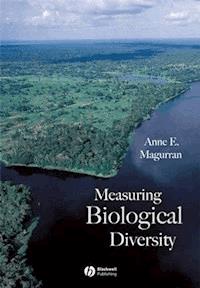
60,99 €
Mehr erfahren.
- Herausgeber: John Wiley & Sons
- Kategorie: Wissenschaft und neue Technologien
- Sprache: Englisch
This accessible and timely book provides a comprehensive overview of how to measure biodiversity. The book highlights new developments, including innovative approaches to measuring taxonomic distinctness and estimating species richness, and evaluates these alongside traditional methods such as species abundance distributions, and diversity and evenness statistics.
- Helps the reader quantify and interpret patterns of ecological diversity, focusing on the measurement and estimation of species richness and abundance.
- Explores the concept of ecological diversity, bringing new perspectives to a field beset by contradictory views and advice.
- Discussion spans issues such as the meaning of community in the context of ecological diversity, scales of diversity and distribution of diversity among taxa
- Highlights advances in measurement paying particular attention to new techniques such as species richness estimation, application of measures of diversity to conservation and environmental management and addressing sampling issues
- Includes worked examples of key methods in helping people to understand the techniques and use available computer packages more effectively
Sie lesen das E-Book in den Legimi-Apps auf:
Seitenzahl: 453
Veröffentlichungsjahr: 2013
Ähnliche



















Contents
Preface
Chapter 1 Introduction: measurement of (biological) diversity
What has changed in the last 15 years?
Biodiversity, biological diversity, and ecological diversity
What this book is about …
… and what it is not about
Assumptions of biodiversity measurement
Spatial scale and biodiversity measurement
Plan of the book
Summary
Chapter 2 The commonness, and rarity, of species
Methods of plotting species abundance data
Species abundance models
Statistical models
Goodness of fit tests
Biological (or theoretical) models
Other approaches
Fitting niche apportionment models to empirical data
General recommendations on investigating patterns of species abundance
Rarity
Summary
Chapter 3 How many species?
Measures of species richness
Surrogates of species
How many species are there on earth?
Summary
Chapter 4 An index of diversity …
Diversity measures
“Parametric” measures of diversity
“Nonparametric” measures of diversity
Taxonomic diversity
Functional diversity
Body size and biological diversity
Summary
Chapter 5 Comparative studies of diversity
Sampling matters
Comparison of communities
Diversity measures and environmental assessment
Summary
Chapter 6 Diversity in space (and time)
Measuring β diversity
Estimating the true number of shared species
β diversity and scale: practical implications
Comparing communities
Turnover in time
Summary
Chapter 7 No prospect of an end
Some challenges
The biodiversity toolkit
Conclusion
References
Worked examples
Index
© 2004 by Blackwell Science Ltd
a Blackwell Publishing company
350 Main Street, Malden, MA 02148-5020, USA
108 Cowley Road, Oxford OX4 1JF, UK
550 Swanston Street, Carleton, Victoria 3053, Australia
The right of Anne E. Magurran to be identified as the Author of this Work has been asserted in accordance with the UK Copyright, Designs, and Patents Act 1988.
All rights reserved. No part of this publication may be reproduced, stored in a retrieval system, or transmitted, in any form or by any means, electronic, mechanical, photocopying, recording or otherwise, except as permitted by the UK Copyright, Designs, and Patents Act 1988, without the prior permission of the publisher.
Library of Congress Cataloging-in-Publication Data
Magurran, Anne E., 1955–
Measuring biological diversity / Anne E. Magurran.
p. cm.
Includes bibliographical references (p. ).
ISBN 0-632-05633-9 (pbk. : alk. paper)
1. Biological diversity—Measurement. I. Title.
QH541.15.B56M34 2003
577–dc21 2003004621
A catalogue record for this title is available from the British Library.
For further information on
Blackwell Publishing, visit our website:
http://www.blackwellpublishing.com
For Jerry
Preface
I wish to begin by acknowledging the wealth of advice and feedback I received following the publication of Ecological Diversity and its Measurement. Although Measuring Biological Diversity is not formally a second edition it has been shaped by the suggestions, advice, ideas, and reprints considerately provided in the 15 years since its predecessor appeared. The new book inevitably reflects the increasing complexity of the field in that time. None the less I hope that it might continue to meet my original goal of providing a practical guide to the myriad measures of biological diversity.
Colleagues and friends who have helped in diverse ways during the writing of this book include: Mary Alkins-Koo, Anette Becher, Gary Carvalho, Gianna Celli, Anne Chao, Steven Chown, Andrew Clarke, Bob Clarke, Jonathan Coddington, Liva Coe, Robert Colwell, Jerry Coyne, Kari Ellingsen, Bland Finlay, Kevin Gaston, Jaboury Ghazoul, Charles Godfrey, Nick Gotelli, Jeff Graves, John Gray, Bill Hamilton, Paul Harvey, John Harwood, Peter Henderson, Ian Johnston, Jake Kenny, Russ Lande, Anna Ludlow, Tino Macías Garcia, “Haggis” Magurran, Rajindra Mahabir, Bob May, Charles Paxton, Owen Petchey, William Penrice, Lars Pettersson, Joe Phelan, Dawn Phillip, Helder Lima de Queiroz, Indar Ramnarine, Sue Ratner, Mike Ritchie, Michael Rosenzweig, Ben Seghers, Dick Southwood, Chris Todd, and Richard Warwick. The St Andrews University Junior Honours Biodiversity class tested some of the methods reviewed in this book and my research group cheerfully kept our projects on fish ecology and behavior moving forward while I was thinking about biological diversity. Peter Henderson, Dawn Phillip, William Penrice, and Fife Nature kindly allowed me to use unpublished data. Luiz Claudio Marigo provided the cover picture of Lago Mamirauá. I also wish to thank Peter Henderson for introducing me to the flooded forests of Mamirauá, and Helder Lima de Queiroz for welcoming me back there. I am equally grateful to my colleagues in Trinidad (particularly Dawn Phillip and Indar Ramnarine) and Mexico (Tino Macías Garcia) for their insights into neotropical biodiversity.
I remain indebted to Palmer Newbould for his prescience in recognizing that biological diversity would be an important research theme, and to the ecologists at the University of Ulster for their encouragement during the early stages of my research career. The Leverhulme Trust, Rockefeller Foundation, Royal Society, and University of St Andrews supported me while I was writing this book. By taking over my teaching for a year Iain Matthews enabled me to finish it. Andrew Clarke, Robert Colwell, and an anonymous reviewer read the entire manuscript and made generous, constructive, and incisive comments; I am in their debt. Any errors that remain are, of course, entirely my own responsibility. My editors at Blackwell Publishing were invariably helpful and supportive; Ian Sherman and Sarah Shannon deserve special gratitude. Finally, Jerry Coyne helped in innumerable ways. Thank you all.
Anne MagurranSt Andrews
chapter one
Introduction: measurement of (biological) diversity1
I begin this book on a personal note. Most ecologists and taxonomists are based in Europe and North America (Golley 1984; Gaston & May 1992). I am no exception. Thus, like many others, my initial insights into the diversity and relative abundance of species were shaped by my experience of working in temperate landscapes. Indeed, the first iteration of this book grew out of my doctoral research on the diversity of Irish woodlands (Magurran 1988). We are all aware that species are distributed unevenly across the earth’s surface but the magnitude of the difference between the diversity of tropical and temperate systems is something that is difficult to comprehend from written accounts alone. Few places have illustrated this contrast more vividly for me than the Mamirauá Sustainable Development Reserve in the Brazilian Amazon2 (Bannerman 2001). The reserve, which is located at the confluence of the Solimões and Japurá Rivers near the town on Tefé in Amazonas, Brazil, covers 1,124,000ha (approximately one-third the size of Belgium) and is devoted to the conservation of võrzea habitat. Võrzea is lowland forest that experiences seasolinal flooding. In Mamirau;á forests can be flooded for more than 4 months a year, during which time water levels rise by up to 12 m. The challenge of producing an inventory of the animals and plants that inhabit this reserve is formidable. It covers a vast area, much of which is difficult to access. The expanse of water impedes sampling. Even fishing can be difficult at high water since the fish move out from the river channels to swim amongst the leaves and branches of the flooded trees.
Figure 1.1 A species accumulation curve for fish found in the floating meadow habitat at the Mamirauá Sustainable Development Reserve in the Brazilian Amazon. The number of species encountered is plotted against the area sampled. Data points reflect the order in which samples were taken. These data were kindly supplied by P. A. Henderson and the sampling methodologies are described in Henderson and Hamilton (1995) and Henderson and Crampton (1997).
Not unexpectedly some groups of animals and plants in the reserve are much better recorded than others. As elsewhere it is the charismatic species, the birds and the mammals, that are most thoroughly enumerated. Mamirauá supports at least 45 species of mammals including two species of river dolphin (Inia geoffrensis and Sotalia fluviatilis), the Amazon manatee (Trichechus inuguis) and two endemic monkeys (the white uacari Cacajao calvus and the black-headed squirrel monkey Saimiri vanzolinii). In addition there are more than 600 species of vascular plants, approximately 400 species of birds and well over 300 species of fish. But even here there are gaps and omissions. Bats, for example, have not yet been formally surveyed. As Figure 1.1 reveals, the species accumulation curve for fish species associated with a single aquatic habitat— the floating meadow—shows no sign of reaching an asymptote, despite intensive sampling (Henderson & Hamilton 1995; Henderson & Crampton 1997). Estimates of the final total of fish species in the reserve remain extremely speculative. The invertebrate fauna is even less well documented and many new species undoubtedly await discovery and description. With the exception of a few key organisms, such as the pirarucu, Arapaima gigas, a bony-tongued fish now threatened as a result of over-exploitation (Queiroz 2000), abundance data exist for very few species. Visiting Mamirauá gave me a new perspective on the diversity of life on earth. It also provoked sobering reflections on the challenges of recording that diversity.
This is not to say, of course, that diversity measurement in other, less richly tapestried, habitats is problem free. I teach a course on biodiversity to third-year students in Scotland’s St Andrews University. One of the class assignments is to estimate the number of species in each of 40 taxa in the county of Fife. Data are presented as species presence in 5 × 5 km grid squares, standard estimation techniques are applied (these are described in Chapter 3) and the students are asked to present a report on the diversity of their chosen plant or animal group. Here too, it is the appealing taxa, the birds and the butterflies, that are most comprehensively recorded and for which the most robust estimates of richness can be obtained. Organisms that are difficult to identify or less popular with the public are much more patchily covered. The class invariably identifies a hotspot of mollusk diversity located in the grid square in which the Fife expert on the taxon happens to live and can hazard only a rough guess at the number of beetles and bugs that the county contains (see Chapter 3 for further discussion of these points). They find this uncertainty frustrating and recommend an increase in sampling effort. Yet, the data set holds more than 5,500 species and Fife is one of the most thoroughly surveyed counties in Britain, which in turn has one of the best species inventories in the world. It would clearly be desirable to fill all the gaps in the Fife data base, but the resources required to do this must be traded off against societal needs such as housing, education, and support for the disadvantaged. Taxpayers rarely find such arguments compelling.
These examples crystalize the challenges that biodiversity measurement must meet. Few surveys tally all species. Time, money, and experts with appropriate identification skills are invariably in short supply. Sampling is often patchy. In many cases it is even hard to judge the extent to which data sets are deficient. These problems are magnified as the scale of the investigation, the inaccessibility of habitat, and the richness and unfamiliarity of the biota increase. The practical difficulties of sampling are compounded when abundance data are collected. Yet, the need to produce accurate and rapid assessments of biodiversity has never been more pressing. It is against this backdrop that I have written this book. In the remainder of the chapter I reflect on changes in the field in the last 15 years (following Magurran 1988) and outline the book’s goals and limitations. I also set the scene by discussing my usage of the terms “biodiversity” and “biological diversity” and present some thoughts on how the nature of an investigation is molded by its geographic scale, as well as by the ecological arena in which it is conducted.
What has changed in the last 15 years?
Ecologists have always been intrigued by patterns of species abundance and diversity (Rosenzweig 1995; Hawkins 2001). Some questions raised by these patterns, such as the diversity of island assemblages, have proved amenable to study (MacArthur & Wilson 1967). Others, including latitudinal gradients of diversity, or the distribution of commonness and rarity in ecological communities, continue to challenge investigators (Brown 2001). The 1992 Rio Earth Summit marked a sea change in emphasis. Biological diversity was no longer the sole concern of ecologists and environmental activists. Instead, it became a matter of public preoccupation and political debate. Many people outside the scientific community are now conscious that biodiversity is being eroded at an accelerating rate even if few fully comprehend the magnitude of the loss. It has been estimated that around 50% of all species in a range of mammal, bird, and reptile groups will be lost in the next 300–400 years (Mace 1995). And while, on average, only a handful of species evolve each year (Sepkoski 1999 used the fossil record to estimate that the canonical speciation rate is three species per year) extinction rates may be as great as three species per hour (Wilson 1992, p. 268). No single catalogue of global biodiversity is yet available and estimates of the total number of species on earth vary by an order of magnitude (May 1990a, 1992, 1994b; and see Chapter 3). The Earth Summit also led national and local authorities to devise biodiversity action plans and to improve biodiversity monitoring. Probably the most significant change in the last 15 years therefore is the increased awareness of biodiversity issues. With this has come a broadening of the concept of (biological) diversity. This point is discussed in more depth below.
Heightened interest in biodiversity has led to the development of important new measurement techniques. Notable advances include innovative niche apportionment models (Chapter 2) along with improved methods of species richness estimation (Chapter 3) and new techniques for measuring taxonomic diversity (Chapter 4). Increased attention has also been devoted to sampling issues (Chapter 5) while methods of measuring β diversity (Chapter 6) have been refined. This is set against a deeper understanding of species abundance distributions and more empirical tests of traditional approaches. The fundamentals of biodiversity measurement may not have changed in the last 15 years but better tools are now available.
Heightened interest in biodiversity has led to the development of important new measurement techniques. Notable advances include innovative niche apportionment models (Chapter 2) along with improved methods of species richness estimation (Chapter 3) and new techniques for measuring taxonomic diversity (Chapter 4). Increased attention has also been devoted to sampling issues (Chapter 5) while methods of measuring β diversity (Chapter 6) have been refined. This is set against a deeper understanding of species abundance distributions and more empirical tests of traditional approaches. The fundamentals of biodiversity measurement may not have changed in the last 15 years but better tools are now available.
The third significant change in the last decade and a half is the near universal access to powerful computers and the advent of the internet. This technology has revolutionized the measurement of diversity. Greater computing power has also made the use of null models and randomization techniques more tractable. A growing list of computer pack-ages is now available and standard spreadsheets can be used to perform hitherto daunting calculations. Table 1.1 lists the computer packages mentioned elsewhere in the text. I have made no attempt to produce a comprehensive list but simply wish to draw the reader’s attention to the packages I have found useful. Some of these are freeware or shareware while others are commercially produced. Web site addresses are correct at the time of writing but there is no guarantee that they will still exist at the time of reading. I would be grateful to learn about other packages relating to methods outlined in the book.
Table 1.1 Biodiversity measurement software. A selection of web sites are listed that provide access to downloadable software or information on where this software can be obtained. The list is not exhaustive but does include those sites that have been used in the preparation of this book. All sites follow the normal convention of beginning http://. The table also indicates whether the software is written for a Macintosh or a PC (Windows) platform.
Web sites
Software details
viceroy.eeb.uconn.edu/EstimateS
EstimateS
package for species richness estimation. Also calculates a range of a diversity statistics and complementarity (b) measures. Mac and PC
homepages.together.net/~gentsmin/ ecosim.htm
Ecosim.
Focuses on null models in ecology. Computes rarefaction curves and some diversity indices. PC
www.irchouse.demon.co.uk/
Species Diversity and Richness.
Calculates a range of diversity measures (with bootstrapping), richness estimators, rarefaction curves, and b diversity measures. PC
www.exetersoftware.com
Programs to accompany Krebs’s (1999)
Ecological Methodology.
Good range of richness, diversity, and evenness measures plus log normal and log series models. PC
www.biology.ualberta.ca/jbzustp/ krebswin.html
Provides software for some of the diversity measures (and other techniques) described in Krebs’s (1999)
Ecological Methodology.
PC
www.entu.cas.cz/png/PowerNiche/
PowerNiche
package provides expected values for certain niche apportionment models. PC
www.pml.ac.uk/primer/
primer
software. Multivariate techniques for community analysis. Includes diversity measures, dominance curves, and Clarke and Warwick’s taxonomic distinctness statistics (Chapter 4). PC
Biodiversity, biological diversity, and ecological diversity
It is often assumed that the term “biological diversity” was coined in the early 1980s. Izsák and Papp (2000), for example, credit it to Lovejoy (1980a). Harper and Hawksworth (1995) note that the term is of older provenance but also date its renaissance to 1980 (Lovejoy 1980a, 1980b; Norse & McManus 1980). However, I first came across the concept in 1976 when discussing potential PhD topics with my supervisor, Palmer Newbould, so I can testify that the term biological diversity was already in current usage then (and that it had acquired much of its modern meaning). The earliest reference I can locate is by Gerbilskii and Petrunkevitch (1955, p. 86) who mention biological diversity in the context of intraspecific variation in behavior and life history. Undoubtedly there are even earlier examples. By the 1960s the term began to be used more widely. For example, Whiteside and Harmsworth (1967, p. 666) include it in a discussion of the species diversity of cladoceran communities while Sanders (1968, p. 244) suggests that diversity measurement, notably rarefaction, will help elucidate the factors that affect biological diversity. Harper and Hawksworth (1995) point out that Norse et al. (1986) were first to explicitly dissect biological diversity into three components: genetic diversity (within-species diversity), species diversity (number of species), and ecological diversity (diversity of communities).
The word “biodiversity,” on the other hand, is indisputably of more recent origin. This contraction of “biological diversity” can be traced to a single event. It was apparently proposed in 1985 by Walter G. Rosen during the planning of the 1986 National Forum on BioDiversity (Harper & Hawksworth 1995). The subsequent publication of these proceedings in a book entitled Biodiversity, under the editorship of E. O. Wilson (1988), introduced the term to a wider audience. In fact the word caught the mood of the moment so well that it soon overtook biological diversity in popularity (Figure 1.2). Like most other users (see also Harper & Hawksworth 1995), I use “biodiversity” and “biological diversity” interchangeably. The United Nations Environment Programme (UNEP) definition (Heywood 1995, p. 8) is widely cited:
“Biological diversity” means the variability among living organisms from all sources including, inter alia, terrestrial, marine and other aquatic systems and the ecological complexes of which they are part; this includes diversity within species, between species and of ecosystems.
Harper and Hawksworth (1995) take exception to the reference to ecosystem, an entity that includes the physical environment (which by definition does not have biodiversity). They suggest “community” as a substitute. While it does not matter greatly whether “biodiversity” or “biological diversity” is the chosen term, the fact that the concept spans a range of organizational levels means that it is important to specify how it is being used. Harper and Hawksworth (1995) propose the adjectives “genetic,” “organismal,” and “ecological” to match the three levels embodied in the UNEP definition.
Figure 1.2 The number of papers per annum (between 1986 and 2001) that mention “biodiversity,” “biological diversity,” or “ecological diversity” in their titles, abstracts, or keywords. Note log scale on y axis. (Data from Web of Science (http://wos.mimas.ac.uk/).)
Hubbell (2001, p. 3) offers a more focused definition that is closer to the subject matter of this book. He defines biodiversity to be “synonymous with species richness and relative species abundance in space and time.”
There is an important distinction between the concept of biodiversity and the notion of a “biodiversity movement.” The biodiversity movement is concerned with political and ethical issues as well as biological ones. Issues such as pesticide use, environmental economics, the fate of endangered species and land use fall within its domain. Indeed, as Smith (2000, p. x) has pointed out “it has more to do with human aspirations than it does with biological focus.” I do not consider the biodiversity movement further except to observe that the discussions and decisions it entails must be underpinned by accurate biodiversity assessment.
“Ecological diversity” is a term that has come to have several overlapping meanings. Pielou (1975, p. v) defined it as “the richness and variety… of natural ecological communities.” In essence, in its original formulation ecological diversity was something that could be measured by a diversity index. It was for that reason that I used it in the title of my first book (Magurran 1988). Norse and McManus (1980) treated ecological diversity as equivalent to species richness—a more restrictive definition than Pielou’s. At present, where it is used at all, ecological diversity is synonymous with biological diversity in its broadest sense (Harper & Hawksworth 1995). It is now associated with the diversity of communities (or ecosystems) and covers matters such as the number of trophic levels, the range of life cycles, and the diversity of biological resources as well as the variety and abundance of species. This evolving terminology is one reason for reverting to the most enduring term of all, “biological diversity,” for the title of this book. The fact that “ecological diversity” is little used these days is another (Figure 1.2).
The definition of biological diversity I have adopted for the book is simply “the variety and abundance of species in a defined unit of study.” My goal is to evaluate the methods used to describe this diversity. I focus on species because they are the common currency of diversity. The first question that people ask is usually something like “how many species of trees are found in Costa Rica?” or “how many beetles are there in England’s New Forest?” or even “how many species are there on the earth?” This focus does not preclude measures that involve phylogentic information, which must in any case be weighted by species richness. I include abundance because the relative importance of species is a significant topic in its own right, and also because relative abundance is implicitly, if not explicitly, involved in the estimation of species richness.
Izsák and Papp (2000) make a distinction between measures of ecological diversity and measures of biodiversity. Measures of ecological diversity traditionally, but not invariably (see, for example, Pielou 1975; Magurran 1988), take account of the relative abundance of species. A familiar example is the Shannon index, discussed in depth in Chapter 4. This class of measures treats all species as equal (see the section below on the assumptions of biodiversity measurement). Newer measures typically ignore abundance differences between species, focusing instead on taxonomic differences. However, I find Izsák and Papp’s (2000) distinction artificial, not least because Pielou (1975), in her pioneering text on ecological diversity, considered ways of incorporating phylogenetic information into diversity measures. It is also of note that Warwick and Clarke’s (2001) taxonomic distinctness measure—one of the most promising new approaches—is a form of the Simpson index, and can be adapted to incorporate abundance data. I have therefore used the term “diversity measure” to cover all the methods reviewed in this book.
Biological diversity, in the sense I am using it in this book, can be partitioned into two components: species richness and evenness (Simpson 1949). The term “species richness” was coined by McIntosh (1967) and represents the oldest and most intuitive measure of biological diversity. Species richness is simply the number of species in the unit of study. When I say simply, I mean that the concept is simple to define; its measurement is not always so straightforward (Chapter 3). I use “species richness measure” when referring to techniques that focus on this component of diversity. “Evenness” describes the variability in species abundances. A community in which all species have approximately equal numbers of individuals (or similar biomasses) would be rated as extremely even. Conversely, a large disparity in the relative abundances of species would result in the descriptor “uneven.” The nature of evenness is further explored in Chapters 2 and 3. Rao (1982), cited in Baczkowski et al. (1998) equates richness and evenness with community size and shape respectively. A “diversity index” is a single statistic that incorporates information on richness and evenness. This blend is often referred to as “heterogeneity” (Good 1953; Hurlbert 1971) and for the same reason diversity measures that incorporate the two concepts may be termed “heterogeneity” measures. The weighting placed on one component relative to the other can have a significant influence on the value of diversity recorded and the way in which sites or assemblages are ranked. A large number of such measures have been devised and much of the book is devoted to assessing their relative merits. I follow the convention of using the term “diversity measure” or “diversity index” to refer to measures that take species abundances (as well as or in place of species richness) into account.
What this book is about …
The primary goal of this book is to provide an overview of the key approaches to diversity measurement. It covers both α diversity (the diversity of spatially defined units) and β diversity (differences in the compositional diversity of areas of α diversity). Species abundance models, species richness estimation techniques, and synoptic diversity statistics are reviewed. No specialist mathematical or statistical knowledge is assumed. Worked examples are included for those methods that are reasonably tractable and that require only a calculator, spreadsheet, or readily obtainable software. Pointers to relevant literature and computer packages are provided for other techniques. I offer guidance on when to use certain methods and on how to interpret the outcome. The limitations of the various procedures are also considered. Most of all I stress the importance of having clearly defined aims or a testable hypothesis (Yoccoz et al. 2001).
… and what it is not about
Ecologists typically make the distinction between pattern and process (following Watt 1947). This book focuses on the description of pattern and has relatively little to say about process. For example, I explain how to quantify the differences between diverse and impoverished habitats without necessarily making inferences about the reasons for those differences. However, pattern cannot be entirely divorced from process. Niche apportionment models are one manifestation of that linkage (Tokeshi 1999; see also Chapter 2). The use of null models to explain empirical species abundance patterns is another (see, for instance, Hubbell 2001). These aspects of biodiversity measurement are dealt with as they arise. Readers searching for a more detailed analysis of process will find the following books of interest: Huston (1994), Rosenzweig (1995), Tokeshi (1999), Gaston and Blackburn (2000), and Hubbell (2001).
Investigations that seek to explain spatial or temporal shifts in diversity treat process as the independent variable and diversity as the dependent variable. The relationship between diversity and ecosystem function is also receiving a great deal of attention (Kinzig et al. 2002; Loreau et al. 2002), but here the axes are reversed (Purvis & Hector 2000). Diversity and function may be linked, at least as richness increases from low to moderate levels (see, for example, Hector et al. 1999; Chapin et al. 2000). Moreover, diversity can be positively correlated with a system’s ability to withstand disturbance (McCann 2000). As with so much else in ecology and evolution these ideas were first aired by Darwin (1859) who discussed a pioneering experiment conducted by George Sinclair before 1816 (Hector & Hooper 2002). The reasons for the covariance between diversity and function, and the consequences of it, lie beyond the scope of this book. However, the methods that this book reviews are relevant to the debate since the outcome of these investigations will depend on how diversity is measured. For example, experiments and simulations that construct perfectly even assemblages are likely to overestimate the strength of the natural relationship between diversity and function. More realistically assembled communities can lead to different but more representative conclusions (Nijs & Roy 2000; Wilsey & Potvin 2000).
A third contemporary preoccupation is the conservation of biological diversity. The book recognizes that this is a vitally important endeavor but does not seek to offer advice on how it might be achieved beyond noting that the techniques described form an important part of the conservation biologist’s tool kit. There is an extensive literature on the subject; Margules and Pressey (2000) and Pullin (2002) provide an entry point.
Finally, because my focus is on species I have not attempted to discuss the measurement of diversity in taxa where species (or their equivalents) are not readily identifiable entities. For example, the concept of species diversity can break down where microorganisms are concerned (O’Donnell et al. 1995), though see Finlay (2002) for a fascinating analysis of global dispersal patterns amongst free-living microbial eukaryote species. Molecular techniques are increasingly used to measure microbial diversity (Fuhrman & Campbell 1998; Copley 2002) and emerging technologies, such as DNA microarrays—“gene chips”—appear to hold great potential (Brown & Botstein 1999). Neither have I tried to address the measurement of genetic diversity within species (Templeton 1995). That is the subject of a large and growing literature in its own right (see, for example, Hillis et al. 1996; Brettschneider 1998; Goldstein & Schlötterer 1999; Schmidtke 2000; Sharbel 2000), and although there are some parallels in approach there are also significant differences in emphasis.
Assumptions of biodiversity measurement
Diversity measurement is based on three assumptions (Peet 1974). First, all species are equal. This means that species of notable conservation value or species that make a disproportionate contribution to community function do not receive special weighting. The relative abundance of a species in an assemblage is the only factor that determines its importance in a diversity measure. Richness measures make no distinctions amongst species at all and treat the species that are exceptionally abundant in the same manner as those that are extremely rare. Exceptions can be made to this however. An investigator may decide to focus on endemic species for example, and compare the diversity of these at different localities. Taxonomic distinctness is a special case. These measures describe the average relatedness of species in a sample—an assemblage in which species are distributed amongst several families will be more diverse than another with identical richness and relative abundance, but where the species are clustered in a single genus (Warwick & Clarke 2001; see also Chapter 4). Furthermore, abundance may covary with other species characteristics such as body size (Gaston & Blackburn 2000). Although these considerations are not explicitly addressed in biodiversity measurement the patterns that emerge shed light on the processes such as niche apportionment and energy allocation that structure communities.
The second assumption of biodiversity measurement is that all individuals are equal. In principle, as far as these measures are concerned, there is no distinction between the General Sherman (the world’s largest tree in terms of volume) in California’s Sequoia National Park and a small seedling Sequoiadendron giganteum. In practice, however, sampling tends to be selective. Surveys of woody vegetation typically enumerate all individuals in classes bounded by increments in tree diameter (see, for example, Whittaker 1960). Seine nets and plankton nets capture only those individuals that are too large to escape through the mesh. Moth trapping samples adult lepidoptera; caterpillars must be surveyed using different techniques. Sampling issues are considered further in Chapter 5.
Finally, biodiversity measures assume that species abundance has been recorded using appropriate and comparable units (Chapter 5). Abundance must be in the form of number of individuals when the log series model is used (though the model can be adapted to accommodate other discrete measures such as occurrence data—see Chapter 2). It is clearly unwise to include different types of abundance measure, such as number of individuals and biomass, in the same investigation. Less obviously, diversity estimates based on different units are not directly comparable. Rankings of assemblages, based on the same diversity statistic, may differ if different forms of abundance have been used.
Spatial scale and biodiversity measurement
Biodiversity is, in essence, a comparative science. The investigator typically wants to know if one domain is more diverse than another, or whether diversity has changed over time due to processes such as succession or enrichment. But which entities should be compared, and over what scales can they be studied? The community seems the natural unit (Harper & Hawksworth 1995). Ever since Forbes (1844) first identified “provinces of depth” in the Aegean Sea, ecologists have recognized that species form the characteristic groupings we now term communities. Communities are also associated with particular geographic localities. As Pethybridge and Praeger (1905) remarked,
Different conditions of climate, soil, water-supply and the various other environmental factors are evidenced by the existence of different associations, so that the distribution of vegetation from this—the “ecological” —point of view, is closely bound up with the geography of the area in its widest sense (my italics).
In addition to their boundaries in space and time, communities are further identified by the presence of ecological interactions amongst the constituent species. A community is the arena within which competition, predation, parasitism, and mutualism are played out. Indeed, the relationship between resources, species interactions, and species abundance is the key to explaining the characteristic patterns of diversity highlighted in Chapter 2.
However, while the community is a fundamental ecological concept, it is also, as Fauth et al. (1996) observe, an inexact one. Major ecological textbooks offer conflicting definitions of the term. Some investigators add a phylogenetic dimension and speak of plant or animal communities. In part this arises from the practical difficulties of addressing the full breadth of diversity in a single study; there are few investigators with the taxonomic expertise to identify the range of vertebrate and invertebrate animals, and plants, let alone microbes, at a given locality (see Lawton et al. 1998 for a discussion of the effort required to compile an inventory of one forest). Furthermore, the inclusion of taxa with abundances spanning many orders of magnitude, raises potential statistical problems. Odum (1968), for instance, notes that the approximate density of organisms per square meter is 1021 for soil bacteria, 10 for grasshoppers (Orchelimum sp.), 10−2 for mice (Microtus sp.), and 10–5 for deer (Odocoileus sp.).
When investigations are restricted to subsets of taxa, the term assemblage is often substituted for community. But even this can lead to confusion because, as Fauth et al. (1996) note, community and assemblage are often used synonymously with each other, as well as with guild and ensemble. Fauth et al.’s (1996) solution, which has particular application to the measurement of biological diversity, is to view associations of organisms in the context of three overlapping sets delineated by phylogeny, geography, and resources (Figure 1.3).
The first of these, phylogeny (set A), encompasses species of common descent. Communities, which belong to set B, are defined as collections of species occurring at a specified place and time. To meet this operational definition it is necessary to identify the geographic boundary of the community. This boundary may either be natural—for example, all organisms in a pond—or arbitrary—for instance, all organisms in a 1m2 plot of grassland. Ecological interactions are thus less a condition of the community than a consequence of it. The crucial point, according to Fauth et al. (1996) is that communities are not delimited either by phylogeny (set A) or resource use (set C). Guilds belong to the third set and define groups of organisms that exploit the same resources, in a similar manner (Root 1967).
The intersections of the sets offer clarification of other widely used terms and concepts. Assemblages consist of phylogenetically related members of a community. Local guilds embrace species that share resources and belong to the same community. There is no single term in common use to describe the intersection of sets A and C, but organisms that reside there are often given functional descriptors, such as “pelagic cichlids.” Finally, ensembles comprise interacting species that share ancestry as well as resources.
Figure 1.3 Fauth et al. (1996) used a Venn diagram to assign groups of organisms to three ecological sets defined by geography, resources, and phylogeny. Under their definition, communities consist of species found at a given place and time. Communities in which species are taxonomically related are termed assemblages, and assemblages whose members exploit a common resource are known as ensembles. These are the entities most often studied in biological diversity. (Redrawn with permission from Fauth et al. 1996.)
The diversity of any of these groupings of species could in principle be examined. Most investigators, however, for all the logistic and statistical reasons alluded to above, will focus on either assemblages or ensembles. By clearly distinguishing the domains within which diversity may be explored Fauth et al.’s (1996) framework clarifies previously imprecise concepts and facilitates comparative analyses of diversity.
Not all ecologists are persuaded that communities are discrete and meaningful units with distinct boundaries, however. The fossil record indicates that as the ice age eased, taxa migrated individually and assemblages were constructed seemingly at random. It is arguable that communities have no temporal validity, and possibly no ecological validity either. Furthermore, ecological entities may be considered self-similar, that is that the same pattern of heterogeneity is found at all spatial scales. Self-similarity models can be used to make predictions about relative species abundance and produce outcomes that are consistent with some natural patterns (Harte & Kinzig 1997; Harte et al. 1999a; see also discussion in Chapter 2). Wilson and Chiarucci (2000) used species–area curves based on forest stands in Tuscany to test these alternatives. They conclude that “there is no evidence for a special level in the spatial continuum that we can label ‘community’.” None the less, Wilson and Chiarucci (2000) concede that the term community is a convenient label and is likely to remain in common usage.
Irrespective of the final resolution of this debate the spatial scale of the investigation has some practical implications for investigators. As noted above, the geographic boundaries of communities, assemblages, and ensembles are defined by the investigator. Given the invariably positive association between species richness and area, special care is needed when contrasting the diversity of assemblages that differ markedly in spatial scale, or when extrapolating from local assemblages to regional ones. These points are revisited and developed in Chapter 6, which further points out that scale has implications for measures of b as well as a diversity. Practical considerations mean that abundance data become more challenging to collect as the geographic coverage of the investigation increases (though range size can be used as a surrogate of abundance for certain well-recorded taxa (Blackburn et al. 1997)). Species richness is thus the usual metric of diversity when large areas are scrutinized (though even here, as Chapter 3 will reveal, the relative abundances of species cannot be entirely ignored). Less obviously, it may not always be meaningful to employ niche-based models to explore the diversity of large-scale, species-rich assemblages, nor to use certain statistical models, such as the log normal, to describe the diversity of localized or impoverished ones. The relationship between assemblage size and the distribution of species abundance is considered in depth in the next chapter. An additional consideration is that the relationship between a and β diversity will shift with scale. Finally, it is important to be aware that local communities are embedded in landscapes. Species composition, along with species richness and abundance, is shaped by regional processes (Gaston & Blackburn 2000; Hubbell 2001). The isolation of an assemblage influences immigration rate. This in turn has implications for community structure. Null models are an effective means of evaluating observed patterns of species composition and diversity but they need to be constructed using a realistic species pool (Chapter 7). Even the most narrowly focused investigations cannot entirely ignore these wider considerations.
Plan of the book
The distribution of species abundance contains the maximum amount of information about a community’s diversity. Chapter 2 therefore sets the scene by reviewing the ever-expanding range of species abundance models. These can be divided into two categories: statistical models endeavor to describe observed patterns while biological models attempt to explain them. The split between biological and statistical also mirrors, to a large extent, the division between stochastic and deterministic models. This distinction has important implications for model fitting. Two well-known statistical models, the log normal and log series, continue to stand the test of time. Biological models have had a mixed history but new formulations by Mutsunori Tokeshi represent an exciting development.
Species richness is the iconic measure of biological diversity. Unfortunately, species inventories can be both costly and challenging to compile and are subject to sample size biases. Chapter 3 investigates methods of estimating species richness. Some of these make inferences based on the underlying pattern of species abundances. However, a new class of non-parametric estimators, devised by Anne Chao and her colleagues, has revolutionized the field.
Species diversity, or heterogeneity, measures are the traditional way of quantifying biological diversity. Some old favorites, such as the “Shannon index” remain popular and new indices continue to be invented. Chapter 4 discusses these measures and evaluates their performance. Guidelines for the selection of diversity measures are provided.
The goal of biodiversity measurement is usually to compare or rank communities. Meaningful comparisons, however, demand good data. Chapter 5 explores important problems and pitfalls in data collection. The issues addressed include sampling protocols and methods of measuring abundance. The chapter also shows how to make statistical comparisons of diversity estimates and explains what to do when different methods yield different rankings. Finally, it considers one important application of diversity measures—environmental assessment.
Up to this point the book focuses on a diversity—the diversity of spatially defined units. However, b diversity, the difference in species composition (and sometimes species abundance), or turnover, between two or more localities is an important part of biological diversity. Indeed, the diversity of a landscape is determined by the levels of both a and b diversity. Similarly, turnover through time sheds light on the temporal dynamics of an assemblage. Chapter 6 examines methods of assessing b diversity. New techniques for estimating the number of shared species in two assemblages are also reviewed.
The book concludes with a brief overview of the current status of diversity measurement and sets out key challenges for the future.
Summary
1 After Simpson (1949).
2http://www.Mamiraua.org.br.
chapter two
The commonness, and rarity, of species1
In no environment, whether tropical or temperate, terrestrial or aquatic, are all species equally common. Instead, it is universally the case that some are very abundant, others only moderately common, and the remainder—often the majority—rare. This pattern is repeated across taxonomic groups (Figure 2.1). Indeed, the adoption, by early phytogeographers such as Tansley, of characteristic species to classify plant associations (Harper 1982), implicitly recognizes that certain members of an assemblage, by virtue of their abundance, help define its identity.
Many people, as Chapter 1 observed, treat biological diversity, or biodiversity, as synonymous with species richness. However, the fact that species abundances differ means that the additional dimension of evenness can be used to help define and discriminate ecological communities (Figure 2.2). Evenness2 is simply a measure of how similar species are in their abundances. Thus, an assemblage in which most species are equally abundant is one that has high evenness. The obverse of evenness is dominance, which, as the name implies, is the extent to which one or a few species dominate the community. It is conventional to equate high diversity with high evenness (equivalent to low dominance) and a variety of measures have been devised to encapsulate these concepts (see Chapter 4 for details).
The observation that species vary in abundance also prompted the development of species abundance models. Motomura’s (1932) geometric series and Fisher’s (Fisher et al. 1943) logarithmic series represented the first attempts to mathematically describe the relationship between the number of species and the number of individuals in those species. Since then a variety of distributions have been devised or borrowed from other sources. Some of these models (discussed in detail below) are more successful than others at describing species abundance distributions, but none are universally applicable to all ecological assemblages. This is because both species richness, and the degree of inequality in species abundances, vary amongst assemblages. In some cases one or two species dominate, with the remainder being infrequent or rare. In other situations species abundances are rather more equal, though never totally uniform. A further complication arises from the fact that sampling may provide an incomplete picture of the underlying species abundance distribution in the assemblage under investigation (see discussion below and in Chapter 4). Yet, even with these constraints, species abundance distributions have the power to shed light on the processes that determine the biological diversity of an assemblage. This stems from the assumption that the abundance of a species, to some extent at least, reflects its success at competing for limited resources (Figure 2.3). No assemblage has infinite resources. Rather, there are always one or more factors that set the upper limit to the number of individuals, and ultimately species, that can be supported. Classic examples of limited resources are the light reaching the floor of a tropical rain forest (Bazzaz & Pickett 1980), nutrients in the soil (Grime 1973, 1979), and the space available for sessile organisms on rocky shores (Connell 1961). (The relationship between productivity and patterns of abundance can be complex—a point well articulated elsewhere (Huston 1994; Rosenzweig 1995; Gaston & Blackburn 2000; Godfray & Lawton 2001).) In one of the most comprehensive reviews of the subject to date, Tokeshi (1993) strongly advocates the study of species abundance relationships. He argues that if biodiversity is accepted as something worth studying (Chapter 1), it follows that species abundance patterns deserve equal and possibly even greater attention. The goal of this chapter is to review the models proposed to account for the distribution of species abundances in ecological assemblages. It provides guidelines on the presentation and analysis of species abundance data and concludes by discussing the concept of rarity in the context of species abundance distributions. Some (though not all) of the methods assume that abundance comes in discrete units called individuals. In other cases abundance is assumed to be continuous (biomass is an example). I touch on these matters as they arise and explore the issue of different types of abundance measure further in Chapter 5.
Figure 2.1 Variation in the relative abundance of species in three natural assemblages. (a) Relative abundance of larger mammals in 11 counties of southwestern Georgia and northwestern Florida (from table 1, McKeever 1959). A total of 2,688 individuals were collected during 31,145 trap nights. (b) Relative abundance (number of individuals) of leeches collected from 87 lotic habitats in Colorado (from table 1, Herrmann 1970). (c) Relative abundance of trees and shrubs found between 1,680 and 1,920 m in the central Siskiyou Mountains in Oregon and California. Abundance represents the number of stems (≥1 cm diameter) in 5ha. (Data from table 12, Whittaker 1960.)
Figure 2.2 A survey of fish diversity in Trinidad revealed two assemblages with equal species richness but different evenness. (a) The abundance of the eight species of fish in the Innis River and Cat’s Hill River in Trinidad is shown using a linear scale. (b) The same data are expressed as relative abundance and presented in the form of a rank/abundance plot. Note the logarithmic scale. The greater evenness of the Cat’s Hill River assemblage is evident from the shallower slope in the rank/abundance plot. In this assemblage the most dominant species (Astyanaxbimaculatus) comprised 28% of the total catch. This contrasts with the less even Innis River in which the most dominant species (Hypostomus robinii) represented 76% of the sample. (Data from study described by Phillip 1998.)
Methods of plotting species abundance data
Comparative studies of diversity are often impeded by the variety of methods used to display species abundance data. Different investigators have visualized the species abundance distribution in different ways. One of the best known and most informative methods is the rank/abundance plot or dominance/diversity curve (Figure 2.4). In this species are plotted in sequence from most to least abundant along the horizontal (or x) axis. Their abundances are typically displayed in a log10 format (on the y axis)—so that species whose abundances span several orders of magnitude can be easily accommodated on the same graph. In addition, and in order to facilitate comparison between different data sets or assemblages, proportional or percentage abundances are often used. This simply means that the abundance of all species together is designated as 1.0 or 100% and that the relative abundance of the each species is given as a proportion or percentage of the total. Krebs (1999) recommends that these plots be termed Whittaker plots in celebration of their inventor (Whittaker 1965).
Figure 2.4 An example of a rank/abundance or Whittaker plot. The y axis shows the relative abundance of species (plotted using a log10 scale) while the x axis ranks each species in order from most to least abundant. The three lines show the densities of trees, in relation to elevation, on quartz diorite in the central Siskiyou Mountains in California and Oregon. Species richness decreases, and assemblages become less even (as indicated by increasingly steeper slopes) at higher altitudes. (Data from table 12, Whittaker 1960.)
Figure 2.5 (a) Rank/abundance plots illustrating the typical shape of three well-known species abundance models: geometric series, log normal, and broken stick. (b) Empirical rank/abundance plots (after Whittaker 1970). The three assemblages are nesting birds in a deciduous forest, West Virginia, vascular plants in a deciduous cove forest in the Great Smoky Mountains, Tennessee, and vascular plant species from subalpine fir forest, also in the Great Smoky Mountains. Comparison with (a) suggests that the best descriptors of these three assemblages are the broken stick, log normal, and geometric series, respectively – but see text for further discussion of this point. (Redrawn with kind permission of Kluwer Academic Publishers from fig. 2.4, Magurran 1988.)
One advantage of a rank/abundance plot is that contrasting patterns of species richness are clearly displayed. Another is that when there are relatively few species all the information concerning their relative abundances is clearly visible, whereas it would be inefficiently displayed in a histogram format (Wilson 1991). Furthermore, rank/abundance plots highlight differences in evenness amongst assemblages (Nee et al. 1992; Tokeshi 1993; Smith & Wilson 1996) (Figure 2.5). However, if S (the number of species) is moderately large the logarithmic transformation of proportional abundances can have the effect of de-emphasizing differences in evenness. Rank/abundance plots are a particularly effective method of illustrating changes through succession or following an environmental impact. Indeed, it is often recommended (see, for example, Krebs 1999) that the first thing an investigator should do with species abundance data is to plot them as a rank/abundance graph.
The shape of the rank/abundance plot is often used to infer which species abundance model best describes the data. Steep plots signify assemblages with high dominance, such as might be found in a geometric or log series distribution, while shallower slopes imply the higher evenness consistent with a log normal or even a broken stick model (Figure 2.5; see also below for further discussion of species abundance models). However, as Wilson (1991) notes, the curves of the different models have rarely been formally fitted to empirical data. Even Whittaker’s (1970) well-known and widely reproduced log normal curve may have been fitted by eye (Wilson 1991). Wilson (1991) provides methods for fitting this and other models to rank/abundance (dominance/diversity) curves. These are discussed in the section (p. 43) on goodness of fit tests below.
Figure 2.6 k-dominance plots for breeding birds at “Neotoma” (table II, Preston 1960). Censuses from 1923 and 1940 are compared. The latter plot is the more elevated, indicating that this assemblage is less diverse.
There are further ways of presenting species abundance data in a ranked format. For instance, the K-dominance plot (Lambshead et al. 1983; Platt et al. 1984) shows percentage cumulative abundance (y axis) in relation to species rank or log species rank (x axis) (Figure 2.6). Under this plotting method more elevated curves represent the less diverse assemblages. Abundance/biomass comparison or ABC curves (Figure 2.7




