


51,99 €
Mehr erfahren.
- Herausgeber: John Wiley & Sons
- Kategorie: Wissenschaft und neue Technologien
- Sprache: Englisch
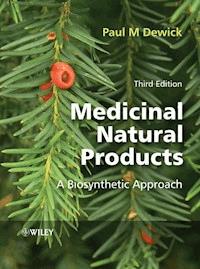
Medicinal Natural Products: A Biosynthetic Approach, Third Edition, provides a comprehensive and balanced introduction to natural products from a biosynthetic perspective, focussing on the metabolic sequences leading to various classes of natural products. The book builds upon fundamental chemical principles and guides the reader through a wealth of diverse natural metabolites with particular emphasis on those used in medicine.
There have been rapid advances in biosynthetic understanding over the past decade through enzymology, gene isolation and genetic engineering. Medicinal Natural Products has been extended and fully updated in this new edition to reflect and explain these developments and other advances in the field. It retains the user-friendly style and highly acclaimed features of previous editions:
- a comprehensive treatment of plant, microbial, and animal natural products in one volume
- extensive use of chemical schemes with annotated mechanistic explanations
- cross-referencing to emphasize links and similarities
- boxed topics giving further details of medicinal materials, covering sources, production methods, use as drugs, semi-synthetic derivatives and synthetic analogues, and modes of action
Medicinal Natural Products: A Biosynthetic Approach, Third Edition, is an invaluable textbook for students of pharmacy, pharmacognosy, medicinal chemistry, biochemistry and natural products chemistry.
Sie lesen das E-Book in den Legimi-Apps auf:
Seitenzahl: 902
Veröffentlichungsjahr: 2011
Ähnliche


















CONTENTS
1 About this book, and how to use it
The subject
The aim
The approach
The topics
The figures
Further reading
What to study
What to learn
Nomenclature
Conventions regarding acids, bases, and ions
Some common abbreviations
2 Secondary metabolism: the building blocks and construction mechanisms
Primary and secondary metabolism
The building blocks
The construction mechanisms
Elucidating biosynthetic pathways
3 The acetate pathway: fatty acids and polyketides
Fatty acid synthase: saturated fatty acids
Unsaturated fatty acids
Uncommon fatty acids
Prostaglandins
Thromboxanes
Leukotrienes
Polyketide synthases: generalities
Polyketide synthases: macrolides
Polyketide synthases: linear polyketides and polyethers
Diels–Alder cyclizations
Polyketide synthases: aromatics
4 The shikimate pathway: aromatic amino acids and phenylpropanoids
Aromatic amino acids and simple benzoic acids
Phenylpropanoids
Aromatic polyketides
Terpenoid quinones
5 The mevalonate and methylerythritol phosphate pathways: terpenoids and steroids
Mevalonic acid and methylerythritol phosphate
Hemiterpenes (C5)
Monoterpenes (C10)
Irregular monoterpenes
Iridoids (C10)
Sesquiterpenes (C15)
Diterpenes (C20)
Sesterterpenes (C25)
Triterpenes (C30)
Steroids
Tetraterpenes (C40)
Higher terpenoids
6 Alkaloids
Alkaloids derived from ornithine
Alkaloids derived from lysine
Alkaloids derived from nicotinic acid
Alkaloids derived from tyrosine
Alkaloids derived from tryptophan
Alkaloids derived from anthranilic acid
Alkaloids derived from histidine
Alkaloids derived by amination reactions
Purine alkaloids
7 Peptides, proteins, and other amino acid derivatives
Peptides and proteins
Ribosomal peptide biosynthesis
Peptide hormones
Ribosomal peptide toxins
Enzymes
Non-ribosomal peptide biosynthesis
Modified peptides: penicillins, cephalosporins, and other β-lactams
Cyanogenic glycosides
Glucosinolates
Cysteine sulfoxides
8 Carbohydrates
Monosaccharides
Oligosaccharides
Polysaccharides
Aminosugars and aminoglycosides
Index
This edition first published 2009 © 2009 John Wiley & Sons Ltd
Registered office
John Wiley & Sons Ltd, The Atrium, Southern Gate, Chichester, West Sussex, PO19 8SQ, United Kingdom
For details of our global editorial offices, for customer services and for information about how to apply for permission to reuse the copyright material in this book please see our website at www.wiley.com.
The right of the author to be identified as the author of this work has been asserted in accordance with the Copyright, Designs and Patents Act 1988.
All rights reserved. No part of this publication may be reproduced, stored in a retrieval system, or transmitted, in any form or by any means, electronic, mechanical, photocopying, recording or otherwise, except as permitted by the UK Copyright, Designs and Patents Act 1988, without the prior permission of the publisher.
Wiley also publishes its books in a variety of electronic formats. Some content that appears in print may not be available in electronic books.
Designations used by companies to distinguish their products are often claimed as trademarks. All brand names and product names used in this book are trade names, service marks, trademarks or registered trademarks of their respective owners. The publisher is not associated with any product or vendor mentioned in this book. This publication is designed to provide accurate and authoritative information in regard to the subject matter covered. It is sold on the understanding that the publisher is not engaged in rendering professional services. If professional advice or other expert assistance is required, the services of a competent professional should be sought.
The publisher and the author make no representations or warranties with respect to the accuracy or completeness of the contents of this work and specifically disclaim all warranties, including without limitation any implied warranties of fitness for a particular purpose. This work is sold with the understanding that the publisher is not engaged in rendering professional services. The advice and strategies contained herein may not be suitable for every situation. In view of ongoing research, equipment modifications, changes in governmental regulations, and the constant flow of information relating to the use of experimental reagents, equipment, and devices, the reader is urged to review and evaluate the information provided in the package insert or instructions for each chemical, piece of equipment, reagent, or device for, among other things, any changes in the instructions or indication of usage and for added warnings and precautions. The fact that an organization or Website is referred to in this work as a citation and/or a potential source of further information does not mean that the author or the publisher endorses the information the organization or Website may provide or recommendations it may make. Further, readers should be aware that Internet Websites listed in this work may have changed or disappeared between when this work was written and when it is read. No warranty may be created or extended by any promotional statements for this work. Neither the publisher nor the author shall be liable for any damages arising herefrom.
Library of Congress Cataloging-in-Publication Data
Dewick, Paul M. Medicinal natural products: a biosynthetic approach/Paul M. Dewick. – 3rd ed.
p. cm. Includes bibliographical references and index. ISBN 978-0-470-74168-9 (cloth) – ISBN 978-0-470-74167-2 (pbk.: alk. paper)
1. Natural products. 2. Biosynthesis. 3. Pharmacognosy. I. Title. RS160.D48 2008 615΄.3–dc22
2008044502
for Jane
1
ABOUT THIS BOOK, AND HOW TO USE IT
THE SUBJECT
This book has been written primarily for pharmacy students to provide a modern text to complement lecture courses dealing with pharmacognosy and the use of natural products in medicine. Nevertheless, it should be of value in other courses where the study of natural products is included, although the examples chosen are predominantly those possessing pharmacological activity.
For centuries, drugs were entirely of natural origin and composed of herbs, animal products, and inorganic materials. Early remedies may have combined these ingredients with witchcraft, mysticism, astrology, or religion, but it is certain that those treatments that were effective were subsequently recorded and documented, thus leading to the early Herbals. The science of pharmacognosy - the knowledge of drugs - grew from these records to provide a disciplined, scientific description of natural materials used in medicine. Herbs formed the bulk of these remedies. As chemical techniques improved, the active constituents were isolated from plants, were structurally characterized, and, in due course, many were synthesized in the laboratory. Sometimes, more active, better-tolerated drugs were produced by chemical modifications (semi-synthesis), or by total synthesis of analogues of the active principles.
Gradually, synthetic compounds superseded many of the old plant drugs, though certain plant-derived agents were never surpassed and remain as valued medicines to this day. Natural drugs derived from microorganisms have a much shorter history, and their major impact on medicine goes back only about 60 years to the introduction of the antibiotic penicillin. Microbially produced antibiotics now account for a very high proportion of the drugs commonly prescribed. There is currently a renewed interest in pharmacologically active natural products, be they from plants, microorganisms, or animals, terrestrial or marine, in the continued search for new drugs, particularly for disease states where our present range of drugs is less effective than we would wish. This is being reflected in a growing number of natural products or natural-product-inspired drugs entering medicine. Herbal remedies are also enjoying a revival as many sufferers turn away from modern drugs and embrace ‘complementary medicine’.
THE AIM
Many university pharmacy courses include a pharmacognosy component covering a study of plant-derived drugs; traditionally, this area of natural products has been taught separately from the microbially derived antibiotics, or the animal-related steroidal and prostanoid drugs. Such topics have usually formed part of a pharmaceutical chemistry course. The traditional boundaries may still remain, despite a general change in pharmacognosy teaching from a descriptive study to a phytochemical-based approach, a trend towards integrating pharmacognosy within pharmaceutical chemistry, and the general adoption of modular course structures. A chemistry-based teaching programme encompassing all types of natural products of medicinal importance, semi-synthetic derivatives, and synthetic analogues based on natural product templates is a logical development. This book provides a suitable text to complement such a programme, and attempts to break down the artificial divisions.
THE APPROACH
This book provides a groundwork in natural product chemistry/phytochemistry by considering biosynthesis -the metabolic sequences leading to various selected classes of natural products. This allows application of fundamental chemical principles and displays the relationships between the diverse structures encountered in nature, thus providing a rationale for natural products and replacing a descriptive approach with one based more on deductive reasoning. It also helps to transform complicated structures into a comprehensible combination of simpler fragments; natural product structures can be quite complex. Subdivision of the topics is predominantly via biosynthesis, not by class or activity, and this provides a logical sequence of structural types and avoids a catalogue effect. There is extensive use of chemical schemes and mechanism, with detailed mechanistic explanations being annotated to the schemes, as well as outline discussions in the text. Lots of cross-referencing is included to emphasize links and similarities; it is not necessary to follow these to understand the current material, but they are used to stress that the concept has been met before, or that other uses will be met in due course. As important classes of compounds or drugs are reached, more detailed information is then provided in the form of short separate monographs in boxes, which can be studied or omitted as required, in the latter case allowing the main theme to continue. The monograph information covers sources, production methods, principal components, drug use, mode of action, semi-synthetic derivatives, synthetic analogues, etc., as appropriate. Those materials currently employed as drugs, or being tested clinically, are emphasized in the monographs by the use of bold type.
THE TOPICS
A preliminary chapter is used to outline the main building blocks, the basic construction mechanisms employed in the biosynthesis of natural products, and how metabolic pathways are deduced. Most of the fundamental principles should be familiar and will have been met previously in courses dealing with the basics of organic chemistry and biochemistry. These principles are then seen in action as representative natural product structures are described in the following chapters. The topics selected are subdivided initially into areas of metabolism fed by the acetate, shikimate, mevalonate, and methylerythritol phosphate pathways. The remaining chapters then cover alkaloids, peptides and proteins, and carbohydrates. Not all classes of natural products can be covered, and the book is intended as an introductory text, not a comprehensive reference work.
The book tries to include a high proportion of those natural products currently used in medicine, the major drugs that are derived from natural materials by semi-synthesis, and those drugs which are structural analogues. Some of the compounds mentioned may have a significant biological activity which is of interest, but not medicinally useful. The book is also designed to be forward looking and gives information on possible leads to new drugs and materials in clinical trials.
THE FIGURES
A cursory glance through the book will show that a considerable portion of the content is in the form of chemical structures and schemes. The schemes and figures are used to provide maximum information as concisely as possible. The following guidelines should be appreciated:
A figure may present a composite scheme derived from studies in more than one organism.Comments in italics provide an explanation in chemical terms for the biochemical reaction; detailed enzymic mechanisms are not usually considered.Schemes in separate frames show a mechanism for part of the sequence, the derivation of a substrate, or perhaps structurally related systems.Although enzymic reactions may be reversible, single rather than reversible arrows are used, unless the transformation is one that may be implicated in both directions, e.g. amino acid/keto acid transaminations.El, E2, etc., refer to enzymes catalysing the transformation, when known. Where no enzyme is indicated, the transformation may well have been determined by other methodology, e.g. isotope tracer studies. Speculative conversions may be included, but are clearly indicated.Enzyme names shown are the commonly accepted names; in general, only one name is given, even though alternative names may also be in current use.Proteins identified via the corresponding gene are often assigned a code name/number by researchers, and no systematic name has been proposed. This means that proteins carrying out the same transformation in different organisms may be assigned different codes.Double-headed curly arrows are used to represent an addition-elimination mechanism as follows:FURTHER READING
A selection of articles suitable for supplementary reading is provided at the end of each chapter. In general, these are not chosen from the primary literature, but are recent review articles covering broader aspects of the topic. They are also located in easily accessible journals rather than books, and have been chosen as the most student friendly. In certain cases, the most recent reviews available may be somewhat less up to date than the information covered in this book. All of the selected articles contain information considered appropriate to this book, e.g. reviews on ‘synthesis’ may contain sections on structural aspects, biosynthesis, or pharmacology.
WHAT TO STUDY
Coverage is fairly extensive to allow maximum flexibility for courses in different institutions, and not all of the material will be required for any one course. However, because of the many subdivisions and the highlighted keywords, it should be relatively easy to find and select the material appropriate for a particular course. On the other hand, the detail given in monographs is purposely limited to ensure students are provided with enough factual information, but are not faced with the need to assess whether or not the material is relevant. Even so, these monographs will undoubtedly contain data which exceed the scope of any individual course. It is thus necessary to apply selectivity, and portions of the book will be surplus to immediate requirements. The book is designed to be user friendly, suitable for modular courses and student-centred learning exercises, and a starting point for later project and dissertation work. The information presented is as up to date as possible; undoubtedly, new research will be published that modifies or even contradicts some of the statements made. The reader is asked always to be critical and to maintain a degree of flexibility when reading the scientific literature, and to appreciate that science is always changing.
WHAT TO LEARN
The primary aim of the book is not to rely just on factual information, but to impart an understanding of natural product structures and the way they are put together by living organisms. Rationalization based on mechanistic reasoning is paramount. The sequences themselves are not important, whilst the names of chemicals and the enzymes involved in the pathways are even less relevant and included only for information; it is the mechanistic explanations that are the essence. Students should concentrate on understanding the broad features of the sequences and absorb sufficient information to be able to predict how and why intermediates might be elaborated and transformed. The mechanistic explanations appended to the schemes should reinforce this approach. Anyone who commits to memory a sequence of reactions for examination purposes has missed the point. There is no alternative to memory for some of the material covered in the monographs, if it is required; wherever possible, information should be reduced to a concept that can be deduced, rather than remembered. The approach used here should help students to develop such deductive skills.
NOMENCLATURE
Natural product structures are usually quite complex, some exceedingly so, and fully systematic nomenclature becomes impracticable. Names are thus typically based on so-called trivial nomenclature, in which the discoverer of the natural product exerts their right to name the compound. The organism in which the compound is found is frequently chosen to supply the root name, e.g. hyoscyamine from Hyoscyamus, atropine from Atropa, or penicillin from Penicillium. Name suffixes might be -in to indicate ‘a constituent of, -oside to show the compound is a sugar derivative, -genin for the aglycone released by hydrolysis of the sugar derivative, -toxin for a poisonous constituent, or may reflect chemical functionality, such as -one or -ol. Traditionally, -ine is always used for alkaloids (ammes).
Structurally related compounds are then named as derivatives of the original, using standard prefixes, such as hydroxy-, methoxy-, methyl-, dihydro-, homo-, etc. for added substituents, or deoxy-, demethyl-, demethoxy-, dehydro-, nor-, etc. for removed substituents. Homo- is used to indicate one carbon more, whereas nor- means one carbon less. The position of this change is then indicated by systematic numbering of the carbon chains or rings. Some groups of compounds, such as steroids, fatty acids, and prostaglandins, are named semi-systematically from an accepted root name for the complex hydrocarbon skeleton. In this book, almost all structures depicted in the figures carry a name; this is primarily to help identification, and, for the student, structural features should be regarded as more pertinent than the names used.
It will soon become apparent that drug names chosen by pharmaceutical manufacturers are quite random, and in most cases have no particular relationship to the chemical structure. However, some common stems are employed to indicate relationship to a group of therapeutically active drugs. Examples are -cillin for antibiotics of the penicillin group, cef- for antibiotics of the cephalosporin group, -mycin for antibiotics produced by Streptomyces , -caine for local anaesthetics, -stat for enzyme inhibitors, -vastatin for HMGCoA reductase inhibitors, prost for prostaglandins, and gest for progestogens. We are also currently still in a transitional period during which many established drug names are being changed to recommended international non-proprietary names (rINNs); both names are included here, with the rINN preceding the older name.
CONVENTIONS REGARDING ACIDS, BASES, AND IONS
In many structures, the abbreviation OP is used to represent the phosphate group and OPP the diphosphate (or pyrophosphate) group:
At physiological pH values, these groups will be ionized as shown, but in schemes where structures are given in full, the non-ionized acids are usually depicted. This is done primarily to simplify structures, to eliminate the need for counter-ions, and to avoid mechanistic confusion. Likewise, amino acids are shown in non-ionized form, although they will typically exist as zwitterions:
Ionized and non-ionized forms of many compounds are regarded as synonymous in the text; thus, acetate/acetic acid, shikimate/shikimic acid, and mevalonate/mevalonic acid may be used according to the author’s whim and context and have no especial relevance.
SOME COMMON ABBREVIATIONS
5-HT 5 -hydroxy tryptamine ACP acyl carrier protein ADP adenosine diphosphate Ara arabinose ATP adenosine triphosphate B: general base CoA coenzyme A as part of a thioester, e.g. acetyl-CoA (CH3COSC0A) Dig digitoxose DMAPP dimethylallyl diphosphate (dimethylallyl py- rophosphate) DXP 1-deoxyxylulose 5-phosphate Enz enzyme (usually shown as thiol: EnzSH) FAD flavin adenine dinucleotide FADH2 flavin adenine dinucleotide (reduced) FAS fatty acid synthase FH4 tetrahydrofolic acid FMN flavin mononucleotide FMNH2 flavin mononucleotide (reduced) FPP farnesyl diphosphate (farnesyl pyrophos- phate) Fru fructose GABA y-aminobutyric acid Gal galactose GFPP geranylfarnesyl diphosphate (geranylfarne- syl pyrophosphate) GGPP geranylgeranyl diphosphate (geranylgeranyl pyrophosphate) Glc glucose GPP geranyl diphosphate (geranyl pyrophos- phate) HA general acid HSCoA coenzyme A IPP isopentenyl diphosphate (isopentenyl py- rophosphate) LT leukotriene Mann mannose MEP methylerythritol phosphate MVA mevalonic acid NAD+ nicotinamide adenine dinucleotide NADH nicotinamide adenine dinucleotide (reduced) NADP+ nicotinamide adenine dinucleotide phos- phate NADPH nicotinamide adenine dinucleotide phos- phate (reduced) NRPS non-ribosomal peptide synthase 0 oxidation - in schemes P phosphate - in text P phosphate - in structures PCP peptidyl carrier protein PEP phosphoenolpyruvate PG prostaglandin PKS polyketide synthase PLP pyridoxal 5’-phosphate PP diphosphate (pyrophosphate) - in text PP diphosphate (pyrophosphate) - in structures Rha rhamnose Rib ribose SAM S-adenosyl methionine TPP thiamine diphosphate (thiamine pyrophos- phate) TX thromboxane UDP uridine diphosphate UDPGlc uridine diphosphoglucose UTP uridine triphosphate W-M Wagner-Meerwein (rearrangement) Xyl xylose Δ heat hv electromagnetic radiation; usually UV or visibleFURTHER READING
Pharmacognosy, Phytochemistry, Natural Drugs
Books
Bruneton J (1999)Pharmacognosy, Phytochemistry and Medicinal Plants. Lavoisier , Paris.
Evans WC (2001)Trease & Evans’ Pharmacognosy. Saunders , London.
Heinrich M, Barnes J, Gibbons S and Williamson EM (2004)Fundamentals of Pharmacognosy and Phytotherapy. Churchill Livingstone , London.
Samuelsson G (2004)Drugs of Natural Origin. A Textbook of Pharmacognosy . Swedish Pharmaceutical Press, Stockholm.
Reviews
Baker DD, Chu M, Oza U and Rajgarhia V (2007) The value of natural products to future pharmaceutical discovery. Nat Prod Rep24, 1225-1244.
Bode HB and Miiller R (2005) The impact of bacterial genomics on natural product research. Angew Chem Int Ed44,6828-6846.
Butler MS (2004) The role of natural product chemistry in drug discovery. J Nat Prod67, 2141-2153; errata (2006) 69, 172. Butler MS (2008) Natural products to drugs: natural product-derived compounds in clinical trials. Nat Prod Rep5, 475-516.
Chin Y-W, Balunas MJ, Chai HB and Kinghorn AD (2006) Drug discovery from natural sources. AAPS J8, 239-253.
Espin JC, Garcia-Conesa MT and Tomas-Barberan FA (2007) Nutraceuticals: facts and fiction. Phytochemistry68 2986-3008.
Kennedy J (2008) Mutasynthesis, chemobiosynthesis, and back to semi-synthesis: combining synthetic chemistry and biosyn thetic engineering for diversifying natural products. Nat Prod Rep25, 25-34.
McChesney JD, Venkataraman SK and Henri JT (2007) Plant natural products: back to the future or into extinction? Phytochemistry 68, 2015-2022.
Misiek M and Hoffmeister D (2007) Fungal genetics, genomics, and secondary metabolites in pharmaceutical sciences. Planta Med73, 103-115.
Newman DJ (2008) Natural products as leads to potential drugs: an old process or the new hope for drug discovery? J Med Chem 51, 2589-2599.
Newman DJ and Cragg GM (2004) Marine natural products and related compounds in clinical and advanced preclinical trials. J Nat Prod67, 1216-1238.
Newman DJ and Cragg GM (2007) Natural products as sources of new drugs over the last 25 years. J Nat Prod 70, 461-477.
Phillipson JD (2007) Phytochemistry and pharmacognosy. Phytochemistry68, 2960-2972.
Tietze LF, Bell HP and Chandrasekhar S (2003) Natural product hybrids as new leads for drug discovery. Angew Chem Int Ed42, 3996-4028.
2
SECONDARY METABOLISM: THE BUILDING BLOCKS AND CONSTRUCTION MECHANISMS
PRIMARY AND SECONDARY METABOLISM
All organisms need to transform and interconvert a vast number of organic compounds to enable them to live, grow, and reproduce. They need to provide themselves with energy in the form of ATP, and a supply of building blocks to construct their own tissues. An integrated network of enzyme-mediated and carefully regulated chemical reactions is used for this purpose, collectively referred to as intermediary metabolism, and the pathways involved are termed metabolic pathways. Some of the crucially important molecules of life are carbohydrates, proteins, fats, and nucleic acids. Apart from fats, these tend to be polymeric materials. Carbohydrates are composed of sugar units, whilst proteins are made up from amino acids, and nucleic acids are based on nucleotides. Organisms vary widely in their capacity to synthesize and transform chemicals. For instance, plants are very efficient at synthesizing organic compounds via photosynthesis from inorganic materials found in the environment, whilst other organisms, such as animals and microorganisms, rely on obtaining their raw materials in their diet, e.g. by consuming plants. Thus, many of the metabolic pathways are concerned with degrading materials taken in as food, whilst others are then required to synthesize specialized molecules from the basic compounds so obtained.
Despite the extremely varied characteristics of living organisms, the pathways for generally modifying and synthesizing carbohydrates, proteins, fats, and nucleic acids are found to be essentially the same in all organisms, apart from minor variations. These processes demonstrate the fundamental unity of all living matter, and are collectively described as primarymetabolism, with the compounds involved in the pathways being termed primary metabolites. Thus, degradation of carbohydrates and sugars generally proceeds via the well-characterized pathways known as glycolysis and the Krebs/citric acid/tricarboxylic acid cycle, which release energy from the organic compounds by oxidative reactions. Oxidation of fatty acids from fats by the sequence called β -oxidation also provides energy. Aerobic organisms are able to optimize these processes by adding on a further process, namely oxidative phosphorylation. This improves the efficiency of oxidation by incorporating a more general process applicable to the oxidation of a wide variety of substrates rather than having to provide specific processes for each individual substrate. Proteins taken in via the diet provide amino acids, but the proportions of each will almost certainly vary from the organism’s requirements. Metabolic pathways are thus available to interconvert amino acids, or degrade those not required and thus provide a further source of energy. Most organisms can synthesize only a proportion of the amino acids they actually require for protein synthesis. Those structures not synthesized, so-called essential amino acids, must be obtained from external sources.
In contrast to these primary metabolic pathways, which synthesize, degrade, and generally interconvert compounds commonly encountered in all organisms, there also exists an area of metabolism concerned with compounds which have a much more limited distribution in nature. Such compounds, called secondary metabolites, are found in only specific organisms, or groups of organisms, and are an expression of the individuality of species. Secondary metabolites are not necessarily produced under all conditions, and in the vast majority of cases the function of these compounds and their benefit to the organism are not yet known. Some are undoubtedly produced for easily appreciated reasons, e.g. as toxic materials providing defence against predators, as volatile attractants towards the same or other species, or as colouring agents to attract or warn other species, but it is logical to assume that all do play some vital role for the well-being of the producer. It is this area of secondary metabolism which provides most of the pharmacologically active natural products. It is thus fairly obvious that the human diet could be both unpalatable and remarkably dangerous if all plants, animals, and fungi produced the same range of compounds.
The above generalizations distinguishing primary and secondary metabolites unfortunately leave a ‘grey area’ at the boundary, so that some groups of natural products could be assigned to either division. Fatty acids and sugars provide good examples, in that most are best described as primary metabolites, whilst some representatives are extremely rare and found only in a handful of species. Likewise, steroid biosynthesis produces a range of widely distributed fundamental structures, yet some steroids, many of them with pronounced pharmacological activity, are restricted to certain organisms. Hopefully, the blurring of the boundaries will not cause confusion; the subdivision into primary metabolism (≡ biochemistry) or secondary metabolism (≡ natural products chemistry) is merely a convenience and there is considerable overlap.
Lesen Sie weiter in der vollständigen Ausgabe!
Lesen Sie weiter in der vollständigen Ausgabe!
Lesen Sie weiter in der vollständigen Ausgabe!
Lesen Sie weiter in der vollständigen Ausgabe!
Lesen Sie weiter in der vollständigen Ausgabe!
Lesen Sie weiter in der vollständigen Ausgabe!
Lesen Sie weiter in der vollständigen Ausgabe!
Lesen Sie weiter in der vollständigen Ausgabe!
Lesen Sie weiter in der vollständigen Ausgabe!




