



Erhalten Sie Zugang zu diesem und mehr als 300000 Büchern ab EUR 5,99 monatlich.
- Herausgeber: No Exit Press
- Kategorie: Krimi
- Serie: A Sunny Randall Mystery
- Sprache: Englisch
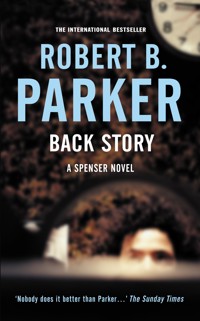
Boston P.I. Sunny Randall - as conflicted as she is beautiful - helps a troubled young woman locate her birth parents only to uncover some dark truths of her own. The fourth novel in the bestselling series featuring Sunny Randall who now faces the unthinkable: the marriage of her ex-husband, Richie, to someone else. Despite the formality of divorce, Sunny and Richie's relationship had continued, in its own headstrong way, until Richie's desire for marriage overtook Sunny's need for freedom. So when college student Sarah Markham comes asking for help in finding her birth parents, Sunny realizes she must take the case, if only to distract her from her personal life. But life and work have a curious - and dangerous - way of intersecting. Before the investigation has a chance to take off, two key players are dead, and Sunny is back on a psychiatrist's couch, probing her own past for clues. What she discovers has the potential to shatter Sarah Markham's family and destroy her sense of self, while Sunny's own beliefs are put to the ultimate test. Emotionally complex and rich with insight, this is the Grand Master at his storytelling best.
Sie lesen das E-Book in den Legimi-Apps auf:
Seitenzahl: 262
Veröffentlichungsjahr: 2014
Das E-Book (TTS) können Sie hören im Abo „Legimi Premium” in Legimi-Apps auf:
Ähnliche















Boston PI Sunny Randall - as conflicted as she is beautiful - helps a troubled young woman locate her birth parents only to uncover some dark truths of her own.
The fourth novel in the bestselling series featuring Sunny Randall who now faces the unthinkable: the marriage of her ex-husband, Richie, to someone else. Despite the formality of divorce, Sunny and Richie’s relationship had continued, in its own headstrong way, until Richie’s desire for marriage overtook Sunny’s need for freedom. So when college student Sarah Markham comes asking for help in finding her birth parents, Sunny realizes she must take the case, if only to distract her from her personal life.
But life and work have a curious - and dangerous - way of intersecting. Before the investigation has a chance to take off, two key players are dead, and Sunny is back on a psychiatrist’s couch, probing her own past for clues. What she discovers has the potential to shatter Sarah Markham’s family and destroy her sense of self, while Sunny’s own beliefs are put to the ultimate test.
Emotionally complex and rich with insight, this is the Grand Master at his storytelling best.
Robert B. Parker (1932-2010) has long been acknowledged as the dean of American crime fiction. His novels featuring the wise-cracking, street-smart Boston private-eye Spenser earned him a devoted following and reams of critical acclaim, typified by R.W.B. Lewis’ comment, ‘We are witnessing one of the great series in the history of the American detective story’(The New York Times Book Review).
Born and raised in Massachusetts, Parker attended Colby College in Maine, served with the Army in Korea, and then completed a Ph.D. in English at Boston University. He married his wife Joan in 1956; they raised two sons, David and Daniel. Together the Parkers founded Pearl Productions, a Boston-based independent film company named after their short-haired pointer, Pearl, who has also been featured in many of Parker’s novels.
Robert B. Parker died in 2010 at the age of 77.
CRITICAL ACCLAIM FOR ROBERT B. PARKER
‘Parker writes old-time, stripped-to-the-bone, hard-boiled school of Chandler…His novels are funny, smart and highly entertaining…There’s no writer I’d rather take on an aeroplane’–Sunday Telegraph
‘Parker packs more meaning into a whispered “yeah” than most writers can pack into a page’–Sunday Times
‘Why Robert Parker’s not better known in Britain is a mystery. His best series featuring Boston-based PI Spenser is a triumph of style and substance’–Daily Mirror
‘Robert B. Parker is one of the greats of the American hard-boiled genre’–Guardian
‘Nobody does it better than Parker…’–Sunday Times
‘Parker’s sentences flow with as much wit, grace and assurance as ever, and Stone is a complex and consistently interesting new protagonist’–Newsday
‘If Robert B. Parker doesn’t blow it, in the new series he set up in Night Passage and continues with Trouble in Paradise, he could go places and take the kind of risks that wouldn’t be seemly in his popular Spenser stories’– Marilyn Stasio, New York Times
THE SPENSER NOVELS
The Godwulf Manuscript
Chance
God Save the Child
Small Vices*
Mortal Stakes
Sudden Mischief*
Promised Land
Hush Money*
The Judas Goat
Hugger Mugger*
Looking for Rachel Wallace
Potshot*
Early Autumn
Widow’s Walk*
A Savage Place
Back Story*
Ceremony
Bad Business*
The Widening Gyre
Cold Service*
Valediction
School Days*
A Catskill Eagle
Dream Girl (aka Hundred-Dollar Baby)*
Taming a Sea-Horse
Pale Kings and Princes
Now & Then*
Crimson Joy
Rough Weather
Playmates
The Professional
Stardust
Painted Ladies
Pastime
Sixkill
Double Deuce
Lullaby (by Ace Atkins)
Paper Doll
Wonderland (by Ace Atkins)*
Walking Shadow
Silent Night (by Helen Brann)*
Thin Air
THE JESSE STONE MYSTERIES
Night Passage*
Night and Day
Trouble in Paradise*
Split Image
Death in Paradise*
Fool Me Twice (by Michael Brandman)
Stone Cold*
Killing the Blues (by Michael Brandman)
Sea Change*
High Profile*
Damned If You Do (by Michael Brandman)*
Stranger in Paradise
THE SUNNY RANDALL MYSTERIES
Family Honor*
Melancholy Baby*
Perish Twice*
Blue Screen*
Shrink Rap*
Spare Change*
ALSO BY ROBERT B PARKER
Training with Weights
A Year at the Races (with Joan Parker)
(with John R. Marsh)
All Our Yesterdays
Three Weeks in Spring
Gunman’s Rhapsody
(with Joan Parker)
Double Play*
Wilderness
Appaloosa
Love and Glory
Resolution
Poodle Springs
Brimstone
(and Raymond Chandler)
Blue Eyed Devil
Perchance to Dream
Ironhorse (by Robert Knott)
*Available from No Exit Press
For Jean: Like the kicker in a mint julep for two
1
My ex-husband was getting married to a woman I wanted to kill. I didn’t actually know her, and killing her would only make matters worse. But I got as much pleasure out of the idea as I could before I had to let go of it.
He didn’t take the coward’s way out and simply send me an invitation. He came to see me.
‘She better be nice to Rosie,’ I said.
‘I wouldn’t let anyone not be nice to Rosie,’ Richie said. ‘Do you think I love Rosie less than you do?’
I didn’t say anything for a bit, then, finally, I said, ‘No.’
‘Thank you,’ Richie said.
‘And, obviously, stupid question, you love this woman?’
‘Yes,’ Richie said.
It got out before I could shut it off.
‘More than you love me?’ I said.
He didn’t say anything for a bit, then, finally, he said, ‘No.’
‘This raises a question,’ I said.
‘It is, I’ve found, possible to love more than one person,’ Richie said. ‘I love you, and I love her. She’s willing to marry me.’
‘And you want to be married?’ I said.
‘Yes.’
‘And I don’t.’
‘I know.’
‘It has nothing to do with not loving you,’ I said.
‘I know.’
‘I just can’t be married, Richie.’
‘I know.’
I had been looking at Richie for so long. He got a dark shadow on his face if he didn’t shave every day. He had the strongest-looking hands I’d ever seen. He had thick black hair and wore it short. He seemed never to need a haircut. I knew what he looked like naked. I knew what he looked like asleep. I knew what he smelled like and sounded like and felt like. I knew how he thought and what he thought.
Richie stood.
‘I wish there was something else to say, Sunny.’
I stood, too. He opened his arms. We hugged each other. It was eviscerating. Richie stepped away; neither of us spoke. He bent over and picked up Rosie and kissed her on the nose. And hugged her. Then he put her back down and turned and left.
I sat on my bed for a time. My eyes filled but I didn’t cry. Rosie jumped up beside me and lay down and wagged her tail.
‘Don’t you ever, ever love her,’ I said to Rosie.
Rosie looked at me as only bull terriers can look. She offered no objection. I wiped my eyes and walked down the length of my loft to the kitchen and got a bottle of Irish whiskey and poured some in a highball glass. I took it with me to the kitchen table and sat in my chair and looked out the window. Rosie came and got up in her chair and looked hopeful. I took a cracker out of the canister on the table and gave it to her. My sister, Elizabeth, would love this. My father would ask if there was anything he could do to help. My mother would assume it was my fault.
I drank a little more whiskey. I could feel a real cry beginning to form in my throat. I tried to swallow it. But then I was taking little short breaths, and making little short sounds, and it was too late. I gave up and let it come. Rosie looked at me uncertainly. She wasn’t used to this. I cried hard for a while, leaning my forehead against my left hand. With my right I tried to comfort Rosie, who was nervous.
We’d been divorced for five years. What the hell did I expect? It wasn’t like he’d been celibate all that time, or I had. It wasn’t just the finality of my former husband remarrying. It wasn’t even that I loved him still, though I did. It was the unyielding reality that, as far as I could tell, I couldn’t marry anybody, live with anybody, share my life fully with anybody.
I drank some more whiskey.
I listened to the paroxysmal quality of my own crying.
I bent over and picked up Rosie and held her in my lap.
‘Only you,’ I said to her. ‘You’re the only one I can live with.’
I rocked back and forth in my chair with her for a time.
‘Only you.’ I gasped. ‘Only you. Only you.’
Why can’t I live with anyone but a dog?
What the fuck is wrong with me?
2
In the morning I was still red-eyed, even after I showered and put on makeup. By muscle memory, I fed Rosie and took her out. When I came in with her, I wasn’t hungry. I drank some orange juice and made some coffee. The phone rang. When I answered it, my voice sounded thick.
‘Sunny?’
‘Yes.’
‘It’s Barbara Stein. Do you have a cold?’
I said, ‘Yes.’ It seemed more dignified than, ‘No, I’ve been crying a lot.’
‘Oh, I’m sorry. Are you well enough to do a little detective work?’
‘Yes.’
‘You’re still in the detective business?’
‘Yes.’
‘Oh, good. I have a young woman who came into my office late yesterday. I’d done legal work for her family from time to time. You know, closings, wills, that kind of thing. She wants to find her biological parents.’
‘Can’t you help her with that?’
‘We’re a small firm,’ Barbara said. ‘Just me and Jake and a paralegal … and this is going to be a little tricky, I think. The parents claim she’s theirs, that she’s not adopted.’
‘DNA?’
‘The parents won’t submit. Say it’s an insulting invasion of their privacy.’
‘Oh, my,’ I said. ‘Birth records?’
‘So far,’ Barbara said, ‘we can’t locate any.’
‘What makes her think she is adopted?’
‘She won’t say. Can you meet with her?’
‘I suppose,’ I said.
‘Can you come to my office?’
‘You still in Andover?’ I said.
She was. We made a date and I hung up. What I didn’t feel like doing was working. But maybe, in the long run, it was better for me than sitting by the window, drinking Irish whiskey. Rosie went to the coat rack by the door and stared at her leash. I didn’t feel like walking her, either. Actually, I didn’t feel like doing anything. Maybe talking to someone. Usually when I felt this bad, and I had never felt this bad since Richie and I divorced, I talked to Richie. My mother and my sister were out. My best friend, Julie, would genuinely care, but she would have a little inside, unspoken thrill of satisfaction that my love life was fucked up, too. And I would sense it, and it would make me mad. My father would hug me. But what could he say?
‘We’re awful goddamned alone,’ I said to Rosie.
She continued to gaze at her leash.
‘Except for Spike,’ I said.
Rosie’s gaze toward the leash wavered for a moment when she heard Spike’s name. She loved Spike almost as much as she loved me … and Richie. And she always had fun with him. I tried to smile at her.
‘Okay,’ I said.
My voice still sounded hoarse to me, and thick with sadness.
‘We will kill two birds. You’ll get your walk, and Spike will make me feel better. Maybe.’
3
Rosie had on her black-and-white leash, which matched her black-and-white collar, which matched her coloration. She pranced, and I walked along Atlantic Avenue through the maelstrom of Big Dig construction to Spike’s Place on Marshall Street, near Quincy Market. Spike used to manage it when it was a casual restaurant during the day, and perform in it when it was a comedy club at night. Now he owned it. The first thing he had done was change the name to Spike’s Place. The second thing he’d done was to retire from show business. He canceled the comedy club and upgraded the dinner menu.
The décor was still the bare-beams and weathered-brick look it always had been. But the food was greatly improved. The service was good. The help dressed better. And Spike, now with a financial stake in things, had attempted an attitude upgrade, which, given his temperament, was not entirely successful.
Inside the front door of Spike’s Place was the hostess stand, and on the table was a small sign that read No dogs allowed, except seeing-eye. The hostess, a pretty young woman in a yellow linen dress, knew me, knew Rosie, and made no comment as she led us to a banquette for two along the wall at a right angle to the bar. Rosie hopped up beside me on the banquette.
‘You want to see Spike?’ the hostess said.
‘Please,’ I said.
‘I’ll tell him you’re here,’ the hostess said. ‘You want anything?’
‘Just some coffee,’ I said.
‘I’ll send some over,’ the hostess said.
She spoke to a waitress as she walked toward the back of the room. The four women at the next table were having an early lunch and discussing a recent production at the American Repertory Theatre. They seemed enthusiastic. The waitress brought me coffee and a roll.
‘Roll’s for Rosie,’ the waitress said.
‘Thank you.’
I stirred some milk and Splenda into my coffee. Rosie fixed a beady, laser-like stare on the roll. I broke off a small piece and put it on the table in front of her, and she ate it.
A mature woman with harlequin eyeglasses gazed at us in horror.
‘That’s offensive,’ she said.
I leaned my head back against the banquette and closed my eyes and took in some air, and said nothing. When I opened my eyes, Spike was standing in front of my table. He was a very big bear of a man, in all senses. His hair was short and his shirt was crisp white and his tan slacks had a sharp crease. He wore mahogany loafers with no socks. The loafers had a high shine. He was looking at me hard. Then he pulled a chair away from another table and sat down across from me.
‘What’s wrong?’ he said.
The mature woman gestured to the hostess, who walked over.
‘I’d like to speak with the manager, please,’ she said.
The hostess was charmed.
‘That would be me,’ she said. ‘I’m Miranda.’
‘Well, are you going to do anything about this dog?’
‘Well, Rosie is sort of a regular patron,’ Miranda said.
‘Which I gather means you do not plan to intervene?’
‘Perhaps a happy compromise,’ Miranda said, ‘would be to offer you a different table.’
‘I prefer to sit where I am,’ the lady said. ‘And I wish to speak with your superior.’
‘You certainly may,’ Miranda said. ‘The owner is sitting right next to you. Spike himself.’
The mature woman and her three mature companions all spoke as if they had taken elocution lessons at Radcliffe. And they looked as if they shopped at an Ellen Tracy discount store.
‘How do you do?’ the mature woman said.
‘How do you do?’ Spike said.
‘I’m sorry to bother you, but I saw your sign when I came in. It says No dogs allowed, except seeing-eye.’
Spike looked at Rosie, and then at Miranda, then back at the woman.
‘Oh, of course, ma’am. I see your point completely.’
He stood up.
‘I’ll take care of it right away.’
Spike walked to the hostess stand and reached behind it and opened the drawer. All of his movements were as graceful and precise as if he weighed half of what he weighed. He took a black felt-tipped Magic Marker from the drawer, bent over, and carefully, after the part that said except seeing-eye, wrote in a neat hand: and Rosie Randall. Then he put the Magic Marker back in the drawer, stepped back, and looked at the sign. Nodded with satisfaction, and returned to his chair.
‘Thanks for caring,’ he said to the lady in the harlequin glasses.
‘But you … you … you can’t just change the sign and allow dogs to eat off the table in a restaurant.’
Spike looked at them, puzzled for a moment. I knew he was struggling with his attitude adjustment.
‘Perhaps if Miranda got you a better table?’ Spike said.
‘It’s not a question of a better table,’ the mature woman said. ‘It’s a question, if I may say so, of hygiene.’
The adjustment was sliding.
‘Rosie’s had all her shots,’ Spike said. ‘I don’t think you’ll infect her.’
Miranda had been hovering near, knowing how tenuous Spike’s hold on civility was.
‘Ladies, if you’ll come with me,’ Miranda said. ‘There’s a lovely table by the window. I’ll have your server move everything … and lunch will be on me.’
It was a chance to finish lunch, preserve their dignity, and save a few bucks. They took it. In maybe a minute they were reseated, their plates were transferred, and they were eating again, though all of them glared occasionally at me and Rosie and Spike.
‘Never fire Miranda,’ I said to Spike.
‘God no,’ he said. ‘I’d put myself out of business in a month.’
We were quiet. Spike looked at me. Then he got up and came around and sat on the banquette beside me.
‘Something bad is bothering you,’ he said. ‘And I want to know what.’
4
I started to tear up again as I told him, and when I got through, he put his arms around me and pulled me against him. This made Rosie vaguely uneasy, until he scooped her in, too, and the three of us sat in close embrace while I cried a little.
After a while I stopped, and with my face still against his chest said, ‘I don’t know what to do.’
‘Of course you don’t,’ Spike said.
‘I know we were divorced,’ I said. ‘I know he slept with other people and God knows I did, too.’
‘But sometimes you slept with each other,’ Spike said softly, ‘even though you were divorced, and you still loved him, and you were pretty sure he loved you, and you sort of knew that someday it would work out, and you’d be together again, in some way or other.’
I nodded against his chest. It was like snuggling a sandbag.
‘And now the sonovabitch is getting married and you can’t think that anymore.’
I nodded again.
‘Even though you divorced him originally.’
‘Yes.’
My voice sounded small and muffled against him. He didn’t say anything else, just kept his arm around me and patted my back gently. With his other hand, he gave Rosie a piece of her dinner roll. I got my breathing under control after a while, and he let me go and I sat up straight. Spike handed me a napkin and I blotted my eyes dry, trying not to make too much of a mess of my makeup.
‘For what it’s worth,’ Spike said, ‘this is as bad as it’s going to get. In a while it will get better.’
‘It doesn’t feel that way.’
‘It will get better,’ Spike said.
‘What the hell is wrong with me?’ I said. ‘I can’t live with him, but when he finds somebody that can, I have a breakdown.’
‘Because the first time you left him. Now he’s leaving you.’
‘You think I’m that childish?’
‘Sure,’ Spike said.
‘I can’t live with anyone,’ I said.
‘I know.’
‘But why can’t I?’
‘I don’t know.’
Rosie had settled in comfortably between us now that there was no more hugging and crying, and kept her eyes on the roll. Spike broke off another small piece and fed it to her.
‘I don’t know, either,’ I said. ‘That’s the awful thing.’
‘Weren’t you seeing a shrink a while ago?’
‘Dr Copeland, yes, but that was business. I was consulting on that Melissa Joan Hall thing.’
‘But didn’t you go see him for a while afterwards?’
‘Just a couple of times,’ I said. ‘I didn’t see any reason to go really.’
‘’Cause Richie wasn’t getting married, and neither were you, so you and he could be whatever you and he were.’
I nodded.
‘And, as I recall, you were bopping that guy from LA.’
‘Spike!’
‘Which made it easier to feel like you were happy,’ Spike said. ‘Right now you feel badly alone.’
‘Except for you,’ I said.
‘And as we both know, I’m gayer than three humming birds,’ Spike said.
‘Doesn’t mean I don’t love you,’ I said.
‘Doesn’t mean I don’t love you, either. But that’s not what we’re talking about.’
‘What are we talking about?’
‘You need to see a shrink.’
‘Oh, God,’ I said.
‘We need to know what’s wrong with you.’ He grinned at me. ‘I can only take you so far.’
‘That seems so long a hill to climb.’
Spike nodded.
‘I mean, do you think I’m crazy?’
‘I think you need to know what’s making you unhappy.’
‘Duh,’ I said. ‘Richie’s marriage might have something to do with it.’
‘I think you need to know why that’s making you so unhappy.’
‘Because I love him, for crissake.’
‘Then I think you need to know why you love him and can’t live with him.’
I was silent. Spike gave Rosie the final bite of roll. The ladies that Rosie had offended finished their free lunches and got up and left. They were careful not to notice me or Rosie.
‘You bastard,’ I said to Spike.
He smiled.
‘Explain to me where I’m wrong,’ he said.
‘You’re not wrong. It’s why I called you a bastard.’
5
Barbara Stein had a law office on the second floor of the old Musgrove Building in downtown Andover, with a nice view of the town library. There was an outer office for her paralegal, two small offices for her and her husband, Jake Kaplan, and a modest conference room. Barbara, her client, and I were in the conference room.
The client’s name was Sarah Markham. She looked about twenty. She was taller than I was, and slim, with long, straight, dark hair, large brown eyes, and a lot of dark makeup. She wore low-slung pants and a cropped long-sleeved T-shirt that exposed her navel. She had rings on most of her fingers, including one on her left thumb, and her nails were painted black. It was a hideous fashion, and thankfully, I was just old enough that it was not required. Barbara had gray hair pulled back into a tight knot, and round, black-rimmed eyeglasses. Exposed navels were not an issue with her.
‘I don’t look like anyone in my family,’ Sarah told me.
‘Eye color?’ I said.
I had a dim sense, lingering from my science-requirement biology class, that two blue-eyed parents couldn’t produce a brown-eyed child.
‘Except that,’ she said. ‘But I don’t look anything like them.’
‘What do your parents say?’
‘They say I’m their biological child.’
‘Barbara tells me they won’t allow DNA testing.’
‘No,’ Sarah said, ‘they won’t.’
‘Because it’s demeaning?’
‘Yes. They’re pretty phobic about doctors and things.’
‘Things?’ I said.
I was trying to focus. Trying to care about her problem.
‘I think my mother has a religious thing about it.’
‘About DNA testing.’
‘I guess,’ Sarah said. ‘They’re pretty phobic, you know?’
‘Give me an example,’ I said.
‘Oh, I don’t know. They’re scared of everything?’
‘Besides doctors and God, who are they scared of?’ I said.
‘Everyone,’ she said. ‘What difference does it make? How is that helping me find my birth parents?’
Vague and impatient. What a lovely combination.
‘They are not at ease with me,’ Barbara said.
‘Tell me again, how did Sarah get to you?’ I said.
‘I have done some general legal work for her family,’ Barbara said.
‘Have they always been ill at ease with you?’
‘No, it’s more since I’ve been helping Sarah.’
‘For God’s sake,’ Sarah said. ‘You’re supposed to be a detective? Why don’t you detect something instead of asking all these dumb questions?’
‘Asking a lot of dumb questions is sort of how you do that,’ I said. ‘How old are you?’
‘Twenty-one.’
‘Live at home?’
‘I’m in college. I live in the dorm. I’m at home during vacations.’
‘Where do you go?’
‘I’m going into my senior year at Taft University,’ Sarah said. ‘What difference does all that make?’
‘I don’t know,’ I said. ‘How will you pay my fee?’
‘I have money from my grandfather.’
‘Does he give it to you, or did you inherit?’
‘He left me a trust fund, he started it when I was born.’
‘Did you know your grandfather?’
‘I don’t remember him.’
‘Paternal or maternal?’ I said.
‘Excuse me?’
‘Which of your parents did he father?’ I said.
‘He was my mother’s father.’
‘Was he wealthy?’
Sarah gave me an it’s-none-of-your-business look. I bore up under it.
‘I don’t know. He didn’t put so much in to start, but … have you heard of compound interest?’
‘Only secondhand,’ I said. ‘Can your parents control the fund?’
‘Not now.’
‘The money passed outright to Sarah,’ Barbara said. ‘When she turned eighteen.’
‘Besides appearance,’ I said, ‘is there anything else that makes you think you’re not biologically related?’
Sarah breathed in deeply and looked even more annoyed, but she answered me.
‘There’s a ton of clues,’ she said. ‘They were always talking when I was little about how my mother couldn’t have kids … except of course you, Sarah. It was like they’d catch themselves.’
I nodded.
‘What else?’
‘They can’t find my birth certificate,’ she said. ‘They don’t remember which hospital I was born in.’
‘Where were you born?’
‘Chicago, Illinois.’
‘When did you move?’
‘I don’t know. It was when I was a baby.’
‘So what’s your earliest memory of where you lived?’
‘Here.’
‘Andover,’ I said.
‘Yes,’ she answered, in a tone that suggested that I was very stupid. ‘Isn’t that what I just said?’
‘What you said was “here.” I was confirming that you meant Andover, and not simply Massachusetts.’
‘Oh, for heaven’s sake,’ Sarah said. ‘Do you want the job or not?’
‘Sarah,’ I said. ‘I know how to do this, and you do not. But I have to do it the way I know how. And I have to be able to stand the client. So far, I can’t.’
Sarah looked at me in astonishment and began to cry. Perfect. Maybe I could join her and we could both have a good cry and fall into each other’s arms. Barbara got up and patted Sarah’s shoulder.
‘Sunny Randall is a very good detective. I know she can help you, but she has to ask questions. I know it seems clear to you. But Sunny’s just come aboard.’
Sarah sniffled and nodded. And sniffled and wiped her eyes and blew her nose on a Kleenex that Barbara gave her.
‘Yes. Please. I’m sorry. I’ll tell you anything you need to know.’
‘With less attitude?’ I said. ‘I’ve not been having the best week of my life, either.’
‘I’m sorry. I didn’t realize. I didn’t mean to have attitude. Really, I’ll try to tell you everything.’
‘That’ll be good,’ I said. ‘Can you get me pictures of yourself, and of your mother and father?’
I knew she wanted to ask me why. And she knew it would annoy me. We looked at each other.
‘It will help with the question of identity,’ I said.
She shrugged.
‘Sure,’ she said.
‘Good,’ I said. ‘Shall we discuss my fee?’
6
Dr Copeland was still a large, athletic-looking shrink. He was wearing a brown tweed jacket today, with a white Oxford shirt and maroon knit tie. His dark hair was still slicked straight back. He still wore big, round, black-rimmed glasses. He was still immaculate.
When I was seated across the desk from him in his office, he said, ‘It’s nice to see you again, Sunny.’
I felt sort of thrilled. He called me by my first name.
‘Yes,’ I said. ‘I’m glad to see you, too.’
I did not venture to call him Max. He smiled and sat back.
‘Richie is getting married,’ I said.
He nodded.
‘You remember Richie?’ I said.
‘Your former husband,’ Copeland said.
‘Yes. Do you remember everything we talked about?’
‘If I don’t, I’ll ask you to remind me,’ Copeland said.
‘Last time we talked, you said the bond between us was powerful, or something like that.’
‘I remember,’ he said.
‘What do you think now?’ I said.
‘I also said I didn’t know where it would lead,’ Copeland said.
‘Covered yourself,’ I said.
Copeland didn’t say anything.
‘I guess I’m mad at you,’ I said.
Copeland nodded.
‘The hell of it is,’ I said, ‘you were right. There is a strong bond between us.’
Copeland nodded.
‘But I can’t live with him. I can’t live with anybody, really. And … Richie’s too … too traditional, I guess. He wants a wife and probably children.’
Copeland was leaning forward. He had his fingertips together in front of him and, with his elbows resting on the arms of his chair, he tapped his steepled forefingers against his chin softly as he listened.
‘I’m thirty-seven,’ I said. ‘If I’m going to have kids, I better do it now.’
Copeland smiled.
‘You have a few years,’ he said.
‘It doesn’t matter. I couldn’t be a wife and mother anyway.’
Copeland nodded just as if it were perfectly normal for a woman to reject marriage and children.
‘I don’t know anyone like me,’ I said.
‘That doesn’t wish marriage and children?’
‘Yes.’
‘Believe me,’ Copeland said. ‘There are many.’
‘I don’t know what to do,’ I said.
‘What would you like to do?’ Copeland said.
‘I’d like to stop feeling like I’ve been shot in the stomach,’ I said.
‘I would think that some member of the Boston psychotherapy community could help you with that,’ Copeland said.
‘I want you to help me.’
He shook his head.
‘Why not?’ I said.
‘I would like to work with you, Sunny, but I am retiring.’
‘You’re not old enough to retire,’ I said.
He nodded as if to acknowledge a compliment.
‘I’m finishing up with my current patients and will be closing the office before the end of the year.’
I felt panicky.
‘You too,’ I said.
‘Another rejection?’ he said.
‘I screwed up my courage and screwed up my courage to finally come here, and you are going to retire.’
‘It is, of course, not personal,’ Copeland said.
‘Not to you,’ I said.
‘Well,’ Copeland said, ‘in a sense it is. I am, after all, the one who’s retiring.’
‘I know,’ I said. ‘I know.’
‘I can refer you to someone.’
‘Like who?’
‘I need to make some phone calls,’ Copeland said. ‘To see who is currently taking new patients.’
‘I was counting on you,’ I said.




