


1,99 €
Niedrigster Preis in 30 Tagen: 1,99 €
Niedrigster Preis in 30 Tagen: 1,99 €
Mehr erfahren.
- Herausgeber: DigiCat
- Kategorie: Poesie und Drama
- Sprache: Englisch
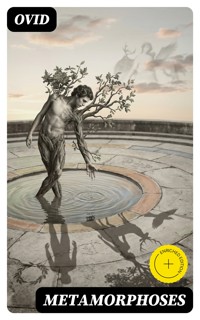
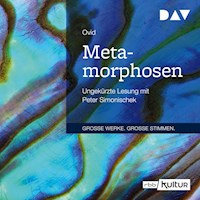
Ovid's "Metamorphoses" is a groundbreaking narrative poem that intricately weaves together over two hundred myths, exploring the themes of transformation and the fluidity of identity. Composed in dactylic hexameter, this epic work showcases Ovid's masterful command of language and his innovative approach to storytelling. The poem not only captures the imagination with its vivid imagery and inventive tales of gods, mortals, and mythical creatures, but it also serves as a reflection on the transitory nature of existence and the interplay between fate and free will, deeply rooted in the literary context of Augustan Rome, where themes of change and renewal were particularly resonant. Ovid, born in 43 BCE in Sulmo, was a revolutionary poet whose experiences in a politically charged society heavily influenced his work. Renowned for his previous poetic composition, "Amores," Ovid's exile in 8 CE for reasons still debated provides a poignant backdrop for "Metamorphoses." This sense of loss and transformation permeates his writing, as he skillfully embodies the complexities of human emotions and relationships, thereby crafting a lasting legacy in Western literature. Highly recommended for readers interested in mythology, poetry, or the intersection of art and philosophy, "Metamorphoses" is more than just a collection of stories; it invites introspection on the nature of change within ourselves and our world. Its enduring relevance speaks to the human condition, making it essential reading for both scholars and casual readers alike. In this enriched edition, we have carefully created added value for your reading experience: - A succinct Introduction situates the work's timeless appeal and themes. - The Synopsis outlines the central plot, highlighting key developments without spoiling critical twists. - A detailed Historical Context immerses you in the era's events and influences that shaped the writing. - An Author Biography reveals milestones in the author's life, illuminating the personal insights behind the text. - A thorough Analysis dissects symbols, motifs, and character arcs to unearth underlying meanings. - Reflection questions prompt you to engage personally with the work's messages, connecting them to modern life. - Hand‐picked Memorable Quotes shine a spotlight on moments of literary brilliance. - Interactive footnotes clarify unusual references, historical allusions, and archaic phrases for an effortless, more informed read.
Das E-Book können Sie in Legimi-Apps oder einer beliebigen App lesen, die das folgende Format unterstützen:
Veröffentlichungsjahr: 2022
Ähnliche




Metamorphoses
Table of Contents
Introduction
In Ovid’s vast poem, a universe of mutable bodies and restless stories surges forward, so that identity, power, love, and memory slip their boundaries and reappear transformed, challenging every certainty as gods, mortals, and the natural world exchange shapes and fates, while language itself flows like water through shifting channels, making change not an episode but a law, a pressure, a haunting, a promise that what seems fixed today will be unfamiliar tomorrow, and that the very act of telling a story can refashion the world it describes.
Metamorphoses is a long narrative poem by the Roman poet Publius Ovidius Naso, known in English as Ovid, composed in the early first century of our era during the reign of Augustus. Written in dactylic hexameter across fifteen books, it gathers an astonishing array of mythic and legendary tales and threads them into a continuous sequence. The premise is at once simple and inexhaustible: stories linked by transformations. Without relying on a single hero, the poem moves from one episode to the next, each connected by change, whether of body, voice, landscape, or fortune, forming a capacious, interwoven tapestry.
Its classic status rests partly on audacity of design. Ovid adapts the epic meter associated with martial grandeur to a mosaic of myths, positioning everyday emotions beside cosmic scenes and mixing tragic intensity with playful wit. He synthesizes scattered tales into a coherent arc, creating not a catalog but a living network in which echoes accumulate and themes resonate. The result is a genre-defying work that feels both panoramic and agile. By maintaining momentum across many narratives, Ovid establishes a new kind of epic—one that privileges storytelling itself as a force of metamorphosis, and in doing so, redefines what poetry can hold.
The poem’s reach has been immense. Medieval schoolrooms copied it; Renaissance artists mined it; early modern poets refashioned it. Dante alludes to its scenes; Chaucer adapts its energies; Shakespeare draws repeatedly on its characters and situations; Milton engages its inventiveness while pursuing his own epic designs. Through a celebrated Elizabethan translation by Arthur Golding, its stories and turns of phrase entered English literature with unusual vitality, shaping language, imagery, and dramatic possibilities. Later writers continue to respond to it, whether by retelling certain episodes or by absorbing its deeper lesson: that narrative is a laboratory for transformation.
Beyond literature, Metamorphoses has been a wellspring for visual art and performance. Painters and sculptors from the Renaissance onward—among them Titian, Rubens, and Bernini—returned to its scenes for their tensions of motion and emotion. The allure is clear: Ovid offers moments of arresting change that invite depiction at the instant where form yields to new form. Musicians and choreographers have likewise found in the poem’s shifting moods and bodies a potent resource for rhythm and gesture. Its stories travel easily across media because transformation is itself an artistic principle: style, like shape, is a mutable surface with depth.
Ovid’s artistry lies in velocity, clarity, and surprise. He excels at transitions that feel both inevitable and daring, moving from one tale to another through shared motifs, verbal echoes, and ironic turns. He cultivates multiple registers—tenderness, ferocity, comedy, pathos—while maintaining formal control in the epic line. His descriptive passages can crystallize an instant, yet the poem rarely lingers; it flows, propelled by cause and consequence, desire and decree. The narrator’s presence is tactful but palpable, guiding a reader through the chain of changes and suggesting, without heavy insistence, correspondences among stories otherwise separated by time and setting.
Understanding the poet’s context deepens appreciation without being necessary to enjoyment. Ovid wrote during the Augustan period, a time of political consolidation and intense cultural production in Rome. His earlier works explored love and social play; later he was exiled by Augustus in 8 CE to Tomis on the Black Sea. In exile, he wrote that this grand poem had not received its final polish. The Metamorphoses nonetheless circulated widely and became central to literary education. Its poised balance between urbane wit and epic ambition mirrors the tensions of an era that valued both order and art’s capacity to exceed prescribed boundaries.
The structural scope is remarkable. Metamorphoses moves from primordial beginnings through successive ages and generations, gathering voices from many places and periods into a continuous chronology that arrives near Ovid’s own time. Each episode functions on its own terms, yet the cumulative design matters. Characters and motifs reappear, themes recur in altered keys, and the reader senses an underlying current carrying the stories forward. This architecture gives the poem an epic sweep without demanding a single plotline; change is both the subject and the engine, the motif that binds disparate moments into a shared imaginative world.
Themes of desire, loss, power, and creativity run throughout. The poem investigates how authority asserts itself and how individuals resist or adapt; how love can inspire, distort, or destroy; how memory preserves a shape even as the shape shifts. Natural forces, divine decrees, and human impulses entangle, revealing both beauty and danger in acts of transformation. Art itself appears as a form of change—craft reshaping raw material, song conserving breath in durable form. By entwining ethics with aesthetics, Ovid explores how stories mediate experience and how the naming of events can stabilize, or unsettle, what happens.
Metamorphoses has moved through languages and centuries with unusual elasticity. Translators face choices about speed, tone, humor, and dignity, and each version highlights different facets: some emphasize glittering narrative momentum; others linger on texture and argument. The poem’s afterlife includes medieval moralizations that reinterpreted its episodes, as well as Renaissance celebrations of its artistry. In English, the Elizabethan cadence of Golding exerted formative influence, while modern translations aim for clarity and propulsion. This transmission history demonstrates the work’s resilience: it invites renewal while retaining a recognizable core of voice, structure, and theme.
For a new reader, the book rewards both continuous and selective reading. One may follow the grand arc or dip into particular episodes, then notice how a later passage refracts an earlier one. No specialized knowledge is required; the poem offers its own cues for understanding and often embeds brief explanations of names and customs. Attending to repeated images of voice, craft, and boundary will illuminate the design. The pleasure lies in movement—of narrative, thought, and feeling—guided by a poet who choreographs variation with rare poise and who trusts readers to recognize patterns emerging through change.
Its contemporary resonance is clear. In an age attentive to fluid identities, ecological shifts, and the ethics of power, Metamorphoses speaks with undimmed energy. It offers a language for thinking about personal and collective transformation, about how new forms arise from conflict and desire, and about the responsibilities that accompany creative power. The poem’s longevity testifies to a simple truth: stories change us as we read them. Ovid crafts a world where transformation is inevitable and meaning is negotiated, inviting each generation to find itself in the flux—and to imagine, with care, what it might become.
Synopsis
Metamorphoses, by Publius Ovidius Naso (Ovid), is a fifteen‑book Latin narrative poem composed in the early first century CE under Augustus. It presents an unbroken sequence of myths and legends organized around the theme of transformation, moving from the origins of the cosmos to Ovid’s Roman present. The work’s narrator links episodes through transitions of place, character, or motif, creating a chain of metamorphoses that spans gods, heroes, and ordinary mortals. Ovid reframes well‑known Greek and Roman stories with an agile, often ironic voice while maintaining a coherent temporal arc. Throughout, the poem probes divine power, human desire, instability of form, and the endurance of art.
The opening books establish a universal stage. A cosmogony fashions order from chaos, followed by the successive Ages of humankind and a flood that resets the world. Survivors renew mortal life, and the renewed earth becomes a theater for the gods’ encounters with mortals. Early tales underscore desire and change: Apollo’s pursuit of Daphne ends in a sudden shift of being; Jupiter’s involvement with Io reconfigures her identity; Jupiter and Callisto’s story tests chastity, favor, and exile. Phaethon’s audacious request to drive the sun’s chariot shakes the heavens, while Europa’s encounter with a disguised god inaugurates new dynastic pathways.
The narrative then turns to Thebes and its founder. Cadmus’s search for his sister leads to a city raised from a serpent’s teeth, linking civic origins with uncanny birth. The Cadmean cycle explores sight, secrecy, and retribution: a hunter’s accidental glimpse of a goddess transforms him; Semele’s liaison with Jupiter situates mortality near divine fire; and the emergence of Bacchus (Dionysus) introduces a deity whose rites challenge civic norms. Skepticism toward the new god provokes conflict, culminating in a confrontation between human authority and ecstatic faith. These episodes crystallize Ovid’s preoccupation with limits—what mortals may see, say, or refuse—under the gaze of the divine.
Book Four expands Ovid’s tapestry through framed storytelling. The daughters of Minyas, indifferent to Bacchus, recount love stories whose outcomes hinge on misrecognition and irrevocable change. Pyramus and Thisbe centers youthful passion constrained by family barriers and porous boundaries between word and world. Other inset tales probe desire’s ambiguities, as with Salmacis and Hermaphroditus, where union reshapes identity. Parallel arcs trace persecution and protection, including Ino’s trials. The book’s close shifts to heroic narrative: Perseus confronts monsters and rescues Andromeda, while the origins of Medusa’s power receive a retrospective explanation. Across these stories, metamorphosis registers both rescue and reprisal.
The mid‑poem turns to art, rivalry, and voice. The Muses recount their contest with the Pierides, defending sacred song and curating exempla of change, including the abduction of Proserpina and Ceres’s far‑ranging search. Arethusa’s flight and transformation link geography with mythic memory. In Book Six, Arachne challenges Minerva in a weaving contest that pits artistic truth against divine prerogative, setting a pattern for the peril of competing with gods. Niobe’s boast about her children invites rebalancing by higher powers, while the tale of Philomela and Procne explores violence, ingenuity, and the reclamation of voice through craft. Artistic making becomes a medium of metamorphosis.
Books Seven and Eight gather tales of cunning, oath, and ordeal. Jason’s quest for the Golden Fleece entwines with Medea’s arts, where promises, rejuvenations, and escapes blur lines between remedy and harm. Theseus confronts challenges tied to Crete and Minos, while a plague on Aegina prompts Aeacus to witness renewal through a startling repopulation. Domestic suspicion shades the story of Cephalus and Procris. Technical mastery and youthful daring animate Daedalus and a perilous flight, contrasted with collective heroism in the Calydonian boar hunt and Meleager’s family tensions. Ovid balances spectacle with intimacy in Baucis and Philemon’s humble hospitality and in Erysichthon’s consuming hunger.
Book Nine advances themes of strength, fidelity, and identity. Hercules contends with river‑gods and tangled obligations, his martial triumphs gradually giving way to a change that repositions him among the immortal. Family entanglements and unintended consequences surface in episodes involving vows and gifts. The book also includes Iphis and Ianthe, where upbringing, expectation, and love culminate in a transformation that resolves an otherwise intractable union. Book Ten centers on song’s power as Orpheus addresses the underworld to recover his wife, then turns to narratives inspired by his music: Pygmalion’s living art, the cautionary pairing of passion and transgression, and the hunting lore surrounding Adonis.
After Orpheus’s artistry reshapes listeners and tales, Book Eleven considers the limits of art amid envy and chance, then pivots to Midas and the mutable value of wealth and perception. Conjugal devotion and divine pity mark Ceyx and Alcyone, where dream and reality intermingle with the sea’s rhythms. The later books compress the Trojan War and its aftermath: preludes to Achilles, the battle of Lapiths and Centaurs, and contests of honor culminate in a debate over the arms of Achilles between Ajax and Ulysses. With Troy’s fall, exiles scatter; Aeneas’s travels through Italy, encounters with Circe, and local legends knit Greek myth to Roman destinies.
Book Fourteen continues the Italic focus, tracing successions, foundations, and rustic cults that prepare Rome’s landscape for future rule. Transformations register political change as much as personal fate. Stories of loyalty, betrayal, and craft recur, while episodes like Pomona and Vertumnus explore persuasion, disguise, and consent in a pastoral key. Ovid integrates seafaring perils, new alliances, and cult aetiologies, progressively aligning mythic time with Roman space. The thread of metamorphosis now underscores continuities across displacement and settlement, suggesting that identity—of persons, places, and peoples—is stabilized not by stasis but by an ongoing accommodation to change and memory shared in story and ritual practice. Book Fifteen provides a reflective capstone. Pythagoras expounds a doctrine of perpetual change that gathers the poem’s motifs into a philosophical frame, linking natural cycles with ethical counsel and temperate living. Stories of Italic rulers, notably Numa, connect wisdom with institutions. Ovid then aligns myth with history, moving toward transformations embedded in Rome’s recent past, including the elevation of Julius Caesar and the consolidation of Augustan order. The poem closes by asserting the enduring life of art within this mutable world. Metamorphoses thus offers a sweeping meditation on power, desire, and identity, proposing that change—feared or welcomed—is the condition through which memory and culture endure.
Historical Context
Ovid’s Metamorphoses took shape in the early Principate, chiefly in Rome during the reign of Augustus (27 BCE–14 CE). The city was the political and cultural center of a vast Mediterranean empire, governed by the emperor’s preeminence, a compliant Senate, and a professional military. Religious institutions were refurbished under imperial oversight, and public life revolved around lawcourts, temples, and spectacles. The Latin literary language reached a polished maturity. In this setting, Ovid crafted an epic of mythic transformations, addressing a readership that included educated elites, patrons, and recitation audiences, all accustomed to hearing Greek stories reframed for Roman ears amid vigorous debates about tradition and innovation.
The poem is inseparable from the long aftermath of Rome’s civil wars. After Caesar’s assassination (44 BCE) and subsequent conflicts, Octavian’s victory at Actium (31 BCE) and political settlements in 27 and 23 BCE stabilized rule under Augustus. Ideologically, the regime celebrated restored order and peace. Metamorphoses begins with creation and the ordering of chaos, a narrative gesture that resonated with contemporary claims that Augustus had brought the world from disorder to stability. While not a state commission, the epic’s arc—from primordial confusion to the poet’s present—interacts with the period’s fascination with providential history and the consolidation of a new political dispensation.
Augustus’s moral legislation framed elite behavior. The Lex Iulia on marriage and adultery (18 BCE) and the Lex Papia Poppaea (9 CE) sought to promote lawful marriage, childbearing, and public virtue among citizens, especially the upper orders. These measures were publicized alongside sermons on mos maiorum, the ancestral way. Ovid had already courted controversy with love elegy and Ars Amatoria, which treated desire with urban wit rather than legal gravity. Metamorphoses repeatedly stages pursuit, consent, and punishment within myth; its kaleidoscope of outcomes could be read as reflecting on, and sometimes unsettling, the neat moral binaries espoused by contemporary law and exempla.
Religious revival was central to Augustan policy. As pontifex maximus from 12 BCE, Augustus restored temples, revived priesthoods, and presided over festivals like the Ludi Saeculares (17 BCE). The imperial ideology also embraced apotheosis: Julius Caesar was honored as divus after 42 BCE, with the sidus Iulium, the Julian star, celebrated as a sign. Metamorphoses culminates in narratives of deification, including Caesar’s transformation and an anticipation of Augustus’s divine honors. This ending aligns with state cult while filtering it through mythic metamorphosis, integrating Roman political theology into a larger, cross-cultural tapestry of gods, heroes, and the mutable boundaries between mortal and divine.
Ovid wrote within a brilliant literary milieu often called Augustan. Virgil’s Aeneid, completed shortly before 19 BCE, offered a national epic, pious and teleological. Horace’s odes and satires refined lyric and moral reflection. Against this backdrop, Ovid adopted Homeric hexameter but rejected a single-hero plot, weaving over two hundred episodes into a continuous sequence of transformations. His approach conversed with, and gently contested, the Aeneid’s nation-building narrative by celebrating variety, play, and the primacy of artifice. The poem’s learned allusiveness invited comparison with canonical Greek and Roman texts while establishing a distinctive, urbane epic voice.
The sources that nourish Metamorphoses are recognizably Hellenistic and Roman. Ovid mined Greek mythographers, epic and tragedy, and Alexandrian scholarship, including the aesthetics of Callimachus, favoring ingenuity and miniature effects. He drew on catalogic metamorphosis traditions (for example, the lost Heteroeumena associated with Nicander) and on Roman elegy’s psychology of desire. His rhetorical education—shared by many Roman elites—honed skills of vivid narration and set-piece speeches, seen in the philosophical discourse ascribed to Pythagoras in Book 15. The poem’s texture reflects the curriculum of declamation, linguistic polish, and a culture that prized intertextual display and competitive reinterpretation.
Rome’s book culture helped shape the work’s form and reception. Papyrus rolls were produced by teams of librarii; booksellers clustered along the Argiletum and elsewhere near the Forum. Elite homes hosted recitations that tested and publicized new writing. Public libraries, such as those on the Palatine and in the Porticus Octaviae, signaled imperial support for literature. Ovid later claimed that he left Metamorphoses unrevised when he was exiled in 8 CE, yet copies had already circulated—evidence of the speed and resilience of the urban book trade. The poem’s modular episodes suited serial reading, anthologizing, and performance in such venues.
Augustus’s building program transformed Rome’s appearance and symbolic vocabulary. The Forum of Augustus with the Temple of Mars Ultor (dedicated 2 BCE), the Temple of Apollo on the Palatine (dedicated 28 BCE), and the Ara Pacis (dedicated 9 BCE) integrated myth and dynastic ideology in marble. Reliefs and statuary showcased Aeneas, personifications, and ancestral exempla. Metamorphoses, an inventory of myths about origins and identities, dialogued with this visual culture. Ovid’s etiologies—stories explaining names, rituals, and landmarks—conversed with monuments that materialized Rome’s sacred history, offering a literary counterpart to the city’s curated past and its projection of continuity.
The economy of the early Principate was a web of agricultural estates, urban markets, and Mediterranean trade routes facilitated by roads and sea lanes. Slavery underpinned production and domestic service; freedpersons played notable roles in commerce and administration. Greek remained a cultural lingua franca from the eastern Mediterranean to Rome. Ovid’s Latin retellings of Greek myths addressed a bilingual world in which elite Romans consumed Greek paideia as cultural capital. The cosmopolitan audience—senators, equestrians, and educated freedpersons—encountered in Ovid an agile mediator between Greek narrative traditions and Roman tastes, embedded in a metropolis whose size and diversity encouraged literary experimentation.
Gender norms and family politics hovered over literary production. Elite women’s conduct was publicly scrutinized, with adultery criminalized and marriage incentivized. Scandals within the imperial household, such as the exile of Julia the Elder (2 BCE) and Julia the Younger (8 CE), became moral exempla. In that same year, Ovid was relegated by Augustus to Tomis on the Black Sea, citing “a poem and a mistake,” likely involving Ars Amatoria and an unspecified indiscretion. While Metamorphoses was composed before and around this rupture, its treatment of desire, power, and punishment gained new poignancy in a milieu where private behavior carried public and political consequences.
Tomis (modern Constanța) lay on the empire’s lower Danube frontier, near peoples Ovid calls Getae and Sarmatae. In his Tristia and Epistulae ex Ponto, he depicts a harsh climate and cultural isolation, contrasting sharply with Rome’s urbane salons. Although these exilic works are separate from Metamorphoses, the exile illuminates the stakes of literary audacity under imperial rule and the vulnerability of an author dependent on favor. Ovid’s claim that Metamorphoses circulated unrevised suggests a text shaped by Rome’s literary institutions, yet shadowed, in its final framing, by the realities of imperial discipline and geographic banishment.
Augustan stability rested on military organization and urban security. The Praetorian Guard, established under Augustus, embodied the emperor’s protective force in and around Rome. The cohortes vigilum, created in 6 CE, provided firefighting and nighttime policing in the crowded capital. Beyond Rome, campaigns in the Balkans and along the Rhine and Danube continued, and the disaster in the Teutoburg Forest (9 CE) revealed limits to expansion. While Metamorphoses is not topical in a narrow sense, its recurring contrast between order and eruption, form and dissolution, could be read by contemporaries as echoing the precarious balance that underwrote imperial peace.
The organization of time itself was a subject of reform and cultural pride. The Julian calendar introduced under Julius Caesar (46 BCE) regularized civic and sacred time; Augustus later corrected its application and, in 8 BCE, lent his name to the month Sextilis. Ovid’s companion project, the Fasti, explores the Roman calendar, while Metamorphoses offers a universal chronology from creation to the poet’s present, interpolating Greek and Italian myths into a single, flowing history. The poem’s sequence of world ages—gold to iron—draws on Hesiodic models and converses with Augustan claims of renewal, leaving open whether a restored “golden age” is secure or elusive.
Law and social engineering extended beyond marriage to status and manumission. Statutes such as the Lex Fufia Caninia (2 BCE) limited the number of slaves freed by will, and the Lex Aelia Sentia (4 CE) regulated age and conditions for manumission, reflecting anxieties about citizen composition. These legal efforts defined and policed boundaries—of class, freedom, and legitimacy. Metamorphoses is fascinated by boundary crossing: human to animal, mortal to divine, male to female, living to inanimate. Though working in myth, the poem’s relentless transformation motif invited Roman readers to contemplate the arbitrariness and fragility of social categories enforced by law and custom.
Performance culture thrived under Augustus. Pantomime, with solo dancers enacting myth to music, and staged recitations attracted diverse audiences. Imperial sponsorship of spectacles and festivals integrated entertainment into civic life and loyalty. Ovid’s compact episodes, vivid scenes, and strong roles for narrators and onlookers lent themselves to excerpting and adaptation, feeding the appetite for mythic repertory visible on stage and in domestic decoration. The same stories that circulated in theater and on wall painting—involving recognition, disguise, and sudden change—echo in the poem, which both drew upon and enriched the performative ecology of Augustan Rome.
Scientific and philosophical currents informed the era’s intellectual atmosphere. Stoicism and Epicureanism were active among Roman elites; Lucretius’s De Rerum Natura had presented an Epicurean cosmos earlier in the first century BCE. Ovid’s cosmology balances competing models—elemental strife, providential telos, cyclical change—without endorsing a single school. The extended speech attributed to Pythagoras in Book 15 promotes transmigration and vegetarianism, reflecting Italic philosophical traditions refracted through Roman literary taste. This philosophical pluralism allowed Ovid to treat metamorphosis not only as mythic spectacle but also as a meditation on nature’s continuity beneath apparent change.
The poem’s engagement with power is both accommodating and critical. Ovid praises Julius Caesar’s apotheosis and anticipates honors for Augustus, acknowledging the ideological horizon of his age. Yet the work abounds in stories where authority figures—often gods—act capriciously, and where victims of power seek refuge in transformation rather than law. Such episodes could be experienced as a mirror held up to imperial Rome: a culture proclaiming restored moral order and divine sanction, yet aware of coercion, desire, and the volatility of fortune. Metamorphoses endures as a brilliant synthesis of myth and history, at once participating in and probing the Augustan world.
Author Biography
Introduction
Publius Ovidius Naso, known as Ovid, was a Roman poet born in 43 BCE in Sulmo, an Italian town east of Rome, and he died in exile on the Black Sea around 17/18 CE. Writing under the principate of Augustus, he became one of Latin literature’s most inventive voices. His signature works include the Metamorphoses, a sweeping mythological epic, and a series of elegiac compositions on love such as the Amores, Ars Amatoria, and Heroides. Celebrated for narrative bravura, verbal play, and psychological poise, he helped define the Augustan poetic age even as his wit and subjects sometimes unsettled official sensibilities.
Alongside Virgil and Horace, Ovid stands as a pillar of Roman letters, but his sensibility is distinct. The Metamorphoses reshaped Greco‑Roman myth into an interlinked history of change, while the Fasti reimagined Rome’s religious calendar in aetiological stories. He perfected the elegiac couplet for urbane, ironic exploration of desire, performance, and storytelling itself. His exile to Tomis in 8 CE, ordered by Augustus, became inseparable from his public image and later writing. Read continuously from antiquity through the Middle Ages and Renaissance, Ovid’s work nourished European literature and art, offering a capacious repertoire of myths, genres, and narrative strategies.
Education and Literary Influences
Ovid was born into an equestrian family and received the education expected of a Roman gentleman. In Rome he studied rhetoric, the discipline that trained future advocates and officials. Ancient testimony associates him with notable teachers of the day, and his poetry shows an intimate command of forensic argument, declamatory posture, and polished style. Yet he gravitated early toward verse. His work reveals debts to Hellenistic poetics, especially the refined brevity of Callimachus, as well as to Roman predecessors in elegy such as Propertius and Tibullus. He also absorbed epic models, including Virgil, and a wide repertory of Greek mythic materials.
Following the customary path for a young aristocrat, Ovid briefly entered public life before turning decisively to poetry. He held minor magistracies and participated in legal proceedings, experiences he later recalled with detachment when contrasting the law courts’ demands with the freedoms of art. Ancient sources and his own poems indicate that family expectations urged a civic career, but literary success and personal inclination prevailed. He married more than once and had a daughter, details he mentions when reflecting on obligations left behind after his banishment. The negotiation between civic duty and creative vocation became a recurring motif in his self‑presentation.
Literary Career
Ovid’s earliest surviving collection, the Amores, established him as a virtuoso of the elegiac couplet. First circulated in the final decades of the first century BCE and later revised into three books, its poems play with the conventions of love elegy, staging a witty persona who treats desire, poetry, and urban life as intertwined performances. Around the same period he composed the Heroides, letters in elegiac verse voiced by mythological heroines addressing absent lovers, which showcase his gift for dramatic monologue and intertextual reimagining. A didactic fragment, Medicamina Faciei Femineae, treats cosmetics, reflecting his interest in technical genres.
The Ars Amatoria extended his experiments with didactic form into a provocative handbook on romance. Its playful instructions and theatrical examples delighted many readers while provoking unease amid Augustus’ moral legislation. Ovid later linked a poem to his downfall, and modern discussions often associate the Ars with that confession without claiming a definitive cause. The Remedia Amoris, conceived as a companion piece, offers strategies for disengaging from love’s entanglements, again balancing mock‑instruction with elegant verse. Together these works display his ability to inhabit and recast didactic conventions, transforming rules into occasions for narrative vignettes and reflections on performance.
The Metamorphoses, completed shortly before the decree of exile, is a fifteen‑book epic in hexameters that narrates an encyclopedic sequence of transformations, from the world’s origin to Ovid’s era. Its linked tales, shifting tones, and intricate transitions create a mosaic of myths bound by the theme of change. Drawing on both Greek and Roman sources, it juxtaposes tenderness, violence, ingenuity, and irony, all while exploring art’s power to memorialize. Ovid later lamented that the poem had not received his final revision, but it nevertheless circulated widely and quickly assumed a central place in the literary imagination of antiquity.
Complementing the mythic panorama, the Fasti adapts the Roman calendar into elegiac narrative. Organized by months, it recounts festivals, rituals, and origin stories, weaving antiquarian learning with playful inquiry. By the time of exile, only the first six months were completed, and Ovid revised these books while far from Rome. The poem’s interest in religious practice, aetiology, and the city’s monuments reveals a different facet of his art: the poet as guide, etymologist, and storyteller of institutions. Although unfinished, the Fasti became an important source for later readers seeking insight into Roman religion and cultural memory.
Exile redirected Ovid’s career without silencing it. In Tomis he composed the Tristia and the Epistulae ex Ponto, verse letters that chart his isolation, petitions for mercy, and enduring ties to friends, family, and patrons in Rome. Their laments refine elegiac rhetoric into instruments of supplication and self‑fashioning, while preserving flashes of wit and craft. He also wrote the Ibis, a fierce invective recalling learned curse poetry. These later works document his sustained engagement with Roman literary networks despite distance, and they attest to the resilience of his artistry in a new, constrained, and often hostile environment.
Beliefs and Advocacy
Ovid did not publicly champion political causes, and his poems rarely articulate doctrinal positions. His writing consistently privileges artistry, play, and the exploration of desire, sometimes in tension with contemporary moral prescriptions. In the Fasti he treats Roman cult and calendar with curiosity and respect, embedding institutional lore within a poet’s enquiry. The exile collections profess loyalty to the ruling house and repeatedly seek clemency, reflecting his dependence on imperial favor. Across genres he returns to themes of mutability, performance, and the durability of poetry, suggesting a conviction that literary craft confers a kind of remembrance that outlasts circumstance.
Final Years & Legacy
In 8 CE Augustus ordered Ovid’s relegation to Tomis on the Black Sea, a frontier town far from Rome’s cultural life. The poet described harsh winters, linguistic barriers, and the threat of nearby conflicts, while also acknowledging local hospitality and his gradual adaptation. He continued to write, sending books to Rome through intermediaries and addressing appeals to the emperor and influential friends. After Augustus’ death in 14 CE, he renewed petitions under Tiberius, but no recall ensued. Ovid died at Tomis around 17 or 18 CE. The locations of his burial and any memorials from his lifetime remain uncertain.
Ovid’s afterlife has been exceptionally rich. Late antique and medieval readers excerpted and moralized his stories, while scholastic commentaries kept his Latin central to education. Humanists and Renaissance artists mined the Metamorphoses and Heroides for subjects and narrative devices, and his influence is manifest in major European poets and dramatists. His myths became a shared visual vocabulary for painters and sculptors, and his techniques of framing and interlacing stories shaped later narrative art. Modern scholarship regards him as a master of intertextuality and voice, a poet whose inventiveness and irony illuminate both Augustan culture and the enduring possibilities of myth.
Metamorphoses
INTRODUCTION.
P. Ovidius Naso—commonly known as Ovid—was born at Sulmo[1], about, ninety miles from Rome, in the year 43 B.C. His father belonged to an old equestrian family, and at an early age brought his son to Rome, where he was educated under the most distinguished masters. Very little is known of the poetís life, except that which is gathered from his own writings. After finishing his education at home he visited Athens, in company with the poet Macer, for the purpose of completing his studies, and before returning visited the magnificent cities of Asia Minor and spent nearly a year in Sicily.
Although as a young man Ovid showed a natural taste and inclination for poetical composition, he was by no means encouraged to indulge in this pursuit. His father thought that the profession of law was much more apt to lead to distinction and political eminence than the vocation of a poet. He therefore dissuaded his son from writing poetry and urged him to devote himself to the legal profession. Compliance with his father’s wishes led him to spend much time in the forum, and for a while poetry was abandoned. Upon attaining his majority, he held several minor offices of state; but neither his health nor his inclinations would permit him to perform the duties of public life. Poetry was his love, and in spite of the strong objections of his father, he resolved to abandon the law courts and devote himself to a more congenial occupation. He sought the society of the most distinguished poets of the day, and his admiration for them amounted almost to reverence. He numbered among his intimate friends the poets Macer, Propertius, Ponticus and Bassus, while Æmilius Macer, Virgil’s contemporary, used to read his compositions to him, and even the fastidious Horace, it is said, occasionally delighted the young man’s ear with the charm of his verse.
Ovid was married three times. His first wife he married when little more than a boy, and the union does not seem to have been a happy one, though it was probably due to no fault of the wife. His second wife seems also to have been of blameless character, but his love for her was of short duration. His third wife was a lady of the great Fabian house and a friend of the Empress Livia. She appears to have been a woman in every way worthy of the great and lasting love which the poet lavished upon her to the day of his death.
Up to the age of fifty Ovid had lived a life of prosperity and happiness. Though not a wealthy man, his means were such as to permit him to indulge in the luxuries of refined life, and his attainments as a poet had surrounded him with a circle of most desirable friends and admirers. He had even obtained the favor and patronage of the royal family. About the year 8 A.D. he, however, incurred the great displeasure of Augustus, and was ordered by him to withdraw from Rome and dwell in the colony of Tomi[2], on the shore of the Euxine sea. Leaving behind him a wife to whom he was devotedly attached he obeyed the edict of his emperor and entered upon an exile from which he was destined never to return. He died in banishment at Tomi in the year 18 A.D.
The exact reason for Ovid’s banishment has never been clear, though there have been many conjectures as to the cause. About two years previous to his exile Ovid had published a composition which had greatly displeased Augustus, on account of its immoral tendency. Almost coincident with this publication was the discovery of the scandal relating to Julia, daughter of the emperor[3]. It is probable that the proximity of these two events tended to intensify the imperial displeasure, and when some time later there was made public the intrigue of the emperor’s granddaughter, the indignation of Augustus gave itself vent in the banishment of Ovid.
The writings of Ovid consist of the Amores in three books; the Heroic Epistles, twenty-one in number; the Ars Amatoria; the Remedia Amoris; the Metamorphoses, in fifteen books; the Fasti, in six books; the Tristia, in five books; the Epistles, in four books, and a few minor poems. In the following pages will be found a translation of the Metamorphoses.
The Metamorphoses of Ovid are a compendium of the Mythological narratives of ancient Greece and Rome, so ingeniously framed, as to embrace a large amount of information upon almost every subject connected with the learning, traditions, manners, and customs of antiquity, and have afforded a fertile field of investigation to the learned of the civilized world. To present to the public a faithful translation of a work, universally esteemed, not only for its varied information, but as being the masterpiece of one of the greatest Poets of ancient Rome, is the object of the present volume.
To render the work, which, from its nature and design, must, of necessity, be replete with matter of obscure meaning, more inviting to the scholar, and more intelligible to those who are unversed in Classical literature, the translation is accompanied with Notes and Explanations, which, it is believed, will be found to throw considerable light upon the origin and meaning of some of the traditions of heathen Mythology.
In the translation, the text of the Delphin edition has been generally adopted; and no deviation has been made from it, except in a few instances, where the reason for such a step is stated in the notes; at the same time, the texts of Burmann and Gierig have throughout been carefully consulted. The several editions vary materially in respect to punctuation; the Translator has consequently used his own discretion in adopting that which seemed to him the most fully to convey in each passage the intended meaning of the writer.
The Metamorphoses of Ovid have been frequently translated into the English language. On referring to Mr. Bohn’s excellent Catalogue of the Greek and Latin Classics and their Translations, we find that the whole of the work has been twice translated into English Prose, while five translations in Verse are there enumerated. A prose version of the Metamorphoses was published by Joseph Davidson, about the middle of the last century, which professes to be “as near the original as the different idioms of the Latin and English will allow;” and to be “printed for the use of schools, as well as of private gentlemen.” A few moments’ perusal of this work will satisfy the reader that it has not the slightest pretension to be considered a literal translation, while, by its departure from the strict letter of the author, it has gained nothing in elegance of diction. It is accompanied by “critical, historical, geographical, and classical notes in English, from the best Commentators, both ancient and modern, beside a great number of notes, entirely new;” but notwithstanding this announcement, these annotations will be found to be but few in number, and, with some exceptions in the early part of the volume, to throw very little light on the obscurities of the text. A fifth edition of this translation was published so recently as 1822, but without any improvement, beyond the furbishing up of the old-fashioned language of the original preface. A far more literal translation of the Metamorphoses is that by John Clarke, which was first published about the year 1735, and had attained to a seventh edition in 1779. Although this version may be pronounced very nearly to fulfil the promise set forth in its title page, of being “as literal as possible,” still, from the singular inelegance of its style, and the fact of its being couched in the conversational language of the early part of the last century, and being unaccompanied by any attempt at explanation, it may safely be pronounced to be ill adapted to the requirements of the present age. Indeed, it would not, perhaps, be too much to assert, that, although the translator may, in his own words, “have done an acceptable service to such gentlemen as are desirous of regaining or improving the skill they acquired at school,” he has, in many instances, burlesqued rather than translated his author. Some of the curiosities of his version will be found set forth in the notes; but, for the purpose of the more readily justifying this assertion, a few of them are adduced: the word “nitidus” is always rendered “neat,” whether applied to a fish, a cow, a chariot, a laurel, the steps of a temple, or the art of wrestling. He renders “horridus,” “in a rude pickle;” “virgo” is generally translated “the young lady;” “vir” is “a gentleman;” “senex” and “senior” are indifferently “the old blade,” “the old fellow,” or “the old gentleman;” while “summa arx” is “the very tip-top.” “Misera” is “poor soul;” “exsilio” means “to bounce forth;” “pellex” is “a miss;” “lumina” are “the peepers;” “turbatum fugere” is “to scower off in a mighty bustle;” “confundor” is “to be jumbled;” and “squalidus” is “in a sorry pickle.” “Importuna” is “a plaguy baggage;” “adulterium” is rendered “her pranks;” “ambages” becomes either “a long rabble of words,” “a long-winded detail,” or “a tale of a tub;” “miserabile carmen” is “a dismal ditty;” “increpare hos” is “to rattle these blades;” “penetralia” means “the parlour;” while “accingere,” more literally than elegantly, is translated “buckle to.” “Situs” is “nasty stuff;” “oscula jungere” is “to tip him a kiss;” “pingue ingenium” is a circumlocution for “a blockhead;” “anilia instrumenta” are “his old woman’s accoutrements;” and “repetito munere Bacchi” is conveyed to the sense of the reader as, “they return again to their bottle, and take the other glass.” These are but a specimen of the blemishes which disfigure the most literal of the English translations of the Metamorphoses.
In the year 1656, a little volume was published, by J[ohn] B[ulloker,] entitled “Ovid’s Metamorphosis, translated grammatically, and, according to the propriety of our English tongue, so far as grammar and the verse will bear, written chiefly for the use of schools, to be used according to the directions in the preface to the painfull schoolmaster, and more fully in the book called, ‘Ludus Literarius, or the Grammar school, chap. 8.’” Notwithstanding a title so pretentious, it contains a translation of no more than the first 567 lines of the first Book, executed in a fanciful and pedantic manner; and its rarity is now the only merit of the volume. A literal interlinear translation of the first Book “on the plan recommended by Mr. Locke,” was published in 1839, which had been already preceded by “a selection from the Metamorphoses of Ovid, adapted to the Hamiltonian system, by a literal and interlineal translation,” published by James Hamilton, the author of the Hamiltonian system. This work contains selections only from the first six books, and consequently embraces but a very small portion of the entire work.
For the better elucidation of the different fabulous narratives and allusions, explanations have been added, which are principally derived from the writings of Herodotus, Apollodorus, Pausanias, Dio Cassius, Dionysius of Halicarnassus, Strabo, Hyginus, Nonnus, and others of the historians, philosophers, and mythologists of antiquity. A great number of these illustrations are collected in the elaborate edition of Ovid, published by the Abbé Banier, one of the most learned scholars of the last century; who has, therein, and in his “Explanations of the Fables of Antiquity,” with indefatigable labour and research, culled from the works of ancient authors, all such information as he considered likely to throw any light upon the Mythology and history of Greece and Rome.
This course has been adopted, because it was considered that a statement of the opinions of contemporary authors would be the most likely to enable the reader to form his own ideas upon the various subjects presented to his notice. Indeed, except in two or three instances, space has been found too limited to allow of more than an occasional reference to the opinions of modern scholars. Such being the object of the explanations, the reader will not be surprised at the absence of critical and lengthened discussions on many of those moot points of Mythology and early history which have occupied, with no very positive result, the attention of Niebuhr, Lobeck, Müller, Buttmann, and many other scholars of profound learning.
A SYNOPTICAL VIEW OF THE PRINCIPAL TRANSFORMATIONS MENTIONED IN THE METAMORPHOSES.
BOOK I.
Chaos is divided by the Deity into four Elements: to these their respective inhabitants are assigned, and man is created from earth and water. The four Ages follow, and in the last of these the Giants aspire to the sovereignty of the heavens; being slain by Jupiter, a new race of men springs up from their blood. These becoming noted for their impiety, Jupiter not only transforms Lycaon into a wolf, but destroys the whole race of men and animals by a Deluge, with the exception of Deucalion and Pyrrha, who, when the waters have abated, renew the human race, by throwing stones behind them. Other animated beings are produced by heat and moisture: and, among them, the serpent Python. Phœbus slays him, and institutes the Pythian games as a memorial of the event, in which the conquerors are crowned with beech; for as yet the laurel does not exist, into which Daphne is changed soon after, while flying from Phœbus. On this taking place, the other rivers repair to her father Peneus, either to congratulate or to console him; but Inachus is not there, as he is grieving for his daughter Io, whom Jupiter, having first ravished her, has changed into a cow. She is entrusted by Juno to the care of Argus; Mercury having first related to him the transformation of the Nymph Syrinx into reeds, slays him, on which his eyes are placed by Juno in the tail of the peacock. Io, having recovered human shape, becomes the mother of Epaphus.
BOOK II.
Epaphus, having accused Phaëton of falsely asserting that Phœbus is his father, Phaëton requests Phœbus, as a proof of his affection towards his child, to allow him the guidance of the chariot of the Sun for one day. This being granted, the whole earth is set on fire by him, and the Æthiopians are turned black by the heat. Jupiter strikes Phaëton with a thunderbolt, and while his sisters and his kinsman Cyenus are lamenting him, the former are changed into trees, and Cyenus into a swan. On visiting the earth, that he may repair the damage caused by the conflagration, Jupiter sees Calisto, and, assuming the form of Diana, he debauches her. Juno, being enraged, changes Calisto into a bear; and her own son Arcas being about to pierce her with an arrow, Jupiter places them both among the Constellations. Juno having complained of this to Oceanus, is borne back to the heavens by her peacocks, who have so lately changed their colour; a thing which has also happened to the raven, which has been lately changed from white to black, he having refused to listen to the warnings of the crow (who relates the story of its own transformation, and of that of Nyctimene into an owl), and having persisted in informing Phœbus of the intrigues of Coronis. Her son Æsculapius being cut out of the womb of Coronis and carried to the cave of Chiron the Centaur, Ocyrrhoë, the daughter of Chiron, is changed into a mare, while she is prophesying. Her father in vain invokes the assistance of Apollo, for he, in the guise of a shepherd, is tending his oxen in the country of Elis. He neglecting his herd, Mercury takes the opportunity of stealing it; after which he changes Battus into a touchstone, for betraying him. Flying thence, Mercury beholds Herse, the daughter of Cecrops, and debauches her. Her sister Aglauros, being envious of her, is changed into a rock. Mercury returns to heaven, on which Jupiter orders him to drive the herds of Agenor towards the shore; and then, assuming the form of a bull, he carries Europa over the sea to the isle of Crete.
BOOK III.
Agenor commands his son Cadmus to seek his sister Europa. While he is doing this, he slays a dragon in Bœotia; and having sowed its teeth in the earth, men are produced, with whose assistance he builds the walls of Thebes. His first cause of grief is the fate of his grandson Actæon, who, being changed into a stag, is torn to pieces by his own hounds. This, however, gives pleasure to Juno, who hates not only Semele, the daughter of Cadmus, and the favourite of Jupiter, but all the house of Agenor as well. Assuming the form of Beroë, she contrives the destruction of Semele by the lightnings of Jupiter; while Bacchus, being saved alive from his mother’s womb, is brought up on the earth. Jupiter has a discussion with Juno on the relative pleasures of the sexes, and they agree to refer the question to Tiresias, who has been of both sexes. He gives his decision in favour of Jupiter, on which Juno deprives him of sight; and, by way of recompense, Jupiter bestows on him the gift of prophesy. His first prediction is fulfilled in the case of Narcissus, who, despising the advances of all females (in whose number is Echo, who has been transformed into a sound), at last pines away with love for himself, and is changed into a flower which bears his name. Pentheus, however, derides the prophet; who predicts his fate, and his predictions are soon verified; for, on the celebration of the orgies, Bacchus having assumed a disguise, is brought before him; and having related to Pentheus the story of the transformation of the Etrurian sailors into dolphins, he is thrown into prison. On this, Pentheus is torn in pieces by the Bacchanals, and great respect is afterwards paid to the rites of Bacchus.
BOOK IV.
Still Alcithoë and her sisters, neglecting the rites, attend to their spinning, during the festivities, and pass the time in telling stories; and, among others, that of Pyramus and Thisbe, by whose blood the mulberry is turned from white to black, and that of the discovery of the intrigues of Mars and Venus, on the information of the Sun. They also tell how the Sun assumed the form of Eurynome, that he might enjoy her daughter Leucothoë; how Clytie, becoming jealous of her sister, was transformed into a sun-flower; and how Salmacis and Hermaphroditus had become united into one body. After this, through the agency of Bacchus, the sisters are transformed into bats, and their webs are changed into vines. Ino rejoicing at this, Juno, in her hatred and indignation, sends one of the Furies to her, who causes her to be struck with insanity, on which she leaps into the sea, with her son Melicerta in her arms; but by the intercession of Venus, they become sea Deities, and their Sidonian attendants, who are bewailing them as dead, are changed into rocks. Cadmus, afflicted at this fresh calamity, retires from Thebes, and flies to Illyria, together with his wife, where they are both transformed into serpents. Of those who despise Bacchus, Acrisius alone remains, the grandfather of Perseus, who, having cut off the head of the Gorgon Medusa, serpents are produced by her blood. Perseus turns Atlas into a mountain, and having liberated Andromeda, he changes sea-weed into coral, and afterwards marries her.
BOOK V.
A tumult arising during the celebration of the nuptials, Phineus claims Andromeda, who has been betrothed to him; and together with Prœtus, he and Polydectes are turned into stone. Pallas, who has aided Perseus, now leaves him, and goes to Helicon, to see the fountain of Hippocrene. The Muses tell her the story of Pyreneus and the Pierides, who were transformed into magpies after they had repeated various songs on the subjects of the transformation of the Deities into various forms of animals; the rape of Proserpine, the wanderings of Ceres, the change of Cyane into a fountain, of a boy into a lizard, of Ascalaphus into an owl, of the Sirens into birds in part, of Arethusa into a spring, of Lyncus into a lynx, and of the invention of agriculture by Triptolemus.
BOOK VI.
Influenced by the example of the Muses, Pallas determines on the destruction of Arachne. She enters with her into a contest for the superiority in the art of weaving. Each represents various transformations on her web, and then Arachne is changed into a spider. Niobe, however, is not deterred thereby from preferring her own lot to that of Latona; on account of which, all her children are slain by Apollo and Diana, and she is changed into a rock. On learning this, while one person relates the transformation by Latona of the Lycian rustics into frogs, another calls to mind how Marsyas was flayed by Apollo. Niobe is lamented by Pelops, whose shoulder is of ivory. To console the Thebans in their afflictions, ambassadors come from the adjacent cities. The Athenians alone are absent, as they are attacked by hordes of barbarians, who are routed by Tereus, who marries Progne, the daughter of Pandion. Tereus coming a second time to Athens, takes back with him to his kingdom Philomela, his wife’s sister; and having committed violence on her, with other enormities, he is transformed into a hoopoe, while Philomela is changed into a nightingale, and Progne becomes a swallow. Pandion, hearing of these wondrous events dies of grief. Erectheus succeeds him, whose daughter, Orithyia, is ravished by Boreas, and by him is the mother of Calais and Zethes, who are of the number of the Argonauts on the following occasion.
BOOK VII.
Jason, by the aid of Medea, having conquered the bulls that breathe forth flames, having sowed the teeth of a serpent, from which armed men are produced, and having lulled the dragon to sleep, recovers the Golden Fleece. Medea, accompanying Jason to Greece, restores Æson to youth by the aid of drugs; and promising the same to Pelias, having first, as a specimen, changed a ram into a lamb, by stratagem she kills him. Passing through many places made remarkable by various transformations, and having slain her children, she marries Ægeus, when Theseus returns home, and narrowly escapes being poisoned by her magic potions. Minos interrupts the joy of Ægeus on the return of his son, and wages war against him; having collected troops from all parts, even from Paros, where Arne has been changed into a jackdaw. Minos endeavours to gain the alliance of Æacus, who, however, refuses it, and sends the Myrmidons, (who have been changed into ants from men after a severe pestilence), under the command of Cephalus to assist Ægeus. Cephalus relates to Phocus, the son of Æacus, how, being carried off by Aurora and assuming another shape, he had induced his wife Procris to prove faithless; and how he had received from her a dog and a javelin, the former of which, together with a fox, was changed into stone; while the latter, by inadvertence, caused the death of his wife.
BOOK VIII.
In the mean time Minos besieges Megara. Scylla, becoming enamoured of him, betrays her country, the safety of which depends upon the purple lock of her father Nisu. Being afterwards rejected by Minos, she clings to his ship, and is changed into a bird, while her father becomes a sea eagle. Minos returns to Crete, and having erected the Labyrinth with the assistance of Dædalus, he there encloses the Minotaur, the disgrace of his family, and feeds it with his Athenian captives. Theseus being one of these, slays the monster: and having escaped from the Labyrinth by the aid of Ariadne, he takes her with him, but deserts her in the isle of Dia, where Bacchus meets with her, and places her crown among the Constellations. Dædalus being unable to escape from the island of Crete, invents wings and flies away; while Icarus, accompanying his father, is drowned. The partridge beholds the father celebrating his funeral rites, and testifies his joy: Perdix, or Talus, who had been envied by Minos for his ingenuity, and had been thrown by him from the temple of Minerva, having been transformed into that bird. Theseus, having now become celebrated, is invited to the chase of the Calydonian boar, which Atalanta is the first to wound. Meleager slays the monster; and his death is accelerated by his mother Althæa, who places in the fire the fatal billet. Returning from the expedition, Theseus comes to Acheloüs, and sees the islands called the Echinades, into which the Naiads have been transformed. Pirithoüs denies the possibility of this; but Lelex quotes, as an example, the case of Baucis and Philemon, who were changed into trees, while their house became a temple, and the neighbouring country a pool of water. Acheloüs then tells the story of the transformations of Proteus and of Metra, xii and how Metra supported her father Erisicthon, while afflicted with violent hunger.
BOOK IX.
Acheloüs then relates his own transformations, when he was contending with Hercules for the hand of Deïanira. Hercules wins her, and Nessus attempts to carry her off: on which Hercules pierces him with one of his arrows that has been dipped in the blood of the Hydra. In revenge, Nessus, as he is dying, gives to Deïanira his garment stained with his blood. She, distrusting her husband’s affection, sends him the garment; he puts it on, and his vitals are consumed by the venom. As he is dying, he hurls his attendant Lychas into the sea, where he becomes a rock. Hercules is conveyed to heaven, and is enrolled in the number of the Deities. Alcmena, his mother, goes to her daughter-in-law Iole, and tells her how Galanthis was changed into a weasel; while she, in her turn, tells the story of the transformation of her sister Dryope into the lotus. In the meantime Iolaüs comes, whose youth has been restored by Hebe. Jupiter shows, by the example of his sons Æacus and Minos, that all are not so blessed. Miletus, flying from Minos, arrives in Asia, and becomes the father of Byblis and Caunus. Byblis falls in love with her brother, and is transformed into a fountain. This would have appeared more surprising to all, if Iphis had not a short time before, on the day of her nuptials, been changed into a man.
BOOK X.
Hymenæus attends these nuptials, and then goes to those of Orpheus; but with a bad omen, as Eurydice dies soon after, and cannot be brought to life. In his sorrow, Orpheus repairs to the solitudes of the mountains, where the trees flock around him at the sound of his lyre; and, among others, the pine, into which Atys has been changed; and the cypress, produced from the transformation of Cyparissus. Orpheus sings of the rape of Ganymede; of the change of Hyacinthus, who was beloved and slain by Apollo, into a flower; of the transformation of the Cerastæ into bulls; of the Propœtides, who were changed into stones; and of the statue of Pygmalion, which was changed into a living woman, who became the mother of Paphos. He then sings, how Myrrha, for her incestuous intercourse with her father, was changed into the myrrh tree; and how Adonis (to whom Venus relates the transformation of Hippomenes and Atalanta into lions) was transformed into an anemone.
BOOK XI.
Orpheus is torn to pieces by the Thracian women; on which, a serpent, which attacks his face, is changed into stone. The xiii women are transformed into trees by Bacchus, who deserts Thrace, and betakes himself to Phrygia; where Midas, for his care of Silenus, receives the power of making gold. He loathes this gift; and bathing in the river Pactolus, its sands become golden. For his stupidity, his ears are changed by Apollo into those of an ass. After this, that God goes to Troy, and aids Laomedon in building its walls. Hercules rescues his daughter Hesione, when fastened to a rock, and his companion Telamon receives her as his wife; while his brother Peleus marries the sea Goddess, Thetis. Going to visit Ceyx, he learns how Dædalion has been changed into a hawk, and sees a wolf changed into a rock. Ceyx goes to consult the oracle of Claros, and perishes by shipwreck. On this, Morpheus appears to Halcyone, in the form of her husband, and she is changed into a kingfisher; into which bird Ceyx is also transformed. Persons who observe them, as they fly, call to mind how Æsacus, the son of Priam, was changed into a sea bird, called the didapper.




