


1,49 €
Mehr erfahren.
- Herausgeber: Ali Ribelli Edizioni
- Kategorie: Gesellschafts- und Liebesromane
- Sprache: Englisch
Three women: Anna, a grandmother living alone, Lydia, her daughter, and Esther, a reluctant caregiver. Simple people like any you may meet in everyday life, but nothing is ever as it seems.
Are the noises that Anna claims to hear, the mysterious mice in the wall, real, or are they the product of her imagination or her illness? Why is Lidia so anxious to find an accommodation for her mother? Why is she so afraid of what people might say? And what exactly is Esther looking for?
"Mice in the wall" is a rather unusual story about the Shoah. Instead of developing along the lines of a historical re-enactment of a distant (and therefore harmless) past, it takes shape, as stated in the setting descriptions within the script itself, in "a not too precise temporal collocation" that "is however much closer to our time than we would like to believe".
This is the strength of Alessandro Izzi’s play: to not surrender to that aforementioned self-indulgent narration of the Italian people, and to judge it without mercy, in the hope that it will t come to terms with its own long rejected collective responsibility.
Das E-Book können Sie in Legimi-Apps oder einer beliebigen App lesen, die das folgende Format unterstützen:
Veröffentlichungsjahr: 2018
Ähnliche




















Mice in the Wall,
by Alessandro Izzi
Graphic design and layout: Sara Calmosi
Publishing Director: Jason Ray Forbus
Translated by Maurizio Izzi
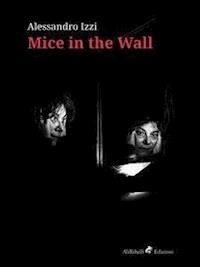
Cover photo by Paolo Di Tucci
ISBN 978-88-33462-11-0
©2018 Ali Ribelli Edizioni
Fiction – Possible Worlds
www.aliribelli.com – [email protected]
Any reproduction of this book is strictly forbidden, even partially, with means of any kind, without the clear authorization of Editor.
Mice in the Wall
by Alessandro Izzi
AliRibelli Edizioni
Contents
Preface
ACT 1 – MEMORY DISORDERS
ACT 2 – INSIDE THE MIRROR LABYRINTH
ACT 3 – LET THERE BE LIGHT
Afterword
Preface
The history of mankind is crowded with horrors and tragedies of a scale and atrocity so vast as to have left their cruel mark on our present. The holocaust, the premeditated extermination of specifically targeted groups of people, is a stark example of just how far supposedly civilized man can go.
The shadow of the horrors committed by man against humanity lingers in our society today in the shape of intolerance, selfishness and fear, once again regaining strength. With the financial crisis of 2008 and its domino effects on the economies of affluent countries, we have witnessed the resurgence of a political class that bases its agenda on exactly those three weaknesses.
Additionally, the large-scale loss of generic job profiles against the web-based industry and the even worse crisis caused by the rise of robotics and artificial intelligence will cause in the near future reason for concern among experts, as increased social injustice will likely generate a scenario of conflict between differently disenfranchised members of society.
Misery is a feeling that creeps into the cracks of society, and can be used by different powers to feed a sentiment of hatred towards whichever group of people are perceived as ‘different’ and ‘hostile’. In 1930s Germany, this sentiment took the shape of antisemitism and concentration camps.
Through a large body of literary and cinematographic works, we have a well-documented and shocking knowledge of the vast extent of the meticulously planned extermination of over 6,000,000 Jews and millions of others belonging to groups the Third Reich perceived as threats. Eyewitness accounts also abound. How and why, then, is ‘Mice in the Wall’ – a contemporary novel on the holocaust written by someone born decades after the event – so important to us?
Because it bears testimony to what written and filmed accounts are able to provide and produce within us: an important achievement if we consider that the collective memory of humanity needs constant reminding of its faults if it ever hopes to achieve universal progress. Indeed, translating past events into a current language, which can convey key messages, is a fundamental part of who we are and hope to become.
This is what Alessandro Izzi, refined writer and Holocaust scholar does through a narration seen through a keyhole, capable of looking from a distance while making you feel only a few steps away. ‘Mice in the Wall’ is no grandiose account but a story composed of small gestures, looks, unspoken words and loud moments of silence. Tactful and yet omitting nothing, Alessandro recreates the full and sheer scale of tragedy and horror, but also the hope and healing, that the Holocaust and its aftermath meant for millions of people.
Reading this book is much like crossing a bridge between worlds, which would otherwise hardly be able to communicate with each other: on one side a black-and-white setting of strife and atrocities, on the other the colorful turbo-capitalism that is creating the disenfranchised and displaced groups of the new millennium in a vast interconnected ocean of solitude.
My advice, dear reader, is to immerse yourself in Alessandro’s narration and re-learn gestures you now hold familiar, to use these words of hope to smash the wall, both physical and mental, that separates you from yourself and your fellow human beings.
Jason R. Forbus
MSc in Globalization
University of Aberdeen
United Kingdom




