


63,99 €
Mehr erfahren.
- Herausgeber: John Wiley & Sons
- Kategorie: Wissenschaft und neue Technologien
- Sprache: Englisch
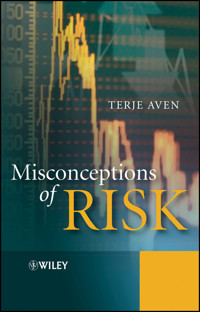
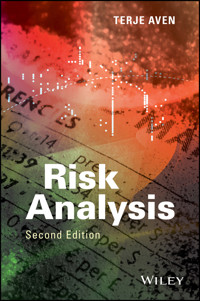
We all face risks in a variety of ways, as individuals, businesses and societies. The discipline of risk assessment and risk management is growing rapidly and there is an enormous drive for the implementation of risk assessment methods and risk management in organizations. There are great expectations that these tools provide suitable frameworks for obtaining high levels of performance and balance different concerns such as safety and costs.
The analysis and management of risk are not straightforward. There are many challenges. The risk discipline is young and there area a number of ideas, perspectives and conceptions of risk out there. For example many analysts and researchers consider it appropriate to base their risk management policies on the use of expected values, which basically means that potential losses are multiplied with their associated consequences. However, the rationale for such a policy is questionable.
A number of such common conceptions of risk are examined in the book, related to the risk concept, risk assessments, uncertainty analyses, risk perception, the precautionary principle, risk management and decision making under uncertainty. The Author discusses these concepts, their strenghts and weaknesses, and concludes that they are often better judged as misconceptions of risk than conceptions of risk.
Key Features:
- Discusses common conceptions of risk with supporting examples.
- Provides recommendations and guidance to risk analysis and risk management.
- Relevant for all types of applications, including engineering and business.
- Presents the Author’s overall conclusions on the issues addressed throughout the book.
All those working with risk-related problems need to understand the fundamental ideas and concepts of risk. Professionals in the field of risk, as well as researchers and graduate sutdents will benefit from this book. Policy makers and business people will also find this book of interest.
Sie lesen das E-Book in den Legimi-Apps auf:
Seitenzahl: 427
Veröffentlichungsjahr: 2011
Ähnliche















Contents
Preface
Acknowledgements
1 Risk is equal to the expected value
Example. A Russian roulette type of game
Daniel Bernoulli: The need to look beyond expected values
Risk-averse behaviour
A portfolio perspective
Dependencies
Different distributions. Extreme observations
Difficulties in establishing the probability distribution
Summary
References
Further reading
2 Risk is a probability or probability distribution
Common risk definitions based on probability
How to specify or estimate the probability distribution
The meaning of a probability
We need to look beyond probabilities to express risk
Summary
References
Further reading
3 Risk equals a probability distribution quantile (value-at-risk)
Four criteria that a risk measure should satisfy
Incoherence of VaR
Tail-value-at-risk
Computing VaR and TVaR
Summary
References
Further reading
4 Risk equals uncertainty
Portfolio analysis
Empirical counterparts
Investment decisions
Expected value-variance analysis
Risk equals uncertainty as a general definition of risk
Summary
References
Further reading
5 Risk is equal to an event
Implications of seeing risk as an event or a consequence
Summary
References
Further reading
6 Risk equals expected disutility
Expected utility theory
Example. The Allais paradox
Should risk be separated from the utility dimension?
Risk also includes the utility dimension
Risk is more than expected disutility
Example
Summary
References
7 Risk is restricted to the case of objective probabilities
Die example
A business example
Evaluation of Knight’s work
Risk classification systems
References
Further reading
8 Risk is the same as risk perception
Die example
Industrial safety example
Basic research about risk perception
The difference between risk and risk perception
Die example continued
Industrial safety example continued
Summary
References
9 Risk relates to negative consequences only
Die example
Investment example
Summary
References
10 Risk is determined by the historical data
Example. Product price
Example. Accident statistics
Statistics and risk
Traditional statistical analysis
An alternative approach
Conclusions
References
Further reading
11 Risk assessments produce an objective risk picture
Example. Standard statistical framework
Example. Accidental deaths in traffic
Example. Risk level in Norwegian petroleum activities offshore
Example. Interval analysis
Example. Risk assessment of a planned process plant
Summary
References
Further reading
12 There are large inherent uncertainties in risk analyses
The objective of the risk analysis is to accurately estimate the risk (probabilities)
Example
The objective of the risk analysis is to describe our uncertainties about the world
Knowledge-based (subjective) probabilities
Challenges related to the specification of knowledge-based probabilities
The need to look beyond the probabilities to express risk
Summary
References
Further reading
13 Model uncertainty should be quantified
Example. Parallel system
Example. Structural reliability analysis
Example. Cost risk
Example. Dropped object
Example. Lifetime distributions
Example Continued. Parallel System
Summary
References
Further reading
14 It is meaningful and useful to distinguish between stochastic and epistemic uncertainties
Summary
References
Further reading
15 Bayesian analysis is based on the use of probability models and Bayesian updating
Bayesian updating for a drilling operation
Updating procedures for pore pressure assessments
An alternative Bayesian updating approach
Assessing the number of events
Comprehensive textbook Bayesian approach
An alternative Bayesian approach
Summary
References
Further reading
16 Sensitivity analysis is a type of uncertainty analysis
Uncertainty analysis
Sensitivity analysis in the context of an uncertainty analysis
Summary
References
Further reading
17 The main objective of risk management is risk reduction
Example. Exploration of space
Example. Investment in securities
Example. Oil and gas exploration
Basic risk management theory
The role of risk reduction in risk management
Summary
References
Further reading
18 Decision-making under uncertainty should be based on science (analysis)
A perspective based on science (analysis)
Critique of this approach
Conditions for obtaining improved risk assessments and risk assessment processes
Example. Cash depot case
Cost–benefit analysis based on expected net present value and other types of criteria
Example. Cash depot case continued
Summary and final remarks
References
Further reading
19 The precautionary principle and risk management cannot be meaningfully integrated
History of the precautionary principle
The example of asbestos
Different interpretations of the precautionary principle
Scientific uncertainties
Cautionary principle
The cautionary and precautionary principles’ place in risk management
Cash depot example (continued from previous chapter)
Summary
References
Further reading
20 Conclusions
How risk is defined
How risk is described
The role of risk assessments and cost–benefit analysis in risk management
Framework for risk assessment
Final remarks
References
Further reading
Index
This edition first published 2010© 2010 John Wiley & Sons Ltd.
Registered officeJohn Wiley & Sons Ltd, The Atrium, Southern Gate, Chichester, West Sussex, PO19 8SQ, United Kingdom
For details of our global editorial offices, for customer services and for information about how to apply for permission to reuse the copyright material in this book please see our website at www.wiley.com.
The right of the author to be identified as the author of this work has been asserted in accordance with the Copyright, Designs and Patents Act 1988.
All rights reserved. No part of this publication may be reproduced, stored in a retrieval system, or transmitted, in any form or by any means, electronic, mechanical, photocopying, recording or otherwise, except as permitted by the UK Copyright, Designs and Patents Act 1988, without the prior permission of the publisher.
Wiley also publishes its books in a variety of electronic formats. Some content that appears in print may not be available in electronic books.
Designations used by companies to distinguish their products are often claimed as trademarks. All brand names and product names used in this book are trade names, service marks, trademarks or registered trademarks of their respective owners. The publisher is not associated with any product or vendor mentioned in this book. This publication is designed to provide accurate and authoritative information in regard to the subject matter covered. It is sold on the understanding that the publisher is not engaged in rendering professional services. If professional advice or other expert assistance is required, the services of a competent professional should be sought.
Library of Congress Cataloging-in-Publication Data
Record on file
A catalogue record for this book is available from the British Library
ISBN: 978-0-470-68388-0 (HB)
Preface
We all face risks of some sort, as individuals, businesses and society. We need to understand, describe, analyse, manage and communicate these risks, and the discipline of risk assessment and risk management has been developed to meet this need. This discipline is growing rapidly and there is an enormous drive and enthusiasm to implement risk assessment methods and risk management in organizations. There are great expectations that these tools provide suitable frameworks for obtaining high levels of performance and balancing different concerns such as safety and costs. But the analysis and management of risk are not straightforward. There are many challenges. The risk discipline is young and there are a number of ideas and conceptions of risk out there. For example, many analysts and researchers consider it appropriate to base their risk management policies on the use of expected values, which basically means that potential losses are multiplied with their associated consequences. However, the rationale for such a policy is questionable when facing situations with large uncertainties - an expected value could produce poor predictions of the actual outcome. Another example is the conception that a risk characterization can be based on probabilities alone. However, a probability assignment or a probability estimate is always conditional on background knowledge and surprises could occur relative to these assessments. Hence, risk extends not only beyond expected values, but also beyond probabilities.
A number of such common conceptions of risk have been identified, altogether 19 in number. These conceptions are formulated as headings of the following 19 chapters. The conceptions are discussed and through argumentation and examples their support, strengths, weaknesses and limitations are revealed. The conclusion is that they are often better judged as mis conceptions of risk than conceptions of risk. The final chapter provides my overall conclusions on the issues addressed in the book based on the discussions set out in the previous chapters.
The book has been written for professionals in the risk field, including researchers and graduate students. All those working with risk-related problems need to understand the fundamental ideas and concepts of risk. The book is (conceptually) advanced but at the same time easy to read. It has been a goal to provide a simple analysis without compromising on the requirement for precision and accuracy. Technicalities are reduced to a minimum, while ideas and principles are highlighted. Reading the book requires no special background, but for certain parts a basic knowledge of probability theory and statistics is required. It has, however, been a goal to reduce the dependence on extensive prior knowledge of probability theory and statistics. The key statistical concepts will be introduced and discussed thoroughly in the book. Boxes are used to indicate material that some readers would find technical.
The book is about fundamental issues in risk analysis and risk management, and it provides recommendations and guidance in this context. It is, however, not a recipe book, and does not tell you which risk analysis methods should be used in different situations. What is covered is the general thinking process related to the understanding of risk, and how we should describe, analyse, evaluate, manage and communicate risk. Examples are provided to illustrate the ideas.
Acknowledgements
Many people have provided helpful comments on and suggestions for this book. In particular, I would like to acknowledge Eirik B. Abrahamsen and Roger Flage for the great deal of time and effort they spent on reading and preparing comment on earlier versions of the book. I am also grateful to an anonymous reviewer fo valuable comments and suggestions.
For financial support, thanks to the University of Stavanger and the Researd Council of Norway.
I also acknowledge the editing and production staff at John Wiley & Son for their careful and effective work.
1
Risk is equal to the expected value
If you throw a die, the outcome will be either 1, 2, 3, 4, 5 or 6. Before you throw the die, the outcome is unknown – to use the terminology of statisticians, it is random. You are not able to specify the outcome, but you are able to express how likely it is that the outcome is 1, 2, 3, 4, 5 or 6. Since the number of possible outcomes is 6 and they are equally probable – the die is fair – the probability that the outcome turns out to be 3 (say), is 1/6. This is simple probability theory, which I hope you are familiar with.
Now suppose that you throw this die 600 times. What would then be the average outcome? If you do this experiment, you will obtain an average about 3.5. We can also deduce this number by some simple arguments: about 100 throws would give an outcome equal to 1, and this gives a total sum of outcomes equal to 100. Also about 100 throws would give an outcome equal to 2, and this would give a sum equal to 2 times 100, and so on. The average outcome would thus be
(1.1)
In probability theory this number is referred to as the expected value. It is obtained by multiplying each possible outcome with the associated probability, and summing over all possible outcomes. In our example this gives
(1.2)
We see that formula (1.2) is just a reformulation of (1.1) obtained by dividing 100 by 600 in each sum term of (1.1). Thus the expected value can be interpreted as the average value of the outcome of the experiment if the experiment is repeated over and over again. Statisticians would refer to the law of large numbers, which says that the average value converges to the expected value when the number of experiments goes to infinity.
Reflection
For the die example, show that the expected number of throws showing an outcome equal to 2 is 100 when throwing the die 600 times.
Lesen Sie weiter in der vollständigen Ausgabe!
Lesen Sie weiter in der vollständigen Ausgabe!
Lesen Sie weiter in der vollständigen Ausgabe!
Lesen Sie weiter in der vollständigen Ausgabe!
Lesen Sie weiter in der vollständigen Ausgabe!
Lesen Sie weiter in der vollständigen Ausgabe!
Lesen Sie weiter in der vollständigen Ausgabe!
Lesen Sie weiter in der vollständigen Ausgabe!
Lesen Sie weiter in der vollständigen Ausgabe!
Lesen Sie weiter in der vollständigen Ausgabe!
Lesen Sie weiter in der vollständigen Ausgabe!
Lesen Sie weiter in der vollständigen Ausgabe!
Lesen Sie weiter in der vollständigen Ausgabe!
Lesen Sie weiter in der vollständigen Ausgabe!
Lesen Sie weiter in der vollständigen Ausgabe!
Lesen Sie weiter in der vollständigen Ausgabe!
Lesen Sie weiter in der vollständigen Ausgabe!
Lesen Sie weiter in der vollständigen Ausgabe!
Lesen Sie weiter in der vollständigen Ausgabe!
Lesen Sie weiter in der vollständigen Ausgabe!




