


117,99 €
Mehr erfahren.
- Herausgeber: John Wiley & Sons
- Kategorie: Wissenschaft und neue Technologien
- Sprache: Englisch
With a Preface by noted satellite scientist Dr. Ahmad Ghais, the Second Edition reflects the expanded user base for this technology by updating information on historic, current, and planned commercial and military satellite systems and by expanding sections that explain the technology for non-technical professionals. The book begins with an introduction to satellite communications and goes on to provide an overview of the technologies involved in mobile satellite communications, providing basic introductions to RF Issues, power Issues, link issues and system issues. It describes early commercial mobile satellite communications systems, such as Marisat and Marecs and their military counterparts. The book then discusses the full range of Inmarsat and other current and planned geostationary, low earth orbiting and hybrid mobile satellite systems from over a dozen countries and companies. It is an essential guide for anyone seeking a comprehensive understanding of this industry and military tool. * Revised edition will serve both technical and non-technical professionals who rely every day on mobile satellite communications * Describes and explains historic, current, and planned civil, commercial, and military mobile satellite communication systems. * First Edition charts and tables updated and expanded with current material for today's mobile satellite technology
Sie lesen das E-Book in den Legimi-Apps auf:
Seitenzahl: 473
Veröffentlichungsjahr: 2014
Ähnliche



















Table of Contents
Cover
Title Page
Copyright
Foreword
Preface
Biography
Chapter 1: Introduction to Satellite Communications
1.1 A Brief History of Satellite Communications
1.2 Current Major Communications Satellite Systems
Chapter 2: Overview of the Technology
2.1 Introduction
2.2 Radio Frequencies
2.3 Orbits
2.4 Satellites and Earth Stations
2.5 Channels, Link Analysis, and Networks
Chapter 3: Early Proposals for Mobile Satellite Communications
3.1 Military Interest in Mobile Satellite Communications
3.2 NASA Efforts
3.3 Aerosat
3.4 Maresat
Chapter 4: MARISAT and MARECS: Pioneering Commercial Mobile Satellite Services
4.1 MARISAT
4.2 MARECS
Chapter 5: Introduction to INMARSAT
5.1 Origins of the INMARSAT Organization
5.2 US Participation in the INMARSAT Organization
5.3 Structure of the INMARSAT Organization
5.4 Ownership of the INMARSAT Organization
5.5 Land Earth Stations (LES
s
) in INMARSAT
5.6 Mobile Terminals in INMARSAT
5.7 INMARSAT System Services
5.8 Transformation of the INMARSAT Organization
5.9 ICO Global Communications
Chapter 6: INMARSAT plc
6.1 Introduction to INMARSAT
plc
6.2 INMARSAT's Satellites
6.3 INMARSAT's Services
Chapter 7: Low Earth Orbit (LEO) Mobile Satellite Communications Systems
7.1 Methodology
7.2 Iridium
7.3 Globalstar
7.4 ORBCOMM
Chapter 8: Non-Inmarsat Geostationary Mobile Satellite Communications Systems
8.1 OmniTRACS
8.2 Thuraya
8.3 Mobile Satellite Communications Services from Intelsat
Chapter 9: Other Important Mobile Satellite Communications Systems
9.1 O3b
9.2 SES
9.3 LightSquared
9.4 TerreStar
9.5 Asia Cellular Satellite (ACS)
9.6 Mexsat
9.7 Google
Chapter 10: Military Mobile Satellite Communications Systems
10.1 1980–1990 History
10.2 US Military Mobile Satellite Communications Post 9/11
Appendix I: US Communications Satellite Timeline 1940s Through 1990s
I.1 Timeline of Selected Events in the Development of Satellite Communications
Appendix II: Background Statements by the International Telecommunications Union on Mobile Satellite Communications Frequency Assignments 1996, 1997, and 2000
1996
1997
2000
Conclusion
Appendix III: Public Services Agreement Between the International Mobile Satellite Organization and INMARSAT
Appendix IV: Mobile Satellite Communications Excerpts From U.S. Federal Communications Commission Report on U.S. Commercial Mobile Services
Index
End User License Agreement
Pages
ix
x
xi
xii
xiii
1
2
3
4
5
6
7
8
9
10
11
12
13
14
15
16
17
18
19
20
21
22
23
24
25
26
27
28
29
30
31
32
33
34
35
36
37
38
39
40
41
42
43
44
45
46
47
48
49
50
51
52
53
54
55
56
57
58
59
60
61
62
63
64
65
66
67
68
69
70
71
72
73
74
75
76
77
78
79
80
81
82
83
84
85
86
87
88
89
90
91
92
93
94
95
96
97
98
99
100
101
102
103
104
105
106
107
108
109
110
111
112
113
114
115
116
117
118
119
120
121
122
123
124
125
126
127
128
129
130
131
132
133
134
135
136
137
138
139
140
141
142
143
144
145
146
147
148
149
150
151
152
153
154
155
156
157
158
159
160
161
162
163
164
165
166
167
168
169
170
171
172
173
174
175
176
177
178
179
180
181
182
183
184
185
186
187
188
189
190
191
192
193
194
195
196
197
198
199
200
201
202
203
204
205
206
207
208
209
210
211
212
213
214
215
216
217
218
219
220
221
222
223
224
225
226
227
228
229
230
231
232
233
234
235
236
237
238
239
240
241
242
243
Guide
Cover
Table of Contents
Preface
Chapter 1: Introduction to Satellite Communications
List of Illustrations
Figure 1.1
Figure 1.2
Figure 1.3
Figure 2.1
Figure 2.2
Figure 2.3
Figure 2.4
Figure 3.1
Figure 3.2
Figure 3.3
Figure 3.4
Figure 5.1
Figure 6.1
Figure 6.2
Figure 6.3
Figure 7.1
Figure 7.2
Figure 7.3
Figure 7.4
Figure 7.5
Figure 8.1
Figure 8.2
Figure 9.1
Figure 10.1
Figure 10.2
Figure 10.3
Figure 1
List of Tables
Table 2.1
Table 2.2
Mobile Satellite Communications Handbook
Second Edition
Roger Cochetti
Foreword by Ahmad F. Ghais
Copyright © 2015 by John Wiley & Sons, Inc. All rights reserved
Published by John Wiley & Sons, Inc., Hoboken, New Jersey
Published simultaneously in Canada
No part of this publication may be reproduced, stored in a retrieval system, or transmitted in any form or by any means, electronic, mechanical, photocopying, recording, scanning, or otherwise, except as permitted under Section 107 or 108 of the 1976 United States Copyright Act, without either the prior written permission of the Publisher, or authorization through payment of the appropriate per-copy fee to the Copyright Clearance Center, Inc., 222 Rosewood Drive, Danvers, MA 01923, (978) 750-8400, fax (978) 750-4470, or on the web at www.copyright.com. Requests to the Publisher for permission should be addressed to the Permissions Department, John Wiley & Sons, Inc., 111 River Street, Hoboken, NJ 07030, (201) 748-6011, fax (201) 748-6008, or online at http://www.wiley.com/go/permissions.
Limit of Liability/Disclaimer of Warranty: While the publisher and author have used their best efforts in preparing this book, they make no representations or warranties with respect to the accuracy or completeness of the contents of this book and specifically disclaim any implied warranties of merchantability or fitness for a particular purpose. No warranty may be created or extended by sales representatives or written sales materials. The advice and strategies contained herein may not be suitable for your situation. You should consult with a professional where appropriate. Neither the publisher nor author shall be liable for any loss of profit or any other commercial damages, including but not limited to special, incidental, consequential, or other damages.
For general information on our other products and services or for technical support, please contact our Customer Care Department within the United States at (800) 762-2974, outside the United States at (317) 572-3993 or fax (317) 572-4002.
Wiley also publishes its books in a variety of electronic formats. Some content that appears in print may not be available in electronic formats. For more information about Wiley products, visit our web site at www.wiley.com.
Library of Congress Cataloging-in-Publication Data:
Cochetti, Roger.
Mobile satellite communications handbook / Roger Cochetti. – Second edition.
pages cm
Includes index.
ISBN 978-1-118-35702-6 (cloth)
1. Artificial satellites in telecommunication–Handbooks, manuals, etc. 2. Mobile communication systems–Handbooks, manuals, etc. I. Title.
TK5104.C57 2015
621.382′5–dc23
2015001464
Foreword
We've been living in the “Space Age” for over half a century. No wonder public interest in space matters now wanes, distracted as it is by more weighty concerns such as the waning of the “Cold War” and the onset of the “War on Terror.” The worldwide public takes for granted space-age achievements closer to home. For decades, weather forecasts relied heavily on observations from meteorological satellites. Confusing maps of city streets are gradually being replaced by GPS navigation and satellite images of earth. Widespread misconception persists that cell-phone calls are connected via satellites.
And yet, satellite telecommunications remain the most impressive commercial achievements of the space age. Alas, the original overblown promise that they would bring about world peace has not been realized. Nevertheless, early commercial satellites connected widely separated nations around the globe using what international regulators call the fixed satellite service (FSS). In today's broadcast satellite service (BSS), satellites provide much television networking as well as directly distributing TV programming. Finally, what is called the mobile satellite service (MSS) now connects users on the move, particularly in remote areas, at sea or in the air.
This handbook primarily tells the MSS story, but draws on FSS and BSS developments as they relate. It's replete with triumphs, successes, tensions, setbacks, and defeats, punctuated by the occasional bankruptcy. Early triumphs of international cooperation are exemplified first in Intelsat (of FSS fame) and then later in INMARSAT. Various tensions arise: international cooperation versus national industrial policies, public versus private enterprise, commercial versus public services (e.g., transportation safety), military versus civilian, and protectionism versus competition. There is the failure to anticipate the market-disrupting cell-phone and Internet technologies. Then there is the spectacular Iridium bankruptcy that presaged the wider financial collapse of telecoms in the late 1990s. Market forces are eroding regulatory distinctions between FSS, BSS, and MSS. Technology is eroding distinctions between celestial and terrestrial radio services altogether.
While it is not intended to be an exposition of MSS technology, this handbook complements existing technical texts by explaining in detail major business and government development that took place over the fifty years of mobile satellite telecommunications. Of necessity, the worldwide MSS story is not confined to national borders. Cochetti's American perspective is understandable, given America's prominence in both telecommunications and satellite technology. Still, it's a major contribution in a developing field that deserves further scholarly study.
In this update, Cochetti brings the story up to date and tells it well, for it's a story worth telling, for its own sake and for lessons learned that may be applied to related fields. One related field is the ongoing effort, sometimes dubbed MSS's “Holy Grail,” to bring broadband Internet connectivity to users worldwide. As George Santayana (1863–1952) once wrote: “Those who cannot remember the past are condemned to repeat it.”
Ahmad F Ghais, Ph.D.
Arvada, Colorado
December 2013
Preface
This book is an update of the Mobile Satellite Communications Handbook, which I originally undertook for Quantum Publishing/John Wiley & Sons Publishers in 1995, following 13 years as an executive in the mobile satellite communications industry. As this revised edition comes to completion in 2013, enormous changes have taken place in the industry and in the fields of mobile satellite communications during the intervening 18 years. Many ambitious mobile satellite communications proposals and investments have come and gone, and many have come and remain today. The organized, and somewhat narrow, mobile satellite communications industry that had emerged from military technologies under the watchful eyes of governments from the 1960s through the mid-1990s has, to a very large degree, been replaced by the disorder, creativity, and creative destruction of the marketplace.
Technologies that had been separate and markets that had been segregated have been, and are being further, conflated and restructured. Even the concept of mobile satellite communications, sometimes called mobile satellite services (MSS) in legal parlance, is being merged with such terrestrial mobile communications services as cellular and Wi-Fi.
To make sense out of this transition and to understand where we are in mid-2013, the revised Mobile Satellite Communications Handbook traces the history of this technology and this industry, explains for the layman the basic technological tenants of mobile satellite communications, and describes the current makeup of the field among civil, commercial, and military mobile satellite communications systems. While this book should not be mistaken for a technical manual, it is unique in providing the reader with a comprehensive overview of the technology and the more-than-a-dozen historic and current mobile satellite operators in this area. For that reason, it addresses a few of the most fundamentally important mobile satellite communications systems in great depth and many others in detail.
This book begins with the start of the satellite communications era and helps the reader understand how the concept grew from a science fiction novelty to a global modern technology and industry. It explains how mobile satellite communications grew out of general-purpose military, civil, and commercial communications satellites and how the mobile satellite industry then evolved from a small entry into the $20 billion undertaking that it is today. It is an exciting story that is important for anyone with an interest in communications or space-based undertakings and the many industries that these two technologies enable.
Given the broad sweep of this book, covering over five decades and dozens of satellite systems, it would not have been possible without the advice, support, and guidance of numerous people, many of whom have far more expertise than I do. With apologies, for lack of space, to the many people who also assisted me, I would like to acknowledge and thank Ahmad Ghais, Scott Chase, Kim Baumgartner, Cara Alfano, Tim Farrar, Lawrence Paul, Dick McClure, Derek Webber, Ginger Ingalls Michael Bellafaire, Joseph Gradisher, Jennifer Green-Lanchoney, the very competent crew at the NASA Headquarters Library in Washington, DC, and the many representatives of individual companies who provided support for this book. Special thanks also go to my sons Andrew and Emmett whose assistance and support was essential to see me through this effort.
RogerCochetti
Washington, DC
November 2013
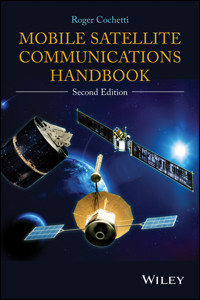
Cover Art
The illustrations used in the cover art are designed to describe the types of communications satellites that have been used in mobile satellite communications over the four decades of this technology. While they may not be illustrations of actual mobile communications satellites, they fairly represent the types of satellites that have been used.
Biography
Dr. Ahmad F. Ghais is an alumnus of NASA, Comsat, Intelsat, and INMARSAT. Starting in 1961, he contributed to the development of satellite telecommunications technology at NASA and later at Comsat. In the early 1970s, he served on the US delegation to the international conferences that created INMARSAT. In the 1980s and early 1990s, he served as INMARSAT's Director of Engineering and Operations in London. Since then, he served as President of the Mobile Satellite Users Association (MSUA), taught telecommunications technology to graduate engineers, and continues to consult on international satellite telecommunications technology, policy and business.
Chapter 1Introduction to Satellite Communications
1.1 A Brief History of Satellite Communications
1.1.1 Origins of Communications Satellite Technology
The advent of satellite communications has revolutionized the world's ability to communicate. The modern age of space-based communication probably began in 1945, when Arthur C. Clarke, then secretary to the British Interplanetary Society and later the author of such popular works of science fiction as 2001: A Space Odyssey, wrote an article entitled “Extraterrestrial Relays” for Wireless World. In it, Clarke described his idea for a worldwide satellite communications system that would be based on three satellites positioned equidistant from each other in orbit over the equator at an altitude of 22,300 mi/36,000 km. Each satellite would be linked by radio to the two others and to the ground, thereby allowing anyone on earth to reach anyone else in the world—wherever that person would be located—by tapping into this radio network. Clarke described the orbital path as a geosynchronic orbit, referring to the fact that a satellite at that specific altitude above the equator could orbit the earth at precisely the same speed as the earth itself rotates, thereby making it appear to be stationary from the perspective of someone on the ground. Because such a satellite would stay above the same spot in the sky at all times, radio signals could be relayed through it without interruption. This orbit today is normally called , or .
Lesen Sie weiter in der vollständigen Ausgabe!
Lesen Sie weiter in der vollständigen Ausgabe!
Lesen Sie weiter in der vollständigen Ausgabe!
Lesen Sie weiter in der vollständigen Ausgabe!
Lesen Sie weiter in der vollständigen Ausgabe!
Lesen Sie weiter in der vollständigen Ausgabe!
Lesen Sie weiter in der vollständigen Ausgabe!
Lesen Sie weiter in der vollständigen Ausgabe!
Lesen Sie weiter in der vollständigen Ausgabe!
Lesen Sie weiter in der vollständigen Ausgabe!
Lesen Sie weiter in der vollständigen Ausgabe!
Lesen Sie weiter in der vollständigen Ausgabe!
Lesen Sie weiter in der vollständigen Ausgabe!
Lesen Sie weiter in der vollständigen Ausgabe!
Lesen Sie weiter in der vollständigen Ausgabe!




