Mother and Daughter - D. H. Lawrence - E-Book

Mother and Daughter E-Book

D H Lawrence

0,0
1,99 €

oder
-100%
Sammeln Sie Punkte in unserem Gutscheinprogramm und kaufen Sie E-Books und Hörbücher mit bis zu 100% Rabatt.

Mehr erfahren.
Beschreibung

Tension simmers in this acute psychological portrait of a claustrophobic relationship between a mother and her child. The struggle for autonomy battles against the suffocating weight of maternal expectation and emotional debt. Every gesture and silence is loaded with meaning, painting a vivid picture of domestic power dynamics. It is a raw, unvarnished look at the complexities of love that binds and stifles.

Das E-Book können Sie in Legimi-Apps oder einer beliebigen App lesen, die das folgende Format unterstützen:

EPUB

Veröffentlichungsjahr: 2026

Bewertungen
0,0
0
0
0
0
0
Mehr Informationen
Mehr Informationen
Legimi prüft nicht, ob Rezensionen von Nutzern stammen, die den betreffenden Titel tatsächlich gekauft oder gelesen/gehört haben. Wir entfernen aber gefälschte Rezensionen.

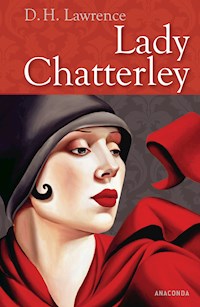


Mother and Daughter by David Herbert Lawrence

Virginia Bodoin had a good job: she was head of a department in a certain government office, held a responsible position, and earned, to imitate Balzac and be precise about it, seven hundred and fifty pounds a year. That is already something. Rachel Bodoin, her mother, had an income of about six hundred a year, on which she had lived in the capitals of Europe since the effacement of a never very important husband.

Now, after some years of virtual separation and "freedom", mother and daughter once more thought of settling down. They had become, in course of time, more like a married couple than mother and daughter. They knew one another very well indeed, and each was a little "nervous" of the other. They had lived together and parted several times. Virginia was now thirty, and she didn't look like marrying. For four years she had been as good as married to Henry Lubbock, a rather spoilt young man who was musical. Then Henry let her down: for two reasons. He couldn't stand her mother. Her mother couldn't stand him. And anybody whom Mrs Bodoin could not stand she managed to sit on, disastrously. So Henry had writhed horribly, feeling his mother-in-law sitting on him tight, and Virginia, after all, in a helpless sort of family loyalty, sitting alongside her mother. Virginia didn't really want to sit on Henry. But when her mother egged her on, she couldn't help it. For ultimately, her mother had power over her; a strange female power, nothing to do with parental authority. Virginia had long thrown parental authority to the winds. But her mother had another, much subtler form of domination, female and thrilling, so that when Rachel said: Let's squash him! Virginia had to rush wickedly and gleefully to the sport. And Henry knew quite well when he was being squashed. So that was one of his reasons for going back on Vinny.—He called her Vinny, to the superlative disgust of Mrs Bodoin, who always corrected him: My daughter Virginia—

The second reason was, again to be Balzacian, that Virginia hadn't a sou of her own. Henry had a sorry two hundred and fifty. Virginia, at the age of twenty-four, was already earning four hundred and fifty. But she was earning them. Whereas Henry managed to earn about twelve pounds per annum, by his precious music. He had realized that he would find it hard to earn more. So that marrying, except with a wife who could keep him, was rather out of the question. Vinny would inherit her mother's money. But then Mrs Bodoin had the health and muscular equipment of the Sphinx. She would live forever, seeking whom she might devour, and devouring him. Henry lived with Vinny for two years, in the married sense of the words: and Vinny felt they were married, minus a mere ceremony. But Vinny had her mother always in the background; often as far back as Paris or Biarritz, but still, within letter reach. And she never realized the funny little grin that came on her own elvish face when her mother, even in a letter, spread her skirts and calmly sat on Henry. She never realized that in spirit she promptly and mischievously sat on him too: she could no more have helped it than the tide can help turning to the moon. And she did not dream that he felt it, and was utterly mortified in his masculine vanity. Women, very often, hypnotize one another, and then, hypnotized, they proceed gently to wring the neck of the man they think they are loving with all their hearts. Then they call it utter perversity on his part, that he doesn't like having his neck wrung. They think he is repudiating a heart-felt love. For they are hypnotized. Women hypnotize one another, without knowing it.

In the end, Henry backed out. He saw himself being simply reduced to nothingness by two women, an old witch with muscles like the Sphinx, and a young, spell-bound witch, lavish, elvish and weak, who utterly spoilt him but who ate his marrow.

Rachel would write from Paris: My dear Virginia, as I had a windfall in the way of an investment, I am sharing it with you. You will find enclosed my cheque for twenty pounds. No doubt you will be needing it to buy Henry a suit of clothes, since the spring is apparently come, and the sunlight may be tempted to show him up for what he is worth. I don't want my daughter going around with what is presumably a street-corner musician, but please pay the tailor's bill yourself, or you may have to do it over again later.—Henry got a suit of clothes, but it was as good as a shirt of Nessus, eating him away with subtle poison.

So he backed out. He didn't jump out, or bolt, or carve his way out at the sword's point. He sort of faded out, distributing his departure over a year or more. He was fond of Vinny, and he could hardly do without her, and he was sorry for her. But at length he couldn't see her apart from her mother. She was a young, weak, spendthrift witch, accomplice of her tough-clawed witch of a mother.

Henry made other alliances, got a good hold on elsewhere, and gradually extricated himself. He saved his life, but he had lost, he felt, a good deal of his youth and marrow. He tended now to go fat, a little puffy, somewhat insignificant. And he had been handsome and striking-looking.

The two witches howled when he was lost to them. Poor Virginia was really half crazy, she didn't know what to do with herself. She had a violent recoil from her mother. Mrs Bodoin was filled with furious contempt for her daughter: that she should let such a hooked fish slip out of her hands! that she should allow such a person to turn her down!—"I don't quite see my daughter seduced and thrown over by a sponging individual such as Henry Lubbock," she wrote. "But if it has happened, I suppose it is somebody's fault—"