


Erhalten Sie Zugang zu diesem und mehr als 300000 Büchern ab EUR 5,99 monatlich.
- Herausgeber: Eye Press
- Kategorie: Gesellschafts- und Liebesromane
- Sprache: Englisch
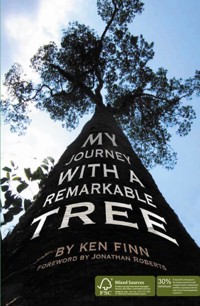
A journey through Cambodia with the simple and romantic ambition to find the folkloric spirit trees, the powerful connecting force between man and nature, Ken Finn's travels turned out to be anything but simple. Back-wearing motos, immobilizing gastric assaults, unexpected road blocks, and monkish processions all contributed to the journey, but most dramatically, instead of enriching forests, destruction was found: the black market timber trade. A new voice was found as Ken followed the trees on their journey to the furniture factories of Vietnam and subsequently a house somewhere on the North Circular, London. The book chronicles his trip not just through Southeast Asia but the inner transition from traveler to activist. It charts the unlocking of a conscience and the discovery of a new sensitivity and passion showing that it is not a major shift in behavior to save the destruction and corruption of the planet and that it is important to care.
Sie lesen das E-Book in den Legimi-Apps auf:
Seitenzahl: 416
Veröffentlichungsjahr: 2005
Das E-Book (TTS) können Sie hören im Abo „Legimi Premium” in Legimi-Apps auf:
Ähnliche




















Copyright © Ken Finn 2005
All rights reserved. Apart from brief extracts for the purpose of review, no part of this publication may be reproduced, stored in a retrieval system, or transmitted in any form or by any means, electronic, mechanical, photocopying, recording or otherwise without the permission of the publisher.
Ken Finn has asserted his right under the Copyright, Designs and Patents Act 1988 to be identified as the author of this work.
My Journey with a Remarkable Tree
1st Edition
March 2005
Published by Eye Books Ltd
29 Barrow Street
Much Wenlock
Shropshire
TF13 6EN
website: www.eye-books.com
Set in Frutiger and Garamond
ISBN: 1903070368
British Library Cataloguing in Publication Data
A catalogue record for this book is available from the British Library
Printed and bound in Great Britain by Biddles Ltd
CONTENTS
FOREWORD -
ACKNOWLEDGEMENTS
SECTION ONE - MEETING WITH A GURU
1 KAURI MORNING
2 BISTO COUNTRY
SECTION TWO - NINETEEN
3 DOWN IN PHNOM PENH
4 YOU SHOULD KNOW
5 FINDING A GUIDE
SECTION THREE - TO THE TEMPLE
6 ROAD TO RUINS
7 NO GOOD GUYS
8 ALIEN RUMBLE
9 TEMPLE SUBTERFUGE
10 BACK TO CHUCKS
11 BADLANDS
12 SHARK SOUP
13 ANGKOR SUNRISE
14 ANGKOR TWILIGHT
SECTION FOUR - EDUCATING RITA
15 FAST TRACK
16 RITA
17 A NEW GUIDE
SECTION FIVE - NO TREES NO RAIN
18 THE ROAD TO TUM RING
19 INTO THE FOREST
20 NO SHIT
21 TOP RANKIN TUM RING
22 TAR KONG
23 PISSON GOD
24 DESPERATELY SPEAKING ENGLISH
25 THUNDER
26 MISS U SCARECROW
SECTION SIX - EDUCATING RITA PART TWO
27 SLUETH IN PP
28 PART P.PEOPLE
SECTION SEVEN - GREEN GEM
29 PATCHES
30 KACHUN
31 SLASH N SAVE
32 SPIRIT LIGHTS
33 LOW TAR
34 OILED
35 GREEN RAT STEW
36 PANT BOYS
37 GRUB N GRAB
38 CHAMAU
SECTION EIGHT - PILGRIMS PROGRESS
39 FREEDOM TRAIL
40 BILLY NO MATES
41 NO FSC IN VN
42 LOVE AND MDF
43 HEAVENS ABOVE
44 HEAVENS RIGHT HERE
45 WING ANA HOPE
46 MENTAL DADIO
47 HOLE IN THE WALL
48 MR NASTY
49 NO BAPS
50 LITTLE HANDS
51 TREE IN A BASKET
SECTION NINE - DON’T BUY IT
52 DON’T BUY IT
SECTION TEN - OUTTA HERE
53 OUT OF JUICE
54 STRANGE FISH
SECTION ELEVEN - KRIME AND MEANIE
55 PART 1. A SCARY TALE
56 PART 2. DEAD ENDERS
57 RICH COUNTRY POOR PEOPLE
SECTION TWELVE - BLIGHTY
58 MING AND VON
59 MSSRS 20 PERCENT
EPILOGUE
UPDATE, AUGUST 2012
FURTHER READING
ABOUT THE AUTHOR
Foreword
In the lowland rainforests of south-east Asia, from India to Vietnam and down the Malay peninsula, there grows a tall and stately old-growth tree called Dipterocarpus alatus, otherwise known as the hairy-leafed apitong or ‘Chhoeuteal’. In Cambodia, where it is locally preserved as a votive, spirit tree, forest-dwellers tap its trunk for resin during the dry season - collecting up to 40 gallons from a single tree - to use for lighting their homes and waterproofing their boats, or as a cash-crop ingredient for varnishes and paints.
The World Conservation Union lists the Chhoeuteal’s status as EN: endangered. Not by the locals who love and understand it, who hardly ever cut one down; but by Asian timber companies and manufacturers, many of them corrupt, who cannot get enough of its magnificent, dark-red, weather-resistant hardwood timber, known as keruing, made into garden furniture and exported to the west by the container-load. You can see examples at your local garden centre: four folding chairs and a round table, £399, parasol extra.
This is the story of one of those groves of trees (illegally cut down in Cambodia, smuggled across the border into Vietnam, laundered into sustainably-sourced artefacts, exported in a container to Felixstowe); and of their pursuit by a brave and passionate man, the author of this book. His story is all the more shocking for its focus: a paradigm of what is happening all over the world, in the Brazilian rainforest, in the Russian taiga, among the giant eucalypts of Tasmania, in the temperate rainforest of the Canadian Great Bear. In the last half-century Cambodia has lost a third of its old-growth forest-cover, devastated by war, logging and conversion to monocultural, MDF-making species like acacia and eucalyptus. A greater area has been degraded by the removal of the choicest trees, and that very degradation is often used as an excuse for total annihilation. But local villagers argue that if the land is left alone for 15 or 20 years, the big trees will grow again. “If they destroy the old forest they might as well come to kill us all. It is our rice pot.”
Jonathan Roberts
author - Mythic Woods - The Worlds Most Remarkable Forest
Acknowledgements
Somehow “My Journey with a Remarkable Tree” has had an energy of its own from the day I decided to take to its road. Maybe fate or some other hidden process was at work but I have never felt that this was my project alone. Kismet has done wonderful service in steering me to the resources I have needed or in creating meetings that at times have seemed spookily pertinent. I’m sincerely grateful.
Fated or not I’m thankful for the help I received both in Cambodia and Vietnam as well as back home in England. I would like to thank my guides and in particular Sena and his family for their hospitality. A big one to Global Witness for their assistance and for the work they undertake in countries like Cambodia; for highlighting the corruption that creates poverty in a land rich in resources. Thanks go to WildAid who acted on my evidence of wildlife trading in Preah Vear and for all those who helped me along the way. Probably more importantly my gratitude goes to those who are working still to protect the forest.
Back in the UK I would like to thank my Editor Chris Davison for his clarity and my publisher Dan for his support and understanding. That this book is printed on Forest Stewardship Council (FSC) paper is a credit to Eye Books for going the extra mile both in terms of effort and expense. It couldn’t have been anything but 100% Recycled or FSC accredited paper for me but as it turns out going ‘Ancient Forest Friendly’ was actually something quite ground breaking in book publishing. The paper used is a minimum 30% accredited content and I have been assured that the remainder is according to FSC ‘from a sustainable source on the way to accreditation.’ We hope that as more publishers and authors begin to insist on recycled or truly sustainable virgin pulp papers like FSC this process will get easier and more economically viable. If you enjoy reading my book please share it with someone else or give it to a charity shop or library. Share more, buy less.
Finally I would like to dedicate this book to my partner who has supported me through the process and a big loving hug to my sons, grandchildren, family and friends.
SECTION ONE
MEETING WITH A GURU
Do you believe in spirits? After my encounter with the ‘Lord of the Forest’ I’m a believer. In the forests of Northland New Zealand there live today giant Kauri trees over two thousand years old. My unexpected and otherworldly connection with one was the start of an incredible journey.
1 Kauri Morning
Dressed like a castaway in the presence of the Lord of the Forest, ‘Te Matua Ngahere’, I’m the fan singled out to have my hand shaken, the child with the posy for the king or the believer receiving the blessing. The heavy pitter-patter of rainfall on my shroud of yellow plastic is an anchor to the world I know back there but right here right now I’m wired to a force of wisdom two thousand years old. In the quiet pounding of my brain the tumblers whir to find a combination that makes sense, yet somewhere else in my being where electricity plays no part, a light of understanding is flowing perfectly clear; release, everything, stillness.
My audience is over and I stand nodding, smiling and tearful. Grateful. I’ve found my guru.
Tingling at every nerve ending I walk back to this world but the after glow is confirmation if any was needed that something very profound has happened to me. Every colour is richer, sound clearer and sensation more intense. I’m in love. Not for the love of someone or something but immersed in love.
2 Bisto Country
It had been the wettest summer month of February on record, New Zealand’s treasures had been snatched between the storms and showers but today there was no respite. We sloshed into the forest leaving my sisters, ‘the golden girls’ dry but steamed up in the car. This morning we were a couple of ‘see it and run’ day-trippers in plastic macs, Brits used to making the most of it.
Bunty and I followed the timber walkway around the museum of trees to the ‘Four Sisters’ a cluster of Giant Kauri that closed the canopy above us. We gawped up while lashings of fresh rain filled our hoods and faces before squelching on to ‘Te Matua Ngahere’ The Lord of the Forest. Like a pair of giggling kids tumbling into a cathedral we were suddenly aware of its majesty. There he stood over two thousand years old, as wide as a house towering up to the heavens, an ancient monument of living timber. At least thirty generations of man including Christ have lived and died during his lifetime. I was mesmerised
For a while I was lost in what I can only describe as a silent dialogue with a tree. I was drawn in and somehow connected to its pure wisdom for a timeless moment. I experienced no internal speech or reasoning I was taken straight to the point of understanding or recognition. The clarity blew me away.
On the way back to the car my senses heightened as if tripping on a beautiful substance I enjoyed the freshness of the forest its intense colours and a physical lightness. It was more than just a hedonistic rush; something deep inside me had taken a jolt.
I wanted to stay in the moment; clarity can be lost in an instant. Life like a fog will roll in and blunt the edges of certainty but we were back at the car and I had to give up something to return to normality. I was high on the experience but I knew that I would sound scary if I just recounted what had happened to me. I had to try and put it in an acceptable form. I was as honest as I could be and told everyone I’d just had a special connection with the Giant Kauri.
A family wedding brought us to the country that’s lived in my mind through the glossy calendars and mementos my big sister sent back every year since I was small child. Since I waved goodbye to a small face and flapping handkerchief at the rail atop the towering Ocean Liner off to a big country of mountains, forests and Maoris. She left behind a late 50’s England I remember without colour emigrating with the thousands of other hopefuls looking for a bright new future in the sun.
Over time the big country in Technicolor seemed to me to become smaller and smaller and I became fearful of an encounter with the claustrophobic British home from home with its exotic lodgers. But here we were five brothers and sisters all together for the first time in twenty years and it was great. God’s own country as they used to call it was still very much of my imaginings, a green and pleasant land with Bisto on the breeze but now more cosy than small and I’m happy to have witnessed it.
At our farewell party my brother-in-law said, “I hear you had an experience with one of our Kauri trees.” Careful not to sound like an old hippy I told him that I had felt a strong connection. “Ah yes, there’s an old tradition among bushmen here that if you’re feeling tired the best thing you can do is to hug a big tree. It recharges your energy.” It was the comment, the small seed from which my journey grew.
Bunty my partner was heading to India for nearly two months to train as a yoga teacher. I had a stopover on the way back to the UK in hand and now a plan was beginning to take shape in my mind. The experience with the Giant Kauri had really moved me yet already the clarity of the moment was beginning to be lost. During a trip to Cambodia a couple of years previous I’d heard a few tantalising stories about the ‘Spirit Trees’ that live in the forest there. A return trip seemed to be the perfect opportunity to go in search of a big recharge and new enlightenment. I imagined going well beyond the beaten track to find more powerful trees and to encounter people who regularly commune with them; to cement in my mind the wisdom passed on by the Kauri.
SECTION TWO
NINETEEN
In 1975 Pol Pot and the Khmer Rouge reset the clock to year zero. Had his lunatic scheme succeeded Cambodia or Kampuchea as he named it would be just nineteen. Its a teenager shaped by very troubled times. You’d be wise to be mindful of its dark side but all the more amazed by its optimism and joy.
3 Down in Phnom Penh
The atmosphere over Phnom Penh was lumpy and my flight bumped and rolled downward. A collection of western browns and blondes swayed above the rows of shiny black Asian haircuts that jiggled in rows just visible over their seatbacks. The landscape below was dry and parched, flat and brown to the horizon, it was so different from my last visit, then the paddies were an intense green. With a bash and a squeak we were on the runway. The engines were still in reverse thrust and the pilot was breaking hard but the clink of buckles unclipping was to be heard all round the cabin, I made the decision not to get involved in the free for all.
I’m the accidental traveller. Over the years I’ve amassed a collection of what Bunty calls “Kenny stories.” Mishaps, misunderstandings and missed departures. I promised her that on this trip I was going to be sorted, a bit more focused but I failed on the first hurdle. I’d left all my cash in the ‘hold’ luggage and had no way of paying for my visa on arrival. Expecting a bureaucratic hassle I went into a small pleading amateur dramatic, however the very pleasant immigration lady waved this aside and took me beyond the passport desk to get my bag and $20. I was happily waiting for my stamp when the guy next to me opened a conversation with a little rant about the ‘fuckin rip off’ visa fee and went straight into his life story - a hard time tale of taxi driving in Birmingham and a broken marriage. Somehow he was looking for a new start, hoping to ‘make a bit’ with his guitar. With a small shudder I imagined being stuck in cab with this ‘Brummy Leonard Cohen’ and immediately realised the benefits of the motorcycle taxi but then maybe Phnom Penh would give him a bigger view on life. With a lighter heart I imagined him giving music lessons to street kids.
I’d been here before and any traveller will recognise the joy of knowing the ropes on arrival and I was pleased to be away from the terminal in quick time, dodging the sharksters and chancers. The $2 moto ride into town took about 20 minutes, and my ability to roughly navigate to my destination afforded me a little bit of ‘local’ status. I secured a nice room in a mid range place favoured by NGO workers; it had a few solid pieces of furniture, a big old fridge, a desk and view of the street.
It was Sunday and I cheerfully spent the afternoon wandering around and revisiting favourite places. I walked out past the Independence Monument and children playing in the spray of the fountains nearby and down to the riverfront. Once a shabby old market strip the area was cleared five years or so ago and an open space created with an embankment wall and ornamental lights, wide pavement and grassed gardens. It still looked a bit new but it was busy with locals and westerners mingling together in a slightly hectic promenade. Young jobbing photographers offered to snap and sell photos to their punters on big old iconic Nikons and Cannons that fifteen years ago would have been slung round the necks of photojournalists. Now there was a ‘Kiss me Quick’ atmosphere about the place; couples canoodled on the wall while children played ball and flew kites, vendors sold lurid coloured drinks, barbecued fish, meats and an array of plastic trinkets. It was easy to just wander and take in the sights and smells.
I strolled along behind couple of young Western guys wearing scruffy fashionable anti-fashion grunge - torn and modified work wear, unlaced boots and faded slogan T-shirts. It’s a tribal statement clearly understood by disaffected western youth and anyone on the protest frontline. Here though I watched the puzzled looks of the locals. I wondered about their thought processes and how I might explain to a poor Cambodian trying to earn enough to be rid of the look of the dirty street how this fashion statement worked.
A stiff and sudden afternoon breeze from the river whipped along the grills of the searing food and bundled the thick blue smoke into a wayward balloon. It billowed across the main road and into the open fronted restaurants and colonial balconies of the affluent before funnelling down a side street. The road was packed with the Sunday afternoon “Darling” a motorised promenade of bikes and cars; everyone in their best outfits, dressed to be seen. A horde of little Honda step-through’s choked the road and the combined exhaust note created a rumble that drowned out the beeps of the flashy Landcruisers caught like beetles in an ant trail. I surrendered to the lures of a Gin and Tonic at the Foreign Correspondents bar on the other side of the ‘Darling’. Showing off, I crossed the road using the ‘Saigon Technique’, which is to walk into the road slowly and deliberately and allow the traffic to avoid you. It takes a bit of balls the first time, to just launch yourself into a wall of traffic but as long as you move predictably it works.
The FCC balcony is a favourite spot for Expats and tourists to watch the world go by, it’s a safe haven. Looking out beyond the road and the wide strip of municipal grass the big brown Tonle Sap River flows past on its way down to meet up with the Mekong. The last time I was here it flowed in the opposite direction; when the monsoon rains deluge the Mekong the river acts as a big drain filling the huge Tonle Sap Lake up stream. But little else has changed and I’m glad to be back.
4 You Should Know
I’m surprised by how many people in 2004 are only vaguely aware of Pol Pot and the Khmer Rouge. These days Cambodia is ranked as one of the older 21st century post conflict countries; a first step on the ladder for career NGO or Donor organisation personnel. Cambodia’s past has been overshadowed by more current atrocities, wars and crusades but it’s a history worth looking at as it illuminates all to well history repeating itself. If you know the story you can skip a bit and if you’re interested in reading more, I’ll suggest a couple of great books. I have to tell you about what happened here because it makes the beautiful Cambodian smile all the more remarkable. With a few apologies to the serious historians of S.E. Asia, here’s my potted version of the last forty years or so for those less academically minded.
The French abandon Vietnam and Indochina after a thorough kicking by Uncle Ho Chi Minh and his communist fighters at Diem Binh Phu. The country is temporarily divided into two pending an election and the combatants are told to go to their rooms, the miserable Viet Cong to the North and the happy Capitalists to the South. Uncle Ho looks set to win the ballot and Ngo Dinh Diem, our man in Saigon bottles out on the National elections. Instead he calls a referendum on his continued rule of the South and wins comfortably despite getting more votes than voters. With China and Russia chucking its weight behind their boy Ho Chi Minh in Hanoi and the USA pumping cash and arms in to shore up the South the classic standoff develops.
With a big guy to back him up and the money rolling in Diem starts to throw his weight around and generally act the tyrant. His popularity plummets - monks are setting light to themselves at parties thrown in his honour. Maybe it was time to do a deal with Uncle Ho up North. Wrong! The US supports a coup and Diem gets a bullet in the head. A new hardliner brings only temporary respite on a downward spiral. The South Vietnamese army are deserting in droves, up to 2000 men a month when the brass start to think about throwing it in for a fast boat out. With an investment to protect and sixteen thousand ‘advisers’ already in the country the USA decides to seriously join the fray. Blaming Uncle Ho and to justify its direct military involvement, the US fabricate an attack on two of their warships in the Bay of Tonkin. American politicians; and this has become a habit for them, put together a small allegiance of the willing; the Australians, New Zealanders, South Koreans, The Philippines and Thai’s to gain wider international support for the venture. By 1969 there are half a million Americans and allies fighting and dying in Vietnam. As the conflict drags on and the casualties grow the US forces with various partners secretly enlarge the war across the Vietnamese border into neighbouring Laos and Cambodia, carpet-bombing and killing thousands of people they have treaties of peace with. It must be acknowledged that they’re out to crush the North Vietnamese who are also trampling over peace accords here but by the end of the war Laos holds the dubious record of the ‘most bombed country in history’. The bombing and covert operations on the ground are the military machine’s little secret; one it can’t ask congress to bankroll so the CIA allegedly finances the whole scheme with drugs money! The Golden Triangle countries whose opium production has fallen into disrepair are built up to provide a chunky revenue stream and in turn to feed the addiction of G.I. junkies fighting the war on the ground. By 1973 the Americans have had enough and ship out. This humiliation is to colour their involvement in the region for a long time. Before regret becomes the dominant sentiment the US and its allies continue to meddle, to withhold aid and effectively create an atmosphere where anarchy, corruption and the rule of the gun flourishes.
The American bombing and a subsequent land invasion of Cambodia in pursuit of the Viet Cong has a huge effect upon the stability of the country and sets the stage for one of the most extreme experiments of social engineering in history, ‘Year Zero’. Taking advantage of the turmoil created by these events the revolutionary government of the Khmer Rouge lead by the dark figure of Pol Pot comes to power in 1975. Within two weeks of its victorious entry into Phnom Penh the entire population is emptied into the countryside and the process of turning the country into a Maoist, agrarian peasantry begins. Connection with the outside world is severed, currency abolished, postal services closed down and an ancient history wiped away with the date reset to Zero. The middle classes; teachers, doctors, lecturers anyone with an education are sent for re-education and later extermination; wearing glasses is a pointer to an education and a death sentence. The masses are grouped into ‘work parties’ to carry out large agricultural projects but because of widespread organisational failure famine spreads. They die in droves. As the experiment spirals out of control the Party becomes increasingly paranoid and seeks to purge itself from within and former comrade kills comrade. Innocence is brutalised as children are trained to become the guards of revolution and in turn reveal the brutal nature of our species; ‘The Killing Fields’ are a testament to the barbarism. As Year Zero clicks one through four over two million people have been killed under the vicious regime.
There’s another twenty years of lies, corruption and double-dealing and even a cameo performance by the British SAS to train The Khmer Rouge in ever more sophisticated ways of death but I’m sure you get the picture.
One thing I can’t help but wonder is where did all this get anyone apart from misery? By my reckoning, adding up the various historical accounts, the Vietnam War and the associated wars it spawned in Cambodia and Laos killed upwards of five million people and yet the political landscape remains largely unchanged. Lives and nature wrecked with good money pissed down the drain for what? If you’re up for it I would read “First They Killed My Father”, by Loung Ung, a harrowing account of a child’s survival and “Voices from S21” by David Chandler. In a suburb of Phnom Penh the Khmer Rouge turned a High School into a high security prison, S21, where they systematically tortured inmates before sending them to their deaths. None of it for the squeamish but you should know.
And so back to the Cambodian smile. I have been moved to tears by the intensity of a Cambodian smile. The blank face that is somewhere else, busy perhaps or maybe a hint of worry but then it catches you watching and crinkles into a delicious chocolate wrapper of a grin. And when you smile back it just keeps on going until you think it can’t get any bigger. And there you are beaming at each other, it’s beautiful but you’d easily be mistaken for ‘Care in the Community’ in Britain.
5 Finding a Guide
I’d made the decision to avoid the regular backpackers places and trails but without the ubiquitous ‘Lonely Planet’ to rely on I needed a guide to show me beyond the well-trodden road. Fortunately I found myself amongst a rich alternative source of knowledge. My hotel was just down the road from the United Nations and in the surrounding streets was a community of Non Governmental Organisations (NGOs), charities and campaign groups. The hotel lobby and restaurants were busy with western personnel; outside their Landcruisers vied for kerb space. Over coffee I talked about what I was trying to do with a couple of guys who worked for an Environmental Agency, I wanted to find the Spirit Forests I’d heard about the last time I was here. They gave me the number of a Khmer (Cambodian) guide who they used from time to time. He was up North somewhere showing some Japanese aid workers around and wouldn’t be back for a couple of days. They suggested in the meantime I should visit some of the Charities and Aid Agencies to find a different view on the country. The UN Library was a good place to start.
I’d imagined that the hallowed ground of the UN would be foreboding but the guard on the gate gave me a pass and showed me in with little more than a look. Somehow I felt a bit of a fraud but I told the librarian that I was researching ethnic minorities and spiritual beliefs. He smiled and helpfully pulled out some titles then left me to it. There was some great stuff; too much for one sitting. I noticed references to the ‘Forest Network’ a collective of NGOs and charities working with forest issues and indigenous peoples. The librarian gave me its address and I headed off on a moto see if there was anyone to talk to.
Arriving on the cusp of lunchtime every body was either gone or going. The receptionist said the ‘Forest Network’ people were out on fieldwork but I could take a look at their publication list to see if there was anything of interest. I did a quick search on the library PC and it brought up a list that included a book on ’Spirit Forests’. It was a start but searching the shelves it wasn’t to be found. The lady with the keys just wanted to lock up and take her lunch and I had let go for now but the information was waiting for me to find it.
Later that evening I spoke to the guide on his mobile, Kim Kong, great name I thought. He said he would be happy to guide me and we made an appointment to meet as soon as he got back. I put the fact that I couldn’t really understand him that well down to the crap reception on his cell phone.
Over the next couple of days I biked about town going to different offices and agencies researching destinations and having fun going places other travellers didn’t go. The one reference to Spirit Trees was all I had come up with so far but I reckoned that once I found a guide I’d get the information I wanted. I was beginning to see a much bigger picture of Cambodia in the sheer number of projects and issues being addressed by foreign NGOs and charities. I was beginning to wonder if I could do something constructive with my time here once I’d found my Spirit Trees.
At the hotel I got a call from reception to say that Kim Kong was waiting to see me. I was dead keen but wanted to be cool, we had a deal to strike before heading off into the wilds. As Kim shook my hand he was clearly talking to me but for the life of me I couldn’t make it out. I kept shaking in the hope that it would become clear but it sounded like a mouthful of tofu. Now we were shaking hands well beyond the cultural norm though Kim obviously thought this was a custom he hadn’t encountered before and kept shaking and smiling. I panicked and became fixed upon his safari suit - beige Crimplene, as crisp as the day it left the ICI factory in 1973 I imagined. My feet were already making escape plans when thankfully something turned the big knob on my mental Star Trek interpreter and I got the gist of what he was saying. We broke contact and sat down. It wasn’t a good start and I found it hard to stay on the correct channel but in between the tofu I heard him say, “$100 a day and not for another ten day.” I was gutted, I’d waited around for pretty much a week already and $100 a day was way over my budget. I had hoped that I would find a guide who might be closer to people and nature but Kim’s ego was as loud as his suit. I voluntarily switched my interpreter back to tofu while he waved his arms in big expansive sweeps. The excitement of arranging a new adventure slipped away.
Despondent I skulked about over the weekend but on Monday I met the guys who’d recommended Kim Kong. They were sorry to hear that things hadn’t worked out with him. In connection with the Spirit Forests they suggested a few more sources including the Forest Network. A Cambodian colleague of theirs who’d hardly said a word joined the conversation to tell me more. He introduced himself as Sena, and he told me he’d interviewed an old guy who knew all about the spirits and ceremony. He had some great recordings that he’d play me sometime. It was clear he knew something of the Spirit Trees and of the beliefs too. He told me that the spirits lived in all things, water and stones and how some trees hid and of rocks that made you sleep. Each had its own character. As he talked I began to add detail to my ideal of a spirit forest. I visualised the pure light breaking through the canopy a hundred feet above me. Standing amongst giants and bathing in the vital energy of a forest pristine and vibrant green. Somehow it would be returning to my childhood wonder of the woods. As we talked it was clear that we had made a connection and that my enthusiasm about spirit trees had touched him. I thought to myself it would be great if I had this guy as my guide but out loud I bemoaned the fact that I was still languishing in the Capital. I hoped he might pick up on the unsaid. Sena looked at me hard for a moment and then said, “I’m going on a field trip tomorrow, maybe you want to come with me? I can show you a Spirit Tree on the way.” Then looked to his colleagues for a confirmation this was OK. They nodded an ‘all right then’ as if we were a couple of kids ‘pretty pleasing’ for a sleep over. Then to check he said, “I’m leaving at 6 o’clock in the morning and we’ll be travelling by moto. It will be hard, are you sure? We’re going to the Preah Vear Temple. It’ll take three days.” “Sure”, I said not knowing where the Preah Vear Temple was, but I could have kissed him.
SECTION THREE
TO THE TEMPLE
Prassat Preah Veah is set high in the rugged country that divides Cambodia and Thailand. The well off neighbour has provided tarmac comfort right to the steps on its side of the mountain. Our journey is on one of the hardest roads in Cambodia.
6 The Road to Ruins
Sena had said to meet him at six. I sat enthusiastically early on a step at the corner of the road watching the motos dodging the white joggers and dog walkers; the NGO industry limbering up before the heat of the day.
Preceded by a glorious aroma that kicked off my stomach juices, a street food vendor trundled by with her little café on a barrow. I jumped up and stopped her. The wok was steaming with vegetable noodles and it all looked beautifully fresh. I gestured, yes please, she gestured to meat; I shook no, she held up an egg with a grin and I nodded yes. With a few waves at the hot charcoal with a bit of board the egg was sizzling under the noodles and in moments dished up on a china plate with a handful of fresh herbs on top. Deelish.
A scruffy Khmer stopped on a beat up old motorbike and smiled, clearly he knew me. I did a double take and realised it was Sena - he’d certainly dressed down. He squatted beside me and lit up a cigarette, he had a few things to say before we set off. “ I’m going to take a look at the route up to Preah Vear for the agency. If anyone asks, you’re my friend and we’re going up to the temple together, I’m your guide. OK?” “Sure”, I said. He half frowned, half smiled; “It’ll be a hard ride.” “I’ll be OK”, I said beginning to wonder a little. The enthusiasm was strong though and we headed off.
Sena said he’d arranged a couple of trusted moto riders in Kompon Thom; about three hours North of Phnom Penh and we made our way there in a shared taxi, three in the front, four in the back. It was a fairly smooth tarmac road and I watched the scenery while he joked and laughed with everyone. He was definitely a bit of a chameleon, yesterday he had sat quietly sizing me up, cards close to his chest but today in the cab he was larging it up. He had everyone involved.
At the bus station, Ret and Rat, our riders for the next three-days emerged from the throng. They looked a bit down at heel but cheerful and I guessed happy with the prospect of a few days solid employment. Rat’s bike was really worse for wear and he probably carried the large stirrup pump to sustain the flaccid looking tyres. Sena noticing my concern said that in the jungle we had to be prepared, so tools and pump were essential. He added that Rat was a fast rider if we needed to make a quick get-away. I noted the ominous ‘quick get-away’ to discuss later. Our first stop was to feed up our riders. I shifted around a bowl of fish noodles in grey liquor while everyone else slurped and noisily sucked out the ‘best bits’ from the bones before up-ending their dishes and tucking away the dregs with relish. That morning’s noodles would have to keep me going for a bit longer I thought.
Rat was dispatched to market to get me a hat - I’d lost my own and the late morning sun was fierce. He returned with a child-size cap brightly embroidered with US Army. It offered very little protection and I imagined the rather interesting suntan mark that it would produce, perched on my baldhead by the end of the day. Leaving town we stopped to get petrol and more air in Rat’s back tyre. I seemed to be the only one worried that it needed pumping up already. But we were away - the last tarmac for days.
Rat spoke no English and I no Khmer beyond hello, thank you and good luck so it was going to be a pretty solitary ride. I looked at the brown paddies trying to imagine the intense green I had witnessed on my first visit to Cambodia. Then the roads were a mess of mud and in places a vehicle could sink to its waistline. Now anything on the move produced a choking cloud of dust. Palms punctuated the flat landscape into the distance like ink splodges on a sky of dirty blue blotting paper. I was idly making up pictures and wondering what a psychiatrist might make of my compositions when the bike hit a pothole. My feet shot off the foot rests and the shock that hit my arse whipped up my spine and flicked my head so far back that my mouth opened like a moneybox. I flailed around and found the grab bar which stopped me from tumbling off the back but in doing so I also found the many nasty repairs that had been made to the frame - the sharp and untidy welds took the skin off my knuckles. I was still fussing to find a good hold when another hole whipped my neck. Instinctively avoiding the sharp frame I managed to grab Rat somewhere under his armpits as my legs swung forward. Somehow I got back into shape but still seeing stars I looked up to see Sena calmly bobbing along in front, one hand free smoking a cigarette.
Thankfully after an hour or so we stopped in a pleasant village for a refreshing drink of sugar cane juice. Here I exchanged my hat for something more suitable at a roadside stall and dug out my facemask. Sena handed around some ciggies and chatted with the locals and Rat went off to find a puncture repair. A couple of kids were doing all the work at the tyre shop while family life went on around them. I tried to keep thoughts of health and safety out of my mind as a toddler in a baby walker scooted through the assorted tools and implements on the dirt floor. A boy of about 7 was doing our job. He had such an air of authority that even the boy nearly twice his age was content to assist; passing tyre leavers and helping him crank up the old compressor. A rudimentary press made from an old piston filled with burning diesel heat sealed an old bit of inner tube over the hole but it seemed far from certain that the leak had been fixed. Judging by the number of patches already dotted round the tube it had seen better days but with optimism and air in the tyre we swung back onto the red road.
Though there was no tarmac involved some highway improvements were underway up the road. Sharp lumps of rock defined the traffic lane as we entered the great hall of dust. Workers with flags made valiant attempts to regulate the up and down flow. Everyone ignored them and we slalomed the rocks and the oncoming traffic in a pea-souper. In between ducking out of the onslaught of grit and vehicles, images were presented to me as if in a dream sequence; a child on a bicycle far too large for it wobbled out of the gloom, a little pony with pompom and bells hauling a family jingled by and beside the road two little dots probably no more than three or four walked hand in hand.
Further North agriculture gave over to forest and a high wall of trees and thick undergrowth bordered the route; the road became an orange stripe in the green. This was it I thought, proper jungle, and cheered my good fortune to be out here doing it for real. We were off the main route now it seemed as there was hardly any traffic to kick up the dust and whilst I still had to concentrate on the road, scanning ahead for holes, the travelling became easier. The temperature had dropped a couple of notches and the air was noticeably fresher. I imagined that we were on the edge of a forest that could stretch up to the border with Laos, getting lusher and thicker by the mile. I wanted to look up to watch the blur of green against the blue, to stretch out my hands to catch the moisture in a perfect ‘Sound of Music, Von Trap Family running over the brow of the hill’ moment. It was a short-lived pleasure as a pall of thick smoke up ahead grabbed it back like a spoilt child.
As Sena and Ret entered the plume it swirled and closed behind them. For a moment they were lost but we found them stopped beside an area a few acres wide that had been flattened and was ablaze, the trunks of the smaller trees looked like they’d been crudely hacked while the more sizeable ones had been sawn. There was no one around to fight the flames and I asked Sena “what’s happening here?” He just shrugged and said, “it’s fuckin stupid”. He pulled a hand held GPS device out of his bag and took a position and snapped a few photos. This was nothing new to him it was obvious but I tried to get my head round why someone would hack down the forest and set light to it. Just torch it and leave it to burn. Everything was tinder dry and every few minutes a sheet of flames shot up the trees that edged the clearing. “Why do they burn it?” I asked hoping for some logic. “Because they have something to burn.” Grim faced he got back on his bike and we rode off. With depressing regularity we passed more areas of smouldering jungle and without stopping Sena logged a GPS waypoint and snapped a shot with his digital camera, talking into a small Dictaphone as we went. It would be a catalogue of destruction.
The road was breaking up again but if there was any consolation to be taken from the worsening road at least its harshness postponed any real realisation of what I was witnessing. Now though the bumps had a sharper edge to them and the backend squirmed from side to side. I knew why we’d stopped. The tyre was flat again. Sena and Ret realising that we weren’t behind turned back. A small bickering broke out between Rat and Sena. Sena kicked the tyre, seeming to make out that Rat was exaggerating, and gestured that he should just get on with it. I wondered why he didn’t just use the pump to get us to the next tyre repair but decided to stay out of it. Then it became clear that I had become part of the conversation and obvious references were being made to my weight. I took umbrage to this and joined the fray adding very little but making the point that I was no way the heaviest. Sena gave me a stern ‘stay out of this look’ so I waited for the conclusion. Which was a Khmer, “if you think it’s frickin rideable help yourself!” With that Sena picked up the gauntlet and bombed off alone on our bike. Rat sent him a few quiet curses and the three of us set off after him. What a revelation. Even three up and squeezed in the middle, Ret’s machine was comfortable. Whilst Rat’s bike had virtually no suspension at all, this bike had springs that worked; they soaked up every jolt that in California would have made me a fortune in whiplash claims. Envy is a terrible thing.
Despite the flat tyre Sena was making amazing time, probably driven on by bloody mindedness; he’d disappeared but I was enjoying the sprung ride. Quite expecting to find him in a heap, instead we found him at a roadside stall some twenty minutes later. The tyre was already off and an old stick of a man had the repair underway. Clearly smug with making it this far and well ahead of us he sat drinking a lurid coloured drink. As we went to join him a little guy rushed at me giving me a start. About six inches from my face he stopped and grinned a toothless grin and then raised a stump of an arm blown off to the elbow in a quick salute, “OK?” He kept on enquiring OK, OK? and saluting in quick succession looking like a flightless chick till I said, “ yes, OK!” and he giggled and scuttled off. I decided to join the boys in one of the lurid drinks, a concoction of crushed ice, tinned milk and pink and lime fluorescent flavourings topped with a glace cherry. They wanted to know whether I liked it, I said, “we have these all the time at home, they’re called the Preah Veah Sunset.” My weak joke got a big laugh, its one of the advantages of travel.
There’d been a lot of clearance here but a little way up the road one tree towered out of the scrub. “See that?” said Sena. That’s ‘The Hiding Tree’. It’s a Spirit Tree.” He went on to tell me the legend how once some people found this tree in the forest and decided to come back with saws to cut it down. It was huge and would make them all rich. When they returned it was gone. The next day when they came to look again it was back. This time they had their saws with them and set to work but the tree was so hard it broke the sharp teeth of the saw without leaving a mark on the bark. Fearing that it had a spirit they left it alone. Here it stands protected by the spirit though from time to time it’s said to disappear. I walked up to take a look. It was indeed a magnificent tree; probably four peoples combined arm lengths in circumference. It had been adorned with an orange sash in the Buddhist fashion and a small concrete ‘spirit house’ had been built at its base. I gave the trunk a hug to the amusement of passers by. Anything of size close by had been cut down leaving a low dense mess of growth. It was a sad reminder of what was there before and somehow like finding a thatched cottage on a rough 70’s council estate. Maybe the melancholy blocked any connection but I asked it to watch over what was left there.
The repair was done and the actual Preah Vear sunset was nearly upon us. I didn’t fancy being on this road in the dark and I hoped we weren’t far from our stop for the night. In the dusk light we came across a string of new settlements, poorly made huts by the road. There were big patches of cleared forest, scraped back to the dust and the remains burned in a hundred pyres. It looked more like vandalism than agriculture. I couldn’t understand why poor people would just burn valuable wood. It didn’t make sense. Somebody was trying to do something about it as there were signs along the roadside, which read, ‘Please don’t cut me anymore’ and ‘Kill the forest, kill yourself’ but the settlers seemed intent on doing both.




