


4,99 €
Niedrigster Preis in 30 Tagen: 4,99 €
Niedrigster Preis in 30 Tagen: 4,99 €
Mehr erfahren.
- Herausgeber: Kolikata Letterpress
- Kategorie: Gesellschafts- und Liebesromane
- Sprache: Englisch
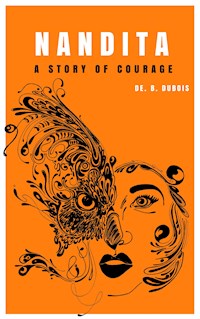
Born into privilege and gently bred, Nandita is nevertheless shackled by society’s narrow expectations of how a woman should be. Married off at 18 to a man she knows little about, Nandita is thrust into a world of violence, where patriarchy rears its ugly head at every step. Expected to be a dutiful wife and daughter-in-law in the face of sexual and emotional abuse, Nandita tries to salvage her marriage while struggling to maintain some semblance of independence. Until, finally, her composure cracks, and she knows she must take a drastic step to preserve her happiness and her dignity.
Das E-Book können Sie in Legimi-Apps oder einer beliebigen App lesen, die das folgende Format unterstützen:
Veröffentlichungsjahr: 2018
Ähnliche




















Inhaltsverzeichnis
NANDITA
1.1
2.1
2.2
2.3
3.1
3.2
3.3
4.1
4.2
5.1
5.2
5.3
5.4
5.5
6.1
7.1
7.2
7.3
8.1
8.2
9.1
9.2
9.3
10.1
10.2
10.3
11.1
11.2
11.3
12.1
12.2
NANDITA
A STORY OF COURAGE
De.B. Dubois
Author De.B. Dubois
The Girl Child (2015); Otherness (2017)
Copyright of the Author
© De.B. Dubois (Debolina Dubois-Bandyopadhyay), 2016
1st Edition, 2016
Edited by Ahana Basu
1.1
20 February 2013. Trimbach. – It has been raining all morning today; sometimes drizzling sometimes snowing, but mostly wet, cold rain. I’m beginning to see a bit of green on the trees outside. Slimy, green moss on naked branches exposed to weather. A few dead leaves from last autumn still stuck on them. Some weeks ago, they were covered with snow. Everywhere I looked I saw brown and white. I love snow-covered winter, for its minimal simplicity of colours. Nature turns subtle during this period. Apart from a few tiny birds zooming around gathering food from the birdhouses and a squirrel that visits my windowsill, there isn’t much activity. You just get what you see. Cold wind, snow, black ice on roads - you know what lies ahead. But transition periods are the worst if not toughest – spring and autumn. There’s always alarm in the air, and too much noise in the visuals. You never get what you see. You never know how to dress or what to expect. You just have to be prepared for the best, or for the worst, ready to escape unforeseen and threatening situations – survival of the resourceful.
2.1
Mumbai on Friday the 20th of June, 2003 was as busy as any weekday. The constant downpour, and thirty centimetres of rain within twelve hours, didn’t stop black, white, blue, orange, green and gold clad men and women from getting to the venue. Four decorated black Honda CRVs, packed with women in expensive attire, along with their chauffeurs’, stopped in front of IMM Hall at Vile Parle. Hurried, panting and restless workers, who, with baskets of garlands balanced on their heads, jute ropes on their shoulders, or cut bamboo sticks in their hands, were making their way into the great hall of wedding receptions; a beautiful pedestal, the background decorated with colourful floral arrangements in traditional brass pots, where on the charge of turning eighteen, preferred against her, Nandita Ganguli was marrying Kailash Neelkant Acharya.
Nandita, the teenaged bride, recent high school graduate, native Bengali from Calcutta and an obedient daughter, all dressed-up, having gained the affection of every beautician who worked on her bridal magic, was cowering in the beauty-parlour, while her new in-laws-to-be were flooding the venue. Apart from her parents and Piya Bose, her childhood best friend, no one from her family was to attend her wedding. Her mother made some last minute phone calls, but everyone apologised, saying – “We never received any invitation. Not even by post.” Nandita understood, and at once conceived a vehement reproach towards her mother who was behind this arranged marriage, that the cost of having relatives flown in and staying in hotels would cause definite bankruptcy; seven hundred and sixty four people had confirmed their presence, and this was minus the Ganguli relatives and friends. After all, the grandeur of Indian weddings cannot be underestimated, yet her mother, Rachana Ganguli, wanted her to be married before twenty. As it rarely happens, this decision of her mother, in its whimsical flight, did not identify with Nandita’s dreams and aspirations. For Nandita, her wedding was nothing more than a prison.
While the bride stood at the beauty-parlour, getting hollered at by Bhavna Patel, her married sister-in-law-to-be, for not wearing her bridal bandana, essential to every Guajarati Nagar Brahmin wedding ritual, the groomsmen humoured Kailash and his father Neelkant Acharya, a few metres away, in a white, decorated Mercedes Benz. Bhavna, being Kailash’s only sister, not counting their cousins, had been made to fill in as the majordome for the wedding, despite the healthy presence of their mother. This transfer of power, in the space of four months, had caused more turmoil within the two wedding parties than mutual understanding and peace. While Nandita stood there, head bowed, silently tearing up, Bhavna left her with an ultimatum – “All this drama of yours will not work in my family. I’m the one in charge here and you are directly answerable to me. Now, wear that bandana and I’ll send the car to collect you and your parents.”
“But Didi, it irritates my forehead. Can’t I wear it on my arms like Mom said?”
“No you can’t! Stop your double-dealing. My mother couldn’t have said that. She got me married and I had to wear it on my forehead too.”
“Your mother is on the phone, Bhavna” – the beautician handed her the phone.
Indian women have long been each other’s enemies, insulting and ridiculing each other to their heart’s content. Although they generally use patriarchal norms and bigot-derogatory rules of society against others of the same gender, their viciousness towards any woman not living according to the norms, daring to transgress, has made independent, open-minded women to strive against double jeopardy – Indian cultural-national antipathy, and that feeling of constant disillusionment coming from endless war against the societal image of an ‘ideal-woman’.
“Do as you wish. Mom says it’s alright. But I’m warning you, this better be the last time you disobey me. Maybe if you decide to do as you wish, you needn’t come to the wedding venue? Just leave.” She left the beauty-parlour after banging the phone receiver back on its stand. Nandita stood there, with vanquished hopes of a bright future, crying, while the beautician started to make ready a new touch-up for her blotchy bridal make-up.
2.2
Bhavna’s wrath had landed on Nandita a few months ago. The worthless tool in this instance was Gokul Bhatt, a businessman by profession. Nandita discovered a budding romance between Bhavna and Gokul, both married, both with children who studied in the same school.
Although married, Bhavna practically lived at her parents’ home. She used her legal residence, the Patel House, as a bed-and-breakfast in all its essence where, according to Indian-Gujarati family traditions, the son lives-in with his parents till the end of time. Bhavna resided with her husband Somesh, daughter Ria, mother and father-in-law Devika and Rajesh, and one unwed sister-in-law Bhumika. In the ten years of her love marriage, Bhavna apparently had to go through hell and back, where she left her in-laws due to constant fights and demands of goods “for the betterment of the household”. Thus it culminated in a son-in-law barging into the Acharya residence, threats of rape-murder-abduction, refusal to sign divorce papers on Somesh’s part – as a result of fatigue and wrath from constant struggles on the streets of Mumbai to set up his own business empire. While Bhavna’s parents took it upon themselves to take care of all of her expenses, including medication and operation costs caused due to failed kidneys during childbirth, her lavish lifestyle, late night parties and even caring and providing for her baby. While Bhavna had all the freedom to work and earn her living, somehow, by a strange turn of fate, Somesh’s business boomed and Bhavna went back to her in-laws, only for dinner-bed-and-breakfast.
Thus, Bhavna’s stayovers, late night conversations on the phone, promises of rendezvous, and finally, the flower incident shocked naïve Nandita.
One spring evening, Bhavna took Nandita into confidence. “We’re planning to play a prank on Gokul on his birthday.”
“We?”
“Yes, it’s Poonam Mehta, you’ve met her remember? So, it’s Poonam, her husband, myself and Monika.”
“Oh! Monika Didi is in it too?”
“Yes, it was her idea, after all it’s her husband.”
“Ok. Tell me.”
“Take this five hundred rupees. You know that flower shop on N.S.Road? You bought flowers for my birthday from there?”
“Yes. Of course I do!”
“So you buy a bouquet from there, and write on the card– ‘For my love, can’t wait to be in your arms again. Anonymous’ – and ask them to deliver it at midnight tonight, at this address…” and she handed her a chit with Gokul Bhatt’s address on it. “Mind you, this is a secret. Don’t tell a soul. Otherwise all the fun will be spoilt.”
“Ok. No problem. But Monika Didi is in on it, right?”
“Don’t be such a duffer! Of course she is. You’re sure you can do this? I can’t ask mom to do it, she is too old fashioned!”
“No no, I’ll do it.”
“Good. Tomorrow, I’ll take you out for coffee. You like Irish coffee right? My treat.”
“Thanks Didi. You can count on me.”
This particular disclosure was obviously calculated, to call forth a furious quarrel between Monika and her husband, and cover Bhavna’s entire trail in sending flowers to her paramour. On the unfortunate night of being treated to Irish coffee, Poonam met up with Bhavna and Nandita at Café Coffee Day.
“Did you hear?” – huffing and puffing, sweaty from Mumbai heat, Poonam sat down opposite Bhavna,.
“What?”
“Monika’s husband Gokul is having an affair. Someone sent him a bouquet of red roses with a note in it.”
“Really? And what was his reaction?”
“Well, apparently he couldn’t stop giggling, and then he got a call and went out immediately. It was midnight. Monika is very upset. She thinks it’s because she is fat and ugly now, after her thyroid problems, that her husband is cheating on her.”
“That’s bad, yaar1.”
“Yes. I feel bad for Monika. It’s not her fault that she is so huge – childbirth and now thyroid. Poor thing.”
“Oh my God. This is terrible, yaar. Does she know who the lover is?”
“No. But the handwriting was familiar. She said she saw it before.”
At this point Nandita realised that she was trapped, as she received a remuneration of Irish coffee for her devotion towards her would-be sister-in-law. Nandita knew about the phone call, as it had taken place in front of her, when Bhavna stayed over that night. She also knew that Bhavna had gone downstairs, at quarter to one to meet Poonam, Monika and Gokul. Little did she know that it was Gokul, alone, in the car.
Obviously, it was only a matter of time before Monika figured out via comparisons of birthday cards and wishes, sent to her a month before this incident, who the writing belonged to. Forcing her – Nandita – into seclusion and possible finger pointing if Bhavna decided to shift the blame, exposing her to the hatred of a host of judgemental people, and fresh scars of doubt and shame inflicted by her own family. Only too often is this the reward for honest people, who are guilty of helping others without weighing their own interests, or the pros and cons of actions.
Quite as she expected, when the time came, Bhavna, armed with all the added extras and superfluities of her scheming mind and her lewd imagination, fabricated stories about attempts that Nandita Ganguli had made in order to corrupt her, Bhavna’s, name and friendship with Monika and Gokul Bhatt.
In her own defence, Nandita said, “How would I know his address, or his birthday, in order to send him a bouquet of flowers, unless it was given to me by someone? And who else can have easy access to this kind of information, if not the mother of his daughter’s classmate? Besides, all you need to do is check his incoming and outgoing phone calls to know who he has really been talking to.”
Neelkant Acharya wouldn’t have it. He wouldn’t take allegations against his daughter’s character, to the point that he even called his son-in-law a lying scoundrel. Needless to say, if he could say that about an Indian male, nothing could stop him from accusing Nandita of being a “whore, trying to mess up” his daughter’s life.
However, Monika saw Nandita’s logic, as much as Bhavna’s mother Devina understood her daughter’s false play. “Sir, please don’t blame an innocent. That child is marrying your son - look at how naïve she is. This kind of passion, towards a married man, can only develop from an experienced woman and it is pretty obvious who that can be. Don’t mind me. I’ll get a divorce and move on. Society will support my husband for I’m fat, and my heath is deteriorating, and I can’t give him any physical satisfaction. But ask yourself and your daughter this, will you be able to rest happily knowing that you not only broke up my marriage, but also blamed and shamed an innocent girl? Plus, is your daughter happy from the kick she got out of sleeping with my husband? I’m not blind, I can see how he looks at her, and the chemistry between them is intoxicating. Why Bhavna? How would you feel if Somesh did the same to you, as you did to us all?” Monika said.
“Lets calm down and talk in private”, said Neelkant Acharya; and everyone moved into the bedroom, closing the door on Nandita.
Colloquial term for friend in Indian English.↩
2.3
Thus, on June 20, 2003, the whole Acharya family and friends were at the IMM Hall, to witness the entrapment of Nandita into the prison of a wedded life; and to see what it looks like when a young bride is decked up as a potential human sacrifice in the well-bred market of acceptable or unacceptable etiquette in Hindu religion and Indian culture.
The bridal party of four were collected and dropped off at the destination. Nandita felt a strange fear as she made her way through the wedding hall. The hall was colourfully decorated, every bit of it yelling festivity. As Nandita walked down the aisle, she noticed that this multitude was not there to see the bride, but merely feasting their eyes on the spectacle. Some of them whispered, “She’d be gone if she had any shame left in her.” Others whispered – “Bhavna said she slept with Monika’s husband, Neelkant Ji is so kind to allow such a wretched female to marry his son.” Others, not making any attempt to conceal their voices, blathered – “They say Bengalis have all the beauty in their women. No doubt, but such beauty can only survive to quench physical thirst. We pity Kailash… Shouldn’t she be pale with shame? She should be dragged by her hair rather than let to walk down like a whore who can’t handle the heat of her palpitations.”
Nandita stopped midway, and looked back at her mother, who seemed aloof – boldly snubbing the crowd. “Maa?” she called out with trembling voice. Piya held Nandita’s hand tightly in her own; “We will not call this wedding off, Nandita. We’ve spent a lot of money here and now everyone knows you are getting married. They are good people. God-fearing. We’ve had this talk before. Besides, we are your parents. We want what is good for you.”
“Courage, dear heart.” – Piya whispered to Nandita, as she held her sombre friend and walked past the multitude playing an active part in moral policing.
Nandita remembered the conversation she had with her mother:
“Maa, there’s still time. Let me break off this engagement. Let’s go back home. Nothing is wasted. All my jewellery and saris can be used later, when I’m ready to get married.”
“Nandita, think about your father. If you break this engagement now, what will your father’s colleagues say? Would your father be able to show his face in public?”
“But I don’t want to marry him. They call me names. Do you even know the fake allegation…”
“You have brought this upon yourself. You should have never agreed to write anything on her behalf.”
“Fine. It’s my fault. I agree. Please Maa, let’s go home. Why do you want me to marry him? You always said you don’t want me to marry outside Bengal. I’m sure you can find someone kind for me. I’ll marry whomever you want me to. But not him.”
“Why did you stay out till ten at night with him in that coffee shop? Colleagues of your father saw you both drinking coffee and laughing. No one wants to marry a girl like that. What did you expect us to do? We are Indians. That was unacceptable behaviour. We had to arrange your engagement and wedding with him. As it is, with your looks, your voluptuous body and your height, people think you shouldn’t be a part of a well-regarded household.”
“Maa, we were just drinking coffee and laughing at some jokes. How is that unacceptable? What does it have to do with my looks? How is that my fault, Maa?”
“It is same as kissing a boy in public. It is shameful. Do you know how your body moves when you walk? You are openly attracting men on purpose. Especially when you wear those tight jeans and kurta1. If your father hadn’t gone there to pick you up at ten, God knows what else you would have done with him. Chhee chhee.”
“What!? Why are you doing this to me? How can you say all this to me? You’re my mother!”
“I’m doing this for your own good. This way people will say that your parents have found you a boy. People won’t say you were hiding in dark corners with him, creating scandal.”
“Maa, today people are calling me a whore because of the lies that his sister is spreading about me, what about that? Don’t you care about that?”
“This is what you have done to yourself. Now learn to live with it.”
Piya and Nandita took their place in the front row facing the podium. Nandita looked straight into her father’s eyes, he looked tired and melancholic, a fatigue caused due to the constant chanting of Hindu wedding ritual slokas that afternoon. Well-dressed pundits in their mid-thirties made their way to the podium, right after her father. They were stopping every now and then, as men and women – old and young – bent down to touch their feet and ask for benediction.
“Isn’t it strange that our people would worship the image portrayed, rather than the person inside? What guarantee do these people have, that these pundits are really honest and good men?” asked Piya.
“Piya, from what I gather, it doesn’t matter who you are inside, it never did, it’s all about the glitter outside. These pundits are working, well, praying would be more appropriate, at the Shrinathji temple, that is excuse enough for them to be equal to God.”
After a moment of silence, Piya took Nandita’s hand in hers. Looking at the on-going rituals, she said, “Listen. You know that I’m there for you. Even with the distance, you can always count on me. This is the best gift I can give to those I love. Not to be overbearing, but be there when needed.”
“You are always needed. You have no idea how scared I am. It is just making me cranky. But I don’t think I have that right to be cranky anymore. Maa says I should be soft-spoken, obedient and do as told by my husband.”
“I’m sorry, but it’s time you screw what your mother says. You’re getting married. This is India. Parents wipe their hands of responsibilities when they marry their daughters off at the age of eighteen. Your mother is getting rid of you. The only difference is, she is not killing you with her own bare hands.”
“Piya!”
“Look, I’m sorry to say this on the day of your wedding. But I’ve been noticing things ever since I’ve gotten here. I’m worried. Anyway, just promise me one thing. You will not lose your identity and happiness in this. Just promise me that. Please.”
“I promise.”
“You promise what?”
“I promise I will not lose my identity and happiness in this.”
Piya gave Nandita’s hand a slight squeeze, “We are women in a world that follows patriarchy and kyriarchy. In order to survive, we need to be daring and resourceful.”
“As a woman determines, so she becomes. Right?” added Nandita with a smile.
“Well, in the Vedas they talk about a man’s determination, for in our great Indian society only a man is allowed to determine anything,” – Piya laughed.
A kind of loose top, sleeved or without sleeves, usually made out of cotton, that extends till the knees.↩
3.1
The ceremony commenced as soon as the groom entered. Nandita’s mother greeted them with the Ponkvu – a ritual where the groom is welcomed by his mother-in-law by aarati1 and she playfully tries to grab his nose, as a reminder that the groom came rubbing his nose at the girl’s door asking for her hand, Nandita realised that Kailash wasn’t wearing his traditional wedding turban, sent to him by her parents. Also, at the Ponkvu, he made it understood that he didn’t want his nose to be touched. But Mrs Ganguli, being a Bengali, couldn’t evaluate the seriousness in her to-be son-in-law’s request. Kailash’s nose was caught, and accidentally injured. This caused a bit of tension in both the parties.
However, after exchanging Jaimala – welcoming appraisal garlands - Nandita got along to ask the reason, wondering if the turban was too tight or if it was irritating his skin. Kailash replied, “Because you refused to wear your wedding bandana and made my sister cry.” His hateful stare and this simple act of vengeance left Nandita stunned and wounded. The Madhuparka ceremony had started. Nandita’s parents, under the supervision of the priests, were washing Kailash’s feet. This ceremony of washing the groom’s feet is symbolic of putting him as superior, instating him as the alpha. He is given honey and milk to drink as a token of love and devotion.
“They asked me to steal his shoes and demand cash on returning,” Piya informed.
“They? Who?”
“The priests and Kailash’s friends. Apparently it’s customary. But I have another custom in mind. A customary Piya rant when the supposed alpha is acting like a sewer rat.”
_
“Kailash, I know it is none of my business to speak here, but I will. Be careful. Your wife to-be didn’t make your sister cry, rather your sister made your wife cry. And that bandana gave her a rash. Look at her forehead, the amount of concealer applied to keep that redness from showing.”
“So now you are telling me that my sister is a liar? You’re calling my sister a liar?” he bellowed defensively at Piya.
“Perhaps…”
“It’s a misunderstanding….” Nandita cut in before the situation could further deteriorate. She was already on the podium, without caring much about the ritual. This instantly started a buzz amongst the guests. “Perhaps it’s just a misunderstanding. I’m sure it is.”
“Be careful, Kailash. Just be careful.” Piya turned and walked away to take her seat.
“Did your friend just threaten me?” Nandita had never seen Kailash this infuriated. “Listen. Drill this into that f-ing Bengali head of yours. In our family, you either respect my sister, or you f-off. Understand?”
Nandita silently nodded. The man in front of her had nothing to do with the person with whom she had enjoyed sharing jokes over a cup of coffee.
“Where’s your mother? I want to talk to her.”
“Kailash, is that really necessary?”
“Yes. I want to tell her what your friend just said.”
“You’re going to ‘tell’ on my friend to my mother?”
“Yes. I want to tell her.” Kailash wasn’t looking at Nandita; he was scanning the room, impatiently shifting from one leg to the other. His tiny, thin body, the same height as his bride, seemed comically agitated at the thought of losing his say to a woman, especially one he could not conquer sexually or intellectually.
“Well, if it is that important, why don’t you talk to my father?” Nandita challenged.
He looked right into her eyes. Face red, eyes sparkling with anger, shoulders hunched. “You think this is a joke?” he asked through clenched teeth. “Listen carefully and get this straight, if I leave this venue, no one will marry you. Remember that. I’m doing you a favour.”
“Wait. What? You are doing me a favour?”
“You think I don’t know what happened here while I was overseas?”
“Here’s your chance Kailash, if you really believe in all that, has been spread about me, break off this marriage. I’m challenging you.” Nandita turned around and went to join Piya. She kept her fingers crossed, content and hoping that daring Kailash would make him and his family leave the venue, thus calling off the wedding.
The chanting on the podium grew louder, the ritual of Kanya Agamana, where the maternal uncle of the bride brings her to the podium. Mrs. Ganguli had no brother, thus Kailash’s maternal uncle took that place. After exchanging garlands in front of the ceremonial pyre, Kailash ignored the podium and remained deep in conversation with his brother-in-law Somesh Patel.
Piya informed Nandita, “Bhavna isn’t here yet. Apparently she had an appointment with the same beautician who did your make-up, in order to freshen hers. They’ve put war mask on her face. So she couldn’t come here. Had to go back home and redo the whole thing.”
“Is that why Kailash said she was crying?”
“Possibly. From what I’ve seen and known of your sister-in-law, she wants the limelight on herself. Even on the day of her brother’s wedding!”
“I knew you were observant, but this! Wow.”
“Nandita, that woman bought a sari double the price of your wedding sari! And went around bragging about it. I don’t need to be Einstein to figure out her motives. No matter the culture, anyone with a little education, and class, wouldn’t try to outshine a bride, not on her special day, the day of her wedding. Now, don’t look at me like that. On this I am traditional. It is not always that we women get to feel special, or are made to feel special – but on that dreadful designated day when she is being given away, rather donated to another family to serve them for eternity. Last chance, says society, go be the Princess!”
“Hmmm. I think I’m beginning to understand what you mean. But tell me, do you think Kailash will call off the wedding? I challenged him.”
“Stop being foolish. He won’t. He’ll marry you. That’s exactly the reason, why, I’m worried about you.”
Soon the pundits summoned the bride and groom. The ritual of Kanya daan or giving away of the bride, comes right after Knaya Agamana. It is a ceremony in which the bride's father washes the groom's feet and gives his daughter's hand to him in the hope that he will take good care of her. Nandita’s father left the podium. She looked at his tired face from afar, smiling despite all odds. “Another ritual” she thought, “another ritual that shows me and my parents down. Another ritual that says you have a daughter, you are inferior. Now and always.”
Little did she know that this was the last time she would see her beloved father looking young and healthy, strong and able.
Kanyadaan is more symbolic than what people usually understand. The bride is considered to be a form of the Goddess Laxmi. In Hindu culture, Laxmi is meant to bring in good fortune, similar to a bride bringing in dowry. She is a woman on a pedestal, and the only misfortune that can fall on her would be thought and intellect, for the perfect woman, in fact, has nothing to do with thinking. She is veiled in culture and silence. She is no better than a prisoner in a confined space, where in her absolute simplicity she’ll remain an object of desire. One foot out of line and she is worse than a fallen angel. Thus she needs to keep her moth shut and eyes closed. Be adorned in cuffs and chains in the form of coral, ivory, gold bangles and silver anklets. A well adorned slave. This way, Kanyadaan is performed in front of the sacred fire, facilitating the pious union of the man and his woman; in other words – facilitating slavery through camouflaged social norms.
Then commenced the Hasta Milap or uniting the hands ceremony. Kailash’s white scarf was tied to Nandita’s gharchola2. Although the tying is symbolic of spiritual union, where family members gather around to sprinkle the couple with rose petal and rice grains, Nandita felt further constrained, like she was being tied down for life. Kailash’s friends started to cheer in an orchestrated manner, as he took his seat on Nandita’s right – the rightful place of the alpha, the man. Kailash raised his hand, as if conducting an orchestra, and at once, his friends fell silent.
From the little Gujarati that Nandita understood, she found out that in a Gujarati Nagar Brahmin wedding, there are four rounds around the fire called Mangal Pheras – the four rounds represent "Dharma" or faith, "Artha" or money, "Kama" or deed and "Moksha" or emancipation – contrary to the Bengali rituals of seven rounds, usually made as a promise from the groom to the bride and vice versa. In its place there exists a ritual of pushing seven areca nuts with the big toe, called Saptapadi, as a symbol of climbing seven hills of difficulties – where at each step of the Saptapadi, the groom asks for support from his bride throughout his life. In it all Nandita noticed that during the rounds, around the ritual pyre, all the responsibilities, socially acceptable for a man, making him the indisputable alpha, were taken with Kailash walking before her; while primitive bindings such as that of protecting family honour through socially and culturally acceptable deeds, and emancipation – “if death is lurking, here’s my promise to give myself to death, so that he spares you”, was when Nandita was made to walk before Kailash. For this is acceptable of a well-bred Indian female – martyrdom and sacrifice for family honour and her husband’s comfort and happiness.
“Kailash, wouldn’t it be nicer if we could walk side by side, as equals, for these wedding vows?”
“What do you mean?”
“I mean, walk together, rather than you walking before myself – for everything that concerns positivity, well-being, forward thinking; and then you walking behind me, putting me forward, for everything concerning ill fate, death, and spite. I just feel that the vows were unfair. Derogatory and disregardful towards my existence, while yours is prized and guarded safely.”
“Eh! We are not Westerners that we’ll write vows and all that! Keep your f-all ideas to yourself. Understand? And let the pundits do their job. Who the f-ing hell do you think you are to question our Hindu scriptures?”
“Kailash, we just got married. We’re still on the podium. Couldn’t you be a bit more considerate and mind your tongue?”
“You just shut up. Talk too much. Bloody bitch!”
At this last backlash from Kailash, Nandita burst into tears. Seeing the bride cry, half of the audience started to sob as well. The difference was that one was crying on realising the living hell she was now perpetually subjected to, by none other than her own parents; and the others were touched by the thought of a bride leaving behind her birth-family, forever, to live with new people, in a new city, with new rules and regulations, and finally – joining a new family. The last nail in the coffin of her dead childhood, freedom, future and innumerable good-times that could have been there for the take, was struck; leaving her marked as the property of this man, adding the name of her husband to hers – Nandita Ganguli, aged eighteen, was to be pronounced from this day onwards as – Nandita Kailash Acharya.
A Hindu religious ritual of worship, either done as a ritual of welcoming guests or as a part of puja; in which light from wicks soaked in purified butter or camphor is offered to one or more deities.↩
Mainly there are two types of sari a bride can wear during wedding ceremony, named as ‘Panetar’ and ‘Gharchola’. Both of these saris are quite heavy and lavishly elegant. Not to mention – costly; more the cost, higher the class. Panetar is a pure white body sari, printed with dotted patterns (known as Bandhini) in golden. The border of Panetar has rich red/maroon patterns. This is given to the bride from her parents/maternal parents to be considered as last gift from them to her. Gharchola is a mostly maroon/rich red body and has woven using silk and zari in stripes or checker patterns and it is gifted by her in-laws to her affirming that they are accepting her as their daughter and taking all responsibility of her now on-wards. Original tradition is, bride wears Panetar at the initial customs of the wedding, on her shoulders, thus making her wear both the saris at the same time. This is symbolic of the weight of family honour and responsibilities, from both sides as it rests on her shoulders.↩
3.2
“Are you happy?” – Nandita’s father was looking into his daughter’s blotchy eyes, scrubbed red, trying to take off the black running mascara. They were in a corner at the buffet area. Kailash was a little further away, standing with his friends, unable to stroll around due to his scarf tied to Nandita’s gharchola. Piya was standing next to her friend, carrying a glass of water and a brown paper bag. It was the second time Nandita needed to hyperventilate.
“Stop stressing,” Piya said
“I’m anxious. I feel like throwing up.” – Nandita replied, leaning on the wall behind.
“Why do you need to throwup? What’s happening?” Nandita’s father asked.
“Answering your first question – do I look happy to you? About your second question – no, you don’t have to jump with joy or hide with shame, I’m not pregnant, I’m anxious. Anxiety makes me throw-up and hyperventilate. You are a doctor. You should know that!” she sobbed.
“My dear girl, it’s just a matter of time. Every woman feels sad to leave her father’s home. Your mother cried all night. Look, although your mother asked me to tell you that this is your new home and family, I want you to know that you can come home whenever you want. But not alone, bring him with you.”
“Why? I have no place in your house now?”
“It’s not like that. It’s just a matter of time. You’ll adapt.”
“You are telling me that it’s a matter of time, surely you are not blind then, you can see how they treat me; and at the same time you are inviting me to your home, because I don’t belong there anymore, and asking me to bring him along. Basically, you are confirming that I have no place of my own. I am as good as a beggar on the street. The difference is this – I’m given a roof in exchange for my services.”
“Nandita! You don’t do service for your family. You do it out of your own free will.”
“Where was my ‘own free will’ in choosing the life I want?”
“Do what you want. But don’t make me feel ashamed of you.”
“Baba1, you won’t be ashamed of me. Just now, I’m ashamed of you and my mother, for not having enough courage and intelligence to know what’s right or wrong.”
“And you? You think you know better than your parents? Than us?” Nandita’s mother had overheard their conversation and joined in. “Remember, I endured you for nine months in my womb. I know what’s good for you. It is a favour we did to educate you and get you married into such a good family. Otherwise in our culture, girls are killed when they are born.”
“Do me a last favour, for being such kind parents that you are, for giving me life and keeping me alive this long… When they kill me – make sure you do all my rites in Calcutta.”
She left her parents standing alone, stunned at her last request, and joined Kailash and his group of friends. As soon as she joined them, their laughter subsided; and suddenly it rose again, with redoubled intensity. Kailash was laughing with his mouth covered, face red and not meeting Nandita’s eyes. “What did we miss?” Piya asked.
“It’s just a raw joke. Not for girls.” replied one of the men.
“What do you mean by raw joke? Like porn?” Everyone fell silent at Piya’s question.
“You know porn?” asked Kailash.
“Yes. Women watch it too.” Piya’s response was greeted with gasps, and shock. One of the men got so furious that he left the circle without a word. “Wait, you guys didn’t know that women watch porn?”
“No. Women shouldn’t watch porn. It’s not good for them,” replied Kailash. “Nandita? You watch porn?”
Everyone standing in that circle was quiet. Right here she had to decide, whether she should be honest or manipulate the truth to save her from any further humiliation on the day of the wedding. “None that you haven’t shared with me, Kailash.”
At this, everyone burst out laughing, except Piya and Nandita who stood smiling politely, understanding that honesty would have cost too much. Piya mumbled a heartfelt ‘sorry’ to Nandita.
“That’s not porn,” Kailash said out loud. “Just a few illustrations from the Kamasutra.”
“Oh. I see.” – Nandita mumbled, putting on an act.
“But if you want, I can show you some tonight. You’ll know what real porn is”, and he laughed again. Nandita felt comforted to see Kailash in a good mood. This was the Kailash she remembered. Piya was smiling politely and not making any further comments, allowing the men to take the lead in the conversation. This seemed to put Kailash in better humour.
Transliterated from Bengali. Baba or Bapi is same as saying Papa or Daddy.↩
3.3
It is never easy to face humiliation with an air of carefree ignorance. This remains especially true for someone who is perhaps more intelligent than the one who humiliates, yet decides to remain quiet for general peace. While people were busy feasting and congratulating Bhavna and her husband for the extraordinary gift of a nuptial night in the Marriott for the bride and the groom, Nandita was gearing up for a battle. She knew that her life had changed and she had no place with her own parents, neither did she have a say around her in-laws. She knew that everything from there on would be compromise on her part, although she had a job and was earning her own living, perhaps she wouldn’t be allowed to venture out into this huge market of opportunity – as is the case of a fast progressing commercial boom in India, as is the case for so many well educated Indian women, who’ve been married.
Some women choose to stay home, being a housewife by consent. Some choose to compromise, and some, like Nandita, are simply robbed-off of any say. This is synonymous to rape, an act of plunder or even a way of confiscating freedom of a person, a sort of moral abuse, exploitation, and violation. – Violation of anything that has been seized, taken, carried out by force on either the physical human apparatus, or on the sentimentality of humans; the minute we are forced to have no-say, the moment we are silenced – the very instance our wishes and desires as women and in some cases even men, are crushed – we are raped! This kind of rape of our wishes and desires, this happens to be more damaging to our soul. Make no mistake, in both cases, physical or psychological, rape is dreadful, a device to prove power. Through it all, our rape-cultured and victim-blaming society is oblivious to these facts, and is entertained with rape jokes. In a Bollywood movie, kissing would be censored, but rape wouldn’t. For, rape sells.
That night, there was no action in the honeymoon suite of the Marriott. Kailash remained in the lounge bar – drinking with his friends, celebrating his wedding night, while his wife slept alone on a decorated bed.
4.1
Nandita Kailash Acharya’s diary
21 June, 2003. Mumbai. – Left the hotel at 11:30 in the morning; arrived at my new home, my in-law’s apartment. We left the room about an hour late as Kailash (K) decided to sleep in. Can’t blame him. He was celebrating with his friends till dawn. I’m not unhappy or disappointed about the fact that I didn’t get to make love to my husband the very first night of my wedding, no. On the contrary, I’m thankful. We barely know each other. And of late, I can’t even say that I know him. But I’m disappointed because he chose to spend his first night – as a husband – with his friends. Anyone with ordinary intelligence and common sense would include their wife on any occasion of merriment on the very first night. But then again, if I confront him, I know his answer too well – “Boys will be boys, and there’s no place for a woman in our talks.”
So that said and done, when we entered the house, the impression I had was of leaving sanctity behind and entering a war zone. The room was silent and full of relatives – my new relatives. And in one corner were Piya and my parents. Somesh was furious. Apparently they charged an extra day for K’s lethargy in leaving the room on time. I could only apologise. But that was unnecessary, as Somesh had concluded – all by himself – that it couldn’t be my fault.
“This can’t be her fault… such things come from your brother Bhavna… and we are married long enough to know well the characters of each other’s family members… I saw him practically grow up under my nose. So Nandita, stop apologising. If anyone needs to apologise it’s your husband.” Bhavna jumped in, “Somesh, why are you blaming my little brother? He’s just a boy. Let him enjoy. We have already paid an extra day; it’s too late now. So why can’t we – you and I – enjoy the room? It would be a good break from everything, plus I always wanted to try their spa! Let’s make the most of it.”
That got settled, as they were to leave right after lunch. Then, a little later, I was asked to make lunch for everyone. Lord knows I’m a bad cook, and apparently they have a tradition where the new bride must make a certain variation of perfumed sweet rice for her new family. The quality of her cooking is judged by the fact that the rice is not burnt. My mother-in-law, Devina Acharya, told me – “You are ‘a’ daughter-in-law now, you need to learn to cook like ‘us’. You know, your papa-in-law won’t touch his food if the colour doesn’t show; colour of the spices must show on the food you cook, or else it’s bland. This is not tasteless Bengali food, we use spices in Gujarati cuisine. So this one time, to save my face and the family honour, I’ll help you out. It would be shameful if the bride of this household can’t cook proper Gujarati food. Watch and learn and pretend to stir when I ask you to.”
Thank heavens for her consideration. I was saved. But the main moment of anxiety came when I discovered a newly implemented method, in order to ask for dowry!
Baba was invited over for lunch, as an imaginary tradition, made up by none other than my father-in-law, where the father of the bride visits his daughter’s new home, and stays back to eat a meal cooked by his daughter. But as she is no more a member of the family she is born into, and is now the property of a different household, the father has to pay back, in money or kind, a said amount for the meal his daughter cooked for him. This amount cannot be less than the proper value of the meal, in terms of the ingredients used. That’s when my dad-in-law said – “In our tradition, a woman doesn’t wear such huge anklets made of pure gold as your wife wears, Dr. Ganguli. She should leave it back here or it’ll bring bad luck.”
Needless to say that in any normal Indian family, the father of the daughter would have obliged this request. But my baba, is dowry-intolerant. He took one look at my sister-in-law’s leeching eyes and understood every motive behind my father-in-law’s cunning. Bhavna has been eyeing my mother’s 200-year-old gold anklets ever since the day of my engagement; little does she know that it is a family heirloom and can only be given to me, if and when I bear a child, preferably a son.
Baba replied, “In our culture, we do not shame the in-laws with money and gifts, Neelkant Ji. We make them happy with fresh fish, perfumed rice, fruits and sweets. But since you don’t eat fish or meat, and sending kilos of rice to Mumbai from Calcutta is practically impossible, I’ll make sure that every month, you receive ten cans of K.C.Das-er Rasagollas. And here’s a gold guinea for my daughter, as per our Bengali Brahmin tradition, for the effort and time she’s spent in making such a wonderful meal.” With that baba handed me a coin of approximately one-quarter ounce of gold that was minted in the epoch of colonial British Empire. I was impressed by his cleverness and resourcefulness. This is a coin that he carries with him all the time. This was his good-luck charm, a gift from my great-grandmother, and here he is, giving it away to me, as if to say – “You need luck, perhaps more than I do, as you need to survive this, and I can’t help you.” The coin had King George II – a left-facing bust of the king with the legend GEORGIVS II DEI GRATIA etched on it. I didn’t get time to check the other side when my mother-in-law took it out of my hand and said, “I’ll keep it in my locker Nandita, and it will be safe there. Also hand me all your jewellery, I’ll guard them safely.”
Needless to say, this didn’t please anyone. Baba was vexed at the proposition-in-law, while my dad-in-law and sister-in-law were annoyed at my fathers’ resourcefulness. So Bhavna sneered, “Yes uncle, we are letting you go this time as you have already given me a diamond ring and my daughter a gold bracelet during the Chero Pakaryo1tradition at the wedding. But next time you better be prepared with more than just a gold coin for your daughter. Now I’m her sister, right? We give equally to daughters in this household.”
Baba laughed at this.
Well, I haven’t been asked to do much since baba left. K is out again with his friends. They meet up every evening from 7 till 11 to chat and drink tea at the local tea stand. This was all too strange and uncanny, as I felt dreadfully left behind and alone on the second night of being wed. Seeing that there’s not much to do, and everyone else gathered for beer and samosas upstairs on the building terrace, I took this opportunity to reflect back on the days past. As I sat myself on the windowsill, a sudden breeze blew in some cigarette smoke and a few fireflies.
While the wind-blown smoke stung my sleepless tired eyes,
Momentary burning end of a clove cigarette captured my breath.
Reminded me of sleepless nights and glowing wings of the firefly,
Reminded me of many silent nights, of crickets chirping and kittens cries.
Those memories need justice, high-flying memories – down my memory lane.
Those memories of happiness, of childhood, and of times lost are burnt in ritual flames.
Burning firefly, burning fiery wings, burning little life, zoomed across my terrace at night.
Would you ever remember me? Would you?
Dear shining busy wings on hot and humid nights;
Forever busy, lighting ways for lost travellers.
_
30 June 2003. Mumbai. – In Juhu, there are mainly Guajarati and Marwari households. Although Maharashtra is home to the Marathis, somehow it feels like their population is undermined in this particular area of the capital of Maharashtra. Juhu is an interesting part of Bombay, modern Mumbai. In the nineteenth century, this place was an island, rising above sea level by a metre or two, reachable during low tides by walking across the tidal inlet. Christened "Juvem" by the Portuguese and inhabited by Agris (salt traders), Bhandaris (toddy tappers), Kulbis (cultivators), and fisher folks (Kuoliwada), Juhu, today, is home to many Indian billionaires and Bollywood celebrities – especially the Bachchan and Roshan families.
Piya headed back home today. So we had our last coffee together and strolled on the Juhu beach. She was awfully quiet and irritable; I wonder if I did something wrong.
Didn’t get much time to write after the 21st. And on Sunday the 22nd of June, as customary, my new family held a reception party. It was quite good. Everyone danced and got drunk. But not many people, apart from Piya, the Punjabi friends, and I indulged in non-vegetarian food. Since then I’ve been craving for fish tandoori. Fish, meat and eggs are prohibited in the Acharya household!
[Rem: Have to discover a way to indulge in some Marathi fish curry, without being caught.]
Ma and Baba leave for Calcutta tomorrow. I won’t be able to accompany them, even to the airport. Don’t know if I feel sad, or something inside me goes – “Good riddance”?
Anyway, the past few days were tough. K and I went back to work on Monday the 23rd. His company transferred him to the Mumbai head-office, as was requested by him. I was unaware of this, but apparently everyone else knew. This was, of course, due to the urgings of my parents-in-law, the distance made them miss their prodigal son. I wanted to yell: “Let that man grow up and live his life”!! But, no, I am an Indian woman, married to an Indian man. Indian men live under the same roof as their parents as long as they are alive. And then, they force their children to do the same, all in the good name of culture and good-upbringing.
Fact is: [1] Indian men feel secure around their mothers, especially when they run the risk of growing up and taking responsibilities; Momma is there to smother them and baby talk them to sleep. [2] Indian men know that if they live under the same roof as their parents, their wife won’t have a say – especially out of respect towards the elders, she will slave away – while he’ll get away with anything and everything. Even murder. [3] It’s the money and property that they are truly after.
My in-laws have been unsustainable ever since the day of my wedding. There is no point in blaming the in-laws; they are from a different era. There’s hardly any in-law who would love you for waking up at 6:30 in the morning, and dedicating two hours of your time and energy to help their adult and lethargic son to wake-up. Just so he isn’t late for work – “Don’t you have anything else to do than romancing early in the morning? I’ll take care of him. My son needs me. Not you. Go, you make sure his breakfast is ready and the vegetables are cut before you leave for work. Also make more tea, Bhavna will be here soon, after dropping off Ria at school”.
There is hardly any husband who doesn’t verbally abuse his wife for waking him up for office – “What the hell is wrong with you, bitch? Stop nagging and let me sleep. Go make some tea or get busy doing whatever you women do. Wake me up at nine”.
There’s hardly any in-law who’ll get you a glass of water to drink after a long day at work, for when I enter home, the first thing that I get to hear from my mother-in-law is this – “Nandita, could you make tea for papa and me? Also start heating up the food for dinner.”
So my day starts with hurt, abused and confused feelings, then gains momentum at office work, and ends with exhaustion and no time for myself.
Amidst it all, I crave non-vegetarian food. It is one thing to voluntarily switch to a certain kind of diet, and another to be forced to adhere. No, they don’t have any scientific reasons, their reason is this: “God doesn’t like us eating non-veg food, it is against our culture and Hindu religion to kill the innocent. Don’t know how some people can be Hindu and eat fish and meat!” When I hear that, I feel like asking – “So what am I, a Muslim from Pakistan? And killing innocent women in the name of sati2, is that not a sin in Hinduism?”
Well, I’ve heard of racism but it’s the first time I’m experiencing inter-communal racism. Since when did Hinduism ban consumption of fish and poultry? Bengalis eat fish, poultry and meat, and it has nothing to do with religion but more with geography and anthropology. But that explanation doesn’t work here, as everything that I do wrong is either blamed on “you Bengalis” or “you women”!
Let’s put it this way, some Indian communities have a bit more intelligence and education in order to not follow a bunch of bigoted priests making their rules and idiots who obey these orders; “In our village we have a very high group of religious and pious men, they physically punish people for butchery of cows. Cows are our mothers; you shouldn’t kill or eat a cow. It’s evil and sinful to do so.” All of this was confirming my fears of being wed into the wrong community; not because they wouldn’t eat or harm cows but because they worship cows as mothers and enslave women by misogynistic patriarchal norms. Further proof that people with such indoctrinations and hypocritical mentality don’t see further than the tip of their nose.
[Rem: Never to ask my in-laws for any opinion on important matters of decision.]
Surely people are blind. Can’t they see that it is those who follow religious rules and orders, and not the ones who break these rules, are the ones to commit crimes in the name of religion and culture? What makes these people so superior that they find it right to hand out punishments? Such is the nature of terrorists. It is safe to say that currently my in-laws are terrorising me.
Transliterated from Gujarati, meaning, “catch the border of the sari”. This is traditionally performed right after the bride’s mother passes by after whispering blessings into the bride’s right year – here the groom tugs at his mother-in-law’s sari as a way of asking the bride’s family for gifts.↩
A Hindu ritual where a widow is either forced by the society or by religious norms, or is indoctrinated to devalue her life due to inferiority of gender, and kills herself on the funeral pyre of her dead husband.↩
4.2
1 August, 2003. Mumbai. – I am exhausted. I never thought that one day I would have to give explanations for things done or not done… I never thought that I would be one of those women, who constantly take blows – emotionally and physically – from her husband and in-laws; I never thought that silence could kill one’s soul.




