


123,99 €
Mehr erfahren.
- Herausgeber: John Wiley & Sons
- Kategorie: Wissenschaft und neue Technologien
- Sprache: Englisch
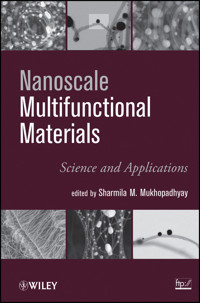
This book consolidates various aspects of nanomaterials, highlighting their versatility as well as how the same materials can be used in seemingly diverse applications spanning across disciplines. It captures the multi-disciplinary and multi-functional aspects of nanomaterials in a holistic way. Chapters address the key attributes of nanoscale materials that make them special and desirable as novel materials; functionality that emerges based on these unique attributes; multiple uses of nanomaterials incuding combining properties and materials selection, and then separate chapters devoted to energy, biomedical materials, environmental applications, and chemical engineering applications.
Sie lesen das E-Book in den Legimi-Apps auf:
Seitenzahl: 746
Veröffentlichungsjahr: 2011
Ähnliche



















Contents
Cover
Title Page
Copyright
Contributors
Preface
Section I: Overview
1: Key Attributes of Nanoscale Materials and Special Functionalities emerging from them
1 BACKGROUND
2 NANOSCALE PARTICLES AND FRAGMENTS: INFLUENCE OF SIZE
3 SPECIAL NANOMATERIALS: UNIQUE ASSEMBLY AND FUNCTIONALITY
4 SUMMARY
REFERENCES
2: Societal Impact and Future Trends in Nanomaterials
1 BACKGROUND AND SCOPE
2 NANOTECHNOLOGY FOR SOCIETAL BENEFITS
3 ISSUES TO WATCH
4 IN SUMMARY: QUEST FOR BALANCE
REFERENCES
Section II: Processing and Analysis
3: Fabrication Techniques for Growing Carbon Nanotubes
1 INTRODUCTION
2 STRUCTURE
3 ELECTRICAL PROPERTIES
4 FABRICATION TECHNIQUES
5 ARC DISCHARGE
6 LASER ABLATION
7 HIGH-PRESSURE CARBON MONOXIDE
8 FLAME SYNTHESIS
9 CHEMICAL VAPOR DEPOSITION
10 SUMMARY
REFERENCES
4: Nanoparticles and Polymer Nanocomposites
1 INTRODUCTION
2 NANOPARTICLES
3 NANOCOMPOSITES
4 GENERAL PRINCIPLES FOR DISPERSION OF NANOFILLERS
5 SUMMARY
REFERENCES
5: Laser-Assisted Fabrication Techniques
1 INTRODUCTION
2 PULSED LASER TECHNIQUES
3 CONTINUOUS LASER HEATING
4 SUMMARY
REFERENCES
6: Experimental Characterization of Nanomaterials
1 INTRODUCTION
2 MICROSCOPY
3 X-RAY DIFFRACTION
4 SUMMARY
REFERENCES
7: Modeling and Simulation of Nanoscale Materials
1 INTRODUCTION
2 AB INITIO METHODS
3 CLASSICAL METHODS
4 SUMMARY
REFERENCES
Section III: Applications
8: Nanomaterials for Alternative Energy
1 BACKGROUND AND INTRODUCTION
2 ELECTROCHEMISTRY BASICS
3 NANOCRYSTALLINE SOLID OXIDE CONDUCTORS FOR SOFCS
4 NANOSTRUCTURED ELECTROCATALYSTS AND ELECTROLYTES FOR PEMFCS
5 NANOSTRUCTURED ELECTRODE MATERIALS IN LI-ION BATTERIES
6 GRAPHENE FOR ENERGY APPLICATIONS
7 CONCLUDING REMARKS
REFERENCES
9: Enhancement of Through-Thickness Thermal Conductivity in Adhesively Bonded Joints Using Aligned Carbon Nanotubes
1 INTRODUCTION
2 DESIGN OF A JOINT CONFIGURATION
3 NUMERICAL THERMAL ANALYSIS
4 EXPERIMENTS
5 SUMMARY AND DISCUSSION
REFERENCES
10: Use of Metal Nanoparticles in Environmental Cleanup
1 INTRODUCTION: ZERO-VALENT IRON NANOPARTICLES (INPS) IN THE ENVIRONMENT
2 USES OF INPS IN ENVIRONMENTAL REMEDIATION
3 FATE AND TRANSPORT OF INPS IN POROUS MEDIA
4 BIMETALLIC NANOPARTICLES
5 SUMMARY AND FUTURE PROSPECTIVE
REFERENCES
11: Use of Carbon Nanotubes in Water Treatment
1 INTRODUCTION TO CHANGING WATER TREATMENT NEEDS
2 TYPES OF CONTAMINANTS PRESENT IN INFLUENT WATERS
3 CARBON NANOTUBES AS ADSORBENT MEDIA IN WATER TREATMENT
4 ADSORPTION OF CONTAMINANTS FROM WATER SYSTEMS ON CARBON NANOTUBES
5 CHALLENGES ASSOCIATED WITH THE USE OF CNT TECHNOLOGY IN WATER TREATMENT PLANTS
6 CONCLUSIONS
REFERENCES
12: Peptide Nanotubes in Biomedical and Environmental Applications
1 BACKGROUND
2 SYNTHESIS AND CHARACTERISTICS OF PEPTIDE NANOTUBES
3 BIOMEDICAL APPLICATIONS
4 ENVIRONMENTAL APPLICATIONS
5 CONCLUDING REMARKS
REFERENCES
Index
Copyright © 2012 by John Wiley & Sons, Inc. All rights reserved.
Published by John Wiley & Sons, Inc., Hoboken, New Jersey. Published simultaneously in Canada.
No part of this publication may be reproduced, stored in a retrieval system, or transmitted in any form or by any means, electronic, mechanical, photocopying, recording, scanning, or otherwise, except as permitted under Section 107 or 108 of the 1976 United States Copyright Act, without either the prior written permission of the Publisher, or authorization through payment of the appropriate per-copy fee to the Copyright Clearance Center, Inc., 222 Rosewood Drive, Danvers, MA 01923, (978) 750-8400, fax (978) 750-4470, or on the web at www.copyright.com. Requests to the Publisher for permission should be addressed to the Permissions Department, John Wiley & Sons, Inc., 111 River Street, Hoboken, NJ 07030, (201) 748-6011, fax (201) 748-6008, or online at http://www.wiley.com/go/permission.
Limit of Liability/Disclaimer of Warranty: While the publisher and author have used their best efforts in preparing this book, they make no representations or warranties with respect to the accuracy or completeness of the contents of this book and specifically disclaim any implied warranties of merchantability or fitness for a particular purpose. No warranty may be created or extended by sales representatives or written sales materials. The advice and strategies contained herein may not be suitable for your situation. You should consult with a professional where appropriate. Neither the publisher nor author shall be liable for any loss of profit or any other commercial damages, including but not limited to special, incidental, consequential, or other damages.
For general information on our other products and services or for technical support, please contact our Customer Care Department within the United States at (800) 762-2974, outside the United States at (317) 572-3993 or fax (317) 572-4002.
Wiley also publishes its books in a variety of electronic formats. Some content that appears in print may not be available in electronic formats. For more information about Wiley products, visit our web site at www.wiley.com.
Library of Congress Cataloging-in-Publication Data:
Nanoscale multifunctional materials: science & applications / edited by Sharmila Mukhopadhyay p. cm. Includes bibliographical references and index. ISBN 978-0-470-50891-6 (hardback) 1. Nanostructured materials. I. Mukhopadhyay, Sharmila M. TA418.9.N35N34554 2011 620.1′15–dc23 2011021421
oBook ISBN: 9781118114063 ePDF ISBN: 9781118114032 ePub ISBN: 9781118114056 MOBI ISBN: 9781118114049
CONTRIBUTORS
Abinash Agrawal. Department of Earth and Environmental Sciences, Wright State University, Dayton, Ohio
Ian T. Barney. Center for Nanoscale Multifunctional Materials, Wright State University, Dayton, Ohio
Liming Dai. Case Western Reserve University, Cleveland, Ohio
Sabyasachi Ganguli. University of Dayton Research Institute, Dayton, Ohio
Hong Huang. College of Engineering and Computer Science, Wright State University, Dayton, Ohio
Allen G. Jackson. Center for Nanoscale Multifunctional Materials, Wright State University, Dayton, Ohio
Sadhan C. Jana. Department of Polymer Engineering, University of Akron, Akron, Ohio
Bor Z. Jang. College of Engineering and Computer Science, Wright State University, Dayton, Ohio
Guillermo A. Jimenez. Department of Polymer Engineering, University of Akron, Akron, Ohio; currently at the School of Chemistry, National University of Costa Rica, Heredia, Costa Rica
Sushil R. Kanel. Department of Systems and Engineering Management, Air Force Institute of Technology, Wright-Patterson Air Force Base, Dayton, Ohio
Dong-Shik Kim. Department of Chemical and Environmental Engineering, University of Toledo, Toledo, Ohio
Byoung J. Lee. Department of Polymer Engineering, University of Akron, Akron, Ohio; currently at Goodyear Tire and Rubber Company, Akron, Ohio
Sharmila M. Mukhopadhyay. Center for Nanoscale Multifunctional Materials, Wright State University, Dayton, Ohio
Paul T. Murray. University of Dayton Research Institute, Dayton, Ohio
Byung-Wook Park. Department of Chemical and Environmental Engineering, University of Toledo, Toledo, Ohio
Upendra Patel. Dr. Jivraj Mehta Institute of Technology, Gujarat, India
Soumya S. Patnaik. Air Force Research Laboratory, Wright-Patterson Air Force Base, Dayton, Ohio
Liangti Qu. Beijing Institute of Technology, Beijing, China
Ajit K. Roy. Air Force Research Laboratory, Wright-Patterson Air Force Base, Dayton, Ohio
Jayesh P. Ruparelia. Institute of Technology, Nirma University, Ahmedabad, India
Sangwook Sihn. University of Dayton Research Institute, Dayton, Ohio
Chunming Su. U.S. Environmental Protection Agency, Ada, Oklahoma
Mesfin Tsige. Department of Polymer Science, University of Akron, Akron, Ohio
Venkata K. K. Upadhyayula. Oak Ridge Institute of Science and Education, Oak Ridge, Tennessee
PREFACE
The possible impact of nanomaterials on future products and services is enormous. This has led to a tremendous expansion in research and development efforts related to nanoscale materials and devices. It has also raised new questions as to how these products will influence the environment, human health, business, education, and other areas of society. As with any emerging field, a vast amount of disconnected information is emerging, often spread across multiple disciplines. The influence of these materials, however, is truly multidisciplinary, and progress will depend upon cross-communication between fundamental science and diverse applications. This work is an attempt at consolidating several diverse areas of nanomaterials in order to provide the reader with a broader perspective. It will also help in envisioning future products and possibilities that may not exist today.
The book has been divided into three sections: Section I provides a panoramic overview of nanomaterials, beginning with a chapter highlighting the scientific phenomena that make nanomaterials different from conventional solids. This is followed by a chapter detailing the impact made by these materials on various areas of society. Section II provides articles related to the processing and analysis of nanoscale materials. These involve multiple experimental approaches in fabrication and characterization, as well as theoretical modeling and simulations. Section III provides discussions of technological areas where nanomaterials can be used. Examples are included dealing with the advanced energy, thermal management, environmental and biomedical areas. Selected figures are reproduced in color free of charge at ftp://ftp.wiley.com/public/sci_tech_med/nanoscale_multifunctional.
The book is aimed at the following readers:
Advanced students and instructors in the fields of science and engineering.Professional scientists and engineers, who may be trained in more traditional disciplines but who need to learn about this emerging area.Policymakers and management experts looking for an understanding of scientific challenges, prospective uses, and emerging markets for nanomaterials.The overall goal is to capture the multidisciplinary and multifunctional flavor of nanomaterials while providing in-depth expert discussion of select areas.
Acknowledgments
Several people have made this book possible. I express my sincere gratitude to the contributors for their effort and dedication in preparing the chapters, to Wright State University, and to my students for the teaching experience that motivated me to create this book. Special thanks to Anil Karumuri, Ph.D. student, for his continuous assistance and hard work in putting the manuscript together. I also thank Anita Lekhwani of Wiley, for giving me the idea of starting a book, and her publication, team for their continuous help and support. Finally, I am indebted to my husband, Bhaskar Mukhopadhyay, for his constant encouragement and support, and to my daughter, Amrita, for her endless enthusiasm and help with graphic design.
Sharmila M. MukhopadhyayDayton, OhioNovember 2010
SECTION I
OVERVIEW
1
KEY ATTRIBUTES OF NANOSCALE MATERIALS AND SPECIAL FUNCTIONALITIES EMERGING FROM THEM
Sharmila M. Mukhopadhyay
Center for Nanoscale Multifunctional Materials, Wright State University, Dayton, Ohio
1 Background
2 Nanoscale Particles and Fragments: Influence of Size
2.1 Basic Physical Parameters
2.2 Thermodynamic Quantities
2.3 Kinetic Properties
2.4 Chemical Properties
2.5 Electronic and Optical Properties
2.6 Magnetic Properties at Nanoscale
3 Special Nanomaterials: Unique Assembly and Functionality
3.1 Nanotubes and Nanostructures
3.2 Thin Films and Multilayer Materials
3.3 Bulk Nanostructured Materials
3.4 Biological and Biomimetic Nanostructures
4 Summary
1 BACKGROUND
Nanoscale materials, which can be either stand-alone solids or subcomponents in other materials, are less than 100 nm in one or more dimensions. To put this dimension in perspective, a nanometer (nm) is one billionth of a meter and one millionth of a millimeter. In terms of familiar objects, the diameter of human hair ranges between 50,000 and 100,000 nm, and of what we call “a speck of dust” ranges between 1000 and 100,000 nm. This implies that a nanomaterial is 500 to 1000 times thinner than human hair in one or more relevant dimension(s)!
Many such materials have always existed in nature, both in the living and nonliving world. In fact, most biological phenomena occur at these scales. The most sophisticated biological machines, such as protein assembly and photosynthesis, involve nanoscale structural units. Geological solids such as clays and minerals also occur as nanoscale entities. Even some historically engineered products such as ceramic and glass artwork from earlier centuries had incorporated pigments that today we would label as nanomaterials.
Despite their abundance in nature and a few historical products, the size-related aspects of this family of solids had not been focused on explicitly by the scientific community. Some scientists and visionaries, such as Richard Feynman [1], had predicted that “there is plenty of room at the bottom,” implying that to create new materials, one can build them from the bottom up (i.e., atom by atom). Such comments made academic sense and grabbed headlines, but such technology could evolve only after new tools capable of monitoring and manipulating materials at the nanoscale became available. Finally, in the 1990s it was pointed out that something as mundane as carbon can be created in multiple nanoscale structures that are not only elegant but also capable of unprecedented properties [2–4]. This discovery energized everyone's interest in nanoscale and opened the floodgates of scientific curiosity into carbon and all other materials that can be created at these scales. Since then, it has become more and more obvious every day that a large number of unprecedented game-changing applications are possible using nanoscale materials and structures [5–10].
It is important to note that even well-known conventional materials may exhibit completely altered properties when broken into minute sizes. In addition, a large number of new structures that do not have larger counterparts are possible at nanometer scales. Based on these, some attributes and properties that change significantly in nanomaterials have been summarized in the following sections. The discussions have been classified into two groups: nanoscale particles, which can be regarded as fragmented pieces of conventional materials; and uniquely assembled solids, which do not have regular-sized counterparts in larger conventional materials. The first category refers to property changes related directly to size (i.e., changes that occur when the size of the solid is reduced to nanoscale). The second category deals with uniquely structured solids that have been assembled atom by atom to create a completely different material, not just a smaller fragment of a larger solid. Examples in the first category are nanoparticles, or nanoclusters of conventional materials, and are sometimes classified as zero-dimensional materials. Common examples from the second category are nanotubes, nanocages, and superlattices. For example, carbon nanostructures such as nanotubes and buckyballs do not have much scaling relationship with bulk graphite. Similarly, peptide nanotubes, self-assembled monolayers, and semiconducting superlattices do not have corresponding bulk counterparts. In both of these categories of nanosolids, unique scale-related properties provide the community with a new inventory of materials for future devices.
2 NANOSCALE PARTICLES AND FRAGMENTS: INFLUENCE OF SIZE
As mentioned earlier, in this section we point out mainly properties that can change significantly simply by reducing the size of material. It is assumed that the core material is the same as that of the larger conventional material in terms of interatomic bonding and chemical composition. Properties that change significantly with size have been classified into the following categories:
1. Basic physical parameters: size, shape, and surface area
2. Thermodynamic quantities
3. Kinetic properties: diffusion
4. Chemical properties: reactivity and catalysis
5. Electronic and optical properties
6. Magnetic properties
Many of the effects may be interrelated at a deeper level. The attempt here is to point out explicitly some properties that change due to nanoscale dimensions, and potential applications resulting from them.
2.1 Basic Physical Parameters
One of the obvious effects of reducing the size of any solid is that the specific surface area (exposed area per unit bulk volume) will be increased. For common geometrical shapes, values of specific surface area (surface area/volume of given solid) are shown in Table 1.1. Surface area per unit mass can be obtained by dividing these by the density of the compact solid. It can be seen that the specific surface area is inversely proportional to its smallest dimension.
Table 1.1 Specific Surface Area of Some Solids as a Function of Size
Shape of SolidCharacteristic Length (units of length)Surface Area/Volume (units of 1/length)Lesen Sie weiter in der vollständigen Ausgabe!
Lesen Sie weiter in der vollständigen Ausgabe!
Lesen Sie weiter in der vollständigen Ausgabe!
Lesen Sie weiter in der vollständigen Ausgabe!
Lesen Sie weiter in der vollständigen Ausgabe!
Lesen Sie weiter in der vollständigen Ausgabe!
Lesen Sie weiter in der vollständigen Ausgabe!
Lesen Sie weiter in der vollständigen Ausgabe!
Lesen Sie weiter in der vollständigen Ausgabe!
Lesen Sie weiter in der vollständigen Ausgabe!
Lesen Sie weiter in der vollständigen Ausgabe!
Lesen Sie weiter in der vollständigen Ausgabe!
Lesen Sie weiter in der vollständigen Ausgabe!
Lesen Sie weiter in der vollständigen Ausgabe!




