


Erhalten Sie Zugang zu diesem und mehr als 300000 Büchern ab EUR 5,99 monatlich.
- Herausgeber: Nine Arches Press
- Kategorie: Poesie und Drama
- Sprache: Englisch
Suzannah Evans' debut collection Near Future is doom-pop-poetry with an apocalyptic edge, a darkly humorous journey through sci-fi lullabies and northern mysteries. This is a future simulation stripped of the space-age gloss of progression - one where the robots have gone rogue and the hopes of a new millennium are malfunctioning; this is a skewed yet oddly familiar world gone uncannily wrong. These playful, sharp, poems are also about more than dystopias and five types of possible apocalypse - in looking at the worst-case scenarios, Evans comes closer to the bigger narrative; universal truths of change, whether man-made or natural, preventable of inevitable, and the uncertain business of human existence where 'there are disasters that you cannot prepare yourself for'. Evans brings a distinctive, skilful and wonderfully peculiar roving eye to our restless and unpredictable times.
Sie lesen das E-Book in den Legimi-Apps auf:
Seitenzahl: 40
Veröffentlichungsjahr: 2018
Das E-Book (TTS) können Sie hören im Abo „Legimi Premium” in Legimi-Apps auf:
Ähnliche




















Near Future
Near Future
Suzannah Evans
ISBN: 9781911027461
ePub ISBN: 9781911027645
Copyright © Suzannah Evans
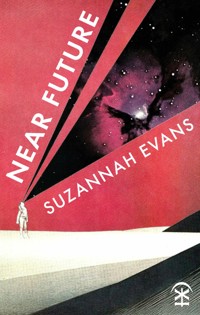
Cover artwork: ‘Projections’ © Bryan Olson
www.bryanolsoncollage.com
All rights reserved. No part of this work may be reproduced, stored or transmitted in any form or by any means, graphic, electronic, recorded or mechanical, without the prior written permission of the publisher.
Suzannah Evans has asserted her right under Section 77 of the Copyright, Designs and Patents Act 1988 to be identified as the author of this work.
First published November 2018 by:
Nine Arches Press
Unit 14, Sir Frank Whittle Business Centre,
Great Central Way, Rugby.
CV21 3XH
United Kingdom
www.ninearchespress.com
Printed in the United Kingdom by:
Imprint Digital
Nine Arches Press is supported using public funding through Arts Council England.
CONTENTS
A Contingency Plan
The Doomer’s Daughter
Helpline
The Handover
Roboblackbird
Summer with Robobees
The Dark Museum
We just passed on the street
This is The End
The End of the End of the World
Sometimes in your own head
Wholly Communion
Real Time
The New Tenants
The Law of Attraction
The New Curriculum
Future Cities
1. The Censored City
2. The Floating City
3. The Plug-In City
This is England’s greenest city
This morning the walls
The Russian Woodpecker
Reconstructing the Monument
Underground in the new Meanwood
The Taste
Guided Tour
Wyre
Trevor on the Long Mynd
About the Dog
Naming the Hill
Coastal Erosion
Extinct Scents
De-extinction
Skies Recorded by the Cyanometer
The Fatbergs
The Humans and the Starlings
Re-wilding
Craters
Letter into Eternity
The Last Poet-in-Residence
Acknowledgements
About the author and this book
‘The Story Just Keeps Going. You’re Supposed To Wrap It Up All Nicely But It’s Real Life. It’s Hard. So I Think I’m Just Going To Have The World Explode.’
Michelle Tea, Black Wave
A Contingency Plan
What if we’re apart when the asteroid comes
or the magnetic storm that shuts off the power?
You could be waiting for a train as the sun’s bulb
flickers out, high above the glass-panelled roof.
I’ll be at work. We’ll lose the phone lines
the door-entry system will go haywire.
I will eat from the vending machine
drink from the competition cupboard
and sleep on nylon carpet with my colleagues
all of us three-weeks unwashed. Stay where you are—
I’ll abseil down eight floors on a rope
made from the supply of festive tinsel
loot M&S, steal a bike and make for the M1
forty miles of silence and abandoned cars
so we can witness the collapse of civilisation
with a picnic of high-end tins
so I can lie in your arms on a rooftop
our dirty faces lit by fires.
The Doomer’s Daughter
I was raised with the knowledge that the worst could happen
on any given day. My schoolbag was weighted with extras;
iodine tablets, dynamo torch, distress flare.
My bedtime stories were from the SAS Pocket Survival Guide
and school holidays were spent in an underground bunker
in Lincolnshire. Dad drilled the whole family every weekend
for the five kinds of apocalypse: nuclear, contagious,
climatic, superintelligent, religious. I can put on a gas mask
and safe-suit in under 60 seconds, even with the light off.
When he died I realised there are disasters
that you cannot prepare yourself for. Still, I drive out
to our safe place every summer, sit on the locked grille
and imagine the provisions he’d gathered down there—
tins going slowly out of date in the darkness
beans in tomato sauce, peach halves in juice.
Helpline
In the call centre at the end of the world
everyone is wearing the rags
of the clothes they came to work in two weeks ago.
From floor ten we count fires in the distance
the smoking remains of suburbs.
Tea breaks are strictly monitored
and the internet is still there
but we are getting tired of news.
We sleep where we’re comfortable—
stairwells, carpet, canteen chairs
Lateness for shifts is not tolerated
although at this stage few of us
have homes to go to.
Demand for the service is high.
I don’t know why I’ve stayed so long in this job
when the world in which I could spend its ample wage
has disintegrated—
politicians in hiding
supermarkets forced open on burst streets.
Perhaps it’s because they all tell me
that my voice could be the last one they hear
perhaps it’s because almost every worried caller
reminds me of my worried mother
or because we talk about wallflowers
and the hunger, the smell of burned paint
reminisce about summer in the park.
Her dog went out two days ago and hasn’t come back
If I’d died he could have eaten me
she says
it sounds like a regret.
The Handover
after Nick Bostrom
Half-way through the presentation
the paperclip machine tells Jamie from marketing




