


1,99 €
Mehr erfahren.
- Herausgeber: Trevor Tucker Publishing
- Kategorie: Gesellschafts- und Liebesromane
- Sprache: Englisch
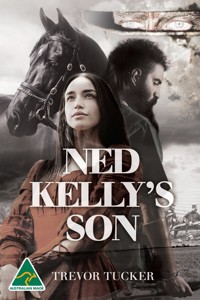
The USA had its share of outlaws, such as Billy the Kid and Jesse James, but Australia had an equally notorious bushranger; his name, Ned Kelly. Undoubtedly, they were all unrepentant individuals.
In Australia, much is known about Ned Kelly, but not everything. For example, very little is known about Ned’s son, Niall, a bloke whose actions arguably overshadow the combined exploits of Billy, Jesse and Ned.
Beautiful, headstrong Orla O’Meara escapes persecution in 19th century Ireland to start a new life in the wild colony of Victoria, Australia.
There she meets the continent’s most notorious bushranger, Ned Kelly and a brief, passionate relationship results in the birth of the outlaw’s unknown son, Niall.
After Ned’s violent death, Orla and her son have to learn to survive in this tough, unforgiving land. Their travels, together with a faithful Waler horse named Boss Boy, take them throughout Australia and bring them up against criminals, goldminers, loggers and the police.
Ned Kelly’s Son is a sweeping saga of drama and romance, following mother and son and the family’s descendants through Australia’s transition from a collection of colonies to a nation born during the Boer War, in which Niall serves.
The Kellys fight injustice and champion the rights of aboriginal people through a hundred years of struggle, poverty, wealth, pain and redemption.
Das E-Book können Sie in Legimi-Apps oder einer beliebigen App lesen, die das folgende Format unterstützen:
Veröffentlichungsjahr: 2024
Ähnliche
















PRAISE FOR NED KELLY’S SON
‘A great cover and a great book.’ Peter Watt, Australian author.
‘Congratulations on the publication – well deserved after all your hard work. Enjoy the giddy life of being an author.’ A J (Sandy) Mackinnon, Australian author
‘I have spent the last few days reading your book; well done, I really enjoyed it and had trouble putting it down.’ D Talbot, Australian historian and author. Wandiligong.
‘Trevor, I bought your book today; have to go to bed early tonight and get stuck into it. Couldn’t put the damn thing down. Enjoyed it greatly. Well worth the wait.’
R Brown. Sale.
‘Ned Kelly’s Son, indeed! Many thanks for your intriguing story of the Dungarvan lady!’ W. Fraher, curator, Waterford County Museum. Ireland.
‘In telling an action-packed journey through many lives, Trevor has painted the Australian landscape in words. So real is the picture, the unexpected raunchiness made me blush.’ M. Edwards, Designer. Gippsland.
‘Orla – her life of adventure and endeavour, her family, her friends, all in the right place at the right time. What if ??? A darn good read.’ Jill T. Farmer. Stockdale.
‘Bloody hell Tucks, this is really good! What a read—just brilliant. It’s a fascinating story well told. It was especially interesting for me, knowing a lot of the people and places personally. I will treasure it—and I will promote and recommend it far and wide.’ Ian Stewart. Surveyor, Launceston.
‘Good on you Trev. I trust it will be a great success, and it might even be taken up as a film.’ Catherine Lewis. Publisher at Wild Dingo Press. St.Kilda.
‘Just finished reading your book. Fabulous! It’s one of those books – you want to know how it ends, but you are enjoying it so much you never want it to end. Well done!' Viv B. Chirnside Park.
‘It just goes to show that your dedication over the past few years is going to pay off. WELL DONE.’ M & P Welch. Belgrave.
‘Compelling! The story line is as good as anything I’ve ever read, written by an Australian author. I had trouble putting it down and was genuinely sad when it finished. Can’t wait for your next book.’ Rocky M. Farmer. Sale.
‘I want to congratulate you on completing, and publishing, such a meaty and well thought out novel. It was a really interesting read, and I especially liked the focus on “original” characters that haven’t appeared in any other Ned Kelly story. You displayed a skill at weaving an engaging narrative, and often approached situations from multiple angles without making the story feel overburdened. I enjoyed your descriptions of the environment, which really captured the sounds, smells and feel of the Australian bush. April Newton,
Director at Newt & Co, publishing. Parkville.
‘Hi Trevor, just thought I'd drop you a note to say I very much enjoyed
“Ned Kelly's Son”. It was a great read.’ Belinda Ritchie. Adventurer & Barrister. Brisbane.
‘A riveting yarn.’ Eugenie Navarre. ‘Kelly family’ researcher, author, journalist and farmer. Queensland & NSW.
‘You have a talent for writing; crisp prose, an intriguing plot and believable characters. Looking forward to your next oeuvre.’ Peter Synan. Retired humanities teacher and researcher of local history. Sale.
ALSO BY TREVOR TUCKER
Aussie Anecdotes
The Stolen Maps
A Sense of Justice
God Only Knows When
NED KELLY’S SON
A SAGA OF AUSTRALIAN HERITAGE, ALMOST LOST IN HISTORY
TREVOR TUCKER
TREVOR TUCKER PUBLISHING
CONTENTS
Dramatis Personae
Preface
I. Orlagh
Chapter 1
Chapter 2
Chapter 3
Chapter 4
Chapter 5
Chapter 6
Chapter 7
Chapter 8
Chapter 9
Chapter 10
Chapter 11
Chapter 12
Chapter 13
Chapter 14
Chapter 15
Chapter 16
Chapter 17
Chapter 18
Chapter 19
Chapter 20
Chapter 21
Chapter 22
Chapter 23
Chapter 24
Chapter 25
II. The Journey
Chapter 26
Chapter 27
Chapter 28
Chapter 29
Chapter 30
Chapter 31
Chapter 32
Chapter 33
Chapter 34
Chapter 35
Chapter 36
Chapter 37
Chapter 38
Chapter 39
Chapter 40
Chapter 41
Chapter 42
Chapter 43
III. Stepfather
Chapter 44
Chapter 45
Chapter 46
Chapter 47
Chapter 48
Chapter 49
Chapter 50
Chapter 51
Chapter 52
Chapter 53
Chapter 54
Chapter 55
Chapter 56
Chapter 57
Chapter 58
Chapter 59
IV. The Meeting
Chapter 60
61. (The summer of 1960/61)
An Afterword
Acknowledgments
Bibliography
Trevor Tucker
Ned Kelly’s Son Copyright Trevor Tucker 2013
This edition published by Trevor Tucker Publishing 2024
All rights reserved. No part of this book may be used or reproduced by any means: graphic, electronic, or mechanical, including photocopying, recording, taping, scanning, or by any information retrieval system, without the express written permission of the author, with the exception of brief quotations in reviews or articles.
ISBN POD: 978-1-922825-23-0
EPUB: 978-1-922825-58-2
Cover Design by Leandra Wicks
For Shelley, and for Callum
Embrace your greatest gift — this only life.
DRAMATIS PERSONAE
Orlagh (Orla) Aileen O’Meara:
Ned Kelly’s unheralded lover; mother of Niall.
Thought to have been born in January 1861
Died: 9th March 1894
Niall Haydn Kelly:
son of Edward (Ned) Kelly.
Born: 19th December 1880
Died: 17th January 1961
PREFACE
Ned Kelly was pleased with the success of his plan although the entire funds from the bank barely filled one saddle bag. Not a shot had been fired. And forever, the good people of Jerilderie would have something to talk about.
As nightfall approached, Ned and his men were joined by the fifth man who had been guarding their horses. Their retreat was not challenged. But knowing that word of their escapade would soon reach the traps in Albury, Wangaratta, and Benalla, despite having cut down the telegraph lines, the five riders brutally urged their horses through the moonlit night. As if understanding the value of that freedom their Walers bravely kept to their tasks.
About an hour before daybreak they reached the Murray River. After two hours rest, they crossed the river then headed for their familiar sanctuary in the Warby Ranges. Their ultimate destination was still at least seventy miles distant but the final leg of that ride could wait for a few days.
Ned never engaged in such sport within the Buckland Valley Goldfields, which is at the foot of Mt. Buffalo in North-Eastern Victoria, although this valley had several goldmining communities at the time and was arguably within ‘his’ territory. This valley meant something much different to Ned: a place of refuge rather than easy pickings and probably the only place where he ever felt at peace and safe. Unsurprisingly, therefore, Ned’s whereabouts and activities during his visits there produced very little recorded history. What has been recorded is not in dispute — however, it is incomplete.
Looking up the valley from the flats of the Buckland River, green takes on a blue-grey tone. The distant mountain peaks, when devoid of snow, become a hazy white mantle when set against an azure summer sky. And much of what Ned would have seen and smelt on each occasion he visited the Buckland Valley, during his last summer of 1879/80, remains to be experienced today.
* * *
On a summer’s afternoon, shadows cast by the ancient red gums of the Oxley Flats near Glenrowan unfailingly creep across the parched earth: inevitably those shadows will diffuse into night. And as each year inexorably sheds its seasons, regrettably many worthy historical events will become vague and are thus fated to be lost forever.
But not always!
What then are the odds that a chance meeting of like souls in 1958 would result in the resurrection of hidden accounts of a mother and her son, whose amazing lives challenge the legend of Australia’s most iconic bushranger?
ORLAGH
1
Clutching a bundle of native flowers she had picked in a nearby paddock, Orla skipped contentedly for home while thinking how she could best arrange those flowers to surprise and impress her mother.
About forty yards from the house, her much loved pup, Tuppy, raced ahead to greet a member of the Royal Irish Constabulary who was leaning his bicycle against the front fence of their house block. Suddenly, without either warning or any apparent provocation, the man proceeded to cruelly, viciously, stomp on her innocent and beautiful pet.
Orla skidded to a halt, and then froze, gawping in disbelief, dumbstruck. Her skin crawled. That nasty man has just killed my Tuppy, she thought. But he’s a policeman! Oh God!Will he try to kill me now?
Though confused, she forced herself not to cry. ‘You rotten bastard.’ Despite her young girl innocence, she unashamedly whispered her first ever swear word. Then, consumed by anger, she wanted to hit back, to punish.
Not wanting to be seen, Orla jumped behind a large oak tree. Her flowers fell to the ground, forgotten; her fingers were now balled into fists. Peering from behind the trunk, she knew intuitively — and precisely — what had to be done.
Ducking low, behind some dense shrubs, she crept towards the house until she was within a few yards of the distracted policeman… and Tuppy. For just a few moments, Orla stared at the pup as its chest heaved for the last time and its tiny heart fluttered to a stop.
By sheer luck, there at her feet was exactly what she needed — a garden stake! She picked it up, positioning herself behind the constable. After taking a deep breath, she swung the stake, axe-like and with all her strength, squarely into the back of his legs. The man screamed and collapsed onto his hands and knees. His helmet fell off. Like the pup, he hadn’t expected such an attack.
Orla stood beside the policeman’s prone body, and without hesitation, delivered a vicious blow to the back of his unprotected head. On contact, his body went rigid; then it sagged and lay motionless on the pathway, unseeing eyes returning the pup’s lifeless gaze.
‘Bastard! Bastard!’ she hissed, as she kept belting into him. At the peak of her rage, her father grabbed her arms and lifted her off the ground. Firmly restrained, the stake having been forcibly discarded, Orla thrashed about with surprising strength.
‘I hate him, Da! I hate that bad policeman,’ she bawled, tears trickling down her cheeks. ‘He’s just killed my Tuppy!’ Orla suddenly stopped struggling. ‘Da, why? Why was he so cruel?’ she implored between sobs of grief and while trying to regain her breath. ‘All Tuppy did was piddle on the man’s silly bike,’ she added, pleading her case while staring into her father’s concerned face… begging his understanding. ‘He made me really sad, and soangry! That’s why I gave him such a good whack, Da.’
‘Well I’ll be buggered!’ Dan was bewildered by the scene in front of him. ‘You go inside, my girl. I’ll take care of Tuppy and get rid of this lousy peeler.’
‘No, Da, I’ll look after Tuppy,’ she replied dejectedly, but with unexpected force.
* * *
In her favourite place at the rear of their property, Orla buried her beloved pup. She then collected some glistening white stones from a small beach formed by the broad sweep of a nearby stream, and used them to lovingly cover the small mound. Back by the stream, occasionally tossing a stick onto its smooth gliding surface, Orla mourned her loss. Her anger flared again. When I’m a big girl, she fervently resolved, nobody will push me about! And watch out if anybody ever again tries to hurt my animals… or my family or my friends! But another thought persisted. Why are the English people so damn cruel?
Later that evening at dinner, Dan dispassionately discussed the day’s event. ‘What if she’d killed the swine of a man?’ He continued before he received a reply. ‘He’ll live, but I’ll bet he’s still got one hell of a headache. And to be sure, he’s got no idea what or who hit him. Mind you, I put him right. I told the cruel bastard ‘it must ‘av been Divine Intervention, or perhaps, t’was the Little People who taught him a lesson.’ They all howled with laughter.
Orla quietly chuckled as she dropped off to sleep, feeling strangely content with her new found hatred of the English. Her parents slept little; they agonized over how to handle any official repercussions. However, her older brothers Sean, Colm, Clive, and Liam joyfully celebrated their sister’s ‘magnificent stick work’ at the local Dungarvan pub.
* * *
Apart from that harrowing event, Orla’s childhood was typical. But her teenage years were, well… interesting.
Orla was trusting but not gullible. She was quick to learn and always willing to help others. Fundamentally, she was an outgoing child who carried mostly endearing traits into her teenage years and adulthood. But she refused to be controlled. Those who tried usually regretted it.
By thirteen, Orla could almost match her father’s way with horses. She rode astride and as hard and skilfully as any man, and she could extract the absolute best from any reined team.
She was also a ‘natural’ with firearms. Not only was she incredibly accurate with a rifle, she could manage her father’s six shot revolving-cylinder Colts equally well with either hand. Somehow she hit every target, even moving targets - a feat, neither her father nor any of her brothers could believe, let alone rival. Dan also saw to it that Orla understood the seriousness of pointing a gun at an assailant.
‘Remember always, my girl,’ he pleaded. ‘There’s no second chance if you’re dead. So, be first, and shoot to kill. If an opponent means business… theywill, to be sure.’
At sixteen, Orla was relatively tall and endowed with an eye-catching figure, which gave her the appearance of a grown woman. She was extremely agile and blessed with unexpected stamina: she could dance all the waltzes, reels, and jigs better than most and was in constant demand at the local pub on Saturday nights whenever the dancing started.
Orla’s skin was pale; her russet hair cut unfashionably short, revealing perfectly formed childlike ears and giving prominence to her high forehead and cheekbones. Her square jaw-line, small but straight nose, and slightly pointed chin gave her face an elfin appearance.
But her eyes were the major attraction — large, viridescent and seductive — they turned the head of many an eager young man. (In fact, she was extremely lucky not to have fallen pregnant after mischievously ‘losing her virginity’ on several lustful occasions.) If anyone, child, woman or man engaged her in conversation, those eyes enchanted her listeners… however, they could also flash unmistakeable menace. No longer were those dark green eyes beguiling, but intimidating and fierce; indeed, fierce enough to guarantee her preparedness to kill.
Her lips were full and perfectly formed and her teeth flashed a brilliant white when she smiled. Normally, she spoke in her relaxed lilting Irish brogue, always friendly and enthusiastic. Her mouth, alas, was her potential downfall. To steal from her, to attempt to molest her, to generally cross her in any way, or if she witnessed the mistreatment of children or animals, then what shamelessly flowed from that mouth left little to the imagination. Offenders were thus ‘warned’, and if anyone then doubted her threats, they usually backed off once their eyes met.
And, out of habit, as Orla departed such situations, she would laugh hysterically. There was no denying it; Orla knew she was excited by challenge.
At first, Orla’s mother, Kathleen, prayed desperately that her daughter’s tempestuousness would be replaced by conduct more befitting a decent Irish woman. Instinctively, she knew Orla would forever struggle to keep her God-given ‘boyo skills’ — and her mouth — in check.
In her quiet times, however, Orla sometimes contemplated her short temper and worried that people might unfairly judge her family after having just witnessed one of her outbursts.
Orla yearned to travel. Her parents encouraged her dream and did their best to prepare her for the eventuality. When Orla formally announced she was ‘off to see world’, her brothers initially opposed her plans. But in her quiet way, Kathleen pointed out that Orla had well and truly proven her ability to look after herself. Eventually, her brothers were placated; when their sister settled they would be most welcome to visit. But what if Orla never settles down, Kathleen agonized silently on their behalf. And then, just faintly alarmed, she confronted her next thought. Dear God, what if my little girl never returns to Ireland?
Tragedy then struck; her father died just before Orla’s seventeenth birthday. A horse kicked him in the chest as he was trying to free the terrified animal from a tangle of fencing wire. Understandably, Dan’s death caused considerable grief for the entire O’Meara family. Orla’s sorrow only temporarily tamed her rush into adulthood.
Soon after Dan’s death, Orla confided in her mother. ‘Ma, I’ve been thinking. I’m feeling uneasy about how I’ll cope when I’m away, without you and my boyo brothers being around, I mean. And I know I’ll miss you one and all. But ma, I have to admit, I’m convinced that I need to do this. I want to be free of all the English shite we have to put up with, and to do things in my own time and in my own way. Is that selfish?’
‘My dear girl, you sound so grown up,’ Kathleen reassured her. ‘But no, not selfish. Perhaps a bit naïve, though. You’ll cope, my love, of that I have no doubt. But mark my words, you’ll find life difficult at times. Anyway, I’m through trying to talk you out of this.’ After a thoughtful pause, Kathleen added. ‘You’ve made a good decision, young lady. Now get a move on, you’ve got packing to do and people to call on before you leave.’
Packing was easy: one small case represented her entire belongings. Orla took particular care in concealing her father’s treasured Colts and ammunition. Kathleen presented Orla with money saved for the occasion, not a fortune, but more than she’d ever seen before.
The cold and overcast weather surrounding the dock at Cork draped another layer of gloom over their feelings of loss. After a tearful farewell and promises to write regularly, Orla boarded a ferry to Swansea, in Wales. Her excitement swamped any last minute feelings of apprehension or regret.
2
London’s mix of opulence, art, industry, poverty, and misery were on a scale Orla never imagined. And the rank, ever pervasive smells disgusted her; in fact, after three weeks, the city’s vast humanity appalled her. It also infuriated her that nobody seemed to have time for a chat. Reluctantly, she admitted to herself she badly missed the friendly folk of Dungarvan, not to mention the clear skies, familiar mountains, green pastures, and the sweet, clean waters of home.
But opportunity finally crossed her path, literally, quickly stripping away her mood of depression. As she was returning to her rented rooms one evening, a modern carriage swept around the corner in front of her. Mid-turn, the driver impatiently urged the horse on when two mongrel dogs darted from a doorway, barking on top note, both intent upon harassing the unsuspecting horse. The startled animal tripped and then crashed onto the cobblestone road among a tangle of shafts, reins and traces: the hapless driver was unceremoniously catapulted twenty yards down the road. As if congratulating each other upon their triumph, the dogs jumped about, still barking madly… then abruptly ended their lark and trotted away as if nothing had just happened.
Without a thought, Orla was beside the terrified, thrashing and heavily lathered horse. She methodically untangled the traces and somehow calmed the unfortunate beast. Exerting gentle authority, she then urged him to stand. Only when the horse stopped snorting and shaking, and she assured herself he had no major injury, did Orla’s attention turn to the driver. It meant little to her that the man was barely conscious: she stood over him and told him exactly what she thought of putting the horse through such unnecessary suffering.
Suddenly, someone gently tapped her on the shoulder. Spinning, eyes still dark and brooding, she found herself gazing into the smiling, attractive face of a well-preserved middle-aged woman.
‘Well said, young lady. It serves him right,’ the woman whispered conspiratorially. ‘Though why my husband thinks he needs to impress me is flattering. Incidentally, my name’s Jean Stewart. But please, call me, Jeanie.’
Orla observed Jeanie as unobtrusively as possible. The woman was about the same height as she though slightly more rounded, and approaching fifty years, Orla guessed. She was also obviously well-to-do; her clothes fit perfectly and seemed fashionable without being pretentious. Her grey hair was loosely curled, shoulder length, and well groomed.
They both looked again to the unfortunate driver who was now moaning in pain and leaning against a shop front. He was obviously in shock and, judging by the ugly bruise on his forehead, probably concussed. Both of his elbows were bleeding. Regardless, the man’s ruined clothes appealed to Orla’s sense of justice. Jeanie attempted to introduce her husband, Frank, but he barely responded.
‘Best we get him to an infirmary straight away,’ suggested Orla, again easily taking control. With just a little charm, she seconded two male bystanders to lift Frank into the carriage. ‘I’ll take the reins,’ Orla insisted as she climbed up to the driver’s seat. ‘But Jeanie, you’ll have to navigate.’
To Orla’s surprise Jeanie joined her. ‘Incidentally, my dear, you haven’t told me your name. And what brings you to this awful city?’
As Orla expertly guided the horse through the now darkening streets, their exchange alternated between serious conversation and volleys of good-natured, albeit most unladylike, laughter.
* * *
It was dark by the time Jeanie and Orla arrived ‘home’. At the neighbouring mews, an attendant stabled, then fed and watered the horse. Certain that its injuries were superficial Orla groomed the horse as Jeanie looked on.
Thankfully it was only a short walk to the Stewarts’ new, and rather grand, two-storey house, for the night air was cold and the fog, now flooding the streets, was heavily laced with the pungent smell of coal smoke from hundreds of household fires.
Jeanie immediately lit several lamps and then lowered the drapes. ‘Servant’s night off,’ she said nonchalantly then proceeded to light the fire in the fireplace.
Orla studied the luxurious dining room surrounding them — everything screamed wealth. They must be bloody well-heeled if this magnificent room is typical of the rest of their house, thought Orla. The granite mantelpiece caught, and held, Orla’s attention. Central upon it were impressive flower arrangements adorning the photographs of two young adults.
Following Orla’s gaze, Jeanie enthusiastically declared, ‘Our children, Anne and Owen. Anne’s now twenty-one and happily married to James. He’s a banker, but a real gentleman. They’ve been living in Adelaide for the past couple of years. That’s in the Colony of South Australia. They’ve got a fifteen-month-old son, Michael, and he’s our only grandchild so far. Anne’s a good girl, she writes regularly. Anyway, we’ll be visiting the colonies next year to hopefully catch up with both of our own kids,’ Jeanie announced as she stood, having coaxed the fire to a cheery blaze. ‘Yes, both of them, and our old colonial friends who we’d been farewelling earlier today... just before you, ah, rescued us.
‘Our son is going on twenty-five. He left home four years ago after a terrible argument with Frank. Their differences arose over Frank’s attitude towards guns; he despises them. But Owen maintained he needed them for protection when travelling after dark. I’ll tell you all about it later.’
Gazing at her son’s face, Jeanie added quietly, ‘He hardly ever writes, but in his last letter he told us he’s living in the northern part of the Colony of New South Wales. Apparently he’s working in the business of buying and selling cattle and seems determined to make his fortune. And he was keen to tell us he already has several good horses and a small property of his own, though not much money.
‘You know, Orla, Frank and I really miss them both very much,’ Jeanie confided reflectively. ‘We’re just so glad they’re both safe and happy and that they’re earning an honest living.’
As the room warmed, Orla relaxed. But what she warmed to most was the calming aura of Jeanie’s motherly persona: a warm smile never far away and a relaxed manner not dissimilar to her own mother.
A quick tour of the house confirmed Orla’s notion of the Stewarts’ wealth. She happily accepted Jeannie’s offer to stay overnight and was assigned one of four splendidly furnished upstairs bedrooms.
The next day, Jeanie insisted Orla leave her rented rooms and stay with them. She was easily persuaded; her money was disappearing at an alarming rate. The arrangements for boarding were simple enough. Orla could stay as long as she wished, for free, in return for helping Jeanie with transport. Day servants would continue to attend to all housework, the preparation of meals, and to the upkeep of the garden.
Orla and Jeanie chatted affably for hours, revealing their respective upbringings and airing their future plans. Jeanie had a few surprises, the most astounding being how she treated leaving behind the comfort of her wealth as inconsequential.
‘It’s just a house after all, Orla. I’d swap it at any time to live in another country so long as it was warm for most of the year,’ she announced. ‘But my life is where Frank wants to be and London suits him for the moment.’
* * *
Frank was bored, sitting in a chair next to his hospital bed, impatient to get out. The door opened and two visitors stepped into his room. Jeanie he recognised immediately, but Orla made him feel decidedly uneasy, vaguely associating that beautiful, smiling face in front of him with excruciating personal abuse and ridicule. Jeanie, recognising Frank’s confusion, good-naturedly explained the events leading to his hospitalisation. It also transpired during the subsequent conversation that Frank genuinely felt bad about laying into the horse. But he also felt equally obliged to explain that if he hadn’t, his increasingly more urgent call of nature was going to do more than just blemish his reputation as a considerate handler! All three roared with laughter; he hadn’t been trying to impress Jeanie.
As the women were about to leave, Frank playfully asked, ‘Miss O’Meara, was it really you who gave me that dreadful earful? But listen, girl, I hold no grudges, so I hope we can be good friends.’
He felt enormous relief when Orla kissed him softly on his bruised forehead and replied cheekily, ‘We’ll see. But only if you call me, Orla.’
Frank was discharged from hospital the following week.
Orla already knew that Frank was fifty-six years old. He was tallish, about six feet, but rotund, thus giving him an imposing stature. She soon learnt that he took pride in his appearance. He shaved every day, kept his hair trimmed and wore elegant but not outlandish clothes. By necessity, he wore wire-framed spectacles to correct his short-sightedness.
Frank also had his moments of contemplation. ‘Orla, please forgive me for appearing distracted,’ he offered apologetically. ‘It’s a bad habit I know, but I worry about my son and I’ve got several business deals in the balance.’
Up to a point, Frank talked openly with Orla. ‘I’m basically a hard working, down to earth family man. But I’ve been lucky. I’ve befriended some influential people and they’ve all helped my business prosper. But it’s not my wealth that I want to be remembered for, Orla. Besides, I don’t like flaunting my wealth. I’m simply a ‘doer’,’ he explained philosophically. After a reflective pause, he added, ‘Some say I’m a visionary and an opportunist. That’s also not far from the truth, I suspect.’
Unbeknownst to Orla, rumour persisted that not all of Frank’s wealth could be attributed to legitimate enterprise. Even though he came from an upper middle-class background, as indeed had Jeanie, his success resulted from expertly cultivated ‘friendships’ with waterfront stand-over men, immigration officers, bankers, parliamentarians, and mining executives… even with nobility. Of his clandestine dealings with such people, he confided in no one.
* * *
The women’s daily routine put Orla in a new world. Jeanie seemed to have friends everywhere. Long and expensive lunches, music recitals, live theatre, and browsing through art exhibitions ensued. However, the number of women eager to debate the emerging, but very distant British colonies of New South Wales, Victoria, South Australia and Tasmania, surprised Orla.
Orla accepted that all of these experiences were broadening her perspective on life and stimulating her mind… even expanding her significant self-confidence; yet it cost her nothing.
‘No need to be embarrassed girl, you’re more than paying your way,’ Frank responded, sweeping aside Orla’s protests. ‘How in hell’s name would we get about safely without you driving us? Besides, hiring a good driver would cost me a fortune.’
Orla had indeed brought with her a most expert pair of hands with the reins. She quickly adjusted to the pace of life on London’s roads and became adept at manoeuvring the carriage in the bustle and commotion of the heavy midday and evening traffic. Orla particularly enjoyed this challenge, and even inclement weather failed to upset her. Confident in her handling — over confident some said — she refused to be bluffed by red-faced coachmen urging on their horses to the demands of their wealthy passengers. Unwittingly, she was steadily becoming a reckless bully and guilty of the very actions for which she had so vigorously criticised Frank. Nevertheless, she enjoyed letting other cabbies know when she had right of way by using either the most flagrantly crude hand gestures, or unladylike verbal abuse… or both.
But, when in the peace and quiet of her room after arriving home from her last outing, Orla began worrying. The horse had been in a heavy lather that night and uncooperative at the mews, clearly unsettled by Orla’s earlier treatment. Orla felt a surge of guilt for her overzealous behaviour. She had also eavesdropped on the mew’s overseer who was lecturing one of the stable boys.
‘Remember, son, cabbie justice comes swiftly and in many guises,’ he had said.
You’d better back off, Orla my girl, she concluded, I don’t fancy being done over in a stinking London alleyway.
After five or six weeks, the social routine was losing its edge for Orla and she barely disguised her petulance and restlessness. Jeanie knew something was wrong.
‘What is it my dear, what’s bothering you? You’ve been acting like a bear with a sore head.’
‘God almighty, is it that obvious? Please don’t think I’m being ungrateful Jeanie, it’s just that there’s no real fun in my life. I haven’t even got one lad trying to get into my bloomers!’
Jeanie interrupted and said mischievously. ‘If you say so, but you’ve only got yourself to blame. You’ve been too damn standoffish.’
‘Yes, you’re right, of course. But listen, Jeanie, it’s something else actually. You’ve both been wonderful to me. You’ve shown and taught me so many things in such a short time. It’s funny, though, it’s as if something’s calling me. I can’t explain it any better than that. It’s the same feeling I had for years before leaving Ireland. And I’ve heard so much about the colonies of Victoria and New South Wales. It’s where I’d love to visit. Please don’t take offence, but I’ll be leaving you soon, Jeanie.’ Knowing that Frank’s rehabilitation was complete, she quickly added. ‘Besides, you don’t really need me to cart you about anymore.’
Jeanie was not surprised. ‘We’ll both miss you very much and I hope you know that. But you live only once and this is the best time in your life to travel. And no offence is taken, my dearest Orla.’ Jeanie then gave Orla a long hug, which was returned with equal affection. ‘So when are you planning to leave?’
‘Just as soon as I can secure passage I suppose.’ Tears then flooded Orla’s eyes at the realisation she was about to leave behind two wonderful people who she now thought of as her other mum and dad.
* * *
‘Orla, do you recall Jeanie and me telling you about our old colonial friends?’ Frank quizzed Orla after dinner that night. ‘We understand they’ve got a married daughter living in the colony of Victoria and, apparently, she and her husband need to spend more time looking after their stock and crops. But they don’t have a suitable nanny to mind their kids. So, Orla, if you’re interested in applying for that job, we’d be happy to provide you with a letter of introduction.’
In astonishment and obvious joy, Orla jumped at this suggestion. ‘Yes, of course, but where do they live… and how do I get there?’
‘Hold your horses, young lady. Jeanie and I have been aware of your impatience for some time. After all, ‘you were off to see the world’. So when you continued to show so much interest in the colonies, I took it upon myself several weeks ago to write and alert our old friends of your possible plans. I’m confident they’ll get our message to their daughter. But please understand, Orla, we can’t guarantee the job with their daughter. However, we think our letter of introduction should give you a head start. Anyway, their daughter has two children and lives in a strange sounding country town called Wangaratta. I think it’s about a hundred miles north of Melbourne, the colony’s capital. I understand there’s a train service to that town.’
Orla’s passion to travel now acutely aroused, at least fifty additional questions followed in rapid order before they all eventually retired. Jeanie and Frank had done their best to answer Orla’s questions, but sleep eluded her that night; her passion unquenched.
As promised, three days later, Frank presented Orla with the Stewarts’ jointly signed and very complimentary letter of introduction. As Orla was about to express her gratitude, Frank handed her a second envelope before she could say anything.
‘Well… don’t take all night. Open it.’
‘The bearer of this Right of Passage, Miss Orlagh Aileen O’Meara, a free British subject of sound character and with no financial or social encumbrances owing to any person, company, organisation or pleasure of the Queen, is hereby and forthwith granted lawful passage to the Colony of Victoria. Furthermore, Miss O’Meara is to be provided first class accommodation and be granted every consideration and assistance during the voyage since all costs associated therewith have been paid in full.’
A second sheet declared her to be an unaided emigrant.
‘Those documents are authentic,’ Jeanie added. Both carried a British Government letterhead emblazoned with the British Coat of Arms, an authorising signature, plus a Department of Emigration and Customs insignia seal.
Frank explained that the documents were not the usual ticketing procedure given the suddenness of Orla’s decision, but were the result of him calling in a favour. What he did not explain, was that as official as the documents appeared, Orla’s name would not be on the passenger list, that being the only way Frank could secure her passage — plus a hefty ‘last minute commercial consideration’.
‘Just show these papers to the captain of the ship when you board. Don’t, under any circumstances, release them from your safekeeping because they’re also the basis of free colonial citizenship. The captain will ensure you’re looked after and he’s guaranteed me your voyage will be as enjoyable as possible. He understands well enough the consequences of not fulfilling our little arrangement.’ Unknown to Orla, the captain had also been well paid to ensure the colonial immigration and customs officials processed her arrival without question.
Incredibly, the documents in her hand announced she would be sailing the next day!
Laughing excitedly, Orla hugged each of her amazing friends. ‘How on earth am I ever going to repay such kindness?’
That night Orla wrote to her family, detailing her good fortune and forthcoming travel plans. She then set about packing. When checking her Colts, they still felt like natural extensions to her arms despite not having handled them for almost six weeks. She carefully concealed them amongst her belongings.
* * *
After another emotional and tearful farewell, Orla boarded the steamer at noon and was shown to her cabin. It was depressingly tiny and provided only the most basic comforts, a far cry from the luxury of her bedroom at the Stewarts’ home.
3
The steamer departed in early October 1879, and arrived in Melbourne during the fourth week in December of that year. Although considered a normal voyage, Orla never felt totally safe during the entire journey. And like most on board, she suffered from seasickness as they rounded The Cape of Good Hope. Later, when they confronted the massive swells of the Southern Ocean, the mal de mer returned with a vengeance. Two elderly passengers died from that dreaded curse and were buried at sea. There were also many cases of life threatening illness resulting from the appalling food and unheeded hygiene. Most passengers were friendly enough despite the conditions on board, and the men kept their hands off Orla (though certainly not their minds).
Worst, however, was the boredom. To relieve that state, Orla read stories to the children. All, and most of their mothers, hung on her every word as she elaborately embellished tales about the mythical leprechaun and legendary highwaymen of Ireland. However, they were disappointed to learn she knew no stories whatsoever about colonial highwaymen.
The Port of Melbourne was packed with merchant and passenger ships, in places berthed gunwale to gunwale, and three abreast. The sound of shrill whistles, the shouting and swearing of dockside workers, the dull rattle of chains being dragged across the wharf, the squeaking of overloaded luggage carts, and the excited chatter of impatient fellow passengers as they pushed by, filled the air to create an urgency typical of a country rushing into nationhood.
The breeze that had been coming in fresh off the bay was now blocked by the ship’s hulls and huge dockside stacks of wool bales and bagged wheat waiting to be loaded. Consequently, whilst the lingering odours of humanity made Orla gag as she stepped onto the wharf, the prospect of soon being able to set foot on land almost overwhelmed her.
Nevertheless, it was disturbingly hot. As she gathered her belongings and headed for the immigration building, Orla was struck by a thought… how on earth do people celebrate Christmas in such heat?
The ritual of immigration and customs checks was over in minutes without so much as one officer raising even an eyebrow. She then found accommodation and arranged her journey to Wangaratta for the following day.
While reading a newspaper that night, Orla noticed the name Kelly for the first time. Apparently the man and his gang, who lived in the north of the colony, were keen on robbing banks and stealing horses and cattle. And, it seemed, they either divided their earnings amongst their families, or with poor neighbours. He sometimes returned horses previously stolen by others, indicating his fair-mindedness to many. It also seemed he enjoyed eluding and then mocking the police despite their varied efforts to entrap him. Allegedly, he also killed three policemen though public opinion was divided about that being murder. Interesting, she thought, but no business of mine.
Next morning’s train ride was initially cool. Orla was enthralled by the vastness and beauty of the surrounding grazing and bush lands, but searing heat soon imposed itself: she felt an immediate concern for the stock which appeared to have little or no water, and often only limited shade.
As the train slowly departed Benalla, sweat ran down between Orla’s shoulder blades and her breasts. The seats made her backside ache. On impulse and without asking the other travellers their preference, she opened the carriage windows fully and propped the doors wide open — far better than sitting in that stifling, stagnant heat.
Soon the blue-grey humps of Mount Buffalo appeared in the east, stark against an azure sky. A north easterly breeze fanned the region, bringing with it the unique eucalypt and freshly mown hay fragrances. They washed over Orla’s face and delighted her senses.
Upon arriving at Wangaratta, Orla sought refreshment and directions at the station kiosk. Engaging a cabbie proved easy — but bloody expensive, she reckoned.
Her driver, a middle-aged woman who seemed oblivious to the hundreds of flies either adorning the back of her shirt or buzzing around her head, proved to be a competent handler. The woman was friendly and relaxed in her manner, and interesting company. She happily outlined the exploits of a recently deceased bushranger, Mad Dan Morgan, who had operated to the north nearby, but mainly in the Colony of New South Wales. However, having no teeth, she tended to launch spittle everywhere when she laughed.
‘I read in a Melbourne newspaper yesterday that there’s another bushranger boyo up this way. Name of Ned Kelly, I think,’ Orla said innocently. ‘Do you ever see him?’
‘Wher’d ya say yus was from, lassie? Ireland, eh?’ the driver snapped, inexplicably changing the subject. ‘An wut’s ya business gonna be, eh? School teacha, mehbe? Govermet work, or wut?’
Orla was aware of a sudden tension, sensing she was also being interrogated and her allegiances tested. ‘I hope to get a job as a nanny at the McIntyre farm. Do you know them?’
‘Oh yeah, I knows ‘em. You definitely not doin no govermet work then?’
Orla simply shook her head.
‘Ned ‘ates spies, ya know,’ the driver’s tone now an unmistakable warning. ‘For that matta, he ‘ates anyone as wut draws wages from them that govern this ‘ere colony… or them as wut gets reward from that Queen of England.’
Realising she was probably in the company of one of the many loyal Kelly sympathisers she recalled reading about the previous evening, Orla wondered how quickly word of her arrival would get to the leader of the highly sought after gang of local bushrangers. Couldn’t give a damn, she decided, dismissing the subject from her mind.
* * *
Orla did in fact soon become ‘of special interest’ to Ned via the cabbie — after all, Orla could have been an undercover police agent.
And, of late, Ned had cause to be wary given the increasing evidence his once good friend Aaron Sherritt had become a police informant. He was also disheartened that many recently arrived Irishmen — those he had previously assumed ‘were of his own blood and therefore allies’ — were now being persuaded by the police through the promise of regular wages, to either spy on him or take up arms against him.
4
The buggy conveying Orla rocked to a stop in front of the farmhouse. A couple, standing arm in arm in the shade of the front veranda, waved their greeting. After quickly unloading her luggage and bidding farewell to the driver, Orla turned her attention to the smiling couple. They were both about the same age, either in their late thirties or early forties, she guessed. The man stood over six feet tall, was square shouldered, but had a wiry build. His hair was receding and turning grey, cut short to match a closely trimmed beard, which did little to hide his deeply suntanned face and neck. He wore a long sleeved shirt tucked tidily into his trousers, but had bare feet. The woman, slightly taller than the man’s shoulder, was slender and likewise had a deeply suntanned face, neck, and hands. Her hair was dark, streaked with grey and worn tucked up into a loose bun. She wore a long sleeved blouse and a full length skirt, despite the heat.
‘I think colonial custom demands I say, g’day,’ Orla said cheerfully in her gentle Irish brogue. ‘Mr. and Mrs. McIntyre, I presume? Pleased to meet you both. My name’s Orla, Orla O’Meara.’ Turning her gaze upon the woman, she added, ‘I understand your parent’s friends in London, the Stewarts, have written to you on my behalf.’ Orla stepped forward to present her letter of introduction. ‘I’m a long way from home, so I do hope you’re aware of the likelihood of my arrival.’
‘G’day to you, too, Orla O’Meara,’ the man said welcomingly as he extended his hand in greeting. ‘And yep, we’ve been expecting you, luv. But first things first, there’ll be no more of that Mr. and Mrs. nonsense — my name’s Alf, and yes, this is my wife, Joan.’
Joan gently hugged Orla. ‘It’s lovely to meet you, Orla. But let’s get out of the sun and away from these damn flies before they cart us off.’ As Joan ushered Orla to the house, Alf dutifully picked up Orla’s luggage and followed the women.
The house was rustic, but inside it was airy and clean and obviously well lived in judging by the ordered chaos. Best of all, it was cool. Joan showed Orla to her room, explaining that regardless of the outcome of their talk later on she was expected to stay overnight.
After unpacking and changing into the lightest clothes she had, Orla returned to the kitchen where Joan offered her a fizzy brown drink.
‘You can have tea if you wish, but we colonials prefer ginger beer at this time of day,’ Joan gently mocked. In addition to a dry sense of humour, Orla sensed that Joan had the steeliness typical of Australia’s pioneers, yet clearly she was still an attractive woman.
As Orla contentedly sipped the cool, sweet ginger beer, she took the opportunity to appraise Alf. His hazel eyes sparkled… a warm smile was never far away. But it was the man’s measured relaxed voice, and his confident gaze, which appealed immediately to Orla; he was someone she felt she could trust.
After relating her chance meeting with the Stewarts, Orla then explained Frank’s timely intervention in securing her passage.
‘Joan’s parents have often talked about Frank and Jeanie,’ Alf responded. ‘Frank seems like a nice old bugger, and shrewd. But he won’t talk about his business deals, if I recall. By the way Orla, sometime in the New year, June or July we think, they’ll be visiting us and have agreed to stay here for a while.’
‘Oh, what a lovely surprise!’ Orla responded enthusiastically. ‘I do hope I’ll be here to greet them. You’ll really like them, I’m certain.’
‘Sorry for interrupting but I have to collect the kids from school,’ said Joan. ‘Won’t be too long. Alf will show you about I’m sure.’
‘I thought most children walked or rode bikes or horses to school?’ Orla asked innocently.
‘Not likely, it’s nearly a fourteen mile round trip,’ Alf and Joan chorused their reply.
Alf escorted Orla outside. Just as he was about to introduce her to the family pet, a handsome sulphur-crested cockatoo, it launched into a deafening but surprisingly clear racket from its aviary. ‘Aarrkkk. Aarrkkk. Siddown, yah yappin bastards.’ Immediately followed by, ‘Shudup Cocko, yah dopey shit.’
‘Behave yourself Cocko, we have a guest,’ berated Alf. ‘No more of that language, right?’ Eyes half-closed and contentedly marking time on his perch, Cocko quietly replied, ‘Righto smart arse, righto.’
Orla had initially recoiled in fright, but was now laughing heartily, having thoroughly enjoyed the bird’s colourful pantomime.
‘You reckon that’s funny,’ Alf suggested. ‘Wait till he starts on the stuff he learnt before we took him in!’
Both still chuckling, the tour continued. Orla easily matched Alf’s stride. She listened with genuine interest as he outlined his future farming plans. As they walked, Alf pointed out his cattle and sheep in the distance. He then proudly introduced his three working dogs, each chained to its own kennel. In a nearby post and rail holding yard, two horses stood head to end, swishing their tails at the incessant flies. All of these fortunate animals shared the deep shade cast by a huge, towering peppercorn tree.
Orla knew instinctivelythat both horses werethoroughbreds: one a bay gelding of at least sixteen hands, the other a chestnut mare of fifteen hands.
‘I understand that you like horses, Orla?’ Alf asked, more as a statement than a question, and continued before Orla could respond. ‘Joan loves riding and I know she’s itching to go for a ride with you after dinner tonight.’
‘Count me in. I haven’t ridden for at least three months,’ replied Orla, excited at the prospect of seeing what these magnificent beasts could do.
‘I’ve got three other horses by the way – Walers. Do you know the breed, Orla? Actually, I prefer to ride them, they’re my favourites. They do all the heavy work around here, too.’
‘No, I’ve not heard of the Waler, and I’ve never considered riding working horses. Dad and I always reckoned they had it tough enough.’
‘The name ‘Waler’ comes from ‘New South Waler’, a horse bred in the early days of that colony. Back then they were the preferred type used by the explorers, surveyors, and settlers. The Waler not only carried their loads but also worked their stock. Anyway, their agility, speed, and grace are legendary, but it’s their endurance and courage that just amazes me. They’ve also been bred to handle extremes in weather conditions, just like this summer and the bleak winters we get here in the Northeast.
‘They may be heavier than is fashionable, but they can handle all sorts of terrain,’ Alf continued enthusiastically. ‘They’ve got a quiet temperament, and they’re never put off by hard work. When I put ‘em to the plough, they’ll go all day long and front up the next morning without any protest whatsoever.’
After a pause, Alf added, almost as if he was talking to himself. ‘Indeed, there are some local lads who also swear by the Waler… and have them to thank for saving their necks on more than one occasion.’
They then refocused their conversation upon the thoroughbreds. Orla appreciated the quality of their lineage and chatted knowledgeably about their conformation. Both belonged to Joan: wedding anniversary presents from Alf.
Eventually they strolled over to a large, rustic outbuilding. Inside were Alf’s jinker, harness equipment, racks of hand-tools, a plough and a set of harrows, a small supply of hay and a few bags of grain. The resident cat quickly made itself scarce.
As the tour concluded, Orla threw a small handful of wheat to Joan’s twelve caged chooks and, finally, she met, Flo, the jersey house cow.
Strolling back to the house, Alf looked up. ‘That’ll be Joan with the kids,’ he said confidently as he pointed to a small cloud of dust about half a mile away.
When the jinker stopped, two very excited children jumped to the ground and ran to Orla, eager to introduce themselves. The eldest, an uninhibited wisp of a girl about eight years old, was first to greet Orla.
‘Hello, my name’s Tylah and this is my brother, Jesse,’ she said, thrusting out her tiny hand.
Jesse, about six years old, appeared a little shy, but nevertheless he swaggered forward, thrust out his equally little hand and said to everyone’s surprise, ‘G’day, Orla. Gosh you’re pretty. Are you going to live with us?’
While pumping both their offered hands at the same time, Orla said, ‘That’d be truly lovely. I‘ll be talking with your parents about that after dinner tonight.’ Her bright, warm, lilting Irish voice immediately had the children captivated. Within a minute, the three of them were walking away hand in hand, chatting excitedly — the children determined to give Orla a proper tour of their farm.
After their first evening meal together, Orla helped the children with some schoolwork and when they eventually dashed outside to play, she broached the reason for being there with Joan and Alf.
Unbeknownst to Orla, Joan and Alf had already discussed the matter after their children had ‘hijacked’ her. In the short time they had known Orla, it was obvious she was an open, friendly, and energetic young woman blessed with an appealing, natural good sense of humour — and certainly ‘no dill’ according to Alf. It was equally obvious to them that Orla was an instant hit with their children. Joan was happy to share the news.
‘Orla, the job’s yours and you’re welcome to stay as long as you wish.’
‘And it’ll be great to have your company,’ Alf quickly added. ‘But I don’t want the four of you ganging up on me. And don’t let the children trick you into believing I‘m the only one who taught Cocko to swear.’
Orla was truly delighted, albeit, a bit relieved. They discussed the general terms of Orla’s employment and easily reached an agreement. It was more a matter of fostering a happy family life than a job description. Not really so different from life back in Dungarvan, Orla thought,with pleasure.
As evening approached, Orla noticed that the neighbouring farmers were heading for their homes.
‘Fancy a ride, Orla?’ Joan asked eagerly, having quietly sidled up behind her.
‘Oh, yes please! Let’s get ‘em saddled, eh?’
‘No need to, luv. Alf’s a jump ahead of us. He’s already done that for us… and he’ll keep an eye on the kids. Come on, let’s get a move on.’
Just beyond the home paddock, Orla noticed Alf’s three Walers. They shared a small grove of gum trees for shade and seemed at peace with the world except for the flies. They wouldn’t be my first choice, Orla thought.
The two thoroughbreds were still in the shade of the huge peppercorn tree, swishing their tails in a vain attempt to keep the flies away. Both appeared drained of energy.
But when the women made it clear they were about to mount, both horses snorted petulantly and shuffled about. The bay gelding seemed determined to make it as difficult as possible for Orla. He turned his head away and downwards and attempted to circle away from her. But she was having none of that. Orla quickly and decisively shortened the nearside rein with her left hand, simultaneously grabbing a tuft of the bay’s mane and held on tight to both. With equal assertiveness, she resolutely held her ground… but spoke calmly and quietly to the gelding.
To Joan’s relief the gelding soon lifted his head and stood motionless, allowing Orla to swing effortlessly up into the saddle. With less grace but in a well-practiced manner, Joan followed suit, gathered her reins and walked the chestnut mare from the holding yard. The bay trailed obediently.
The light was still good although the sun was now below timber height and shadows were lengthening. And, to every person and every creature’s relief, the temperature was falling rapidly.
The horses were quickly urged into a canter. As they felt their hearts starting to race with the rejuvenated blood now coursing through their bodies, both animals pulled hard on their reins, keen to be released from the boredom of the long hot day.
After another hundred yards or so, Orla gave a wild, excited yell and booted the gelding’s ribs hard with her heels. Without breaking his stride he arched his neck downward, then, with a snort, lifted his now unrestrained head and lunged forward explosively, eager to settle into his work. Orla could feel the bay’s strength through her legs and felt a primeval joy so intense that for a fleeting moment she thought that surely not even sex felt this good. Hunched over the bay’s neck, horse and rider charged as one across the flat country, both exhilarated in the cool evening air as it washed over their faces.
Orla was leading by a considerable margin — and showing off. But the boundary fence was also looming very rapidly through the gathering nightfall. She needed to rein in sharply. The bay stopped just short of the fence. Orla’s heart was pumping wildly and she released a most unladylike yell and punched the air in a vigorous display of gratification.
Yet incredibly, out of the corner of her eye, something caught and held her attention… and what she saw shocked her.
Beyond the fence, just within the timberline were four men, each sitting motionless upon their own grand looking Waler. The men all wore dark moleskin trousers that covered the tops of their riding boots, and wore either faded beige or green long sleeved shirts. One of them, the eldest man Orla guessed, was tall and thin and had a short, sandy coloured beard. Another man had a full, black beard and was also tallish, but much more strongly built. The other two were of slight build and looked quite young. About my age, she thought. They both had their broad-brimmed hats pushed to the back of their heads, with the strap under their noses. All of the men had revolvers either tucked into their trouser belts, or resting in holsters.
Nonchalantly Orla diverted her gaze to face Joan as she approached giving the impression — she hoped — that she’d seen nothing untoward. Neither woman spoke. Soon after, having regained her breath, Joan kicked up her mount into a slow canter and retraced their steps as darkness closed around them. Orla followed, perplexed by Joan’s silence.
Back at the holding yards Joan was surprisingly withdrawn, still somewhat annoyed by Orla’s earlier recklessness and waiting for the right moment to raise her concern with their guest.
As they finished grooming and watering their horses, Orla offhandedly asked, ‘Did you recognise those four boyos watching us from the timber just beyond your boundary fence?’
As Orla’s astonishing question registered, Alf, who until then had been idly watching the women performing their tasks, dropped the bucket of oats he’d been holding.
Simultaneously, a tortured look appeared on Joan’s face and she yelled, ‘What? No, I never saw anyone! Why didn’t you say something? What did they look like? Were they armed, or what?’
‘I didn’t want to alarm you, Joan. I thought it best to let them think we hadn’t seen them. They were in shadow, but I still got a pretty good look at them.’ Quickly, but calmly, Orla then described what she saw.
‘Bloody hell, that’ll be Kelly and his boys for sure. You did right, luv,’ said Alf. ‘I’d better bring the horses in, just in case.’




