


1,49 €
Mehr erfahren.
- Herausgeber: Trevor Tucker Publishing
- Kategorie: Gesellschafts- und Liebesromane
- Sprache: Englisch
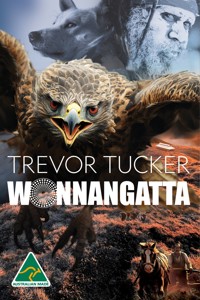
An abandoned five-year-old English boy, Leon, is rescued by a compassionate neighbouring family who adopt Leon and move with him to Australia for a better life in 1903.
Rocky, a relative of the family already in Australia, allows them to reside in his majestic country homestead, near Wangaratta in Victoria. Rocky clearly has considerable wealth, though it soon becomes clear he didn’t earn it through hard work.
Leon embraces farming and rural life in the wild colony, but unbeknown to him, he is being groomed for bigger, murkier things.
When two men are murdered on a remote cattle station, Rocky, Leon and Adam, an aboriginal man, go in search of the killer. In the process they become embroiled in cattle theft, fraud and more death.
Wonnangatta is a sweeping saga of mystery, romance and intrigue played out against the raw beauty of the Australian bush.
Das E-Book können Sie in Legimi-Apps oder einer beliebigen App lesen, die das folgende Format unterstützen:
Veröffentlichungsjahr: 2024
Ähnliche

















ALSO BY TREVOR TUCKER
Ned Kelly’s Son
A saga of Australian heritage … almost lost in history.
The Stolen Maps
Australia’s greatest maritime secret?
Aussie Anecdotes
A collection of quintessential Australian short stories.
A Sense of Justice
A tale of retribution for two unlikely Australian heroes.
God only knows when.
A look at the criminal underbelly of rural Australia and the consequences of farm invasion and stock theft.
WONNANGATTA
TREVOR TUCKER
TREVOR TUCKER PUBLISHING
Wonnangatta Copyright Trevor Tucker 2024
This edition published by Trevor Tucker Publishing 2024
All rights reserved. No part of this book may be used or reproduced by any means: graphic, electronic, or mechanical, including photocopying, recording, taping, scanning, or by any information retrieval system, without the express written permission of the author, with the exception of brief quotations in reviews or articles.
ISBN POD: 978-1-922825-353
EPUB: 978-1-922825-346
Cover Design by Leandra Wicks
FOREWORD
Two murders occurred between late 1917 and 1918 at the remote Wonnangatta Valley in East Gippsland, Victoria, Australia. The victims were Jim Barclay, the manager of Wonnangatta Station, and John Bamford, a cook and general hand.
Theories have since abounded regarding the perpetrators; some controversial, some nonsense, and a few, quite close to the mark.
Historically, verdicts of murder, by a person or persons unknown were formally handed down in both instances.
These weren’t the only murders which occurred in this same period—all in similar surroundings—but those deaths never made it into the public domain.
Regardless, the Barclay and Bamford cases have never been officially solved … unless the validity of this account is accepted as more than circumstantial.
1
I knew the “little earner” I’d created couldn’t last forever. Little, be buggered, it was a substantial operation.
With nobody to answer to but myself, nevertheless my chosen trade was a tad risky. Incredibly, because there was no practical opposition from local graziers, and currently no organised police interference, I was raking in the cash.
My trade, though frowned upon by many, was an essential service to the timber workers harvesting cedar in the remote Dorrigo region of New South Wales. In fact, their lives depended upon me. So, you see, I was active in the exploitation business, transferring meat to those hardworking axemen. Not my meat of course, that all belonged to unsuspecting, careless, and lazy graziers.
Yes, my monopoly operation was fundamentally illegal, but no one was being physically harmed, and on balance, the local blacks were willing and peaceful benefactors so long as I paid them on time and kept the grog up to them.
But, unbeknown to me, things were about to change!
Competition had also emerged, but worse, men were now hunting me, to put a bullet in my head and collect a sizeable bounty.
And, behind the closed doors of political party meeting rooms in Canberra, cattle duffing had firmly captured the attention of Australia’s sympathetic lawmakers.
Good God, please give me a break.
* * *
Of course, such rhetoric is far too expansive to appear on the headstone of a felon’s grave, regardless of how famous or infamous.
Nevertheless, the forgoing admission typified the lives of many who had lost their way.
2
I was born Leon Douglas Hart in 1881, Bristol, England, an only child in a disintegrating marriage.
Bristol was a rapidly developing and important trading town located on the river Avon, a place of real opportunity for most who lived there; but not so for my parents who lost their well-paid jobs, both fired for being argumentative troublemakers.
Unfortunately, my parents had simultaneously fallen victim to the merciless grip of the demon grog and refused to acknowledge their reliance upon it; often unaware they had left me alone to fend for myself, not caring if I was hungry, cold, and frightened.
As an infant, I don’t recall any enjoyable family times but do recall events which upset me with increasing regularity. For instance, at my fourth birthday party. Those who attended, soon departed (most of them crying) to their homes when my drunken mother disrespectfully reprimanded those who hadn’t given me a birthday present. ‘Bloody useless lot of so-called friends; go on, shove off the lot of yah,’ she yelled at them. I seldom met those kids again.
The worst event occurred on the second day I attended school. No one was there to collect me at day’s end. Somehow, I safely found my way home, albeit now a house stripped of all its goods and chattels; no sign of my parents, and not even a “sorry son” note.
The dreadful reality of being abandoned suddenly consumed me: a child should never expect to be betrayed this way. Totally confused and terrified I slumped onto the front steps and bawled.
I never did see my parents again and never saw any need to search for them.
* * *
Old man Ronnie Rosser, who lived in the house opposite, rescued me. He had seen what had unfolded during that day and admitted to me (about three years later) that he was glad to see the last of my parents. But he too had not expected they would be so heartless to just dump me with nothing but the clothes I was wearing.
What I thought would be a neighbourly overnight stay, turned into many wonderful years under Ron’s, and then his son’s care. We all got on famously. I now miraculously had the grand-father I always wanted with Ronnie, and a father, Max, to look up to. So, it seemed only right my adopted name became, Leon Rosser.
Regrettably, Ron’s health was deteriorating quickly. He was admitted to an old age infirmary in Bristol, but not before he arranged for me to live with Max and his wife, Elspeth, who owned a farm in rural Gloucestershire. Their ongoing support and guidance never diminished, and I got on well with my three stepsiblings, Fay (the eldest), Bertie (next youngest) and Paul (the youngest). Decent folk, all of them, so I guess I was entitled to later become the black sheep.
Nevertheless, as expected of me in this near perfect guardianship arrangement, I worked hard around the farm, got good school results, tried to be punctual, and saved whatever money came my way. I enjoyed every task and I’m proud I excelled in all four.
It also surprised me how quickly I became adept at riding horses: I had a natural sense of camaraderie with all four of Max’s horses who each willingly transported me to many out of the way places of neighbouring counties. This animal attraction was not confined to horses; sheep and cattle handling came easily to me and would play a major part in my later life.
As a matter of fact, it was during this time of exploration I also took a wrong turn, not in terms of forgetting the way home, but rather, I had a compelling belief that Max would be delighted if his flock of sheep was supplemented by a few more head relieved from unwitting neighbours. I never confessed those thefts, nor did Max suspect my involvement: if he did, he never raised it with me.
When I turned fifteen, I dreamt of one day having my own farm, confident in my fifth, and most effective latent ability: an unexpected liking for planning ahead and converting opportunity to my favour.
For example, I often quizzed Max on everything he knew about Australia and repeatedly dangled the potential of unimaginable prosperity and health benefits in that distant country … for all our family. Eventually, Max and Elspeth eagerly announced a major decision they(?) had been pondering for months. The prospect of free, abundant, fertile farming land, and accommodation upon arrival, was far too enticing an opportunity to consider forever remaining in England. Fortuitously, they felt it fitting I should accompany them.
So, I too, became a free settler in that new country much sooner than I had anticipated. As exciting a prospect this immigration proved, the sailing was tediously rough, uncomfortable, and often terrifying. On several occasions I recall feeling utterly dreadful, unceremoniously heaving overboard in company with one or more of my equally stricken family members, contemplating death by drowning as surely the preferred way to die.
Disembarking at Melbourne, I vowed to myself that nothing would ever get me to return by ship to England.
* * *
Upon arrival at Customs, my stepsiblings and I were soon in for a very well-concealed surprise.
In just a few seconds, most unexpectedly, Max was joyfully embracing an old, scruffily dressed and heavily bearded man. Obviously, somehow, they knew each other. After much backslapping, smiles and vigorous handshakes, Max said enthusiastically, ‘I’d like you all to meet Uncle Vincent. He’s going to take us to our destination.
‘It wasn’t easy, but Elspeth and I deliberately kept this surprise from you children. And, I’ll have you know, it was Vincent’s older brother, Ron, who first floated this idea years ago.’
‘Yeah, well maybe he did,’ I reflected, ‘but it was my influence which finally pushed Max and Elspeth into making “their good sense decision” to leave England.’
‘Anyway, Max continued, ‘Vincent has kept his word to meet us, and I’m sure he’ll keep an eye on us.’
‘Hang on there just a bit, Max,’ Vincent replied in a clear, confident fashion. ‘I go by the name “Rocky” around here, so please let’s not confuse the locals, eh?
‘Anyway, welcome all. But before we have a good chat, let’s grab your luggage and get me wagon loaded.’
An hour and a half later, with help from two of Rocky’s strong wharfie mates eager to make a bob or two, the wagon was fully loaded with our only worldly belongings which were then secured in place with stout ropes and amazing non-slip knots.
Having thanked and paid our hired help, Rocky ushered us into a tea house opposite the dock, a slightly elevated location from where we could keep watch on our wagon and the horses.
Rocky had brought five horses with him, one to pull the wagon and four others—complete with saddles and bridles—for us kids to ride. I was last to enter the teahouse, having lingered behind to acquaint myself with these beasts, all of which seemed at ease to allow me to run my hands over their muzzles and gently tug their ears.
‘You’re a bloody lucky young fella!’ Rocky confronted me as I walked into the tea house. ‘Last time a bloke tried to pat me horses, he lost two fingers: bit clean off his right hand. You’re gunna have tah tell me where you learnt that sort of stuff.’
* * *
A very pleasant meal and half an hour later, we were on our way. Rocky, Elspeth and Max were sitting shoulder to shoulder on the wagon driver’s bench, leading, and us kids following, me at the rear in case any of my stepsiblings got into difficulties with their assigned mount.
Every few miles, I pushed my horse forward to walk beside those up front. As I came abreast of each animal I would lean from my saddle and either stroke its face or firmly pat and rub its neck while simultaneously muttering my endearments and encouragement. None of them objected, but rather, seemed glad of my attentions.
Each time we stopped for a meal break or to find a suitable toilet spot, I lavished attention on my horse, then upon the wagon horse, seeing to it they had no stones lodged under their shoes, nor leg joint “hot spots”. More than once, I looked up and noticed Rocky watching me as I went about my tasks. I’d smile and he would return that smile while slowly shaking his head, as if in disbelief, I’m sure.
I must have shamed Fay, Bertie, and Paul by my actions, because Max soon gave them an earful. ‘Come on you three, you can’t leave all the work to Leon. Get your lazy backsides moving and do your bit to help.’
‘Yeah, come on,’ I said jovially enough, ‘you just might enjoy it … and besides, yah might learn something.’
Each day, Rocky would seek out my company away from the others. For about half an hour or so, we’d happily talk about horses, some of the places he’d lived and worked in his youth and, it seemed to me, that I was being tested … as if he had something in mind for me, but never really got around to telling me exactly what that might be.
On the other hand, Rocky was never rude nor disrespectful to the others; always polite and he easily cultivated an open, rapport. Most evenings as the tree’s shadows advanced across the plains, and that amazing interval when the flies had retreated and before the mosquitoes came lusting after our blood, our dinner would be eaten in quiet, relaxed camaraderie.
3
We headed north towards the town of Wangaratta, then east towards a distant mountain range. ‘The Great Dividing Range,’ Rocky nonchalantly advised us while nodding in their general direction, ‘but we’ve only got twelve miles to go before arriving at the property. It’s a deceptive view, but those mountains are another twenty-five miles or so further east.’
Mind you, it had taken us fifteen days of slog to get this far: so, no need just then, to break our normal routine and charge off.
There had been no home comforts afforded us during that travelling time, other than those provided by the few overnight guest house stopovers recommended by Rocky. The country through which we travelled was varied, vast and beautiful, but the passing of each day left us bored and lethargic, even though most of the time we were all sitting. Regardless, Rocky would call a halt every two hours, whereupon we’d gladly walk beside our mounts to not only give them a breather, but also for us, an opportunity to massage our aching backsides and leg muscles.
The early November weather was very kind to us; generally bright and sunny. The only clouds, high above, were swept into white, feathery skeins reaching from horizon to horizon.
The roads and tracks which Rocky expertly navigated, were generally in reasonable condition allowing us to make good progress. Passing traffic was minimal and usually in good humour.
Elspeth and Fay had had the foresight to bring their umbrellas, but initially, us men only had wide-brimmed hats to keep the worst of the sun from unprotected limbs and exposed ear tips. Thanks to Rocky’s nous, we novice English folk soon learnt the benefit of wearing button-down long-sleeved shirts and to raise one’s shirt collar to get some additional relief from the sun.
Fortunately, there were few occasions throughout each day when a cooling breeze wasn’t blowing to take some of the edge off the temperature.
Our wagon horse had shown great stamina and had immediately settled into his task from day one and shown a responsiveness and work ethic that I’d never witnessed previously. ‘A “waler”’, Rocky was quick to proudly point out, ‘by far me best and most important animals I’ve got; you’ll see.’
Apart from the first day when our allotted mounts misbehaved, they too had settled into a daily rhythm without too much protest thereafter.
* * *
It was not unexpected that nobody greeted us when we finally arrived at the property. But that was easily overlooked as I cast my eyes upon the magnificent sights surrounding this place.
The landscape was flat to undulating, and giant red gum eucalyptus trees were scattered throughout the near and medium distance. To the east was the telltale sign of a river judging by the continuous band of growth of different trees as far as the eye could see in both directions: the Ovens River. And of course, to the north and further east, loomed Mount Buffalo.
Post and rail fencing skirted and divided Rocky’s property into several well grassed paddocks; clearly, establishing his boundaries would have been a massive task. Three windmills were strategically positioned to catch any breeze, ensuring a constant supply of water for any stock; but right then, a little strange I thought, there was no stock to be seen.
To our left was a neat, but small and most rustically constructed cottage, and an adjacent, decrepit long drop toilet which obviously also had functionality in mind ahead of an inviting design. An equally decrepit lean-to at the rear of the hut completed the domestic layout. However, about a hundred yards to the north was another building, almost hidden by a stand of eucalypt trees which I would later learn was a purpose-built slaughterhouse.
I rode up to the wagon just as it came to a halt at the property’s entrance gate. ‘Well, this is it folks,’ said Rocky cheerfully. ‘Here, Leon, you’ll need this’. I leaned from my saddle and accepted the offered key.
I dismounted, opened the gate’s rather large padlock then easily hauled the well-hinged gate wide open.
As I led my horse through the gate, I looked up to see Max’s face; obviously shocked, mouth wide open, staring in disbelief in the direction of the cottage. In that instant, a very agitated Elspeth stood up from the wagon’s bench seat, put her hands on her hips, turned to confront Rocky and then proceeded to shout at him on top note.
‘You rotten bloody scoundrel, Rocky!’ she let fly. ‘You’ve dragged us halfway around the world … to this! Why in God’s name would you do this to us? You’ve not only deceived us, but you’ve betrayed us to boot! Good God man, even a blind man would know seven people can’t live in that hovel; what are you playing at? I’m going to report you to the police at the first opportunity and, and … ‘
I’d never witnessed anything like this from Elspeth; her usual calm and softly spoken demeanour had disappeared, totally.
By this stage, Max was also on his feet. And, judging by the ferocious look of menace on his face and his bunched fists, for a moment I thought he was about to knock Rocky’s head off.
‘Sit down; both of you, and listen,’ Rocky interrupted, albeit while trying to stifle a laugh. ‘I’m sure you both wanted a surprise, but this ain’t it.’
Max and Elspeth glanced at each other, then gradually sat down. Like me, they were baffled, and understandably both relieved.
‘Leon, please close the gate after we pass through; there’s a good lad,’ Rocky asked casually, ‘and snib the padlock. Hang onto that key but keep it safe, and don’t lose it!’
Rocky flicked the reins, and the wagon horse moved forward along a well-defined, two-wheel track which by-passed the cottage and headed towards the northern horizon of the paddock.
‘Now, Max, if you would,’ Rocky asked quietly, ‘call the kids and have ‘em ride ahead with Leon to the top of this rise. And tell ‘em to stop there and wait for us to catch up.’
4
As Rocky brought the wagon to a halt at the crest of the hill, I turned in my saddle just in time to see Elspeth’s demeanour change from tight-lipped disinterest and coldness, to disbelief, then astonishment. Initially her eyes and mouth flew wide open, but her right hand quickly covered her mouth. Her posture also altered abruptly; her head jerking upright in unison with her suddenly ramrod straight back; her shoulders squared. With her left hand she brushed off her hat, and slowly started to stand, not that by doing so the view before her could have been improved … and I’m sure I heard her say, ‘Good God almighty, Rocky; you really are a sneaky bastard!’
Max’s reaction was different: the headlock he had put on Rocky was possibly a bit too strong, but they were both laughing good naturedly. ‘Now that’s what I call a surprise, you cunning old devil; but I love you to bits,’ Max said as he released Rocky, then punched him on the shoulder as if to reinforce his words.
Before us was an almost breathtaking sight: in a clearing near the bottom of a densely populated valley of native trees, sat the most splendid homestead of traditional colonial design. Green corrugated iron sheeting adorned the roof and a wrap-around veranda, while the exterior was white and accommodated many glazed windows. The veranda was raised requiring a few steps; however, there were no handrails.
A robust chimney stood proudly to one side dominating the roof. I later learnt that this huge chimney was made from rocks selected from the creek which ran past the house about fifty yards away.
A smaller building whose architecture mimicked the house stood closely nearby, a pantry or wash house perhaps.
About forty yards from the house, a large shed sat nestled between a post and rail fence, and close behind were stock holding yards.
Realising what had just unfolded, I swung my horse around and charged down the valley with Fay, Bertie, and Paul in close pursuit.
Arriving at the house, we dismounted and quickly hitched our horse’s reins to the hitching rail. Breaking our necks to inspect inside the house we all charged for the front door.
However, we were suddenly confronted by a black man who most unexpectedly appeared from a side veranda holding a shotgun, albeit brandishing it with just the right amount of menace to put a halt to our impatient charge.
‘Hang on you lot,’ he said firmly as he pressed himself between us and the house’s fly-wire front door. ‘Where’s your manners? Just wait here until the owner arrives, he might not want to let you into his home!’
I was about to argue the toss with this somewhat belligerent fellow, but he was saved by the arrival of Rocky’s wagon. Max almost threw himself to the ground and then rushed around the wagon, presumably to help Elspeth alight. But Max needn’t have done so for she was already walking toward the veranda steps, unashamedly looking to-and-fro, smiling like a loon, and muttering, ‘Oh my God, Max, isn’t this just so beautiful. C’mon, let’s see inside, eh?’
Had Rocky not intervened, Elspeth would have walked straight into the black fellow. ‘Thanks, Adam,’ Rocky quickly called out, ‘would you take care of the horses please, then join us for a cuppa.’
Only then did Elspeth register the presence of Adam; quickly stepping back in shock and bewilderment and nearly losing her balance … only to be saved by Adam who grabbed her by the wrist to prevent her from falling from the veranda.
Adam then resumed his position, determined it seemed, to prevent any of us from entering the house. ‘Boots off first,’ he stipulated, albeit smiling broadly as he stood aside and held the front door open.
As Elspeth walked past Adam, it didn’t go unnoticed that she reached out and touched his arm and said quietly, ‘thank you, Adam.’
* * *
I was about to take my boots off but hung back. The folly of my earlier confidence—that I should have “dealt with Adam”—had sensibly evaporated. He was not only over six feet tall, but well-built, athletic … very black, and obviously much stronger than me.
His face intrigued me: receding short curly hair, prominent eyebrows, deep brown eyes, clean shaven face, and perfect, white teeth.
But it was his disposition which intrigued me most; a natural friendliness, and a ready smile, nevertheless assertive without being overbearing.
A hundred questions competed for attention in my brain, but the best I could come up with, was, ‘I say, Adam, are there any fish to be had in that creek?’
‘Oh yes, if you know where to look,’ Adam replied, ‘mainly trout and blackfish in the larger pools. You can test your luck later this arvo if you’d like.’
‘That’d be great, but we don’t have any rods or reels,’ I replied, somewhat dejected, ‘and, besides, what would I use for bait?’
‘Don’t worry about rods, we’ve got several, though they’re not necessary to catch trout; I’ll teach you how to tickle ‘em. On the other hand, we’ll need rods for the blackfish: you can only catch them late in the afternoon as the sun’s going down, and early into the night.
‘As for bait, well Leon, how about you go and get settled into your new house, while I turn the horses out. I’ll be back shortly to help unload the wagon. Easiest if you all offload as much as possible and spread it along the veranda. That way you can more quickly identify your personal belongings and get it inside before we tackle the heavier stuff.
‘After I’ve put the wagon away, I’ll meet you here, around five thirty. Then we’ll collect some bait and head off upstream to some good fishing spots I know. Oh yes, bring an old sock with you, one without any holes.
With that organised, Adam said as he walked away, ‘see you then, but don’t tell your brothers and sister; we don’t want them tagging along, not yet anyway.
‘And don’t forget to let Rocky know you’re going fishing with me, OK?’
Tickling trout, collecting bait, and learning how to handle a rod and reel, plus the prospect of night fishing for blackfish was, well, exciting … but the need for a sock had me puzzled.
* * *
As I removed my boots, I could hear Fay, Bertie, and Paul inside, laughing and talking excitedly, each claiming their room to be the best. Max met me in the hallway and directed me to my own room, yes, my own room; my own bed, my own floor to ceiling windows which doubled as a door allowing me to access the side veranda, blackout curtains, my own wardrobe, my own bookshelf, floor rugs, a lockable door … and best of all, the unexpected luxury of privacy.
I then found Rocky in the kitchen with a very attentive Elspeth, showing her the ropes on how to best control the stove’s fire without either burning any meals, or herself, and how to keep the fire just hot enough to keep the kettle boiling all day for that ever-necessary cup of tea.
As Rocky stood up after feeding the fire one last piece of wood, and before he could move on to explain anything else, I walked up to him, offered my hand, and said, ‘I dunno what I’ve done to deserve this Rocky, but thank you so much.’
‘A pleasure son,’ Rocky replied, ‘now go and see if your father needs a hand, eh?’
5
An hour later the wagon was finally empty. Adam then led the horse with the wagon attached into the large storage shed which allowed the wagon to enter at one end, and to be driven from the other end without restriction. A clever arrangement which meant all harnessing, loading, and unloading could be undertaken while protected from either the sun, or rain, or wind.
After transferring and positioning my few belongings into my room, I wandered outside again to more closely inspect this truly magnificent house and its surrounds. All exterior walls of the house and its outbuildings were painted white, hiding milled red gum, tongue-in-groove wallboards.
The veranda was also made from milled red gum, albeit much thicker, then oiled for long term preservation.
Looking up the valley, Mount Buffalo loomed huge in the distance. Close by, I could hear the small creek babbling along as it made its way to the Ovens River. And there was no lack of bird life competing for my attention: tiny wrens, some with bright blue tail feathers flittered between nearby shrubs, white-winged choughs paraded about in happy families and kookaburras occasionally burst into laughter.
* * *
True to his word, Adam arrived on time carrying two rods and a small shoulder bag. ‘You’ve got the sock that I suggested?’ he asked as he handed one of the rods to me.’
‘Yes, but what’s it for?’
‘Well, one of the best baits for trout are live grasshoppers. You’ve already seen many different types of ‘em jumping around, and some with yellow wings which make that “clacking” noise as they fly away when you disturb them. During the hottest time of the day, they’re all at their most active, and very hard to catch. However, they all slow down as the evening approaches, particularly if a cool change arrives, makin’ ‘em much easier to catch.
‘But, since we’re going to need twenty or so, how do you reckon you’re going to keep ‘em secure and still leave both your hands free to use your rod and reel?’
I got it, and burst out, ‘The sock!’
‘Right, so now, give it to me and let me show you how to secure ‘em.’
With that said, Adam moved quickly and soon caught two good sized hoppers. ‘Here, watch this.’ Gradually he rolled back the neck of the sock then thrust both insects to the toe end. Surprisingly, neither hopper was able to use its strong back legs to kick free, the spines on their legs having firmly snagged on the loose fibres of the sock. He then rolled the sock back into its normal shape, twisted the neck a few turns, then thrust the bunched up, twisted end firmly behind my belt.
‘Right, now show me how you’d retrieve ‘em before putting ‘em onto your hook.’
I fumbled getting the sock from my belt, but then carefully rolled it open until a hopper came into view. I plucked it free of the restraining fibres and then, instinctively, quickly started to roll back the neck of the sock to prevent its partner making a break for unplanned freedom.
Of course, I was too slow; I dropped the first hopper. The second one suddenly kicked and was airborne in a flash of whirring bright yellow wings, and a clicking sound as if telling me, ‘You’ll have ta do better than that to catch me chum.’
Understandably Adam saw the humour in that lesson but held his laughter in check. ‘You’ll soon get the hang of things Leon, yah just need a bit more practise.’
Once we’d caught about thirty hoppers and consigned them to my sock, Adam called a halt. For the next fifteen minutes or so, he first demonstrated how to rig the line; no sinker, just a single hook attached using a very easy, universal, non-slip knot. He next demonstrated how to feed the hopper onto the hook, and how to cast the lightly weighted line; always upstream he emphasised, for trout can only survive by facing into flowing water, which must pass over their gills.
‘I think you’re ready Leon,’ Adam said confidently, ‘so let’s now catch a fish or two. I’ll go first; you watch me carefully how I make the cast, and to where I put the bait. Don’t rush things; the rocks are slippery, and you don’t want a wet backside.’
I watched in awe as Adam slowly waded into the creek, no more than three steps. He stopped, balanced himself, then gracefully lobbed his hopper about fifteen feet upstream to a run of crystal-clear water close to the opposite bank. Relentlessly, the current dragged the hopper deeper into the pool which beckoned beneath a section of scrub whose branches overhung the creek’s bank.
As soon as I lost sight of the hopper, the loose line trailing the bait zipped forward, upstream, vigorously pulling down the tip of Adam’s rod. Adam didn’t strike immediately but waited about three seconds; only then striking, downstream, to set the hook. Those few seconds were to become the difference between assured success and a disappointing loss; the interval being the time necessary for the fish to turn and face upstream, and to commence feeding. Without that hesitation, the bait would invariably be yanked from the fish’s mouth.
Adam easily landed the fish which he estimated to be a one-pound rainbow trout, then, after wetting his hands removed the hook. ‘If the fish you catch ever swallows the hook completely, and you don’t want to keep your catch, don’t try to remove the hook,’ he said compassionately, ‘or you’ll probably kill it; so just cut the line and release it.’
That said, he returned the fish to the creek, walked up the bank, then removed his shoulder bag and handed it to me.
‘Here, you keep this, it’s got all you need in it in case you get broken off or snagged … and it’s somewhere to put your keepers.




