


14,35 €
Mehr erfahren.
- Herausgeber: Carcanet Poetry
- Kategorie: Poesie und Drama
- Sprache: Englisch
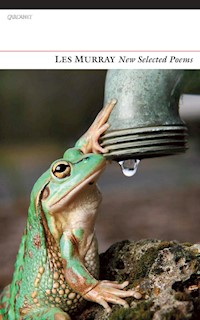
New Selected Poems contains Les Murray's gathering from the full range of his poetry, from poems of the 1960s to work from Taller When Prone (2004) and new poems yet to appear in a collection. Les Murray is one of the finest poets writing today; endlessly inventive, his work celebrates the world and the power of the imagination. New Selected Poems is the poet's choice of his essential works: an indispensable collection for readers who already love his poetry, and an ideal introduction for those new to it.
Das E-Book können Sie in Legimi-Apps oder einer beliebigen App lesen, die das folgende Format unterstützen:
Veröffentlichungsjahr: 2012
Ähnliche
















LES MURRAY
New Selected Poems
to the glory of God
Contents
Title Page
Dedication
The Burning Truck
Driving through Sawmill Towns
An Absolutely Ordinary Rainbow
Working Men
Vindaloo in Merthyr Tydfil
Incorrigible Grace
The Pure Food Act
József
Kiss of the Whip
The Broad Bean Sermon
The Mitchells
The Powerline Incarnation
Creeper Habit
Employment for the Castes in Abeyance
Driving to the Adelaide Festival 1976 via the Murray Valley Highway
The Buladelah-Taree Holiday Song Cycle
The Gum Forest
Rainwater Tank
The Future
Immigrant Voyage
The Craze Field
The Grassfire Stanzas
Homage to the Launching-place
First Essay on Interest
The Fishermen at South Head
View of Sydney, Australia, from Gladesville Road Bridge
Quintets for Robert Morley
Equanimity
Shower
Two Poems in Memory of My Mother, Miriam Murray née Arnall
Weights
Midsummer Ice
Machine Portraits with Pendant Spaceman
The Hypogeum
Second Essay on Interest: the Emu
A Retrospect of Humidity
Flowering Eucalypt in Autumn
The Chimes of Neverwhere
The Smell of Coal Smoke
Time Travel
The Dark
Flood Plains on the Coast Facing Asia
The Dream of Wearing Shorts Forever
At the Aquatic Carnival
The Sleepout
Louvres
Letters to the Winner
The Milk Lorry
The Butter Factory
Roman Cage-cups
The Lake Surnames
Nocturne
Lotus Dam
Hearing Impairment
At Thunderbolt’s Grave in Uralla
Poetry and Religion
May: When Bounty is Down to Persimmons and Lemons
June: The Kitchens
July: Midwinter Haircut
August: Forty Acre Ethno
September: Mercurial
November: The Misery Cord
December: Infant Among Cattle
February: Feb
The Transposition of Clermont
Cave Divers Near Mount Gambier
The Tin Wash Dish
The Inverse Transports
The Pole Barns
Glaze
Shale Country
The International Terminal
Granite Country
Dog Fox Field
Hastings River Cruise
Words of the Glassblowers
High Sugar
On Removing Spiderweb
The Assimilation of Background
Accordion Music
Ariel
Politics and Art
The Ballad of the Barbed Wire Ocean
Midnight Lake
Antarctia
Blue Roan
The Gaelic Long Tunes
Wagtail
Bats’ Ultrasound
Eagle Pair
Two Dogs
Cockspur Bush
Lyrebird
Shoal
Cattle Ancestor
Mollusc
The Snake’s Heat Organ
Yard Horse
The Octave of Elephants
Pigs
The Cows on Killing Day
Shellback Tick
Cell DNA
Goose to Donkey
Spermaceti
Migratory
Home Suite
The Wedding at Berrico
Crankshaft
The Family Farmers’ Victory
Dead Trees in the Dam
Rock Music
The Rollover
Late Summer Fires
Corniche
Suspended Vessels
The Water Column
The Beneficiaries
Wallis Lake Estuary
On Home Beaches
On the Present Slaughter of Feral Animals
Memories of the Height-to-Weight Ratio
It Allows a Portrait in Line Scan at Fifteen
Performance
Second Childhood is Legal
Inside Ayers Rock
Contested Landscape at Forsayth
The Shield-Scales of Heraldry
The Year of the Kiln Portraits
Tympan Alley
A Lego of Driving to Sydney
Burning Want
The Last Hellos
Comete
Cotton Flannelette
The Warm Rain
Demo
Deaf Language
The Head-Spider
Dreambabwe
Amanda’s Painting
One Kneeling, One Looking Down
The Margin of Difference
A Reticence
The Harleys
Aurora Prone
The Instrument
Music to Me is Like Days
A Deployment of Fashion
To Me You’ll Always Be Spat
The Disorderly
A Postcard
The Internationale
Oasis City
Towards 2000
You Find You Can Leave It All
Small Flag Above the Slaughter
Downhill on Borrowed Skis
The Holy Show
A Riddle
Sound Bites
In the Costume of Andalusia
Autumn Cello
The New Hieroglyphics
The Annals of Sheer
Ernest Hemingway and the Latest Quake
The Images Alone
Rooms of the Sketch-Garden
The Tin Clothes
Judged Worth Evacuating
The Moon Man
Succour
Predawn in Health
Touchdown
The Cut-Out
Visitor
Clothing as Dwelling as Shouldered Boat
Starry Night
The Kettle’s Bubble-Making Floor
Big Bang
Worker Knowledge
Jellyfish
The Great Cuisine Cleaver Dance Sonnet
Creole Exam
Hoon Hoon
A Countryman
The End of Symbol
Reclaim the Sites
The Bellwether Brush
In a Time of Cuisine
Uplands
The Pay for Fosterage
A Study of the Nude
Iguassu
Pietà Once Attributed to Cosme Tura
The Knockdown Question
The Insiders
Pop Music
The Body in Physics
Fruit Bat Colony by Day
The Climax of Factory Farming
The Poisons of Right and Left
The Top Alcohol Contender
Apsley Falls
To One Outside the Culture
Portrait of a Felspar-Coloured Cat
At University
The Young Fox
Experience
The Barcaldine Suite
The Meaning of Existence
The Aboriginal Cricketer
The Aztec Revival
The Averted
Post Mortem
The Hanging Gardens
Leaf Brims
The Statistics of Good
Twelve Poems
Travelling the British Roads
Winter Winds
The Tune on Your Mind
A Dialect History of Australia
For an Eightieth Birthday
Melbourne Pavement Coffee
Black Belt in Marital Arts
The Welter
A Levitation of Land
Through the Lattice Door
On the North Coast Line
The Nostril Songs
The Newcastle Rounds
The House Left in English
Yregami
Upright Clear Across
The Shining Slopes and Planes
The Succession
The Offshore Island
The Hoaxist
The Cool Green
Death from Exposure
Me and Je Reviens
Pressure
Church
Pastoral Sketch
The Mare out on the Road
The Blueprint
Blueprint II
Norfolk Island
Birthplace
Lateral Dimensions
Bright Lights on Earth
Panic Attack
Sunday on a Country River
Ripe in the Arbours of the Nose
Industrial Relations
From a Tourist Journal
Definitions
The Conversations
The Double Diamond
As Country Was Slow
Midi
Observing the Mute Cat
Nursing Home
Fame
Cattle-Hoof Hardpan
Phone Canvass
Science Fiction
Brown Suits
Southern Hemisphere Garden
The Suspect Corpse
Eucalypts in Exile
Cherries from Young
Croc
High-speed Bird
The Cowladder Stanzas
The Farm Terraces
Visiting Geneva
The Bronze Bull
Port Jackson Greaseproof Rose
The Springfields
Rugby Wheels
A Frequent Flyer Proposes a Name
Hesiod on Bushfire
The Blame
Daylight Cloth
The Mirrorball
Infinite Anthology
Manuscript Roundel
Natal Grass
The Black Beaches
Inspecting the Rivermouth
High Rise
Nuclear Family Bees
When Two Per Cent Were Students
I Wrote A Little Haiku
West Coast Township
Money and the Flying Horses
Sun Taiko
Child Logic
Powder of Light
Index of First Lines
Index of Titles
About the Author
Also by Les Murray from Carcanet
Copyright
The Burning Truck
i.m. Mrs Margaret Welton
It began at dawn with fighter planes:
they came in off the sea and didn’t rise,
they leaped the sandbar one and one and one
coming so fast the crockery they shook down
off my kitchen shelves was spinning in the air
when they were gone.
They came in off the sea and drew a wave
of lagging cannon-shells across our roofs.
Windows spat glass, a truck took sudden fire,
out leaped the driver, but the truck ran on,
growing enormous, shambling by our street-doors,
coming and coming …
By every right in town, by every average
we knew of in the world, it had to stop,
fetch up against a building, fall to rubble
from pure force of burning, for its whole
body and substance were consumed with heat
but it would not stop.
And all of us who knew our place and prayers
clutched our verandah-rails and window-sills,
begging that truck between our teeth to halt,
keep going, vanish, strike … but set us free.
And then we saw the wild boys of the street
go running after it.
And as they followed, cheering, on it crept,
windshield melting now, canopy-frame a cage
torn by gorillas of flame, and it kept on
over the tramlines, past the church, on past
the last lit windows, and then out of the world
with its disciples.
Driving through Sawmill Towns
1
In the high cool country,
having come from the clouds,
down a tilting road
into a distant valley,
you drive without haste. Your windscreen parts the forest,
swaying and glancing, and jammed midday brilliance
crouches in clearings …
then you come across them,
the sawmill towns, bare hamlets built of boards
with perhaps a store,
perhaps a bridge beyond
and a little sidelong creek alive with pebbles.
2
The mills are roofed with iron, have no walls:
you look straight in as you pass, see lithe men working,
the swerve of a winch,
dim dazzling blades advancing
through a trolley-borne trunk
till it sags apart
in a manifold sprawl of weatherboards and battens.
The men watch you pass:
when you stop your car and ask them for directions,
tall youths look away –
it is the older men who
come out in blue singlets and talk softly to you.
Beside each mill, smoke trickles out of mounds
of ash and sawdust.
3
You glide on through town,
your mudguards damp with cloud.
The houses there wear verandahs out of shyness,
all day in calendared kitchens, women listen
for cars on the road,
lost children in the bush,
a cry from the mill, a footstep –
nothing happens.
The half-heard radio sings
its song of sidewalks.
Sometimes a woman, sweeping her front step,
or a plain young wife at a tankstand fetching water
in a metal bucket will turn round and gaze
at the mountains in wonderment,
looking for a city.
4
Evenings are very quiet. All around
the forest is there.
As night comes down, the houses watch each other:
a light going out in a window here has meaning.
You speed away through the upland,
glare through towns
and are gone in the forest, glowing on far hills.
On summer nights
ground-crickets sing and pause.
In the dark of winter, tin roofs sough with rain,
downpipes chafe in the wind, agog with water.
Men sit after tea
by the stove while their wives talk, rolling a dead match
between their fingers,
thinking of the future.
An Absolutely Ordinary Rainbow
The word goes round Repins,
the murmur goes round Lorenzinis,
at Tattersalls, men look up from sheets of numbers,
the Stock Exchange scribblers forget the chalk in their hands
and men with bread in their pockets leave the Greek Club:
There’s a fellow crying in Martin Place. They can’t stop him.
The traffic in George Street is banked up for half a mile
and drained of motion. The crowds are edgy with talk
and more crowds come hurrying. Many run in the back streets
which minutes ago were busy main streets, pointing:
There’s a fellow weeping down there. No one can stop him.
The man we surround, the man no one approaches
simply weeps, and does not cover it, weeps
not like a child, not like the wind, like a man
and does not declaim it, nor beat his breast, nor even
sob very loudly – yet the dignity of his weeping
holds us back from his space, the hollow he makes about him
in the midday light, in his pentagram of sorrow,
and uniforms back in the crowd who tried to seize him
stare out at him, and feel, with amazement, their minds
longing for tears as children for a rainbow.
Some will say, in the years to come, a halo
or force stood around him. There is no such thing.
Some will say they were shocked and would have stopped him
but they will not have been there. The fiercest manhood,
the toughest reserve, the slickest wit amongst us
trembles with silence, and burns with unexpected
judgements of peace. Some in the concourse scream
who thought themselves happy. Only the smallest children
and such as look out of Paradise come near him
and sit at his feet, with dogs and dusty pigeons.
Ridiculous, says a man near me, and stops
his mouth with his hands, as if it uttered vomit –
and I see a woman, shining, stretch her hand
and shake as she receives the gift of weeping;
as many as follow her also receive it
and many weep for sheer acceptance, and more
refuse to weep for fear of all acceptance,
but the weeping man, like the earth, requires nothing,
the man who weeps ignores us, and cries out
of his writhen face and ordinary body
not words, but grief, not messages, but sorrow,
hard as the earth, sheer, present as the sea –
and when he stops, he simply walks between us
mopping his face with the dignity of one
man who has wept, and now has finished weeping.
Evading believers, he hurries off down Pitt Street.
Working Men
Seeing the telegram go limp
and their foreman’s face go grey and stark,
the fettlers, in their singlets, led him
out, and were gentle in the dark.
Vindaloo in Merthyr Tydfil
The first night of my second voyage to Wales,
tired as rag from ascending the left cheek of Earth,
I nevertheless went to Merthyr in good company
and warm in neckclothing and speech in the Butcher’s Arms
till Time struck us pintless, and Eddie Rees steamed in brick lanes
and under the dark of the White Tip we repaired shouting
to I think the Bengal. I called for curry, the hottest,
vain of my nation, proud of my hard mouth from childhood,
the kindly brown waiter wringing the hands of dissuasion
O vindaloo, sir! You sure you want vindaloo, sir?
But I cried Yes please, being too far in to go back,
the bright bells of Rhymney moreover sang in my brains.
Fair play, it was frightful. I spooned the chicken of Hell
in a sauce of rich yellow brimstone. The valley boys with me
tasting it, croaked to white Jesus. And only pride drove me,
forkful by forkful, observed by hot mangosteen eyes,
by all the carnivorous castes and gurus from Cardiff
my brilliant tears washing the unbelief of the Welsh.
Oh it was a ride on Watneys plunging red barrel
through all the burning ghats of most carnal ambition
and never again will I want such illumination
for three days on end concerning my own mortal coil
but I signed my plate in the end with a licked knife and fork
and green-and-gold spotted, I sang for my pains like the free
before I passed out among all the stars of Cilfynydd.
Incorrigible Grace
Saint Vincent de Paul, old friend,
my sometime tailor,
I daresay by now you are feeding
the rich in Heaven.
The Pure Food Act
Night, as I go into the place of cattle.
Night over the dairy
the strainers sleeping in their fractions, vats
and the mixing plunger, that dwarf ski-stock, hung.
On the creekstone cement
water driven hard through the Pure Food Act
dries slowest round tree-segment stools, each buffed to a still bum-shine,
sides calcified with froth.
Country disc-jocks
have the idea. Their listeners aren’t all human.
Cows like, or let their milk for, a firm beat
nothing too plangent (diesel bass is good).
Sinatra, though, could calm a yardful of horns
and the Water Music
has never yet corrupted honest milkers
in their pure food act.
The quiet dismissal switching it off, though,
and carrying the last bucket, saline-sickly
still undrinkable raw milk to pour in high
for its herringbone and cooling pipe-grid fall
to the muscle-building cans.
His wedding, or a war,
might excuse a man from milking
but milk-steeped hands are good for a violin
and a cow in rain time is
a stout wall of tears.
But I’m britching back.
I let myself out through the bail gate.
Night, as I say.
Night, as I go out to the place of cattle.
József
M.J.K. 1882–1974 In Piam Memoriam
You ride on the world-horse once
no matter how brave your seat
or polished your boots, it may gallop you
into undreamed-of fields
but this field’s outlandish: Australia!
To end in this burnt-smelling, blue-hearted
metropolis of sore feet and trains
(though the laughing bird’s a good fellow).
Outlandish not to have died
in king-and-kaiserly service,
dismounted, beneath the smashed guns
or later, with barons and credit
after cognac, a clean pistol death.
Alas, a small target, this heart.
Both holes were in front, though, entry
and exit. I learned to relish that.
Strange not to have died with the Kingdom
when Horthy’s fleet sank, and the betting
grew feverish, on black and on red,
to have outlived even my Friday club
and our joke: senilis senili
gaudet. I bring home coffee now.
Dear God, not one café in this place,
no Andrássy-street, no Margaret’s Island …
no law worth the name: they are British
and hangmen and precedent-quibblers
make rough jurisprudence at best.
Fairness, of course; that was their word.
I don’t think Nature speaks English.
I used to believe I knew enough
with gentleman, whisky, handicap
and perhaps tweed. French lacked all those.
I learned the fine detail at seventy
out here. Ghosts in many casinos
must have smiled as I hawked playing cards
to shady clubs up long stairways
and was naturalized by a Lord Mayor
and many bookmakers, becoming a
New Australian. My son claims he always
was one. We had baptized him Gino
in Hungary. His children are natives
remote as next century. My eyes
are losing all faces, all letters,
the colours go, red, white, now green
into Hungary, Hungary of the poplar trees
and the wide summers where I am young
in uniform, riding with Nelly,
the horseshoes’ noise cupping our speeches.
I, Mórelli József Károly,
once attorney, twice gunshot, thrice rich,
my cigarettes, monogrammed, from Kyriazi,
once married (dear girl!) to a Jew
(gaining little from that but good memories
though my son’s uniforms fitted her son
until it was next year in Cape Town)
am no longer easy to soften.
I will eat stuffed peppers and birds’ milk,
avoid nuns, who are monstrous bad luck,
write letters from memory, smoke Winstons
and flex my right elbow at death
and, more gently, at living.
Kiss of the Whip
In Cardiff, off Saint Mary’s Street,
there in the porn shops you could get
a magazine called Kiss of the Whip.
I used to pretend I’d had poems in it.
Kiss of the Whip. I never saw it.
I might have encountered familiar skills
having been raised in a stockwhip culture.
Grandfather could dock a black snake’s head,
Stanley would crack the snake for preference
leap from his horse grab whirl and jolt!
the popped head hummed from his one-shot slingshot.
The whips themselves were black, fine-braided,
arm-coiling beasts that could suddenly flourish
and cut a cannibal strip from a bull
(millisecond returns) or idly behead an
ant on the track. My father did that.
A knot in the lash would kill a rabbit.
There were decencies: good dogs and children
were flogged with the same lash doubled back.
A horsehair plait on the tip for a cracker
sharpened the note. For ten or twelve thousand
years this was the sonic barrier’s
one human fracture. Whip-cracking is that:
thonged lightning making the leanest thunder.
When black snakes go to Hell they are
affixed by their fangs to carved whip-handles
and fed on nothing but noonday heat,
sweat and flowing rumps and language.
They writhe up dust-storms for revenge
and send them roaring where creature comfort’s
got with a touch of the lash. And that
is a temple yard that will bear more cleansing
before, through droughts and barracks, those
lax, quiet-speaking, sudden fellows
emerge where skill unbraids from death
and mastering, in Saint Mary’s Street.
The Broad Bean Sermon
Beanstalks, in any breeze, are a slack church parade
without belief, saying trespass against us in unison,
recruits in mint Air Force dacron, with unbuttoned leaves.
Upright with water like men, square in stem-section
they grow to great lengths, drink rain, keel over all ways,
kink down and grow up afresh, with proffered new greenstuff.
Above the cat-and-mouse floor of a thin bean forest
snails hang rapt in their food, ants hurry through several dimensions:
spiders tense and sag like little black flags in their cordage.
Going out to pick beans with the sun high as fencetops, you find
plenty, and fetch them. An hour or a cloud later
you find shirtfulls more. At every hour of daylight
appear more that you missed: ripe, knobbly ones, fleshy-sided,
thin-straight, thin-crescent, frown-shaped, bird-shouldered, boat-keeled ones,
beans knuckled and single-bulged, minute green dolphins at suck,
beans upright like lecturing, outstretched like blessing fingers
in the incident light, and more still, oblique to your notice
that the noon glare or cloud-light or afternoon slants will uncover
till you ask yourself Could I have overlooked so many, or
do they form in an hour? unfolding into reality
like templates for subtly broad grins, like unique caught expressions,
like edible meanings, each sealed around with a string
and affixed to its moment, an unceasing colloquial assembly,
the portly, the stiff, and those lolling in pointed green slippers …
Wondering who’ll take the spare bagfulls, you grin with happiness
– it is your health – you vow to pick them all
even the last few, weeks off yet, misshapen as toes.
The Mitchells
I am seeing this: two men are sitting on a pole
they have dug a hole for and will, after dinner, raise
I think for wires. Water boils in a prune tin.
Bees hum their shift in unthinning mists of white
bursaria blossom, under the noon of wattles.
The men eat big meat sandwiches out of a styrofoam
box with a handle. One is overheard saying:
drought that year. Yes. Like trying to farm the road.
The first man, if asked, would say I’m one of the Mitchells.
The other would gaze for a while, dried leaves in his palm,
and looking up, with pain and subtle amusement,
say I’m one of the Mitchells. Of the pair, one has been rich
but never stopped wearing his oil-stained felt hat. Nearly everything
they say is ritual. Sometimes the scene is an avenue.
The Powerline Incarnation
When I ran to snatch the wires off our roof
hands bloomed teeth shouted I was almost seized
held back from this life
O flumes O chariot reins
you cover me with lurids deck me with gaudies feed
my coronal a scream sings in the air
above our dance you slam it to me with farms
that you dark on and off numb hideous strong friend
Tooma and Geehi freak and burr through me
rocks fire-trails damwalls mountain-ash trees slew
to darkness through me I zap them underfoot
with the swords of my shoes
I am receiving mountains
piloting around me Crackenback Anembo
the Fiery Walls I make a hit in towns
I’ve never visited: smoke curls lightbulbs pop grey
discs hitch and slow I plough the face of Mozart
and Johnny Cash I bury and smooth their song
I crack it for copper links and fusebox spiders
I call my Friend from the circuitry of mixers
whipping cream for a birthday I distract the immortal
Inhuman from hospitals
to sustain my jazz
and here is Rigel in a glove of flesh
my starry hand discloses smoke, cold Angel.
Vehicles that run on death come howling into
our street with lights a thousandth of my blue
arms keep my wife from my beauty from my species
the jewels in my tips
I would accept her in
blind white remarriage cover her with wealth
to arrest the heart we’d share Apache leaps
crying out Disyzygy!
shield her from me, humans
from this happiness I burn to share this touch
sheet car live ladder wildfire garden shrub –
away off I hear the bombshell breakers thrown
diminishing me a meaninglessness coming
over the circuits
the god’s deserting me
but I have dived in the mainstream jumped the graphs
I have transited the dreams of crew-cut boys named Buzz
and the hardening music
to the big bare place
where the strapped-down seekers, staining white clothes, come
to be shown the Zeitgeist
passion and death my skin
my heart all logic I am starring there
and must soon flame out
having seen the present god
It who feels nothing It who answers prayers.
Creeper Habit
On Bennelong Point
a two-dimensional tree
drapes the rock cutting.
Bird-flecked, self-espaliered
it issues out of the kerb
feeding on dead sparks
of the old tram depot;
a fig, its muscles
of stiffened chewing gum grip
the flutings and beads
of the crowbar-and-dynamite wall.
The tree has height and extent
but no roundness. Cramponned in cracks
its branches twine and utter
coated leaves.
With half its sky blank rock
it has little choice.
It has climbed high from a tiny sour gall
and spreads where it can,
feeding its leaves on the light
of North Shore windows.
Employment for the Castes in Abeyance
I was a translator at the Institute:
fair pay, clean work, and a bowerbird’s delight
of theory and fact to keep the forebrain supple.
I was Western Europe. Beiträge, reviste,
dissertaties, rapports turned English under my
one-fingered touch. Teacup-and-Remington days.
It was a job like Australia: peace and cover,
a recourse for exiles, poets, decent spies,
for plotters who meant to rise from the dead with their circle.
I was getting over a patch of free-form living:
flat food round the midriff, long food up your sleeves –
castes in abeyance, we exchanged these stories.
My Chekhovian colleague who worked as if under surveillance
would tell me tales of real life in Peking and Shanghai
and swear at the genders subsumed in an equation.
The trade was uneasy about computers, back then:
if they could be taught not to render, say, out of sight
out of mind as invisible lunatic
they might supersede us – not
because they’d be better. More on principle.
Not that our researchers were unkindly folk:
one man on exchange from Akademgorod
told me about Earth’s crustal plates, their ponderous
inevitable motion, collisions that raised mountain chains,
the continents rode on these Marxian turtles, it seemed;
another had brought slow death to a billion rabbits,
a third team had bottled the essence of rain on dry ground.
They were translators, too, our scientists:
they were translating the universe into science,
believing that otherwise it had no meaning.
Leaving there, I kept my Larousse and my Leutseligkeit
and I heard that machine translation never happened:
language defeated it. We are a language species.
I gather this provoked a shift in science,
that having become a side, it then changed sides
and having collapsed, continued at full tempo.
Prince Obolensky succeeded me for a time
but he soon returned to Fiji to teach Hebrew.
In the midst of life, we are in employment:
seek, travel and print, seek-left-right-travel-and-bang
as the Chinese typewriter went which I saw working
when I was a translator in the Institute.
Driving to the Adelaide Festival 1976 via the Murray Valley Highway
A long narrow woodland with channels, reentrants, ponds:
the Murray’s a mainstream with footnotes, a folklorists’ river.
The culture, on both banks, is pure Victoria:
the beer, the footy, the slight earnest flavour, the cray.
Some places there’s a man-made conventional width of water
studded with trunks; a cold day in the parrots’ high rooms.
Walking on the wharf at Echuca, that skyscraper roof:
sixty feet down timber to a dry-season splash.
In the forest there are sudden cliffs: dusty silken water
moving away: the live flow is particle-green.
Billabongs are pregnant with swirls, and a sunken road
of hyacinth leads to an eerie noonday corner.
Ships rotting in the woods, ships turning to silt in blind channels;
one looked like a bush pub impelled by a combine header.
Out in the wide country, channels look higher than the road
even as you glance along them. Salt glittering out there.
Romance is a vine that survives in the ruins of skill:
inside the horizon again, a restored steamboat, puffing.
Thinking, at speed among lakes, of a time beyond denim
and the gardens of that time. Night-gardens. Fire gardens.
Crazed wood, brushed chars, powder-blue leaves. Each year the purist
would ignite afresh with a beerbottle lens, a tossed bumper –
Heading for a tent show, thinking stadium thoughts,
a dense bouquet slowing the van through the province of sultanas.
The Buladelah-Taree Holiday Song Cycle
1
The people are eating dinner in that country north of Legge’s Lake;
behind flywire and venetians, in the dimmed cool, town people eat Lunch.
Plying knives and forks with a peek-in sound, with a tuck-in sound,
they are thinking about relatives and inventory, they are talking about customers and visitors.
In the country of memorial iron, on the creek-facing hills there,
they are thinking about bean plants, and rings of tank water, of growing a pumpkin by Christmas;
rolling a cigarette, they say thoughtfully Yes, and their companion nods, considering.
Fresh sheets have been spread and tucked tight, childhood rooms have been seen to,
for this is the season when children return with their children
to the place of Bingham’s Ghost, of the Old Timber Wharf, of the Big Flood That Time,
the country of the rationalized farms, of the day-and-night farms, and of the Pitt Street farms,
of the Shire Engineer and many other rumours, of the tractor crankcase furred with chaff,
the places of sitting down near ferns, the snake-fear places, the cattle-crossing-long-ago places.
2
It is the season of the Long Narrow City; it has crossed the Myall, it has entered the North Coast,
that big stunning snake; it is looped through the hills, burning all night there.
Hitching and flying on the downgrades, processionally balancing on the climbs,
it echoes in O’Sullivan’s Gap, in the tight coats of the floodedgum trees;
the tops of palms exclaim at it unmoved, there near Wootton.
Glowing all night behind the hills, with a northshifting glare, burning behind the hills;
through Coolongolook, through Wang Wauk, across the Wallamba,
the booming tarred pipe of the holiday slows and spurts again; Nabiac chokes in glassy wind,
the forests on Kiwarrak dwindle in cheap light; Tuncurry and Forster swell like cooking oil.
The waiting is buffed, in timber villages off the highway, the waiting is buffeted:
the fumes of fun hanging above ferns; crime flashes in strange windscreens, in the time of the Holiday.
Parasites weave quickly through the long gut that paddocks shine into;
powerful makes surging and pouncing: the police, collecting Revenue.
The heavy gut winds over the Manning, filling northward, digesting the towns, feeding the towns;
they all become the narrow city, they join it;
girls walking close to murder discard, with excitement, their names.
Crossing Australia of the sports, the narrow city, bringing home the children.
3
It is good to come out after driving and walk on bare grass;
walking out, looking all around, relearning that country.
Looking out for snakes, and looking out for rabbits as well;
going into the shade of myrtles to try their cupped climate,
swinging by one hand around them,
in that country of the Holiday …
stepping behind trees to the dam, as if you had a gun,
to that place of the Wood Duck,
to that place of the Wood Duck’s Nest,
proving you can still do it; looking at the duck who hasn’t seen you,
the mother duck who’d run Catch Me (broken wing)
I’m Fatter (broken wing), having hissed to her children.
4
The birds saw us wandering along.
Rosellas swept up crying out we think we think; they settled farther along;
knapping seeds off the grass, under dead trees where
their eggs were, walking around on their fingers, flying on into the grass.
The heron lifted up his head and elbows; the magpie stepped aside a bit,
angling his chopsticks into pasture, turning things over in his head.
At the place of the Plough Handles, of the Apple Trees Bending Over, and of the Cattlecamp,
there the vealers are feeding; they are loosely at work, facing everywhere.
They are always out there, and the forest is always on the hills;
around the sun are turning the wedgetail eagle and her mate, that dour brushhook-faced family:
they settled on Deer’s Hill away back when the sky was opened,
in the bull-oak trees way up there, the place of fur tufted in the grass, the place of bone-turds.
5
The Fathers and the Great-grandfathers, they are out in the paddocks all the time, they live out there,
at the place of the Rail Fence, of the Furrows Under Grass, at the place of the Slab Chimney.
We tell them that clearing is complete, an outdated attitude, all over;
we preach without a sacrifice, and are ignored; flowering bushes grow dull to our eyes.
We begin to go up on the ridge, talking together, looking at the kino-coloured ants,
at the yard-wide sore of their nest, that kibbled peak, and the workers heaving vast stalks up there,
the brisk compact workers; jointed soldiers pour out then, tense with acid; several probe the mouth of a lost gin bottle;
Innuendo, we exclaim, literal minds! and go on up the ridge, announced by finches;
passing the place of the Dingo Trap, and that farm hand it caught, and the place of the Cowbails,
we come to the road and watch heifers,
little unjoined Devons, their teats hidden in fur, and the cousin with his loose-slung stockwhip driving them.
We talk with him about rivers and the lakes; his polished horse is stepping nervously,
printing neat omegas in the gravel, flexing its skin to shake off flies;
his big sidestepping horse that has kept its stones; it recedes gradually, bearing him;
we murmur stone-horse and devilry to the grinners under grass.
6
Barbecue smoke is rising at Legge’s Camp; it is steaming into the midday air,
all around the lake shore, at the Broadwater, it is going up among the paperbark trees,
a heat-shimmer of sauces, rising from tripods and flat steel, at that place of the cone shells,
at that place of the Seagrass, and the tiny segmented things swarming in it, and of the Pelican.
Dogs are running around disjointedly; water escapes from their mouths,
confused emotions from their eyes; humans snarl at them Gwanout and Hereboy, not varying their tone much;
the impoverished dog people, suddenly sitting down to nuzzle themselves; toddlers side with them:
toddlers, running away purposefully at random, among cars, into big drownie water (come back, Cheryl-Ann!).
They rise up as charioteers, leaning back on the tow-bar; all their attributes bulge at once:
swapping swash shoulder-wings for the white-sheeted shoes that bear them,
they are skidding over the flat glitter, stiff with grace, for once not travelling to arrive.
From the high dunes over there, the rough blue distance, at length they come back behind the boats,
and behind the boats’ noise, cartwheeling, or sitting down, into the lake’s warm chair;
they wade ashore and eat with the families, putting off that uprightness, that assertion,
eating with the families who love equipment, and the freedom from equipment,
with the fathers who love driving, and lighting a fire between stones.
7
Shapes of children were moving in the standing corn, in the child-labour districts;
coloured flashes of children, between the green and parching stalks, appearing and disappearing.
Some places, they are working, racking off each cob like a lever, tossing it on the heaps;
other places, they are children of child-age, there playing jungle:
in the tiger-striped shade, they are firing hoehandle machineguns, taking cover behind fat pumpkins;
in other cases, it is Sunday and they are lovers.
They rise and walk together in the sibilance, finding single rows irksome, hating speech now,
or, full of speech, they swap files and follow defiles, disappearing and appearing;
near the rain-grey barns, and the children building cattleyards beside them;
the standing corn, gnawed by pouched and rodent mice; generations are moving among it,
the parrot-hacked, medicine-tasselled corn, ascending all the creek flats, the wire-fenced alluvials,
going up in patches through the hills, towards the Steep Country.
8
Forests and State Forests, all down off the steeper country; mosquitoes are always living in there:
they float about like dust motes and sink down, at the places of the Stinging Tree,
and of the Staghorn Fern; the males feed on plant-stem fluid, absorbing that watery ichor;
the females meter the air, feeling for the warm-blooded smell, needing blood for their eggs.
They find the dingo in his sleeping-place, they find his underbelly and his anus;
they find the possum’s face, they drift up the ponderous pleats of the fig tree, way up into its rigging,
the high camp of the fruit bats; they feed on the membranes and ears of bats; tired wings cuff air at them;
their eggs burning inside them, they alight on the muzzles of cattle,
the half-wild bush cattle, there at the place of the Sleeper Dump, at the place of the Tallowwoods.
The males move about among growth tips; ingesting solutions, they crouch intently;
the females sing, needing blood to breed their young; their singing is in the scrub country;
their tune comes to the name-bearing humans, who dance to it and irritably grin at it.
9
The warriors are cutting timber with brash chainsaws; they are trimming hardwood pit-props and loading them;
Is that an order? they hoot at the peremptory lorry driver, who laughs; he is also a warrior.
They are driving long-nosed tractors, slashing pasture in the dinnertime sun;
they are fitting tappets and valves, the warriors, or giving finish to a surfboard.
Addressed on the beach by a pale man, they watch waves break and are reserved, refusing pleasantry;
they joke only with fellow warriors, chaffing about try-ons and the police, not slighting women.
Making Timber a word of power, Con-rod a word of power, Sense a word of power, the Regs. a word of power,
they know belt-fed from spring-fed; they speak of being stiff, and being history;
the warriors who have killed, and the warriors who eschewed killing,
the solemn, the drily spoken, the life peerage of endurance; drinking water from a tap,
they watch boys who think hard work a test, and boys who think it is not a test.
10
Now the ibis are flying in, hovering down on the wetlands,
on those swampy paddocks around Darawank, curving down in ragged dozens,
on the riverside flats along the Wang Wauk, on the Boolambayte pasture flats,
and away towards the sea, on the sand moors, at the place of the Jabiru Crane;
leaning out of their wings, they step down; they take out their implement at once,
out of its straw wrapping, and start work; they dab grasshopper and ground-cricket
with nonexistence … spiking the ground and puncturing it … they swallow down the outcry of a frog;
they discover titbits kept for them under cowmanure lids, small slow things.
Pronging the earth, they make little socket noises, their thoughtfulness jolting down and up suddenly;
there at Bunyah, along Firefly Creek, and up through Germany,
the ibis are all at work again, thin-necked ageing men towards evening; they are solemnly all back
at Minimbah, and on the Manning, in the rye-and-clover irrigation fields;
city storemen and accounts clerks point them out to their wives,
remembering things about themselves, and about the ibis.
11
Abandoned fruit trees, moss-tufted, spotted with dim lichen paints; the fruit trees of the Grandmothers,
they stand along the creekbanks, in the old home paddocks, where the houses were,
they are reached through bramble-grown front gates, they creak at dawn behind burnt skillions,
at Belbora, at Bucca Wauka, away in at Burrell Creek, at Telararee of the gold-sluices.
The trees are split and rotten-elbowed; they bear the old-fashioned summer fruits,
the annual bygones: china pear, quince, persimmon;
the fruit has the taste of former lives, of sawdust and parlour song, the tang of Manners;
children bite it, recklessly,
at what will become for them the place of the Slab Wall, and of the Coal Oil Lamp,
the place of moss-grit and swallows’ nests, the place of the Crockery.
12
Now the sun is an applegreen blindness through the swells, a white blast on the sea face, flaking and shoaling;
now it is burning off the mist; it is emptying the density of trees, it is spreading upriver,
hovering about the casuarina needles, there at Old Bar and Manning Point;
flooding the island farms, it abolishes the milkers’ munching breath
as they walk towards the cowyards; it stings a bucket here, a teatcup there.
Morning steps into the world by ever more southerly gates; shadows weaken their north skew
on Middle Brother, on Cape Hawke, on the dune scrub toward Seal Rocks;
steadily the heat is coming on, the butter-water time, the clothes-sticking time;
grass covers itself with straw; abandoned things are thronged with spirits;
everywhere wood is still with strain; birds hiding down the creek galleries, and in the cockspur canes;
the cicada is hanging up her sheets; she takes wing off her music-sheets.
Cars pass with a rational zoom, panning quickly towards Wingham,
through the thronged and glittering, the shale-topped ridges, and the cattlecamps,
towards Wingham for the cricket, the ball knocked hard in front of smoked-glass ranges, and for the drinking.
In the time of heat, the time of flies around the mouth, the time of the west verandah;
looking at that umbrage along the ranges, on the New England side;
clouds begin assembling vaguely, a hot soiled heaviness on the sky, away there towards Gloucester;
a swelling up of clouds, growing there above Mount George, and above Tipperary;
far away and hot with light; sometimes a storm takes root there, and fills the heavens rapidly;
darkening, boiling up and swaying on its stalks, pulling this way and that, blowing round by Krambach;
coming white on Bulby, it drenches down on the paddocks, and on the wire fences;
the paddocks are full of ghosts, and people in cornbag hoods approaching;
lights are lit in the house; the storm veers mightily on its stem, above the roof; the hills uphold it;
the stony hills guide its dissolution; gullies opening and crumbling down, wrenching tussocks and rolling them;
the storm carries a greenish-grey bag; perhaps it will find hail and send it down, starring cars, flattening tomatoes,
in the time of the Washaways, of the dead trunks braiding water, and of the Hailstone Yarns.
13
The stars of the holiday step out all over the sky.
People look up at them, out of their caravan doors and their campsites;
people look up from the farms, before going back; they gaze at their year’s worth of stars.
The Cross hangs head-downward, out there over Markwell;
it turns upon the Still Place, the pivot of the Seasons, with one shoulder rising:
‘Now I’m beginning to rise, with my Pointers and my Load …’
hanging eastwards, it shines on the sawmills and the lakes, on the glasses of the Old People.
Looking at the Cross, the galaxy is over our left shoulder, slung up highest in the east;
there the Dog is following the Hunter; the Dog Star pulsing there above Forster; it shines down on the Bikies,
and on the boat-hire sheds, there at the place of the Oyster; the place of the Shark’s Eggs and her Hide;
the Pleiades are pinned up high on the darkness, away back above the Manning;
they are shining on the Two Blackbutt Trees, on the rotted river wharves, and on the towns;
standing there, above the water and the lucerne flats, at the place of the Families;
their light sprinkles down on Taree of the Lebanese shops, it mingles with the streetlights and their glare.
People recover the starlight, hitching north,
travelling north beyond the seasons, into that country of the Communes, and of the Banana:
the Flying Horse, the Rescued Girl, and the Bull, burning steadily above that country.
Now the New Moon is low down in the west, that remote direction of the Cattlemen,
and of the Saleyards, the place of steep clouds, and of the Rodeo;
the New Moon who has poured out her rain, the moon of the Planting-times.
People go outside and look at the stars, and at the melon-rind moon,
the Scorpion going down into the mountains, over there towards Waukivory, sinking into the tree-line,
in the time of the Rockmelons, and of the Holiday …
the Cross is rising on his elbow, above the glow of the horizon;




