


6,99 €
Mehr erfahren.
- Herausgeber: Corvus
- Kategorie: Gesellschafts- und Liebesromane
- Sprache: Englisch
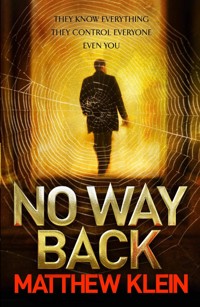
Jimmy thinks he knows about loss, about fear, about paranoia. He should think again. Every time Jimmy Thane has been faced with a crossroad, he's taken the wrong path. But after years of drinking and womanising, he has been given one last chance to save both his career and his marriage - he has seven weeks to transform a failing company. From the moment he enters the building there's something wrong - the place is too quiet, too empty. When the police come calling about the disappearance of the former CEO, Jimmy starts to wonder what he's got himself into. Then he discovers surveillance equipment in his neighbour's house, looking straight into his front room. And his wife isn't just tired, she's terrified and trying to hide it. Nothing is at it seems. Jimmy's not living his dream - he's been plunged into the worst kind of nightmare. And when the truth comes out, it's more terrifying than he could ever imagine...
Das E-Book können Sie in Legimi-Apps oder einer beliebigen App lesen, die das folgende Format unterstützen:
Veröffentlichungsjahr: 2013
Ähnliche




















NO WAY BACK
Matthew Klein graduated from Yale University in 1990. He founded several technology companies in Silicon Valley. Today he lives in Westchester County, outside New York City, with his wife Laura, his two sons and a whippet named Zeus.
In addition to writing novels, he runs Collective2, a financial technology company. He can be reached at matthewklein.org.
Published in trade paperback in Great Britain in 2013 by Corvus, an imprint of Atlantic Books Ltd.
Copyright © Matthew Klein, 2013
The moral right of Matthew Klein to be identified as the author of this work has been asserted by him in accordance with the Copyright, Designs and Patents Act of 1988.
All rights reserved. No part of this publication may be reproduced, stored in a retrieval system, or transmitted in any form or by any means, electronic, mechanical, photocopying, recording, or otherwise, without the prior permission of both the copyright owner and the above publisher of this book.
This novel is entirely a work of fiction. The names, characters and incidents portrayed in it are the work of the author’s imagination. Any resemblance to actual persons, living or dead, events or localities, is entirely coincidental.
10 9 8 7 6 5 4 3 2 1
A CIP catalogue record for this book is available from the British Library.
Trade paperback ISBN: 978 0 85789 858 6 E-book ISBN: 978 0 85789 859 3
Typeset by carrdesignstudio.com Printed in Great Britain
Corvus An imprint of Atlantic Books Ltd Ormond House 26–27 Boswell Street London WC1N 3JZ
www.corvus-books.co.uk
For Mom
(Just skip over the sex scenes, please)
I tell you a truth. No one can see the kingdom of God unless he is born again.
John 3:3
Things are not what they appear to be. Nor are they otherwise.
Surangama Sutra
CONTENTS
PROLOGUE
PART ONE
CHAPTER 1
CHAPTER 2
CHAPTER 3
CHAPTER 4
CHAPTER 5
CHAPTER 6
CHAPTER 7
CHAPTER 8
CHAPTER 9
CHAPTER 10
CHAPTER 11
CHAPTER 12
CHAPTER 13
CHAPTER 14
CHAPTER 15
CHAPTER 16
CHAPTER 17
CHAPTER 18
CHAPTER 19
CHAPTER 20
CHAPTER 21
CHAPTER 22
CHAPTER 23
CHAPTER 24
CHAPTER 25
CHAPTER 26
CHAPTER 27
CHAPTER 28
CHAPTER 29
CHAPTER 30
CHAPTER 31
PART TWO
CHAPTER 32
CHAPTER 33
CHAPTER 34
CHAPTER 35
CHAPTER 36
CHAPTER 37
CHAPTER 38
CHAPTER 39
CHAPTER 40
CHAPTER 41
CHAPTER 42
CHAPTER 43
CHAPTER 44
CHAPTER 45
CHAPTER 46
CHAPTER 47
CHAPTER 48
CHAPTER 49
CHAPTER 50
CHAPTER 51
CHAPTER 52
CHAPTER 53
CHAPTER 54
EPILOGUE
PROLOGUE
How long could the victim last?
That was always the question, when he tortured someone. Over the years, he had developed some rough rules: women lasted longer than men, blacks longer than whites. Smart people lasted longer than dumb ones, rich longer than poor. He had long ago given up trying to find reasons for these apparent truths: did the rich fight longer because they had more to lose? Were blacks better physical specimens than whites, as the racists suggested? Were men cowards and women strong?
His tools varied. Knives were effective, particularly when used to amputate, rather than stab. Stabbing was messy, but more than that, it made people frantic, unable to concentrate on the question at hand. For him, torture was about getting answers. When a victim focused on the knife hilt in his gut, his answers were incomplete.
So he would chop a finger right away, to prove his seriousness, and then another while the victim still couldn’t believe the first was gone. He’d leave the stubs on the floor, in front of the victim, little talismans of bone and skin, a testament to his power and their doom.
Even with his rough-hewn rules, he could be surprised. People he thought would break quickest often fought longest. The confident, muscular man – the former cop, the rival gang boss, the ex-Marine – might give up in minutes, after the loss of just one eye, or one testicle – and become a whimpering, snot-dripping mess. In contrast, the weak Jew, or the wispy Chinaman, or even the coked-up whore, might astound him, and last for hours, unafraid, stoic, dignified.
So how long would this one last? This victim was bound to a wooden chair, in the middle of a rude shack. Near him, a video camera stood on a tripod, recording the events with a dull unblinking eye. Black wool blankets – moth-eaten and horrid – were taped across the windows. In the corner, water dripped into a rusted sink. The victim’s ankles were wrapped with electrical tape to chair legs, a sock stuffed in his mouth. His face was frantic, breathless – but not yet resigned. There was still more work to do.
The torturer held a finger to his own lips, and said, ‘Shh.’ He said it gently, the way a nurse comforts a patient. ‘Now, shh. We can make this all stop. All of this can stop.’
The victim whimpered and nodded. He did want it to stop. He did indeed.
‘I need to know certain things. I have questions. You must answer them honestly, yes?’ The torturer spoke with an accent, which the victim knew was Russian.
The torturer reached out, grabbed the sock in the victim’s mouth. ‘I will take this out. Do not scream. No one can hear you. Yes?’
The victim nodded. Tears wet his cheeks.
The torturer removed the sock. The victim breathed hard through his mouth, in great gulping relief, as if – for the last hour – the problem had been the sock in his mouth, and not the fact that five of his fingers had been removed with a hunting knife.
‘This is better, yes?’ the torturer said.
‘Yes,’ the victim agreed, weakly.
‘You know who I am, of course.’
More a statement than question. The victim had made a point not to look at the tormenter’s face – in forlorn hope that this somehow might spare him – and even now he continued to look away. But the truth was that he did know. He knew his tormentor’s name.
‘You think,’ the torturer said, ‘that if you don’t look at my face, I will let you live. That is what you think, yes?’
‘No,’ the victim said. But he was dismayed. How had the man known his thoughts?
From outside the log walls of the shack came the sound of lapping water – the gentle sound of ocean, of pebbles skittering into surf.
‘Please,’ the victim said. ‘Please let me go.’ But his voice was a whisper, without hope, because he knew now that no words would save him.
The victim was nearly ready, his tormentor knew. Hopelessness was key. Soon answers would pour forth, unbidden. A surfeit of facts, and details – so much information that it would be hard to capture it all. It would break over them both like long-awaited rain over hard-packed earth, flooding dry gullies; and the torturer would drink it down eagerly. He would tell his victim to slow down – slow down, please – go back to the beginning, and tell him again, and focus on just one moment. The first time the victim met his wife, for example, or that summer night they listened to music under the stars – please, go back to that time again, and tell me every fact you remember – every detail: what she wore, how she smelled, what her mouth tasted like when you kissed. He needed to know everything. No detail was too small, nothing that happened unimportant.
‘Of course no one who sees my face, or hears my voice, lives to see the sun again. You’ve heard that about me? You’ve heard the stories they tell?’
The man in the chair whimpered and nodded.
‘But there are other considerations. Family, wife, friends. Their children. Do you understand?’
‘Yes.’
‘I have so many questions,’ the torturer said, taking a deep breath, as if steeling himself for new exertion. ‘More questions than you have fingers left, I’m afraid.’ He held up his knife, and laid the blade gently against the victim’s cheek. ‘Should I remove your eyes?’
‘No—’
‘Will you answer my questions?’
‘Yes. Anything. Anything you want.’
‘You must think carefully. I will ask you for so many facts! You will be tempted to ignore some details. You will think them unimportant. But details are what I care about. The smallest details. I love them, and I want to hear them. Every single one. Do you understand?’
‘Yes.’
‘Good.’ He lifted the knife from the victim’s cheek.
The victim exhaled, relieved at the apparent reprieve he was being granted.
When the next scream came, it was so loud that someone standing outside the shack would have heard it. Someone standing as far away as the edge of the beach would have heard it, muffled through the log walls – that long despairing wail of horror, rising and falling, that scream of pain and shock and disbelief.
But no one did hear that scream. No one was standing outside the shack. No one was walking on the beach. The torturer and his victim were alone.
When the screaming subsided, and turned into quiet whimpering, the torturer said, so gently that his words could have been a caress, ‘Should I take your other eye too?’
‘No, no, please,’ the man whispered. ‘I’ll tell you everything. Everything you ask. Everything.’
‘Every detail?’
‘Every detail! I promise.’
There. Now he was ready, the torturer knew. Now the man would reveal everything.
The torturer would learn everything he needed to know. He would work slowly. He had all night.
He had all the time in the world.
PART ONE
CHAPTER 1
On Monday morning, at one minute past nine o’clock, I sit in a Florida parking lot, counting cars.
It’s an old trick, the easiest way to take a company’s pulse: arrive at the beginning of the business day – on the dot – and see how many employees have bothered to show up. You can tell a lot about a company from its parking lot.
This Monday morning, in this parking lot, at this company, there are twelve cars.
Twelve cars would be a healthy number for a company with fifteen employees.
Twelve cars would be an acceptable number for a company with thirty, or even forty, employees.
But Tao Software LLC – the company that I have been hired to rescue – has eighty-five employees. That’s eighty-five full-time employees. That doesn’t include contractors or part-timers – people like the masseuse who comes in twice a week to give back-rubs, or the guy who maintains the two cappuccino machines in the kitchen.
Twelve cars. Eighty-five employees.
Even before I’ve walked through the front door – before I’ve studied the Balance Sheet or the P&L – I have all the numbers that I need. They are: twelve and eighty-five. Investigation complete.
I’m conducting my inquiry from the front seat of a rental Ford, its air conditioner blasting. I study the cars around me. They differ in hue and upkeep, but what they share is the same relentless grinding economy: a Taurus, three low-end Hondas, a couple of Nissans, and a beat-up Chevy truck with dings in the door. Nothing showy, and, more importantly, nothing that indicates that the company’s highly-paid executives have yet arrived.
I check my watch one last time, to make sure I haven’t made a simple mistake, and perhaps arrived on a Saturday, or maybe an hour too early. I’ve done both those things, once even showing up for a Board of Directors meeting on a Sunday, and then proceeding to place outraged phone calls to the homes of the other board members who were so rudely late. But I was high on coke at the time, and everyone knew it, and so we all had a good laugh.
But no, today really is a Monday, and it really is nine o’clock. There really are only twelve cars in the lot. This really is the company I have been hired to save.
I kill the ignition and open the door. The Florida heat backhands my face. My suit wilts. What was once crisp wool pinstripe has been transformed, magically, into dark wet chamois, like a rag held aloft by a Mexican when he’s done detailing a BMW at the car wash.
I trudge across the parking lot to a low-slung office. It is one of those nondescript buildings that dot industrial parks across America, an undistinguished shell behind which the actual dirty biological processes of capitalism take place, hidden from view. It is a building that reveals absolutely nothing about its occupant, save for the cheap plastic sign at the door that says: ‘Tao Software LLC’ with a swirled gust-of-air logo that, I suppose, is meant to indicate a majestic wind, sweeping aside all competition. Or it could just be a fart. Based on what I know about Tao Software LLC, I’m guessing more fart than wind.
But inside, everything changes. The reception area is chilled to the temperature of fine Chardonnay. The space is decorated like an interior design showroom. There is expensive grey felt wallpaper on the walls. Pinpoint spots highlight carefully selected furniture: a green Camden sofa; a high-gloss mahogany coffee table; a convex reception desk, chest high, gently curving across the open space like a relaxed letter S.
In my corporate travels, I have seen a lot of reception desks. I have developed a very general, but highly accurate, rule. The more money and attention lavished on the desk where the receptionist sits, the crappier the company, and the more incompetent the executives that hide behind it.
Behind this stylish and attractive reception desk sits a stylish and attractive woman. She wears a feather-weight telephone headset. She has long red hair pulled into an elaborate chignon. She wears far too much grey eye shadow, which makes her look like a very strung-out, but very chic, heroin addict. ‘Good morning,’ she says, with a voice indicating either exhaustion or severe ennui. ‘Can I help you?’
From her look, she doubts very much that she can. Perhaps it is my crumpled suit, or the sweat glistening on my face. Or the bags under my eyes. Or the paunch I’ve been cultivating for the last five years – ever since I turned forty-two and decided that working out in the gym was a hobby for younger men.
I lean over her desk, try to get into her face. ‘My name is Jim Thane.’
When the name doesn’t register, I add: ‘Your new CEO.’
She stiffens. ‘Mr Thane. I didn’t know that was you.’
Meaning: You don’t look like a CEO. Which is true. The image people conjure when they hear ‘CEO’ – a silver-haired gentleman with an imperious air and a steely gaze – surely doesn’t fit me. I’m more of the cuddly teddy-bear type. The ex-alcoholic, ex-meth addict, ex-rehab cuddly teddy-bear type. Not the first thing that comes to mind, when you hear ‘CEO’, I bet.
I twinkle my fingers around my face, like Ethel Merman singing a show tune. ‘Surprise,’ I croon.
Suddenly Miss Strung-Out is all stutters and nervousness. ‘Oh my Lord, Mr Thane. I didn’t know you were coming today. I didn’t get your office ready. Should I get your office ready? I can do that right now.’ She rolls her chair back and stands, forgetting the telephone cord still attached to her ear. When she rises, the phone yanks across her desk, skidding on rubber feet. The cord tugs her ear down sharply, as if she’s being scolded by an invisible schoolmarm. ‘Ouch,’ she says. She leans down, fiddles with her ear, and extracts herself.
Finally, she looks up and smiles.
I say: ‘And you are... ’
‘Embarrassed.’
‘Hello, Embarrassed. I’m Jim.’ I offer my hand.
‘Amanda,’ she says.
‘Do you have an intercom, Amanda?’
She nods.
‘Make an announcement. All-hands meeting. Where do those usually take place?’
‘I’m not sure,’ she says. Meaning the company never has meetings. Then again, how could they, when no one comes to work? She adds, helpfully: ‘Maybe in the lunchroom?’
‘That’s fine,’ I say. ‘All-hands meeting in the lunchroom.’
‘What time would you like it, Jim?’
‘Now.’
‘Now?’ She’s taken aback. ‘Should we—’ She peers past me, into the main office. The room is still dark, the desks mostly empty. ‘Should we wait for more people to get here?’
‘No.’
I walk through the building as if I’m a prospective buyer deciding how much to pay for a fixer-upper. Alas, this is just an act. I have already taken title, and there’s no backing out now. And I have already determined – ten yards past the reception area – that the company now in my possession is steaming corporate turd.
But, of course, that’s why I’m here. I’m a turnaround executive. A restart man. I get hired only at places that are falling apart. You won’t see me at a well-run company minting money. But if you work at a company where management has taken a mental sabbatical, where the company is burning cash like coal in a Dickens novel, where customers are as scarce as July snow, then you might see a man like me walk through the front door. If you do, by the way, it’s probably not a bad idea to start polishing your résumé.
Here’s how it works. Imagine you are a venture capitalist who invests $20 million in a Florida software company. Months go by without any obvious success. The CEO telephones you breathlessly, and announces that a few huge sales deals are just weeks from closing. But those deals never seem to materialize. The new version of the company’s software product is perpetually ‘a month away’. The old version is buggy, virtually unsaleable. Meanwhile, the company’s cash is dwindling. What do you do? Do you shut down the place, fire all the employees, eat the loss of everything you have invested so far? Do you shovel more money into the firm, and hope the incompetent CEO suddenly grows a brain?
No. You choose a third path. You call a man like me. I fly into the company, size it up, fire three-quarters of the staff, and try to salvage some value from what’s left. It’s called a restart. Perhaps I will figure out a way to sell the company to an acquirer. Or maybe I can knock a few of the engineers’ heads together, and get a new version of the product out the door, and start making sales. From the venture capitalist’s perspective, whatever I manage to do is better than calling the whole thing a total loss and writing it down to goose eggs.
Typically a restart assignment is brief – twelve months or less. I get paid a decent salary, but most of my compensation is what is euphemistically called ‘upside’. Upside is another way of a venture capitalist saying, If I don’t make money, there’s no way in hell you’re going to.
So that’s the prize. If I can turn the place around, and restart it successfully, I make millions. If I can’t, I make little. The job is half Green Beret mission, half crapshoot. You have no idea what you’re going to find until you walk through the door.
I hear Amanda’s voice on the intercom. ‘Attention Tao team members,’ she says. She speaks languorously, as if the act of making a public announcement is exhausting. ‘There will be an all-hands meeting in the lunchroom starting immediately. Repeat, all-hands in the lunchroom immediately.’
Despite the announcement, there’s little movement – just a solitary chair squeaking somewhere behind me. Indeed, for a company haemorrhaging over a million dollars of cash each month, there’s an obvious lack of brio on the floor. I see a Hispanic woman sitting in her cube, doing her nails. I pass another cube, where a young man – his back to me – is hunched over his desk with his phone at his ear, discussing what distinctly sounds like tonight’s dinner plans with his girlfriend.
The office has an open floor plan – modern Steelcase cubicles and Herman Miller chairs. Around the perimeter are small private offices. Each has a window facing the building’s exterior, and a glass wall facing the interior bullpen, presumably to allow management to keep tabs on the underlings, or maybe to allow the bigwigs to demonstrate good work habits to the rank-and-file. However, since all the private offices are dark and empty at five minutes past nine o’clock on a Monday morning, this inspirational message may be lost on employees at Tao.
From the entrance of the building, there’s a commotion. Amanda is talking to an animated – and now rather disturbed – man. He carries a briefcase. He has just entered the lobby. I can’t hear their words, but I see the man’s eyebrows arch in surprise as he mouths the word ‘Now?’ Amanda nods, says something, and points in my direction. The man takes a long look at me, then drops his conversation with Amanda without saying goodbye. He makes a beeline to me. Twenty feet away, he already has his hand outstretched, and a big smile planted on his face.
He rushes me. ‘Hello. You must be Jim. I’m David Paris.’ He says this without pause or breath, one long word: HelloyoumustbeJimI’mDavidParis. He adds: ‘VP of Marketing.’
I take his hand, shake it perfunctorily. David Paris is shorter than me, small-boned, with a wiry body that would look fine in spandex on a gym mat. Here in an office, wearing chinos and a shirt, he just looks peculiar. He has dark hair, ears the size of croissants, and eyelids pulled upward at the corners. His appearance is either the result of unfortunate genetics, or of a botched facelift. Either way, he reminds me of an elf.
‘I’m Jim Thane,’ I say.
He wags a long elven finger at me, as if I’ve been naughty. ‘All-hands meeting? I like it! Trying to shake things up a little?’
‘Exactly.’
‘Good.’ He lowers his voice to a stage whisper. ‘I’m glad you’re here. Jim. Really glad. It’s time to get some competent management in this place.’
‘I’ll do my best, David.’
The lunchroom is twenty feet square, with three sets of tables and chairs. It’s a typical corporate kitchen: stocked during a period of great corporate largess and ambition (microwave, dual cappuccino machines, cartons of Pop-Secret stacked along the wall), but depleted and worn down by tedious workday life. Several dirty, waterlogged laser-printed signs cajole the reader to behave properly: to clean the counter, wipe the microwave, empty old lunches from the fridge. There are many exclamation marks on each sign. From the look of the place, these pleas, despite the copious punctuation, have been ignored.
I go to the front of the room. The employees of Tao – the ones who have actually arrived for work – gather on the other side. There are now twenty of them. Each wears the official Software Company Uniform: slacks on the bottom, short sleeves on top. I’m the only person in the State of Florida apparently stupid enough to wear a suit and tie in August.
I clear my throat. ‘Good morning!’ I say loudly. I try to make my voice seem both authoritative and happy at the same time, but I realize, too late, that I sound like a drill sergeant getting a blow job. I lower my voice, try a more conversational tone. ‘My name is Jim Thane. As you may have guessed, I’m the new CEO here at Tao Software.’
I peer into the audience. Not a single face looks glad to see me. The most common expression seems to be mild amusement: Let’s see how long the guy in the wool suit lasts.
‘I’ve been hired by the investors in Tao. My job is to help turn this company around.’ I decide to leave out the part about how I was hired only after the previous CEO disappeared off the face of the earth, and how I was surely the last available choice to take the job, and how no one – including me – holds out much hope that I’ll succeed.
Instead I say: ‘From what I understand, there’s a lot of terrific potential here at Tao. The investors in this company are very enthusiastic. They tell me there are fabulous people here, and that the company has created a very exciting technology.’
Which is half true. The investors are excited by the company’s technology. It’s the people they could do without. Indeed, if there were some kind of capitalist neutron bomb, a device that could make people disappear, but leave a company’s intellectual property intact, the venture capitalists behind Tao would surely have deployed it, in this very lunchroom.
I continue: ‘I know a lot of you are nervous. You see a new CEO. You don’t know what to expect. You wonder if Tao will survive. You wonder if your job is safe.’
Finally, my words gain traction. People look at me expectantly. They do wonder. ‘Well, I’m not going to lie to you. There will be changes. There have to be. We need to work harder. And we need to work smarter. We need to – let me be blunt – we need to make more money.’
I say these words slowly, and let them sink in. It’s a simple point – that a business needs to make money – but you’d be surprised how often it’s overlooked. After working in the same job for a couple of years, people tend to forget. They stop thinking about their company as a business, and see it more as adult daycare. It’s the place they go to keep busy between weekends. They forget a business has only one purpose. Not to entertain them. Not to fulfil them. But to make money. For someone else. That’s all.
‘But there is good news,’ I say. ‘The fact that I’m here means that important people believe in Tao. If they didn’t, the investors would not have hired me. They would have given up. They would have shut the place down and called it a day.’
Which is not exactly true. In fact, they almost did shut the place down. When Charles Adams, the previous CEO of Tao, failed to show up for work one morning, and then disappeared without leaving a forwarding address, the investors in Tao came this close to closing the company. It was only because I managed to run into Tad Billups at Il Fornaio, where he couldn’t hide behind his secretary, and where I could relentlessly beg him for a job – any job – that I’m here. Tad is the Chairman of the Board at Tao, and a partner at Bedrock Ventures, the VC firm that owns most of the company’s stock, and which supplies its capital. More importantly, Tad was my roommate at UC Berkley. We go back. Tad owes me.
But not that much, apparently. This job is bottom of the barrel: almost no chance of success, three thousand miles from my home in Silicon Valley, geographically undesirable, and, for any other man, a sure résumé killer.
I suppose Tad thought that, given my own colourful résumé – my alcohol and drug addictions, my gambling problem, my twenty-one-day stint in the Mountain Vista Recovery Centre – a gig at Tao might be a step up. He was right. I’m a bit of a restart project myself.
I say to the assembly: ‘Does anyone have any questions?’
No one does.
‘All right,’ I say. ‘I have a question for you.’ I look at my watch. ‘It’s 9.15 on a Monday morning. I counted a dozen cars in the parking lot. My question to you is: where the hell is everyone?’
No one volunteers an answer. I notice a familiar face in the crowd. It’s the Hispanic woman whom I last observed giving herself a manicure at her desk. She’s attractive, a bit overweight. I look to her and say: ‘You. I’m sorry, I don’t know your name.’
‘Rosita.’
‘Nice to meet you, Rosita. What do you do here at Tao?’
‘Customer service.’
‘OK, Rosita, please tell me. How many employees are there at Tao?’
‘I don’t know,’ she says. ‘Eighty, I think.’
I know the exact answer is eighty-five, but I don’t correct her. Instead, I say, ‘And how many people are in this room?’
She looks around, does a quick count. ‘Maybe twenty?’
‘Maybe twenty,’ I repeat. ‘So that means that even though the workday has started, sixty employees haven’t bothered to show up. Maybe that’s the reason we’re having problems. What do you think, Rosita?’
She’s noncommittal. ‘Maybe.’
I lift my hand to my eyes and look around the room, like a man who has misplaced his car in the multiplex parking lot. ‘Are there any VPs here? Tao has five Vice Presidents, if I remember correctly. How many of them are here?’
David Paris, the elfin Marketing Vice President, waves a bony finger. ‘I’m here, Jim. David Paris, VP of Marketing—’
I cut him off. ‘Yes, I know. David’s here. Anyone else?’
A man pushes his way into the lunchroom. He’s carrying a brown paper bag, neatly folded. He was on his way to the refrigerator to deposit it. He realizes that he’s being talked about.
He says, ‘I’m Randy Williams. VP of Engineering.’ He’s in his late thirties, with a round Midwestern face and a doughy gut. He has blond hair cut in a spiky style that’s too young for him, and skin the colour of milk. He smiles, revealing a gap in his two front teeth, wide enough to ride a pony through.
I say: ‘You’re late.’
He bristles. He wasn’t expecting a public reprimand. He stutters, ‘Sorry, yes. Sorry. I know. I didn’t think that—’
I cut him off mercilessly. This is where I establish that it’s not business as usual any more. Time to light a few fires, burn the place down. I say: ‘Randy, I expect everyone to arrive at nine o’clock. Not 9.01, not 9.02, and certainly not 9.15. If and when this company turns profitable, we can loosen things up. Until then, nine a.m. sharp. No exceptions.’
I pause. I look at Randy. ‘Understand?’
He can’t believe he’s being publicly humiliated. His face turns cinnamon. ‘Yes,’ he says quietly.
‘Now then,’ I say. ‘Where’s our VP of Sales?’
I look around the room. At first no one answers. Then Rosita pipes up. She’s smiling now, clearly enjoying this dressing down of the VPs. ‘That’s Dom Vanderbeek. He’s not here.’
I hear laughter and gasps of pleasure from the edge of the room. People are looking forward to my tearing the VP of Sales a new asshole. I won’t disappoint them.
Amanda is at the far side of the room, near the door. She says, ‘Dom works from home on Mondays and Tuesdays.’
‘Oh does he?’ I say. ‘Amanda, get him on the phone.’ I point to a phone mounted on the nearby wall.
‘That phone?’ she asks.
‘On speaker, please.’
She shrugs – couldn’t give a shit – walks over to the phone, dials nimbly. In a moment, we hear ringing on the speaker. A voice answers. It’s staccato, clipped. ‘Yeah, this is Dom.’ I’ve heard that voice a thousand times: the former athlete, the macho sales guy, the company blowhard.
‘Dom,’ I say into the phone. ‘This is Jim Thane. I’m the new CEO at Tao.’
‘Jim, how are you.’ He says this like a statement of fact, not a question. The reason it doesn’t sound like a question is because it’s not. He couldn’t care less.
‘I have you on speakerphone, Dom. We’re all in the lunchroom, at the all-hands meeting, and we’re wondering why you’re not here. Since you probably have hands. And since you’re the VP of Sales.’
Silence on the line. He’s measuring me now, trying to figure out if this is a joke, or if I’m a lunatic. Finally, he decides on a course of action: he’ll be friendly and patient, try to get the new guy up to speed.
‘OK, Jim. Well on Mondays and Tuesdays, I usually work from home. It’s easier to make sales calls from here.’
‘The thing is, Dom, the sales team isn’t exactly lighting the world on fire. So I want everyone working from the office. Every day. That includes you.’
Silence again. I look at the faces in the lunchroom. Most of the people here are low-level employees, and they’ve never heard executives argue. A girl titters nervously.
‘All right,’ Dom says, finally. ‘I’ll be there first thing tomorrow.’
I shake my head, for the benefit of my audience. I say: ‘Now.’
‘What?’
‘Now, Dom.’
‘Listen, at this hour, traffic is nuts. I wasn’t planning on—’
‘Start planning. I want you here. Now.’
More silence. The room is quiet. People are titillated. They know there’s a chance that this conversation could spiral out of control, that Dom Vanderbeek could take my bait.
Everyone waits. There’s a moment when I think Dom Vanderbeek might say something sharp to me, but instead he backs down. Now I have a sense of him: he’s wily, knows not to fight when he’s at a disadvantage. He’ll wait until circumstances are in his favour.
‘All right, Jim,’ Dom says pleasantly. ‘I’ll be on the road in ten minutes.’
‘Looking forward to meeting you, Dom,’ I say.
‘Me too,’ he says, and hangs up.
CHAPTER 2
A corporate turnaround is like a murder investigation. The first thing you do is interview the suspects.
I ask Amanda where is the most convenient place to hold a series of private meetings. She points to the conference room right across from the reception area.
At first, I think the engraved plaque on the door the one that proclaims Boardroom is an ironic joke, a small-company jibe at big-company pretension. But once I enter, I realize no irony was intended. Like every other space at Tao, the room is overwrought, designed to impress. Theres a long black table, twelve Aeron chairs, a sideboard that may or may not hide a wet bar. Everything in the room is state of the art: two flat-panel video screens on opposite walls, remote-controlled halogen lighting, recessed audio speakers built into panelling, a huge whiteboard with coloured dry-erase markers.
I station myself at the centre of the table, on the long side of the oval. My message here by not taking one of the two power seats at the ends is that Im just a regular guy who wants to shoot the breeze. Which isnt true, of course, but its a CEOs job to be aware of appearances.
Lesen Sie weiter in der vollständigen Ausgabe!
Lesen Sie weiter in der vollständigen Ausgabe!
Lesen Sie weiter in der vollständigen Ausgabe!
Lesen Sie weiter in der vollständigen Ausgabe!
Lesen Sie weiter in der vollständigen Ausgabe!
Lesen Sie weiter in der vollständigen Ausgabe!
Lesen Sie weiter in der vollständigen Ausgabe!
Lesen Sie weiter in der vollständigen Ausgabe!
Lesen Sie weiter in der vollständigen Ausgabe!
Lesen Sie weiter in der vollständigen Ausgabe!
Lesen Sie weiter in der vollständigen Ausgabe!
Lesen Sie weiter in der vollständigen Ausgabe!
Lesen Sie weiter in der vollständigen Ausgabe!
Lesen Sie weiter in der vollständigen Ausgabe!
Lesen Sie weiter in der vollständigen Ausgabe!
Lesen Sie weiter in der vollständigen Ausgabe!
Lesen Sie weiter in der vollständigen Ausgabe!
Lesen Sie weiter in der vollständigen Ausgabe!
Lesen Sie weiter in der vollständigen Ausgabe!
Lesen Sie weiter in der vollständigen Ausgabe!
Lesen Sie weiter in der vollständigen Ausgabe!
Lesen Sie weiter in der vollständigen Ausgabe!
Lesen Sie weiter in der vollständigen Ausgabe!
Lesen Sie weiter in der vollständigen Ausgabe!
Lesen Sie weiter in der vollständigen Ausgabe!
Lesen Sie weiter in der vollständigen Ausgabe!
Lesen Sie weiter in der vollständigen Ausgabe!
Lesen Sie weiter in der vollständigen Ausgabe!
Lesen Sie weiter in der vollständigen Ausgabe!
Lesen Sie weiter in der vollständigen Ausgabe!
Lesen Sie weiter in der vollständigen Ausgabe!
Lesen Sie weiter in der vollständigen Ausgabe!
Lesen Sie weiter in der vollständigen Ausgabe!
Lesen Sie weiter in der vollständigen Ausgabe!
Lesen Sie weiter in der vollständigen Ausgabe!
Lesen Sie weiter in der vollständigen Ausgabe!
Lesen Sie weiter in der vollständigen Ausgabe!
Lesen Sie weiter in der vollständigen Ausgabe!
Lesen Sie weiter in der vollständigen Ausgabe!
Lesen Sie weiter in der vollständigen Ausgabe!
Lesen Sie weiter in der vollständigen Ausgabe!
Lesen Sie weiter in der vollständigen Ausgabe!
Lesen Sie weiter in der vollständigen Ausgabe!
Lesen Sie weiter in der vollständigen Ausgabe!
Lesen Sie weiter in der vollständigen Ausgabe!
Lesen Sie weiter in der vollständigen Ausgabe!
Lesen Sie weiter in der vollständigen Ausgabe!
Lesen Sie weiter in der vollständigen Ausgabe!
Lesen Sie weiter in der vollständigen Ausgabe!
Lesen Sie weiter in der vollständigen Ausgabe!
Lesen Sie weiter in der vollständigen Ausgabe!
Lesen Sie weiter in der vollständigen Ausgabe!
Lesen Sie weiter in der vollständigen Ausgabe!
Lesen Sie weiter in der vollständigen Ausgabe!




