



0,00 €
Mehr erfahren.
- Herausgeber: Candlelight Classics
- Kategorie: Gesellschafts- und Liebesromane
- Sprache: Englisch
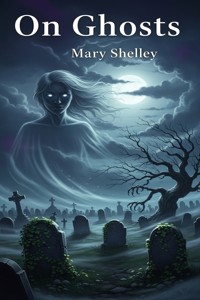
Shadows of the mind. Spirits of fear. A haunting reflection on the unseen. In On Ghosts, Mary Shelley explores the mysterious world of the supernatural, weaving together philosophical insight and gothic imagination. Rather than simply telling ghost stories, Shelley reflects on why humans are drawn to tales of spirits, the unknown, and the afterlife. She examines fear, belief, imagination, and the psychological power of the supernatural in shaping human thought and emotion. Blending essay-like reflection with gothic sensibility, this work reveals Shelley's deep interest in the boundaries between reason and imagination. A compelling piece of gothic literature, On Ghosts offers a fascinating glimpse into the mind behind Frankenstein. "A thought-provoking meditation on fear, belief, and the unseen world." Step into the eerie and intellectual world of Mary Shelley. Scroll up and get your copy today to experience On Ghosts.
Das E-Book können Sie in Legimi-Apps oder einer beliebigen App lesen, die das folgende Format unterstützen:
Veröffentlichungsjahr: 2026
Ähnliche







On Ghosts
Mary Shelley
About Mary Shelley
Mary Shelley (1797–1851) was an English novelist, short story writer, and essayist, best known for her groundbreaking novel Frankenstein; or, The Modern Prometheus, published in 1818. Daughter of the philosopher William Godwin and the pioneering feminist Mary Wollstonecraft, Mary Shelley grew up surrounded by radical ideas and literary inspiration.
At just 18 years old, Shelley conceived the idea for Frankenstein during a summer stay in Geneva with poet Percy Bysshe Shelley—whom she later married—and Lord Byron. The novel, blending Gothic horror with philosophical depth, is often considered the first true science fiction work. It explores themes of creation, ambition, and the consequences of humanity’s quest for knowledge.
Beyond Frankenstein, Mary Shelley wrote several other novels, including The Last Man, a dystopian tale of a future pandemic, as well as travel writings, biographies, and numerous short stories. Her works often delve into isolation, loss, and the tension between nature and scientific progress.
Mary Shelley remained a tireless editor and promoter of her husband’s poetry after his death, preserving his legacy while continuing her own literary career. Today, she is recognized not only as the mother of science fiction but also as a bold and visionary voice in 19th-century literature.
I look for ghosts—but none will force
Their way to me; 'tis falsely said
That there was ever intercourse
Between the living and the dead.
—Wordsworth
What a different earth do we inhabit from that on which our forefathers dwelt! The antediluvian world, strode over by mammoths, preyed upon by the megatherion, and peopled by the offspring of the Sons of God, is a better type of the earth of Homer, Herodotus, and Plato, than the hedged-in cornfields and measured hills of the present day. The globe was then encircled by a wall which paled in the bodies of men, whilst their feathered thoughts soared over the boundary; it had a brink, and in the deep profound which it overhung, men's imaginations, eagle-winged, dived and flew, and brought home strange tales to their believing auditors. Deep caverns harboured giants; cloud-like birds cast their shadows upon the plains; while far out at sea lay islands of bliss, the fair paradise of Atlantis or El Dorado sparkling with untold jewels. Where are they now? The Fortunate Isles have lost the glory that spread a halo round them; for who deems himself nearer to the golden age, because he touches at the Canaries on his voyage to India? Our only riddle is the rise of the Niger; the interior of New Holland, our only terra incognita; and our sole mare incognitum, the north-west passage. But these are tame wonders, lions in leash; we do not invest Mungo Park, or the Captain of the Hecla, with divine attributes; no one fancies that the waters of the unknown river bubble up from hell's fountains, no strange and weird power is supposed to guide the ice-berg, nor do we fable that a stray pick-pocket from Botany Bay has found the gardens of the Hesperides within the circuit of the Blue Mountains. What have we left to dream about? The clouds are no longer the charioted servants of the sun, nor does he any more bathe his glowing brow in the bath of Thetis; the rainbow has ceased to be the messenger of the Gods, and thunder longer their awful voice, warning man of that which is to come. We have the sun which has been weighed and measured, but not understood; we have the assemblage of the planets, the congregation of the stars, and the yet unshackled ministration of the winds:—such is the list of our ignorance.
Nor is the empire of the imagination less bounded in its own proper creations, than in those which were bestowed on it by the poor blind eyes of our ancestors. What has become of enchantresses with their palaces of crystal and dungeons of palpable darkness? What of fairies and their wands? What of witches and their familiars? and, last, what of ghosts, with beckoning hands and fleeting shapes, which quelled the soldier's brave heart, and made the murderer disclose to the astonished noon the veiled work of midnight? These which were realities to our fore-fathers, in our wiser age—




