


Erhalten Sie Zugang zu diesem und mehr als 300000 Büchern ab EUR 5,99 monatlich.
- Herausgeber: The Lilliput Press
- Kategorie: Gesellschafts- und Liebesromane
- Sprache: Englisch
What is the sound of a voice that is alienated from itself? How can one truthfully represent the creative process of an artist? Oona, an artist-in-the-making, lives in an affluent suburban culture of first-generation immigrants in New Jersey where conspicuous consumption and white privilege prevail, and the denial of death is ubiquitous. The silence surrounding death extends to the family home where Oona is not told while her mother lies dying of cancer upstairs. Afterwards, a silence takes hold inside her: her inner life goes into a deep freeze. Emotionally hobbled, she has her first encounters with sex, drugs and other trials of adolescence. Lyons' first novel gives voice to a female character on her fraught journey into adulthood and charts her evolution as an artist, as her adolescent dissociation is thawed through contact with the physical world, the materials of painting and her engagement with Irish community, culture and landscape. Set during the era of the Celtic Tiger and its aftermath, this is a resonant story conveyed in an innovative form. Written entirely without the letter 'o', the tone of the book reflects Oona's inner damage and the destruction caused by hiding, omitting and obliterating parts of ourselves.
Sie lesen das E-Book in den Legimi-Apps auf:
Seitenzahl: 289
Veröffentlichungsjahr: 2020
Das E-Book (TTS) können Sie hören im Abo „Legimi Premium” in Legimi-Apps auf:
Ähnliche




















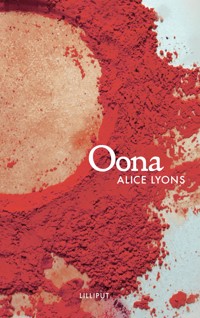
Oona
ALICE LYONS
the lilliput press
dublin
Contents
Oona (key)
I SANCTUM
Kapitel 1
Kapitel 2
Kapitel 3
Kapitel 4
Kapitel 5
Kapitel 6
Kapitel 7
Kapitel 8
Kapitel 9
Kapitel 10
Kapitel 11
Kapitel 12
Kapitel 13
Kapitel 14
2 MICHANAGRAPE
Kapitel 15
Kapitel 16
Kapitel 17
Kapitel 18
Kapitel 19
Kapitel 20
Kapitel 21
Kapitel 22
Kapitel 23
Kapitel 24
Kapitel 25
Kapitel 26
Kapitel 27
Kapitel 28
Kapitel 29
– O –
3 TEETERING IN MUSEUMS
Kapitel 31
Kapitel 32
Kapitel 33
Kapitel 34
Kapitel 35
Kapitel 36
Kapitel 37
Kapitel 38
Kapitel 39
Kapitel 40
Kapitel 41
Kapitel 42
Kapitel 43
Kapitel 44
Kapitel 45
Kapitel 46
4 THE MAW
Kapitel 47
Kapitel 48
Kapitel 49
Kapitel 50
Kapitel 51
Kapitel 52
Kapitel 53
Kapitel 54
Kapitel 55
Kapitel 56
Kapitel 57
Kapitel 58
Kapitel 59
Kapitel 60
Kapitel 61
Kapitel 62
Kapitel 63
Kapitel 64
Kapitel 65
Kapitel 66
Kapitel 67
Kapitel 68
5 SHITE
Kapitel 69
Kapitel 70
Kapitel 71
Kapitel 72
Kapitel 73
Kapitel 74
Kapitel 75
Kapitel 76
Kapitel 77
Kapitel 78
Kapitel 79
Kapitel 80
Kapitel 81
Kapitel 82
6 CLASHYBEG
Kapitel 83
Kapitel 84
Kapitel 85
Kapitel 86
Kapitel 87
Kapitel 88
Kapitel 89
Kapitel 90
Kapitel 91
Kapitel 92
Kapitel 93
Kapitel 94
Kapitel 95
Kapitel 96
7 GALILEELEELEELEELEELEELEELEELEELEELY
Kapitel 97
Kapitel 98
Kapitel 99
Acknowledgments
Mirror is going really badly. Nobody has any idea of what it’s about. All hopeless. Sizov saw it in order to decide the question of the two parts, and he had no idea what it was about either. The material keeps falling apart, it doesn’t make a whole. Altogether it is all hopeless.
—Andrei Tarkovsky, diary entry, 17 March 1974, Moscow.
Your soul is just a length of baby.
—Fanny Howe
Oona (key)
i sanctum
1 (Diminished)
2 (In-baby-side)
3 Maybe
4 Star
5 Island
6 (IIIIII)
7 Chastity Belt
8 Explain
9 Sanctum
10 There Was the Day That She
11 My Feet Felt Everything
12 Where Can I Dig?
13 (___na)
14 Paint Speech
2 michanagrape
15 Ranch Me
16 Crazy Mare Mall
17 Mustard Shag
18 Dürer’s Hare
19 Mike Zwick
20 Michanagrape
21 Leaf Litter
22 Plexus
23 Clap Clap
24 Patersin
25 Annie Squarcialupi
26 Bra
27 Typewriter Supplies
28 Bubble Wrap
29 Charred Vine
– o –
3 teetering in museums
31 Ari Feldman
32 Drug-Drenched Paper Scrap
33 Trader Vic’s
34 Ireland 1980
35Speech is a planting but not everything thrives
36 Teetering in Museums
37 Feelings
38 Venetian Red
39 In Abeyance
40 Haystack
41 There Is a Snake That Warms Itself in the Sun at Certain Times
42 Payne’s Grey
43 Help
44 Bench, High Line
45 Painting a Dead Man
46 Citizen
4the maw
47 The Maw
48 Near Leitrim
49 In the Village
50 List
51 Sliabh an Iarainn
52 Muddy Jar
53 The Art & Writing Level
54 Dismember Remember
55 Pile: Midsummer’s Eve
56 Cian the Barbarian
57 A Fabric
58 Lace Curtain
59 Backfill
60Write It
61 Septic
62 Current
63 Match Sunday
64 Tea
65 Mullingar Latte
66 Archive
67 Man-Wig
68 Burnt Umber
5shite
69 Peak Mutter
70 Thuds
71 Gab
72 Urban Farms Revisited
73 Gall
74 Trailer
75 Treatment
76 Paper
77 Village Pets
78 Yeller
79 Dark Beans
80 Wake
81FUCK THE EU
82 Sea Swims (early spring)
6clashybeg
83 Sandglass
84 Cash
85 The Fletchers
86 Legless
87 Silverfish
88 Philip G.
89 Self Painting
90 Rick Three-Sticks
91 Saskia
92 Mutt-Mass-Car-Park Face
93 Drawing Inishmurray
94 Suddenly
95 In the Rainwater Barrel
96 Bleachgreen
7 galileeleeleeleeleeleeleeleeleeleeleely
97 Unlimitedness
98 Pastry Blender
99 Sea Swims (summer)
I SANCTUM
1
I have diminished myself relentlessly.
Why?
Because these fragments –
because I am in pieces.
2
When I was a baby, she said, Oona, say WATER. WA-TER.
I held her gaze, set my teeth, parted my lips. Then sent air and spittle between my teeth: TSISST TSISST.
Bubbles tickled my lips.
Unh. Unh was her reply.
Oona, say WA-TER. WA-TER.
I’m saying it!, I felt/said in-baby-side.
TSISST (bubbles) TSISST (bubbles). Syllables I said emphatically and with her WA-TER rhythm.
This made her laugh. I made her laugh.
3
Maybe
she didn’t get the time.
she figured telling me equalled death.
she decided that silence was life.
she knew I knew and figured that was plenty.
she hadn’t the right terms.
she said terminal cancer and I didn’t hear.
she didn’t think I’d mind.
she prayed a miracle’d change everything.
she was afraid it’d kill me.
she was afraid it’d kill her.
she didn’t want heartbreak.
she didn’t want my heartbreak.
she figured if she kept the truth in, the truth mightn’t be true.
she’d rather live with the lie than die with the truth.
she didn’t think.
she was thinking but I didn’t figure in her thinking.
she’d rather die than tell me she was dying as that meant it was true.
she figured she’d let me fill in the blanks.
she kept telling herself she’d tell me the next day.
She died the next day.
4
We lived in a family.
A dad. Her, me.
Her laughing. Me making her laugh. Me making her tea.
Her reading me the Arabian Nights my head in her lap.
Dim lamplight.
Blue TV sheen in the middle distance.
Her bright mind, sharp and fierce.
Her mind a star that fell in a blue lake.
Way she pursed her lips when she deep-smiled, eye edges creasing.
Braid between us unbreakable at the chest area.
Yes, the heart.
5
Ireland is an island.
Arrived age nine and Ireland invaded.
Green green green talk talk talk grey sky grey sky grey sky – very near – hedge hedge wall wall bull sheep sheep sheep ass ass wall wall wall cart cart cart sheep sheep sheep calf sheep calf calf bull bull bull wall turf fire turf fire turf fire turf fire.
Acrid turf burn scent breath printed in me.
Relatives chatted
flagrantly.
Claimed as family by them.
Great Aunt Margaret in a hairnet and slubby cardigan.
UncleAuntMargaretNualaBernadineGerardineMarianPatriciaFrancesIda.
They hadn’t much.
Cattle, an ass, turf in the barn.
Wet farm.
Me in my pressed white shirt making the limewash walls seem blue-grey.
Yes, I am a Yank with my trimmed hair and well-laundered dresses.
I wasn’t an I.
My edges blurred.
Ireland filled me up in the places I wasn’t.
Big suburb gaps in me.
Mist, which they call misht.
Uncle Ant cut peat and gave me a piece.
I wrapped it in newspaper and stuck it in my blue Pan Am bag.
Desire.
It was in the way way back in my walnut cabinet.
A teenage Tuesday I hunkered in, grabbed it
then stuffed it further, deeper in the dark.
6
I I I I I I I I I I I I I I I I I I I I I I I I I I I I I I I I I I I I I I I I I I I I I I I I I I I I I I I I I I I I I I I I I I I I I I I I
All my I’s islanded.
A track.
My running self-stitch, repairing.
The Islands can’t link up.
There is a missing thing which I must write.
Find.
In time.
I I I I I I I I I I II I I I I I III I II I I I II I I I I IIII I I I I I I I I I I II I I I I I I II I II II III IIIIII II III II II II II II II IIIIIII II I I I I I II II I II II II II II III I II II I I II I I I II I
7
I remember seeing it in a display case in Venice, with Her. It was the Big France-Germany-Switzerland-Italy-Austria-Netherlands-England-Ireland American Express Bus Trip a few years after the Big Ireland Trip. I was twelve. The chastity belt in decaying leather and crude metal with a fist-sized ring. Sharp spikes went in at the centre like a reverse sea urchin. The belt guarded the lady’s labia and vagina, preventing entry. If the man put his bare dick in that thing, he’d be cut bad. If she sat, the spikes’d dig in. She’d be sliced up and infected and there’d be sepsis and death.
This was in the sixteenth century.
As I grew up, I created my special chastity belt.
It was invisible but palpable, cinching seed-me.
Seed-me was dark and deep and if I gazed in, I’d get dizzy.
Spin and fall. Get eaten up.
Desire was in there, a bit decrepit already.
Let me explain.
Try.
8
EXPLAIN.
Term that frikens me.
9
Papier-mâché was the chief material. I mixed white wheatmeal and water – made a paste. Blew up a rubber sac with air and wrapped it with wet newspaper strips. Brushed it with the wheat paste and put the thing by the fireplace. When it was dried, I stuck a needle in and burst the rubber sac. Then I had a vacant white sphere, a little bumpy, but serviceable.
The kitchen table was my science lab that weekend: it was newspaper-strewn, paint in jelly jars with brushes stuck in, papier-mâché dust, public-library texts, lined paper with handwritten scrawls, weird little diagrams. I sawed the sphere in half with her serrated knife taking care that the edges weren’t jagged. I painted a half-sphere’s curve with a black pupil, a blue iris and multiple spidery red veins that curved with the sphere’s curve and bumped a little where the papier-mâché was uneven. The Eyeball.
In the remaining half-sphere’s cave, I built the retina, the receiving place, the sanctum. My intent was making real the device that seemed the Everything Instrument in my as yet brief life. If science permitted dissecting myself I might find my place within the field. The science field.
I liked fields. Mulligan’s field was the place where we played best, where Li-my-friend and I had met picking daisies when we were three. That was the myth we created. We. In the field. Where we were. Where I was. Was I there? Where was I? I was in the eye I felt. Even if I didn’t feel very real, yet my eye was.
In my best Palmer penmanship, I scrivened IRIS, PUPIL, RETINA, SCLERA and defined them, taped the index cards beside the papier-mâché replicas.
The science assignment was due Tuesday.
10
There was the day that she
I’d been in classes all day. Dad was at the plant. A regular day with her in her bed and nurses at her side and us absent. But it was a different day because last night the nurses had called me in. By her bedside. Her eyes. Where she wasn’t. They were just whites, the irises disappeared back in her head. Skin like vellum, lips parched, rimed in white crust. Clearly she was busy dying. They’d never said cancer. They’d never said terminal. They’d said tummy bug, thus the drip and the meals she lacked.
This night, the nurse said, Say night night.
I didn’t say night night. I said Bye.
That I held her in my yes heart.
She said, Pray.
I didn’t pray. Didn’t get what praying was.
I left, went in bed, muffled my cries in my mattress. Wet it with my tears. Next day, I left the bus and walked Mulligan’s field as I always did at three-ish. There were pine trees between me and the cul-de-sac where we lived. I heard Mrs Dagger’s Cadillac (Ruby Red) start up nearby. Big rumble and I knew.
The Cadillac engine ignited the truth.
The Cadillac engine busted up the lies.
This I knew, just knew:
She died while I was in freshman classes and Dad at the plant. Nurses with her.
Mrs Dagger was intercepting me. Li-my-friend was her daughter. Mrs Dagger had been called by my father because she had died and I wasn’t permitted see.
A child can’t see death in this suburb we lived in.
Cadillac between me and the real – that she was dead, had been dying, that I’d been kept away.
Furtively between parted curtains in Li-my-friend’s place, I watched funeral men put her in the hearse when Mrs Dagger wasn’t watching. A stretcher with a stick wrapped in sheets she was. Night night. Slid in the black hearse and away.
Days later they put her in a dank dark gash in a cemetery with sterile granite placemats marking the dead there. All the names made plain. American. Sign with a red circle read: WREATHS AND FLAGS IMPEDE GRASS CUTTING. Wanted is this big dead lawn, easily maintained. Flat. She in there unvisited.
She never said
They never said
Then I never said.
Inside.
11
Day she died filled with textures
my feet felt everything:
ridged rubber bus steps I descended
gravel and salt – the January suburb street
Mullligan’s field crabgrass and hay stubble already freezing
greasy tiles in Dagger’s stale kitchen
gritty brick-edged cement steps that led up
where Dad was waiting in the hall
unfixed blue slate hall tile
way it ferried my feet a laggard inch
his camel Chesterfield flapped like an empty tent
I ran inside
cigar smell, gaberdine hand
tinkling bus change
day I ascended
12
Where can I dig?
In that silence.
Years, days, minutes when I didn’t hear myself
my largest sea part, the part with tides.
Write that unheard language.
Where I wasn’t
myself and further.
Later walked up the aisle twice thinking I knew myself when I didn’t duh.
Writing is plaiting.
A landscape, a fading language, a weird suburb.
Veer.
Plait.
13
My name is __na
My name is __na
My name is __na
My name is __na
My name is __na
My name is __na
My name is __na
na na na na na na na na na na na na na na na na
na
na
na
na
na
na
14
Lamp Black deep dark clarity. Inky night-time. Titanium White chalky, assertive. Zinc White weaker, lacking tint-verve. Ultramarine Blue can be black in a puddle until the hue leaks wild at the pinguid edges. Cerulean Blue – very much itself, unkeen re: mixing. Cerulean likes singleness. Viridian Green – middling. Terre Verte, a bit weak but it has its place. Cadmium Red, Cadmium Yeller in light, medium and deep types: nuclear hue. Raw Sienna: earthy, muddy. Burnt Sienna, in the nutmeg family while Burnt Umber is a melted Hershey Bar. Raw Umber greenish yak dung. Alizarin: thin, winey and inky. Permeates everything. Same with Prussian Blue – my least-liked pigments – the bad way they behave, bullying everything.
2 MICHANAGRAPE
15
I was split-level like the Panzavecchias’ ranch-style place where Apache Street and Pawnee Lane met. Upstairs, in the sunlit-den me, I was nice. Read all the signals, was well-behaved. Acted as if she wasn’t in bed always uneating with a drip in her arm, nurses at her bedside, busy dying. Attended cheerleading practice as usual. In a basement party with mates, I admitted she might actually be terminal – cancer I guessed, explained I hadn’t seen her eat in weeks, that we had nurses all day and all night at her bedside.
Terry in the sweaty teenage basement gathering, when I’d said my bit, hissed, Shh. Think it and it might happen!
Her champagne terrier hair became white, wan and patchy. I knew.
Sister Eugene, a nun-relative I’d barely ever seen, was making frequent visits. I knew.
Her sudden relenting – letting me get my ears pierced at twelve rather than at sixteen, as decreed when she’d dug her heels in years back, and I had hated her strictness. I knew.
Drip in her arm. I knew.
Her in bed at Thanksgiving. I knew.
Then at Christmas. I knew I knew.
The paper scrap with her handwriting and all the names and the jewellery items they’d get. I knew I knew I knew.
In this underside split-level ranch me, I was aware. Truth leaked in unimpeded. In my basement air were sensings. Temperatures, shivers, plummets, eruptings, tightenings, releasings, halts, acidic pulses, warmings, freezings, spikes, gluts, glitches, cryptic, slight registers, trembles, gurgles. As the adults in my midst talked, walked, were – all these sensings happened. I registered them silently, packed them all away in my split-level ranch basement space, dragging this feeling-bag everywhere with me.
I knew I knew I knew. In the feeling-bag I knew.
I wasn’t mute. It wasn’t like that. I was actually cute and I talked talk a Jersey teen talked:
Pick me up at this time talk.
Bus arrives at such-and-such a time talk.
Can I buy a Perry Ellis sweater? talk.
Will Ken call? talk.
Janet Crutch is a bitch talk.
What’re we having at dinner? talk.
I was slaving away at being the average teen. The things I said were unremarkable. The thing I didn’t remark: HELP.
The bridge between my head talk and my belly talk was fucked up. Actually, there wasn’t a bridge. Just the upstairs and basement ranch with an absent staircase. Dual levels, each having a life by itself. Chastity-belted I was in my middle. Cinched at the waist tight.
This split-level place. M-ther – missing.
Her cleaning knack: the scrubbing, shining, bleaching and refreshing ability. The saucepan-gleaming gift. The creative dinner-making, setting an abundant table each evening. Leaving appliances, sink, surfaces, tiles all twinkling. Nary a breadcrumb, nary a greasy splatter anywhere. Smithereened after she died, her gleaming kitchen had a greasy film that defied scrubbing. Rescue Pads, little lime-green rectangles, scrubby cleaning things. These were her washing-up implements. Afterwards, Rescue Pads never did the trick, didn’t live up their name.
The laundry still smelled like bleach and pets. Bleaching stirring stick in the bleaching basin leaning in the laundry sink. Plaid blanket pet bed still creased in her neat way. Bench with the spindled back – she paid the antique man a pittance – standing tall in the hall. Stickley desk beside it. Upstairs, drawers stacked with her beautiful sweaters infused with her smells. Tweed suit she’d picked up in Galway. These things she selected. Just sitting there dumbly, accusing in their thingness. In their silence.
Winds blew up the stairs, in all the spaces we’d lived in. Everything shivered. If I knew she was dying upstairs in the single bed while it was happening, maybe I’d have released my attachment a little bit. As it was, it was excruciating living with things, in this place she wasn’t but was. I was thirteen. Class, friends, beginner’s sex, keg parties. The best time in life,adults had repeated. Enduring manic and depressed Dad.
In the upper ranch, I was stiff-lipped. I was present in principle. Captured by Dad’s camera in Super 8 mm cheerleading films, in snaps at art fairs, my painting and drawing medals displayed at family gatherings, smiling. Well, I was spreading lips, displaying my teeth. In the under-level, sensings turbidly swirled but upstairs I was unaware. Dragged this gut-suitcase everywhere with me. It was inaccessible luggage. Like the tree with the awful malignancy in its svelteness. A gall it’s called. Ink was made with it in the past. Me lugging this gall everywhere.
I read: gulag narratives, kulak sufferings, Nazi shits killing everything.
Ukrainian and Irish famine tales, Native American massacres.
The hard lives: refugees, ‘asylum seekers’, exiles.
The friend that had been in hiding during the Red Khmer time;
they’d killed her medic parents. I empathized and used such narratives as an escape.
My empathy was a guise, in part.
Pain is pain is pain.
I parcelled mine up, sent it away, put it in elsewheres,
scattered it everywhere thinking I might shift it,
in bad faith with myself.
Did I shatter in a flash like an incendiary device?
Did I particle-ize the minute she left us?
It happened gradually.
A hundred girls in pleated check skirts scattering: all me-pieces.
Self. Effervesced.
I chased extremities, margins, elsewheres.
Liked maps.
Ran ran ran filling that self space up with literatures, art, travels,
learning (all the degrees I accumulated), yearning.
Had a brain and creativity.
Writing, painting, drawing.
Spent years in academe’s verges.
(Never in the centre; I was invisibility-dedicated.)
Teachers were always a little surprised at my well-written papers
because I didn’t speak in class.
Filled up with their praise, I felt affirmed,
briefly.
Sure I knew I was missing a Thing I Needed.
What?
It was In There but inaccessible.
I kept travelling away, leaning elsewhere.
16
I am dying, daughter, I can’t bear parting.
My life has been brief. The me that will never blaze – I grieve it.
A keen that breaks the riverbanks
breaks the weirs and falls
breaks the river itself.
[Unsaid. Unheard]
And the dead are piling up in the spaces between the displays – striped sweaters, checked shirts, cashmere scarves, patent leather handbags. Ancient wrinkled deads that sailed here, emptied shtetls, Tipperarys, slave ships. We squeeze past spectres packed like gauzy curtain displays in the Crazy Mare Mall in Patersin, a disused silk mill where bargains are attained. Malignant smell in the mill, in the Passaic River rushing beside. Anne Klein winter jackets, frilly shirts, practical cardigans, ladies’ slacks and pleated skirts – racks and racks extending infinitely in the dark brick mill – where New Jersey denizens get their gear at keen prices.
A single-armed, un-alive lady fingers designer fabrics, as she regards the beings that are still living, the energy they put in the buying act. Her missing arm was ripped asunder in a mechanized jacquard-weaving accident back in the day in the Silk when the mills in Patersin were belching steam, belching finished silk textiles, belching immigrants at day’s end.
She sidles up with the bargain-hunting, peppy human beings. Their single-minded gazes are fixed in the bins, in the breezy displays and sample piles, the unbelievable bargains. Perry Ellis is available as well. A red running mare is stitched in the labels, blaring in signs and packaging. We are branded with the Red Mare brand in the mill that became the mall.
17
Shag carpet in mustard hues, resembling barf in my place. A rust and reddish bedspread with white curved bands arranged like waves in the sand where currents have made rivulets. Curtains in the same fabric. High library shelves with cabinets at the base, stained dark walnut. Metal grate in the ceiling that emitted freezing air in summer. Birch branches with green in their arms. All that animated green life – packed in the panes. It was like living in a winter tree, clinging in the branches and taking what shelter there was. Remembering the fullness in the leaf years, the changing textures, tints and scent that had garlanded the branches.
Sunlight played in the barf shag carpet where I lay vinyl-listening at eye level with the shag hair dust detritus particles that snagged in the pile. Sunlight caught in the plasticky clear filaments. Unnatural, sickly textile. The nice natural fibre rug in the den had been fitted when she was in her right mind. When she was well and imagining life as an extended thing. The shag was installed after she’d had X-rays because it was easily maintained and in style. Just get it in there and die.
The stale air in the barf-hued chamber enlivened after we visited the mall with Aunt Reet. The Crazy Mare Mall had Perry Ellis, Liz Clayburn and Calvin Klein. Sweaters in fall. New slacks, skirts, new styles. Tweeds. Ah. Make me new make me new the garments said. Buy me and be changed by me. Be changed.
The mills had manufactured silks that haberdashed wealthy NYC families where my granny Jane had been a maid. But after the 1913 silk mill strike, after my badged grandad had cracked strikers’ heads with his billy club, the mills had shifted – in a fifty-year span they became airy brick retail spaces selling designer gear made in China that we in the suburbs craved after we’d ditched ‘Red City’, its tenements, anarchism and shit status. After we jilted the immigrant mantle.
Paper bags stuffed with purchases crunched up the stairs plunked deep in the shag. Crêpe paper perfume and crinkle. Plastic wrappings deflated with vehement exhales as they were punctured and gave their stuff.
I was cheered by new stuff in sexy swells, a slight shift in the way I felt in myself, a freshness in new hues, textures. I liked flannels, tweeds, graph prints, stripes, Shetland sweaters, matelassé anything, alpaca, cashmere sweaters, chambray shirts, gaberdine menswear, eyelets, summer ginghams, seersuckers, linens, winter camelhair, jersey in spring, pelisses any time. Maybe they were a key. Maybe they’d make life like the girls in the magazines. They had real lives while mine in the chamber was vague. The purchases might take me away – but it wasn’t very far.
Fabrics helped but remained at my edges. Their pleasure quickly fading. The stuff didn’t penetrate, didn’t shift seed-me layered in there silent, watching. The way they replaced her a little bit. Her feel-smell-presence. Fabrics were her and they were vehicles that might take me away. Fabrics had sex, that ebbed, that didn’t bide. The her place and the sex place weren’t distant. Nuzzling her was the start and sex later streamed in that same place. Flinging that humid human nestness further afield was sex’s passage in future.
The mustard shag chamber had library shelves, a feature she liked, she that didn’t study after age sixteen but that built shelves and squeezed in a degree in library science at her life’s finish line. I recall her returning Fridays after a day at the public library, where she was part-time, with titles I’d greedily read. The case in the chamber had maybe six shelves starting high up near the ceiling and ending at hip height where the shelf widened. Beneath were cabinets. The shelves and cabinet were stained a deep dark black walnut. In the walnut-stained cabinet, behind the walnut-stained cabinet sliding panel, with the circular, brass-lined indent in the timber that held an index finger and let the panel slide in a channel, there were albums (Dylan, Street-Legal, CSNY, Stevie’s Tunes in the LifeKey) and, tucked in the back, that thing wrapped up in paper.
The bundled-up thing was bread-sized and light. Unevenly shaped. It had been in the cabinet since 1969. It had heft, but the American central heating desiccated it. Uncle Ant had cut this turf with a slane in Curraghard. With intrigue I had lugged and stuffed it here. In Ireland with him and his daughters we turned the cut turf and it baked in the sun when there was sun. That the dried earth was burned in my relatives’ range was fascinating. Elemental earth burned and spread particles creating an acrid-sweet scent in the evening air that, when smelled, always kindles that first trip ‘back’.
Uncle Ant must have seen the charm the turf had with me. ‘Why, take it, sure,’ he suggested, laughing at the idea, which I was pensive with.
I’d never have asked, never knew I even wanted it that bad. The turf was wrapped in the Ballaghadereen News, and at the Great Western Inn, I placed it in my blue Pan Am bag, flew Newark-wards with it.
18
In time back when she lived. When she smelled up the car, when her fingers drummed and fingered the fluted-like-pie-crust Buick steering wheel. When she reached her arm instinctively, braced me in the bench seat beside her every time she hit the brakes in rainy streets. Her presence pulsing, fragrancing the space. Breath-warm car, car where we faced the same way: street signs, lights, suburban streets, Jersey sights like malls, highways, bargain basements. Car she’d furtively park at the side, dig up wild tiger lilies in Wayne and replant in her garden beside the azaleas. Tiger-lily thief. Car where, when smaller, I backseat slept, cheek mashed in the leatherette wetted with my deep-sleep spit. Then we ended up in Atlantic City and Aunt Wally. Aunt Wally the funnest, heartfeltest in the family. Instant happiness seeing her smiling at me in her bullet-bra swimsuit, hearing her Philadelphia accent. Sea-swimming with Aunt Wally the everyday swimmer she was. Then the car warm, sandy. Aunt Wally’s clam-pie dinners. Uncle Seán grumpy in the recliner, face like meat, whiskey at his side and Winnie clucking, serving, wiping. Uncle Seán with the insurance firm: Burns & Sparks.
The car was an us-place – she and me, else Dad and she and me travelling, visiting relatives less rich than us in Fair Lawn and Midland Park, relatives that were teachers and clerks and insurance agents and candy sellers, still immigrant-tinged and living with recent immigrants. Dad an executive, which barricaded us away in the white places, tenement- and hue-free we were. The car – the vehicle that bridged us and the relatives severed by the cash difference. The car carried us the distance the cash didn’t span. We swam in the relatives’ inflatable baths, ate their grilled meats, adults drank their martinis and manhattans in their less leafy tracts with less acreage. They never said there was a cash gulf but there was. It was felt. We visited them; they never visited us. Stranded in the affluent suburbs that were indigent-free. Every minimum-single-acre resident in that suburb-present grew up in a crammed-sibling-bed past, knew hunger, knew handball in the streets, were tainted sepia-tinted, grannies and granddads in dirty rags and need, gruelling sea travels that were unspeakable. Laundry hanging between buildings, ladies peeking behind starched lace curtains. Time passed, wars. The 1950s arrived and wham! in came shiny appliances, marble baths, laundry chutes, minibars, multiple car garages, car-key swinging parties that freaked them, in their disremembering track with its single future-based, cash-accumulating, hue-free path.
Severance. Strandedness. It was felt.
I felt it as a chill in my centre, a slashed umbilicus when we left the relatives’ parties in the denser areas and headed back up 208 past the trees. Urban Farms was the suburb name. Passed the club and the lake where the suntan cream slicked the surface in summer. It was like being cut but it was said we were lucky, privileged. It was a time-slice in the American myth-dream and it was pervading. It paved life’s vagaries, varieties, uncertainties, eschewals with urgency. That life was a bright, flat, white space that lacked penumbral shades and skins. Darkness in its rich varieties and death as a simple fact didn’t figure. It was a klieg-light, leisurely life with big cars, fake ski areas and subterranean IBM missile bases where Indian land had been. Sun-drenched and untrue, it was a ruin in the making.
Art class was where the life was. It was her gift. Every birthday. Mine. Late in the day I entered the piney, sharp turpentine tang that tickled the sinuses. Easels and palette tables – the metal tables printed with rural English hunting scenes that adults ate at while watching TV. A sink where I cleaned my hands in dumped turps. Alban Albert, New Jersey artist, was the teacher. He made landscapes, green-and-white-dappled that sat well in heavy frames, graced the bank managers’ and lawyers’ chambers in New Jersey. Mr Albert was gentle, instructive, discreet. His craft was in charge. I’d find a painting I liked in a magazine and Alban taught the making craft. I did Dürer’s hare. Andrew Wyeth’s lightning finial. Cassatt’s girl in a chair. Edgar Degas’s self-likeness. An Edward Curtis black-and-white Native American with a blanket in ricrac patterns I did in grey pastels.
Time was different in Alban Albert’s space, a squarish building in a car park near Franklin Avenue. In my father’s discarded grey-white shirt, I carried my paints and brushes in and entered the slipstream. A silent speech began rivering in me. Subject – palette – canvas – subject – palette – canvas. Started with a light pencil sketch. Light because heavy graphite blackened the paint applied after. Then the pigment-feel – gritty Raw Umber, Cadmium Red like warm butter, vibrant, blaring. The pigment-feel at the brush tip, the hue at its height.
There was little talking. Mr Albert circulated. Whatever he said was hushed. He mixed a new hue silently, swished pigments with a palette knife, brushed it up there subtly, a new view. We’d stand back, have a think. Try it again. Little by little the painting built up. He brushed brief liquid lines in fluid pigment, weaving the hare’s fur a brush-line at a time. Lamp Black, Burnt Umber, Raw Sienna, Zinc White, thatched lines built up, became hare-like.
I had an innate fluency. I’d sense the hue, what pigments amassed in the nameless shades. I’d test a hue mix and usually arrived at it in the first try. I matched hard and blurry edges with the edges in the picture I was imitating, knew that a bunched-up rag was as much a painting implement as fine-haired Russian sable. I’d brush a tint up there, step back, think. It was a space I sank in like a sea. I relished being in that place with painters beside me but I didn’t much set my abilities against theirs. I appreciated what they made, but I existed in myself, didn’t have much uncertainty that I can recall. After her death this characteristic vanished. I became a vacillating entity.
Raw canvas was like a light table shining beneath pure pigments – hues blazed unabashedly lit. If I put Burnt Sienna after a dried bluish layer, then Burnt Sienna had its legs cut beneath it. Bleakened. The grey spectrum, all the tints and shades were my native habitat. Then there was the entire predicament deciding what is put beside what. Will it have what it takes? Vying with all that is up there? Will it play its part? Is it yelling, is it underbeing? If it’s imprecise, scrape it with a pyjama scrap, chuck it in the metal pedal bin. Maybe just let it sit there and see.




