


22,79 €
Mehr erfahren.
- Herausgeber: Independent Thinking Press
- Kategorie: Bildung
- Sprache: Englisch
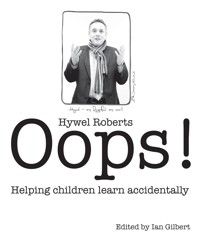
The book also shines a spotlight on the role of the teacher and how he or she can do the right things to get the absolute best from students. Some of the best learning takes place when, rather than imposing on young people a pre-determined curriculum, you find the stimulus that is relevant and engaging for them and build from there. Then the curriculum starts to emerge in a way that simply hooks students into learning almost despite themselves. There is nothing for them to push against ('What's the point?!', 'This is boring..!') as they have helped shape the direction of the lesson in a way that makes it real and useful to them. All this without them even realising what is going on! They have been 'lured into learning' and the process is shared with teachers in this book, with examples as to how it can be done and how the author has done it. Reading this book will support teachers in developing ideas that motivate everybody in the classroom, from infants to secondary and beyond. Whether you're new to teaching or have vast experience you will find in this book inspiration to raise achievement, improve behaviour and enhance creativity in the classroom; and you will change the way you approach lesson planning forever. Shortlisted for the Education Resources Awards 2013, Secondary Resource - non ICT category Oops Book Launch, Waterstones, Sheffield, May 2012: Photography by Jane Hewitt www.janehewittphotography.co.uk
Das E-Book können Sie in Legimi-Apps oder einer beliebigen App lesen, die das folgende Format unterstützen:
Veröffentlichungsjahr: 2012
Ähnliche







A book of happy accidents and improvisations that would be a lovely addition to any teacher’s bookshelf …
Ian McMillan, poet, broadcaster and comedian
Learning is natural; sometimes it gets difficult and then the learner gets stuck. When we get stuck we need a teacher who makes it feel natural to want to get learning again. Hywel Roberts is one of these. In real life he is a teacher who finds the way to open doors, include the loner, create the hook or dilemma that cannot be side-stepped … the sort of teacher who entices the learner and reduces resistance.
His book talks with the reader, the teacher who wants to think again about how they are in the classroom, around the school and in the staffroom. The stream of ideas for engaging with pupils and making learning live are supported by a down-to-earth conversation about how it really is in the day-to-day life of the school. It makes you smile, wince, laugh, and ponder … and most of all think: think how enjoyable teaching can be if we invest in ourselves as teachers.
Open it anywhere … it is full of gems.
Mick Waters, Professor of Education at Wolverhampton University
It’s no accident that Hywel Roberts – himself a world leader in enthusiasm – has written a must read book for teachers. Oops! Helping children learn accidentally brings together insight, pizzazz, wit and quirkiness into one happy place, it’s a joy of a book written by a great teacher. Easy to read, practical, full of great ideas and invention – it’s more than a book, it’s a treatise on positivity and a reminder of why it’s great to be a teacher.
Alistair Smith, learning consultant and author, www.alistairsmithlearning.com
There can be little doubt that the new book Hywel has written is tantalising, and so useful for the new teacher. It will, I am sure, stand alongside iconic publications that hit the ‘common touch’ as the truth is so sharp in the contexts he writes and explores.
Hywel has, at long last, launched a war on the ‘drains’, i.e. those mis-named teachers who glory in pouring toxic substances all over anything ‘child centred’ in schooling, and shrieks like a Greek Siren the awful warning that to ignore the drawing power of these malice makers means professional death.
I liked the text a lot as it reminded me of all the wonderful moments in my teaching career – the fun, the joy of working with spotty youth, the challenges of facing the classes almost impossible to teach and finding a way to get through.
We hear the voice of a true pioneer, clear and sure in the belief that teaching is an amalgam of so many things beyond ‘subject knowledge’. The book races along at an almost breathless speed – just like the writer.
I am envious that this book has been written so well and captures so much.
In all the showers of experience that Hywel brings the reader, we see a humility born out of experience and a deep knowing of young people. We also know that the book has been written from first-hand experience – so rare in today’s awful target-driven texts. Hywel has much experience in an area of woeful economic deprivation after the closure of the steel industry, as well as the deepening depression occurring in the north.
But no ‘doom and gloom’ indulgences are allowed. We are reminded of the continuing professional responsibility of bringing learning to life and we keep getting very clear guidance for newcomers as well as reminders for us oldies of how we have to keep vigilant to make our teaching count.
Luke Abbott, Director of Mantle of the Expert
As someone who struggles to finish educational literature, I knew I was onto a winner early on when Morrissey and Jaws’ Chief Brody were key references.
This book had Hywel Roberts’ inspirational stamp of wit and infectious enthusiasm running right through its core; I read the whole book with a huge grin on my face, often laughing out loud or whispering, ‘Aw, I love that!’ I felt like I had been let in on his secret and I had - it’s a mindset, not a technique. Where else would you be instructed to ensure that ‘Happiness’ was in your curriculum?
Hywel’s emphasis on connecting at a human level ensures children have a relevant and memorable experience with a real person, whom he encourages to be brave and embrace the unexpected and in turn empower pupils to question and steer their own learning. It’s so steeped in common sense that you can’t disagree with it!
The novel illustrations, acronyms and lists really made me chuckle; I promise to now ‘embrace the emo kid’. The subtle reinterpretations of popular sayings kept me on my toes, although my mind didn’t wander once. What would take many people half a page to say, Hywel encapsulates in one word or drawing. I have come away with a whole new vocabulary to tap me on the shoulder as I plan and teach, to remind me of my purpose and keep me on track.
Rather than lesson plans and schemes of work, there are inspiring anecdotes from all phases, so there are no ‘get outs’; he has succeeded at luring children of all ages and backgrounds into actively learning.
As I read, not only did I constantly reflect on my own ‘botheredness’ but kept adding to the internal list I was forming of people to buy this for. At a time in my career when I am filled with self-doubt and fear, this book is like a magic medicine that reminds me why I became a teacher and empowers me to buy a stack of sticky notes and fat pens and start ‘digging’, ‘luring’ and ‘raving’ in my own classroom on Monday morning.
In short, it’s BLUMMIN’ BRILLIANT!
Ruth Saxton, Primary School Teacher and Chair for NATD
Quirky, creative and personable, Hywel is a gifted teacher with a passion for enabling others. In this gem of a book he shares his passion for captivating children through memorable learning experiences. If you want the children in your school to make great progress and remember you as a teacher who made learning fun, dip into this book for inspiration and ideas.
Diane Heritage, Deputy Lead Associate, North of England National College
Reading Hywel’s book has been a pleasure. As a primary teacher for over twenty years, with the additional role of ‘Creativity Coordinator’ tagged on for good measure, I was ‘hooked’ by the first sentence of the foreword: ‘Good teachers are great liars’! I immediately wanted to know more, and especially as I’ve been lucky enough to hear Hywel present training to teachers, the ‘preferably read it with a Barnsley accent’ had me intrigued.
The last thing I need is book about teaching theory; no busy teacher needs that. We get enough theory and hoops to jump through from senior management, Government initiatives and the continual pressure of the inspectors arriving to give ourselves more reading for reading’s sake. Hywel’s book is not like that. Yes, it contains theory, it talks about learning and child-centredness but it is also inspiring, easy to read and is filled to the rafters with practical application; things I can steal and adapt for my learners and for me; things that actually work and will invigorate my teaching practice without it once making me doubt my own ability. Things that have made me go ‘hmmmm?!’.
As I read through the book (literally from cover to cover) I was struck by the cleverness of the ‘Lists’. Hywel writes lists and bullet points throughout. ‘Top 10s’ and ‘Top 5s’, Lists of the Bests and the Worsts, Things-to-do, Things-not-to-do, bullet-pointed action points and superb summing-ups. All of these appeal to me, and are RELEVANT. Relevance is a recurring theme. The book contains simple, effective illustrations, brilliant ‘sliding scales’ to provoke thought and reflection on who and where I am as a teacher and I acknowledge to myself now that I will be recommending Hywel’s book to so many of my colleagues: from students and NQTs who will absorb and adapt the suggestions without resistance, to the older switched-off colleagues who have arrived at the point of forgetting what the point is in being the teacher and lead learner. The book offers something for everyone engaged in education, whether that engagement is currently active or not. It is for those of us who love teaching and are instinctively creative in what we do but always want to be better at it. It is also, most importantly, for those who are not sure how to be creative, or how to liven the classroom and the learning for which we are responsible. And for those who may have accidentally switched to standby, waiting for something or someone to reactivate them, this is that switch.
I would regard myself as BRAVE (read the book to find out what Hywel means by this) but I will go back to this for inspiration and to refresh my teaching over and over. I would like to thank Hywel on behalf of my future pupils, who will undoubtedly pass through my classes and accidently learn more than they would have if I had not read this book.
Susan Coates, St Gregory’s RC Primary School, South Shields
Oops! must be essential reading for student teachers. It is a dossier for practical teaching and describes the pedagogy of ‘the buzzing’. Hywel Roberts offers a book that is a filled to capacity with drama-led ideas that are far from a performance and without a leotard in sight. I am buying a copy for each of the team at school.
Richard Kieran, Headteacher, Woodrow First School
What fun!! This book is packed full of practical ideas to make your classroom an engaging, exciting and fun place to be – whatever the age of your pupils. Less is more when it comes to teaching and learning: less teacher direction and control – more learning for the learners.
Hywel makes the art of questioning, waiting and trusting learners to rise to the situation safer and less scary for teachers. Go on – try one or two of his ideas … they really work.
I’m so tempted to go back to the classroom to use more of Hywel’s brilliant and inspiring ideas with young learners. I’ll certainly be using his techniques with the groups of leaders I work with. I know they will make me better at helping people learn.
Enjoy. I intend to …
Thank you Hywel.
Karen Ardley, Karen Ardley Associates
This is a book of ‘substance’ (not that sort!) which speaks to you with formidable experience and gregarious humour. Examples of Hywel’s experience are interwoven throughout the chapters. As is the humour! Hywel highlights the essence of enjoyment, necessary for all learners, including the teachers. Inspirational ideas spill as the book progresses and all written in such a direct style that you cannot help but ‘see the light’. Great thanks indeed go to Hywel for being so generous in sharing his experiences. A must-read for all who work with children.
Julie Bruck, Advanced Skills Teacher, Barnsley
It’s fair to say that we sometimes get books that we think we ought to read, trust me this is a book that you will want to read! I read it in two sittings as I couldn’t put it down – cliché? – well I defy you to start reading it and see for yourself. It should come with a few warnings though:
Don’t read it in a public place – you will get strange looks when you sit there laughing out loud!
This book will cause you to question your own teaching, methods, approaches and motivation – be prepared to do some serious thinking about your own classroom. When was the last time you ‘lured’ your pupils into their learning? Hywel talks about ‘igniting curiosity’, ‘capturing imagination’ and ‘botheredness’!
As a result of your thinking – this book will then cause you more soul-searching as you begin to take risks – stepping out of your comfort zone is never easy!
One of the key strengths of this book is that it’s written by a practising teacher – one who ‘gets it’, who is dealing with a whole range of pupils and their attitudes – it’s not a ‘worthy tome by someone who hasn’t been in a classroom for years’ … it’s amazing the number of times he hits the nail on the head. The positivity of this book is really refreshing; patience, being a radiator not a drain, what is MY usp … some of these I know but I just needed reminding as it’s easy to get tired and lack the energy to be creative and BRAVE!
However, to borrow one of Hywel’s favourite words – you’ll be ‘buzzing’ when you’ve read this!
Buzzing with ideas, enthusiasm, a sense of ‘I want to give that a go’ … definitely a read for teachers who want to be reinspired! I want to be that ‘positive teacher’, excuse me while I just reread …… Oops!
PS please read page 25 – number 1 – that’s me … I’m officially a good teacher as I just LOVE stationery shops!
Jane Hewitt, AST Dearne ALC, Barnsley and affiliate of Creative Teaching & Learning magazine
At last there is a book to cover all bases. Whether you are a student teacher, NQT or school leader, this is a genuine guide to push your own practice. Do you want to be an outstanding teacher? Do you want to lead an outstanding school? Read this book and your life will be a whole load easier. I’d like to think that all the ‘Drains’ who sit in staffrooms throughout the country will soon be reading this book in their PPA time instead of perusing the tabloid press or playing chess!
Hywel Roberts combines his knowledge of cutting-edge pedagogy with humour and genuine experience to provide an unpretentious guide to teaching. Reading this book made me laugh, remember the dark days of my own education and some memories of my early days in the classroom. It also made me nod, think, reflect, learn and enthuse about the job we all do. If you are a teacher, or want to be a teacher, please read this book!
Dave Whitaker, Executive Deputy Headteacher, Springwell Community School
Oops! is about principles. It’s about a mentality that encourages us to drop the reins of rigid, boring schemes of work and instead create learning that is exciting and relevant! Via practical ideas, anecdote and dry wit, Roberts’ magnificent work dares us to believe that we can make it so.
Jamie Portman, Assistant Headteacher, Campsmount Technology College
Educators! Look to your laurels! There’s a hip, young(ish) gunslinger coming at ya straight outta Barnsley, and he’s gonna change the way you think! Hywel Roberts is a magpie’s intellect writing like a man with two brains on a heavyweight jag of a particularly garrulous amphetamine. His message is that engagement is the message and in delivering it he’s sharp, he’s intellectually underpinned, he’s effervescent, he’s the teacher you wished your teachers had seen teach.
In Oops! Helping Children Learn Accidentally he’s produced a cornucopic (I know it doesn’t exist – it should) antidote to cynicism; a call to arms. It’s part memoir, part guide, part surreal series of disembodied lists, part methodology for being the kind of maverick who gets better results than anyone else and that the kids like better than they like you (!) Read it, shed your teaching skin, and there’ll be no danger that you’ll ever, ever become what Hywel memorably calls, ‘A monkey. A puppet. A monkey puppet.’
Phil Beadle, Teacher, Education Consultant and Author
For Maria and Tom: everything to me
Foreword
Good teachers are great liars. They create all sorts of untruths, weaving a whole tangled web of deception on a daily basis in order to trick children into learning, despite their best intentions to the contrary. They lie. They cheat. They deceive. They hoodwink. And they have their own language of deceit too. ‘Let’s imagine …’. ‘Let’s pretend …’. ‘What if …?’.
In order to go through the artificial process of teaching children about things that aren’t there (volcanoes, poverty, desert islands, molecules, God …) they have to act as if they were there.
Lies, all lies.
To make the lies work, that is to say to ensure they remain invisible, the duplicitous teacher must also ensure the learners join in the deceit too. ‘If you were a poor abandoned dog, how would you be feeling at this moment?’ is a question whose structure guarantees that children have to join in the lie in order to respond. ‘But I’m not a dog!’ won’t help. ‘But if I were a dog, I’m sure I would be too cute to be abandoned’ is better. Just.
This is what good teachers do. They create alternative possibilities, different realities, ones that are enticing to young minds, ones that lure children in. Teacher as Child Catcher.
(Poor quality teachers, on the other hand, think their job is to impart knowledge, dry facts that are as real as that volcano they are studying on the other side of the world and remain just as distant.)
Children may learn real facts about real volcanoes but they will absorb and remember everything there is to know about made-up volcanoes that could erupt at any time in the corner of the classroom. In the science of memory, context memory (real-life learning) trumps content learning (‘”Fact, fact, fact!” repeated Thomas Gradgrind.’) every time. Deceit is what is used to make it real. Want them to know about the truth? Start with lies. Works every time.
Hywel Roberts’ pants are usually on fire. He is a master fabulist, a weaver of complete and utter nonsense (flying machines, talking dogs, mad women on supposedly uninhabited islands …). His ability to make lies out of facts knows no bounds. Whenever he sees something real he likes the look of – a photo, a story, an object, a toy – the question first to his treacherous mind is this one:
Where’s the curriculum in that?
In other words, how can I exploit this discovery and turn it into a fantasy to trick children into learning? This is what Oops! is all about – the ability to pluck the curriculum from the environment, wrap it up in a tissue of lies for the classroom and trick children into learning about it. Oops!, I just taught you something while we were having fun and making stuff up. Oops!, I just learned something and I came to school today determined to repel all assaults on my ignorance. Damn you, Mr Roberts!!
Drama is a great way of lying to children but, although Hywel draws from his experience of using drama to help children learn well, this is not a book about drama in the classroom. Far from it. This book – best read in a Barnsley accent wherever possible – is full of ideas and activities to bring the learning alive in many, many ways and will seriously challenge the nature of your teaching.
So, read this book, seek out the curriculum that is found all around you, take it, then turn it into a big fat lie with which to trick your children into learning everything there is about it.
And may God have mercy on your soul.
Ian Gilbert Santiago March 2012
Acknowledgements
Thanks to … Jane Hewitt for taking my picture and for being the teacher we all wish we could be. David Whitaker for being the good guy on the side of vulnerable kids. Luke Abbott for opening so many doors and for being Dorothy Heathcote’s outstanding Sherpa. Karen Ardley for helping me to hold my nerve. Mick Waters, Jamie Portman, Alistair Smith, John Turner and others who have given me wonderful opportunities through gainful employment. The National Association for the Teaching of Drama (NATD) for inspiration and for fighting hard for teachers and the teaching of Drama. Matthew Milburn for the permission to be the teacher I could be (and to stop simply making up plays) as well as for the Chilean miners’ lesson. Tim Godwin for his ‘Northern bloke’ impressions. Helen Toft for her passion and for helping people to be brilliant. Liz Gaughan and Dave Matthews at Horbury School back in the day. Melanie Cutler for hoovering the taxi rank. Iona Towler-Evans, Ondrie Mann, Gemma Handley, Tim Taylor and Richard Kiernan – the Mantle experts. Phil Beadle for telling me I should write a book. Diane and Russell Heritage for helping me let go. Darren and Ronnie at Enquire. Debbie Kidd for unlocking potential in children and teachers. Verity Watts for pushing my thinking. Josie Thirkell, Simon Barber, Phil Davies and Marc Doyle for giving me work at the start. Staff and students at Springwell Community Special School and the Kingstone School, Barnsley, UK.
Also a heartfelt thanks to those friends and family who’ve demonstrated interest mixed with a dash of patience during the writing of this book. Nainy and Jackie Butterfly. Cheers also to my soundtrack of King Creosote, Ron Sexsmith, the Manic Street Preachers and James. Hi to Jason Isaacs!
Big thanks to my editor, the kind Ian Gilbert, who believed I had something to say, and for tirelessly, honestly and supportively helping me to fulfil my ambition of writing a book. And Caroline Lenton and her team at Independent Thinking Press for their advice, support and enthusiasm.
And especially to my Dad, Arfon Roberts, who would have loved this silliness.




