


Erhalten Sie Zugang zu diesem und mehr als 300000 Büchern ab EUR 5,99 monatlich.
- Herausgeber: Cinnamon Press
- Kategorie: Gesellschafts- und Liebesromane
- Sprache: Englisch
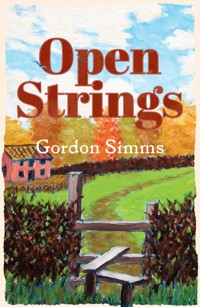
Following Roy's boyhood in post-war rural Bedfordshire Open Strings immerses us in the countryside with its changing seasons and characters who accompany Roy as he makes the transition from childhood to adolescence. Often naïve, Roy struggles to understand much of the behaviour he witnesses, yet makes discoveries about himself and the human condition. Moving from 'Flood' with its echoes of Bruno Schulz's The Street of Crocodiles and merging of memory, imagination and dream to the onset of school, that results in a vow of silence, and through the friendships, rivalries, hero-worship, first loves and moments of pushing the boundaries of behaviour that come with these early life stages, we arrive at 'GDAE' in which violence between strangers leaves Roy fleeing the scene as he has fled from other dilemmas. A poignant and convincing novella, Open Strings examines the way we make sense of the world with its moments of euphoria, its bewildering protocols, the strange behaviour of others and the small acts of betrayal that mark us deeply. Humane, engaging and authentic, Open Strings is a finely-observed collection and a compelling read.
Sie lesen das E-Book in den Legimi-Apps auf:
Seitenzahl: 172
Veröffentlichungsjahr: 2023
Das E-Book (TTS) können Sie hören im Abo „Legimi Premium” in Legimi-Apps auf:
Ähnliche




















Contents
Title Page
Copyright
Praise for Open Strings
Acknowledgements
Author biography
Dedicaton
Epigraph
Half Title
Flood
Silence
Olympians
Mervyn
Rainmaker
Nothing But The Sun
Not Cricket
Manhunt
The Tower Fund
G D A E
Open Strings
Gordon Simms
Published by Leaf by Leaf an imprint of Cinnamon Press,
Office 49019, PO Box 15113, Birmingham, B2 2NJ
www.cinnamonpress.com
The right of Gordon Simms to be identified as author of this work has been asserted by him in accordance with the Copyright, Designs and Patent Act, 1988. © 2023, Gordon Simms.
Print Edition ISBN 978-1-78864-973-5
Ebook Edition ISBN 978-1-78864-899-8
British Library Cataloguing in Publication Data. A CIP record for this book can be obtained from the British Library.
All rights reserved. No part of this publication may be reproduced, stored in a retrieval system, or in any form or by any means, electronic, mechanical, photocopying, recording or otherwise without the prior written permission of the publishers. This book may not be lent, hired out, resold or otherwise disposed of by way of trade in any form of binding or cover other than that in which it is published, without the prior consent of the publishers.
Designed and typeset by Cinnamon Press.
Cover design by Adam Craig from original artwork by Colin Ross Jack, used with kind permission.
Cinnamon Press is represented by Inpress.
Praise for Open Strings
Open Strings captures so well the rough edges, sharp corners, loose ends, terrors and daily miracles of childhood; its rivalries and moments of unexpected tenderness. A compelling, first-rate story that invites the reader to become a participant and a collaborator; thereby drawing the reader into a debate on the power of story, of memory and on the nature of “reality” itself.
Jackie Fellague, poet and environmentalist
I felt I was stepping into a bygone age. Beautiful writing, evocative yet with a poetic economy of style. The quirky characters and the landscape are deliciously encapsulated. So much to dwell on: a wonderful novella.
Emma Curtis, novelist
A vivid picture of a bygone era, brilliantly brought to life through detailed observation. The reader is effortlessly and intimately involved in the narrative.
Bernard Lord, poet
Gordon Simms captures the spirit of a rural, post-war childhood in this enchanting story. Through his evocative descriptions and masterful dialogue we see how one boy’s friendships and rivalries prepare him for the wider world.
Harriet Springbett, author
Acknowledgements
of the founder members of the Writers’ Block, way back when, whose inspirational experimentation gave rise to the beginning of this book..
And to Jan and the team at Cinnamon Press for their help in completing it
Author biography
Gordon Simms trained as an English and Drama teacher, Gordon lectured at Rose Bruford College of Speech and Drama before becoming a Drama Advisor and Head of Performing Arts. He is the author of several plays, including the prize-winning Stop Press. His ten-minute play Zero Contract was performed in 2017 in France where he has organised three bilingual literary festivals. He ran Segora International writing competitions for fifteen years, celebrating winning entries with readings, book launches and workshops. He has judged poetry, playwriting and short story competitions. A prolific poet, he has been successful in over ninety competitions and widely anthologised. His collection Uphill to the Sea won the Biscuit Prize in 2011. His short fiction has been published in The Real Jazz Baby and shortlisted for Fish. He has broadcast with the BBC and read at various venues in England, Scotland, Ireland and France.
to Jocelyn
for her constant support and encouragement
I will revise,
rewind, fast-forward, edit.
I capture their antic play that I might say
That must have been last summer or
Yes, that was my childhood—there!
(from Uphill to the Sea)
Open Strings
FLOOD
Of all the stories flowing through my childhood, this is the one I remember. I remember the flavour of it, its smells, the feel and finally, worst of all, the taste of it. Sometimes I requested it, and sometimes it rolled in on some kind of moon-driven rotation. It was called The Flood. Or, if it wasn’t, it should have been, because that’s what it was about, and the terrible impression it left was of a world deep in water. And if any of you doubt the power of story you’d better stop listening, now. (I say ‘listening’ because you often hear a voice in your head when reading). So haunting was this story, my first dream would be The Flood dream. Hours later when I woke that would be the only dream I saw. The Flood.
Usually the dream was worse than the story because the story came to an end and the book would be closed and the light would go out and with it my mother. I couldn’t listen if my father read it. I would wrap the pillow round my ears. Once I buried my head under the bolster. After that he must have decided I couldn’t stand the sound of his voice. From then on, he talked about me, rather than to me. I could hear him then all right. “That boy had better come to his senses.” Or “It’s time he woke his ideas up.”
One night I must have been falling asleep before my mother finished the story. I took the book carefully, for it was like one of the afflictions in the Old Testament, and said goodnight and she switched off the main light and left the room. Perhaps she went downstairs to finish the washing-up. I don’t know: I’m guessing. I imagine her hands sloshing about in the lather, the glistening plates and pans on the draining board, the smell of wet wood, the drip, drip of the water trickling from the runnels and falling into clear circles in the soapy froth of the sink.
I gingerly held the book and looked at the cover. The Flood, it said. I suppose I’m imagining that, but that’s the title I see. Of course, I could read by then. So why was it read to me? Perhaps I demanded it, once in a while, for a change. Perhaps it was the only way I could address that story, never daring to read it for myself. Possibly, now and again, it was considered a good thing that I should be terrified.
We have a fascination for things we least like. We’re drawn to the bottom of the garden to again see the dead blackbird we discovered earlier. We lift the plank of wood to peer at the writhing worms. We go to the water’s edge and imagine ourselves falling, the water rising.
Twilight: the boy and the girl and their pet collie being washed away downstream on an upturned table. The upper branches of trees poking through the eddies. The roofs of cottages, their thatch returning to whence it came. Biblical stuff, isn’t it? But no Saviour, no angel, no firemen or coastguards in solid launches. Just the blue of the dress, the brown shirt and grey trousers, the indigo sky and black water—except for the white swirl breaking over the front of the table.
I gazed a long time at the cover. Dots and speckles appeared, so that the water took on movement and the table seemed to float. Then my head dropped. I jerked open my eyes and ran the first two fingers of my right hand along the edge of the cover. My father had taught me always to go to the top right-hand corner, because of his theory. I used to listen to his theories before I was unable to bear his voice, and I used to take notice of them. Perhaps that’s the real reason I stopped listening to him. This theory concerned the way people handled books. He said they rested them on their laps and were careless turning the pages. They would either push the page into a fold like a wave and risk creasing it, or turn the bottom right-hand corner up, making it dog-eared.
That’s why I remember the bit about the collie. Perhaps the illustrator wanted to give the idea that the faithful pet would somehow guard the children and take them to safety. But there was no bank or island, only what, in the distance, might have been the horizon, almost indistinct from the sky.
I slid my index finger under the lip of the cover and opened the book. I read the publisher’s address and the names of the author and the artist who had painted the collie. I can’t remember any of that now. Then I turned to the first page of the story proper.
The first paragraph was about clouds gathering until they filled the sky. It was gloomy, and there was silence in the countryside, as if the world was waiting. As I reached the end, where the birds had stopped singing, I realised I’d cut my finger. You can do that on paper. I expect you’ve done it sometimes. I had that thin, sharp feeling, only when I looked it wasn’t bleeding, so I was wrong. I couldn’t even see one of those tiny marks that graze the skin without really cutting it, though the lamp wasn’t very bright so I might not have seen it anyway. But I could feel it.
The second paragraph was about a great wind that blew in from the ocean. I knew from the cover that there was an ocean, but I didn’t know how far away it was when the story started. This wind swept the clouds into heaps, not letting sunlight through. I didn’t need to turn back to the cover to see that sky. As I neared the end of that paragraph, I ran my fingers to the top edge of the page, just as I’d been taught. I finished the paragraph and curled my finger under the single sheet of paper. It was then I saw a smudge. The stem of a t had stretched to the edge of the page, tracing the route my finger must have taken. The cross of the t had become a branch, so the letter looked like a tree, leaning as if it was being uprooted. On the line above, an o and what might have been an l had blurred. The o had filled in like the sky, and lost some of its roundness. The l had lengthened, splashing at the bottom like a waterfall. They were next to each other in the same word (it might have been cloud, mightn’t it?) which looked larger than it should have done. Nearby was an h, like a dripping tap.
Making a mess of a book got you into serious trouble in our house. Books were precious, a kind of magic—that was another theory. A dirty thumbprint got you a telling off: spilling, tearing or crumpling got a good thrashing. Thrashings never felt good to me, but then I never handed one out. I wonder if I liked books in the first place because they were dangerous.
The blurred area was grey, where the rest of the page was cream. As I watched, it spread, like the cloud. I thought I’d better turn the page so I couldn’t see it. If I did that, shut my eyes, and counted to ten, it might go away. I also got the idea that if I turned the page quickly the movement would dry it, like wind through the weekly wash. I knew about friction, you see. It was a silly idea, but I was getting desperate. I suppose that’s why I can remember it, because I was so anxious. You do recall tiny little details when you’re in shock, and I suppose I was in a kind of shock. I also remember hoping by the time the book was picked up by anyone else, all sign of the blur would have vanished.
The idea came and went in a flash, like a raindrop. You don’t remember single raindrops, you’re thinking. But you do, you know. I bet every one of you can remember a particular raindrop that fell close to you at some time in your life, even years ago. You just think about it. It might have landed on your arm, or made a dark patch on the road in front of you. You might have heard it on the earth, or maybe on a tin roof or skylight, even if at first you didn’t realise it was rain. And if it was a hot day, you’d have smelt it—that warm, treacly smell from tarmac or the sweetness given off by a leaf.
Well, I tried it. I whipped the page over as smartly as I could. The word I had been looking at, that may have been cloud, had come through and was lying back to front and inside out, where it shouldn’t have been at all.
I closed the book. The cover felt damp. I opened my eyes as wide as I could and blinked several times. I opened the book. The introductory page with the names on and the first two pages of the story had stuck together. On Page Three the black letters were blurring one after another. Some grew very large, then dwindled, swaying like waterweed below the surface. I slammed the book shut. A drop of water squeezed out: the beginning of The Flood.
I’m a Scorpio. November. They play the national anthem on my birthday, but not for me. Scorpio is a water sign. I expect you know that. I didn’t, not at first. People are sometimes afraid of Scorpios. They’re nothing like as afraid as Scorpios are of themselves though, believe me.
When the book began to drip, I was petrified. I couldn’t move a muscle for at least half a minute. That might not sound long, but you just try it. Sit there for thirty seconds without moving, with your eyes and mouth wide open—as if you’re screaming. Don’t scream though, I can’t stand it. Start now.
The trouble is with your face fixed like that you probably can’t see when thirty seconds are up, and I don’t want you counting them silently to yourself because that would give you something to think about, and there wasn’t a thought in my head. When people say they’re not thinking about anything, they don’t mean that literally. You realise that, I’m sure. It’s actually impossible to think about nothing. Experts don’t agree on how we dream, so you might be thinking even when asleep. You’ve had a good thirty seconds, by the way.
What did it feel like, doing and trying to think of nothing? Difficult, isn’t it? After all, nothing is an idea of some sort. You’ve got to be in a pretty severe state of something or other to think about nothing, even for that short time.
When I came back to my senses, water was trickling from the book. The bedcover was damp, and that would mean trouble and some embarrassing questions. I had to stop this flow. I clutched the book: when I squeezed it, however, the water came faster.
It took a long time to dawn on me what’s probably obvious to you by now. All I had to do was get the window open. I pulled my legs from under the bedclothes, cradling the book with my arms stretched in front. Really, I should have used one hand on the catch, but I had been brought up so strictly in the matter of caring for books that even now I had to hold The Flood with both hands. I managed to hook my toe round the bedside chair. I dragged it across the lino—I was a bit worried about the noise, but if I’d known what was to come, I wouldn’t have bothered about that one bit. I stood on the chair, keeping the book level. I needed to get my elbow under the catch without spilling. Water ran up my sleeves, but I didn’t let that stop me. What did hold me up was the catch itself. It had always been hard to open. Usually I gripped it really tightly with both hands to make it work. I couldn’t get enough leverage on it with an elbow, especially as, with the book, I couldn’t give it a good upward thump.
I made a last effort to lift the catch. The book slithered from my hands and splashed onto the floor. A jet of water hit me under the chin. I slewed sideways and lost balance. I fell on the book, which shot away and spewed over the wall above my bed. The lamp went out with a bang.
I stood; my bare feet submerged. Had I concentrated on the window things might still not have turned out so badly, but I was intent on finding the book to smother the fountain issuing from it. I was paddling in inches of water. I couldn’t tell where the book was. Was it floating, submerged, or trapped behind furniture? For all I knew it could have flown to the top of the wardrobe, or, for that matter, dissolved.
I splashed about frantically. I couldn’t worry about noise now. Something bumped me in the back. I reached behind to discover the chair, floating waist high. I panicked. I forgot about the window, which opened onto a sloping roof the cat used to climb, and down which I might have slithered to safety. I waded to where the door should be. I found the handle, just below the surface. It was slippery, but I managed to turn it. I knew how much to twist it by its feel because (as you have, I dare say) I’d often crept out of my room in the dark when I couldn’t sleep to walk silently about the house.
The handle turned as expected, but when I tried to pull nothing happened. I tried harder, but I was floundering in chest-high water whose weight exceeded any power I could generate. You hear a lot about that sort of thing in Physics. I wouldn’t recommend finding out about it the way I did. I banged on the door and shouted, several times. My voice rose to a wail. That’s why I said I can’t stand screaming: it reminds me of what it sounded like to me, in my head, in my room, in my Flood, in which I was shortly to drown.
If you’ve heard anything of this kind before, this is where you’d probably expect to be told that I woke and was mightily relieved to discover it was only a dream. Well, a nightmare then. I’m sorry I can’t tell you that because I was already awake, and it was all too real. Come on, you’re thinking, you can’t expect us to believe that! You’ll see.
I felt someone pushing from the other side. The door was opening. There was a gasp and a surge of water, and I was flushed out on to the landing. If you’ve seen one of those weirs fashioned out of stone steps, you’ll know how the river rushes down them, spilling white, black and brown in a torrent. Our staircase must have looked like that, only with myself and bits and pieces of bedroom furniture plunging down it. The front door would stop me, I thought, but it had already been wrenched from its hinges, and I was carried into the garden. I could see only the wispy tops of the taller trees beyond the shrubbery, and I was brushed past them in seconds.
Now although I’m a Scorpio, as I told you, I hate water. I was always too frightened to be able to swim. I could never relax, and had no coordination. I would thrash around, staying afloat until my energy failed, when I would sink. So you’ll realise I’d no chance of saving myself in this phenomenal inundation except by clambering on to a cottage roof or clutching a topmost branch of one of the ash trees that lined the road. But they weren’t near enough, and their dim shapes rushed past. I think I nearly lost consciousness through exhaustion and cold fear. But then I heard a dog barking. I saw Prince, my grandfather’s Labrador on whose back I once rode when a toddler. I’d often been told about that; I couldn’t remember it. But sometimes when you hear about an event from your earliest years, you make a picture in your mind of what it must have looked like, and before long it’s as vivid as a memory, so you can’t tell the difference.
I don’t know what he was doing there. I’m sure he’d died some years before, not long after he’d given me that ride around the yard. And before you pick me up on it, he was a Labrador, not a collie. I expect you’ve noticed when illustrations in a book disappoint you. They show things that don’t look as you’ve imagined from reading the story. A few pages into the book you come across a picture you didn’t know was there (otherwise you’d have looked at it first): it might be of one of the main characters, and it’s irritating if it doesn’t seem like the person you’ve pictured. Worse, sometimes the artist has missed something important, painting the wrong colour hair or different clothes, something that contradicts what’s been written.




