


59,99 €
Mehr erfahren.
- Herausgeber: John Wiley & Sons
- Kategorie: Wissenschaft und neue Technologien
- Serie: Special Publications
- Sprache: Englisch
Published by the American Geophysical Union as part of the Special Publications Series. Opening Space Research: Dreams, Technology, and Scientific Discovery is George Ludwig's account of the early development of space-based electromagnetic physics, with a focus on the first U.S. space launches and the discovery of the Van Allen radiation belts. Narrated by the person who developed many of the instruments for the early Explorer spacecraft during the 1950s and participated directly in the scientific research, it draws heavily upon the author's voluminous collection of laboratory notes and other papers, upon the Van Allen archive, and upon a wide array of other sources. This book presents very detailed discussions of historic events in a highly readable (semitechnical), first-person form. More than that, though, Opening Space Research brings to the forefront the entire team of scientists who made these accomplishments possible, providing an extensive index of names to enhance and complete the historical record. Authoritative and unique, this book will be of interest to space scientists, science historians, and anyone interested in space history and the first U.S. space launches.
Sie lesen das E-Book in den Legimi-Apps auf:
Seitenzahl: 991
Veröffentlichungsjahr: 2013
Ähnliche



















Contents
Foreword
Prologue
Introduction
Special acknowledgments
Chapter 1: Setting the Stage at the University of Iowa
Initiating the Iowa cosmic ray program
Inventing the rockoon
Chapter 2: The Early Years
Entering opportunity’s door
The summer 1953 rockoon expedition
McDonald’s and Webber’s balloon programs, 1953–1955
The summer 1954 third rockoon expedition
A great personal adventure, summer 1955
Discovery of the auroral soft radiation
Anderson’s Canadian balloon flights in early 1956
Iowa City balloon flights in March 1956
Chapter 3: The International Geophysical Year
IGY inception and early planning
Adding rockets to the program
Artificial Earth satellites
A retrospective view of the IGY
Chapter 4: The IGY Program at Iowa
Ground-launched rockets
Projects sometimes failed
Large balloons
Rockoons
Chapter 5: The Vanguard Cosmic Ray Instrument
Van Allen’s cosmic ray experiment proposals
Major challenges
Evolution of the instrument design
Assembling and testing the instrument
Final work on the Vanguard instrument
Additional notes on the data recorder
Chapter 6: Sputnik!
Early indications of Soviet intentions
Scientists gather to review IGY progress
A memorable cocktail party: The announcement
Closing the conference
Continuing reactions
Chapter 7: The U.S. Satellite Competition
Competing launch vehicle proposals
The Stewart Committee and the Vanguard decision
Keeping the Orbiter dream alive
Chapter 8: Go! Jupiter C, Juno, and Deal I
Obtaining the approvals
Preparations at Huntsville and Pasadena
A call from the Jet Propulsion Laboratory
A hurried move to California
Building the Deal I satellite
Instrument calibration
The corona discharge problem, again
Environmental testing
Chapter 9: The Birth of Explorer I
The first countdown attempts
The Deal I launch: Explorer I in orbit!
Public jubilation
Returning from the Cape
Chapter 10: Deal II and Explorers II and III
Building the Deal II instruments
To Cape Canaveral for the Deal II launch
A heartbreaking failed launch attempt
The crash effort for a second try
The Vanguard I launch
A successful Explorer III launch!
Chapter 11: Operations and Data Handling
Explorer I operation
Explorer I data acquisition
Explorer III operation
Explorer III data acquisition
Data flow
The ground network
Data tape logistics
Making the data intelligible
Reading and tabulating the information
Endnotes
Chapter 12: Discovery of the Trapped Radiation
Ernest (Ernie) C. Ray
Iowa’s cosmic ray experiment
Early hints of the high-intensity radiation
Examining the Explorer I data
From perplexity to understanding with Explorer III
My hurried move back to Iowa City
The announcement
Going public
The Soviets missed the discovery
A recent Soviet view of the discovery
Endnotes
Chapter 13: Argus and Explorers IV and V
Nuclear weaponry and the cold war
The Argus effect and project
NOTSNIK
The Iowa cosmic ray group and Argus
Explorer IV and V preparation and launch
Explorer IV operation
Early unclassified Explorer IV results
Argus results
Endnotes
Chapter 14: Extending the Toehold in Space
Completing the first generation
Second-generation spacecraft
An early scorecard
Endnotes
Chapter 15: Pioneering in Campus Space Research
The Cosmic Ray Laboratory
Establishing the university's role in space research
Training ground for Space scientists
Endnotes
Chapter 16: Some Personal Reflections
Family life
The university scene
Collegial interactions
Public exposure
Physics or engineering
The value of an outstanding mentor
The spirit of the times
Endnotes
Epilogue
Acronyms and Abbreviations
Selected Bibliography
Name Index
Subject Index
Published under the aegis of the AGU Books Board
Kenneth R. Minschwaner, Chair; Gray E. Bebout, Kenneth H. Brink, Jiasong Fang, Ralf R. Haese, Yonggang Liu, W. Berry Lyons, Laurent Montési, Nancy N. Rabalais, Todd C. Rasmussen, A. Surjalal Sharma, David E. Siskind, Rigobert Tibi, Peter E. van Keken, members.
Library of Congress Cataloging-in-Publication Data
Ludwig, George H.
Opening space research : dreams, technology, and scientific discovery / George H. Ludwig. p. cm.
Includes bibliographical references and index.
ISBN 978-0-87590-733-8 (alk. paper)
1. Space sciences–lowa. 2. Outer space–Exploration. 3. University of lowa. 4. Astronautics and state–United States. I. Title.
QB498.2.U6L83 2011
629.4092–dc23
2011014553
[B]
ISBN 13: 978-0-87590-733-8
Book doi:10.1029/062SP
Copyright 2011 by the American Geophysical Union
2000 Florida Avenue, NW
Washington, DC 20009
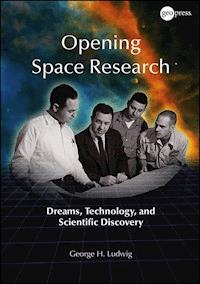
Front cover: Pondering the early puzzling data from Explorer I. From the left, Carl McIlwain, James Van Allen, George Ludwig, and Ernie Ray. March 1958. (Photo courtesy of the Department of Physics and Astronomy Van Allen Collection, The University of Iowa, Iowa City, Iowa.)
Figures, tables, and short excerpts may be reprinted in scientific books and journals if the source is properly cited.
Authorization to photocopy items for internal or personal use, or the internal or personal use of specific clients, is granted by the American Geophysical Union for libraries and other users registered with the Copyright Clearance Center (CCC) Transactional Reporting Service, provided that the base fee of $1.50 per copy plus $0.35 per page is paid directly to CCC, 222 Rosewood Dr., Danvers, MA 01923. 978-0-87590-727-7/11/$1.50 +0.35.
This consent does not extend to other kinds of copying, such as copying for creating new collective works or for resale. The reproduction of multiple copies and the use of full articles or the use of extracts, including figures and tables, for commercial purposes requires permission from the American Geophysical Union. geopress is an imprint of the American Geophysical Union.
History with its flickering lamp stumbles along the trail of the past, trying to reconstruct its scenes, to revive its echoes and kindle with pale gleams the passion of former days.
Sir Winston Spencer Churchill in the British House of Commons 12 November 1940
Written for my family:
Ros (Rosalie)
Rose (Barbara)
Sharon
George
Kathy
and their families.
Foreword
This book is a participant’s well-told and perspective account of the early days of scientific research in space, with emphasis on the role of the University of Iowa.
The unique core of the book, Chapters 5–11, is the inside story of the development of the radiation instruments thatwere flown successfully on the first American Satellite Explorer I and its prompt successor, Explorer III, both in early 1958. The author, George H. Ludwig, then a graduate student in physics at the University of Iowa, was the central person in developing those instruments and in overseeing the decoding and tabulation of their in-flight data. His detailed narrative of this work has a special authenticity because of its dependence on his own meticulous records.
During 1955 and 1956, I prepared proposals for a comprehensive global and temporal survey of the primary cosmic radiation above the Earth’s atmosphere. My proposal was accepted by the U.S. National Committee for the 1957–1958 International Geophysical Year (IGY) on 12 May 1956 and was placed on the short list of potential payloads for early satellite missions. Initial funding was provided by the National Science Foundation and by my ongoing grant from the U.S. Office of Naval Research.
I specified the scheme of the instrumentation and selected the basic detectors, Geiger-M uller tubes, developed by Nicholas Anton of the Anton Electronics Laboratories of Brooklyn, New York. The tubes were based on the earlier work of Herbert Friedman in introducing a small admixture of chlorine gas into an argon-filled tube, a so-called halogen quenched tube of “infinite” lifetime and stable operation over a wide range of temperature. Our adopted Anton type 314 tube had these properties and was of mechanically rugged construction.
During 1956–1957, Ludwig mastered the then new techniques of transistor electronics and carried out the detailed design of the electronics for our instruments. He also designed a miniature, commandable magnetic-tape recorder for recording and rapidly playing back the data from a full satellite orbit in order to obtain comprehensive geographical and temporal coverage of the counting rate of the Geiger tube.
At the outset of the IGY, the planned vehicle for launching satellites was a Vanguard, under development by the Naval Research Laboratory and the Glenn L. Martin Company. I followed its development closely and also maintained contact with Ernst Stuhlinger of the Army Ballistic Missile Agency (ABMA) on a technically competitive but unofficial plan for a multistage ABMA/Jet Propulsion Laboratory (JPL)vehicle. Because of my progressive uneasiness about the difficulties in developing the Vanguard vehicle, Ludwig and I decided that the Iowa instruments would be designed for compatibility with either the Vanguard or the ABMA vehicle, later called Jupiter C.
All of our preparatory work culminated in the late autumn of 1957 following success of the Soviet Sputniks 1 and 2, early failures of the Vanguard vehicle, and the consequent national decision to adopt the Jupiter C as a backup vehicle. JPL was assigned overall responsibility for the payload, and the U.S. IGY staff chose the Iowa package as the primary scientific instrument thereof.
In mid-November 1957, Ludwig drove his family from Iowa City to Pasadena, California, with his precious instrumentation in the trunk of their personal automobile in order to work with the JPL staff in integrating it into the payload of the Jupiter C.
The successful launch of Explorer I on 31 January 1958 and Explorer III on 26 March 1958 placed our radiation instruments in space. After several weeks of intense puzzlement in understanding our data, my colleagues and I recognized that we had discovered the presence of an enormous population of energetic, electrically charged particles trapped in the external magnetic field of the Earth—later called the radiation belts. The in-flight reliability of Ludwig’s instruments was central to this discovery.
Ludwig continued at the University of Iowa with the development of radiation instruments for subsequent satellite flights and later had a distinguished career as a senior official of the National Aeronautics and Space Administration and the National Oceanic and Atmospheric Administration.
James A. Van Allen University of Iowa October 2004
FIGURE 0.1 The diminutive Explorer I sitting atop its Jupiter-C launch vehicle just moments before lift-off. The first stage liquid oxygen tank is frosted and still venting, and the upper-stage cylindrical tub and pencil-like satellite are spinning. (Courtesy of the NASA Marshall Space Flight Center.)
Prologue
Cape Canaveral, Florida, 10:47 EST, 31 January 19581
The launch countdown was in its final few minutes, and the cylindrical “tub” atop the first stage of a Juno I launch vehicle was spinning rapidly. Finally, a voice over the intercom intoned, “four – three – two – one – ignition – liftoff.” My senses were soon overwhelmed by the thunder of the rocket engine, as it beat upon me to affirm ignition and the beginning of the rocket’s purposeful climb toward space.
At the very tip of that multistage rocket assemblywas a payload containing a cosmicray instrument that I had painstakingly designed over the past two years as a graduate student at the University of Iowa.2 Perched on a stool in a nearby hangar, I listened with growing satisfaction to a wavering tone from a receiver on the workbench beforeme. During the 10 minutes following liftoff, the signal told me that the counting rate of the instrument’s Geiger-Müller detector increased, peaked, and then dropped slightly to an essentially constant value.
That counter was detecting showers of secondary atomic particles produced by collisions of high-energy galactic cosmic rays with molecules in the Earth’s upper atmosphere. Its counting rate increased as the instrument rose to a height of about 60,000 feet (11 miles or 18 kilometers),3 where the production of secondary particles peaked. As the counter progressed higher above the substantial atmosphere, it detected fewer and fewer of those secondary particles until, ultimately, the counter registered little other than externally arriving primary cosmic rays.4,5
Thus, the signal’s pattern told me that the rocket had successfully climbed to a height of at least 11 miles, passed above it, and remained above that height until it passed out of range. Furthermore, it showed that the instrument and transmitters in the payload were operating properly.
Down-range tracking stations quickly confirmed that the four-stage rocket had completed its work in lifting the 18 pound payload with my precious instrument package to the intended height of about 220 miles and in propelling it to the required speed of slightly more than 18,000 miles per hour. Although those down-range stations were able to measure the approximate speed of the departing final rocket stage and instrument, they were not capable of accurately determining its exact direction of flight. Thus, it remained possible that it had been aimed excessively upward or downward, inwhich case itwould make a premature fiery descent into the atmosphere. Although preliminary indications of a successful launch looked promising, we still did not know whether the instrument was in a durable orbit.
By that time, there was nothing more that I could learn in the hangar, and I quickly made my way to the project’s more complete receiving station. Located in a special trailer some distance from the other Cape facilities, thiswas one of a global network of stations set up to receive the signals from the U.S. satellites. That stationwas especially important at that moment because it was linked to the rest of the receiving station network by high-quality telephone lines. That communication network permitted us to hear of the progress in acquiring the signal as the instrument progressed above other stations around the world. I joined a steadily growing and increasingly excited group at the trailer’s steps.
We did not expect to hear a meaningful confirmation that the instrument had been successfully orbited until it had made a nearly complete circle of the Earth, when it would come within range of receiving stations on the west coast of the North American continent. Expectations were that itwould pass within range of four stations in California between 12:25 and 12:30 EST.
The time of anticipated signal acquisition came with great excitement but passed with the disappointing absence of any signal. During the next minutes, we waited with a growing dread that the launch or instrument might have failed. Just as my fear was peaking, at about 12:42 EST, a voice from the trailer shouted, “Gold [the Earthquake Valley receiving station] has it!” We knew then that the rocket had provided a greater thrust than expected, resulting in a higher orbit. Thus, it took longer than expected for the new satellite to orbit the Earth. Our knot of observers exploded with applause and shouts of relief and jubilation as we realized that
Joy also reigned in Washington, D.C. The three primary leaders of the effort, Wernher von Braun, directing the booster rocket effort, William H. Pickering, leading the upper-stage rocket and overall satellite effort, and James A. Van Allen, the principal scientist for our cosmic ray experiment, along with a bevy of Army generals, followed the launch and the interminable wait in a “war room” in the Pentagon. As soon as the orbit had been confirmed, the threewerewhisked to the National Academy of Sciences building on Constitution Avenue. There they briefed several civilian program officials and then led a spirited press conference in the academy’s Great Hall.
Word of the accomplishment immediately spread worldwide, as the front pages of the morning papers were emblazoned with the welcome news.
That event signaled both a conclusion and a beginning. On the national scale, it represented the culmination of a major effort to orbit the first U.S. artificial earth satellite. In Iowa City, it marked the realization of James A. Van Allen’s long-standing dream of placing cosmic ray instruments well above the Earth’s atmosphere. On a personal note, it was the end of a busy and exciting two year developmental effort that later served as the basis for my physics master’s thesis.
The event initiated a new era of scientific research within the Earth’s magnetic shell and beyond. The ensuing half-century of remarkably active and productive research in space has included the conduct of countless scientific investigations throughout our solar system, the announcement of numerous important scientific discoveries, and the training of many scientists who became leaders in the new field.
How did we get to this point, and what followed the initial excursion into space?
Endnotes
1 The corresponding universal time (UT, also commonly referred to as Greenwich Mean Time (GMT)) was 03:47 on 1 February 1958. Local times are used throughout most of this book. However, in discussions of the worldwide network of ground receiving stations and the data produced by them, the author reverts to universal time to avoid confusion. Such occurrences are appropriately identified.
2 During the period covered in this work, the university was known as the State University of Iowa (SUI), sometimes rather derisively pronounced “soo-eee.” Several decades ago it came to be known, simply, as the University of Iowa (UI). The two names are used here synonymously, with SUI being preferred when describing the events of the 1950s.
3 U.S. units of measure are used throughout most of this book, occasionally with corresponding international (SI) units indicated in parentheses.
4 An excellent summary of the state of knowledge of cosmic ray physics at that time is contained in D. J. X. Montgomery, Cosmic Ray Physics (Princeton Univ. Press, 1949).
5 The manner in which the counting rate of a simple Geiger-Müller counter varies as a function of altitude is described in many sources, including James A. Van Allen, “The Cosmic Ray Intensity Above the Atmosphere Near the Geomagnetic Pole,” Il Nuovo Cimento (1953) pp. 630–647.
Introduction
It has been more than fifty years since the opening of the Space Age with the launching of the first Soviet Sputnik on 4 October 1957.1 That new Earth satellite’s self-assured beep-beep-beep signaled the beginning of a new era. Much has happened since then, including the operation of numerous robotic instruments to probe the new frontier, man’s first tentative venture into Earth orbit, the brash human landing on the Moon, the introduction of new space technologies into our everyday lives and culture, and many new and oftentimes breathtakingly beautiful glimpses of our vast universe.
The years since Sputnik have crept by at a relentless pace. A substantial fraction of the world’s present population has been born since then, and most of them know of those early times only through oral tradition, written history, and artifacts in museums.
I was recently shocked by the realization that we are nearly as far into the Space Age now as we were into the Age of Aviation when the Space Age began. Fifty years before Sputnik (only a few years after the Wright brothers’ first flights in a powered aircraft), the pioneers of aviation were speculating on whether “aeroplanes” might possibly play a useful role in warfare, transportation, and commerce. By the end of those five decades, the effectiveness of aircraft in warfare had been well established in two world wars. Airlines had taken over from trains and ships for much of the long-distance passenger travel. Aircraft were handling a substantial portion of the long-distance shipment of goods. Turboprop engines were rapidly displacing piston engines, and jet engine–driven aircraft were well established in the military services and were beginning to come into commercial service.
During the second half of the twentieth century, spacecraft have been absorbed into our culture in much the same way. We depend on them for many facets of our everyday lives, including communications, navigation, position finding, Earth observation, weather and climate observation, tactical and strategic reconnaissance, and many other capacities.
Enough time has elapsed since the beginning of the Space Age to gain a good historical perspective. But it is recent enough that the memories of still-living direct participants can be tapped.
It has been customary in the popular arena to describe entry into space primarily in terms of the manned program. This is perhaps understandable because the venture of humans into any new realm is always far more exciting than the introduction of mere robots.
Nevertheless, instrumented robots did enter space first, and many of the initial technical and operational problems were solved during their development and use. Fortunately, the voices of enthusiastic and dedicated scientists, reinforced by a sometimes sporadic popular interest, ensured that the first flights of space-capable launchers were put to useful purposes for research rather than being used simply to prove the technology or for military purposes. This resulted in an immensely imaginative and productive program of scientific discovery.
This tale’s focus on the research program at the University of Iowa’s Department of Physics and Astronomy is not meant to minimize the work of other groups. It does reflect the fact, however, that the Iowa department, under Van Allen’s guidance, did provide outstanding leadership in the new branch of research.
The story may be of special interest from two points of view. First, it describes the experiences of a fledgling scientist-engineer in a uniquely exciting period of initial discovery, vigorous growth, and historical significance in a new scientific arena. Second, it uses many historical materials dealing with the details of the development, launch, and use of the early Explorer satellite instruments that have never been published and do not exist elsewhere.
By extreme good fortune—by being in just the right place at the right time with the appropriate background—I was able to participate actively in the opening of this new era. As I completed my undergraduate work and was looking forward to my graduate studies, I became increasingly aware of the significance of the time. In addition to my already established custom of recording work-related activities in laboratory notebooks, I started noting some of my thoughts and experiences in personal journals. Later, as more of my time was spent in management, I began a series of office journals. Much of the material for this book was derived from those three sources.
Special acknowledgments
My wife, Rosalie (who now prefers the shorter name “Ros”), was an active partner in the events related in this story. I am indebted to her for that enthusiastic participation and for her forbearance and support during the more than ten-year period of preparing this manuscript.
James A. Van Allen, in addition to providing the leadership for much of the program at Iowa, encouraged and helped me in writing this story. Throughout the process of researching and drafting this manuscript, he provided information and commented on portions of the text. Special thanks are due to him for preparing the book’s foreword.
Leslie (Les) H. Meredith, the first graduate student with whom I worked in the Iowa Cosmic Ray Laboratory, introduced me to the art of balloon instrument design and fabrication. He provided substantial previously unpublished technical and anecdotal information about the rockoon expeditions that has been incorporated into this book. He reviewed the full manuscript and provided substantive comments.
Frank B. McDonald, from my first association with him at Iowa in 1953 through our most recent discussions, has been a strong guide, personal booster, close friend, and a major factor in my professional development. He reviewed segments of the manuscript during its preparation and provided important comments on the full draft.
Ros and I developed especially close personal and professional bonds during our university years with Carl E. McIlwain and his wife, Mary; Laurence (Larry) J. Cahill Jr. and wife, Alice; and Ernest (Ernie) C. Ray and Mary. Ernie passed away before I began writing this book, but Mary Ray assisted in relating Ernie’s role. Carl McIlwain and Larry Cahill reviewed portions of the manuscript during its preparation and provided very valuable assistance by reviewing the full text.
Special thanks are extended to Nancy Johnston and Mary McIlwain, who painstakingly proofread the full manuscript.
Others, too numerous to list, encouraged me and provided input during the long process of writing this book. Many of them are mentioned in the text. Grateful thanks are expressed to all of them.
Endnote
1 It can be argued that the Space Age started earlier with, for example, the flight of balloons into the high atmosphere in the early Twentieth Century, or the first launch of a V-2 rocket to a height greater than 100 miles in 1946. In this work, I somewhat arbitrarily mark the beginning of the Space Age with the first durable excursion into the region above the Earth’s sensible atmosphere, that is, with the launch of Sputnik 1 on 4 October 1957.
CHAPTER 1
Setting the Stage at the University of Iowa
Balloons led the initial forays into near space for scientific research. Victor F. Hess, during a balloon flight in Austria on 7 August 1912, conclusively showed the extraterrestrial origin of cosmic rays.1 That event marked the beginning of an extraordinary chapter in the history of science, in which balloon-based research played an important role.2
Cosmic rays are nuclear particles that travel at extremely high speed. They originate in extraterrestrial space, probably mostly in supernovae. They consist of protons (hydrogen nuclei), alpha particles (helium nuclei), and lesser numbers of highercharged atomic nuclei, as well as some electrons and photons. Most of the cosmic rays approaching the Earth collide with atoms and molecules in the upper atmosphere to produce showers of secondary radiation. Because few of the primordial cosmic rays ever reach the Earth’s surface, it is necessary to study them from as high above sea level as possible. Balloons remain an important vehicle for their study.
The use of rockets for this purpose was seriously discussed as early as 1929 when, at a meeting in the home of John C. Merriam, then president of the Carnegie Institution in Washington, D.C., one of the attendees optimistically asserted that if a rocket went more than 50 miles high, above the ozone layer, it would “settle the nature of cosmic rays.”3 In 1931, Robert Millikan at the California Institute of Technology tried to persuade Robert H. Goddard to use the high-altitude rockets that he was developing in New Mexico for cosmic ray research. However, Goddard, having become by that time apprehensive about collaborative arrangements and, as a result, an inveterate loner in his rocket work, shied away from such joint endeavors.4
Even during the development of the V-2 rocket (Vengeance Weapon Number 2) in Germany during World War II (WWII), serious thought was given by its designers to using it for high-altitude research and space travel, but those thoughts had to be set aside because of the high wartime priority given to developing the weapon. In fact, project technical leader Wernher von Braun and two other staff members were imprisoned by the German Gestapo for two weeks in March 1944—charged with diverting their full attention from their wartime duties by planning to use rocketry for space travel.
An interesting vignette in that connection was related by Ernst Stuhlinger, one of von Braun’s close associates. In the fall of 1944, he visited his former mentor, Professor Hans Geiger, where he lay near the end of his life in a Berlin hospital. Geiger asked his former student what he was presently doing. Stuhlinger replied, “We are working on a long-range precision rocket which, we hope, will be able one day to fly to the Moon.” Stuhlinger went on to explain that he was working on the guidance system that would make it possible. Geiger’s interest was piqued, and he asked, “Do you think you could put a cosmic ray counter on board? And transmit the pulse signals to the ground? And really measure the cosmic ray intensity at high altitudes, far above the atmosphere?” Stuhlinger replied, “Absolutely, and we will certainly not send any of our rockets into space without some scientific instruments on board!”5
It was not until peace followed WWII that the first scientific instruments were carried aloft by rockets. The vehicles first used for that purpose were the captured German V-2 rockets that had been brought to the United States after the war, along with a cadre of senior German scientists and engineers led by Wernher von Braun. The primary purpose of the U.S. V-2 work was to help jump-start a nascent American rocket program.
Fortunately, the German team, with the support of their U.S. associates, followed through on the promise that the rockets would serve a useful purpose by carrying meaningful scientific instruments. By the end of 1950, approximately 63 V-2s had been launched in the United States, most with an assortment of research instruments. Strong leadership for the developing U.S. research program that employed the V-2s was provided by (in simple alphabetical order) Homer E. Newell Jr. (Naval Research Laboratory, NRL), William H. Pickering (Jet Propulsion Laboratory, JPL), Milton W. Rosen (NRL), Homer Joe Stewart (JPL), John W. Townsend Jr. (NRL), and James A. Van Allen (Applied Physics Laboratory, APL). Those individuals all went on to figure prominently in developing the follow-on research rockets and the first U.S. satellites.
New vehicles for high-altitude research were soon developed in the United States, most notably, the Women’s Army Corps (WAC) Corporal by the JPL in California; the Aerobee, developed jointly by the APL and the NRL; and the Viking, developed by the NRL. By the end of 1950, approximately 10 of the WAC Corporals, 50 of the Aerobees, and 7 of the Vikings had been launched.
A more complete discussion of those rocket developments is contained in Chapter 7.
Initiating the Iowa cosmic ray program
Professor James A. Van Allen served as the instigator and leader of the cosmic ray research program at the University of Iowa.
James A. Van Allen
James Alfred Van Allen (“Van” or “Jim” to his friends) was born and grew up in the small midwestern town of Mount Pleasant, Iowa. The second of four sons of Alfred Morris and Alma Olney Van Allen, he credits C. A. Cottrell, a science teacher at Mount Pleasant High School, with awakening the enthusiasm for science that suffused his entire adult life.
Upon high school graduation in June 1931 as his class valedictorian, he immediately entered Mount Pleasant’s Iowa Wesleyan College, graduating there summa cum laude in June 1935. As a Wesleyan student, he learned of the excitement of hands-on research through his association with his highly esteemed physics professor, Thomas C. Poulter. For his graduate studies, Van Allen went to his “family university,” the University of Iowa, where he received his M.S. degree in 1936 and his physics Ph.D. in June 1939.
Van Allen’s first postgraduation job was as a Research Fellow at the Department of Terrestrial Magnetism in Washington, D.C. That work focused on laboratory nuclear physics but also piqued a growing interest in geophysics that would become his life’s focus. As WWII was intensifying in Europe in 1939, his group switched to development of the then-evolving proximity fuse. Among other tasks, Van Allen oversaw the development of special very rugged miniature vacuum tubes that made such devices feasible (and that later facilitated postwar rocket research). Development of the fuse progressed rapidly, and his group set up the Applied Physics Laboratory of the Johns Hopkins University in mid-1942 to facilitate that work. In late 1942, he was commissioned by the navy to help in deploying the new, highly secret devices into action in the South Pacific and in evaluating their performance.
After the war, Van Allen returned to the APL, where he set up and headed its High Altitude Research Group from then until late 1950. During that period, his group conducted a highly successful research program that included studies of the primary cosmic rays, the solar ultraviolet spectrum, the geomagnetic field in the ionosphere, and the altitude distribution of ozone in the upper atmosphere. In addition to managing the activities of his group, he conducted a vigorous research program of his own. From 1947 on, his record of published papers reflects his growing involvement in cosmic ray research. His studies included the use of the V-2 rockets that were brought to the United States following the war. The first three live firings of the V-2s carried his cosmic radiation instruments, and by the end of the V-2 program, his APL group served as the principal instrumenting agency for 12 of the 63 V-2s that were launched. All 12 of those carried cosmic ray instruments from his laboratory, in addition to instruments to study the other phenomena mentioned above.
As already mentioned, Van Allen was instrumental in the development of the Aerobee high-altitude research rocket. This started with his leading a study of U.S. efforts that might have resulted in new rockets suitable for high-altitude research. His APL work, combined with a similar interest at the NRL, led to a rocket development proposal from the Aerojet Engineering Corporation, a company spawned by the West Coast’s JPL. That resulted in contracts in early 1947 with Aerojet and the Douglas Aircraft Company. Van Allen provided the technical supervision, serving as the agent of the Navy’s Bureau of Ordinance, which provided the financial support for the work.
Thus, by the end of 1950, Van Allen had already established a reputation as a highly skilled researcher and manager. By his direct involvement in the miniaturization and ruggedization efforts involved in producing the proximity fuse and the early rocket instruments, he was a leading instrumentation expert. His publication list from 1947 through 1950 includes eight papers dealing with technical aspects of rocketry and instrumentation. Fourteen of his papers deal with results from the cosmic ray research. In addition to his personal research, he had provided strong overall leadership in establishing a vigorous research program in the United States. He was poised to play a key role in the development of space research as the second half of the twentieth century opened.
Van Allen and the Iowa Physics Department came together by a wonderfully fortuitous set of circumstances. By 1950, he was at a point in his career where a change of scene seemed desirable. The leadership at the APL seemed to him to be shifting its focus away from pure science research toward research more directly related to defense. At just that time, a vacancy occurred in Van Allen’s alma mater, the University of Iowa’s Department of Physics. Van Allen was offered the position as department head with the rank of full professor, and he arrived on the scene on the first day in January 1951.
His primary research aspiration was to extend his earlier observations of primary cosmic rays to above the substantial atmosphere and to conduct them over a wider range in latitude. He was especially interested in establishing that type of research in a teaching university’s academic environment.
Van Allen remained at the university throughout the rest of his professional career, during which time he and his progression of outstanding students sent instruments to the Moon, Venus, Mars, Jupiter, Saturn, and beyond. During this distinguished career, he served as principal investigator on more than 25 space science missions.
Van Allen especially enjoyed his role as a teacher, both in the classroom and the laboratory. He always treated his students with great respect, learning from them and guiding them with wisdom and kindness.
James Van Allen died on 9 August 2006 at the age of 91 of heart failure after a 10-week period of declining health. He remained actively involved in his research until his last few days.
When Van Allen arrived in Iowa City in 1951, no cosmic ray research program existed there. But the nuclear physics research program in which he had participated for his graduate studies in the late 1930s was still active. The department had a modest electronics laboratory and a small but excellent machine shop.
One of Van Allen’s first actions was to obtain a grant from the private Research Corporation to help get the cosmic ray program started. The objective of that grant was to loft cosmic ray instruments with clusters of small balloons. He also moved rapidly to draw others into the new research effort. He hired Melvin (Mel) B. Gottlieb, then a recent University of Chicago graduate, as a member of the faculty.
The team of Van Allen, Gottlieb, and his first graduate student, Leslie H. Meredith, developed, tested, and flew the initial balloon-borne instruments.
Leslie H. Meredith
Leslie (Les) H. Meredith was born on 23 October 1927 and lived during most of his childhood in Iowa City. He received most of his college degrees from the University of Iowa: his B.A. in 1950, his M.A. in 1952, and his Ph.D. in 1954, all in physics. His timing was fortunate, as he became Van Allen’s first graduate student.
During parts of 1953 and 1954, Les went to Princeton University to work with Van Allen on the Matterhorn nuclear fusion project.6 Upon receiving his Ph.D. in 1954, he began his postgraduate career at the Naval Research Laboratory (NRL) in Washington, D.C., serving as head of the Rocket Sonde Branch and Meteor and Aurora Section. After the National Aeronautics and Space Administration was signed into law in October 1958, Les became one of the cadre of scientists transferred from the NRL to form what became the Goddard Space Flight Center in Greenbelt, Maryland. Serving for 12 years as chief of its Space Science Division, he provided outstanding leadership in the buildup of Goddard’s research staff and program. By mid-1970 he took over as deputy director of the Space and Earth Sciences Directorate, and after October 1972, he served for nearly three years as Goddard’s assistant director.
During subsequent years, Les moved through a progression of upper-level management positions, culminating in a short tour as the Goddard Center’s acting director. After his retirement as a federal government employee, he worked for nine years with the 13-agency U.S. Global Change Research Program.
In 2003, he and his wife, Marilyn, moved to their retirement home at North Myrtle Beach in North Carolina. Marilyn died in 2008, but Les has continued to reside there.
Les’ early balloons were launched from a football practice field on the east bank of the Iowa River from 16 June 1951 (beginning only five months after Van Allen’s arrival) through 26 January 1952. His scientific objective was to measure the incoming cosmic ray intensity as a function of altitude with a directional telescope using thin-walled Geiger-Müller (GM) counters. A concomitant purpose was to help the department gain initial experience with counters and coincidence circuits, telemetering techniques, and balloon flying.
That first Iowa balloon apparatus employed an array of three in-line, thin-walled, cylindrical, Victoreen-type 1B85 GM counters, with a coincidence circuit to form a directional telescope. An event from the center counter was counted, but only when the top and bottom counters were triggered at essentially the same time. Thus, only particles traveling vertically through all three counters were registered. The output of that telescope, along with an altitude measurement, was sent to ground by a frequency-modulated (FM/FM) telemetering system adapted from a design originally developed by Thomas Coor at Princeton University.7 Height-measuring barometers and transmitters taken from surplus weather radiosondes were included. Meredith’s circuits employed 13 miniature acorn vacuum tubes, each measuring about one-half inch in diameter and one and one-half inches in length.
His apparatus, with batteries, was assembled in a frame constructed of one-half inch, lightweight angle stock riveted together to form a boxlike structure measuring 15 by 15 by 30 inches. The gondola was completely covered with celluloid and partly covered with white paper to control the temperature of the instrument during its several-hour flight.
A number of inexpensive Darex type-J weather balloons of about six foot diameter were used to loft the instruments. Multiple small balloons were used rather than a single larger one. Not only were the smaller ones less expensive, but their use also freed the flights from the tight constraints of the Federal Aviation Administration— the larger balloons would have presented a potential hazard to aviation, whereas the smaller ones would not endanger the aircraft. The number of balloons was chosen so that their net free lift was about twice the total weight of the gondola and its rigging. For a payload weight of 27 pounds, a typical arrangement included nine balloons, each with 6 pounds lift.
Some of Les’ recollections about these earliest developments are entertaining and revealing.8 He stated, “The system test… was to take [the instrument] to the first high hill that you came to on the highway going south along the river, I think it was about five miles out of town, and then turn it on. The signal strength and counter operation were then checked at the receiving station, which was located in the attic of the physics building.” He continued, “Each balloon was of… some kind of rubber that had to be boiled just prior to launch to be flexible.” Recalling the field operation: “At launch, with the balloons at an angle because of any breeze, I and a helper ran with the payload until the balloons were high enough so the gondola wouldn’t swing down and hit the ground.”9
Out of Meredith’s seven flights in that series, the first two, flown on 16 June and 6 July 1951, produced somewhat noisy but usable data. Flight 3 failed to produce any usable data. Flights 4, 5, and 6 were flown with simple test equipment instead of with the more valuable instruments in order to work out some of the remaining technical details. The seventh and last flight in the series, launched 26 January 1952, produced good data throughout most of the flight. Preparation for the launch of the final flight is shown in Figure 1.1.
The three productive flights in this series served as the basis for Meredith’s master’s thesis, in which he established a new value for cosmic ray vertical intensity at that latitude for particles above an energy threshold that was lower than had previously been measured.10
Inventing the rockoon
Soon after arriving at Iowa, Van Allen sent a proposal to the U.S. Office of Naval Research (ONR) for measuring the cosmic ray intensity at altitudes well above those reachable by balloons. The grant that resulted from that proposal was the beginning of a highly productive relationship, with ONR financial support for Van Allen’s programs continuing unbroken through the next 38 years.
Van Allen’s plan was to lift rockets by balloon to above most of the atmosphere before firing them, to reduce the effect of atmospheric drag on the speeding rockets. That combination, which quickly came to be known as the rockoon, permitted the attainment of very high altitudes with small but useful payloads at very low cost.
The idea for the rockoon had first been suggested to Van Allen by Lee Lewis of the U.S. Navy (USN) during the Aerobee-firing cruise of the USS Norton Sound in March 1949.11,12 The concept was further developed in discussions during that cruise by the two of them, along with George Halverson of the USN and Siegfried Frederick Singer (known widely as S. Fred Singer) of the University of Maryland. The basic approach was to lift small, inexpensive, military-surplus rockets by balloons to an altitude of the order of 11 miles before firing them. When fired, the rockets would already be above the densest portion of the atmosphere. By thus avoiding the dominating influence of aerodynamic drag in the lower atmosphere, a much higher altitude could be reached than if the rockets had been fired from the ground. The initial rockoons made it possible to carry payloads weighing 40 pounds to peak altitudes greater than 60 miles for a cost for the rocket and balloon of less than $1800 for each flight. That compared with about $25,000 for each ground-launched Aerobee and $450,000 for each larger Viking rocket.
FIGURE 1.1 James Van Allen (left) and Leslie Meredith preparing one of Les’ instrument gondolas for launching on 26 January 1952. The gondola frame resting on the ground contained the three-counter telescope at its top, the airborne portion of the telemetering system in the center, and the batteries in the bottom. (Courtesy of the Department of Physics and Astronomy Van Allen Collection, The University of Iowa, Iowa City, Iowa.)
Shipboard launching made the concept especially attractive and feasible for several reasons: (1) a ship can steam downwind to minimize the relative wind seen by the tethered balloon–rocket combination while the balloon is being inflated, (2) ships at sea can avoid populated areas and the possibility of damage by returning rockets that are fired in variable and largely uncontrollable directions, and (3) a wide range in geographic position can be covered from a single field installation.
The basic techniques and logistics of launching rockets from shipboard had already been worked out during the Aerobee firings from the USS Norton Sound. Launching rockoons from shipboard represented a straightforward extension of those practices, adding only the requirement for inflating and launching the large balloons. In view of the modest demands imposed on the ship by the rockoon operation, it was not necessary to schedule the ships for that exclusive purpose—the task was added for voyages already planned for other purposes. Thus, the incremental cost of the field support operations was kept very low.
The basic rockoon concept was reduced to practical form by Van Allen and Gottlieb, assisted by students Joseph Kasper and Ernest Ray, during late 1951 and 1952.13,14,15
That first rockoon’s solid propellant propulsion unit was known as the Deacon. It was originally designed by the JPL in Pasadena, California, as a jet-assisted takeoff (JATO) rocket for launching military aircraft from short runways. The Deacon was about six and one-quarter inches in diameter and nine feet long and had a thrust of 5700 pounds during a three to five second burn. They were mass-produced by the Allegheny Ballistic Laboratory of the Hercules Power Company located in Cumberland, Maryland.
Van Allen and Gottlieb developed several modifications to the mass-produced JATO rockets. Extra large tail fins, fabricated in the State University of Iowa (SUI) instrument shop, were required to assure stable flight when the rockets were fired in the rarified upper atmosphere. A thin-walled, aluminum, pressure-tight instrument nose cone, with an adapter to fit it to the rocket case, was developed to house the instruments. Finally, a hook arrangement was devised for suspending the rockets beneath the balloons during their ascent. The Deacon rocket assembly that resulted is shown in Figure 1.2.
Two types of scientific instruments were prepared for the first rockoon field expedition. One, prepared by Les Meredith as a part of the work for his Ph.D. dissertation, contained a single GM counter to measure the absolute intensity of cosmic radiation above the effective atmosphere as a function of height and geomagnetic latitude. His instrument was somewhat similar electronically to that which he used for his earlier balloon flights, but with a single omnidirectional GM counter substituted for the three-counter directional detector. Since the resulting omnidirectional counting rate would be greater than the directional rate seen during the balloon flights, the new instrument required a pulse-scaling circuit to reduce the pulse rate to be transmitted to the ground. That electronic scaling circuit was adapted from a design by John A. Simpson at the University of Chicago. Five cascaded binary stages divided the counting rate from the GM counter by a factor of two to the fifth power, or 32. Most of the electronic circuits used the very rugged, low-power, and tiny Raytheon CK-5678 vacuum tubes that Van Allen had helped develop for the proximity fuses during WWII. The general arrangement of Meredith’s rockoon instrument is shown in Figure 1.3a.
FIGURE 1.2 The Deacon rocket, modified for use as a rockoon, in front of the Old Capital Building on the University of Iowa campus. From the left, Melvin Gottlieb, Les Meredith (kneeling), Lee Blodgett, Robert Ellis (partly obscured), and James Van Allen. (Courtesy of the Department of Physics and Astronomy Van Allen Collection, The University of Iowa, Iowa City, Iowa.)
FIGURE 1.3 The two instrument packages for the 1952 rockoon flights. Both were 6.5 inches in diameter. Markings for Les Meredith’s instrument in (a) are 1: Victoreen type 1B85 Geiger-Müller counter; 2: Cathode follower circuit board; 3: Five-stage binary scaling circuit; 4: Subcarrier audio oscillator that modulated the transmitter; 5–9: Batteries; 10: Transmitter. Bob Ellis’ instrument, in (b), consisted of the spherical ion chamber at the top, followed by the box containing the immediately associated electronics circuits behind the pressure gauge. The next three decks contained batteries, while the lower deck contained a transmitter similar to that used by Meredith. (Courtesy of Leslie H. Meredith and the Department of Physics and Astronomy Van Allen Collection, The University of Iowa, Iowa City, Iowa.)
A second instrument type was prepared by Robert (Bob) A. Ellis Jr. It used a chamber to measure total cosmic ray ionization. His instrument, also shown in Figure 1.3b, drew heavily on Meredith’s designs and techniques, but he used a pulseionization chamber rather than a GM counter as the principal detector. Individual pulse amplitudes, rather than counting rates, were telemetered. The chamber was a six-inch diameter sphere of 0.010 inch thick copper with an axial Kovar collector wire supported by ceramic insulators and with guard rings to eliminate electrical leakage across the insulators. The chamber’s pulses were amplified and lengthened before transmission by a circuit that produced an output pulse whose length was proportional to the input pulse amplitude.
Design of the research instruments for the rockoon flights benefited greatly from Van Allen’s experience in developing the proximity fuses for artillery shells during WWII. Robust components and construction techniques were used to withstand the high initial acceleration and severe vibration of the rocket firings. Most of the vacuum tubes adopted from the proximity fuse program for our purposes were the superrugged, low-power, subminiature vacuum tubes identified as the Raytheon CK-5678. The larger 3A5 acorn tube that had been used in the transmitters for the balloon-borne instruments was found to be sufficiently rugged and was retained for the rockoon flights. The coils for the transmitters were hand-wound and adjusted for the proper frequency (74 MHz) and maximum power (one to two watts).
Testing procedures were remarkably simple and direct. Meredith recounted, “The only ‘G’ [acceleration] test was to put a working circuit board with its batteries on an arm on the drill press and see if it survived being spun. Only the ones that flew off and went flying across the lab failed.”16
Initial ground-launched tests of the rocket configuration (without the balloon or instruments) were made by Van Allen, Meredith, and Ellis at the U.S. Naval Ordnance Missile Test Facility at the White Sands Missile Range, New Mexico, during June and July 1952. Of three launches from the White Sands short tower, two flights were successful and demonstrated the rocket assembly’s mechanical ruggedness, flight stability, and performance. Two additional launchings of small rockets from a simulated balloon suspension rig verified the design of the coupling ring and hook, showing that the rocket’s line of flight would be within a few degrees of its static angle of suspension at the time of firing.
The first field expedition with Meredith’s and Ellis’ research instruments was on the U.S. Coast Guard icebreaker USCGC Eastwind during August and September 1952.17,18 The Iowa participants were Van Allen, Meredith, and technician Lee F. Blodgett. Ellis did not participate in the field exercise—Van Allen took charge of his instruments.
The icebreaker, under the command of Captain Oliver A. Peterson, progressed northward along the Davis Strait between Canada and Greenland, with its primary mission being to resupply the weather station at Alert Base on the northwestern shore of Ellesmere Island. The Iowa group and the balloon support team flew with their equipment from Westover Air Force Base in Massachusetts to join the ship at Thule in north Greenland. (The locations of those sites can be seen in Figure 2.13.) They were joined there by a group from New York University, who brought equipment for cosmic ray neutron measurements via balloons.
On board ship, the scientists were very ably assisted by Lieutenant Malcolm S. Jones from the ONR. The Iowa researchers set up their laboratory in a room below decks, as seen in Figure 1.4. The balloon crew arranged their equipment for inflating and launching the balloons on the ship’s helicopter deck. The ship departed Thule with the full complement of scientists and their gear on 29 July 1952, progressing farther northward on its primary supply mission to Alert Base. Incidentally, on that cruise, they set a new record of 508 miles for the closest approach to the North Pole by a ship under its own power.
FIGURE 1.4 Preparing one of Les Meredith’s rockoon instruments for flight in the temporary laboratory on the icebreaker USCGC Eastwind, fall 1952. From the left, Les Meredith, James Van Allen, and Lee Blodgett (behind Van Allen). (Courtesy of the Department of Physics and Astronomy Van Allen Collection, The University of Iowa, Iowa City, Iowa.)
After the supply delivery at Alert Base, the ship returned to the upper end of Baffin Bay, where, during the period 20 August through 4 September, the SUI scientists made their rockoon launches from the mouth of Murchison Sound, about 100 miles northwest of Thule.
Open-neck, thin-film, plastic Skyhook balloons, 55 feet in diameter and made by the General Mills Aeronautical Research Division in Minneapolis, Minnesota, were used to lift the approximately 210 pound rockets and instrumented nose cones to firing altitude. A small SUI-made rocket-firing gondola, containing a timer, barometric pressure switch, and firing batteries, was suspended from the rocket’s tail fins by a light cord so that the rocket would break away once it was fired. The balloons were filled with enough helium to give about 35 pounds more lift than the combined rocket, payload, firing gondola, and rigging weight. That produced a balloon rate of rise of about 800 feet per minute, thus requiring nearly an hour for the climb to the firing altitude of about 40,000 feet. To keep the rockets and instruments warm during the long balloon ascents through the cold stratosphere, the rocket bodies were painted black to absorb solar radiation and were covered by transparent plastic shrouds spaced away from the bodies by Styrofoam rings to provide additional warming by the greenhouse effect.
FIGURE 1.5 Launching a rockoon from the deck of the USCGC Eastwind on the 1952 expedition. The balloon had been filled, the rocket had been assembled, and preparations were being made to attach the load line to the rocket. From the left, Lieutenant Malcolm S. Jones, Les Meredith, and James Van Allen. (Courtesy of the Department of Physics and Astronomy Van Allen Collection, The University of Iowa, Iowa City, Iowa.)
Preparations for launches were made by the Iowa University team, with very effective help by the ship’s officers and men. Lieutenant Jones installed and armed the rocket igniters. The balloon inflation and launching operations were conducted by J. R. Smith and J. Froelich from General Mills. Figure 1.5 shows the action on the ship’s deck during final preparations for one of the launches.
Seven flights were attempted, and all of the balloons performed admirably. However, the first two rockets, both of which carried Meredith’s instruments, failed to ignite. On the second of those flights, data were received from the instrument for about 10 hours as it floated at balloon altitude, thus verifying the effectiveness of the payload temperature control arrangement and the adequacy of the battery packs. Those two initial failures were blamed on failure of the pressure switches due to their low temperature, and sealed cans of fruit juice were added to the firing gondolas to help keep the switches warmer during the balloon ascent. That technique was validated by a balloon test flight and was adopted for the rest of the rockoon launches.
The third rockoon flight, on 28 August 1952 (SUI flight number 3),19 was the world’s first ballistically successful rockoon flight. The rocket fired at an altitude of 38,000 feet, 55 minutes after release of the ensemble from shipboard. The rocket reached an estimated summit altitude of about 200,000 feet, or nearly 38 miles. The flight failed, however, to produce useful data from the instrument.
The remaining four rocket flights, made near 88 degrees north geomagnetic latitude, were also ballistically successful, with the best performance being a flight to over 55 miles height. Flights 4 and 5 carried Les’ instruments, while flights 6 and 7 carried the instruments that had been built by Ellis.
The ship returned to Thule on 5 September 1952, and the researchers returned from there to the United States by Air Force aircraft. As they returned to the campus that September, the Iowans were delighted that the practicality and effectiveness of the new low-cost rockoon technique had been convincingly demonstrated. Processing and analyzing the data from those flights occupied the scientists’ attention for some months after their return.
Van Allen prepared a paper for presentation to the American Physical Society in November 1952. That paper’s main purpose was to provide an overall summary of then-existing knowledge of the low-rigidity end of the primary cosmic ray spectrum. In the second half of that paper, he made use of the data from the two successful rockoon flights of Les Meredith’s instrument. One conclusion was that the new measurements confirmed and extended previous evidence for the marked flattening of the integral primary cosmic ray spectrum below a magnetic rigidity of about 1.5 × 10⁹ volts.20
Van Allen reported separately that flights 6 and 7 of Ellis’ instruments produced good values of total cosmic ray ionization up to about 40 miles altitude.21
Meredith used the results from his two successful 1952 flights, combined with the data from a flight made during the following summer, for his dissertation.22 The flight data from those three flights spanned the range of geomagnetic latitude from about 88 to 54 degrees. His dissertation reported a value of unidirectional particle intensity averaged over the upper hemisphere of 0.48 (cm2 sec sterad)–1. He further stated that his measurements were consistent with a complete or nearly complete absence of primary cosmic ray particles of magnetic rigidity less than 1.7 × 10⁹ volts. (It should be noted for the sake of completeness that later, more sensitive and discriminating instruments did provide quantitative measurements of spectra at lower rigidities.23’24’25)
Endnotes
1 The original announcement of the discovery of Cosmic Rays was contained in V. F. Hess, Phys. Z., 13, (1912). He received a Nobel Prize in physics for this work in 1936.
2 For an interesting short account of the discovery and early history of cosmic ray research see Bruno Rossi, Cosmic Rays: A Dramatic and Authoritative Account (McGraw-Hill, 1964).
3 For an account of that meeting, see Milton Lehman, This High Man: The Life of Robert H. Goddard (New York: Farrar, Straus, and Co., 1963).
4 Clayton R. Koppes, JPL and the American Space Program (Yale Univ. Press, 1982).
5 Ernst Stuhlinger, “Discovery of the Van Allen Belts: Memories of an Old-Timer,” lecture presented at the Univ. of Iowa Dept. of Phys., 27 June 1998.
6 During the fifteen-month period from May 1953 to August 1954, Van Allen was on sabbatical leave from the University of Iowa. The Matterhorn project at Princeton University, New Jersey had the goal of demonstrating controlled nuclear fusion, and Van Allen worked there with Lyman Spitzer to build and operate the Model B-1 stellarator. Leslie Meredith worked with them there from October 1953 to October 1954.
7 T. Coor, Jr., Phys. Rev., 82, (August 1948) p. 478.
8 A remarkably complete and lucid discussion of that balloon experiment, including instrumentation, calibration, and results, is contained in Leslie H. Meredith, “A Measurement of the Vertical Cosmic Ray Intensity as a Function of Altitude,” M.S. thesis, Univ. of Iowa Dept. of Phys., June 1952. This was the first thesis prepared at the University of Iowa by a student under Van Allen’s guidance.
9 Leslie H. Meredith, letter to George H. Ludwig, 7 June 1999.
10 Meredith, “A Measurement of the Vertical Cosmic Ray Intensity.”
11 James A. Van Allen, “Energetic Particles in the Earth’s External Magnetic Field,” in C. Stewart Gillmor and John R. Spreiter, eds., Discovery of the Magnetosphere (AGU, 1997) pp. 237–238.
12 James A. Van Allen, Origins of Magnetospheric Physics (Wash., DC: Smithsonian Inst. Press, 1983). On page 21 he stated that an illustration with caption suggesting the flight of a manned balloon-rocket combination to carry a pilot to a height of 43 miles was contained in the July 1934 issue of the popular magazine Modern Mechanix and Inventions. The source of the idea was not identified other than by reference to “a Wyoming inventor.” Van Allen stated that he was unaware of that article until it was brought to his attention in 1981.
13 James A. Van Allen and Melvin B. Gottlieb, “The Inexpensive Attainment of High Altitudes with Balloon-launched Rockets,” in Rocket Exploration of the Upper Atmosphere,” ed. by R. L. F. Boyd and M. J. Seaton (Pergamon Press, 1954) pp. 53–64.
14 The most complete description of the rockoon technique is contained in James A. Van Allen, “Balloon-Launched Rockets for High-Altitude Research,” chap. 9 in Sounding Rockets ed. by Homer E. Newell Jr. (McGraw-Hill, 1959) pp. 143–164.
15 Some details about these early flights were extracted from the account in Van Allen,




